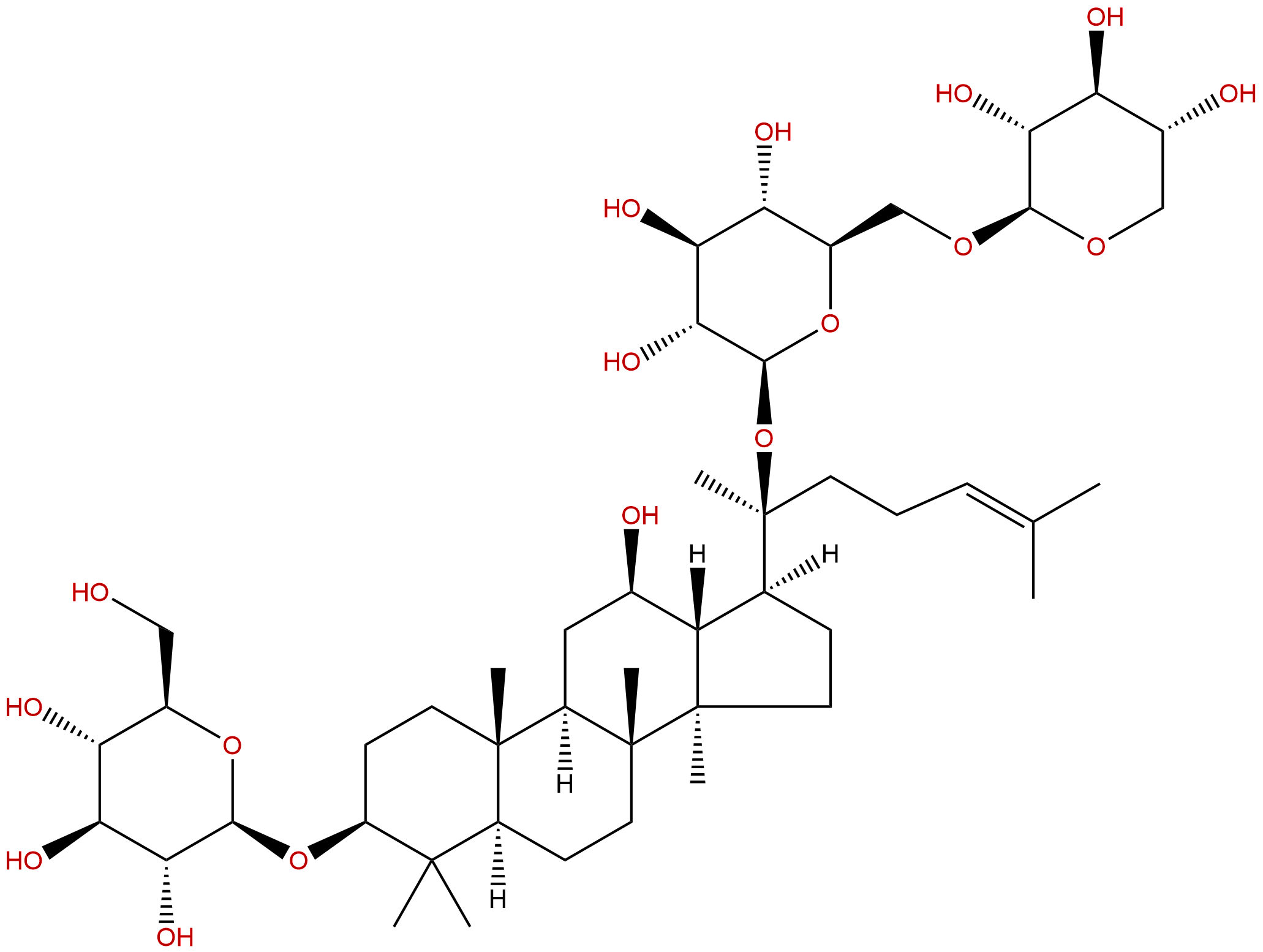


Product name: Gypenoside IX
Synonym name: Notoginsenoside Fd
Catalogue No.: BP1790
Cas No.: 80321-63-7
Formula: C47H80O17
Mol Weight: 917.14
Botanical Source: Panax notoginseng
Physical Description: White powder
Type of Compound: Triterpenoids
Purity: 95%~99%
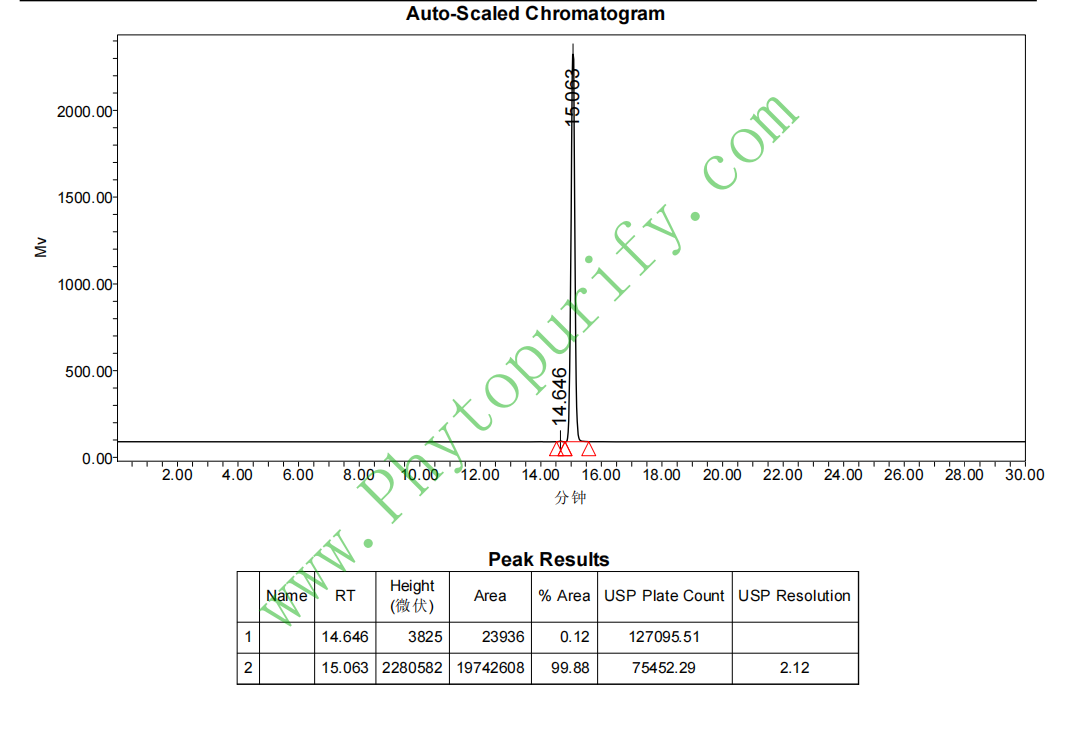
Analysis Method: HPLC-DAD or/and HPLC-ELSD
Identification Method: Mass, NMR
Packing: Brown vial or HDPE plastic bottle
Storage: Store in a well closed container, protected from air and light. Put into refrigerate or freeze for long term storage.
Whenever possible, you should prepare and use solutions on the same day. However, if you need to make up stock solutions in advance, we recommend that you store the solution as aliquots in tightly sealed vials at -20℃. Generally, these will be useable for up to two weeks.
The product could be supplied from milligrams to grams, up to kilograms
Inquire for bulk scale.
Descriptions:
Gypenosides (Gyp, Stevenleaf) are triterpenoid saponins contained in an extract from Gynostemma pentaphyllum Makino, they induce apoptosis in human hepatoma cells through the up-regulation of Bax and Bak, and down-regulation of Bcl-2, release of mitochondrial cytochrome c and activation of caspase cascade.[1]
Gypenosides induce ER stress and production of reactive oxygen species and Ca 2+ , change the ratio of Bcl-2 and Bax, followed by the dysfunction of mitochondria, cause cytochrome c release, activation of caspase-3 before leading to apoptosis, these results provide information towards an understanding of the mechanisms by which Gyp induces cell cycle arrest and apoptosis in human tongue cancer cells.[2]
Gypenosides can inhibit invasion and migration of human tongue SCC4 cells by down-regulating proteins associated with these processes, resulting in reduced metastasis.[3]
Gypenosides can protect cortical cells by multiple antioxidative actions via enhancing intracellular GSH, suppressing glutamate-induced cytosolic Ca 2+ elevation and blocking glutamate-induced apoptosis, GPs imply their remarkable preventative and therapeutic potential in treatment of neurological diseases involving glutamate and oxidative stress.[4]
Gypenosides protect biomembranes from oxidative injury by reversing the decreased membrane fluidity of liver microsomes and mitochondria, increasing mitochondrial enzyme activity in vascular endothelial cells and decreasing intracellular lactate dehydrogenase leakage from these cells; the extensive antioxidant effect of GPs may be valuable to the prevention and treatment of various diseases such as atherosclerosis, liver disease and inflammation.[5]
References:
[1] Wang Q F, Chen J C, Hsieh S J, et al. Cancer Lett, 2002, 183(2):169-78.
[2] Chen J C, Lu K W, Tsai M L, et al. Oral Oncol, 2008, 45(3):273-83.
[3] Lu K W, Tsai M L, Chen J C, et al. Anticancer Res, 2008, 28(2A):1093-9.
[4] Shang L, Liu J, Zhu Q, et al. Brain Res, 2006, 1102(1):163-74.
[5] Li L, Jiao L, Lau B H. Cancer Biother, 1993, 8(3):263-72.
[6] Liu C, Zhang Q, Xie E, et al. Drug Standards of China, 2013, 14(1):7-9.
HPLC of Gypenoside IX
Storage conditions:Short-term storage at 2~8℃, long-term storage at -20 ~ -80℃
277.9100
2.6634
2.6634
.0693
.5389
.1246
Low
74.7383
6.3428
No
No
No
No
No
No
0.0
Yes
No
No
No
Cardiovascular disease is the leading cause of death and disability worldwide, with myocardial ischemia and its severe consequence - myocardial infarction - posing a significant public health challenge. Currently, although reperfusion therapy represented by percutaneous coronary intervention and thrombolytic drugs can effectively restore blood flow, the reperfusion process itself may cause myocardial cell damage, inflammatory response, and increased oxidative stress, namely myocardial ischemia/reperfusion injury, which limits further improvement of clinical prognosis. Therefore, the search for new therapeutic drugs that can effectively prevent or alleviate myocardial ischemia/reperfusion injury has become a hot topic in pharmacological research. In this context, natural products derived from traditional medicinal plants have attracted much attention due to their multi-target and multi pathway properties. Sanqi saponin Fd, also known as Gynostemma pentaphyllum saponin IX, is a dammarane type tetracyclic triterpenoid saponin extracted from Panax notoginseng in the Araliaceae family and Gynostemma pentaphyllum in the Cucurbitaceae family. In recent years, a large number of studies have shown that Sanqi saponin Fd exhibits significant cardioprotective effects in myocardial ischemia models, with mechanisms involving anti apoptosis, anti-inflammatory, antioxidant, and regulation of energy metabolism, indicating its enormous value as a potential candidate drug for myocardial ischemia treatment. This article aims to systematically review the chemical properties, pharmacological activities, molecular mechanisms of action, and pharmacological properties of Panax notoginseng saponins Fd, in order to provide comprehensive scientific references for the in-depth research and clinical translation of this compound.
The chemical name of Sanqi saponin Fd is (3 β, 12 β) -12-hydroxydamam-24-en-3-yl-O - β - D-glucopyranosyl - (1 → 2) - O - [β - D-xylopyranosyl - (1 → 3)] - β - D-glucopyranoside, and its CAS number is 80321-63-7. This compound belongs to the dammarane type tetracyclic triterpenoid saponin, with a molecular formula of C ₄₇ H ₈₀ O ₁₈ and a molecular weight of 917.1400. The core of its structure is a steroid like Damatane skeleton, which is usually connected to sugar chains at positions C-3 and C-20. The unique sugar chain connection mode of Panax notoginseng saponins Fd is a key feature that distinguishes it from other similar saponins such as ginsenoside Rb1 and Rg1.
From the analysis of physicochemical parameters related to drug properties, the calculated value of the lipid water partition coefficient (LogP) of Panax notoginseng saponins Fd is 2.6634, indicating that it has a certain degree of lipophilicity, but not high lipid solubility. Its topological polar surface area (TPSA) is as high as 277.9100 Å ², which is mainly attributed to the abundant hydroxyl and sugar structures in the molecule, resulting in strong polarity. The water solubility value is 0.0693, indicating that its solubility in water is low and it belongs to insoluble compounds, which may be a major limiting factor for its oral bioavailability. In terms of drug metabolism characteristics, existing data indicate that it has no significant inhibitory effect on hERG potassium channels, indicating a low risk of causing QT interval prolongation and apical torsion type ventricular tachycardia in the heart. The Ames test result is 0.0, indicating preliminarily that it has no direct genetic toxicity. In addition, its blood-brain barrier permeability is predicted to be "low", indicating that the compound mainly acts on the peripheral system and is not easily able to enter the central nervous system. This may help reduce central nervous system side effects for drugs that focus on cardiovascular system effects.
Sanqi saponin Fd mainly comes from two traditional medicinal plants: Sanqi from the Panax genus of the Araliaceae family and Gynostemma from the Gynostemma genus of the Cucurbitaceae family.
1. pseudoginseng Mainly produced in Yunnan, Guangxi and other regions of China, its dried roots and rhizomes are the source of the famous Chinese medicine "Sanqi", which has the effects of dispersing blood stasis, stopping bleeding, reducing swelling and relieving pain. Sanqi contains abundant saponin components, and Sanqi saponin Fd is one of the important active ingredients.
2. Gynostemma pentaphyllum Widely distributed in East Asia and Southeast Asia, it is known as "southern ginseng" in China. The whole plant of Gynostemma pentaphyllum contains various saponins, and its saponin IX is Sanqi saponin Fd, which is a characteristic active ingredient in Gynostemma pentaphyllum.
The extraction of Panax notoginseng saponins Fd usually involves solvent extraction combined with modern chromatographic separation techniques. The conventional process is as follows: first, the plant materials (such as Sanqi root powder or whole Gynostemma pentaphyllum) are dried and crushed, and then heated and refluxed with methanol, ethanol, or a certain concentration of alcohol water solution or extracted with ultrasound assistance. The crude extract was obtained by vacuum concentration of the extraction solution. The crude extract is usually initially enriched by macroporous adsorption resins (such as D101, AB-8), and eluted with water and different concentrations of ethanol in a gradient. Saponins are mainly concentrated in the elution sites of medium to high concentrations of ethanol. Subsequently, further separation and purification were carried out using techniques such as silica gel column chromatography, reverse phase silica gel column chromatography (such as ODS), and preparative high-performance liquid chromatography, ultimately obtaining high-purity Sanqi saponin Fd monomer. In recent years, new separation technologies such as high-speed countercurrent chromatography have also been applied in the separation and purification of this type of saponin due to their high efficiency and avoidance of irreversible adsorption by solid adsorbents.
Numerous preclinical studies have confirmed that Panax notoginseng saponins Fd exhibit significant cardioprotective activity in various experimental myocardial ischemia models, mainly manifested in the following aspects:
1. Reduce myocardial injury and improve heart function In a rat model of acute myocardial ischemia/reperfusion injury induced by ligation of the left anterior descending coronary artery, pre administration of Sanqi saponin Fd significantly reduced the levels of serum myocardial injury markers (such as creatine kinase, lactate dehydrogenase, and cardiac troponin), reduced myocardial infarction area, improved electrocardiographic abnormalities (such as ST segment elevation), and enhanced left ventricular systolic and diastolic function. In the isoproterenol induced myocardial ischemia model, it also showed similar protective effects.
2. Inhibit cardiomyocyte apoptosis Apoptosis is an important pathway for myocardial cell loss in myocardial ischemia/reperfusion injury. Research has found that treatment with Sanqi saponin Fd can reduce the expression of pro apoptotic protein Bax and upregulate the level of anti apoptotic protein Bcl-2 in ischemic myocardial tissue, thereby inhibiting the activation of mitochondrial apoptosis pathway and reducing myocardial cell apoptosis.
3. Anti inflammatory effect Myocardial ischemia triggers a strong inflammatory response, exacerbating tissue damage. Sanqi saponin Fd can significantly inhibit the production and release of pro-inflammatory cytokines such as tumor necrosis factor - α and interleukin-6 in ischemic myocardial tissue, and may also promote the expression of anti-inflammatory factors such as interleukin-10. It can also inhibit the excessive activation of the inflammatory key signaling pathway nuclear factor kappa B.
4. Anti oxidative stress Oxidative stress is the core link of ischemia/reperfusion injury. Sanqi saponin Fd can increase the activity of endogenous antioxidant enzymes such as superoxide dismutase and glutathione peroxidase in myocardial tissue, reduce the content of lipid peroxidation products such as malondialdehyde, directly or indirectly eliminate excess reactive oxygen species, and maintain cellular redox balance.
5. Other potential activities In addition to the direct protection of myocardial ischemia, research also suggests that Panax notoginseng saponin Fd may have beneficial effects on the upstream pathological process of ischemic heart disease such as atherosclerosis by regulating lipid metabolism, improving endothelial function, inhibiting platelet aggregation and other ways.
The cardioprotective effect of Sanqi saponin Fd is not achieved through a single target, but through a complex multi-target network that works synergistically. Existing research has revealed its interactions with multiple key proteins and signaling pathways:
1. Regulating apoptosis related targets:BCL2 Family proteins are one of its key functional targets. Sanqi saponin Fd upregulates the expression of anti apoptotic protein Bcl-2 and downregulates pro apoptotic protein Bax, stabilizes mitochondrial membrane potential, reduces the release of cytochrome C, thereby inhibiting the activation of caspase cascade reaction and ultimately blocking cardiomyocyte apoptosis.
2. Regulating inflammation and stress response pathways:
* NF - κ B pathway This pathway is the core regulator of inflammatory response. Sanqi saponin Fd can inhibit the degradation of I κ B α and the nuclear translocation of NF - κ B p65 subunit, thereby downregulating its downstream target genes TNF、IL-6、NOS2 The expression of inducible nitric oxide synthase can alleviate inflammatory damage and cellular toxicity caused by excessive NO production.
* Nrf2/ARE pathway Nuclear factor E2 related factor 2 is the main regulator of cellular antioxidant defense. Sanqi saponin Fd can activate NFE2L2 Promote its nuclear translocation, thereby upregulating the expression of II phase detoxifying enzymes and antioxidant proteins such as heme oxygenase-1 and quinone oxidoreductase-1, enhancing the antioxidant capacity of cells.
* MAPK pathway The mitogen activated protein kinase family is involved in regulating cellular stress, apoptosis, and inflammation. Research has shown that Panax notoginseng saponins Fd may regulate MAPK1 The phosphorylation level of the members affects the activity of downstream transcription factors and exerts a protective effect.
3. Affects energy metabolism and cellular adaptation:
* HIF-1 α pathway Hypoxia inducible factor-1 α is a key transcription factor for cells to adapt to hypoxic environments. Under ischemic conditions, Panax notoginseng saponins Fd may stabilize by HIF1A Protein promotes the expression of target genes such as vascular endothelial growth factor, which helps improve myocardial microcirculation and energy metabolism adaptation.
* SIRT1 pathway Silent information regulatory factor 1 is an NAD+- dependent deacetylase involved in regulating energy metabolism, oxidative stress, and cell survival. Sanqi saponin Fd has been reported to activate SIRT1 Subsequently, deacetylation and activation of downstream targets such as PGC-1 α and FOXO can improve mitochondrial biosynthesis and function, enhancing cellular stress tolerance.
* PPAR γ pathway Peroxisome proliferator activated receptor gamma is a member of the nuclear receptor superfamily, involved in regulating glucose and lipid metabolism and inflammation. Panax notoginseng saponins Fd may serve as PPARG Regulating agents that exert anti-inflammatory and metabolic regulatory effects.
4. Intervention of renin-angiotensin system Angiotensin converting enzyme is a key enzyme in the renin-angiotensin system, and its high activity leads to vasoconstriction, elevated blood pressure, and tissue fibrosis. Research suggests that Panax notoginseng saponins Fd may have an impact on ACE The activity has a certain inhibitory effect, which may have beneficial effects on hypertension and ventricular remodeling.
In summary, Panax notoginseng saponins Fd form a synergistic network by simultaneously acting on multiple key targets and pathways such as BCL2, NF - κ B, Nrf2, SIRT1, etc., achieving comprehensive protection of ischemic myocardium from multiple dimensions such as inhibiting apoptosis, reducing inflammation, combating oxidative stress, and improving energy metabolism.
Although Sanqi saponin Fd exhibits excellent pharmacological activity, its pharmacological properties, especially pharmacokinetic properties, are the key challenges that it must face in the process of transforming into clinical drugs.
Absorption, distribution, metabolism, excretion As a highly polar and high molecular weight saponin compound, the oral bioavailability of Panax notoginseng saponins Fd is generally low. This is mainly attributed to: ① poor intestinal permeability: its larger molecular size and polarity make it difficult for it to passively diffuse through the intestinal epithelial cell membrane; ② First pass effect: It may be widely metabolized in the intestine and liver, such as being hydrolyzed and deglycosylated by gut microbiota, and converted into secondary glycosides, whose activity and properties may be altered; ③ P-glycoprotein efflux: Saponins are often substrates for intestinal P-glycoprotein and other efflux transporters, which are actively pumped into the ileal lumen to reduce absorption. Animal pharmacokinetic studies have shown that the prototype drug has low exposure to blood and short peak time. In terms of distribution, it has low blood-brain barrier permeability and is mainly distributed in organs with abundant blood flow such as the heart, liver, and kidneys. The excretion pathway may mainly be through bile and kidneys.
Formulation and administration strategy In order to improve its bioavailability and efficacy, researchers are exploring various strategies: ① Structural modification Improve its lipid solubility and membrane permeability through chemical modifications, such as preparing prodrugs and esterification derivatives. ② New drug delivery system Using nanotechnology, such as preparing liposomes, nanoparticles, micelles, solid dispersions, etc., can increase their solubility, protect them from premature degradation, and potentially enhance their accumulation in ischemic myocardium through enhanced permeation and retention effects or active targeting strategies. ③ Exploration of administration routes Besides oral administration, injection therapy (such as intravenous injection) may bypass absorption barriers and directly exert its therapeutic effects, especially suitable for interventions in acute myocardial ischemia.
Preliminary evaluation of safety Based on limited preclinical toxicology data, Sanqi saponin Fd has shown good safety within the effective dose range. Its lack of hERG inhibition and negative Ames test provide preliminary support for its cardiac and genetic safety. However, further research is still needed on the acute toxicity, long-term toxicity, and reproductive toxicity of the system.
Panax notoginseng saponin Fd, as a natural product with clear multi target cardioprotective effect, has broad clinical application prospects, but also faces many challenges.
Potential application directions:
1. Adjuvant therapy for acute myocardial infarction Can be used as an adjuvant drug for reperfusion therapy (such as PCI), aiming to reduce reperfusion injury, shrink infarct size, protect heart function, and improve long-term prognosis of patients.
2. Prevention and treatment of chronic myocardial ischemia Used for long-term treatment of stable angina patients, it delays disease progression through its anti-inflammatory, antioxidant, and endothelial function improving effects.
3. Prevention of heart failure Myocardial ischemia is an important cause of heart failure. Sanqi saponin Fd may have value in preventing the development of ischemic cardiomyopathy into heart failure by protecting myocardial cells and inhibiting adverse remodeling.
4. combination therapy Combined use with traditional cardiovascular drugs (such as antiplatelet drugs, statins, ACEI/ARBs) may result in synergistic effects or reduce the dosage and side effects of certain drugs.
Challenges faced and future research directions:
1. Optimization of drug properties How to significantly improve its oral bioavailability is the primary challenge. In the future, it is necessary to strengthen research on its metabolic pathways, major metabolites, and their activities in the body, and vigorously develop efficient and safe delivery systems.
2. In depth mechanism explanation Although multiple targets have been identified, the exact primary target (possibly a receptor or enzyme) is still unclear. Using chemical biology methods such as affinity fishing, molecular docking, and validation to search for its direct binding proteins will help to more accurately understand its origin of action.
3. Translation between preclinical and clinical research It is necessary to conduct toxicology studies that comply with good laboratory practices and design rigorous clinical trial protocols to evaluate their safety, efficacy, and optimal dosing regimen in humans. Currently, there is a lack of human clinical trial data.
4. Quality Control and Standardization Ensuring stable and controllable content and quality of Sanqi saponin Fd from plant raw materials to final formulations is the foundation of industrial application.
Sanqi saponin Fd is a type of dammarane saponin isolated from traditional medicinal plants Sanqi and Gynostemma pentaphyllum. A large number of preclinical studies have shown that it exerts strong anti cardiomyocyte apoptosis, anti-inflammatory, antioxidant, and energy metabolism improving effects by synergistically regulating multiple key molecular targets and signaling pathways such as BCL2, NF - κ B, Nrf2, and SIRT1, thereby demonstrating significant cardioprotective effects in various animal models of myocardial ischemia. These characteristics make it a highly promising lead compound for the development of novel anti myocardial ischemia drugs. However, its poor drug resistance, especially low oral bioavailability, is the main bottleneck restricting its clinical translation. Future research should focus on improving its pharmacokinetic properties using modern pharmaceutical and medicinal chemistry methods, and conducting systematic safety evaluations and target confirmation studies. With the gradual resolution of these key issues, Panax notoginseng saponins Fd is expected to move from the laboratory to clinical practice, providing a multi-target and comprehensive treatment option for myocardial ischemia patients, and also providing important reference for the development of innovative drugs based on natural products.
