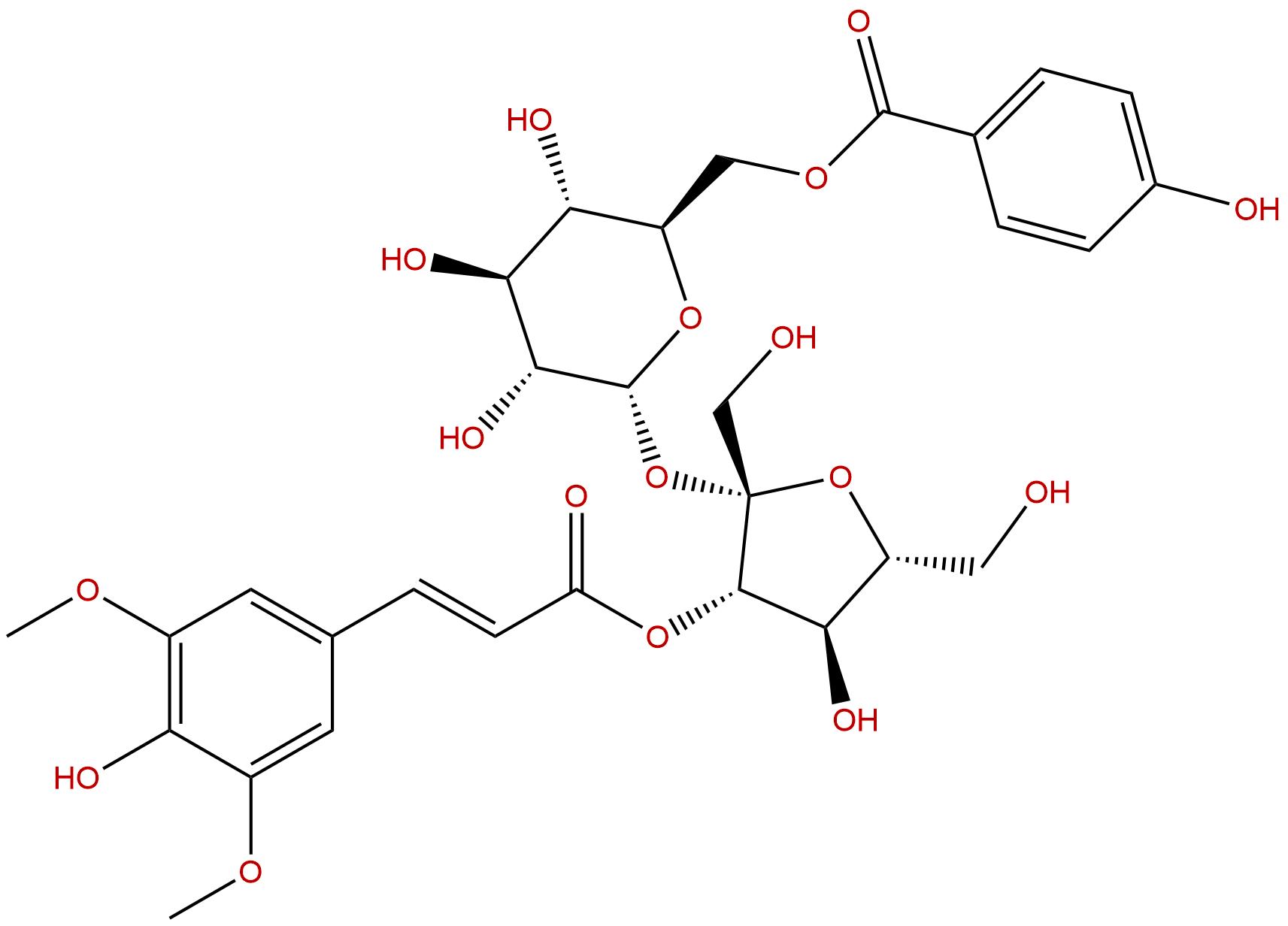


Product name: Tenuifoliside B
Synonym name:
Catalogue No.: BP3382
Cas No.: 139726-36-6
Formula: C30H36O17
Mol Weight: 668.601
Botanical Source:
Physical Description:
Type of Compound: Terpenoids
Purity: 95%~99%
Analysis Method: HPLC-DAD or/and HPLC-ELSD
Identification Method: Mass, NMR
Packing: Brown vial or HDPE plastic bottle
The product could be supplied from milligrams to grams. Inquire for bulk scale.
We provide solution to improve the water-solubility of compounds, thereby facilitating the variety of activity tests and clinic uses.
For Reference Standard and R&D, Not for Human Use Directly.
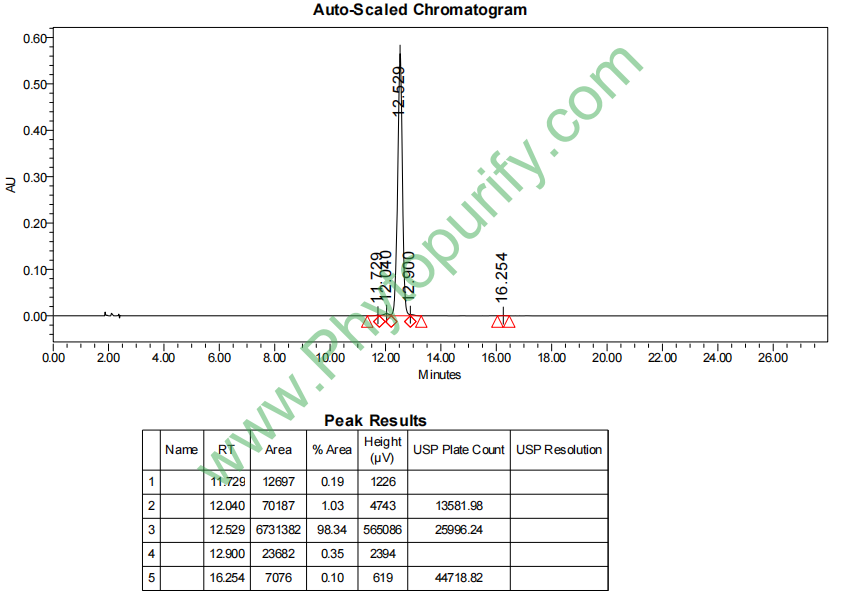
HPLC of Tenuifoliside B
Storage conditions:Short-term storage at 2~8℃, long-term storage at -20 ~ -80℃
260.5900
-.0035
-.0173
2.2997
.4767
.1175
Low
76.0295
4.7565
Yes
No
No
No
No
No
0.0
Yes
Yes
Yes
Yes
Alzheimer's Disease (AD), as a progressive neurodegenerative disease, has become a major global public health challenge. Its main pathological features include senile plaques formed by the deposition of β - amyloid protein (A β), neurofibrillary tangles composed of over phosphorylated Tau protein, and subsequent neuronal loss and synaptic dysfunction. At present, first-line clinical drugs such as acetylcholinesterase inhibitors and NMDA receptor antagonists can only alleviate some symptoms and cannot effectively prevent or reverse disease progression. Therefore, searching for novel lead compounds with multiple targets, high efficiency, and minimal side effects from natural products is one of the important strategies for current AD drug development.
Polygalae Radix, as a representative herb of traditional Chinese medicine known for its ability to enhance intelligence and soothe the mind, has been recorded in medical literature and modern research for its effects on promoting intelligence and neuroprotection. Tenuifoliside B (CAS: 139726-36-6) is an oligosaccharide ester compound isolated from the roots of Eucommia ulmoides. Early studies have found that this compound can significantly antagonize potassium cyanide induced chemical hypoxia and learning and memory impairment caused by scopolamine, suggesting its clear potential for brain protection and cognitive improvement. With the deepening of research, the regulatory role of Zhizhi glycoside B in multiple pathological stages of AD has gradually been revealed. It exhibits multiple pharmacological activities by acting on multiple key targets such as BACE1, APP, MAPT, SIRT1, NFE2L2, intervening in A β production, inhibiting Tau protein hyperphosphorylation, antioxidant stress, and anti apoptosis, making it a highly promising candidate lead compound for AD. This article aims to provide a systematic review of the chemical properties, pharmacological activities, mechanisms of action, and medicinal properties of Zhizhi glycoside B, in order to provide scientific references for its subsequent research and transformation.
Xiye Yuanzhi glycoside B is a naturally occurring oligosaccharide ester with a unique structure. Its molecular formula is C29H40O18 and its molecular weight is 668.6010. Structurally, it is composed of a three glycosidic moiety connected to two benzoyl groups and one acetyl group through ester bonds. The core trisaccharide sequence is usually glucose rhamnose xylose, with two benzoyl groups substituted at specific hydroxyl positions on different sugar groups, and an acetyl group attached to the terminal sugar group. This multi substituted esterification structure is an important material basis for its biological activity and determines its unique physicochemical properties.
According to the provided pharmacological parameters, the logarithmic (LogP) value of the lipid water partition coefficient of Zhizhi glycoside B is -0.0035, which is close to zero, indicating that the compound has a balanced lipophilicity and hydrophilicity, but slightly hydrophilic. Its topological polar surface area (TPSA) is as high as 260.5900 Å ², mainly due to the presence of a large number of polar groups such as hydroxyl, ether, and ester bonds in the molecule. High TPSA is one of the key factors affecting the membrane permeability of compounds. The calculated water solubility value is 2.2997 (usually measured in mg/mL or log mol/L, indicating moderate to high water solubility), which is consistent with the results of high polarity surface area. By combining LogP and TPSA values, it can be preliminarily predicted that its membrane permeability, especially its ability to pass through the blood-brain barrier (BBB), may be limited, which is consistent with the prediction of "low blood-brain barrier" directly indicated in the parameters. However, natural products may enter the central nervous system through active transport or metabolic transformation in the body, so experimental verification is crucial. In addition, the compound showed no hERG inhibitory activity (No) in preliminary toxicity screening, and the Ames test result was 0.0 (usually indicating no mutagenicity), providing preliminary favorable evidence for its safety.
The main source of Zhizhi glycoside B in fine leaves comes from plants of the genus Zhizhi in the family Zhizhi Polygala tenuifolia Willd The dried root is the authentic source of the traditional Chinese medicine "Yuanzhi". In addition, within the same genus of plants Polygala japonica Houtt Waiting also exists.
The extraction and separation of glycoside B from plant materials usually follows the conventional process of natural product chemistry and is optimized based on its high polarity. The main steps are as follows:
1. Extract Alcohol extraction is often used. Heat reflux extraction or ultrasound assisted extraction of dried root powder of Eucommia ulmoides using methanol, ethanol, or a certain concentration of aqueous ethanol (such as 70% ethanol). Alcohol extraction can effectively dissolve polar components such as oligosaccharides, saponins, etc.
2. Rough classification The extract obtained by vacuum concentration of the extract is often subjected to preliminary separation using solvent extraction method. Due to the high polarity of Zhizhi glycoside B, it is mostly distributed in the water layer or n-butanol layer. The extract is usually suspended in water first, and then extracted with petroleum ether and ethyl acetate to remove fat soluble impurities. The water layer is retained or further extracted with n-butanol to enrich the target components.
3. Separation and Purification The n-butanol fraction or water-soluble fraction is the focus of further separation. Multiple chromatographic techniques are often used in combination:
* Column chromatography (CC)Reverse phase silica gel (such as RP-18), macroporous adsorption resin (such as D101, AB-8), or silica gel column are commonly used for preliminary separation. Perform gradient elution using methanol water or ethanol water systems with different ratios.
* High performance liquid chromatography (HPLC)This is a key step in obtaining high-purity Zhizhi glycoside B. Usually, preparative or semi preparative reverse phase HPLC (C18 column) is used, with methanol water or acetonitrile water (often containing a small amount of formic acid or acetic acid to improve peak shape) as the mobile phase for isocratic or gradient elution. The target peak is monitored and collected by a UV detector (which has characteristic absorption at the UV absorption wavelength of benzoyl).
4. appraisal The isolated pure product was determined to have the chemical structure of amygdalin B through spectroscopic techniques such as nuclear magnetic resonance (NMR, including 1H-NMR, 13C-NMR, 2D-NMR such as HSQC, HMBC), mass spectrometry (MS, such as ESI-MS, HR-ESI-MS), and comparison with literature data.
In recent years, some green and efficient extraction techniques such as microwave-assisted extraction and supercritical fluid extraction have also been explored for application, aiming to improve extraction efficiency and reduce solvent consumption.
The pharmacological research of Zhizhi glycoside B mainly focuses on its protective effect on the central nervous system, especially in improving learning and memory and resisting Alzheimer's disease like pathological damage. The evidence mainly comes from various in vitro and in vivo models.
1. Improve learning, memory, and cognitive function
* Scopolamine model Scopolamine is a cholinergic M receptor antagonist that can induce acute memory impairment and mimic cholinergic defects in AD. Research has confirmed that Zhizhi glycoside B can dose dependently improve memory acquisition and consolidation disorders in mice induced by scopolamine in Morris water maze and passive avoidance experiments. Its function may be related to regulating the cholinergic system and protecting neuronal synaptic plasticity.
* Chemical hypoxia model Potassium cyanide (KCN) causes intracellular chemical hypoxia by inhibiting cytochrome C oxidase. Xiye Yuanzhi glycoside B can significantly counteract KCN induced hypoxia damage, improve the survival rate of model animals, or improve behavioral performance after hypoxia, indicating its role in enhancing brain tissue's ability to withstand hypoxia. This is of great significance for AD brains that are prone to energy metabolism damage.
* A β - induced model In AD rat or mouse models induced by lateral ventricle injection of A β 25-35 or A β 1-42, administration of Zhizhi glycoside B can significantly improve spatial learning and memory abilities, reduce escape latency, and increase target quadrant dwell time.
2. Neuroprotective effect
* antiapoptosis In PC12 cells, primary cortical neurons, or hippocampal neuron models induced by neurotoxic substances such as A β or glutamate, amygdalin B can increase cell survival rate, reduce lactate dehydrogenase (LDH) leakage, and downregulate the expression of pro apoptotic proteins (such as Bax and cleaved Caspase-3), upregulate the expression of anti apoptotic protein Bcl-2, and inhibit mitochondrial apoptosis pathway.
* anti-oxidative stress There is significant oxidative stress in the AD brain. Xiye Yuanzhi glycoside B can alleviate the excessive accumulation of reactive oxygen species (ROS) in neurons induced by A β or H2O2, increase the activity of antioxidant enzymes such as superoxide dismutase (SOD) and glutathione peroxidase (GSH Px), and reduce the level of malondialdehyde (MDA).
* Anti neuroinflammation Overactivation of microglia mediated neuroinflammation is an important driver of Alzheimer's disease. Research has shown that Zhizhi glycoside B can inhibit the excessive production of inflammatory factors (such as TNF - α, IL-1 β, IL-6) in microglia activated by lipopolysaccharide (LPS) or A β, and its mechanism may be related to the regulation of inflammatory signaling pathways such as NF - κ B.
3. Regulating effect on core pathology of AD
* Inhibit the generation of A βCell model studies have shown that Zhizhi glycoside B can reduce the secretion of A β 40 and A β 42 by APP Swedish mutant cells or APP overexpressing cells. Its target involves downregulating the expression or activity of β - secretase 1 (BACE1).
* Inhibit excessive phosphorylation of Tau protein In some AD cell models or scopolamine models, it has been observed that icariin B can reduce the phosphorylation levels of Tau protein at multiple sites (such as Ser396, Ser404), which may be related to its regulation of the activity of key kinases such as GSK-3 β and CDK5.
The neuroprotective and cognitive improvement effects of Zhizhi glycoside B are not achieved through a single pathway, but based on its "multi-target" characteristics, it synergistically regulates multiple key signaling pathways related to AD. The potential molecular targets and mechanism networks revealed by existing research include:
1. Regulating the processing of amyloid precursor protein (APP) and A β metabolism
* Targeting BACE1β - site APP lyase 1 (BACE1) is a key rate limiting enzyme for the generation of A β. Xiyeyuanzhi glycoside B can downregulate the protein expression level of BACE1, possibly by affecting its transcriptional or post-translational stability, thereby reducing the production of A β. This is one of the core components of its intervention in AD pathology.
* Affects APP metabolism In addition to inhibiting BACE1, research suggests that it may have a regulatory effect on the metabolic processes of APP itself. However, whether it affects the full-length expression of APP or promotes its non amyloid processing pathways (such as the alpha secretase pathway), further exploration is needed.
2. Regulating Tau protein phosphorylation and microtubule stability
* Inhibition of GSK3 β activity Glycogen synthase kinase-3 β (GSK3B) is one of the most important kinases for phosphorylating Tau protein. Xiyeyuanzhi glycoside B may activate the upstream Akt signaling pathway, promoting inhibitory phosphorylation of GSK3 β at the Ser9 site, thereby reducing its kinase activity and decreasing the excessive phosphorylation of Tau protein.
* Other kinases It may also have a regulatory effect on kinases involved in Tau phosphorylation, such as CDK5 and MAPK.
3. Activate cellular self-protection pathways: SIRT1 and Nrf2/ARE
* Activate SIRT1 Silencing information regulatory factor 1 (SIRT1) is an NAD+- dependent deacetylase involved in regulating various cellular protective processes such as energy metabolism, antioxidant, anti apoptotic, and autophagy. Xiye Yuanzhi glycoside B has been shown to upregulate the expression or activity of SIRT1. Activated SIRT1 can upregulate mitochondrial biosynthesis and antioxidant gene expression by deacetylating and activating transcription factors such as PGC-1 α and FOXO; Meanwhile, SIRT1 can also exert anti-inflammatory effects by inhibiting the transcriptional activity of NF - κ B through deacetylation.
* Activate Nrf2/ARE pathway Nuclear factor E2 related factor 2 (NFE2L2/Nrf2) is a core transcription factor that regulates antioxidant response elements (ARE). Xiye Yuanzhi glycoside B can promote the translocation of Nrf2 from the cytoplasm to the nucleus, enhance its binding with ARE, and thereby upregulate the expression of phase II detoxifying enzymes and antioxidant proteins such as heme oxygenase-1 (HO-1) and quinone oxidoreductase 1 (NQO1), which is the core mechanism of its anti oxidative stress.
4. Regulating the balance between cell apoptosis and survival
* Regulating the Bcl-2 family Xiye Yuanzhi glycoside B can upregulate the expression of anti apoptotic protein Bcl-2 (BCL2) and downregulate the expression of pro apoptotic protein Bax, improve the Bcl-2/Bax ratio, stabilize mitochondrial membrane potential, and prevent the release of cytochrome C.
* Inhibit Caspase cascade reaction Through the above effects, the activation of downstream Caspase-9 (CASP9) and Caspase-3 is ultimately inhibited, blocking the execution of the apoptotic program.
5. Affects the cellular signal transduction network
* MAPK pathway The mitogen activated protein kinase (MAPK) family (such as MAPK1/ERK) is involved in the regulation of cell proliferation, differentiation, survival, and apoptosis. Xiyeyuanzhi glycoside B may exert neurotrophic and survival promoting effects by regulating the phosphorylation level of ERK, affecting downstream transcription factors and cell cycle proteins.
In summary, Zhizhi glycoside B forms a multidimensional action network with inhibition of A β production (BACE1/APP), alleviation of Tau pathology (GSK3B/MATP), enhancement of cellular defense (SIRT1/NFE2L2), and inhibition of apoptosis (BCL2/CASP9) as its core, providing a solid molecular basis for its potential as a multi-target therapy candidate for AD.
Although Zhizhi glycoside B has shown good pharmacological activity in preclinical studies, whether it can ultimately become a drug depends on systematic pharmacological evaluation.
1. Preliminary analysis of drug properties based on computational parameters
According to the provided parameters, the molecular weight (668.6) is slightly higher than Lipinski's "Five Rules" recommendation of 500, but still within an acceptable range; LogP (-0.0035) and TPSA (260.6) significantly exceed the ideal range of conventional small molecule drugs (usually LogP<5 and TPSA<140 Å ² are favorable for membrane permeability). High TPSA and low LogP are the causes of it Prediction of blood-brain barrier permeability as' low ' The main reason. This is the primary challenge facing the development of Zhizhi glycoside B as a central nervous system drug. However, its good water solubility (2.2997) is beneficial for formulation development. In terms of safety, the absence of hERG inhibition and non mutagenicity (Ames test negative) are important early positive signals.
2. In vitro and in vivo pharmacokinetic studies
There is relatively limited research on the pharmacokinetics of Zhizhi glycoside B in fine leaves, but speculation can be made based on its structural characteristics and similar compounds
* absorb As a highly polar oligosaccharide ester, its oral bioavailability may be low. Hydrolysis (ester bond cleavage) may occur in the gastrointestinal tract under the action of acids and enzymes, producing benzoic acid and deacetylated glycosides, which may be further metabolized by gut microbiota. The absorption degree of the prototype drug needs to be experimentally confirmed.
* distribution The predicted BBB low permeability means that even if absorbed into the bloodstream, the amount of prototype drug entering brain tissue may be limited. This seems to contradict its significant central pharmacological effects in the body. Possible explanations include: ① its active metabolites can enter the brain; ② It indirectly affects the central nervous system by regulating peripheral inflammation or metabolism; ③ In pathological conditions (such as BBB damage associated with AD), its brain entry increases; ④ The existing prediction models may have biases and require experimental verification. Research on organizational distribution is crucial.
* Metabolism The ester bond is its main metabolic site and is expected to undergo hydrolysis under the action of plasma esterases and liver microsomal enzymes. In addition, the glycosylation part may also undergo gradual deglycosylation. It is necessary to clarify its main phase I and phase II metabolites and evaluate their activity.
* excretion Polar prototype drugs and their metabolites may be mainly excreted through the kidneys in urine.
3. Prospects for formulation strategies
In order to enhance its pharmacological properties, especially to improve brain targeting, advanced formulation technologies may be required:
* Prodrug strategy Modify the hydroxyl or carboxyl groups in the molecule through esterification, amidation, and other methods to prepare a more lipophilic prodrug, in order to improve its BBB permeability, and release the original drug after enzymatic interpretation.
* Nano drug delivery system Encapsulate it in liposomes, polymer nanoparticles, solid lipid nanoparticles, or brain targeted functional nanocarriers. These carriers can actively deliver drugs into the brain through receptor-mediated endocytosis, such as utilizing receptors highly expressed on the BBB, such as transferrin receptors and low-density lipoprotein receptor related proteins.
* Combined use with other medications Consider combining with technologies that can temporarily and reversibly open the BBB, such as focused ultrasound combined with microbubbles, or co administering with carrier molecules that promote central drug delivery, such as peptides.
The in vivo pharmacokinetics, absolute bioavailability, tissue distribution (especially brain tissue concentration), and metabolite identification research of the system are the necessary steps to promote the development of amygdalin B.
As an active ingredient derived from traditional Chinese medicine for cognitive disorders such as Alzheimer's disease, Zhizhi glycoside B has shown unique application prospects in the prevention and treatment of cognitive disorders, but it also faces many challenges.
Potential application directions:
1. Prevention and Early Intervention of Alzheimer's Disease Its multi-target mechanism of action is particularly suitable for AD, a multifactorial disease. Used in preclinical stages (such as mild cognitive impairment), it may delay the progression of the disease to typical AD by simultaneously inhibiting A β deposition, slowing down Tau tangle formation, protecting neuronal and synaptic function.
2. Adjuvant therapy for vascular dementia Its strong anti hypoxia and antioxidant damage ability has potential therapeutic value for vascular cognitive impairment caused by cerebral ischemia and hypoxia.
3. Components of combination therapy Given that its mechanism of action is different from existing symptomatic therapeutic drugs, it may be used as a new component in combination therapy regimens in the future, in combination with acetylcholinesterase inhibitors, in order to produce synergistic effects.
4. Development of functional food or health products Yuanzhi itself is a medicinal food of the same origin (specific regulations need to be confirmed) or a traditional medicinal food. As one of its active biomarkers, fine leaf Yuanzhi glycoside B is expected to be developed into a health product for improving memory and anti fatigue.
Challenges and future research directions:
1. Brain targeted delivery The biggest bottleneck in transformation is how to efficiently and safely deliver sufficient amounts of drugs to the affected areas of the brain. Future research needs to focus on breaking through its formulation challenges.
2. In depth study on the mechanism of action At present, it is not fully clear whether the regulation of some targets (such as SIRT1, Nrf2) is a direct effect or an indirect effect mediated by upstream signaling. It is necessary to use techniques such as gene knockout/knockdown, molecular docking, and surface plasmon resonance to more accurately identify its direct target.
3. Comprehensive preclinical development Complete systematic pharmacological, pharmacokinetic, and toxicological evaluations that meet the requirements for new drug registration. This includes long-term toxicity, reproductive toxicity, carcinogenicity testing, as well as screening for off target effects beyond its primary target of action.
4. Research on Active Metabolites Given its potential widespread metabolism, it is crucial to systematically study the activity, toxicity, and pharmacokinetic behavior of its metabolites. It is possible that some of its metabolites are the true active forms.
5. Exploration of biomarkers Searching for dynamic biomarkers that can reflect the efficacy of Zhizhi glycoside B in fine leaves (such as A β and pTau in cerebrospinal fluid, or inflammatory factors and extracellular vesicles in peripheral blood) can help stratify patients and evaluate therapeutic effects in future clinical trials.
Xiye Yuanzhi Glycoside B is an oligosaccharide ester compound with clear neuroprotective and cognitive improvement activities discovered from traditional Chinese medicine Yuanzhi. The pharmacological basis of its action lies in its ability to intervene in the core pathological process of Alzheimer's disease with multiple targets, including inhibiting BACE1 to reduce A β production, regulating kinase activity to reduce excessive phosphorylation of Tau protein, activating endogenous protective pathways such as SIRT1 and Nrf2 to enhance cell stress resistance, and balancing the Bcl-2 family to inhibit neuronal apoptosis. These characteristics make it an excellent lead compound for developing novel AD multi-target therapeutic drugs.
However, its high polarity and predicted low blood-brain barrier permeability are key obstacles that hinder its translation into clinical applications. Future research should be conducted in parallel: on the one hand, utilizing chemical and biological methods to further elucidate its intricate molecular mechanisms and networks; On the other hand, actively utilizing modern pharmacy and delivery technologies, such as designing brain targeted prodrugs or constructing functional nano delivery systems, to solve the problem of brain delivery. Meanwhile, standardized preclinical pharmacokinetics and safety evaluation of the system are indispensable.
In summary, Zhizhi glycoside B represents a successful case of searching for complex disease treatment strategies from the treasure trove of natural products. Through interdisciplinary collaboration, we aim to deepen our understanding of the relationship between its components, targets, pathways, and diseases, and overcome the bottleneck of drug development. This is expected to bring the wisdom of this ancient Chinese medicine to millions of Alzheimer's disease patients worldwide.
