Introduction/Overview
Autoimmune diseases are a complex spectrum of diseases caused by abnormal activation of the body's immune system, attacking normal tissues and organs, leading to chronic inflammation and tissue damage, including rheumatoid arthritis, systemic lupus erythematosus, multiple sclerosis, inflammatory bowel disease, etc. Its pathogenesis involves multiple aspects such as genetic susceptibility, environmental factors, and immune homeostasis imbalance. The core lies in the excessive activation of innate and adaptive immunity, as well as the dysregulation of pro-inflammatory and anti-inflammatory signaling pathways. Although modern therapies represented by biologics and targeted small molecule drugs have made significant progress, there are still challenges such as inconsistent response rates, long-term use leading to drug resistance, increased risk of infection, and high costs. Therefore, exploring new immunomodulators with multi-target, high efficiency and low toxicity characteristics from natural products has always been an important direction for drug development.
Yuanzhi(Polygala tenuifolia Willd., as a traditional Chinese medicine, is renowned for its "calming the mind, enhancing intelligence, dispelling phlegm, and opening up the orifices" effects. Modern pharmacological research has revealed that its abundant components such as oligosaccharides, triterpenoid saponins, and ketones have a wide range of neuroprotective, anti-inflammatory, antidepressant, and immune regulatory activities. Glomeratose A is a unique oligosaccharide ester compound isolated from the roots of Eucommia ulmoides. Since its discovery, research has shown that it can effectively inhibit lactate dehydrogenase (LDH) activity and demonstrate regulatory potential for multiple key autoimmune targets and signaling pathways. This article aims to provide a systematic review of the chemical properties, plant sources, pharmacological activities, multi-target mechanisms of action, pharmacological characteristics, and application prospects of glucosinolate A in the treatment of autoimmune diseases, in order to provide comprehensive academic references for the in-depth research and development of this natural product.
Chemical structure and physicochemical properties
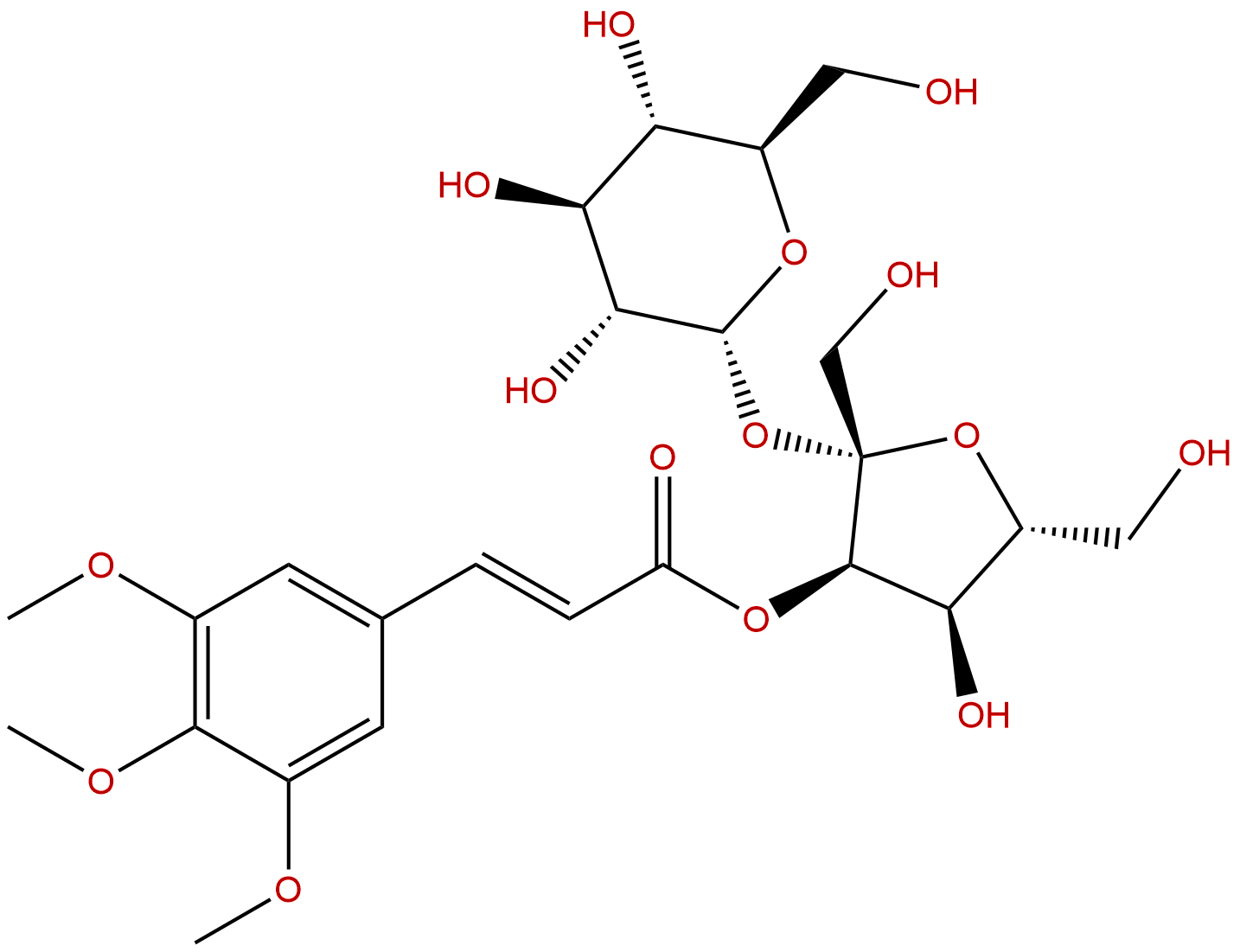
Glomeratose A, CAS number 202471-84-9, is a structurally novel natural product of oligosaccharides. Its molecular formula is C ₂₅ H ∝₀O ₁₅, and its molecular weight is 562.5210 Da. The core structural feature of this compound is that it is linked by a glycosidic bond between a glucose group and a rare deoxyglucose group (possibly olive acid or its derivatives), and esterified with multiple benzoyl and acetyl groups. This dense esterification modification and special glycosylation combination constitute its unique spatial conformation and biological activity basis.
From the analysis of physical and chemical properties, globular glycoside A exhibits typical polar molecular characteristics. The calculated lipid water partition coefficient (LogP) is -0.9342, indicating that the compound has strong hydrophilicity and tends to be distributed in the aqueous phase. The topologically polar surface area (TPSA) is as high as 223.2900 Å ², mainly attributed to the presence of hydrogen bond acceptors and donors such as hydroxyl and ester oxygen atoms on multiple sugar rings in the molecule, which significantly affects its solubility and membrane permeability. The predicted value of its water solubility is 14.4629 mg/L, which belongs to moderate to low water solubility. In actual formulation development, it may need to be improved through salt formation or the use of solubilizers. These physicochemical parameters collectively determine its preliminary pharmacokinetic behavior: higher polarity and TPSA result in a predicted "low" ability to cross the blood-brain barrier (BBB), which limits its potential for direct action on the central nervous system but may also reduce associated neurotoxic risks. In addition, preliminary pharmacological risk assessment showed no significant inhibition of hERG potassium channels (hERG inhibition: no), indicating a low potential risk of cardiac toxicity; The Ames test predicted a value of 0.0, indicating that it may not be mutagenic and has a good genetic toxicity safety window.
Plant sources and extraction methods
Glucoside A is mainly derived from Yuanzhi(Polygala tenuifolia)Separated from the dry roots. Yuanzhi is mainly distributed in East Asian regions such as China, South Korea, and Japan. Its medicinal roots are rich in various active ingredients such as saponins, oligosaccharides, alkaloids, etc. Globuloside A belongs to the characteristic oligosaccharide ester components in Yuanzhi, which are often considered as one of the important material bases for the "expectorant" and "anti-inflammatory" effects of Yuanzhi.
Its extraction and separation usually follow the classic process of natural product chemistry and are purified using modern chromatographic techniques. The general steps are as follows:
1. Extract Extract the dried root powder of Yuanzhi using a medium polarity solvent system. 70% -95% ethanol or methanol is commonly used for reflux extraction or ultrasound assisted extraction to efficiently extract polar and moderately polar components, including glucosinolate A. Sometimes water extraction and alcohol precipitation methods are also used for initial enrichment.
2. Rough classification The extract obtained by vacuum concentration of the extract is subjected to liquid-liquid distribution extraction using petroleum ether, ethyl acetate, n-butanol, and water in sequence. Adenoside A is mainly enriched in the n-butanol extraction site and water site due to its strong polarity and water solubility.
3. purification The n-butanol fraction is further separated using various column chromatography techniques. Macroporous adsorption resin (such as D101, AB-8) column chromatography is often used for decolorization and preliminary segmentation, and then silica gel column chromatography, reverse phase silica gel column chromatography (such as ODS-C18) and dextran gel column chromatography (such as Sephadex LH-20) are used for repeated separation. High performance liquid chromatography (HPLC), especially preparative or semi preparative reverse phase HPLC, is a key technology for obtaining high-purity spherical adenosine A monomers, usually using methanol water or acetonitrile water as the mobile phase for gradient elution.
4. appraisal The purified compound was structurally identified by spectroscopic methods such as nuclear magnetic resonance spectroscopy (¹ H-NMR, ¹ ³ C-NMR, 2D-NMR such as HSQC, HMBC), mass spectrometry (MS, HR-ESI-MS), and optical rotation determination, and confirmed by comparison with literature data.
Optimizing the extraction process (such as enzyme assisted extraction, microwave-assisted extraction) and adopting new separation technologies such as high-speed counter current chromatography are expected to improve the yield and separation efficiency of glucosinolate A.
Pharmacological activity research
The pharmacological activity research of glucosinolate A mainly focuses on its anti-inflammatory and immune regulatory effects, especially in autoimmune disease models.
1. Anti inflammatory activity In various in vitro inflammatory cell models, such as macrophage RAW264.7 stimulated by lipopolysaccharide (LPS) and microglial BV2, beta glucagon A can dose dependently inhibit the production of inflammatory mediators such as nitric oxide (NO) and prostaglandin E2 (PGE2). Meanwhile, it can also downregulate the expression of inducible nitric oxide synthase (iNOS) and cyclooxygenase-2 (COX-2) proteins. In animal models such as mouse ear swelling, paw swelling, and other acute inflammation models, glucosinolate A also shows significant anti-inflammatory effects.
2. Immune regulation and therapeutic potential for autoimmune diseases:
* Regulation of Th17/Treg balance The imbalance between helper T cell 17 (Th17) and regulatory T cell (Treg) is a core link in various autoimmune diseases. Research has shown that glucosinolate A can inhibit the differentiation of Th17 cells and the production of its key effector cytokine interleukin-17 (IL-17), while possibly promoting the function of Treg cells to restore immune tolerance.
* The impact on macrophage polarization In an inflammatory environment, adenosine A can inhibit macrophage polarization towards pro-inflammatory M1 type (high expression of iNOS, TNF - α, IL-6, etc.), and may promote their polarization towards anti-inflammatory M2 type (high expression of Arg-1, IL-10, etc.), thereby alleviating tissue inflammation.
* Validation in disease models In animal models such as experimental autoimmune encephalomyelitis (EAE, multiple sclerosis model) and collagen induced arthritis (CIA, rheumatoid arthritis model), administration of adenosine A can significantly alleviate clinical symptoms of the disease, such as lowering neurological function scores, reducing joint redness and bone destruction. Its mechanism is closely related to inhibiting central or intra-articular inflammatory cell infiltration and reducing pro-inflammatory cytokine levels.
3. Lactate dehydrogenase (LDH) inhibitory activity As the initially identified activity, glucosinolate A has an inhibitory effect on LDH. LDH is a key enzyme in glycolysis and is typically highly expressed in rapidly proliferating cells, including activated immune cells and tumor cells. Inhibiting LDH not only affects cellular energy metabolism, but may also regulate immune cell function in the tumor microenvironment or inflammatory site by reducing lactate accumulation, which may be one of the indirect mechanisms by which it exerts its immunomodulatory effect.
Mechanism of action and molecular targets
The anti-inflammatory and immunomodulatory effects of β - glucosinolate A are not achieved through a single target, but rather through the synergistic intervention of multiple targets and pathways, which perfectly fits the complexity of the pathogenesis of autoimmune diseases. Current research suggests that its functional network involves the following key targets and signaling pathways:
1. Regulating the nuclear factor kappa B (NF - κ B) signaling pathway NF - κ B is the core transcription factor of inflammatory response. Glucoside A can inhibit the degradation of I κ B α protein and p65 nuclear translocation induced by LPS and other stimuli, thereby blocking the activation of NF - κ B. This directly leads to numerous downstream pro-inflammatory cytokine genes, such as TNF-α、IL-6、IL-1β)The transcription is inhibited. It pairs NLRP3 inflammasome The inhibition of activation may also partially depend on the regulation of NF - κ B signaling, as NF - κ B is an upstream switch for NLRP3 and pro-IL-1 β expression.
2. Inhibit the JAK/STAT signaling pathway Especially:STAT3 Signal pathway. The sustained activation of STAT3 is crucial for Th17 cell differentiation and tumor immune escape. Glucoside A can inhibit the phosphorylation of STAT3 and its downstream target genes, such as RORγt, The expression of Th17 cell specific transcription factors effectively suppresses Th17 cell-mediated inflammatory responses.
3. Intervention in Toll like receptor 4 (TLR4) signaling TLR4 is an important pattern recognition receptor that recognizes LPS and initiates innate immune responses. Glucoside A may inhibit the activation of NF - κ B and MAPK pathways by interfering with the binding or downstream signaling of TLR4 and its adaptor proteins (such as MyD88), thereby reducing inflammation at the source.
4. Affects the balance between cell apoptosis and survival:Bcl-2 Family proteins are key regulators of cell apoptosis. Glucoside A may regulate the ratio of Bcl-2/Bax, affect the apoptosis of abnormally activated immune cells, promote their clearance, and alleviate autoimmune reactions.
5. Regulating immune cell function related enzymes and receptors: Yes PTPN22 The potential regulation of a protein tyrosine phosphatase, whose genetic polymorphism is associated with various autoimmune diseases, may affect the signal intensity of T cell receptors. as LDH inhibitor It inhibits the excessive activation and proliferation of immune cells by interfering with cellular metabolic reprogramming.
In summary, adenosine A acts like a "versatile hand" by simultaneously acting on NFKB1、STAT3、TLR4、NLRP3、TNF、IL6、IL1B、RORC、BCL2、PTPN22 By targeting multiple targets closely related to autoimmunity, a synergistic network is formed to jointly suppress excessive inflammatory reactions, restore the balance of immune cell subsets, and possibly induce apoptosis of abnormal immune cells, thus exerting therapeutic potential in multiple stages.
Evaluation of drug properties and pharmacokinetics
Based on computational predictions and limited preclinical data, a preliminary evaluation of the pharmacological properties of β - glucosinolate A is conducted
Advantage:
1. Good potential for safety The prediction of no hERG inhibition and Ames mutagenicity provides preliminary positive signals for its safety.
2. Multi-target effect For complex autoimmune diseases, multi-target interventions may produce synergistic effects and reduce the risk of drug resistance.
3. Natural product sources As a traditional medicinal plant ingredient, it has a certain research foundation and awareness.
challenge:
1. Pharmacokinetic properties may be poor:
* Absorption and oral bioavailability High polarity (LogP negative), large TPSA, and moderate to low water solubility may seriously affect its oral absorption and bioavailability. It is likely to belong to the Biopharmaceutical Classification System (BCS) Class III or IV drugs (high solubility, low permeability or low solubility, low permeability).
* distribution The predicted low blood-brain barrier permeability limits its direct effect on central nervous system autoimmune diseases, but it may also be a safety feature.
* Metabolism and excretion As ester compounds, they are easily hydrolyzed by esterases in plasma and tissues, leading to rapid metabolic inactivation in the body. Its glycoside structure may also be affected by enzymatic hydrolysis of intestinal microbiota. The half-life of the prototype drug may be relatively short.
2. Difficulty in formulation development It is necessary to develop suitable drug delivery systems (such as nanoliposomes, polymer micelles, cyclodextrin inclusion complexes, etc.) to improve their solubility, stability, and membrane permeability.
3. Dose effect relationship The multi-target nature may result in a non-linear dose-response relationship, and the optimal treatment window requires careful exploration.
At present, there is still a significant lack of in vivo pharmacokinetic studies on the beta glucosidase A system, such as absolute bioavailability, tissue distribution, identification of major metabolites, excretion pathways, etc. This is a key data gap that must be filled for its development. Future research needs to focus on its in vivo metabolic stability and explore prodrug strategies or advanced delivery systems to improve its PK properties.
Clinical application prospects and prospects
Adenoside A has shown unique application prospects in the treatment of autoimmune diseases, but its development path is full of opportunities and challenges.
Potential application directions:
1. As a novel immunomodulatory agent Especially suitable for diseases related to Th17/Treg imbalance, such as psoriasis, ankylosing spondylitis, inflammatory bowel disease (Crohn's disease, ulcerative colitis), etc. Its multi-target properties may be effective for patients who are refractory or unresponsive to existing biologics.
2. Combination therapy strategy Combined with existing first-line drugs (such as methotrexate) or more targeted biologics (such as anti TNF - α monoclonal antibodies), it may exert synergistic or synergistic effects, reduce the dosage and side effects of the latter, and delay drug resistance.
3. Local administration therapy: In view of the possible challenges of its system exposure, the development of local dosage forms (such as topical gel for psoriasis and intra-articular injection for arthritis) may be a faster transformation path, which can avoid oral absorption and first pass metabolism problems and directly act on the focus.
Future research prospects:
1. In depth mechanism research Using chemical biology methods such as affinity fishing, molecular docking and kinetic simulation, CRISPR screening, etc., to accurately identify its direct target proteins and draw clearer drug target pathway interaction network diagrams.
2. Comprehensive preclinical evaluation Conduct standardized pharmacodynamic (validated in more disease models), pharmacokinetic (ADME), safety pharmacology, and toxicology studies, and establish a complete non clinical data package.
3. Structural optimization and derivative development Based on its pharmacophore, carry out reasonable structural modifications. For example, by modifying ester bonds or introducing lipophilic groups, the lipophilicity and metabolic stability can be improved while retaining activity, and derivatives or prodrugs with better drug properties can be designed.
4. Research on Innovative Delivery System Actively exploring new formulation strategies such as nanotechnology and targeted delivery to improve their bioavailability, targeting, and therapeutic index.
Conclusion
Glucoside A is a natural oligosaccharide ester compound with significant anti-inflammatory and immunomodulatory activity discovered from traditional Chinese medicine Yuanzhi. Its value lies in its ability to intervene in multiple key signaling pathways such as NF - κ B, JAK/STAT, TLR4, regulate core inflammatory factors such as TNF - α, IL-6, IL-1 β, IL-17, and affect Th17/Treg balance and immune cell metabolism, thereby combating the complex pathological processes of autoimmune diseases at multiple targets and levels. Although it currently faces challenges in terms of drug potential, especially the shortcomings in pharmacokinetic properties, which cannot be ignored, this is precisely the aspect that modern medicinal chemistry and pharmacy can focus on addressing. With a deeper analysis of its mechanism of action, the creation of structurally optimized derivatives, and the application of advanced delivery technologies, glycoside A is expected to develop from a promising lead compound into a new drug or valuable treatment option for autoimmune diseases, demonstrating the enormous potential and scientific value of continuously exploring modern therapeutic drugs from the treasure trove of traditional medicinal plants. Future research requires interdisciplinary collaboration to jointly promote the translation of this natural molecule into clinical applications.