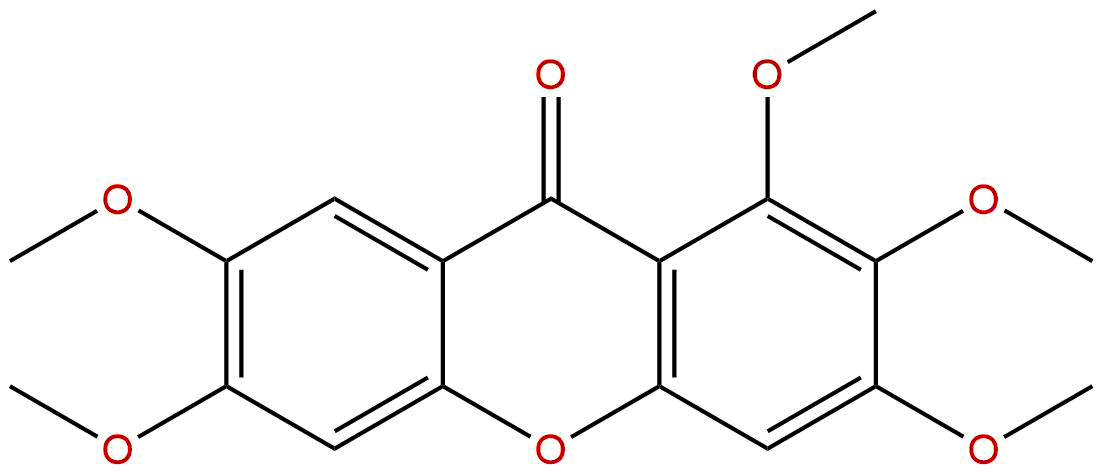


Product name: 1,2,3,6,7-Pentamethoxyxanthone
Synonym name:
Catalogue No.: BP5323
Cas No.: 64756-86-1
Formula: C18H18O7
Mol Weight: 346.335
Botanical Source: Polygalae radix
Type of Compound: Xanthones
Purity: 95%~99%
Analysis Method: HPLC-DAD or/and HPLC-ELSD
Identification Method: Mass, NMR
Packing: Brown vial or HDPE plastic bottle
Storage: Store in a well closed container, protected from air and light. Put into refrigerate or freeze for long term storage.
Whenever possible, you should prepare and use solutions on the same day. However, if you need to make up stock solutions in advance, we recommend that you store the solution as aliquots in tightly sealed vials at -20℃. Generally, these will be useable for up to two weeks.
The product could be supplied from milligrams to grams
Inquire for bulk scale.
For Reference Standard and R&D, Not for Human Use Directly.
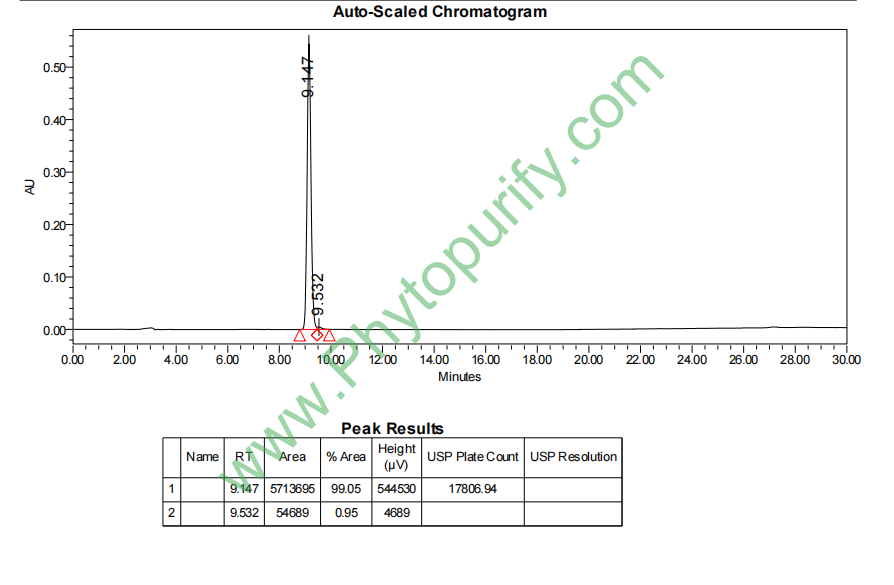
HPLC of 1,2,3,6,7-Pentamethoxyxanthone
Storage conditions:Short-term storage at 2~8℃, long-term storage at -20 ~ -80℃
76.3600
2.3309
2.3312
.0059
3.1713
31.5234
High
81.1278
2.2415
Yes
No
Yes
No
Yes
No
1.5
Yes
No
Yes
Yes
Natural products, as an important source of drug discovery, have long played an irreplaceable role in the human fight against diseases. Xanthones are a class of natural polyphenolic compounds with a unique tricyclic aromatic skeleton (dibenzo - γ - pyranone), widely found in higher plants such as Gentianaceae, Theaceae, and Faraceae, as well as certain fungi and lichens. Due to its highly modifiable structure, anthraquinone derivatives exhibit a wide range of biological activities, including anti-tumor, anti-inflammatory, antioxidant, antimicrobial, antidepressant, and hepatoprotective effects, making them a hot topic in natural product chemistry and pharmacology research.
Among numerous derivatives of anthraquinone, polyoxomethoxy substituted anthraquinone has attracted much attention due to its unique lipophilicity, membrane permeability, and potential biological activity. 1,2,3,6,7-Pentamethoxyxanthone (CAS number: 64756-86-1) is a typical representative of this class of compounds. Its molecular structure contains five methoxy groups (- OCH ∝), which are respectively attached to carbon atoms 1, 2, 3, 6, and 7 of the anthraquinone parent nucleus. This highly symmetrical and dense methoxy substitution pattern endows the compound with unique physicochemical properties and potential pharmacological activity.
In recent years, with the increasingly severe problem of microbial resistance, finding antibacterial drugs with new mechanisms of action or capable of overcoming existing resistance has become an urgent task in the global public health field. The potential of 1,2,3,6,7-pentamethoxyshanone in the field of antibacterial activity, especially its potential inhibitory effects on various bacterial and fungal targets such as DNA gyrase, topoisomerase IV, FtsZ, FabI, DHFR, ergosterol synthase, and resistance related efflux pumps, makes it a highly valuable lead compound for research. This article aims to systematically review the chemical structure, plant origin, pharmacological activity, mechanism of action, and pharmacological characteristics of 1,2,3,6,7-pentamethoxyketone, in order to provide a comprehensive theoretical basis and scientific basis for the in-depth research and development of this compound and its derivatives.
The chemical structure of 1,2,3,6,7-pentamethoxyshanone is based on the parent nucleus of anthraquinone, namely dibenzo - γ - pyrone. The mother nucleus is composed of a central gamma pyranone ring (C ring) fused with two benzene rings (A and B rings) on either side. In 1,2,3,6,7-pentamethoxy ketones, one methoxy group (- OCH ∝) is attached to each of the 1st, 2nd, and 3rd positions of the A ring and the 6th and 7th positions of the B ring. The molecular formula of this compound is C ₁₈ H ₁₈ O ₇, with a molecular weight of 346.3350 g/mol. The high symmetry of its structure (similar substitution patterns between the A and B rings) is one of its prominent features, which may be closely related to its binding mode with specific biological targets.
From the perspective of physical and chemical properties, 1,2,3,6,7-pentamethoxyketone exhibits typical lipid soluble molecular characteristics. Its oil-water partition coefficient (LogP) is 2.3309, indicating that the compound has moderate lipophilicity and can be well distributed in the lipid bilayer, which is conducive to its penetration of the cell membrane and reaching intracellular targets. Its topological polar surface area (TPSA) is 76.3600 Å ², which is at a moderate level. Molecules with TPSA less than 140 Å ² are generally considered to have good oral bioavailability potential, and the TPSA value of this compound suggests that it may have some transmembrane transport ability. However, its water solubility is extremely low, only 0.0059 mg/mL, which may be one of the main challenges for its subsequent formulation development and in vivo pharmacokinetic studies. Low water solubility often leads to incomplete oral absorption and may affect its distribution and clearance in the body.
In addition, computer prediction models show that 1,2,3,6,7-pentamethoxyketone has a high blood-brain barrier (BBB) penetration ability. This characteristic suggests that the compound may act on the central nervous system, but it may also pose potential neurotoxic risks. Importantly, the predicted results indicate that the compound does not have a hERG (human ether - à - go go related gene) potassium channel inhibitory effect, which reduces its risk of causing cardiac QT interval prolongation and fatal arrhythmias, indicating a positive pharmacological signal. The Ames test predicted a value of 1.5, usually indicating that the compound may have potential genotoxicity or mutagenicity, which requires high attention and rigorous validation in subsequent experimental studies. Overall, the physicochemical properties of 1,2,3,6,7-pentamethoxyshanone exhibit complex characteristics of "high lipid solubility, low water solubility, high BBB penetration, low risk of cardiac toxicity, and potential genetic toxicity", indicating the direction that needs to be optimized for its subsequent drug development.
1,2,3,6,7-Pentamethoxychalcone, as a natural product, is mainly found in certain higher plants, especially in Gentianaceae and Guttiferae/Clusiaceae plants. For example, in plants of the Gentianaceae family Huangqin Gentiana(Veratrilla baillonii)And also plants of the Theaceae family Mountain bamboo Belonging to(Garcinia In some species of spp., it has been reported that this compound has been isolated. In addition, in some Polygalaceae plants such as Polygala tenuifolia(Polygala It may also exist in spp. These plants typically grow in tropical or subtropical regions and have traditionally been used to treat fever, inflammation, infections, and digestive system diseases, which is consistent with the activity of the anthraquinone compounds they contain.
Extracting 1,2,3,6,7-pentamethoxyketone from plant materials usually follows the classic process of natural product chemistry. Due to the high lipophilicity of the compound, the selection of extraction solvent is crucial. Common extraction solvents include methanol, ethanol, ethyl acetate, dichloromethane, or their mixed solvents. Usually, dried and crushed plant materials are soaked or percolated with high concentration methanol or ethanol (such as 95% ethanol) at room temperature or heating conditions, repeated multiple times to fully extract the target components. The extract was concentrated under reduced pressure to obtain the total extract.
Subsequently, the total extract needs to undergo systematic separation and purification. Due to the complex composition of plant extracts, liquid-liquid extraction method is usually used for preliminary classification. For example, the total extract is suspended in water and extracted sequentially with solvents of different polarities such as petroleum ether, chloroform (or dichloromethane), ethyl acetate, n-butanol, etc. Due to its LogP value of 2.33 and moderate to low polarity, 1,2,3,6,7-pentamethoxychalcone is usually enriched in chloroform or ethyl acetate extraction layers.
Further separation and purification mainly rely on various chromatographic techniques. Silica gel column chromatography is the most commonly used method, which uses gradient elution with different ratios of petroleum ether ethyl acetate or chloroform methanol mixed solvents. Collect fractions containing the target compound through thin-layer chromatography (TLC) monitoring. For xanthones with similar structures, it may be necessary to combine other chromatographic techniques, such as Sephadex LH-20 gel column chromatography (using molecular sieve effect to remove pigments and impurities), reverse phase silica gel column chromatography (such as ODS, using methanol water or acetonitrile water systems) and preparative high-performance liquid chromatography (Prep HPLC) to obtain high-purity monomer compounds. Finally, the isolated compound was structurally identified using spectroscopic techniques such as nuclear magnetic resonance spectroscopy (NMR, including ¹ H-NMR, ¹ ³ C-NMR, HMBC, HSQC, etc.) and high-resolution mass spectrometry (HR-MS), confirming its identity as 1,2,3,6,7-pentamethoxyketone.
At present, there are relatively limited reports on the direct pharmacological activity of 1,2,3,6,7-pentamethoxyanthraquinone, but its belonging to the anthraquinone family and structurally similar polyoxomethoxyanthraquinone have been proven to have a wide range of biological activities. Based on its chemical structure and known structure-activity relationship, it can be inferred that this compound has potential research value in the following fields, especially its antibacterial activity.
Antibacterial activity This is the pharmacological direction of 1,2,3,6,7-pentamethoxy ketone that has received the most attention. Oxanthrone compounds generally exhibit antibacterial activity and have diverse mechanisms of action. Multimethoxy substitution enhances the lipophilicity of the molecule, making it easier to penetrate bacterial cell walls and membranes. Previous studies have shown that similar polyoxomethoxyanthraquinones exhibit inhibitory effects on Gram positive bacteria (such as Staphylococcus aureus and Bacillus subtilis), Gram negative bacteria (such as Escherichia coli and Pseudomonas aeruginosa), and fungi (such as Candida albicans). The antibacterial spectrum of 1,2,3,6,7-pentamethoxyshanone may encompass these pathogenic microorganisms. Of particular note is that computer-aided drug design (CADD) and molecular docking studies predict that the compound can bind to multiple key antimicrobial targets, including bacterial DNA gyrase (GyrA), topoisomerase IV (GyrB), cell division protein FtsZ, acyl ACP reductase (FabI), dihydrofolate reductase (DHFR), as well as fungal lanosterol 14 α - demethylase (CYP51A1/ERG11) and resistance associated efflux pump (CDR1). This suggests that it may have multiple antibacterial mechanisms and may be effective against certain drug-resistant strains.
Antitumor activity Oxyanthrone is a recognized family of compounds with anti-tumor potential. They can induce tumor cell apoptosis through various pathways, such as inhibiting topoisomerase, interfering with microtubule polymerization, regulating cell cycle, and inhibiting angiogenesis. The methoxy substituent of 1,2,3,6,7-pentamethoxyshanone may enhance its interaction with DNA or protein targets. It has been reported that some polymethoxyxanthanone has cytotoxicity to many cancer cell lines, such as liver cancer, lung cancer, breast cancer, leukemia, etc. Therefore, the activity of this compound in the field of anti-tumor is worth further exploration.
Anti inflammatory and antioxidant activity The phenolic hydroxyl group of anthraquinone (although the compound is fully methoxylated and has no free phenolic hydroxyl group) or its metabolites may have the ability to scavenge free radicals and inhibit the production of inflammatory mediators (such as NO, PGE2, TNF - α, IL-6). Although 1,2,3,6,7-pentamethoxyketone itself lacks phenolic hydroxyl groups, it may undergo demethylation metabolism in vivo, producing hydroxylated products with stronger antioxidant activity. In addition, the anthraquinone skeleton itself is also considered to have the potential to inhibit cyclooxygenase (COX) and lipoxygenase (LOX).
Other activities Based on its high blood-brain barrier penetration, the potential activity of this compound in central nervous system diseases such as neurodegenerative diseases, depression, and anxiety is also worth paying attention to. Some derivatives of anthraquinone have been reported to have monoamine oxidase (MAO) inhibitory activity, acetylcholinesterase (AChE) inhibitory activity, and antidepressant like effects.
The pharmacological mechanism of 1,2,3,6,7-pentamethoxyshanone, especially its antibacterial mechanism, is the core of its research. Based on existing literature and computer simulation predictions, its mechanism of action may involve simultaneous intervention of multiple key targets, exhibiting characteristics of multi-target action.
Antibacterial mechanism:
1. Inhibit DNA replication:GYRA and GYPB It is the two subunits of bacterial DNA gyrase II, responsible for introducing negative supercoils during DNA replication.FTSZ It is a key protein for bacterial cell division, equivalent to microtubule proteins in eukaryotes, and is the core of the cell division machine. Molecular docking studies have shown that 1,2,3,6,7-pentamethoxyshanone may bind to the active sites of these targets through hydrogen bonding and hydrophobic interactions, thereby inhibiting bacterial DNA replication and cell division. This inhibitory effect on multiple key nodes of the cell cycle may make it difficult to develop drug resistance.
2. Interference with fatty acid synthesis:FABI Enoyl ACP reductase is a key enzyme in the bacterial fatty acid synthesis pathway, catalyzing the final step of fatty acid chain elongation. Inhibition of FabI can block the synthesis of bacterial cell membrane phospholipids, leading to damage to cell membrane integrity and bacterial death. The potential inhibitory effect of this compound on FabI provides another important target for its antibacterial activity.
3. folic acid metabolism:DHFR Dihydrofolate reductase is a key enzyme in the folate metabolism pathway, responsible for reducing dihydrofolate to tetrahydrofolate, which is an essential coenzyme for nucleic acid and amino acid synthesis. Inhibition of DHFR is the mechanism of action of classic antibacterial drugs such as trimethoprim. The potential inhibitory effect of this compound on DHFR suggests that it may exert antibacterial effects by interfering with bacterial nucleotide synthesis.
4. Antifungal mechanism For fungi,ERG11(CYP51A1)The encoded lanosterol 14 α - demethylase is a key enzyme in ergosterol biosynthesis. Ergosterol is an important component of fungal cell membrane, similar to cholesterol in mammalian cells. Inhibition of ERG11 can disrupt the integrity and function of fungal cell membranes.CDR1 The Candida resistance gene 1 encodes an ABC transporter protein, which is one of the most important efflux pumps in Candida albicans. It is responsible for pumping antifungal drugs such as azoles out of cells, leading to drug resistance. The inhibitory effect of this compound on ERG11 indicates its direct antifungal activity, while its potential inhibitory effect on CDR1 suggests that it may serve as a resistance reversal agent, enhancing the efficacy of traditional antifungal drugs.
Mechanism of anti-tumor action(Speculation): The anti-tumor mechanism of anthraquinone usually involves inhibition of topoisomerases I and II, leading to DNA breakage and cell cycle arrest (especially in the G2/M phase). In addition, they may induce tumor cell apoptosis by regulating signaling pathways such as PI3K/Akt/mTOR and MAPK/ERK. The planar aromatic ring structure of 1,2,3,6,7-pentamethoxyshanone allows it to be embedded between DNA base pairs (DNA intercalators), thereby interfering with DNA transcription and replication. Its methoxy group may enhance its binding affinity with DNA or related proteins by affecting the electronic distribution and hydrophobicity of the molecule.
The evaluation of drug properties is a key bridge connecting lead compounds with candidate drugs. Based on the aforementioned physicochemical properties and computer prediction results, a preliminary evaluation of the pharmacological properties of 1,2,3,6,7-pentamethoxyshanone can be conducted.
Advantage:
1. Moderate lipophilicity The LogP value is approximately 2.33, which meets the requirement of LogP<5 in Lipinski's "Five Rules" and is beneficial for membrane permeability and oral absorption.
2. No risk of hERG inhibition This is a significant advantage that greatly reduces the risk of cardiac toxicity and is a key safety indicator in drug development.
3. Potential for multi-target action Its antibacterial effect involves multiple targets, which may help overcome or delay the development of drug resistance, which is an important strategy in current antibacterial drug research and development.
Disadvantages and Challenges:
1. Extremely low water solubility The water solubility of 0.0059 mg/mL is its main weakness. Low water solubility not only leads to poor oral bioavailability, but also poses difficulties for in vitro activity testing and in vivo administration. It is necessary to use formulation techniques such as nanocrystals, liposomes, cyclodextrin inclusion complexes, solid dispersions, etc. to improve their solubility and dissolution rate.
2. Potential genetic toxicity The Ames test predicted a value of 1.5, which is a signal that requires high vigilance. Strict validation must be conducted through standard in vitro (such as Ames test, micronucleus test, chromosome aberration test) and in vivo genetic toxicity test. If genetic toxicity is confirmed, it will seriously hinder its development as a drug.
3. High blood-brain barrier penetrability Although it is advantageous for treating central nervous system diseases, high BBB penetration may lead to insufficient concentration of drugs in peripheral target tissues and increase the risk of central nervous system side effects for treating peripheral infections such as skin, respiratory, and urinary tract infections. This needs to be balanced based on specific treatment goals.
Prediction of pharmacokinetic characteristics Based on its physicochemical properties, its pharmacokinetic characteristics can be inferred. After oral administration, due to poor water solubility, its absorption may be incomplete and vary greatly among individuals. Once absorbed, due to its high lipophilicity, it may be widely distributed in the body, especially in brain, fat, and liver tissues. Metabolism may mainly occur through the liver's cytochrome P450 enzyme system (such as CYP3A4), and the main metabolic pathways may include O-demethylation (generation of hydroxylated metabolites) and glucuronidation/sulfation binding reactions. Its elimination half-life may be relatively long, mainly through bile excretion. Due to the moderate LogP value, its plasma protein binding rate may be higher. These predictions need to be validated and corrected through in vivo pharmacokinetic experiments, such as measuring blood drug concentrations after oral or intravenous administration in rats or mice.
1,2,3,6,7-Pentamethoxychalcone, as a structurally unique natural polyoxomethoxyanthraquinone, has shown great potential in various therapeutic fields despite not yet entering the clinical research stage.
Antimicrobial drug development Given the increasingly severe global crisis of antibiotic resistance, it is urgent to develop antibiotics with new mechanisms or those that can overcome existing resistance. The multi-target antibacterial mechanism of 1,2,3,6,7-pentamethoxyshanone (simultaneously acting on multiple pathways such as DNA replication, cell division, fatty acid synthesis, folate metabolism, etc.) is its greatest advantage. This "multi-target strike" strategy makes it difficult for bacteria to develop drug resistance through a single gene mutation. In the future, it can be used as a lead compound to optimize its drug properties through structural modifications such as introducing polar groups to improve water solubility, removing or shielding potential toxic groups, and developing a new class of antibacterial drugs. Especially its dual inhibitory effect on fungal CYP51A1 and drug-resistant efflux pump CDR1 makes it uniquely valuable in the treatment of drug-resistant fungal infections such as invasive candidiasis.
Antitumor adjuvant therapy Its potential anti-tumor activity, especially its potential multi mechanism effects (DNA embedding, topoisomerase inhibition, signaling pathway regulation), makes it a potential chemotherapy sensitizer or standalone anti-tumor drug. Future research can focus on its sensitivity to specific tumor types and its synergistic effects with traditional chemotherapy drugs such as cisplatin, paclitaxel, and doxorubicin.
Central nervous system diseases Its high BBB penetration provides the possibility for the development of drugs for the treatment of central nervous system diseases. For example, exploring its potential as a monoamine oxidase B (MAO-B) inhibitor for treating Parkinson's disease, or as an acetylcholinesterase (AChE) inhibitor for treating Alzheimer's disease. Its anti-inflammatory and antioxidant activities may also be beneficial for neuroprotection.
Future research directions:
1. In depth pharmacological research Systematic in vitro and in vivo pharmacological experiments are needed to verify its antibacterial, anti-tumor, anti-inflammatory and other activities, and to clarify its exact mechanism of action and targets. Especially to establish direct binding evidence with predicted targets such as GyrA, FtsZ, DHFR, etc.
2. Toxicological assessment Priority must be given to addressing its potential genetic toxicity issues. Conduct comprehensive toxicology studies, including acute toxicity, subchronic toxicity, reproductive toxicity, and genetic toxicity tests, to evaluate its safety.
3. Pharmaceutical Chemistry Optimization Conduct a systematic structure-activity relationship (SAR) study using 1,2,3,6,7-pentamethoxyketone as the parent nucleus. By introducing different substituents (such as hydroxyl, amino, halogen, heterocyclic, etc.) or changing the position of the methoxy group, a series of derivatives are synthesized with the aim of improving water solubility, reducing toxicity, enhancing activity and selectivity.
4. Formulation development Develop advanced drug delivery systems, such as liposomes, nanoparticles, phospholipid complexes, eutectics, etc., to address the issue of poor water solubility and improve their bioavailability.
5. Pharmacokinetic study Establish sensitive and specific biological sample analysis methods (such as LC-MS/MS) to comprehensively study their absorption, distribution, metabolism, and excretion (ADME) processes in animal bodies, elucidate their metabolic pathways and metabolites.
1,2,3,6,7-Pentamethoxyshanone, as a structurally unique member of the anthraquinone family, exhibits a series of fascinating physicochemical properties and pharmacological potential due to its highly symmetrical multi methoxy substitution mode. Its moderate lipophilicity, absence of hERG inhibition risk, and predicted multi-target antibacterial mechanism make it a promising lead molecule for addressing the current antibiotic resistance crisis. However, its extremely low water solubility and potential genetic toxicity risk are the Achilles heel leading to its clinical application.
The journey from the discovery of natural products to the birth of innovative drugs is a challenging one. For 1,2,3,6,7-pentamethoxyketone, future research requires close collaboration among multidisciplinary teams such as pharmacology, medicinal chemistry, toxicology, and pharmacy. By thoroughly elucidating its mechanism of action, systematically optimizing its chemical structure, and supplemented with advanced formulation technology, it is expected to overcome its inherent defects and transform it into a candidate drug with clinical application value. Despite the long road ahead, the chemical space and biological activity potential contained in this natural molecule undoubtedly add a "raw stone" worth carefully polishing to humanity's arsenal of fighting diseases, especially in dealing with drug-resistant microbial infections.
