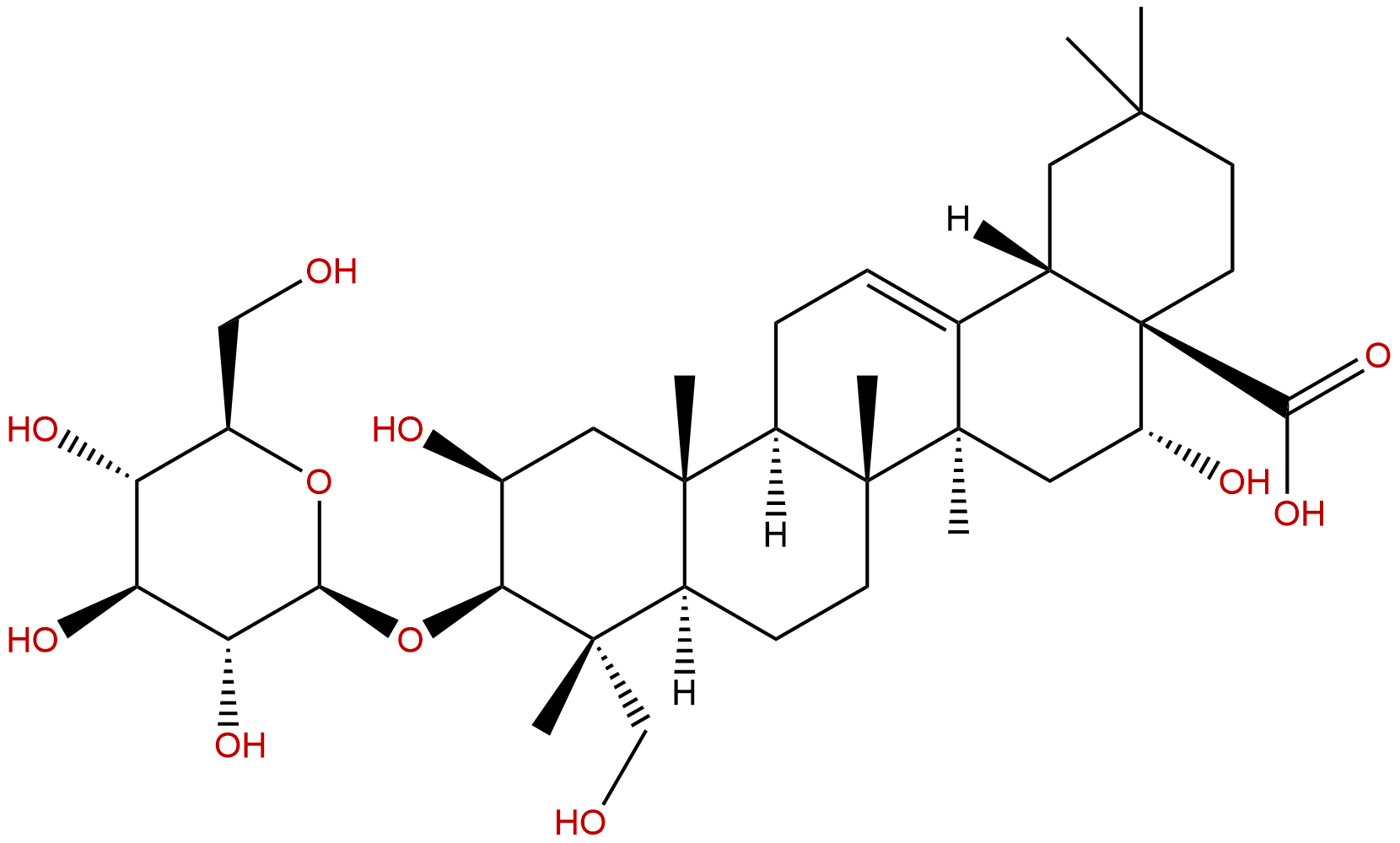
Yuanzhi acid-3-O - β - D-glucopyranoside: a potential anti Alzheimer's disease natural triterpenoid saponin derived from Yuanzhi
1. Overview
Yuanzhi acid-3-O - β - D-glucopyranoside, also known as Bernardioside A in English, is a naturally occurring triterpenoid saponin with a unique structure. Its CAS number is 121368-52-3, molecular formula is C36H58O11, and molecular weight is approximately 666.85 g/mol. This compound was initially isolated from the Asteraceae plant Bellis Bernardii, but subsequent studies have shown that its more important plant source is the traditional Chinese medicine Polygala tenuifolia. Yuanzhi, as a famous traditional Chinese medicine for calming the nerves and promoting cognitive development, has been used for thousands of years for its cognitive enhancement and neuroprotective effects. Modern pharmacological research is dedicated to revealing the material basis of its action, and yuanzhiacid-3-O - β - D-glucopyranoside is one of the active ingredients that has attracted much attention.
In recent years, with the aging of the global population, the incidence rate of neurodegenerative diseases such as Alzheimer's disease continues to rise, and the development of effective prevention and treatment drugs has become a major scientific problem to be solved. Natural products have become an important source of new drug development due to their structural diversity and multi-target effects. This compound has entered the research field due to its clear activity targeting key pathological processes in Alzheimer's disease. According to database information, it can act on multiple targets closely related to Alzheimer's disease, including APP, BACE1, MAPT, PSEN1, and APOE4. This suggests that it may exert neuroprotective effects by intervening in core pathological processes such as beta amyloid production and abnormal phosphorylation of Tau protein. This article will provide a systematic professional popularization of this potential natural compound from its chemical structure, source, pharmacological mechanism, medicinal properties, and prospects.
2. Chemical structure and physicochemical properties
Yuanzhi acid-3-O - β - D-glucopyranoside belongs to the oleanane type pentacyclic triterpenoid saponins. Its structural feature is a highly modified aspartic acid (a triterpenoid acid) as an aglycone, which is connected to a D-glucopyranose unit through a β - glycosidic bond on its C-3 hydroxyl group. This glycosylation modification significantly alters the physicochemical properties and biological activity of the parent aglycone, which is key to the good water solubility and specific biological activity of many natural saponins.
Analyze its physicochemical properties based on the provided pharmacological parameters:
* Molecular weight (MW):666.85 g/mol, Slightly higher than the commonly considered "drug like" molecular weight threshold (500 g/mol), which is a common characteristic of many natural active saponins.
* Lipid water partition coefficient (LogP/LogD)The calculated LogP is 2.40, while LogD (at a specific pH, typically simulating physiological pH 7.4) is 0.50. The LogD value is significantly lower than LogP, indicating that under physiological conditions, due to the presence of multiple hydroxyl and sugar groups in the molecule, its hydrophilicity is enhanced and it is more inclined to be distributed in the aqueous phase. This is related to Water solubility The parameter 0.1288 (usually measured in mg/mL or mol/L, depending on the database definition) reflects properties ranging from slightly soluble to soluble.
* Topological Polarity Surface Area (TPSA)Up to 197.37 Å ², mainly attributed to multiple hydroxyl groups (- OH), ether bonds (- O -), and oxygen atoms in glycosidic bonds in the molecule. High TPSA is an important factor affecting its membrane permeability.
* Hydrogen bond donor and acceptor Based on the structural formula, it can be inferred that the molecule contains multiple hydroxyl groups and a large number of hydrogen bond donors and acceptors, which further explains its high TPSA and strong hydrophilicity.
These physicochemical properties collectively determine the basic profile of the absorption, distribution, metabolism, and excretion (ADME) behavior of the compound in the organism.
3. Plant sources and traditional applications
The main plant source of yuanzhiacid-3-O - β - D-glucopyranoside is Polygala tenuifolia Willd It is a plant of the family Fargesiaceae. The dried root of Yuanzhi is a commonly used medicinal herb in traditional Chinese medicine clinical practice. Its application history can be traced back to the "Shennong Bencao Jing", which is listed as a top grade and recorded to have the effects of "benefiting wisdom, making ears and eyes smarter, not forgetting, and strengthening the mind and power". In traditional Chinese medicine theory, the main functions of distant aspiration to the heart, kidney, and lung meridians are to calm the mind, increase intelligence, dispel phlegm and open the orifices, and dispel abscesses and swelling. It is commonly used to treat insomnia, dreams, forgetfulness, palpitations, and mental confusion caused by heart kidney failure, as well as stroke, epilepsy, and dizziness caused by phlegm obstructing the heart and orifices. It is also used for coughing, phlegm accumulation, and carbuncles and sores.
Modern research in traditional Chinese medicine has confirmed that the neuropsychiatric pharmacological activity of Yuanzhi is the scientific connotation of its "calming the mind and enhancing intelligence" effect. Its chemical composition is complex, mainly including triterpenoid saponins (such as saponins from Polygala tenuifolia), oligosaccharides (such as oligosaccharides from Polygala tenuifolia), glycosides (such as this compound), and alkaloids. Among them, triterpenoid saponins are considered to be the main group of active substances that exert cognitive improvement and neuroprotective effects. Yuanzhi acid-3-O - β - D-glucopyranoside, as a triterpenoid saponin in Yuanzhi, is an important chemical substance that connects traditional efficacy with modern pharmacological research. Its activity against Alzheimer's disease-related targets provides direct molecular evidence for elucidating the traditional efficacy of Yuanzhi's "beneficial wisdom" and "unforgettable" effects.
4. Pharmacological activity and mechanism of action
The database information clearly indicates that the target of action of yuanzhiacid-3-O - β - D-glucopyranoside is highly concentrated in the key pathological proteins of Alzheimer's disease: APP (amyloid precursor protein), BACE1 (β - site amyloid precursor protein lyase 1), MAPT (microtubule associated protein Tau), PSEN1 (presenilin 1), and APOE4 (apolipoprotein E ε 4 allele product). This suggests that it may intervene in the complex pathological network of AD through multiple targets and pathways.
(1) Target analysis and mechanism of action speculation:
-
Targeting the A β generation pathway (APP, BACE1, PSEN1)One of the main pathological features of Alzheimer's disease is the abnormal deposition of beta amyloid protein (A β) in the brain, leading to the formation of senile plaques. A β is sequentially cleaved by APP through BACE1 and γ - secretase (whose catalytic subunit includes PSEN1). This compound can simultaneously act on these three targets, which may mean:
- Regulating APP metabolism May reduce the total amount of APP as a substrate by affecting its transcription, translation, or transport.
- Inhibition of BACE1 activity As a β - secretase, BACE1 is a key rate limiting enzyme for the production of A β. Inhibiting its activity can directly reduce the production of A β.
- Regulating the activity/selectivity of gamma secretase PSEN1 is the core component of gamma secretase. Adjusting its function may alter the cleavage site of the APP, tending to produce shorter and less toxic A β peptide segments (such as A β 38) rather than the more toxic A β 42.
Through these triple effects, the compound is expected to effectively reduce the levels of toxic A β in the brain, thereby alleviating A β - mediated neurotoxicity, synaptic dysfunction, and inflammatory responses.
-
Targeted Tau protein pathology (MAPT)Another core pathology of AD is neurofibrillary tangles formed by excessive phosphorylation of Tau protein. The MAPT gene encodes Tau protein. This compound acts on MAPT targets, possibly by regulating the activity of related kinases (such as GSK-3 β) or phosphatases, inhibiting abnormal phosphorylation of Tau protein, maintaining microtubule stability, and ensuring normal transport of substances within neurons.
-
Targeting genetic risk factors (APOE4)APOE4 is the strongest genetic risk factor for sporadic AD. It is involved in lipid transport, A β clearance, and neuroinflammation regulation. APOE4 carriers have reduced clearance efficiency of A β in the brain and increased inflammatory response. This compound acts on the APOE4 target and may improve its function, promote A β clearance, and inhibit neuroinflammation by affecting APOE expression, lipid status, or its interaction with receptors.
(2) Integrated action mode:
The multi-target properties of yuanzhiacid-3-O-glucopyranoside are highly compatible with the complex pathogenesis of Alzheimer's disease, which involves multiple factors and pathways. It may simultaneously intervene in the two core pathologies of AD, the "A β cascade hypothesis" and the "Tau protein hypothesis," and involve key genetic risk factors. This' one stone, multiple birds' mode of action may be more advantageous in addressing the complexity and heterogeneity of AD compared to single target drugs, producing synergistic therapeutic effects, and potentially delaying disease progression.
It should be pointed out that the above mechanism analysis is mainly based on the inference of the correlation of target information. The exact molecular mechanism of action, whether it directly binds to these target proteins or indirectly regulates through upstream signaling pathways, still needs further biochemical, cellular, and animal experiments to verify and elucidate.
5. Evaluation of drug properties
Based on the provided pharmacological parameters and in combination with classic standards such as the "Lipinski Rule of Five" (Ro5), a preliminary evaluation of the pharmacological potential of 3-O - β - D-glucopyranoside can be conducted
-
Lipinski Five Rule Compliance:
- Molecular weight (MW): 666.85>500, Violation of 1 item。
- LogP (calculated value): 2.40<5, Comply with。
- Number of hydrogen bond donors (estimated to be>5):>5, Violation of 1 item。
- Number of hydrogen bond acceptors (estimated to be>10):>10, Violation of 1 item。
This compound clearly violates the three terms (MW, HBD, HBA) in Ro5, which is typical among natural saponin compounds. Ro5 is mainly used to predict oral absorption, and violating multiple criteria usually suggests that oral bioavailability may be low. But this does not mean that there is no development value, as many successful drugs (especially natural product derived drugs) are beyond the scope of Ro5 and can be optimized through other routes of administration (such as injection) or formulation techniques.
-
Absorption and distribution characteristics:
- Caco-2 permeability (0.4304)The low value suggests that its passive transmembrane transport ability in small intestinal epithelial cells is weak, and oral absorption may be poor.
- Blood-brain barrier permeability (BBB-permeability)Clearly labeled as' low '. This is a major challenge for treating central nervous system diseases such as AD. High TPSA (197.37) and strong hydrophilicity (LogD=0.50) are the main reasons for its poor BBB penetration. In future development, how to improve its brain entry efficiency is a key issue, which may require structural modification of molecules (such as preparing prodrugs, simplifying structures) or the use of drug delivery systems (such as nanoparticles, liposomes).
- Plasma protein binding rate (PPB: 79.69%): Belongs to a combination of moderate to high levels. This will affect its free drug concentration, which in turn affects the efficacy and distribution volume, but it is also within the common range of many drugs.
-
Preliminary assessment of metabolism and toxicity:
- AMES test (0.0)、Chromosomal aberration (none)、HERG inhibition (No)These key toxicity indicators are all negative, indicating that the compound has a low risk of genetic toxicity and cardiac toxicity, and a good safety starting point.
- Skin sensitization (Skid_Sens: No)、Respiratory sensitization (Resp_Sens: No)、Phototoxicity (Photo_tox: None)No special toxicity was shown.
- Serum biochemical indicators The display may have an impact on serum alkaline phosphatase (Ser_LK) and aspartate aminotransferase (Ser_ST) (marked as "Yes"), indicating a potential effect on the liver at higher doses and requiring close attention in subsequent toxicology studies.
comprehensive evaluation Yuanzhi acid-3-O - β - D-glucopyranoside has clear multi-target pharmacological activity highly correlated with AD, and has a low initial toxicity risk, which constitutes its core advantage as a lead compound. However, its poor drug properties (high MW, high polarity, low BBB permeability, low oral absorption) are the main obstacles to developing it into a traditional small molecule drug. It is more likely to be an excellent one lead compound Through rational drug chemical modifications (such as simplifying sugar chains, introducing lipophilic groups to improve LogD and BBB penetration), or developing into New drug delivery system(such as targeted delivery for BBB) to overcome its pharmaceutical shortcomings and ultimately move towards clinical applications.
6. Research Status and Application Prospects
At present, research on yuanzhiacid-3-O - β - D-glucopyranoside is still in a relatively early stage. The existing literature mainly focuses on the isolation and identification, content determination, and target prediction research based on network pharmacology or molecular docking from plants such as Polygala tenuifolia. The specific mechanism of action, neuroprotective effects at the cellular level, and in vivo pharmacological validation in AD animal models (such as APP/PS1 transgenic mice) targeting APP, BACE1, Tau, and other targets still require systematic and in-depth experimental research to fill the gap.
Future research directions may focus on the following areas:
- Deep analysis of the mechanism of action Conduct biochemical experiments to verify its direct inhibitory activity on BACE1, gamma secretase, and other enzymes; Using an AD cell model, investigate its specific effects and signaling pathways on A β production, Tau phosphorylation, synaptic function, and neuroinflammation.
- Pharmacodynamic validation Evaluate its effectiveness in improving cognitive dysfunction, reducing pathological protein deposition, and protecting neurons in various AD animal models, and clarify its in vivo activity.
- Research on Structural Optimization and Structure Performance Relationship Using it as the parent nucleus, carry out systematic structural modifications. For example, exploring the influence of glycosylation on activity and properties, attempting to synthesize derivatives with deglycosylation or glycosylation modification; Modify the glycoside moiety to improve its lipid solubility and BBB penetration. Intended to obtain candidate compounds with comparable or superior activity but significantly improved drug properties.
- Exploration of New Delivery Strategies Given its poor BBB penetration, the study loaded it into brain targeted nanodrug delivery systems (such as polymer nanoparticles, liposomes, exosomes, etc.) and actively delivered it into the brain through receptor-mediated transport mechanisms to increase drug concentration in the brain.
- Research on the synergistic effect of multiple components As a component of Yuanzhi, studying its synergistic effect with other active ingredients in Yuanzhi (such as other saponins and oligosaccharides) provides a basis for developing compound natural medicines based on Yuanzhi extracts with controllable quality.
Application Prospects Despite facing challenges in drug development, the unique multi-target anti AD activity of 3-O - β - D-glucopyranoside from Yuanzhi acid still holds significant research value. It is not only one of the key substances that explains the modern scientific connotation of the "intelligence enhancing" effect of traditional Chinese medicine Yuanzhi, but also provides a highly promising natural lead compound for the development of new anti Alzheimer's disease drugs. With the interdisciplinary integration of chemical biology, medicinal chemistry, and pharmacy, continuous in-depth research and rational development of this compound are expected to ultimately transform it into innovative drugs or treatment strategies for Alzheimer's disease, contributing Chinese wisdom and natural solutions to this global health challenge.