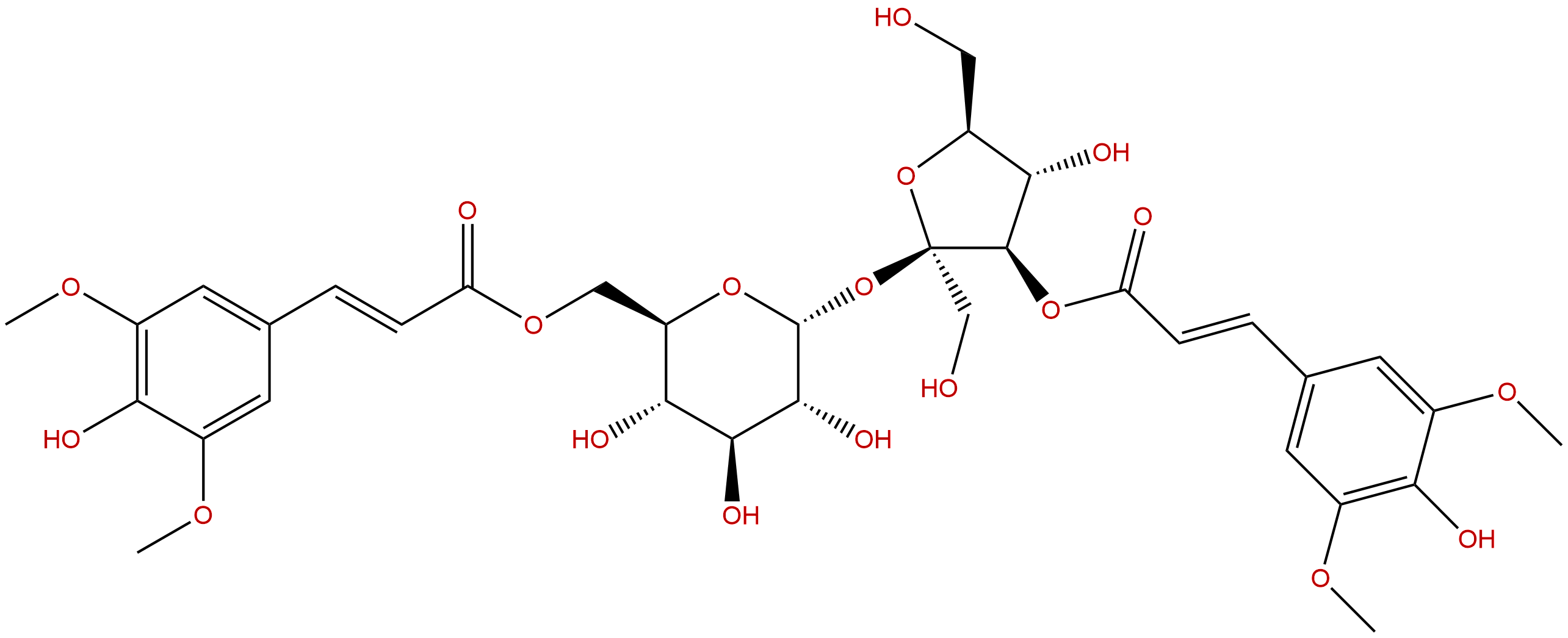


Product name: 3,6′-Disinapoylsucrose.
Synonym name: 3,6′-Disinapoylsucrose.
Catalogue No.: BP1629
Cas No.: 139891-98-8
Formula: C34H42O19
Mol Weight: 754.691
Botanical Source: " Constit. of Polygala virgata, Polygala reinii, Polygala tenuifolia, Raphanus sativus and Securidaca longipedunculata"
Physical Description: Powder
Type of Compound: Phenylpropanoids
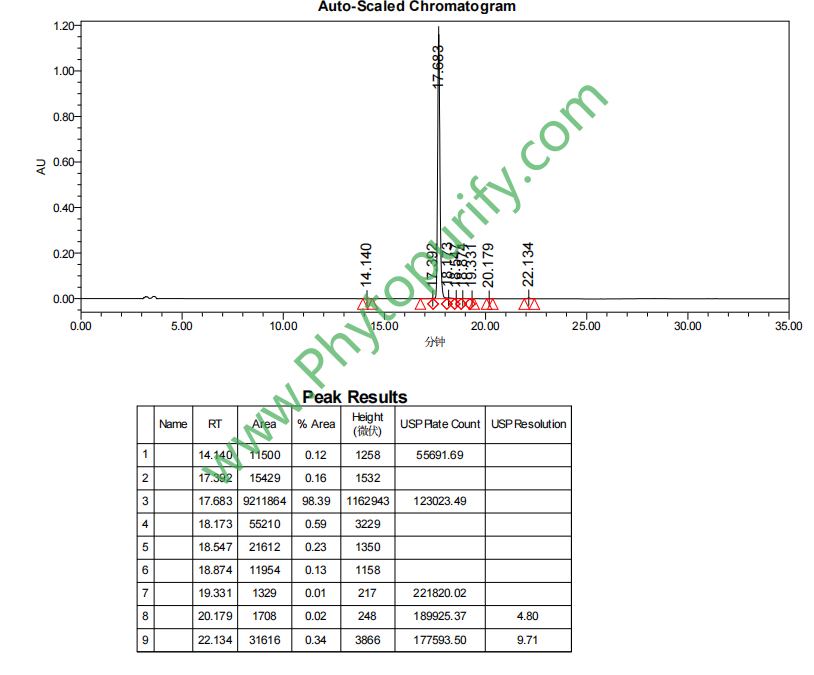
Purity: 95%~99%
Analysis Method: HPLC-DAD or/and HPLC-ELSD
Identification Method: Mass, NMR
Packing: Brown vial or HDPE plastic bottle
The product could be supplied from milligrams to grams. Inquire for bulk scale.
We provide solution to improve the water-solubility of compounds, thereby facilitating the variety of activity tests and clinic uses.
For Reference Standard and R&D, Not for Human Use Directly.
Description:
3,6'-Disinapoyl sucrose has neuroprotective effect and antidepressive activity in rats, at least in part, by increasing expression of cyclic AMP response element (CRE)-binding protein (CREB) and its downstream target protein, brain-derived neurotrophic factor (BDNF). 3,6'-Disinapoyl sucrose protect neuron cells from glutamate-induced excitotoxicity include the downregulation of proapoptotic gene Bax and the upregulation of antiapoptotic gene Bcl-2.
References:
J Biomed Biotechnol. 2012;2012:1-5.
Protection of SH-SY5Y neuronal cells from glutamate-induced apoptosis by 3,6'-disinapoyl sucrose, a bioactive compound isolated from Radix Polygala.
The neuroprotective effects of 3,6'-Disinapoyl sucrose (DISS) from Radix Polygala against glutamate-induced SH-SY5Y neuronal cells injury were evaluated in the present study.
METHODS AND RESULTS:
SH-SY5Y neuronal cells were pretreated with glutamate (8 mM) for 30 min followed by cotreatment with 3,6'-Disinapoyl sucrose for 12 h. Cell viability was determined by (3,4,5-dimethylthiazol-2-yl)-2,5-diphenylte-trazolium bromide (MTT) assay, and apoptosis was confirmed by cell morphology and flow cytometry assay, evaluated with propidium iodide dye. Treatment with 3,6'-Disinapoyl sucrose (0.6, 6, and 60 μmol/L) increased cell viability dose dependently, inhibited LDH release, and attenuated apoptosis. The mechanisms by which 3,6'-Disinapoyl sucrose protected neuron cells from glutamate-induced excitotoxicity included the downregulation of proapoptotic gene Bax and the upregulation of antiapoptotic gene Bcl-2.
CONCLUSIONS:
The present findings indicated that 3,6'-Disinapoyl sucrose exerts neuroprotective effects against glutamate toxicity, which might be of importance and contribute to its clinical efficacy for the treatment of neurodegenerative diseases.
J Pharm Pharmacol. 2011 Jun;63(6):869-74.
Possible mechanism of the antidepressant effect of 3,6'-disinapoyl sucrose from Polygala tenuifolia Willd.
The present study was designed to observe the effects of 3,6'-Disinapoyl sucrose (DISS), an active oligosaccharide ester component obtained from the roots of Polygala tenuifolia Willd., on behavioral and biochemical aspects of depression induced by chronic mild stress (CMS) in rats. It is the first exploration of the possible association between DISS's antidepressant-like effects and biochemical markers of depression, and involved measuring monoamine oxidase (MAO) activity, cortisol levels, superoxide dismutase (SOD) activity and malondialdehyde (MDA) levels.
METHODS AND RESULTS:
Rats were exposed to stressor once daily for consecutive 5 weeks. DISS and a positive control drug, fluoxetine, were administered via gastric intubation to once daily for consecutive 3 weeks from the third week. The results showed that rats subjected to CMS exhibit a reduction in sucrose intake. Conversely, brain MAO-A and MAO-B activity, plasma cortisol levels, and MDA levels were increased, while SOD activity was decreased following CMS exposures. DISS significantly inhibited MAO-A and MAO-B activity and blocked plasma elevated cortisol level, an indicator of the hypothalamic-pituitary-adrenal (HPA) axis. In addition, DISS increases SOD activity, inhibits lipid peroxidation, and lessens production of MDA.
CONCLUSIONS:
These results suggest that DISS may possess potent and rapid antidepressant properties, which are mediated via MAO, the HPA axis and oxidative systems. These antidepressant actions make DISS a potentially valuable drug for the treatment of depression.
HPLC of 3,6′-Disinapoylsucrose.
Storage conditions:Short-term storage at 2~8℃, long-term storage at -20 ~ -80℃
279.0500
.3030
.2932
1.6078
.5009
.1553
Low
75.7063
5.0061
Yes
No
No
No
No
No
0.0
Yes
Yes
Yes
Yes
Atherosclerosis (AS) is the main pathological basis of cardiovascular and cerebrovascular diseases. Its occurrence and development involve many complex biological processes, such as lipid metabolism disorder, endothelial dysfunction, chronic inflammatory reaction and cell apoptosis. Although lipid-lowering therapies such as statins have achieved significant results, residual cardiovascular risks, drug side effects, and the need for multi-target regulation still exist, prompting researchers to continuously explore candidate molecules with novel structures, unique mechanisms, and high safety from natural products. Hydroxycinnamic acid compounds, as a class of phenylpropanoid secondary metabolites widely present in the plant kingdom, have attracted much attention due to their significant antioxidant, anti-inflammatory, and metabolic regulating activities.
3,6 '- Dissinanoylsucrose (DSS), CAS number 139891-98-8, is a natural phenolic acid ester compound formed by the ester bond between a sucrose backbone and two sinanoyl groups. Since its discovery, research has mainly focused on its plant chemical characteristics. However, in recent years, with the in-depth application of network pharmacology, molecular docking and in vitro experimental technology, the multi target pharmacological activity of DSS in anti atherosclerosis has gradually emerged. Its potential targets include scavenger receptor LOX-1, energy metabolism core kinase AMPK, epigenetic regulator EHMT2, apoptosis related protein MCL1/BCL2, DNA helicase RECQ1, and key protein of cholesterol reverse transport ABCA1, suggesting that it may play an anti atherosclerotic role by intervening in multiple pathways such as lipid uptake, energy homeostasis, inflammatory response, cell survival, and genome stability. This article aims to systematically review the chemical structure, plant origin, pharmacological activity, mechanism of action, and medicinal properties of DSS, in order to provide comprehensive scientific references for the in-depth research and development of this compound.
3,6 '- disuccinosyl sucrose is a typical sucrose type phenolic acid ester. Its molecular structure is centered around β - D-fructofuranyl - (2 → 1) - α - D-glucopyranoside (i.e. sucrose). Two Sinapoyl groups are respectively connected to the hydroxyl groups at positions 3 (glucose unit) and 6 (fructose unit) of sucrose molecules through ester bonds. Mustard acyl is a derivative of hydroxycinnamic acid, characterized by the presence of two methoxy groups at positions 3 and 5 of the benzene ring, a hydroxyl group at position 4, and an unsaturated acrylic acid side chain. This connection method allows DSS molecules to simultaneously possess the hydrophilicity of sucrose, the hydrophobicity of sinapyryl, and phenolic hydroxyl activity.
Its molecular formula is C34H42O19 and its molecular weight is 754.6910 g/mol. The calculated LogP value of the lipid water partition coefficient is approximately 0.3030, indicating that the compound has moderate lipophilicity but overall leans towards hydrophilicity. The topologically polar surface area (TPSA) is as high as 279.0500 Å ², mainly attributed to the numerous ether bonds, ester bonds, and hydroxyl groups in the molecule, indicating its high ability to form hydrogen bonds. The theoretically calculated water solubility value is 1.6078, belonging to the range of slightly soluble to soluble, which is consistent with its larger polar surface area. These basic physicochemical parameters provide important basis for their subsequent extraction, separation, analysis, identification, and pharmacokinetic behavior in vitro and in vivo.
3,6 '- disuccinosyl sucrose is not widely distributed in all plants, and its reports mainly focus on a few traditional medicinal plants, especially in medicinal herbs commonly used in traditional Chinese medicine systems for calming the nerves and promoting intelligence. Among them, the most important source is the plants of the Euphorbiaceae family Polygala tenuifolia(Polygala tenuifolia Dry roots of Willd. As a representative of "Anshen Medicine", the chemical composition research of Yuanzhi shows that sucrose ester compounds are one of its important active ingredient groups, and DSS is a representative one among them. In addition, plants of the same genus Guazi Jin(Polygala japonica Houtt.) and some plants in the Scrophulariaceae family have also isolated this compound or sucrose mustard esters with similar structures.
The extraction of DSS from plant materials usually uses organic solvent extraction method. The common process is as follows: after crushing dried medicinal materials such as Polygala tenuifolia roots, first use methanol or ethanol (such as 70% -95% concentration) for heating reflux extraction or ultrasound assisted extraction to fully dissolve phenolic esters and saponins, including DSS. The extract is concentrated under reduced pressure to obtain a paste. Subsequently, utilizing the polarity characteristics of DSS, solvents such as petroleum ether, ethyl acetate, and n-butanol are often used for systematic solvent extraction and classification. DSS is mainly enriched in the ethyl acetate or n-butanol fractions. Further purification depends on column chromatography technology. Silica gel, macroporous adsorption resin (such as D101, AB-8), reversed silica gel (such as ODS-C18) and dextran gel (such as Sephadex LH-20) are often used for repeated chromatographic separation. High performance liquid chromatography (HPLC), especially preparative HPLC, is the final key step in obtaining high-purity DSS monomers. Methanol water or acetonitrile water (containing a small amount of formic acid or acetic acid to adjust pH) is often used as the mobile phase for gradient elution. Structural identification involves the comprehensive use of ultraviolet spectroscopy (UV), mass spectrometry (MS), nuclear magnetic resonance hydrogen and carbon spectra (¹ H-NMR, ¹ ³ C-NMR), as well as two-dimensional nuclear magnetic resonance techniques.
Although the existing studies have not directly verified the atherosclerosis model of DSS in vivo and in vitro, based on the known activity, related target prediction and preliminary experiments of its core pharmacophore (myrosinyl), its pharmacological activity mainly focuses on multiple segments related to anti atherosclerosis.
Antioxidant and anti-inflammatory activities Mustard acyl is a potent antioxidant group. The phenolic hydroxyl group in DSS molecules can effectively scavenge free radicals (such as DPPH, ABTS free radicals) and inhibit lipid peroxidation. In cell models, oxidized low density lipoprotein (ox LDL) - induced endothelial cell or macrophage injury is a key initial event of atherosclerosis. DSS may exert anti-inflammatory effects by reducing the generation of ox LDL and its toxicity to endothelial cells through its antioxidant properties, while inhibiting the burst of reactive oxygen species (ROS) and the expression of pro-inflammatory factors (such as TNF - α, IL-6, IL-1 β) triggered by ox LDL in macrophages.
Regulate lipid metabolism and foam cell formation It is the core step of atherosclerotic plaque formation that macrophages take a large amount of ox LDL and transform it into foam cells. The predicted target LOX-1 is the main ox LDL scavenger receptor on the surface of macrophages and endothelial cells. DSS may reduce the abnormal uptake of ox LDL by macrophages by inhibiting the expression or function of LOX-1. On the other hand, the target ABCA1 is a key initiating protein for cholesterol reverse transport (RCT), promoting the efflux of intracellular cholesterol to apolipoprotein A-I (apoA-I). DSS may enhance the cholesterol efflux ability of macrophages by up regulating the expression of ABCA1, thereby inhibiting the formation of foam cells and promoting plaque regression.
Regulating cell apoptosis and survival The imbalance of apoptosis of cells in atherosclerotic plaque (such as endothelial cells, smooth muscle cells, macrophages) is involved in plaque instability and rupture. The predicted targets MCL1 and BCL2 are important anti apoptotic proteins. DSS may protect endothelial cells from apoptosis induced by damaging factors such as ox LDL and maintain vascular endothelial integrity by regulating the expression of these proteins; At the same time, it may also affect the survival fate of macrophages, thereby regulating the inflammatory environment of plaques.
Potential other activities The target RECQ1 is a DNA helicase that participates in DNA repair and maintains genomic stability. Although its direct relationship with atherosclerosis is not clear, DNA damage caused by oxidative stress cannot be ignored in the process of atherosclerosis. It is worth exploring whether DSS indirectly protects DNA through antioxidant activity or directly affects RECQ1 function. In addition, as a core sensor of cellular energy metabolism, AMPK activation can bring multiple benefits such as anti-inflammatory effects, improvement of endothelial function, and promotion of fatty acid oxidation, making it a potential important node for DSS.
Based on the prediction of network pharmacology and molecular docking, combined with the known biological effects of hydroxycinnamic acid compounds, the mechanism of DSS anti atherosclerosis may be a multi-target, multi-channel collaborative network system:
Inhibition of LOX-1/NF - κ B inflammatory pathway LOX-1 is not only a receptor for ox LDL, but its activation can also activate the downstream nuclear factor kappa B (NF - κ B) signaling pathway, leading to the transcription of a large number of pro-inflammatory mediators. DSS may inhibit NF - κ B activation and reduce vascular wall inflammation by directly binding to LOX-1 or interfering with its expression, blocking the interaction between ox LDL and LOX-1. This is the core potential mechanism of its anti-inflammatory effect.
Activate AMPK signaling pathway The activation (phosphorylation) of AMPK has a global regulatory effect. DSS may activate AMPK directly or indirectly. Activated AMPK can: a) inhibit acetyl CoA carboxylase (ACC), promote fatty acid oxidation, and reduce lipid accumulation; b) Inhibit mammalian rapamycin target protein (mTOR) signaling and alleviate inflammation; c) Upregulation of endothelial nitric oxide synthase (eNOS) activity and improvement of endothelial dependent vasodilation; d) May positively regulate the expression of ABCA1 and promote cholesterol efflux. Therefore, AMPK may be a key hub target for DSS to exert lipid regulation, anti-inflammatory, and endothelial protection functions.
Regulating the balance between epigenetics and apoptosis The target EHMT2 (G9a) is a histone methyltransferase that catalyzes H3K9me2 modification and is typically associated with gene transcription inhibition. In atherosclerosis, EHMT2 may be involved in inhibiting the expression of some protective genes. It is an interesting scientific hypothesis whether DSS acts as an inhibitor of EHMT2 by reducing inhibitory histone modifications, thereby silencing beneficial genes such as ABCA1. Meanwhile, by regulating Bcl-2 family proteins such as MCL1 and BCL2, DSS may affect the mitochondrial apoptosis pathway and maintain the homeostasis of vascular cells.
Promote ABCA1 mediated cholesterol reverse transport The expression of ABCA1 is regulated by the transcription factor liver X receptor (LXR). DSS may significantly upregulate its expression in macrophages by activating LXR or stabilizing ABCA1 mRNA/protein. The increased ABCA1 pumps intracellular free cholesterol to apoA-I to form new high-density lipoprotein (HDL), which is the first step of cholesterol reverse transport and the classic way of anti atherosclerosis.
In conclusion, DSS may act on LOX-1, AMPK, EHMT2, ABCA1, MCL1/BCL2 and other targets, forming a synergistic network from reducing lipid intake (inhibiting LOX-1), promoting lipid output (up regulating ABCA1), improving energy metabolism and inflammation (activating AMPK), regulating epigenetic (inhibiting EHMT2) to maintaining cell survival (regulating MCL1/BCL2), and jointly combating the occurrence and development of atherosclerosis.
Based on the provided pharmacological parameters and known compound characteristics, a preliminary evaluation of the pharmacological properties of DSS is conducted
At present, pharmacokinetic studies on DSS systems (such as absolute bioavailability, tissue distribution, metabolite identification, excretion kinetics, etc.) are still blank in public literature, which is a key data gap that must be filled for their development.
As a natural small molecule with well-defined structure, 3,6 '- biserucyl sucrose shows unique potential and challenges in the development of anti atherosclerosis drugs.
Potential advantages and prospects:
1. Multi target synergistic effect: It acts on multiple key links of atherosclerosis (lipid, inflammation, apoptosis, metabolism), and may have synergistic effects. It is suitable for the prevention and treatment of this complex disease, and may be better than a single target drug.
2. Natural Product Sources and Safety Fundamentals Derived from the traditional medicinal plant Yuanzhi, this medicinal herb has a long history of clinical application, providing a certain traditional basis for its safety. Preliminary pharmacological predictions also indicate low risks of cardiac toxicity and genetic toxicity.
3. As a lead compound Its structure provides an excellent template for subsequent chemical modification and optimization. For example, modification of sucrose hydroxyl groups, modification of sinapyryl groups, or introduction of other pharmacophores can be used to enhance metabolic stability, target selectivity, oral bioavailability, or confer new activity.
Challenges faced and future research directions:
1. In depth functional verification Current mechanism research is mostly based on prediction and association analysis. It is urgent to carry out rigorous experiments at the cellular level (such as endothelial cell, macrophage, smooth muscle cell co culture model) and animal level (such as ApoE -/- or LDLR -/- mouse atherosclerosis model) to verify the actual impact of DSS on plaque area, composition, stability and related molecular markers.
2. Clear target confirmation It is necessary to directly verify the interaction between DSS and predicted targets (such as LOX-1, AMPK, EHMT2) through techniques such as surface plasmon resonance (SPR), isothermal titration calorimetry (ITC), cell thermal shift analysis (CETSA), or drug affinity reaction target stability (DARTS), and clarify whether it is an agonist, inhibitor, or conformational modulator.
3. Pharmacokinetic and toxicological studies of the system Complete ADME (absorption, distribution, metabolism, excretion) studies and standardized preclinical toxicology evaluations (acute toxicity, long-term toxicity, reproductive toxicity, etc.) must be conducted to clarify their in vivo fate and safety window.
4. Formulation development Developing a suitable drug delivery system to address its physical and chemical property defects is a key engineering step in transforming it into actual drugs.
Looking ahead to the future, research on DSS is expected to advance along two paths: firstly, as a Quality markers (Q-markers) in herbal medicine or traditional Chinese medicine formulas, used to control the quality of Polygala tenuifolia and related preparations in anti atherosclerosis; Secondly, as Lead compounds for innovative drug development, optimized by modern pharmaceutical chemistry and pharmaceutics, it may eventually be developed into an innovative drug for the prevention or treatment of atherosclerosis and related cardiovascular and cerebrovascular diseases, especially for patients with multiple risk factors, or as a supplement to existing standard therapies.
3,6 '- disuccinosyl sucrose is a characteristic sucrose ester compound isolated from the traditional Chinese medicine Yuanzhi. Although it has been discovered for a long time, the understanding of its pharmacological activity, especially its potential in anti atherosclerosis, is deepening with the application of modern research technology. Existing evidence and theoretical predictions strongly suggest that DSS may act on multiple targets related to lipid metabolism, inflammatory response, cell survival and epigenetic regulation, such as LOX-1, AMPK, ABCA1, EHMT2, MCL1/BCL2, forming a multi pathway synergistic network of action, thus playing an intervention role in multiple pathological links of atherosclerosis, a complex disease. However, there is still a lot of basic research work to be done from potential to reality, including precise in vitro and in vivo efficacy validation, identification of direct targets, systematic pharmacokinetics and safety evaluation, etc. At the same time, its inherent pharmacological defects also call for innovative formulation strategies or reasonable structural modifications. In a word, as a natural molecule connecting traditional medicinal wisdom with modern disease treatment, the in-depth study of DSS not only helps to clarify the modern scientific connotation of the traditional efficacy of Polygala tenuifolia (which may be related to improving brain blood supply and anti cerebral atherosclerosis), but also provides a new candidate structure and idea for developing multi-target anti atherosclerosis drugs, which is worthy of continuous attention and exploration.
