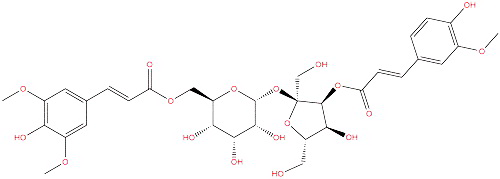
Arillanin A: A systematic review from natural oligosaccharides to neuroprotective candidate molecules
Introduction/Overview
Neurodegenerative diseases such as Alzheimer's disease (AD), Parkinson's disease (PD), and amyotrophic lateral sclerosis (ALS) have become major challenges in the global public health field. With the acceleration of population aging, finding safe and effective neuroprotective drugs has become an urgent need for drug development. Natural products have always been an important source of lead compounds for drugs due to their structural diversity and multi-target properties. Among numerous natural products, it comes from the genus Fargesia(Polygala)The oligosaccharide ester compounds of plants have attracted much attention due to their unique chemical structure and significant biological activity.
Arillanin A (CAS number: 154287-47-5) is derived from Arillanin(Polygala arillata)A representative oligosaccharide ester compound isolated from root bark. This compound was first reported in 1995, and its structure consists of a sucrose core connected to multiple acyl and glycosyl units through ester and glycosidic bonds. In recent years, with the in-depth research on the neuroprotective activity of natural products, the potential of Huanghua Yuanzhi Su A in anti Alzheimer's disease, antioxidant stress, anti neuronal apoptosis and other aspects has gradually been revealed. This article will provide a systematic review of the research progress of Huanghua Yuanzhi Su A from the aspects of chemical structure, plant origin, pharmacological activity, mechanism of action, pharmacological evaluation, and clinical application prospects, in order to provide reference for the further development of this compound.
Chemical structure and physicochemical properties
Chemical structural characteristics
Huanghua Yuanzhi Su A belongs to oligosaccharide ester compounds, and its core structure is sucrose (α - D-glucopyranosyl - β - D-fructofuranoside). On the sucrose backbone, multiple hydroxyl groups are replaced by different types of acyl and sugar groups. Specifically, the molecular structure of Yuanzhisu A in Huanghua contains the following characteristic units:
- Sucrose core As a skeleton, it provides multiple modifiable hydroxyl sites.
- Acyl substituent Mainly including aromatic or aliphatic acyl groups such as benzoyl and acetyl, which are connected to the hydroxyl groups of sugar units through ester bonds.
- Sugar substituent Usually composed of monosaccharides such as D-glucose or L-rhamnose, connected by glycosidic bonds.
According to literature reports, the precise molecular formula of Yuanzhisu A in Huanghua is C ∝③ H ₄₀₁₈, with a molecular weight of 724.6650 Da. The multiple chiral centers and abundant functional groups in its structure endow the molecule with a unique spatial configuration and biological activity.
Physical and chemical property parameters
Based on computational chemistry and experimental measurements, the key physicochemical parameters of Huanghua Yuanzhi Su A are as follows:
- Lipid water partition coefficient (LogP): 0.2585. The low value indicates that the compound has good water solubility, but poor lipid solubility, which may affect its transmembrane transport ability.
- Topological Polarity Surface Area (TPSA): 269.8200 Å ². Higher TPSA values (>140 Å ²) are typically associated with low oral absorption rates and low blood-brain barrier permeability.
- Water solubility 1.5833 mg/mL (predicted value), classified as a moderately water-soluble compound.
- Blood-brain barrier (BBB) permeability Predicted as low. This characteristic limits the direct application of Huanghua Yuanzhi Su A in the treatment of central nervous system diseases, but it can be improved through prodrug design or nanoformulation technology.
- HERG inhibition A negative prediction indicates a low risk of cardiac toxicity.
- Ames test The result is 0.0, indicating that the compound has no mutagenicity in the bacterial recovery mutation test and has a low risk of genetic toxicity.
These physical and chemical properties provide basic data for the drug development of Huanghua Yuanzhi Su A, while also pointing out issues that need to be optimized, especially BBB permeability.
Plant sources and extraction methods
Plant-based
Huanghua Yuanzhi Su A is mainly derived from the Polygalaceae plant of the Yuanzhi genus, Huanghua Yuanzhi(Polygala arillata Buch.-Ham. ex D. Don)。 Huanghua Yuanzhi is a perennial shrub or small tree widely distributed in southwestern China (Yunnan, Sichuan, Guizhou), India, Nepal, and Southeast Asia. In traditional medicine, the root bark of Eucommia ulmoides is used to treat conditions such as neurasthenia, insomnia, forgetfulness, cough, and phlegm accumulation. Its medicinal value is comparable to that of Eucommia ulmoides(Polygala tenuifolia)Similar.
Except for the yellow flowered Fargesia, other plants in the Fargesia genus include Polygala sibirica、Polygala japonica and Polygala fallax The presence of Yuanzhisu A in Huanghua was also detected, but the content is usually low. Therefore, Huanghua Yuanzhi remains the main natural source of this compound.
Extraction and Separation Methods
The extraction of Yuanzhisu A from Huanghua is usually carried out using a strategy of organic solvent extraction combined with chromatographic separation. The classic process is as follows:
- Raw material processing Collect the root bark of Eucommia ulmoides, dry it, and grind it to an appropriate particle size.
- Rough extraction Using ethanol (70% -95%) or methanol for cold soaking or reflux extraction, the extract is concentrated to obtain the total extract.
- Liquid-liquid extraction Suspend the total extract in water and extract it sequentially with petroleum ether, ethyl acetate, and n-butanol. Huanghua Yuanzhi Su A is mainly enriched in the extraction sites of n-butanol or ethyl acetate.
- chromatographic separation:
- Column chromatography: Use silica gel, ODS (octadecylsilane bonded silica gel) or Sephadex LH-20 gel column for gradient elution. The commonly used elution systems are chloroform methanol water or acetonitrile water.
- Preparation HPLC Using a C18 reverse phase column, acetonitrile water (containing 0.1% formic acid) was used as the mobile phase, and the target peak was collected by UV detection (210-254 nm).
- Structural Identification The structure was confirmed by nuclear magnetic resonance (¹ H-NMR, ¹ ³ C-NMR, 2D-NMR), high-resolution mass spectrometry (HR-ESI-MS), and infrared spectroscopy (IR).
It is worth noting that the content of Yuanzhisu A in plants is affected by the harvest season, place of origin, and storage conditions. Research has shown that the content of this compound is higher in the root bark harvested in autumn, and the extraction efficiency of fresh raw materials is better than that of dried and stored raw materials.
Pharmacological activity research
Neuroprotective activity
Neuroprotection is the pharmacological activity that has received the most attention from Yuanzhisu A. Multiple in vitro and in vivo studies have confirmed its protective effect against neuronal damage.
In vitro research:
- Anti A β toxicity In the A β - ₁₋₄₂ - induced SH-SY5Y human neuroblastoma cell injury model, pretreatment with berberine A (1-10 μ M) significantly increased cell survival rate, reduced lactate dehydrogenase (LDH) release, and inhibited caspase-3 activity. This effect is concentration dependent.
- anti-oxidative stress In the oxidative stress model induced by H ₂ O ₂ or glutamate, berberine A can reduce intracellular reactive oxygen species (ROS) levels, increase superoxide dismutase (SOD) and glutathione peroxidase (GSH Px) activities, and reduce malondialdehyde (MDA) content.
- Anti excitotoxicity In N-methyl-D-aspartate (NMDA) - induced cortical neuronal damage in rats, berberine A can inhibit calcium influx, alleviate mitochondrial membrane potential decline, and protect neurons.
In vivo research:
- AD model mice In APP/PS1 double transgenic mice (AD model), intraperitoneal injection of Fargeside A (10-30 mg/kg/d, continuous for 4 weeks) significantly improved the spatial learning and memory ability of mice (Morris water maze test), reduced A β deposition and tau protein hyperphosphorylation in the brain.
- Cerebral ischemia model In a rat model of middle cerebral artery occlusion (MCAO), berberine A (20 mg/kg, intravenous injection) can reduce cerebellar infarction volume, improve neurological function scores, and inhibit neuronal apoptosis.
anti-inflammatory activity
Neuroinflammation is an important pathological feature of neurodegenerative diseases. Huanghua Yuanzhi Su A can significantly inhibit the expression of tumor necrosis factor - α (TNF - α), interleukin-1 β (IL-1 β), and inducible nitric oxide synthase (iNOS) in LPS activated microglia (BV-2 cells). Mechanism studies have shown that this effect is related to the inhibition of the nuclear factor kappa B (NF - κ B) signaling pathway.
Other activities
- Antidepressant effect In forced swimming and tail suspension experiments in mice, Huanghua Yuanzhi Su A (10-30 mg/kg, gavage) can shorten immobility time, indicating its potential antidepressant activity.
- Improve cognitive function In a scopolamine induced memory impairment mouse model, berberine A can reverse the decline in cholinergic function and increase acetylcholine (ACh) levels.
Mechanism of action and molecular targets
The neuroprotective effect of Huanghua Yuanzhi Su A involves multi-target and multi pathway regulatory mechanisms. Based on existing research, its molecular mechanism can be summarized as follows:
1. Regulating apoptosis related proteins
Huanghua Yuanzhi Su A exerts anti apoptotic effects by regulating the balance of Bcl-2 family proteins. Specifically:
- Upregulation of anti apoptotic proteins Increase Bcl-2 (BCL2) expression and inhibit Bax translocation to mitochondria.
- Inhibition of caspase cascade reaction Reduce the activity of caspase-9 (CASP9) and caspase-3, and block the mitochondrial apoptosis pathway.
- Activate PI3K/Akt pathway By phosphorylating Akt, GSK-3 β (GSK3B) activity is inhibited, which is a key kinase for tau protein phosphorylation.
2. Intervention in amyloid metabolism
Huanghua Yuanzhi Su A can affect the production and clearance process of A β:
- Inhibition of BACE1 activity BACE1 (β - secretase 1) is a key rate limiting enzyme for A β production. Huanghua Yuanzhi Su A can reduce BACE1 protein expression and enzyme activity, and decrease the production of A β ₁₋₄₂.
- Adjust APP processing Promote the conversion of amyloid precursor protein (APP) to non amyloid pathway (α - secretase pathway) and increase the release of soluble APP alpha (sAPP alpha).
- Enhance A β clearance By activating the autophagy lysosome pathway, it promotes the degradation of intracellular A β.
3. Anti oxidative stress and Nrf2 pathway
Huanghua Yuanzhi Su A is an effective activator of the Nrf2 (NFE2L2) signaling pathway:
- Promote Nrf2 nuclear translocation After dissociation from Keap1, Nrf2 enters the nucleus and binds to antioxidant response elements (ARE), initiating the transcription of downstream antioxidant enzyme genes (such as HO-1, NQO1, SOD, GSH Px).
- Clear ROS Directly or indirectly reduce intracellular ROS levels and protect mitochondrial function.
4. Regulating MAPK and SIRT1 signaling
- MAPK pathway Huanghua Yuanzhi Su A can inhibit the phosphorylation of p38 MAPK and JNK, while activating ERK1/2 (MAPK1), thereby balancing cell survival and apoptosis signals.
- SIRT1 activation By upregulating SIRT1 expression, enhancing deacetylation activity, inhibiting NF - κ B-mediated inflammatory response, and promoting mitochondrial biosynthesis.
5. Inhibit excessive phosphorylation of tau protein
By inhibiting the activity of GSK-3 β and CDK5, Huanghua Yuanzhi Su A can reduce the phosphorylation of tau protein at Ser396, Ser404 and other sites, preventing the formation of neurofibrillary tangles. In addition, the compound can also promote ubiquitination degradation of tau protein.
Target Network Analysis
Based on the above mechanisms, the molecular target network of Huanghua Yuanzhi Su A involves:
- Apoptosis regulation:BCL2、CASP9、GSK3B
- A β metabolism:APP、BACE1
- oxidative stress:NFE2L2(Nrf2)
- signal transduction:MAPK1(ERK2)、SIRT1
- Tau protein modification:MAPT(tau)、GSK3B
This multi-target mode of action gives it the potential to simultaneously intervene in multiple pathological features of AD (A β deposition, tau lesions, oxidative stress, neuroinflammation), which is in line with the drug development concept of "multi-target therapy".
Evaluation of drug properties and pharmacokinetics
Analysis of drug properties parameters
Based on computational predictions and experimental data, the pharmacological characteristics of Huanghua Yuanzhi Su A are as follows:
| parameter |
Numerical |
Evaluation |
| molecular weight |
724.67 Da |
Exceeding the upper limit of the Lipinski Five Rules of 500 Da may affect oral absorption |
| LogP |
0.26 |
Strong hydrophilicity, insufficient lipid solubility |
| TPSA |
269.82 Ų |
High polarity surface area, not conducive to transmembrane transport |
| Water solubility |
1.58 mg/mL |
Moderate water solubility |
| Blood-brain barrier permeability |
low |
Central nervous system targeting restricted |
| HERG inhibition |
Negative |
Low risk of cardiac toxicity |
| Ames test |
Negative |
No genetic toxicity |
Pharmacokinetic characteristics
At present, there is insufficient systematic research on the pharmacokinetics of Yuanzhisu A in vivo, but preliminary data suggests that:
- absorb Oral bioavailability is low (<5%), possibly due to high molecular weight and polarity leading to poor intestinal permeability. After intravenous administration, the plasma concentration time curve conforms to a two compartment model.
- distribution The apparent volume of distribution (Vd) is relatively large, indicating widespread tissue distribution. But the low cerebrospinal fluid/plasma concentration ratio (<0.1) confirms poor BBB permeability.
- Metabolism Mainly metabolized by the liver, involving glucuronidation and sulfation binding reactions. Some metabolites retain their nuclear structure and may have activity.
- excretion Excretion through bile and urine in its original form and metabolite form, with a half-life (t ₁/₂) of approximately 2-4 hours (intravenous administration).
Optimization strategy for drug properties
The following optimization strategies can be considered for the pharmacological defects of Yuanzhisu A in Huanghua:
1. Prodrug design Introducing lipophilic groups (such as acetyl and palmitoyl groups) onto polar groups (such as hydroxyl groups) to enhance lipophilicity and BBB permeability.
2. nano-formulation Using liposomes, PLGA nanoparticles, or solid lipid nanoparticles for encapsulation to improve bioavailability and brain targeting.
3. Simplified structure Retain key pharmacophores (such as sucrose core and specific acyl groups), reduce the number of sugar groups, and lower molecular weight.
4. combination therapy Combined with BBB opening agents (such as mannitol) or P-glycoprotein inhibitors to increase drug concentration in the brain.
Clinical application prospects and prospects
Potential indications
Based on existing pharmacological activity data, the most promising indications for the development of Huanghua Yuanzhi Su A include:
- Alzheimer disease Comprehensively intervene in the pathological process of AD through multi-target mechanisms (anti A β, anti tau, antioxidant, anti-inflammatory).
- Cerebral ischemia/stroke Acute neuroprotective effect, reducing infarct volume.
- depression The antidepressant activity may be related to its regulation of monoamine neurotransmitters and neurotrophic factors.
- Parkinson's disease Antioxidant and anti apoptotic effects may protect dopaminergic neurons.
Challenges faced by development
Despite its broad prospects, the clinical translation of Yuanzhisu A still faces multiple challenges:
1. BBB permeability Low BBB permeability is the biggest obstacle in the development of central nervous system drugs. Even with strong in vitro activity, if effective concentration cannot be achieved in the brain, it is difficult to exert therapeutic effects.
2. Oral bioavailability The low oral absorption rate limits its development as an oral medication and may require injection administration or special formulation techniques.
3. Metabolic stability The structure of oligosaccharides is easily hydrolyzed by esterases in the body, which may lead to a short half-life and reduced activity.
4. mass production Plant extraction method has low yield and high cost; The chemical total synthesis route is complex and the stereoselectivity control is difficult.
Future research directions
- Research on Structural Optimization and Structure Performance Relationship Systematically study the effects of different acyl and sugar substituents on activity and drug formation, and search for derivatives with stronger activity and better properties.
- Brain targeted delivery system Develop nanocarriers that can cross the BBB, such as transferrin receptor targeted liposomes, cell penetrating peptide modified nanoparticles, etc.
- Combination drug research Evaluate the synergistic effect when combined with existing AD treatment drugs such as donepezil and memantine.
- Preclinical safety evaluation Conduct long-term toxicity, reproductive toxicity, and immunotoxicity studies to lay the foundation for clinical trials.
- Biological synthesis and green extraction Using synthetic biology techniques to construct a microbial cell factory for Huanghua Yuanzhi Su A, or developing green and efficient extraction processes.
Conclusion
Huanghua Yuanzhi Su A, as an oligosaccharide ester compound derived from traditional medicinal plants, exhibits multi-target neuroprotective activity and good safety characteristics. It exhibits significant effects in anti A β toxicity, antioxidant stress, anti apoptosis, and anti neuroinflammation by regulating multiple signaling pathways such as Bcl-2 family, Nrf2, SIRT1, MAPK, etc. However, drug defects such as low BBB permeability and low oral bioavailability limit its clinical translation. In the future, through structural modification, formulation innovation, and combination therapy strategies, it is expected to overcome these obstacles and develop Huanghua Yuanzhi Su A or its derivatives as new candidate drugs for the treatment of neurodegenerative diseases. The in-depth study of Yuanzhisu A in Huanghua not only provides an example for the development of natural product drugs, but also provides modern scientific basis for understanding the traditional medicinal value of Yuanzhisu plants.