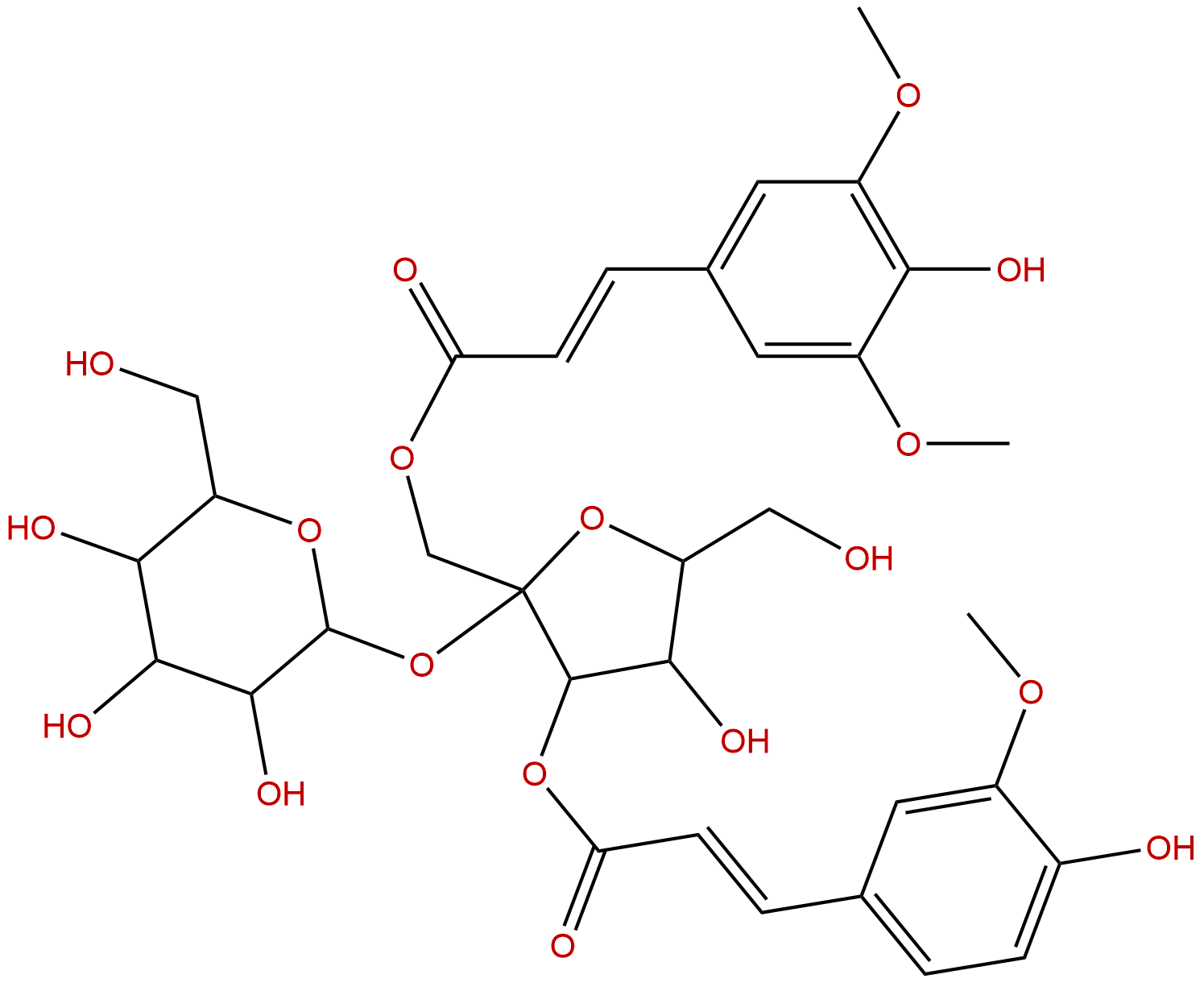


Product name: 3-Feruloyl-1-Sinapoyl sucrose
Synonym name:
Catalogue No.: BP1824
Cas No.: 98942-06-4
Formula: C33H40O18
Mol Weight: 724.665
Botanical Source:
Physical Description:
Type of Compound:
Purity: 95%~99%
Analysis Method: HPLC-DAD or/and HPLC-ELSD
Identification Method: Mass, NMR
Packing: Brown vial or HDPE plastic bottle
The product could be supplied from milligrams to grams. Inquire for bulk scale.
We provide solution to improve the water-solubility of compounds, thereby facilitating the variety of activity tests and clinic uses.
For Reference Standard and R&D, Not for Human Use Directly.
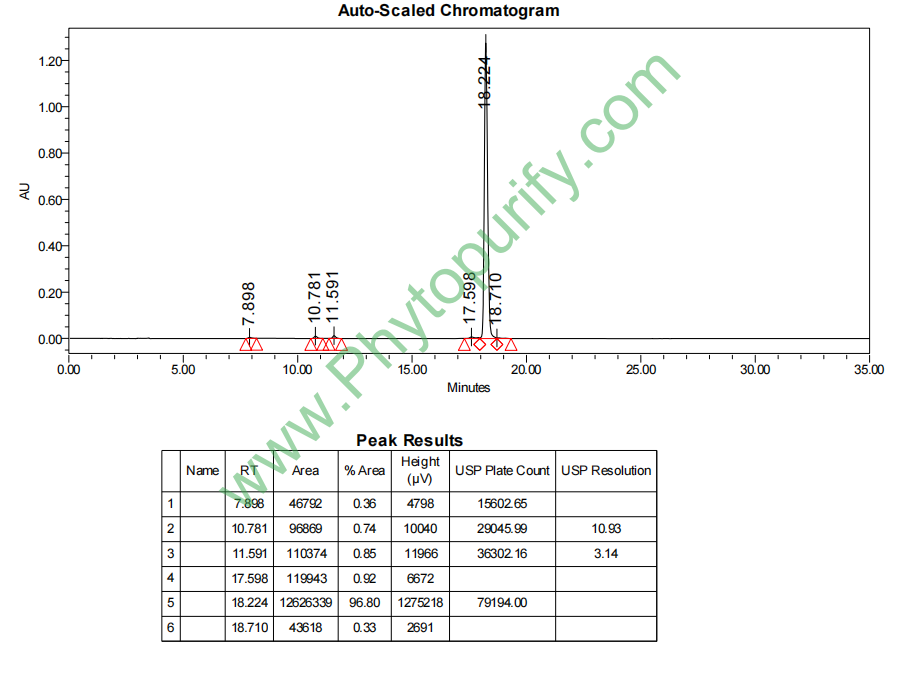
HPLC of 3-Feruloyl-1-Sinapoyl sucrose
Storage conditions:Short-term storage at 2~8℃, long-term storage at -20 ~ -80℃
269.8200
.1261
.1182
1.8214
.5009
.1606
Low
76.9225
4.9421
Yes
No
No
No
No
No
0.3
Yes
Yes
Yes
Yes
3-Feruloyl-1-Sinapoyl sucrose (FSS) is a naturally occurring sucrose ester with a unique structure. Its CAS number is 98942-06-4, molecular formula is C33H40O18, and molecular weight is approximately 724.67 g/mol. This compound was initially isolated from Polygala chamaebuxus, but subsequent studies have found that it is also present in the traditional Chinese medicine Polygala tenuifolia. Yuanzhi, as a commonly used traditional Chinese medicine for calming the nerves and improving intelligence, has a complex chemical composition, and FSS, as one of its active ingredients, has attracted attention in recent years due to its potential metabolic regulatory activity.
From a chemical structure perspective, FSS belongs to glycoside compounds, characterized by the presence of sinapyryl and feruloyl groups attached to the 1st and 3rd hydroxyl groups of sucrose molecules, respectively. Both of these acyl groups originate from the phenylpropanoid metabolic pathway and are common phenolic acid components in plants, with various biological activities such as antioxidant and anti-inflammatory. Therefore, FSS can be regarded as a natural "hybrid" molecule that combines the structural and functional characteristics of sugars and phenolic acids.
Preliminary modern pharmacological studies have revealed that FSS may regulate metabolic syndrome by acting on multiple targets related to energy metabolism and insulin sensitivity, such as AMPK, PPARG, SREBF1, IRS1, and ADIPOQ. Metabolic syndrome is a complex metabolic disorder characterized by central obesity, insulin resistance, hypertension and dyslipidemia. It is an important risk factor for cardiovascular disease and type 2 diabetes. At present, the treatment for metabolic syndrome is mostly a combination of multiple drugs, which has problems such as significant side effects and poor patient compliance. Therefore, searching for multi-target, low toxicity lead compounds from natural products has important scientific value and clinical significance. This article will provide a systematic professional science popularization introduction to FSS from the aspects of chemical structure, plant origin, pharmacological activity, drug evaluation, and research prospects.
The molecular formula of FSS is C33H40O18, with a molecular weight of 724.6650 g/mol. The SMILES structural formula is:COc1cc(/C=C/C(=O)OC2C(O)C(CO)OC2(COC(=O)/C=C/c2cc(OC)c(O)c(OC)c2)OC2OC(CO)C(O)C(O)C2O)ccc1OFrom the SMILES equation, it can be inferred that its core structure is a sucrose molecule, with a sinapyl group connected by an ester bond at position 1 and a Feruloyl group connected by an ester bond at position 3.
Both sinapyryl and feruloyl are derivatives of hydroxycinnamic acid, with the difference being the number and position of methoxy substituents. Mustard acyl has two methoxy groups at positions 3 and 5 of the benzene ring, while feruloyl has one methoxy group at position 3. This structure endows FSS with strong polarity. The calculated topological polar surface area (TPSA) is as high as 269.82 Å ², mainly attributed to the large number of oxygen atoms (18) and polar groups such as hydroxyl, methoxy, and ester bonds in the molecule.
The calculated value of its lipid water partition coefficient (LogP) is 0.1261, and the LogD is 0.1182, indicating that the compound has extremely strong hydrophilicity and weak hydrophobicity in physiological pH environments. This prediction is consistent with the measured water solubility data (1.8214, usually measured in mg/mL or log mol/L, indicating good water solubility). The combination of high TPSA and low LogP values determines that FSS has poor membrane permeability. The predicted value of Caco-2 cell permeability model is only 0.1606 (usually measured in units of × 10 ⁻⁶ cm/s, which is much lower than the standard for high permeability compounds), and the blood-brain barrier (BBB) permeability is predicted to be "low", which means that FSS is difficult to enter the central nervous system through passive diffusion.
From the perspective of molecular weight (724.67), FSS has significantly exceeded the scope of conventional small molecule drugs (usually<500 Da). Based on its high polarity and multiple hydrogen bond donors and acceptors, it can be preliminarily judged that its oral bioavailability may face challenges. However, these physicochemical properties also suggest that it may have a lower risk of cytotoxicity and central nervous system side effects, which may be an advantage for chronic metabolic diseases that require long-term medication.
The main plant source of FSS is Polygalaceae, a genus of Polygala plants in the family Polygalaceae. The existing database clearly indicates that it originates from Thinleaf Milkwort, scientific name Polygala tenuifolia Willd.。 In addition, early literature also reported on plants belonging to the same genus Polygala chamaebuxus The compound was isolated from the middle.
Yuanzhi is an important medicinal herb in traditional Chinese medicine, and its dried roots are used as medicine. It was first recorded in the "Shennong Bencao Jing" and is classified as a top-grade herb. According to traditional Chinese medicine theory, the nature of Yuanzhi is warm, with a bitter and pungent taste. It has the ability to return to the heart, kidney, and lung meridians Soothing the mind and enhancing intelligence, communicating with the heart and kidneys, dispelling phlegm and opening up orifices, and dissipating abscesses and swelling The efficacy. In clinical practice, it is commonly used to treat insomnia, dreams, forgetfulness, palpitations, confusion, cough and discomfort caused by heart kidney failure, as well as diseases such as ulcers, swelling, and breast pain. Yuanzhi is an important component of famous calming formulas such as "Tianwang Buxin Dan" and "Anshen Dingzhi Wan".
Traditional applications are mostly focused on their regulatory effects on the nervous and respiratory systems. Modern plant chemistry research has isolated and identified a large number of active ingredients from Polygala tenuifolia, mainly including Triterpenoid saponins (such as saponins from Polygala tenuifolia), sugar esters (such as FSS, tenuifoliside A, etc.), ketones (such as saponins from Polygala tenuifolia), and alkaloids, etc Among them, sugar esters are a characteristic and abundant compound in Yuanzhi, and FSS is one of them. This type of compound is considered one of the material foundations for the "intelligence enhancing" effect of Yuanzhi, and its mechanism may be related to improving energy metabolism, antioxidant stress, and anti neuroinflammation in the brain.
In recent years, with the expansion of research perspectives, researchers are no longer limited to the effects of Yuanzhi on the nervous system, but have begun to explore its potential in metabolic diseases. This has opened up a new direction for the research of sugar ester components such as FSS, moving from traditional "puzzle solving" to modern "metabolic regulation", reflecting the characteristics of traditional Chinese medicine's multi-component, multi-target, and multi-functional nature.
The existing target information suggests that the role of FSS is closely related to the regulatory network of energy metabolism and glucose lipid homeostasis, and its potential targets include AMPK, PPARG, SREBF1, IRS1, and ADIPOQ. These targets are interrelated and together form a key pathway network that regulates metabolic syndrome.
Core target and mechanism analysis:
AMPK (AMP activated protein kinase)Known as the "energy receptor" of cells. Activated when energy is insufficient (AMP/ATP ratio increases). Activated AMPK can promote glucose uptake and fatty acid oxidation (productivity), while inhibiting the synthesis of cholesterol and fatty acids (energy consumption). If FSS can activate AMPK, it can fundamentally promote energy expenditure, improve insulin sensitivity, combat obesity and insulin resistance, which is one of the core mechanism hypotheses for its intervention in metabolic syndrome.
PPARG (Peroxisome proliferator activated receptor gamma)Members of the nuclear receptor superfamily are key regulatory factors for adipocyte differentiation and function, as well as targets for insulin sensitizers such as thiazolidinediones. Activation of PPARG can promote adipocyte differentiation, storing lipids in subcutaneous fat rather than visceral fat or liver or muscle, thereby improving systemic insulin sensitivity. However, excessive activation of PPARG can lead to side effects such as weight gain and edema. FSS, as a natural ligand, may regulate PPARG activity in a milder manner.
SREBF1 (sterol regulatory element binding protein 1)It is a key transcription factor that regulates the synthesis of fatty acids and cholesterol. In insulin resistance and obesity, SREBF1 is often abnormally activated, leading to excessive lipid synthesis in the liver, causing fatty liver and hyperlipidemia. The activation of AMPK can directly phosphorylate and inhibit the activity and processing maturation of SREBF1. Therefore, FSS may indirectly inhibit SREBF1 by activating AMPK, thereby reducing hepatic lipid synthesis and improving lipid profile.
IRS1 (Insulin Receptor Substrate 1)It is a key adaptor protein in the insulin signaling pathway. After insulin binds to the receptor, IRS1 is phosphorylated and activates the downstream PI3K/Akt pathway, promoting the translocation of glucose transporter GLUT4 and achieving glucose uptake. In insulin resistance, IRS1 often undergoes serine phosphorylation (rather than normal tyrosine phosphorylation), leading to signal transduction obstruction. The activation of AMPK can improve the insulin signaling pathway, possibly restoring insulin sensitivity by affecting the phosphorylation status of IRS1.
ADIPOQ (Adiponectin)It is an adipokine secreted by adipocytes that has insulin sensitizing, anti-inflammatory and anti atherosclerotic effects. Adiponectin levels are typically reduced in obese and metabolic syndrome patients. The activation of PPARG can upregulate the expression and secretion of adiponectin. Therefore, FSS may systematically improve metabolic status by acting on PPARG and increasing adiponectin levels in the body.
Integration of mechanisms of action and association with diseases:
Based on the above target analysis, the potential network of action of FSS can be outlined: FSS may serve as a AMPK activator Initiate the energy metabolism regulation program of cells. On the one hand, activated AMPK promotes glucose utilization and fatty acid oxidation; On the other hand, it inhibits SREBF1 mediated lipid synthesis. Meanwhile, FSS may regulate PPARG Promote healthy adipose tissue function and increase Adiponectin (ADIPOQ) The secretion. Elevated adiponectin and AMPK activation work together to improve IRS1 Related insulin signaling enhances muscle and liver sensitivity to insulin.
This multi-target mode of action precisely targets Metabolic syndrome Multiple pathological stages:Insulin resistance, central obesity, dyslipidemia, and low-grade inflammation Compared with single target drugs, this multi pathway collaborative intervention may be more effective in breaking the vicious cycle of metabolic disorders and may reduce the side effects caused by overactivation or inhibition of a single pathway. Of course, the above mechanism is currently mainly based on bioinformatics prediction and target association analysis. The specific molecular binding mode, signal transduction details, and in vivo effectiveness still need to be verified through extensive cell and animal experiments.
Based on the provided pharmacological parameters, we can conduct a preliminary assessment of the development potential of FSS as an oral medication. The evaluation will be based on the well-known "Rule of Five" (Ro5) and other key parameters of ADMET (absorption, distribution, metabolism, excretion, toxicity).
1. Analysis of Drug like Rule (Lipinski Five Rules):
- Molecular weight (MW):724.67 > 500。not conform to Rule 1 (MW<500).
- Lipid water partition coefficient (LogP):0.1261 < 5。Comply with Rule 2 (LogP<5).
- Number of hydrogen bond donors (HBD)Based on the structural formula estimation, the sucrose portion and phenolic hydroxyl group provide more HBD, with a quantity greater than 5.not conform to Rule 3 (HBD<5).
- Number of hydrogen bond acceptors (HBA)Most of the 18 oxygen atoms in the molecule are HBAs, with a quantity greater than 10.not conform to Rule 4 (HBA<10).
Conclusion: FSS seriously deviates from Lipinski's five rules (usually allowing a maximum of one violation), with three out of four items not meeting the criteria. This strongly indicates its Oral bioavailability may be low Ro5 is mainly based on the summary of compounds absorbed by passive transmembrane diffusion. The high polarity and large molecular weight of FSS determine that it is difficult to be effectively absorbed by the intestine through simple passive diffusion.
2. Interpretation of absorption and distribution parameters:
- Caco-2 permeability (0.1606)The extremely low value confirms the prediction of poor intestinal absorption. It may rely on active transport or bypass pathways for absorption, but efficiency is questionable.
- Penetration of blood-brain barrier (low)Consistent with high TPSA (269.82) and low LogP. This is a disadvantage for treating central nervous system diseases, but for FSS that mainly acts on peripheral metabolic organs such as the liver, fat, and muscle, it may actually reduce potential central side effects.
- Plasma protein binding rate (PPB: 76.92%): Belongs to above average level. Higher protein binding can affect the concentration of free drugs, potentially prolonging their half-life, but can also affect the rapid efficacy and tissue distribution.
3. Metabolic and toxicity parameter analysis:
- Ames test (0.3)This value usually represents the mutagenicity test result (such as the ratio of the number of revertant colonies to the control), and 0.3 is a lower value, indicating that in this testing system No mutagenic risk This is a positive signal.
- Chromosomal aberration, hERG inhibition, skin/respiratory sensitization, phototoxicity The database shows "none" or "no", indicating that FSS has shown good safety in preliminary genetic toxicity and cardiac safety prediction.
- Serum enzyme markers (Ser_LK, GGT, AST, ALT)All are 'yes'. This requires high vigilance, alert FSS May have potential hepatotoxicity It may lead to an increase in liver enzymes such as alkaline phosphatase (ALK), gamma glutamyl transferase (GGT), aspartate aminotransferase (AST), and alanine aminotransferase (ALT). This is a security risk that must be carefully considered during its development process.
4. Comprehensive evaluation:
FSS as a Natural lead compounds It has demonstrated interesting multi-target metabolic regulation potential in pharmacological activity. However, from the perspective of drug development, it faces significant challenges:Poor oral absorption, high molecular weight, and high polarity Not in line with the design principles of conventional small molecule drugs. Its development path may be more inclined towards:
- As a starting point for prodrug or structural optimization Modify its structure (such as simplification, esterification masking polar groups) to improve lipid solubility and membrane permeability.
- Study its natural absorption and mode of action In the traditional Chinese medicine compound of Yuanzhi, other ingredients may promote the absorption of FSS or have a synergistic effect with it. Studying its complete pharmacokinetic behavior is crucial.
- Explore non oral administration routes If administered by injection (if its water solubility is good enough and safety permits), but the potential liver toxicity signal issue needs to be addressed first.
- As a tool compound Used to study the molecular mechanism of sucrose ester components regulating metabolism, providing new targets and ideas for drug discovery.
At present, there is relatively limited independent research literature on 3-ferulate-1-sinapylsucrose (FSS), and most studies report it as one of a series of sugar ester components in Polygala tenuifolia or other plants of the same genus. The existing data mainly focuses on the isolation and identification of plant chemistry and preliminary activity screening. Its role in targeting metabolic syndrome related targets is mainly based on database association and molecular docking calculations, which provide in-depth predictions In vitro and in vivo functional validation research is still in its infancy。
Research Status:
1. Chemistry and Separation The separation, purification, and structural identification methods of FSS are relatively mature. High performance liquid chromatography (HPLC) and liquid chromatography-mass spectrometry (LC-MS) techniques can be used for quantitative analysis, laying the foundation for quality control and pharmacokinetic research.
2. Active research The total extract or sugar ester parts of Yuanzhi have been reported to have effects such as improving learning and memory, antidepressant, anti-inflammatory, and antioxidant. A few studies suggest that components containing FSS may have regulatory effects on blood glucose and blood lipids, but rigorous research directly attributing activity to FSS and elucidating its molecular mechanisms is still lacking.
3. Mechanism Exploration As mentioned earlier, target prediction based on bioinformatics provides important clues for the mechanism of action of FSS, but all of these predictions need to be confirmed through experiments, such as using AMPK/PPARG reporter gene experiments, detecting adipocyte differentiation, measuring insulin stimulated glucose uptake, etc.
Application prospects and future directions:
Despite facing challenges in drug development, research on FSS still holds significant value and may develop in the following directions in the future:
Mechanism driven deep pharmacological research The primary task is to conduct systematic cellular and animal experiments to verify its actual regulatory effects on targets such as AMPK and PPARG, and evaluate its overall therapeutic efficacy in improving insulin resistance, fatty liver, and dyslipidemia in animal models of metabolic syndrome (such as high-fat diet induced obese mice). This is a crucial step in transforming it from a 'predicted active compound' to a 'candidate lead compound'.
Structural optimization and derivative design In response to its poor oral absorption, medicinal chemists can modify its structure. For example, attempting to synthesize it Prodrug(such as esterification of phenolic hydroxyl groups, which can be hydrolyzed into active ingredients in vivo), or simplifying the structure to retain pharmacophores while reducing molecular weight and polarity. By studying the structure-activity relationship, it is expected to obtain derivatives with better drug properties.
Research in the context of traditional Chinese medicine compound prescriptions Study the bioavailability, pharmacological contribution, and synergistic effect of FSS with other ingredients in Yuanzhi compound (such as compatibility with Poria cocos, Ginseng, Acorus tatarinowii, etc.). This may reveal its pharmacological substance basis and mode of action that are more in line with traditional medication.
As a probe and tool molecule Using FSS as a molecular probe can further explore new mechanisms of interaction between sucrose ester natural products and metabolic regulatory networks, and may even discover new targets of action.
Prioritize safety evaluation Given its predicted potential hepatotoxicity (elevated serum enzyme markers), any further development must involve early and comprehensive toxicological evaluation to clarify its safe dose window and toxicity mechanism.
In summary, 3-ferulate-1-sinapyrylsucrose represents a class of natural products with novel structures and unique mechanisms of action. It has emerged from traditional Chinese medicinal herbs and demonstrated new potential in the field of modern metabolic diseases. Although its path is not smooth, crossing the gap from "activity" to "drug" requires solving many problems such as absorption and toxicity, it undoubtedly provides a valuable starting point and unique chemical structure template for the development of multi-target metabolic regulators. With the continuous advancement of natural product chemistry, pharmacology, and drug design technology, the future of FSS and its derivatives is worth looking forward to.
