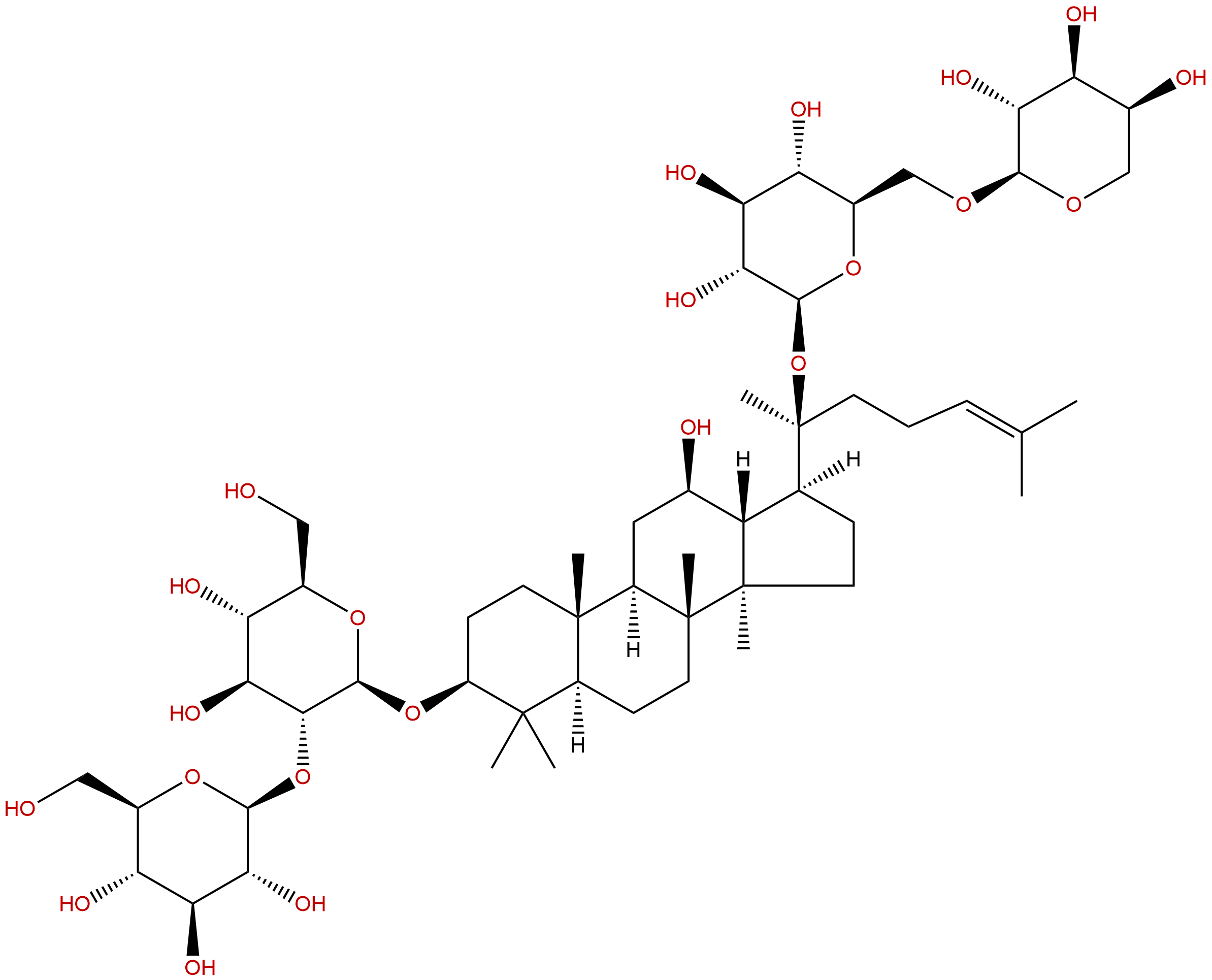


Product name: Ginsenoside Rb2
Synonym name: Ginsenoside
Catalogue No.: BP0658
Cas No.: 11021-13-9
Formula: C53H90O22
Mol Weight: 1079.28
Botanical Source: Panax ginseng (ginseng) and Panax notoginseng
Physical Description: White powder
Type of Compound: Triterpenoids
Purity: 95%~99%
Analysis Method: HPLC-DAD or/and HPLC-ELSD
Identification Method: Mass, NMR
Packing: Brown vial or HDPE plastic bottle
Storage: Store in a well closed container, protected from air and light. Put into refrigerate or freeze for long term storage.
Whenever possible, you should prepare and use solutions on the same day. However, if you need to make up stock solutions in advance, we recommend that you store the solution as aliquots in tightly sealed vials at -20℃. Generally, these will be useable for up to two weeks.
The product could be supplied from milligrams to grams, up to kilograms
Inquire for bulk scale.
Descriptions:
Ginsenosides, which are active compounds found in ginseng (Panax ginseng), are used as antidiabetic treatments; ginsenoside Rb2 may inhibit palmitate-induced gluconeogenesis via AMPK-induced SHP by relieving ER stress, a cause of gluconeogenesis.[1]
Ginsenoside Rb2 is a inducer of the SOD1 gene, the SOD1 gene is greatly activated by ginsenoside Rb2 through transcription factor AP2 binding sites and its induction.[2]
The intra-tumoral or oral administration of ginsenoside-Rb2 causes a marked inhibition of both neovascularization and tumor growth,the inhibition of tumor-associated angiogenesis by ginsenoside-Rb2 may partly contribute to the inhibition of lung tumor metastasis.[3]
Ginsenoside-Rb2 has hypoglycemic activity in streptozotocin-diabetic rat, one of the mechanisms probably is the changes of glucokinase and glucose-6-phosphatase levels.
Ginsenoside-Rb2 has anti-oxidant activity, has hydroxyl radical scavenging activity changes by heat processing.[4]
Ginsenoside Rb2 can enhance the expression of the sterol regulated element binding protein (SREBP) mRNA whereas treatment with cholesterol and FBS led to a reduction in the abundance of this transcript, suggests that it might be a valuable component capable of lowering the levels of lipids.[5]
Ginsenoside-Rb2 is the most effective among ginsenosides from red ginseng to prevent the lethal infection of HVJ, so that this ginsenoside is a promising candidate as a mucosal immunoadjuvant to enhance antiviral activity.[6]
References:
[1] Lee K T, Jung T W, Lee H J, et al. Arch Pharm Res, 2011, 34(7):1201-8.
[2] Kim Y H, Park K H, Rho H M. J Biol Chem, 1996, 271(40):24539-43.
[3] Sato K, Mochizuki M, Saiki I, et al. Biol Pharm Bull, 1994, 17(5):635-9.
[4] Kang K S, Kim H Y, Baek S H, et al. Biol Pharm Bull, 2007, 30(4):724-8.
[5] Kim E J, Lee H I, Chung K J, et al. Bmb Rep, 2009, 42(4):194-9.
[6] Yin S, Wu H, Xu F, et al. Acta Acad Med Militaris Tertiae, 2010, 32(7):658-60.
[7] Yoo Y C, Lee J, Park S R, et al. J Ginseng Res, 2013, 37(1):80-6.
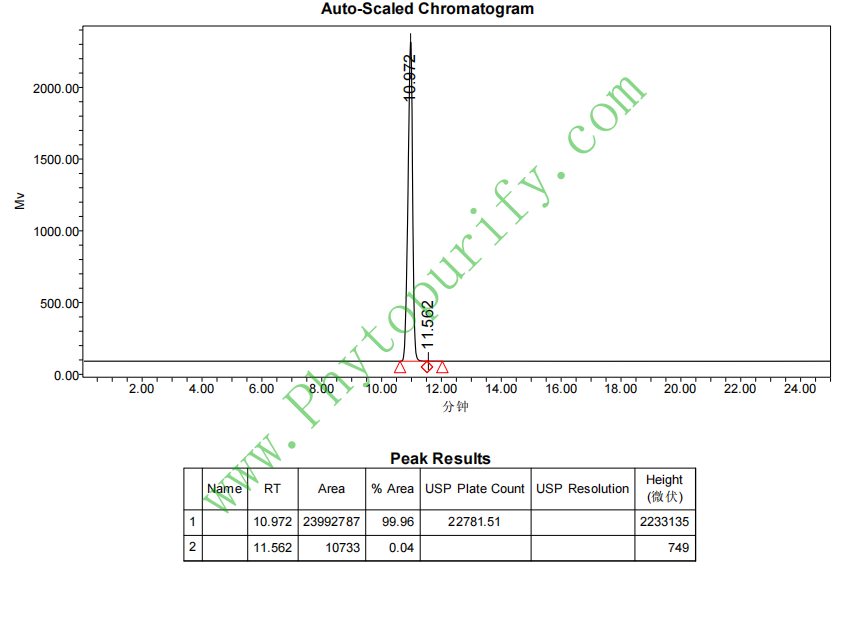
HPLC of Ginsenoside Rb2
Storage conditions:Short-term storage at 2~8℃, long-term storage at -20 ~ -80℃
357.0600
2.0515
2.0515
.1605
.4702
.0981
Low
70.7396
6.8267
Yes
No
No
No
No
No
0.0
Yes
No
No
No
Ginseng (Panax ginseng C.A. Mey.), as a treasure of traditional medicine, has attracted global attention for its pharmacological activities. Its core active ingredient, ginsenosides, is a class of triterpenoid saponins with diverse structures, mainly divided into damantane type and oleanane type according to the glycoside structure. Ginsenoside Rb2 (CAS: 11021-13-9) is one of the representative components of the dammarane type protopanaxadiol group (PPD type). As the main bioactive substance of ginseng extract, it has long shown extensive potential in anti-aging, anti-tumor, metabolic regulation, and neuroprotection. In recent years, with the development of molecular pharmacology and network pharmacology, research on ginsenoside Rb2 has progressed from macroscopic effect description to detailed analysis of specific molecular targets and signaling pathways. For example, it has been proven to upregulate GPR120 gene expression and exhibit antiviral activity, providing new ideas for the development of novel metabolic diseases and viral infection treatment drugs. Especially in the field of neurodegenerative diseases, the multi-target and multi pathway neuroprotective mechanisms are gradually becoming clear and have become a research hotspot. This article aims to systematically review the chemical properties and pharmacological activities of ginsenoside Rb2, with a particular focus on its specific molecular mechanisms and pharmacological characteristics of neuroprotective effects. It also looks forward to its clinical application prospects, in order to provide comprehensive scientific references for the deep development and transformation research of this natural product.
The molecular formula of ginsenoside Rb2 is C53H90O22, with a molecular weight of 1079.2810 Da. Its chemical structure belongs to the dammarane type tetracyclic triterpenoid saponin, and its aglycone is 20 (S) - protopanaxadiol. There are two sugar chains connected to each of the C-3 and C-20 positions of the aglycone: a glucose group (Glc) is connected to the C-3 position, and a pyranose glucose group (Glc) is further connected to the C-2 position of the glucose; The C-20 position is connected to a glucose group (Glc), and the C-6 position of the glucose is further connected to a pyranose arabinose group (Ara (p)). This unique glycosylation pattern (Glc (2-1) Glc and Glc (6-1) Ara (p)) is a key feature that distinguishes it from other ginsenosides (such as Rb1, Rc, Rd), and profoundly affects its physicochemical properties and biological activity.
From the parameters related to drug properties, its lipid water partition coefficient (LogP) is 2.0515, indicating that it has a certain degree of lipophilicity, but not high lipid solubility. Its topological polar surface area (TPSA) is as high as 357.0600 Å ², which is mainly attributed to the abundant hydroxyl and sugar structures in the molecule, leading to its high polarity. The water solubility value is 0.1605 mg/mL, which belongs to slightly soluble or poorly soluble in water, which to some extent limits its bioavailability. The molecular weight exceeds 1000 Da and contains multiple hydrogen bond donors and acceptors, which together determine its poor membrane permeability. According to the prediction, its blood-brain barrier (BBB) permeability is "low", indicating that its prototype drug may face challenges in directly entering the central nervous system, but metabolites or regulating peripheral mechanisms may still exert neuroprotective effects. In terms of preliminary safety prediction, the hERG inhibition risk is "no", and the Ames test result is 0.0, indicating that its potential cardiac toxicity and genetic toxicity risks are low, and it has a good safety basis.
Ginsenoside Rb2 mainly comes from plants of the Panax genus in the Araliaceae family, including Asian ginseng, American ginseng, and Panax notoginseng, with relatively high content in ginseng roots. Its content is significantly affected by the place of origin, cultivation years, harvest season, and processing methods (such as red ginseng and white ginseng). The processing of red ginseng may cause the conversion of some saponins, thereby affecting the relative content of Rb2.
The extraction of ginsenoside Rb2 from plant materials usually follows the general process of natural product separation. Firstly, solvent extraction method is adopted, commonly using methanol, ethanol or water ethanol mixed solution for reflux extraction or ultrasound assisted extraction to extract saponins from plant cells. Subsequently, taking advantage of the solubility of ginsenosides as glycosides in water and n-butanol, water saturated n-butanol is often used for liquid-liquid extraction to preliminarily enrich the saponin sites. After obtaining the crude extract, further fine separation and purification are required. Column chromatography technology is the core method, often using silica gel column chromatography, reverse phase silica gel (such as ODS) column chromatography, and recently the highly efficient application of preparative high-performance liquid chromatography (HPLC). Macroporous adsorption resins (such as D101, AB-8) are also commonly used for saponin enrichment and preliminary decolorization and impurity removal. In order to obtain high-purity ginsenoside Rb2 monomers, multiple chromatographic techniques are often used in combination with thin-layer chromatography (TLC) or high-performance liquid chromatography-mass spectrometry (HPLC-MS) for online monitoring and identification. Modern green extraction technologies such as supercritical fluid extraction and microwave-assisted extraction are also being explored to improve extraction efficiency and reduce the use of organic solvents.
Ginsenoside Rb2 has a wide range of pharmacological activities, and its research has gone beyond the traditional concept of "adaptogens" and delved into specific disease areas.
Neuroprotective effect This is currently the most active field of research on ginsenoside Rb2. Numerous in vitro and in vivo studies have shown that Rb2 can significantly improve cell survival and function in various neural injury models. In the Alzheimer's disease (AD) model, it can reduce beta amyloid (A β) - induced neuronal apoptosis and improve cognitive dysfunction. In the Parkinson's disease (PD) model, it can protect dopaminergic neurons from damage by neurotoxins such as MPTP/MPP+. Its neuroprotective effect is closely related to multiple mechanisms such as antioxidant stress, anti apoptosis, inhibition of inflammatory response, and promotion of neurotrophic factor expression.
Antiviral effect Research has confirmed that ginsenoside Rb2 has inhibitory effects on certain viruses. For example, reports have shown that it has a certain inhibitory effect on the replication of respiratory syncytial virus (RSV) and herpes simplex virus (HSV). Its mechanism may involve interfering with virus adsorption or entry into host cells, regulating host immune response, etc., especially its upregulation of GPR120 (a free fatty acid receptor) expression, which may indirectly affect the virus infection process by regulating the inflammatory pathway. However, the specific antiviral targets still need further clarification.
Metabolic regulation effect Ginsenoside Rb2 shows regulatory potential in glucose and lipid metabolism disorders. It can improve insulin resistance, reduce hyperglycemia, and its mechanism is related to activating the AMPK signaling pathway, regulating the translocation of glucose transporters (such as GLUT4), and anti-inflammatory effects mediated by GPR120. In terms of lipid metabolism, it can reduce serum triglyceride and cholesterol levels.
Cardiovascular protective effect: Research shows that Rb2 has the effects of protecting vascular endothelial function, inhibiting atherosclerotic plaque formation, and resisting myocardial ischemia-reperfusion injury. Its mechanism is related to antioxidation, anti-inflammatory and regulation of nitric oxide (NO) production.
antitumor activity Some studies suggest that ginsenoside Rb2 has inhibitory effects on the proliferation of certain cancer cell lines (such as liver cancer and colon cancer cells), and can induce cell apoptosis and autophagy. However, its anti-tumor activity is relatively weaker compared to other ginsenosides (such as Rg3, Rh2), and the mechanism is more complex.
The neuroprotective effect of ginsenoside Rb2 is a typical manifestation of its multi-target and multi pathway synergistic effect. Based on existing research, its key mechanisms of action and molecular targets can be summarized as follows:
Anti apoptotic pathway:
Antioxidant stress and Nrf2 pathway:
Regulating tau protein phosphorylation and AD related pathology:
Epigenetic regulation and cellular energy metabolism:
Other potential mechanisms:
In summary, ginsenoside Rb2 acts on multiple targets such as BCL2, CASP9, NFE2L2, GSK3B, BACE1, SIRT1, MAPK1, interweaving into a complex neuroprotective network to jointly combat the core processes of neurodegenerative diseases such as apoptosis, oxidative stress, protein misfolding, and metabolic disorders.
Although ginsenoside Rb2 has a wide range of pharmacological activities, its pharmacological development faces significant challenges, mainly due to its complex glycosylation structure and high molecular weight.
Pharmacokinetic characteristics The oral bioavailability of ginsenoside Rb2 is extremely low. This is mainly due to: ① poor stability of the gastrointestinal tract: gastric acid and gut microbiota (especially bacteria in the colon) can gradually hydrolyze their glycosides, first removing the C-20 sugar chain (generating Rd), then further removing the C-3 sugar chain, and finally converting it into secondary metabolites such as glycoside compound K (CK). These metabolites often have stronger membrane permeability and biological activity. ② Poor absorption: high molecular weight and TPSA make passive transmembrane diffusion difficult; Although there may be limited absorption mediated by intestinal transporters, the efficiency is not high. ③ First pass effect: After entering the liver through the portal vein, it may undergo further metabolism. Therefore, the detected concentration of prototype Rb2 in the bloodstream is very low, and its pharmacological effects are largely attributed to its intestinal metabolites (such as CK) or indirect effects mediated by metabolites. It is widely distributed, but its blood-brain barrier permeability is poor, which limits the direct effect of the prototype drug on the central nervous system. The main excretion pathways are feces and urine.
Optimization strategy for drug properties To overcome these shortcomings, researchers are exploring various strategies:
1. Structural modification Chemical modification of sugar or glycoside groups, such as preparation of prodrugs, esterification derivatives, etc., to improve their lipid solubility and stability.
2. New drug delivery system Using nanotechnology such as liposomes, polymer nanoparticles, solid lipid nanoparticles, micelles, etc. to encapsulate Rb2 can significantly improve its solubility, protect it from degradation, enhance its intestinal absorption and targeting, and even improve its brain delivery through specific mechanisms such as adsorption mediated endocytosis.
3. Precursor drug strategy By utilizing the metabolic characteristics of gut microbiota, Rb2 is regarded as a "prodrug", with a focus on studying the pharmacokinetics and pharmacodynamics of its active metabolite CK, and developing optimized formulations for direct delivery of CK.
4. combination therapy Combined with P-glycoprotein inhibitors or other absorption enhancers, it may improve intestinal absorption.
The clinical application prospects of ginsenoside Rb2 are broad, but the road ahead is winding.
Potential application directions:
1. Adjuvant therapy for neurodegenerative diseases As a multi-target neuroprotective agent, it has great potential for early intervention and combination therapy in diseases such as Alzheimer's disease, Parkinson's disease, and vascular dementia. It can be developed as a dietary supplement or used in combination with existing drugs (such as acetylcholinesterase inhibitors, memantine, etc.) to synergistically enhance efficacy and reduce side effects.
2. Metabolic syndrome and related complications Based on its regulatory effect on glucose and lipid metabolism and GPR120 activation characteristics, it is expected to be used for the prevention and control of diabetes, nonalcoholic fatty liver, obesity and the cardiovascular risk caused by it.
3. Antiviral adjuvant therapy As a natural antiviral ingredient, it can also be used as an adjuvant therapy or preventive healthcare for certain viral respiratory infections.
4. Anti aging and cognitive enhancement It activates SIRT1, antioxidant and other mechanisms, making it valuable in the healthcare field of delaying aging and improving age-related cognitive decline.
Challenges and Future Prospects:
1. Deep exploration of mechanisms Current target research is still mostly based on the "single target single pathway" model, which requires the use of systems biology, network pharmacology, and multi omics techniques to comprehensively elucidate the overall action network of "multi-component multi-target multi pathway" and clarify its direct target and indirect regulatory effects.
2. Breakthrough of pharmacokinetic bottleneck The development of new drug delivery systems, especially brain targeted delivery systems, is the key to promoting their clinical application. It is necessary to conduct a thorough evaluation of the safety, long-term toxicity, and large-scale production process of nano formulations.
3. Lack of high-quality clinical evidence At present, the vast majority of research is still in the preclinical stage, and there is an urgent need to design rigorous randomized controlled clinical trials to verify their effectiveness and safety in humans, and determine appropriate doses and treatment courses.
4. Resources and Standardization Issues The content of ginsenoside Rb2 in the raw materials is limited, and the chemical synthesis cost is high. We need to develop sustainable biosynthetic technologies, such as synthetic biology and plant cell culture, and establish quality standards for raw materials and formulations.
In the future, with a deeper understanding of the molecular mechanism of ginsenoside Rb2 and continuous innovation in drug delivery technology, this ancient natural active molecule is expected to rejuvenate and move from the laboratory to clinical practice, providing new strategies and choices for the prevention and treatment of various complex diseases.
Ginsenoside Rb2, as one of the main active ingredients of ginseng, has shown great potential for drug development due to its extensive pharmacological activities, especially its neuroprotective effects by regulating multiple key targets such as BCL2, NFE2L2, GSK3B, SIRT1, etc. Its mechanism of action is complex, exhibiting the unique multi-target synergistic advantage of natural products. However, its inherent pharmaceutical defects, such as low oral bioavailability and low blood-brain barrier permeability, are the main obstacles that restrict its clinical translation. At present, the research focus is shifting from activity discovery to mechanism deepening and dosage form innovation, especially the development of delivery systems based on nanotechnology, which brings hope for breaking through its delivery bottleneck. In the future, through interdisciplinary collaboration, based on elucidating its systemic action network, overcoming pharmacokinetic limitations, and promoting strict clinical evaluation, ginsenoside Rb2 is expected to be transformed from a promising candidate molecule into an innovative drug or functional product for the prevention and treatment of major public health problems such as neurodegenerative diseases and metabolic disorders, continuing and expanding the wisdom of traditional Chinese medicine.
