| Catalog No | Package | Original Price | Price | Inventory | Quantity | Operating |
|---|---|---|---|---|---|---|
| BP4745-5mg | 5mg | $420.00 | Sign in |
|


Storage conditions:Short-term storage at 2~8℃, long-term storage at -20 ~ -80℃
101.1500
4.4445
4.4437
.0025
3.1164
5.4269
Low
80.0148
5.0838
No
No
No
No
No
No
0.0
Yes
No
No
No
Natural products have always been an important source of drug discovery and development, especially in the field of anti-tumor. Finding efficient and low toxicity active molecules from nature is one of the hot research directions in pharmacy. Ginseng(Panax ginseng C. As a traditional precious Chinese medicine, A. Meyer's active ingredient ginsenosides and their metabolites, protopanaxadiol (PPD) and protopanaxatriol (PPT) compounds, have been proven to have a wide range of pharmacological activities, including anti-tumor, anti-inflammatory, antioxidant, and immune regulation. However, the low oral bioavailability and rapid metabolism of natural ginsenosides limit their clinical translation. In recent years, a series of derivatives with stronger activity and better drug properties have been discovered by modifying the structure of ginsenosides or studying their metabolites in vivo.
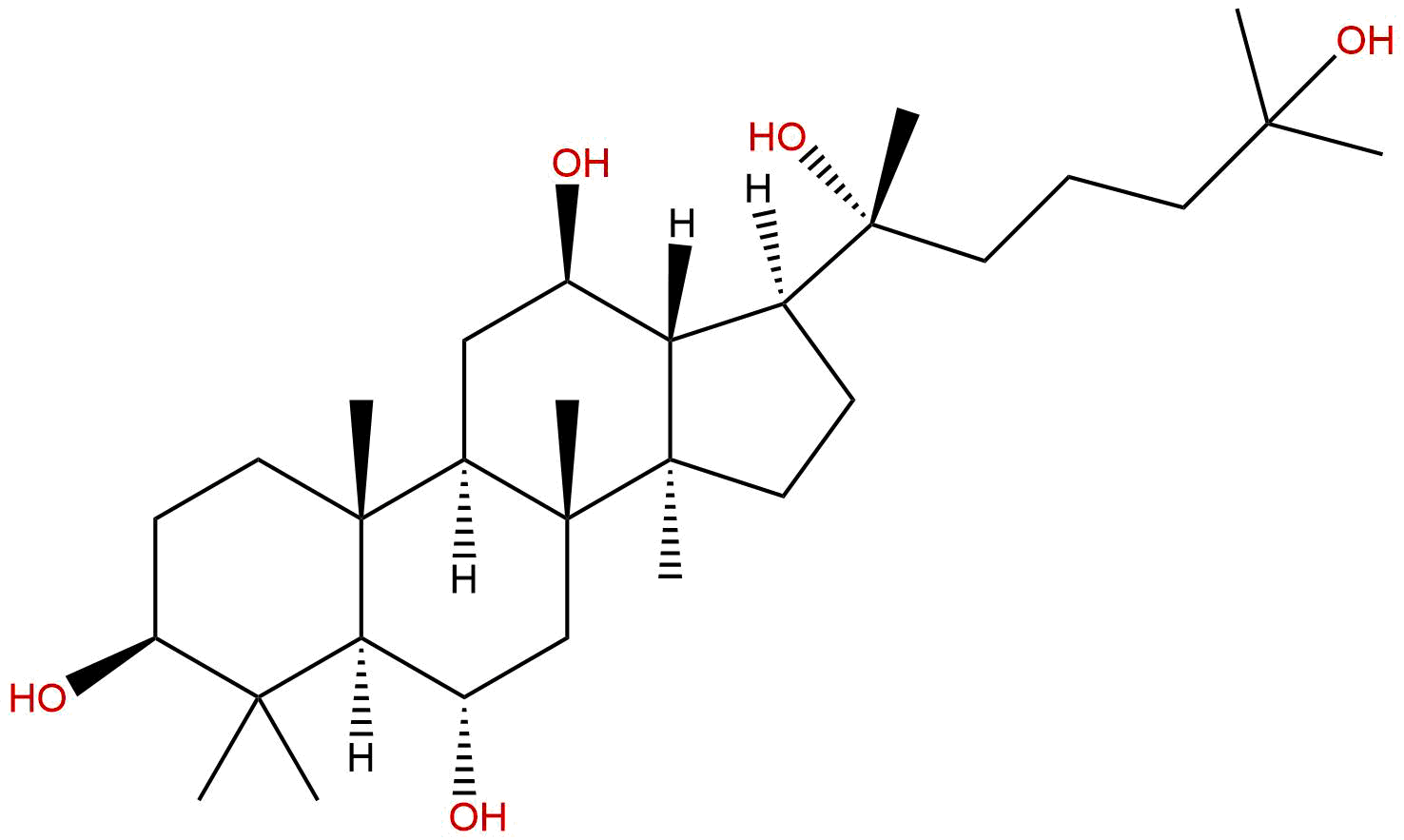
20 (R) -25-Hydroxyprotopanaxatio, abbreviated as 25-OH-PPT or AD-1, is a dammarane type triterpenoid compound derived from the ginsenoside metabolism pathway. Its chemical structure involves the introduction of a hydroxyl group at the C-25 position of 20 (R) - protopanaxatriol (20 (R) - PPT). This structural modification endows the molecule with unique biological properties. Early studies have shown that 25-OH-PPT exhibits significant anti proliferative, apoptosis inducing, and anti metastatic activities in various tumor models. Its mechanism of action involves the regulation of multiple key signaling pathways, including multi-target effects on apoptosis regulatory proteins (MCL1, BCL2), transcription factors (STAT3, HIF1A), matrix metalloproteinases (MMP2), topoisomerases (TOP1, TOP2A), and hormone receptors (ESR1, CYP19A1). This multi-target and multi pathway regulatory mode has potential advantages in overcoming tumor drug resistance and complexity.
This article aims to provide a systematic professional review of 20 (R) -25 hydroxyprotopanaxatriol. Starting from its chemical structure and physicochemical properties, the plant sources and extraction methods of 20 (R) -25 hydroxyprotopanaxatriol are sorted out, with a focus on its anti-tumor pharmacological activity and molecular mechanism. Combined with its pharmacological parameters and pharmacokinetic characteristics, the potential of 20 (R) -25 hydroxyprotopanaxatriol as a lead compound is evaluated. Finally, its clinical application prospects are discussed, in order to provide reference for the in-depth research and development of this natural product.
20 (R) -25 hydroxyprotopanaxatriol belongs to the damaane type tetracyclic triterpenoid compounds, and its core skeleton consists of a cyclopentane dihydrophenanthrene nucleus (A, B, C, D rings) with 17 carbon atoms and a C-17 side chain. Its chemical name is (20R) - dama-24-en-3 β, 6 α, 12 β, 20,25-pentanol. Compared with the parent compound 20 (R) - protopanaxatriol, its most significant structural feature is the introduction of a hydroxyl group (- OH) at position C-25 (the quaternary carbon atom at the end of the side chain), and an R configuration at position C-20. C-3, C-6, and C-12 positions are respectively connected to β - OH, α - OH, and β - OH, with a double bond between C-24 and C-25. This polyhydroxy substitution and specific stereoconfiguration are the structural basis for its biological activity.
In terms of physical and chemical properties, according to computational chemistry and experimental data, the molecular weight of this compound is 494.7570 g/mol, belonging to the category of small molecule compounds. Its lipid water partition coefficient (LogP) is 4.4445, indicating that the molecule has strong lipophilicity, which is beneficial for it to pass through the phospholipid bilayer of the cell membrane and enter the cell to bind with the target. However, its topological polar surface area (TPSA) is 101.15 Å ², which is relatively high (it is generally believed that TPSA>140 Å ² is not conducive to oral absorption), suggesting the presence of multiple hydrogen bond donors and acceptors (i.e. multiple hydroxyl groups) in its molecule, which to some extent increases its water solubility challenge. Its water solubility is only 0.0025 mg/mL, which is a difficult to dissolve compound, and this is a key issue that needs to be paid attention to in its drug development. The compound's ability to penetrate the blood-brain barrier (BBB) was evaluated as' low ', indicating limited potential for its application in the treatment of central nervous system related diseases, but it may also imply a more specific peripheral effect. In addition, the risk assessment of hERG inhibition is' no ', indicating a lower risk of inducing QT interval prolongation and apical torsion type ventricular tachycardia, which is a favorable safety feature. The Ames test result is 0.0, indicating that it is negative in the standard mutagenicity test, suggesting a low risk of genetic toxicity.
20 (R) -25 hydroxyprotopanaxatriol is not a native saponin abundant in ginseng plants, but a metabolic or transformed product of ginsenosides under specific conditions in vivo or in vitro. Its main sources include:
In terms of extraction and purification, due to the extremely low content of 25-OH-PPT in ginseng raw materials, it usually needs to be separated from fermentation broth or enzymatic reaction systems. The separation and purification process generally includes solvent extraction (such as ethyl acetate, n-butanol), silica gel column chromatography, ODS reverse phase column chromatography, and preparative high-performance liquid chromatography (Pre HPLC). By utilizing the difference in polarity and molecular size between it and impurities, high-purity 25-OH-PPT monomer is ultimately obtained through gradient elution.
The pharmacological activity research of 20 (R) -25 hydroxyprotopanaxatriol mainly focuses on its anti-tumor effect, while also involving other potential biological effects.
1. Antitumor activity
A large number of in vitro and in vivo experiments have confirmed that 25-OH-PPT has significant proliferation inhibition and killing effects on various human tumor cell lines, with a wide spectrum of effects, including but not limited to:
* Lung cancer It exhibits potent cytotoxicity against non-small cell lung cancer cell lines such as A549 and H1299, with IC50 values typically in the micromolar range.
* breast cancer: It has inhibitory effect on MCF-7 (ER positive), MDA-MB-231 (triple negative) and other breast cancer cell lines, and is also effective on hormone independent breast cancer cells.
* colorectal cancer Inhibit the growth of cells such as HCT116 and HT-29, and induce their apoptosis.
* liver cancer Has anti proliferative activity against liver cancer cells such as HepG2 and Huh7.
* prostate cancer Inhibit the proliferation of prostate cancer cells such as LNCaP and PC-3.
* leukemia Has the ability to induce differentiation and apoptosis in leukemia cell lines such as HL-60 and K562.
* Ovarian cancer and cervical cancer It also showed activity on cell lines such as SKOV3 and HeLa.
2. Inducing cell apoptosis
25-OH-PPT mainly induces tumor cell apoptosis through mitochondrial pathway (endogenous pathway) and death receptor pathway (exogenous pathway). It can:
*Downregulate the expression of anti apoptotic proteins MCL1 and BCL2.
*Upregulate the expression of pro apoptotic protein BAX and promote its translocation to the mitochondrial membrane.
*Resulting in the loss of mitochondrial membrane potential (Δ PSI m) and the release of cytochrome c into the cytoplasm.
*Activation of Caspase-9 and Caspase-3/7 ultimately leads to cell apoptosis.
3. Inhibit cell proliferation and cycle arrest
This compound can arrest the tumor cell cycle in either G0/G1 phase or G2/M phase, depending on the cell type. The mechanism involves the regulation of cyclins and cyclin dependent kinases (CDKs), such as downregulating the expression of Cyclin D1, CDK4, Cyclin B1, while upregulating the levels of CDK inhibitors p21 and p27.
4. Inhibit tumor cell migration and invasion
25-OH-PPT can significantly inhibit the migration and invasion ability of tumor cells, which is closely related to its downregulation of the expression and activity of matrix metalloproteinase MMP2. MMP2 is a key enzyme that degrades extracellular matrix (ECM), and its reduced activity directly weakens the invasive ability of tumor cells.
5. Anti angiogenesis
By inhibiting the protein expression and transcriptional activity of hypoxia inducible factor HIF1A, 25-OH-PPT can downregulate the expression of its downstream target gene, vascular endothelial growth factor (VEGF), thereby inhibiting the formation of tumor neovascularization and cutting off the tumor's nutritional supply.
6. Reverse multidrug resistance
Preliminary studies suggest that 25-OH-PPT may increase the sensitivity of drug-resistant tumor cells to chemotherapy drugs such as doxorubicin and paclitaxel by inhibiting the function or expression of P-glycoprotein (P-gp), demonstrating the potential to reverse multidrug resistance.
7. Other pharmacological activities
In addition to its anti-tumor effects, studies have also found that 25-OH-PPT has anti-inflammatory activity (inhibiting the NF - κ B pathway), neuroprotective effects (reducing oxidative stress in neuronal injury models), and anti-aging activity (by regulating the SIRT1 pathway).
The anti-tumor mechanism of 20 (R) -25 hydroxyprotopanaxatriol is multi-layered and multi-target, with its core being the precise regulation of multiple signaling pathways closely related to tumor occurrence and development. The following is an in-depth analysis of its key molecular targets:
1. Apoptosis regulatory network: MCL1 and BCL2
MCL1 and BCL2 are key anti apoptotic proteins in the BCL-2 family, highly expressed in various tumors, and are important mechanisms for tumor cell survival and drug resistance. 25-OH-PPT can significantly reduce the protein levels of MCL1 and BCL2 through transcriptional repression and/or promotion of protein degradation. This downregulation disrupts the balance between pro apoptotic and anti apoptotic proteins within the cell, allowing pro apoptotic effector proteins such as BAX/BAK to be released and form oligomers on the outer membrane of mitochondria, leading to mitochondrial outer membrane permeabilization (MOMP) and initiating the endogenous apoptotic program. This is one of the core mechanisms by which 25-OH-PPT induces apoptosis.
2. Signal transduction hub: STAT3
Signal transducer and activator of transcription factor 3 (STAT3) is a key oncogenic transcription factor, and sustained activation of STAT3 can promote cell proliferation, survival, angiogenesis, and immune escape. 25-OH-PPT can inhibit the phosphorylation of STAT3, especially at the Tyr705 site, preventing its dimerization and incorporation into the nucleus, thereby suppressing its transcriptional activity. The decrease in STAT3 activity directly leads to the downregulation of downstream target genes, including MCL1, BCL2, Cyclin D1, VEGF, MMP2, etc. Therefore, inhibiting the STAT3 signaling pathway is one of the key mechanisms for 25-OH-PPT to exert multi-target effects.
3. Tumor microenvironment regulation: HIF1A and MMP2
* HIF1A In the hypoxic microenvironment of tumors, HIF1A is stably expressed and activated, driving angiogenesis and metabolic reprogramming. 25-OH-PPT promotes the ubiquitination degradation of HIF1A protein (possibly by enhancing the binding of VHL protein to HIF1A), reduces its protein level, thereby inhibiting the expression of angiogenic factors such as VEGF and exerting anti angiogenic effects.
* MMP2 As the main enzyme for degrading type IV collagen, MMP2 is a key enzyme for tumor cell invasion and metastasis. 25-OH-PPT inhibits the STAT3 or MAPK/ERK pathways, downregulates the mRNA and protein expression of MMP2, and may directly inhibit its enzyme activity, effectively preventing the migration and invasion of tumor cells.
4. DNA topology and replication: TOP1 and TOP2A
Topoisomerase I (TOP1) and II α (TOP2A) are essential enzymes for DNA replication, transcription, and chromosome separation, and are also classic targets for various chemotherapy drugs such as camptothecin and etoposide. Research has shown that 25-OH-PPT can inhibit the catalytic activity of TOP1 and TOP2A. It may form a "cleavable complex" by binding to enzyme DNA complexes, preventing the reconnection of DNA strands, leading to the accumulation of DNA damage, and ultimately inducing cell death. This topoisomerase inhibition activity is another important mechanism of its anti-tumor effect.
5. Proliferation and survival pathway: MAPK1
Mitogen activated protein kinase 1 (MAPK1, also known as ERK2) is a key member of the RAS-RAF-MEK-ERK signaling pathway, regulating cell proliferation and differentiation. The regulatory effect of 25-OH-PPT on MAPK1 is cell type and concentration dependent. In some cells, it may reduce the activity of ERK1/2 by inhibiting the phosphorylation of MEK, thereby inhibiting proliferation; In other cells, it may induce cellular aging or apoptosis by continuously activating ERK1/2. This complex regulatory pattern reflects the precision of its function.
6. Hormone related targets: ESR1 and CYP19A1
For hormone dependent tumors (such as breast cancer), 25-OH-PPT shows a dual regulatory effect.
* ESR1 (estrogen receptor alpha): 25-OH-PPT can down regulate the expression of ESR1, and may act as a selective estrogen receptor down-regulation (SERD) to antagonize the growth promoting effect of estrogen on breast cancer cells.
* CYP19A1 (aromatase)This enzyme is the key rate limiting enzyme for the conversion of androgens to estrogens. 25-OH-PPT can inhibit the enzymatic activity of CYP19A1, thereby reducing the production of estrogen in the body. This dual inhibition of ESR1 and CYP19A1 makes it have a synergistic effect similar to "aromatase inhibitor+anti estrogen" in the treatment of ER positive breast cancer.
In summary, 25-OH-PPT forms a complex and interconnected molecular network by simultaneously acting on multiple key nodes such as apoptosis, signal transduction, tumor microenvironment, DNA damage repair, and hormone metabolism, thereby achieving multidimensional strikes on tumor cells.
The conversion of natural active molecules into clinical drugs must undergo strict pharmacological evaluation. Based on the provided parameters and existing research, the pharmacological properties of 20 (R) -25-hydroxyprotopanaxatriol are analyzed as follows:
1. Analysis of drug properties
* Molecular weight and LogP The molecular weight (494.76 Da) is slightly higher than the limit of molecular weight<500 in Lipinski's "Five Rules", but LogP (4.44) is within an acceptable range (<5). Overall, its medicinal properties are acceptable, but it is at the boundary.
* Hydrogen bond donor and acceptor The molecule contains 5 hydroxyl groups (all hydrogen bond donors), and the number of hydrogen bond donors (5) exceeds the limit of<5 in the "Five Rules" (equal to 5, at the critical point). The number of hydrogen bond acceptors (5) meets the requirements. Excessive hydrogen bond donors are often detrimental to membrane permeability and oral absorption.
* TPSA The high TPSA value of 101.15 Å ² further confirms that its oral absorption may face challenges.
2. Pharmacokinetic characteristics
* absorb The compound has extremely poor water solubility (0.0025 mg/mL) and a high LogP, indicating that it belongs to BCS class II (low solubility, high permeability) drugs. Its oral absorption will be severely limited by solubility, resulting in low bioavailability. This may be the main bottleneck in its development as an oral medication.
* distribution High lipophilicity makes it easy to distribute into tissues, but the plasma protein binding rate may be higher. Low BBB permeability indicates a predominant peripheral distribution.
* Metabolism As a substrate of CYP450 enzymes (especially CYP3A4), 25-OH-PPT may undergo extensive phase I and phase II metabolism (such as hydroxylation and glucuronidation) in the liver, resulting in a short half-life.
* excretion Metabolites may be mainly excreted through bile and urine.
3. Safety evaluation
* HERG inhibition Negative, reducing the risk of cardiac toxicity.
* Ames test Negative, preliminarily ruling out genetic toxicity.
* Preliminary toxicity Existing animal experimental data shows that 25-OH-PPT has low toxicity to major organs (heart, liver, kidney) at effective doses, demonstrating a good safety window.
4. Pharmaceutical strategy
Given the challenges of drug formation mentioned above, structural modification or formulation optimization of 25-OH-PPT is key to advancing its clinical translation.
* Prodrug design Esterification or phosphorylation modification of hydroxyl groups at positions C-3, C-6, C-12, or C-25 to prepare prodrugs for improved water solubility and oral absorption. For example, its succinate or phosphate prodrug has shown improved pharmacokinetic properties in studies.
* Formulation optimization The use of novel drug delivery systems such as nanoliposomes, polymer micelles, solid dispersions, and phospholipid complexes can significantly improve their solubility, dissolution rate, and bioavailability.
* Simplified structure Retain key pharmacophores (such as C-25 hydroxyl, C-20 R configuration), simplify the parent nucleus, and search for analogs with smaller molecular weight and better LogP.
20 (R) -25 hydroxyprotopanaxatriol, as a natural product derivative with multi-target anti-tumor activity, has shown broad clinical application prospects, especially in the following fields worthy of further exploration:
1. As a novel anti-tumor candidate drug
Its unique "multi-target, low toxicity" characteristics make it very suitable for development as:
* Monotherapy: Used for tumor types that are not sensitive to traditional chemotherapy or have developed drug resistance, such as triple negative breast cancer, some types of lung cancer and liver cancer.
* combination therapy Used in combination with chemotherapy drugs (such as cisplatin, paclitaxel, doxorubicin), targeted drugs (such as imatinib, gefitinib), or immune checkpoint inhibitors (such as PD-1/PD-L1 antibodies). The mechanism is to enhance chemotherapy sensitivity by downregulating MCL1/BCL2; By inhibiting STAT3, the tumor immune microenvironment is improved and the efficacy of immunotherapy is enhanced. This synergistic effect is expected to achieve the clinical goal of "increasing efficiency and reducing toxicity".
* adjuvant therapy Used as an adjuvant therapy after tumor surgery or chemotherapy to remove small residual lesions, prevent recurrence and metastasis.
2. Application in hormone dependent tumors
In view of its dual inhibitory effects on ESR1 and CYP19A1, 25-OH-PPT has unique advantages in the treatment of ER positive breast cancer. It can serve as a potential alternative or complementary drug for aromatase inhibitors (such as itraconazole) and selective estrogen receptor downregulation (such as fluvoxetine), especially for patients who develop resistance to existing endocrine therapies.
3. Optimize the structure as a lead compound
The Damane skeleton of 25-OH-PPT is an excellent lead compound platform. Future research can focus on structural modifications in the following directions:
* Improve water solubility Introduce phosphate groups, amino acids, or sugar groups at positions C-3, C-6, and C-12.
* Enhance targeting capability Constructing antibody drug conjugates (ADCs) or targeted nano delivery systems by connecting targeted ligands such as folate and RGD peptides.
* Optimize metabolic stability Modify the C-25 position or side chain double bond to resist CYP450 enzyme metabolism.
4. Challenges and Future Directions Faced
Despite the promising prospects, the clinical translation of 25-OH-PPT still faces many challenges:
* Pharmacokinetic optimization The most urgent task is to solve the problem of low oral bioavailability.
* Deepening the mechanism of action It is necessary to use systems biology and network pharmacology methods to more comprehensively reveal the molecular network of its multi-target effects and clarify its key targets in different tumor types.
* Long term toxicity assessment Standardized long-term toxicity and reproductive toxicity studies are required.
* Clinical research advancement After completing sufficient preclinical studies, phase I clinical trials should be initiated as soon as possible to evaluate their safety, tolerability, and pharmacokinetic characteristics in humans.
20 (R) -25 hydroxyprotopanaxatriol, as an important in vivo metabolite of ginsenosides, has demonstrated significant scientific value and application potential in the field of anti-tumor drug development due to its unique chemical structure and multi-target mechanism of action. It achieves multidimensional inhibition of tumor cell proliferation, apoptosis, invasion, metastasis, and angiogenesis by regulating a series of key targets such as MCL1, BCL2, STAT3, HIF1A, MMP2, TOP1/2A, MAPK1, ESR1, and CYP19A1. Although its poor water solubility and low oral bioavailability are the main obstacles to drug development, these bottlenecks are expected to be overcome through strategies such as prodrug design, new formulation technology, and structural optimization. In the future, with a deeper understanding of its pharmacological mechanism and continuous innovation in medicinal chemistry, 20 (R) -25-hydroxyprotopanaxatriol and its derivatives are expected to become a new type of anti-tumor drug with Chinese original characteristics, bringing new treatment options for cancer patients.
Batch can search by a CAS number,one per line
