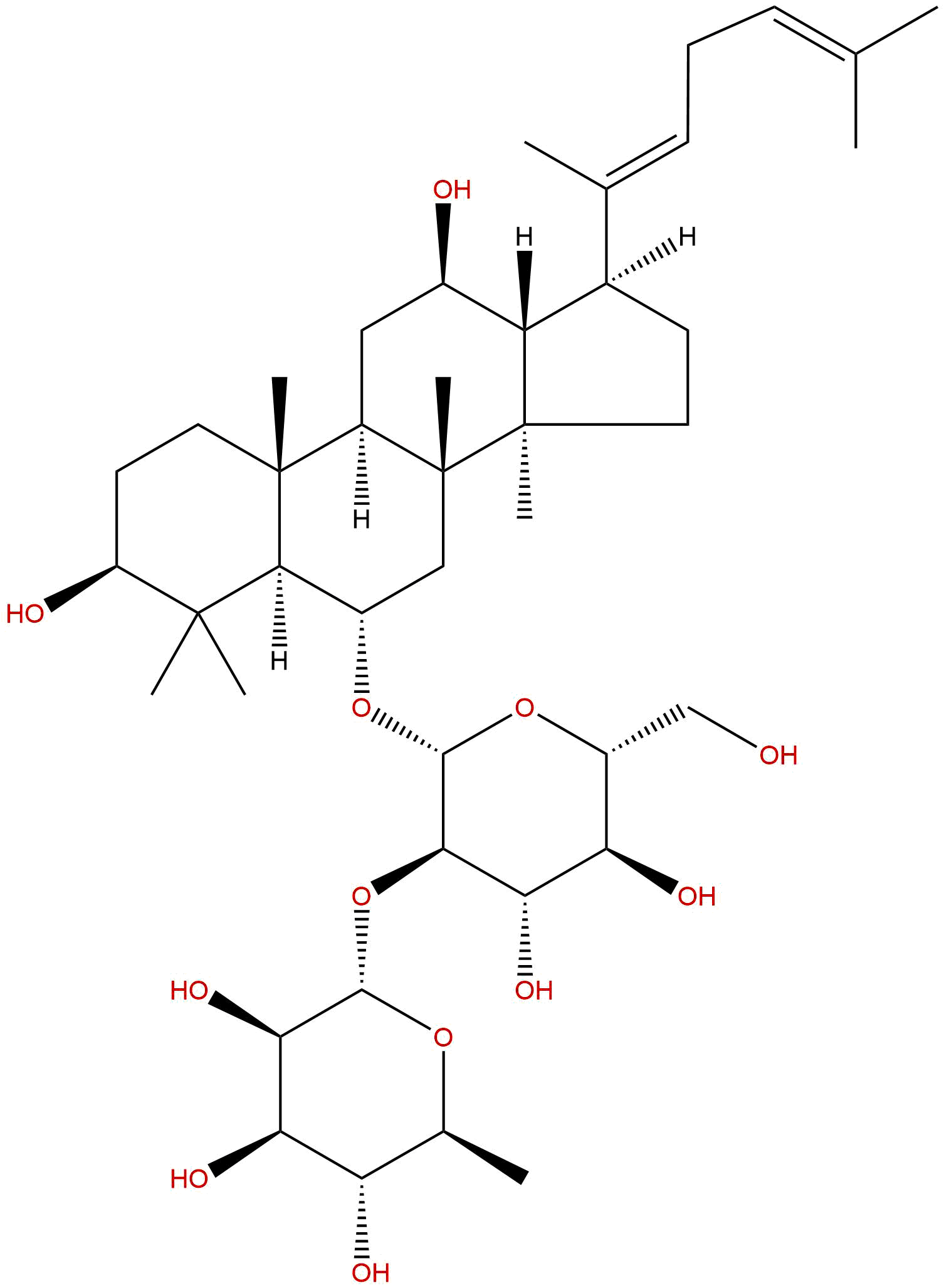


Product name: (20E)-Ginsenoside F4
Synonym name: Δ20(22)-Ginsenoside Rg6; 20(E)-Ginsenoside F4
Catalogue No.: BP0656
Cas No.: 181225-33-2
Formula: C42H70O12
Mol Weight: 767.01
Botanical Source: Ginseng Radix Et Rhizoma
Physical Description:
Type of Compound: Triterpenoids
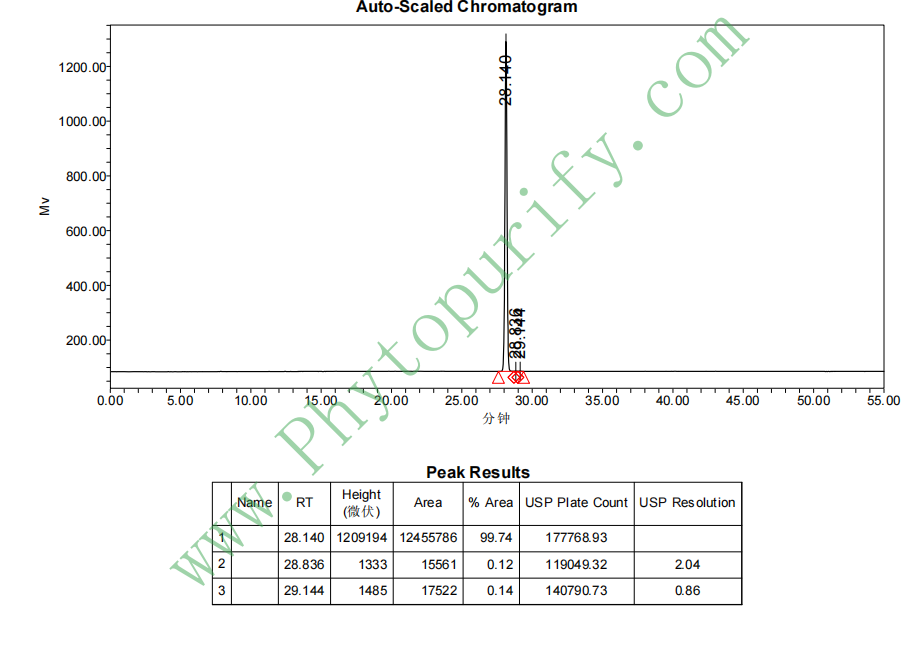
Purity: 95%~99%
Analysis Method: HPLC-DAD or/and HPLC-ELSD
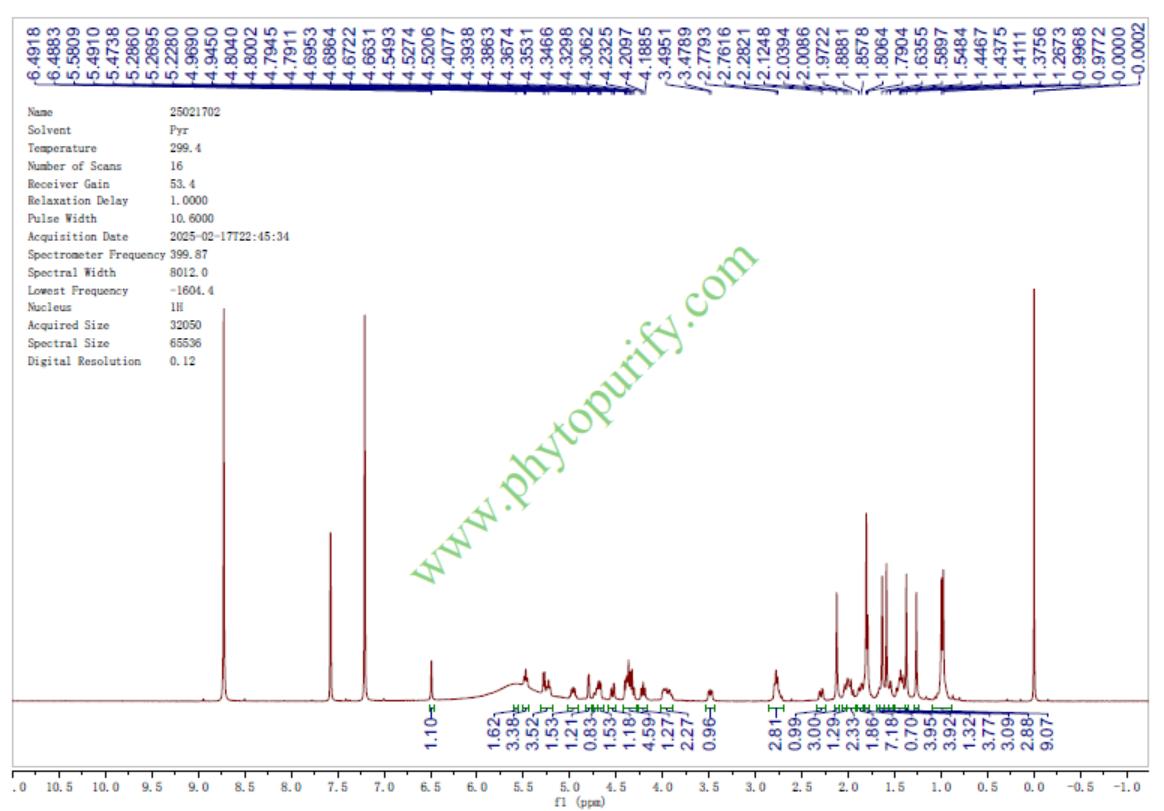
Identification Method: Mass, NMR
Packing: Brown vial or HDPE plastic bottle
Storage: Store in a well closed container, protected from air and light. Put into refrigerate or freeze for long term storage.
Whenever possible, you should prepare and use solutions on the same day. However, if you need to make up stock solutions in advance, we recommend that you store the solution as aliquots in tightly sealed vials at -20℃. Generally, these will be useable for up to two weeks.
The product could be supplied from milligrams to grams
Inquire for bulk scale.
Chengdu Biopurify Phytochemicals Ltd. is a leading company in the research, development, manufacture and marketing of High Quality Phytochemicals and Extracts(especially Active Ingredients from Traditional Chinese Medicine,TCM), Natural Active Pharmaceutical Ingredients worldwide.
The main services:
A. Supply active ingredients and reference standards of TCM, from mgs to kgs scale
B. Custom extraction and purification, target Herb Active Ingredients
C. Custom synthesis and semi-synthesis for Natural Active Ingredients
D. CR(contract research), CM(contract manufacture) and PD(process development) services from lab scale, pilot scale to commercial scale(GMP is also available)
E. TCM compounds library for drug screen,more than 3000 compounds available, many of them are rare and unique.
HPLC of (20E)-Ginsenoside F4
HNMR of (20E)-Ginsenoside F4
Storage conditions:Short-term storage at 2~8℃, long-term storage at -20 ~ -80℃
(20E) - Ginsenoside F4 (CAS number: 181225-33-2), as one of the important triterpenoid saponins in ginseng, has gradually become a hot topic in natural product pharmacology research in recent years due to its unique biological activity and potential medicinal value. Ginsenosides are the main active ingredients in ginseng (Panax spp.) and have a wide range of pharmacological effects, including immune regulation, anti-inflammatory, anti-tumor, neuroprotective, and other biological effects. As a representative of triterpenoid saponins, (20E) - ginsenoside F4 has a unique structure with a molecular weight of 767.01 and high polarity (TPSA 198.76). Its immune regulatory function is particularly prominent, involving multiple key immune signaling pathways and targets such as TLR4, STAT3, NFKB1, etc. This article aims to systematically review the chemical structure, plant origin, pharmacological activity, mechanism of action, and pharmacological evaluation of ginsenoside F4 (20E), explore its potential applications in immune regulation and related diseases, and provide theoretical basis and research direction for its clinical translation.
(20E) - Ginsenoside F4 belongs to the triterpenoid saponin class, and its chemical structure is based on the prototype of ginsenosides - the pentacyclic triterpenoid skeleton, which connects multiple sugar residues. Its molecular formula is C42H72O13, with a molecular weight of 767.01, and it has typical triterpenoid saponin structural characteristics, namely a hydrophobic triterpenoid skeleton and a hydrophilic sugar chain part. The LogP value of this compound is 3.4907, indicating moderate lipid solubility that facilitates cell membrane penetration, but low water solubility (0.0236), suggesting limited solubility in aqueous phase. The polar surface area (TPSA) is 198.76, reflecting the presence of a large number of polar functional groups in its molecule, mainly derived from hydroxyl and sugar groups, which affect its binding ability to biological targets and pharmacokinetic properties. The low permeability of the blood-brain barrier suggests limited distribution in the central nervous system. The negative result of hERG channel inhibition experiment indicates a low risk of cardiac toxicity. The Ames mutagenicity test showed a value of 0.0, indicating a low risk of genetic toxicity and a good safety basis.
(20E) - Ginsenoside F4 is mainly found in plants of the Panax genus in the Araliaceae family, especially in Asian ginseng and American ginseng. Although its content is not as abundant as mainstream ginsenosides such as Rb1 and Rg1, as a secondary saponin, its biological activity is unique and irreplaceable. Traditional extraction methods often use alcohol extraction combined with water phase distribution and column chromatography purification. The specific process usually includes:
In recent years, supercritical CO2 extraction, membrane separation technology, and molecular imprinting technology have also been attempted to be applied to the extraction and purification of this saponin, improving yield and purity, reducing solvent usage, and complying with green chemistry principles.
(20E) - The pharmacological activity of ginsenoside F4 is mainly concentrated in the field of immune regulation, exhibiting significant dual regulatory abilities of anti-inflammatory, immune enhancement, and immune suppression. In addition, it has also shown potential in anti-tumor, antioxidant, and neuroprotective aspects.
Numerous in vitro cell experiments and animal model studies have shown that (20E) - ginsenoside F4 can regulate immune cell function and promote immune balance. Its functions include:
(20E) - Ginsenoside F4 can inhibit the activation of NFKB1, reduce the production of inflammatory mediators, and alleviate tissue inflammatory damage. Its antioxidant effect is achieved by clearing free radicals, reducing oxidative stress, and protecting cells from damage.
Some studies have shown that this saponin has inhibitory effects on tumor cell proliferation and induces apoptosis, which may be related to its regulation of the immune microenvironment and direct action on tumor cell signaling pathways.
(20E) - The immune regulatory mechanism of ginsenoside F4 involves multiple signaling pathways and key molecular targets:
The synergistic regulation of these targets enables (20E) - ginsenoside F4 to exhibit complex and precise regulatory abilities in immune regulation, enhancing immune defense and inhibiting excessive inflammation, reflecting its bidirectional regulatory properties.
(20E) - Ginsenoside F4 has a high molecular weight (767.01), high TPSA (198.76), and low water solubility (0.0236), which poses challenges to its oral absorption and bioavailability. The LogP value is 3.49, indicating that it has a certain degree of lipophilicity, which is beneficial for cell membrane penetration, but its overall polarity is strong, which may limit its passive diffusion. The low permeability of the blood-brain barrier suggests its limited distribution in the central nervous system, which may reduce central nervous system related side effects. The negative inhibition of hERG channel and the negative Ames test indicate that the risk of cardiac toxicity and genetic toxicity is low, and the safety is good.
At present, there are relatively few systematic pharmacokinetic studies on (20E) - ginsenoside F4. However, based on the common characteristics of ginsenoside compounds, it is speculated that its oral absorption is poor and its bioavailability is limited. It mainly affects blood drug concentration through intestinal metabolism and liver first pass effects. Its metabolites may form more absorbable active metabolites through glycoside hydrolysis mediated by gut microbiota. The main excretion pathways are bile and urine.
In the future, systematic in vivo pharmacokinetic studies need to be conducted to clarify its absorption, distribution, metabolism, and excretion (ADME) characteristics, providing a basis for dosage form design and clinical application.
(20E) - Ginsenoside F4 has potential clinical application value in various immune related diseases due to its significant immunomodulatory effects. Including but not limited to:
In addition, given its good safety, in the future, its pharmacokinetic properties can be improved through structural modification, nanocarrier technology, and other means to enhance its bioavailability and targeting, and promote its clinical translation.
(20E) - Ginsenoside F4, as a triterpenoid saponin with unique structure and multi-target immunomodulatory effects, has shown broad pharmacological research and clinical application prospects. It achieves precise regulation of the immune system by regulating key immune signaling pathways such as TLR4, STAT3, NFKB1, and has anti-inflammatory, immune balance, and anti-tumor potential. Although its pharmacokinetics and clinical research are still in their infancy, (20E) - ginsenoside F4 is expected to become an important candidate molecule in the development of natural product drugs due to its good safety and significant biological activity. Future research should focus on systematic pharmacokinetic evaluation, in-depth analysis of mechanisms of action, and expansion of clinical indications, in order to achieve successful translation from laboratory to clinical use and promote innovative applications of natural products in modern medicine.
