


Synonym name:
Catalogue No.: BP1475
Cas No.: 34080-08-5
Formula: C30H52O4
Mol Weight: 476.731
Botanical Source: Panax ginseng
Purity: 30%, 90%, 95%, 99%
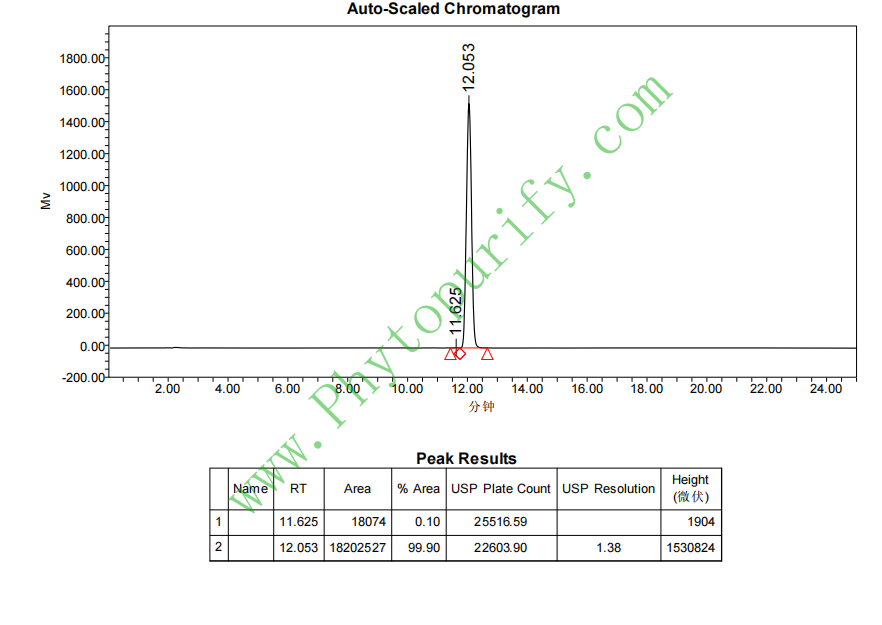
Analysis Method: HPLC-DAD or/and HPLC-ELSD
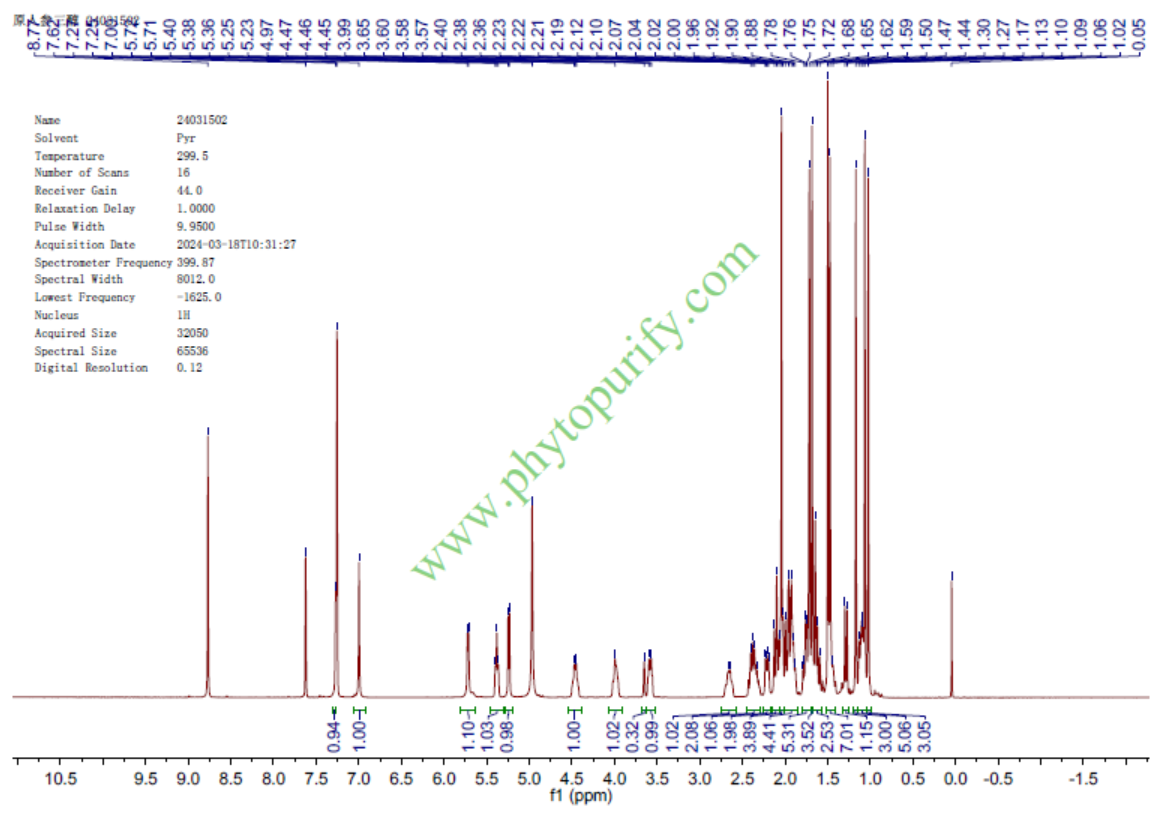
Identification Method: Mass, NMR
Packing: Brown vial or HDPE plastic bottle
Can be supplied from milligrams to grams, up to kgs.
Inquire for bulk scale.
Storage conditions:Short-term storage at 2~8℃, long-term storage at -20 ~ -80℃
80.9200
5.3841
5.3847
.0012
4.2043
6.7816
Low
87.3057
5.0516
No
No
No
No
No
No
0.0
No
No
No
No
In the vast field where traditional medicine and modern pharmacology intersect, ginseng(Panax ginseng C. As the "King of Herbs", the study of pharmacological active ingredients in A. Mey. and its related plants has always been a hot topic in the fields of natural product chemistry and pharmacology. Ginsenosides, as their main active ingredient, are mainly classified into dammarane type triterpenoid saponins based on their glycosidic skeleton, and further divided into protopanaxadiol type (PPD) and protopanaxatriol type (PPT). Protopanaxatriol (PPT), CAS number 34080-08-5, is a key glycoside produced by deglycosylation metabolism of protopanaxatriol type saponins (such as ginsenosides Re, Rg1, Rf, etc.) in vitro and in vivo. Compared to its glycosidic form, aglycones typically have better membrane permeability and bioavailability, thus their direct pharmacological activity is increasingly being valued. In recent years, with the acceleration of global population aging, research on anti-aging and related degenerative diseases has become at the forefront of life sciences. PPT, due to its significant activity in regulating energy metabolism, oxidative stress, cell cycle and apoptosis, telomere maintenance, and other signaling pathways closely related to the core mechanisms of aging, is transforming from a metabolite of a traditional medicinal plant to an anti-aging lead compound with clear molecular targets and broad development prospects. This article aims to systematically review the chemical properties, sources, pharmacological activities of PPT, especially its multi-target mechanism of anti-aging effect, drug evaluation, and prospects for its future translational medicine prospects.
Protonaringenin is a tetracyclic triterpenoid compound belonging to the dammarane type sapogenin. Its systematic chemical name reflects its complex stereostructure: based on the Dammarane skeleton, hydroxyl groups are substituted at positions 3 β, 6 α, 12 β, and 20 (S), and a double bond is introduced between positions C-24 and C-25 on the side chain. This specific hydroxyl substitution pattern (3 β, 6 α, 12 β, 20S) and unsaturated side chain bonds are key features that distinguish it from the protopanaxadiol type (PPD, hydroxyl at position 20, no double bonds) and other triterpenoid compounds.
Its molecular formula is C30H52O4 and its molecular weight is 476.7420. Based on the analysis of drug parameters, the lipid water partition coefficient (LogP) of PPT is 5.3841, indicating its strong lipophilicity; The topological polar surface area (TPSA) is 80.92 Å ², which is relatively small. These two parameters together determine that the water solubility of PPT is extremely low (about 0.0012 mg/mL), which is beneficial for its penetration into the phospholipid bilayer of cells, but also poses challenges for its dissolution and absorption during oral administration. Both computational and experimental data suggest that PPT has a low ability to penetrate the blood-brain barrier (BBB), which may limit its ability to target the central nervous system. However, it does not inhibit hERG potassium channels (hERG inhibition: no) and the Ames test result is negative (0.0), indicating a low risk of cardiac toxicity and genetic toxicity, providing a favorable basis for its subsequent safety development.
The PPT mainly comes from plants of the Panax genus in the Araliaceae family, especially ginseng(Panax ginseng)And Sanqi(Panax notoginseng). In plants, PPT does not exist in large quantities in the form of free glycosides, but rather serves as the core of saponins' glycosides, which are linked to one or more sugar groups (such as glucose, xylose, arabinose, etc.) through glycosidic bonds to form various protopanaxatriol type saponins, such as ginsenoside Rg1, Re, Rf, etc.
Therefore, there are two main ways to obtain PPT:
1. Direct extraction and separation From the total saponin extract of ginseng or Panax notoginseng, the sugar group of the original ginsenotriol type saponin is cleaved through acid hydrolysis, enzyme hydrolysis, or microbial transformation, releasing free PPT glycosides. Subsequently, high-purity PPT was isolated from the hydrolysis product using separation and purification techniques such as silica gel column chromatography, high performance liquid chromatography (HPLC), and high-speed countercurrent chromatography (HSCCC). The acid hydrolysis conditions are severe, which may produce by-products or damage the structure; Enzymatic hydrolysis and microbial transformation have mild conditions and high selectivity, making them more promising green preparation methods.
2. Chemistry and biosynthesis With the development of synthetic biology, the biosynthesis of PPT or its precursors through metabolic engineering modification of yeast or plant cells has become a research hotspot. In addition, using inexpensive and readily available natural products as starting materials for semi synthesis is also a potential pathway for large-scale production of PPT.
At present, the mainstream approach in laboratory and industry is still to extract, hydrolyze, and purify saponins from plant raw materials.
The PPT demonstrates a wide range of pharmacological activities, and its research has extended from early enhancement of immunity and anti fatigue to multiple key areas of modern medicine such as anti-tumor, neuroprotection, cardiovascular protection, metabolic regulation, and anti-aging.
The anti-aging and other pharmacological effects of PPT are not achieved through a single target, but like a "multi node regulator" that acts on multiple key hubs in the aging network. The core mechanism and molecular targets can be summarized as follows:
Activate energy metabolism and longevity pathway:
Enhance antioxidant defense system:
Regulating cell cycle and aging related signals:
Telomere maintenance:
In summary, PPT synergistically activates AMPK/SIRT1 energy and longevity pathway, NRF2 antioxidant pathway, and cross regulates key factors such as p53/p21 and FOXO through dialogue, forming a multidimensional anti-aging network to combat the driving factors of aging from multiple levels such as energy metabolism, oxidative damage, cell cycle, and genome stability.
Despite the significant pharmacological activity of PPT, its pharmacological development still faces some challenges, mainly due to its physicochemical properties.
Absorption, distribution, metabolism, excretion (ADME):
Formulation strategy The research on new drug delivery systems is crucial in order to overcome the bottleneck of PPT's drug efficacy. For example, preparing it into self microemulsions, cyclodextrin inclusion complexes, polymer nanoparticles, etc. can significantly improve its solubility, stability, and biofilm permeability, thereby enhancing oral bioavailability. For local anti-aging applications (such as skin), consideration may be given to developing transdermal drug delivery formulations.
safety The existing preliminary toxicological data (such as no hERG inhibition and Ames negative) suggest a good safety threshold. However, comprehensive preclinical safety evaluation, including long-term toxicity, reproductive toxicity, carcinogenicity testing, etc., is an indispensable step in its clinical translation.
As a multi-target anti-aging natural lead compound, PPT has broad clinical application prospects, but solid research is still needed to promote its transformation.
Potential application directions:
Future research prospects:
As an important active glycoside of ginsenosides in Panax plants, protopanaxatriol (PPT) plays a multiple regulatory role in the core biological process of anti-aging due to its unique tetracyclic triterpenoid chemical structure. It precisely intervenes in key nodes in the aging signaling network such as AMPK/SIRT1, NRF2, p53/p21, FOXO, and exerts the potential to delay aging and prevent aging related diseases from multiple dimensions such as energy metabolism, oxidative stress, and cellular homeostasis. Although its inherent low water solubility and limited bioavailability pose challenges to drug development, modern pharmaceutical and medicinal chemistry strategies provide feasible solutions for this. Digging from the wisdom of traditional Chinese medicine, with the support of modern science and technology, the in-depth study of PPT not only helps to reveal the deep mechanism of natural products' multi target anti-aging, but also lays a solid scientific foundation for its transformation into a new drug or health product to combat the health challenges of aging society. In the future, interdisciplinary collaboration will drive PPT from the laboratory to clinical practice, ultimately benefiting human health.
