


Synonym name: 20(R)-Ginsenoside Rh2
Catalogue No.: BP0042
Cas No.: 112246-15-8
Formula: C36H62O8
Mol Weight: 622.873
Botanical Source: Panax ginseng
Purity: 20%, 95%, 98%
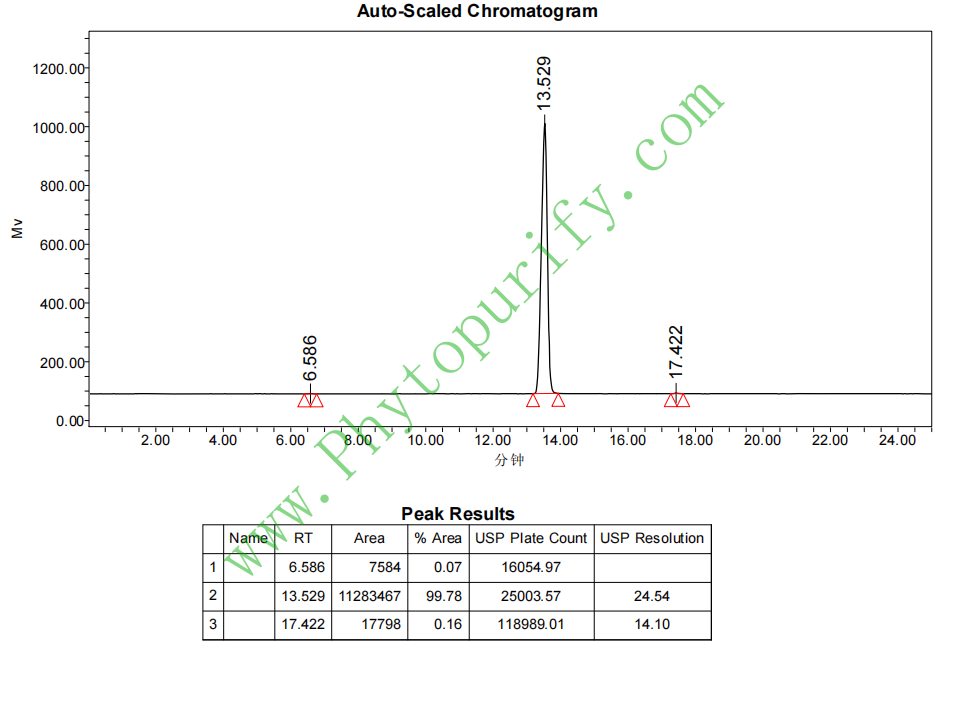
Analysis Method: HPLC-DAD or/and HPLC-ELSD
Identification Method: Mass, NMR
Packing: Brown vial or HDPE plastic bottle
Can be supplied from milligrams to grams, up to kilograms.
Inquire for bulk scale.
The purity(assay) of 20%, 40% and 90%, 95% is available for food, nutrition and cosmetics request, except for R&D and reference standard.
Descriptions:
Ginsenoside Rh2 is one of the most active components of red ginseng, controlling cancer and other metabolic diseases including osteoclast differentiation; ginsenoside Rh2 can suppress RANKL-induced osteoclast differentiation in vitro and in vivo through the regulation of c-Fos and NFATc1 expressions, not excluding the involvement of NF-κB and ERK, it is also suggested to be developed as a therapeutic drug for prevention and treatment of osteoporosis.[1]
Ginsenoside Rh2 has antitumor, antidiabetic, antiallergic, and anti-inflammatory effects; however, the extremely poor oral bioavailability induced by its low water solubility greatly limits the potency of Rh2 in clinical use, the sulfated modification of Rh2 improved its water solubility and the sulfated derivatives could be more potential candidates for developing as anti-inflammatory agents.[2]
Ginsenoside Rh2 potently protects ischemia-reperfusion brain injury, also inhibits prostaglandin-E_2 synthesis in lipopolysaccharide-stimulated RAW264.7 cells, suggests it can improve ischemic brain injury.[3]
Ginsenoside Rh2 potently reverses memory impairment caused by scopolamine, it might improve learning deficits, also have the memory-enhancing effects of RGB.[4]
Ginsenoside Rh2 can suppress growth of uterine leiomyoma in vitro and in vivo and may regulate ERα/c-Src/p38 MAPK activity.[5]
Ginsenoside Rh2 can inhibit the tendency of apoptosis, and reverse the impaired β-cell growth potential by modulating Akt/Foxo1/PDX-1 signaling pathway and regulating cell cycle proteins, suggests its therapeutic potential in the treatment of diabetes.[6]
References:
[1] Long He, Junwon Lee, Jae Hyuk Jang,et al. Bone, 2012, 50(6):1207-13.
[2] Fu B D, Bi W Y, He C L, et al. Fitoterapia, 2013, 84(3):303-7.
[3] Park E K, Choo M K, Oh J K, et al. Biol Pharm Bull, 2004, 27(3):433-6.
[4] Yang J H, Han S J, Ryu J H, et al. Biol Pharm Bull, 2009, 32(10):1710-5.
[5] Zhu Y, Xu J, Li Z, et al. J Funct Foods, 2015, 18:73-82.
[6] Wang Y, Wang H, Liu Y, et al. Horm Metab Res, 2012, 44(1):33-40.
[7] H Li, P Y Li, P Yong. Natural Products Chemistry & Research, 2014, 1(1):1-5.
HPLC of 20(R)-Ginsenoside Rh2
Storage conditions:Short-term storage at 2~8℃, long-term storage at -20 ~ -80℃
139.8400
4.4047
4.4047
.0042
.7183
.2794
Low
81.2944
5.3410
No
No
No
No
No
No
0.0
Yes
No
No
No
Lipid metabolism disorder is a kind of metabolic disease characterized by abnormal lipid synthesis, transport or decomposition, such as cholesterol and triglyceride. It is the common pathological basis of atherosclerosis, non-alcoholic fatty liver disease, obesity, type 2 diabetes and other major chronic diseases. The pathogenesis of this disease is complex, involving dysregulation of the regulatory network of multiple genes and targets. Although existing therapeutic drugs such as statins and betas are effective, there are still problems such as insufficient efficacy, side effects, or drug resistance. Therefore, exploring multi-target, efficient and low toxicity active ingredients from natural products has become an important direction for new drug development.
As a traditional precious Chinese medicine, the medicinal value of ginsenosides, the core active ingredient of ginseng, has been widely confirmed. 20 (R) - Ginsenoside Rh2 (CAS: 112246-15-8) is a rare secondary saponin produced during intestinal metabolism or specific processing of protopanaxadiol type saponins. Compared with its isomer 20 (S) - configuration, its biological activity research has received much attention in recent years. Numerous studies have shown that 20 (R) - Rh2 exhibits significant potential in regulating lipid metabolism, anti-tumor, anti-inflammatory, and neuroprotective effects, particularly in intervening in lipid metabolism disorders and related diseases, demonstrating unique multi-target regulatory advantages. This article aims to provide a systematic review of the chemical properties and pharmacological activities of 20 (R) - Rh2, particularly focusing on its core targets and molecular mechanisms for regulating lipid metabolism, and to explore its pharmacological properties and clinical application prospects in depth, in order to provide scientific basis for the further development of this natural product.
The molecular formula of 20 (R) - ginsenoside Rh2 is C ∝₆ H ₆₂ O ₈, with a molecular weight of 622.8840. Its chemical structure belongs to the damaane type tetracyclic triterpenoid saponin, which is a derivative of protopanaxadiol (PPD). Its structural feature is that the aglycone is 20 (R) - protopanaxadiol, and there is a β - D-glucopyranose group connected at the C-3 position. The key difference between it and the common 20 (S) - ginsenoside Rh2 lies in the different stereoisomers of the C-20 chiral center (R type and S type), which often lead to significant differences in its biological activity, affinity for target proteins, and pharmacokinetic behavior due to these small stereochemical differences.
From the analysis of physicochemical parameters related to drug properties, the lipid water partition coefficient (LogP) of 20 (R) - Rh2 is 4.4047, indicating its strong lipophilicity. Its topological polar surface area (TPSA) is 139.84 Å ², reflecting the polarity characteristics brought by sugar groups. Based on its LogP and TPSA values, this compound meets the four criteria of the five rules for class drugs. However, a higher LogP value indicates poor water solubility, with a calculated water solubility of only 0.0042 mg/mL. This may be one of the main limiting factors for its oral bioavailability. In terms of preliminary safety prediction, the Ames test result was negative (0.0), indicating no direct genetic toxicity risk; The inhibition prediction of hERG is' no ', indicating a low potential risk of cardiac toxicity. In addition, its blood-brain barrier permeability is predicted to be "low", indicating that it may not easily enter the central nervous system. This may reduce central side effects for the treatment of peripheral metabolic diseases, but also limits its potential for use in central nervous system related diseases.
20 (R) - Ginsenoside Rh2 is not a native saponin in plants of the Araliaceae family such as ginseng and American ginseng, and its content in the original plant is extremely low. It is mainly obtained through the following two ways:
In laboratory and industrial preparation, extraction and separation methods mainly include:
* Extract Total saponins are often obtained from ginseng roots, stems, leaves, or ginseng cultures using methods such as ethanol or methanol reflux extraction and ultrasound assisted extraction.
* transformation Using enzymatic hydrolysis (specific glycosidase) or mild chemical hydrolysis, the abundant prototype saponins are directionally converted into target rare saponins.
* Separation and purification Separation and purification were carried out using techniques such as macroporous adsorption resin column chromatography, silica gel column chromatography, reverse phase high performance liquid chromatography (RP-HPLC), and preparative liquid chromatography. Among them, chiral separation technology is crucial for distinguishing between 20 (R) and 20 (S) configurations.
* synthesis Previous studies have used semi synthetic or microbial synthetic pathways to prepare 20 (R) - Rh2 from abundant saponins as precursors, providing a feasible solution for obtaining sufficient pure products for research.
20 (R) - Rh2 exhibits a wide range of pharmacological activities, particularly in regulating lipid metabolism and related diseases.
1. Regulate lipid metabolism and anti atherosclerosis
In various animal models induced by high-fat diets, 20 (R) - Rh2 can significantly reduce serum total cholesterol (TC), triglycerides (TG), low-density lipoprotein cholesterol (LDL-C) levels, and increase high-density lipoprotein cholesterol (HDL-C). It can reduce hepatic steatosis, inhibit lipid deposition in the liver and aortic wall, and slow down the formation of atherosclerotic plaque. Its strength of action is often comparable to or has a synergistic effect with positive drugs such as statins.
2. Antitumor activity
20 (R) - Rh2 can significantly inhibit the proliferation and induce apoptosis of many tumor cells (such as liver cancer, colon cancer, breast cancer, lung cancer, etc.). Research has shown that its anti-tumor activity is sometimes superior to its 20 (S) - isomer. It can block the cell cycle in G1 or S phase and induce apoptosis through mitochondrial and death receptor pathways.
3. Anti inflammatory and immune regulation
20 (R) - Rh2 can inhibit macrophage production of nitric oxide (NO), prostaglandin E2 (PGE2), and pro-inflammatory cytokines (such as TNF - α, IL-1 β, IL-6) induced by lipopolysaccharides (LPS) and other factors. It exerts anti-inflammatory effects by regulating inflammatory signaling pathways such as NF - κ B and MAPK, and has bidirectional regulatory ability on immune cell function.
4. Neuroprotective effect
Although the blood-brain barrier has low permeability, some studies suggest that it may indirectly affect the central nervous system by improving peripheral metabolism, or there may be a possibility of low concentrations entering the brain. In the Alzheimer's disease model, it has shown potential to alleviate beta amyloid toxicity and tau protein hyperphosphorylation.
5. Other activities
It also includes improving insulin resistance, protecting against myocardial ischemia-reperfusion injury, and antiplatelet aggregation.
The improvement effect of 20 (R) - Rh2 on lipid metabolism disorders is attributed to its synergistic regulation of multiple key targets and signaling pathways. According to the provided target information, its core mechanism of action can be summarized as follows:
1. Regulating lipid synthesis, uptake, and transport
* Targeted SREBP pathway and liver X receptor (LXR)20 (R) - Rh2 can be activated SIRT1(Deacetylase 1), which is then inhibited by deacetylation SREBPs The transcriptional activity of sterol regulatory element binding proteins downregulates the expression of fatty acid and cholesterol synthesis related genes (such as FAS, HMGCR). Meanwhile, it may serve as NR1H3(LXRα)and NR1H2(LXRβ)The regulator of cholesterol affects cholesterol reverse transport and fatty acid synthesis, but its specific excitatory or antagonistic effect may depend on the cellular environment and metabolic status.
* Inhibit intestinal cholesterol absorption By downregulating intestinal epithelial cells NPC1L1 The expression of Nieman Pick C1 protein 1 competitively inhibits the absorption of dietary cholesterol, which is a mechanism of action that statins do not possess.
2. Improve insulin resistance and energy metabolism
* Regulating the insulin signaling pathway By inhibiting GSK3βThe activity of glycogen synthase kinase 3 β promotes glycogen synthesis and enhances insulin signaling. Meanwhile, regulation MAPK1 ERK2 signaling affects cell growth, differentiation, and metabolic adaptation.
* Activate AMPK pathway The activation of SIRT1 often promotes the AMPK (AMP activated protein kinase) pathway, jointly upregulating fatty acid oxidation, inhibiting synthesis, and improving energy metabolism homeostasis.
3. Inhibit inflammation and oxidative stress
* Inhibition of NF - κ B and HIF-1 α pathway By inhibiting HIF1A The stability and transcriptional activity of hypoxia inducible factor-1 α can reduce its harmful effects under metabolic stress. Meanwhile, inhibiting the activation of NF - κ B through pathways such as SIRT1 blocks the inflammatory cascade reaction upstream.
* Adjust Notch signal:NOTCH1 The signaling pathway plays a crucial role in metabolic inflammation and cell fate determination. 20 (R) - Rh2 may improve metabolic inflammation by regulating Notch signaling, affecting macrophage polarization and adipocyte differentiation.
4. Affects drug transport and coagulation
* Regulating ABCB1 (P-gp)As a substrate or regulator of multidrug resistance protein P-glycoprotein, it may affect the intestinal absorption and distribution of itself and other drugs, which is closely related to pharmacokinetic behavior.
* Potential anticoagulant effect: Target F2 Prothrombin (prothrombin) suggests that it may have intervention potential for atherothrombotic complications by influencing the coagulation cascade reaction.
In summary, 20 (R) - Rh2 forms a multidimensional regulatory network covering lipid synthesis, absorption, transport, oxidation, inflammatory response, and insulin signaling by acting on core targets such as SIRT1, NR1H3, NPC1L1, GSK3 β, and NOTCH1. This is the molecular basis for its comprehensive anti lipid metabolism disorder effect.
Although the pharmacological activity of 20 (R) - Rh2 is clear, its pharmacological development still faces challenges, mainly focused on its poor solubility and oral bioavailability.
20 (R) - Ginsenoside Rh2 has broad development prospects in the following fields:
Future research should focus on:
* In depth mechanism exploration Using proteomics, metabolomics, and gene editing techniques to further elucidate the network interactions between its core targets.
* Structure performance relationship and optimization On the basis of clarifying the advantages of the 20 (R) configuration, reasonable structural modifications are carried out to improve its water solubility and pharmacokinetic properties while retaining its activity.
* Advanced delivery system research and development Accelerate the preclinical and clinical research of new dosage forms such as nano formulations to solve delivery bottlenecks.
* Large scale clinical research Conduct rigorously designed clinical trials to confirm its effectiveness and safety in humans, and clarify its therapeutic window.
20 (R) - Ginsenoside Rh2, as a rare natural ginsenoside with a unique three-dimensional configuration, has become a star molecule in the field of natural product drug development due to its excellent pharmacological activities of multi-target and multi pathway synergistic regulation of lipid metabolism, anti-inflammatory, and anti-tumor effects. It exhibits different characteristics from the common 20 (S) - configuration in terms of chemical structure, mechanism of action, and biological activity, providing a new entry point for precision drug development. Despite its inherent challenges of poor water solubility and low oral bioavailability, the development of modern pharmacy and nanotechnology provides powerful tools for drug development. With the continuous deepening of understanding of its molecular mechanism and breakthroughs in delivery technology, 20 (R) - Rh2 is expected to move from the laboratory to clinical practice and develop into a new candidate drug for the treatment of lipid metabolism disorders and related chronic diseases, fully reflecting the enormous potential of exploring modern therapeutic value from the treasure trove of traditional Chinese medicine.
