| Catalog No | Package | Original Price | Price | Inventory | Quantity | Operating |
|---|---|---|---|---|---|---|
| BP4549-5mg | 5mg | $420.00 | Sign in |
|


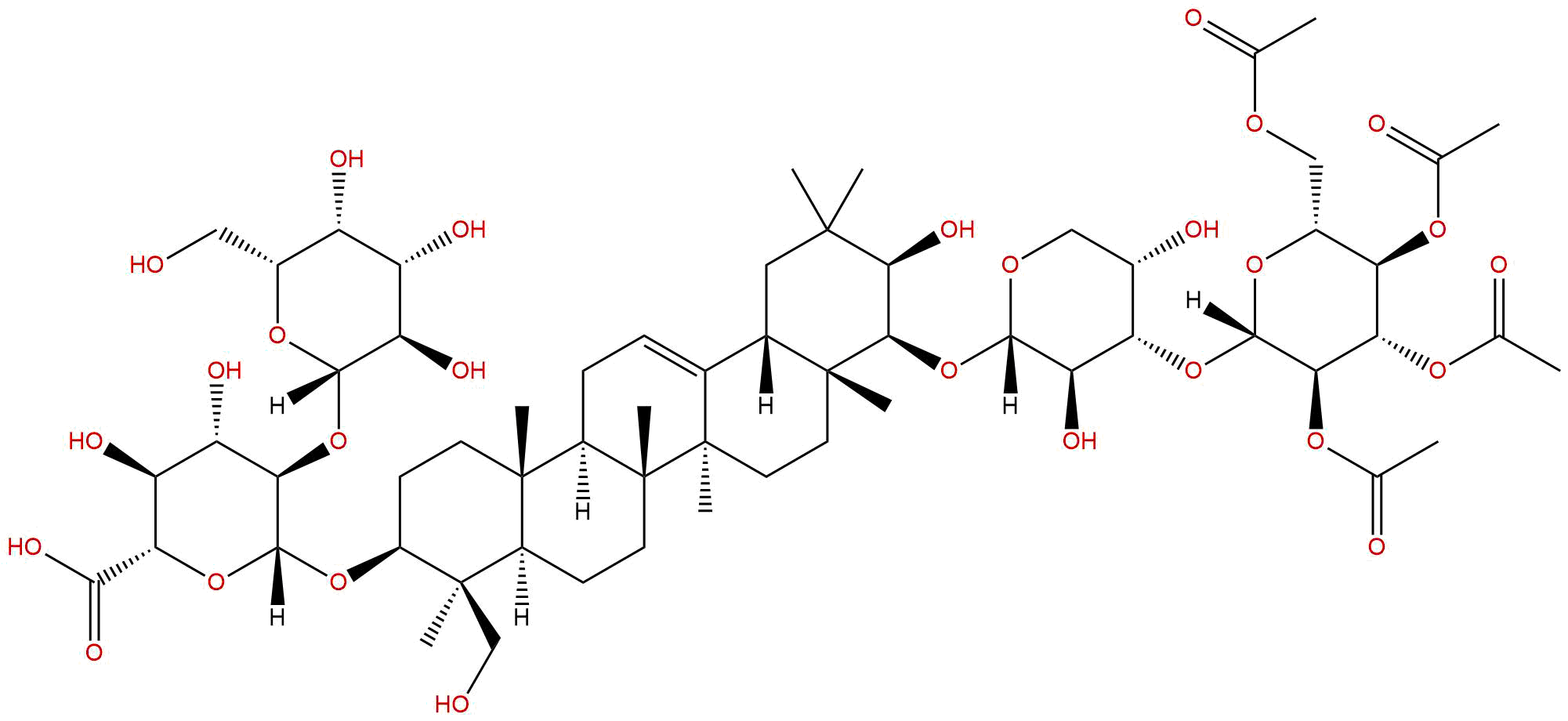
Product name: Soyasaponin Af
Synonym name:
Catalogue No.: BP4549
Cas No.: 117230-32-7
Formula: C61H94O28
Mol Weight: 1275.4
Botanical Source:
Type of Compound: Triterpenoids
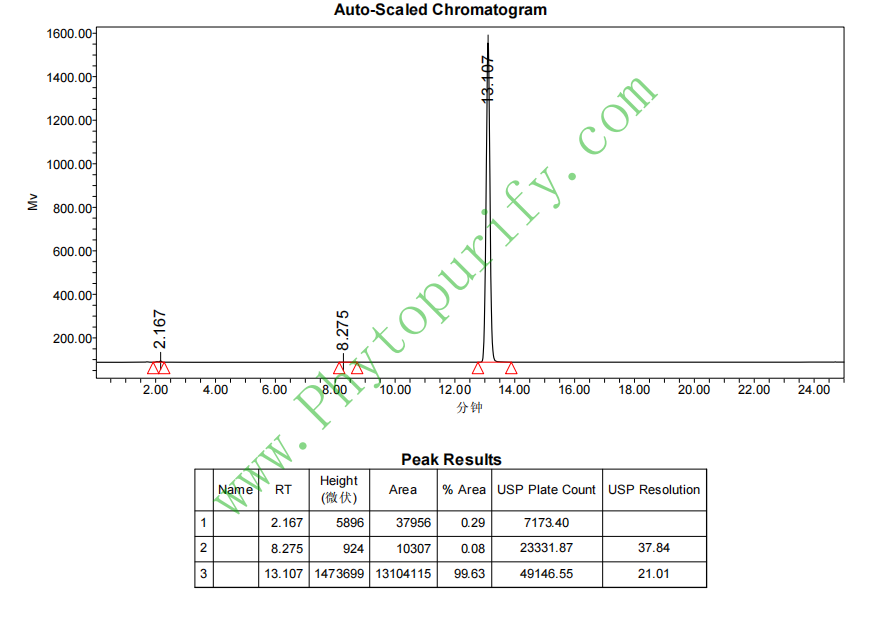
Purity: 95%~99%
Analysis Method: HPLC-DAD or/and HPLC-ELSD
Identification Method: Mass, NMR
Packing: Brown vial or HDPE plastic bottle
Storage: Store in a well closed container, protected from air and light. Put into refrigerate or freeze for long term storage.
Whenever possible, you should prepare and use solutions on the same day. However, if you need to make up stock solutions in advance, we recommend that you store the solution as aliquots in tightly sealed vials at -20℃. Generally, these will be useable for up to two weeks.
The product could be supplied from milligrams to grams
Inquire for bulk scale.
For Reference Standard and R&D, Not for Human Use Directly.
HPLC of Soyasaponin Af
Storage conditions:Short-term storage at 2~8℃, long-term storage at -20 ~ -80℃
418.6400
1.6711
-.6912
.2526
.4734
.1458
Low
80.4813
7.3306
Yes
No
Yes
No
No
No
0.0
Yes
No
Yes
No
Osteoporosis is a systemic bone disease characterized by reduced bone mass, destruction of bone microstructure, and increased bone fragility. It is the main cause of increased risk of fractures in middle-aged and elderly people, especially postmenopausal women. With the acceleration of global population aging, osteoporosis and the resulting fractures have become a major public health issue, bringing heavy economic and health burdens to society and individuals. At present, first-line clinical treatment drugs mainly include bisphosphonates, selective estrogen receptor modulators, RANKL inhibitors, and parathyroid hormone analogues. However, long-term use of these drugs often accompanies potential side effects such as mandibular necrosis, atypical femoral fractures, increased cardiovascular risk, and high treatment costs. Therefore, the search for efficient, low toxicity, and multi-target novel anti osteoporosis lead compounds from natural products has become an important direction in drug development.
Soybean saponins are a class of oleanane type triterpenoid saponins widely present in leguminous plants, with abundant biological activity. Soybean saponin Af, chemically known as Acetyl soy saponin A2, is an acetylated soybean saponin isolated from the seed coat of black beans. In recent years, with the deepening of research on phytochemicals, soybean saponin Af has attracted much attention due to its unique potential in regulating bone metabolism balance. Preliminary studies have shown that it can exert a dual effect of promoting bone formation and inhibiting bone resorption by acting on estrogen receptors, regulating key signaling pathways and molecular targets related to osteoblast differentiation and osteoclast activity. This article aims to systematically review the chemical structure, plant origin, pharmacological activity, mechanism of action, medicinal properties, and application prospects of soybean saponin Af in the field of osteoporosis resistance, in order to provide comprehensive scientific references for the in-depth research and development of this natural product.
The chemical structure of soybean saponin Af belongs to the oleane type pentacyclic triterpenoid saponin. Its parent nucleus is oleanolic acid, and the sugar chain is partially connected at the C-3 position. Specifically, its sugar group is composed of a molecule of glucuronic acid (GlcA) connected to a molecule of galactose (Gal) through a β -1,2-glycosidic bond, and then connected to a molecule of rhamnose (Rha) through a β -1,2-glycosidic bond, forming a triple sugar chain. This is a common characteristic of component A of soybean saponins. The key difference between soybean saponin Af and other group A saponins (such as Soyasaponin A1) is that its C-22 hydroxyl group is acetylated, which is also the origin of its nickname "Acetyl soy saponin A2". This acetylation modification may significantly affect its lipophilicity, membrane permeability, and interaction with target proteins.
Its CAS number is 117230-32-7, molecular formula is C ₆₀ H ₉₆ O ₂₉, and molecular weight is 1275.3950 g/mol. From the analysis of parameters related to drug properties, its lipid water partition coefficient (LogP) is 1.6711, indicating that the molecule has a certain degree of lipophilicity, but is not highly lipophilic. Its topological polar surface area (TPSA) is as high as 418.6400 Å ², which is mainly attributed to the presence of multiple hydroxyl and sugar groups in the molecule, resulting in strong molecular polarity. The theoretically calculated water solubility value is 0.2526 mg/mL, belonging to the category of slightly soluble to insoluble, which is consistent with its high molecular weight and multipole group structure. High TPSA and larger molecular weight also determine its difficulty in crossing the blood-brain barrier (predicted as low permeability), which may actually reduce the risk of central nervous system side effects for anti osteoporosis drugs that mainly act on the peripheral skeletal system. In terms of early safety indicators, the predicted data showed no hERG potassium channel inhibitory activity (low risk of arrhythmia), and the Ames test result was negative (0.0), suggesting that it may not have genetic toxicity. These preliminary pharmacological parameters provide useful references for the subsequent development of soybean saponin Af.
Soybean saponin Af mainly comes from leguminous plants such as soybeans, especially black beans, which have relatively high content in their seed coat. As a traditional medicinal and edible product, black beans are rich in various bioactive ingredients such as anthocyanins and saponins in their seed coat. The distribution of soybean saponins in legumes is tissue-specific, with distribution in the seed coat, cotyledons, and hypocotyls, but there are differences in composition and content. As an acetylated saponin, the content of soybean saponin Af is influenced by soybean variety, growth environment, harvesting time, and processing method.
The extraction and isolation of soybean saponin Af from black bean seed coat usually follows the following process: first, the black bean seed coat is dried and crushed to obtain the raw material powder. Extraction often uses solvents of moderate polarity, such as 70-80% ethanol or methanol aqueous solution, to dissolve saponin components from plant cells through heating reflux, ultrasound assisted or microwave-assisted extraction methods. Due to the surface activity of saponins, foam is easily produced in the extraction process. After the crude extract is concentrated under reduced pressure and the solvent is recovered, a paste rich in saponins is obtained.
Subsequently, it is necessary to remove impurities and enrich the crude extract. Large pore adsorption resins (such as D101 and AB-8) are commonly used for preliminary purification by column chromatography. The differences in adsorption desorption behavior of saponins and impurities such as sugars and proteins on the resin are utilized for gradient elution with water and different concentrations of ethanol. The high concentration ethanol elution sites are collected to obtain saponin enrichment. Further separation and purification require the use of high-performance liquid chromatography technology. A reverse phase C18 chromatography column is commonly used, with methanol water or acetonitrile water (usually containing a small amount of formic acid or acetic acid to improve peak shape) as the mobile phase for gradient elution. Multiple separations are performed by preparative or semi preparative HPLC, and monitored by UV detector (saponins have terminal absorption at 200-210 nm) or evaporative light scattering detector to obtain high-purity soybean saponin Af monomer. Its structure was confirmed by spectroscopic techniques such as nuclear magnetic resonance (NMR, including ¹ H-NMR, ¹ ³ C-NMR, 2D-NMR) and mass spectrometry (MS).
A large number of in vitro and in vivo pharmacological studies have confirmed that soybean saponin Af exhibits various biological activities in the treatment of osteoporosis, with the core reflected in the bidirectional regulation of bone metabolism "builders" (osteoblasts) and "disruptors" (osteoclasts).
1. Promote osteoblast differentiation and mineralization:
At the cellular level, soybean saponin Af can significantly promote the proliferation, differentiation, and mineralization nodule formation of pre osteoblasts (such as MC3T3-E1 and hFOB1.19 cells). Research has shown that within a certain concentration range, treatment with soybean saponin Af can dose dependently increase the expression of osteoblast marker genes, including the COL1A1 gene encoding type I collagen, the bone calcium protein (BGLAP) gene, and key osteogenic transcription factors RUNX2 and SP7 (Osterix) genes. The significant increase in alkaline phosphatase (ALP) activity and mineralized nodules (stained with Alizarin Red) intuitively demonstrates its ability to enhance osteoblast function.
2. Inhibit osteoclastogenesis and bone resorption activity:
In osteoclast research models, such as inducing RAW264.7 cells or bone marrow monocytes to differentiate into osteoclasts by macrophage colony-stimulating factor and nuclear factor kappa B receptor activator ligand, soybean saponin Af exhibits clear inhibitory effects. It can reduce the formation of tartrate resistant acid phosphatase positive multinucleated osteoclasts and decrease the expression of osteoclast specific genes such as tissue protease K (CTSK). More importantly, in the co culture experiment of bone slices, soybean saponin Af can significantly reduce the area and number of absorption pits formed by osteoclasts on bone slices, indicating that it can directly inhibit the bone resorption function of osteoclasts.
3. In vivo anti osteoporosis effect:
Animal experiments provide direct evidence for the therapeutic effect of soybean saponin Af. Oral administration of soybean saponin Af intervention can effectively alleviate bone loss in postmenopausal osteoporosis rat or mouse models induced by ovariectomy. Micro CT analysis showed that the microstructure parameters such as the number, thickness, and connection density of bone trabeculae in the treatment group were significantly better than those in the model group, and the bone volume fraction and bone density were improved. Three point bending and other biomechanical tests have shown that soybean saponin Af can increase the ultimate load and stiffness of the femur, enhancing the bone's ability to resist fractures. Histomorphometric analysis further confirms that it can increase bone formation rate while reducing bone resorption related parameters.
4. Other potential activities:
In addition to its core anti osteoporosis effect, based on the universal activity of soybean saponin compounds, soybean saponin Af may also have antioxidant, anti-inflammatory, and mild estrogen like effects, which may synergistically contribute to its bone protective effect, such as by reducing the negative impact of chronic inflammation on bone metabolism.
The anti osteoporosis effect of soybean saponin Af is not achieved through a single pathway, but involves a complex multi-target regulatory network, and its mechanism of action mainly revolves around regulating signaling pathways related to osteogenic and osteoclast differentiation.
1. Pathway mediated by estrogen receptor 1 (ESR1):
The steroid like triterpenoid nucleus in the structure of soybean saponin Af may allow it to act as a plant estrogen and weakly interact with estrogen receptor alpha (ESR1). Activation of ESR1 signaling in osteoblasts can upregulate the expression of transcription factors such as RUNX2 and SP7, promoting osteogenic differentiation. Meanwhile, in osteoclast precursor cells, estrogen signaling can inhibit RANKL induced activation of NF - κ B and MAPK pathways through non genomic mechanisms, thereby suppressing osteoclastogenesis. Soy saponin Af may partially mimic the protective effect of endogenous estrogen.
2. Key targets and pathways regulating osteogenic differentiation:
* RUNX2 and SP7: As the main transcription factor controlling osteogenic differentiation, upregulation of RUNX2 and its downstream target gene SP7 expression is the core event of soybean saponin Af promoting osteogenesis. It may initiate the expression of RUNX2 by activating classic osteogenic pathways such as BMP/Smad or Wnt/β - catenin.
* Vitamin D receptor (VDR): The VDR signal plays a crucial role in promoting bone mineralization and calcium homeostasis. Whether soybean saponin Af acts as a ligand or regulator of VDR, thereby affecting the expression of target genes such as BGLAP (osteocalcin), is a direction worth exploring.
* Negative regulator of bone formation, SOST: The sclerosis protein encoded by the SOST gene is a potent inhibitor of the Wnt/β - catenin pathway. There are studies suggesting that certain phytochemicals can downregulate the expression of SOST. Whether soybean saponin Af can alleviate the inhibition of osteogenic signaling by inhibiting SOST remains to be experimentally verified.
* Extracellular matrix gene COL1A1: Soy saponin Af can directly upregulate the expression of type I collagen (COL1A1), providing the main structural protein for bone matrix deposition.
3. Key targets and pathways for inhibiting osteoclast differentiation:
* Nuclear factor kappa B receptor activator ligand/osteoprotegerin system: Soy saponin Af may regulate the secretion balance of RANKL and its decoy receptor TNFRSF11B (i.e. osteoprotegerin, OPG) by affecting osteoblasts/stromal cells, increasing the OPG/RANKL ratio and inhibiting osteoclast differentiation from the source.
* Osteoclast functional gene CTSK: Protease K is a key enzyme involved in the degradation of bone organic matrix by osteoclasts. Soybean saponin Af downregulates CTSK expression, directly weakening the bone resorption ability of osteoclasts.
* NF - κ B and MAPK pathway: The NF - κ B and MAPK (such as JNK, p38, ERK) signals activated by RANKL are central links in osteoclast differentiation. Research has shown that soybean saponin Af can inhibit RANKL induced degradation of I κ B α and p65 nuclear translocation (NF - κ B pathway), as well as inhibit phosphorylation of JNK and p38 (MAPK pathway), thereby blocking osteoclastogenesis.
In summary, soybean saponin Af synergistically acts on nuclear receptors such as ESR1 and VDR, positively regulating the RUNX2/SP7/COL1A1/BGLAP osteogenic network and negatively regulating the RANKL/CTSK osteoclast network. It may also affect key regulatory factors such as SOST and OPG, forming a multi-target and multi-level bone metabolism regulatory system.
Although soybean saponin Af has shown promising pharmacological activity, its development into a drug still depends on systematic pharmacological evaluation and pharmacokinetic characteristics.
Drug analysis:
As mentioned earlier, soybean saponin Af has a high molecular weight (>500 Da), a high polar surface area, and poor theoretical water solubility. These characteristics are in line with multiple unfavorable factors in the "Five Laws of Similar Drugs", indicating that its oral bioavailability may be low. Large molecule saponins are easily hydrolyzed by gastric acid and intestinal microbiota enzymes in the gastrointestinal tract, undergoing metabolism such as deacetylation and deglycosylation, and converting into other sapogenins or secondary saponins. This is both a possible pathway for metabolic inactivation and a process of prodrug activation. Its acetyl group may enhance lipid solubility and membrane permeability to some extent, but overall, it still faces challenges in being absorbed into the systemic circulation through intestinal epithelial cells. Predict low blood-brain barrier permeability, but have little impact on bone targeting. Preliminary computer predictions indicate that there is no hERG inhibition or genotoxicity risk, providing a positive signal for safety assessment, but further experimental verification is needed.
Prospects for pharmacokinetic research:
At present, there are insufficient research reports on the pharmacokinetics of soybean saponin Af system, which is a key gap that must be filled in its development process. Future research requires the establishment of sensitive and specific biological analysis methods (such as LC-MS/MS) to explore their potential in animal models
1. Absorption: Absolute bioavailability after oral administration, examining the absorption site and mechanism (whether active transport is involved).
2. Distribution: Whether the distribution characteristics of tissues in the body have a tendency to accumulate towards bone tissue (bone targeting).
3. Metabolism: The main metabolites, metabolic pathways, and enzymes involved in metabolism (such as CYP450, glucuronosyltransferase, and gut microbiota enzymes) in plasma, liver, and intestine.
4. Excretion: Main excretion pathways (bile, urine) and elimination half-life.
Given its physical and chemical properties, developing new drug delivery systems may be the key to improving its drug efficacy. For example, making it into phospholipid complexes, cyclodextrin inclusion complexes, nanoliposomes, or solid dispersions is expected to significantly improve its solubility and permeability, and enhance oral bioavailability. In addition, exploring its active metabolites is also an important pathway.
Soybean saponin Af, as a natural compound derived from foodborne plants, has unique advantages and broad prospects in the development of anti osteoporosis drugs.
Application prospects:
1. Prevention and treatment of osteoporosis: Its multi-target and bidirectional regulation of bone metabolism make it a promising candidate for the development of novel bone formation promoters or bone resorption inhibitors for the prevention and adjuvant treatment of postmenopausal osteoporosis and senile osteoporosis. Combined use with existing single target drugs may result in synergistic effects, reducing individual dosages and side effects.
2. Functional foods and dietary supplements: Black beans and their extracts have a long history of consumption and have a good safety foundation. Black bean seed coat extract rich in soybean saponin Af can be directly developed into functional foods or dietary supplements with bone health claims, serving the bone health of sub healthy populations.
3. Bone repair material additives: In the field of bone tissue engineering, loading soybean saponin Af into biocompatible scaffold materials for local sustained release may promote bone integration around implants for bone defect repair.
Challenges and future research directions:
1. In depth mechanism research: It is necessary to use techniques such as gene knockout, chromatin immunoprecipitation, proteomics, etc. to more accurately elucidate the details of its direct target and upstream and downstream signaling networks.
2. System drug optimization: Comprehensive preclinical pharmacokinetic and toxicological studies must be conducted. Actively develop new delivery systems to address its low bioavailability.
3. Structure performance relationship research: Systematically study the effects of structural modifications such as acetyl groups and sugar chains on activity, metabolism, and pharmacokinetics, and obtain candidate molecules with stronger activity and better properties through structural optimization or synthesis of derivatives.
4. Clinical translational studies: After completing sufficient preclinical research, gradually advance human clinical trials to evaluate its effectiveness, safety, and appropriate dosage in different osteoporosis populations.
Soybean saponin Af is a natural saponin compound with clear anti osteoporosis potential discovered from the traditional ingredient black beans. It exhibits dual effects of promoting bone formation and inhibiting bone resorption in cell and animal models by acting on multiple molecular targets closely related to bone metabolism, such as ESR1, VDR, RUNX2, SP7, CTSK, OPG/RANKL, etc. Although its large molecular weight and poor solubility pose challenges to oral bioavailability, preliminary computer predictions suggest good safety, and its foodborne background provides positive expectations for its safety. Future research should focus on in-depth analysis of its molecular mechanisms, systematic evaluation of its pharmacokinetic and toxicological properties, and overcoming its physicochemical deficiencies through the use of formulation methods. With the continuous deepening of research, soybean saponin Af is expected to become a highly valuable lead compound or functional ingredient in the field of anti osteoporosis drug development, providing a new natural solution for the prevention and treatment of osteoporosis, which is in line with the current trend of "returning to nature" and "multi-target therapy" in pharmaceutical research and development.
