Introduction/Overview
Cardiovascular disease (CVD) is the leading cause of death and disability worldwide, with a complex pathological process involving multiple mechanisms such as inflammation, oxidative stress, cell apoptosis, metabolic disorders, and fibrosis. Although modern medicine has made significant progress in the prevention and treatment of CVD, existing drugs still have limitations such as side effects, drug resistance, and insufficient multi-target synergistic regulation. Therefore, finding new lead compounds with high efficiency, low toxicity, and multi-target effects from natural products has always been an important direction for drug development.
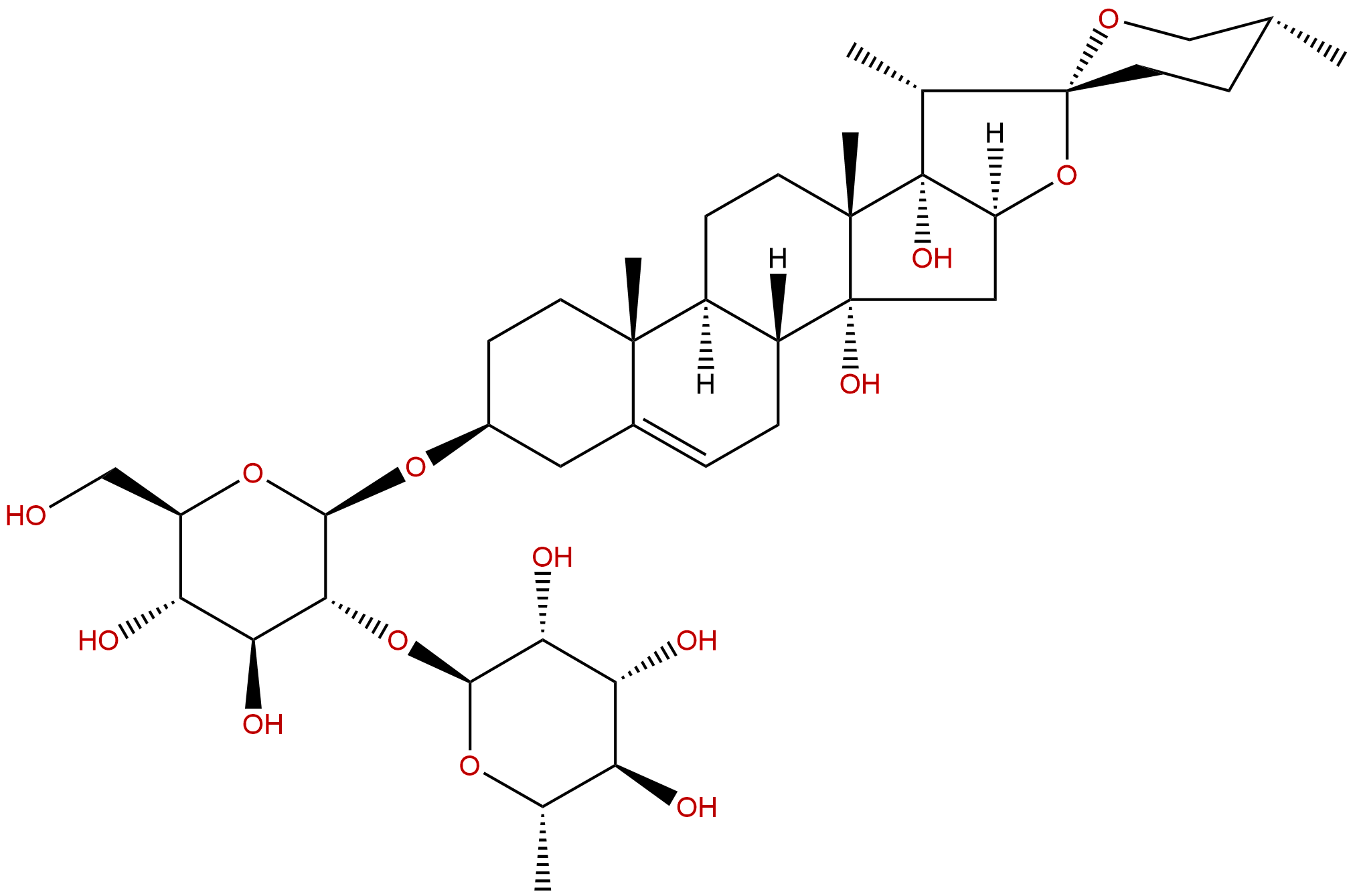
Ophiogenin-3-O - α - L-rhamnopyranosyl (1 → 2) - β - D-glucopyranoside (Ophiogenin-3-O - α - L-rhamnopyranosyl - (1 → 2) - β - D-glucopyranoside), CAS number 128502-94-3, is a traditional Chinese medicine derived from Ophiopogon japonicus(Ophiopogon japonicus)Steroid saponin compounds isolated from the middle. As a classic traditional Chinese medicine that nourishes yin, moistens the lungs, nourishes the stomach, and generates fluids, Ophiopogon japonicus has long been applied in clinical practice for its cardiovascular protection. In recent years, with the deepening development of natural product chemistry and molecular pharmacology, the study of active ingredients in Ophiopogon japonicus has gradually become a hot topic. Ophiogenin-3-O-GR, as one of the important glycosidic saponins, has attracted much attention due to its multi pathway and multi target cardiovascular protective activity. This article aims to systematically review the chemical structure, plant origin, pharmacological activity, molecular mechanism of action, and pharmacological properties of Ophiogenin-3-O-GR, in order to provide comprehensive scientific references for the in-depth research and potential drug development of this compound.
Chemical structure and physicochemical properties
The molecular formula of Ophiogenin-3-O-GR is C39H62O14, with a molecular weight of 754.9110. The core of its structure is the spirostanol type steroidal sapogenin - Ophiogenin, which is connected to a disaccharide chain on the C-3 hydroxyl group. This disaccharide chain is composed of one molecule of β - D-glucopyranose (Glc) and one molecule of α - L-rhamnopyranose (Rha) connected by specific glycosidic bonds. Specifically, the α - L-rhamnopyranose group is connected to the β - D-glucose group through a (1 → 2) glycosidic bond, while the glucose group is connected to the C-3 position of the aglycone through a glycosidic bond. This glycosylation modification has a decisive impact on its water solubility, biological activity, and recognition of target proteins.
Based on its calculated physicochemical parameters, the lipid water partition coefficient (LogP) of Ophiogenin-3-O-GR is 1.6434, indicating its lipophilicity but not high hydrophobicity. Its topological polar surface area (TPSA) is as high as 217.2200 Å ², mainly attributed to the abundant hydroxyl groups and oxygen atoms on the sugar ring in the molecule, indicating its strong ability to form hydrogen bonds. The theoretical water solubility value is 0.0650 mg/mL, which belongs to the category of slight solubility. This is consistent with the properties of most steroidal saponins, that is, the introduction of sugar groups significantly improves the solubility of glycosides, but overall it still tends to be lipophilic. These basic physicochemical properties are the basis for its in vitro and in vivo biological activity, absorption, distribution, metabolism, and excretion (ADME) characteristics.
Plant sources and extraction methods
Ophiogenin-3-O-GR is mainly derived from Ophiopogon japonicus, a plant in the Liliaceae family and the genus Spartina(Ophiopogon japonicus Dried tubers of (L. f.) Ker Gawl. Ophiopogon japonicus is mainly produced in Sichuan, Zhejiang and other places in China, and is one of the famous "Eight Flavors of Zhejiang" with a long history of medicinal use. In addition to Ophiogenin-3-O-GR, Ophiopogon japonicus also contains various other active ingredients such as steroidal saponins, high isoflavones, polysaccharides, etc., which together form the basis of its multiple pharmacological effects.
The extraction and separation of Ophiogenin-3-O-GR from Ophiopogon japonicus is usually carried out using organic solvent extraction combined with modern chromatographic techniques. The standard procedure is as follows:
1. Extract Grind the dried Ophiopogon japonicus root tubers and first use methanol, ethanol, or a certain concentration of ethanol water solution for heating reflux or ultrasound assisted extraction to fully dissolve the saponin components.
2. enrichment The extract obtained by vacuum concentration of the extract is often purified using macroporous adsorption resins (such as D101, AB-8), and gradient elution is performed with water and different concentrations of ethanol. Saponins are usually concentrated in the 30% -70% ethanol elution site.
3. Separation and purification: The saponin rich parts were further systematically separated by normal phase silica gel column chromatography, reverse phase silica gel column chromatography (such as ODS), dextran gel column chromatography (such as Sephadex LH-20) and high performance liquid chromatography (HPLC). The separation of Ophiogenin-3-O-GR often utilizes its specific retention behavior on a reverse phase C18 column, combined with UV detection (saponins have terminal absorption at 200-210 nm) or evaporative light scattering detector (ELSD) for tracking and preparation.
4. appraisal The final pure product was structurally confirmed by techniques such as nuclear magnetic resonance (NMR, including 1H-NMR, 13C-NMR, 2D-NMR such as HSQC, HMBC), mass spectrometry (MS, such as ESI-MS, HR-ESI-MS), etc.
Pharmacological activity research
Numerous in vitro and in vivo pharmacological studies have shown that Ophiogenin-3-O-GR has broad and significant cardiovascular protective activity, mainly manifested in the following aspects:
-
Anti myocardial ischemia/reperfusion injury In animal models such as the rat coronary artery ligation model, Ophiogenin-3-O-GR pretreatment can significantly reduce myocardial infarction area, improve heart function, and lower serum levels of myocardial injury markers such as creatine kinase CK-MB and lactate dehydrogenase LDH. Its protective effect is closely related to reducing oxidative stress and inhibiting cell apoptosis.
-
Anti myocardial fibrosis In models of myocardial fibrosis induced by stress loads (such as aortic arch constriction) or angiotensin II, this compound can inhibit excessive proliferation and activation of myocardial fibroblasts, reduce the deposition of extracellular matrix proteins (such as collagen I, III), and thus delay or reverse the process of myocardial fibrosis.
-
Improving endothelial function and anti atherosclerosis: In atherosclerosis model or hyperlipidemia model, Ophiogenin-3-O-GR can up regulate the expression of endothelial nitric oxide synthase (eNOS), promote the production of nitric oxide (NO), and improve vascular endothelium-dependent relaxation function. Meanwhile, it can inhibit the abnormal migration and proliferation of vascular smooth muscle cells, and alleviate the infiltration of inflammatory cells and lipid deposition in the vascular wall.
-
Anti heart failure In animal models of chronic heart failure, this compound exhibits effects on improving cardiac contraction and relaxation function, reversing ventricular remodeling, and its mechanism involves regulating myocardial energy metabolism and inhibiting excessive activation of the neuroendocrine system.
-
Neuroprotective effect (related to vascular cognitive impairment)Given the close relationship between cardiovascular disease and cerebrovascular health, research has also found that Ophiogenin-3-O-GR has a protective effect on neuronal damage induced by hypoxia/reoxygenation, suggesting its potential benefits for diseases such as vascular dementia.
Mechanism of action and molecular targets
The cardiovascular protective effect of Ophiogenin-3-O-GR is not achieved through a single pathway, but based on its synergistic regulation of multiple key molecular targets, forming a networked mechanism of action. According to existing research, its core targets and pathways include:
-
Activate AMPK signaling pathway AMP activated protein kinase (AMPK, encoded by PRKAA1, etc.) is a core regulator of cellular energy metabolism. Ophiogenin-3-O-GR has been shown to activate AMPK. The activation of AMPK can promote fatty acid oxidation and glucose uptake, improving the energy metabolism homeostasis of myocardial cells; On the other hand, it can inhibit mammalian rapamycin target protein (mTOR) signaling, alleviate endoplasmic reticulum stress and cell apoptosis, while suppressing inflammation and fibrosis related gene expression.
-
Regulating apoptosis related proteins This compound can upregulate the expression of anti apoptotic protein Bcl-2 and downregulate the expression of pro apoptotic protein Bax, thereby stabilizing mitochondrial membrane potential, reducing the release of cytochrome C, inhibiting the activation of caspase-3, and ultimately blocking the apoptotic pathway of cardiomyocytes and endothelial cells.
-
Inhibition of inflammatory signaling pathway Toll like receptor 4 (TLR4) is a key initiating factor for innate immune and inflammatory responses. Ophiogenin-3-O-GR can inhibit the expression of TLR4 and its downstream myeloid differentiation factor 88 (MyD88), thereby blocking the activation of nuclear factor kappa B (NF - κ B). The inhibition of NF - κ B activity leads to a reduction in the production of pro-inflammatory cytokines such as tumor necrosis factor - α (TNF - α) and interleukin-6 (IL-6), thereby alleviating inflammatory damage to blood vessels and myocardial tissue.
-
Intervention of STAT3 signaling Signal transducer and activator of transcription factor 3 (STAT3) plays an important role in cardiac stress, inflammation, and fibrosis. Research has shown that this compound can inhibit the phosphorylation (activation) of STAT3, thereby interfering with its mediated transcription of pro fibrotic and pro-inflammatory genes.
-
Other potential targets:
- BACE1 As a β - secretase, BACE1 is associated with amyloid production, and its inhibition may be related to the neuroprotective effect of this compound, which is beneficial for cardiovascular patients with concomitant cerebrovascular disease.
- PTPN1(PTP1B)Protein tyrosine phosphatase 1B is a negative regulator of the insulin signaling pathway, and its inhibition can improve insulin sensitivity, which has positive implications for metabolic syndrome related cardiovascular diseases.
- ESR2 (estrogen receptor beta)By regulating ESR2, it may affect vasomotor function, inflammation, and lipid metabolism, and may have unique value in cardiovascular protection in postmenopausal women.
- APEX1 (Depurine/Depyrimidine endonuclease 1)Involved in DNA repair and oxidative stress response, its regulation may enhance the survival ability of cells under stress such as ischemia/reperfusion.
- SERPINE1 (plasminogen activator inhibitor-1)Its downregulation helps improve fibrinolysis and prevent thrombosis.
- PRKCA (protein kinase C alpha)The excessive activation of PKC α is associated with myocardial hypertrophy, fibrosis, and vascular dysfunction, and its inhibition is one of the important mechanisms of cardiovascular protection.
In summary, Ophiogenin-3-O-GR acts on core targets such as AMPK, BCL2, TLR4, and STAT3, interweaving into a comprehensive network that covers energy metabolism regulation, anti apoptosis, anti-inflammatory, and anti fibrosis effects. This provides a solid multi-target pharmacological basis for its treatment of complex cardiovascular diseases.
Evaluation of drug properties and pharmacokinetics
Based on calculations and preliminary experimental data, a preliminary evaluation of the pharmacological properties of Ophiogenin-3-O-GR is conducted
- drug-likeness The molecular weight (754.9) is slightly higher than the traditional "five rules" standard of 500, but still within the range of many successful drugs, especially those derived from natural products. Moderate LogP value (1.64) and high TPSA (217) make it possible to have an acceptable balance of membrane permeability and solubility.
- Absorption and distribution As a moderately polar molecule, its oral absorption may be limited to some extent, and its bioavailability needs to be clarified through in vivo pharmacokinetic studies. The calculation predicts that its blood-brain barrier (BBB) permeability is "low", which is consistent with the characteristics of most saponin components, indicating that it mainly acts on the peripheral system and has limited direct effects on the central nervous system, but may also reduce the risk of central nervous system side effects.
- Metabolism and Safety Preliminary computer predictions indicate that the compound has a risk of 0.0 in the Ames test (mutagenicity) model, suggesting low potential genotoxicity. The key cardiac safety indicator, hERG potassium channel inhibition, was predicted to be 'no', indicating that it may not have a significant risk of inducing apical torsion ventricular tachycardia, which is an important safety advantage. However, its specific metabolic pathways (such as hydrolysis into aglycones by gut microbiota, I/II phase metabolism in the liver), half-life, tissue distribution, and potential toxicity still need to be elucidated through systematic preclinical pharmacokinetic and toxicological studies.
- Water solubility Theoretical water solubility (0.065 mg/mL) is low, and it may be necessary to use solubilization techniques in formulation development, such as making cyclodextrin inclusion complexes, nanocrystals, liposomes, or prodrugs, to improve their bioavailability.
Clinical application prospects and prospects
Ophiogenin-3-O-GR shows great potential as a new multi target candidate drug for cardiovascular disease treatment. Its clinical application prospects may include:
1. Adjuvant therapy for acute coronary syndrome Based on its strong anti myocardial ischemia/reperfusion injury effect, it may be developed as an adjuvant protective drug after thrombolysis or interventional therapy for myocardial infarction.
2. Prevention and treatment of chronic heart failure Through its multiple mechanisms of anti fibrosis, improving energy metabolism, and inhibiting ventricular remodeling, it may be used to delay the progression of heart failure.
3. Atherosclerosis and related diseases Its role in improving endothelial function, anti inflammation and stabilizing plaque makes it valuable in the prevention and treatment of atherosclerosis, hypertension and vascular complications of diabetes.
4. combination therapy As a multi-target regulator, when used in combination with existing single target drugs such as statins and ACEI/ARBs, it may produce synergistic effects, improve efficacy, or reduce individual dosage and side effects.
However, pushing it from lead compounds to clinical drugs still faces many challenges and future research directions:
* In depth mechanism research It is necessary to use techniques such as gene knockout/knock in animals and proteomics to more accurately verify its direct interaction with the above-mentioned targets and elucidate its dominant pathways in different cardiovascular pathological scenarios.
* Systematic pharmacokinetic study Comprehensive ADME research must be conducted to clarify its in vivo processes, absolute bioavailability, active metabolites, and species differences.
* Preclinical safety evaluation Complete standardized GLP toxicology studies, including acute toxicity, long-term toxicity, reproductive toxicity, etc., and comprehensively evaluate their safety.
* Formulation optimization Develop new drug delivery systems, such as oral nano formulations or injectable liposomes, to address their solubility and permeability issues and improve their pharmaceutical properties.
* Structural modification Using it as the parent nucleus, reasonable structural modifications (such as glycosylation and aglycone modifications) are carried out to further enhance activity, improve pharmacokinetic properties, or reduce potential toxicity.
Conclusion
Ophiogenin-3-O-L-pyranose rhamnose (1 → 2) - β - D-glucopyranoside (Ophiogenin-3-O-GR) is a steroid saponin compound with important research value discovered from traditional Chinese medicine Ophiopogon japonicus. It exhibits significant pharmacological activity in anti myocardial ischemia, anti fibrosis, anti-inflammatory, and endothelial function protection by synergistically regulating multiple key targets closely related to cardiovascular disease, such as AMPK, BCL2, TLR4/NF - κ B, STAT3, etc. The preliminary calculated pharmacological parameters show certain potential for development, especially the negative hERG inhibition indicates a promising prospect for cardiac safety. Although there are still many scientific questions to be solved regarding its in-depth mechanism of action, systemic pharmacokinetics, toxicology, and formulation on the road to clinical application, Ophiogenin-3-O-GR undoubtedly provides an attractive natural lead compound for the development of novel cardiovascular drugs with multi-target therapeutic advantages. With the continuous advancement of modern pharmaceutical technology, the in-depth exploration and transformation research of this traditional Chinese medicine active ingredient is expected to bring new breakthroughs to the prevention and treatment of cardiovascular diseases.