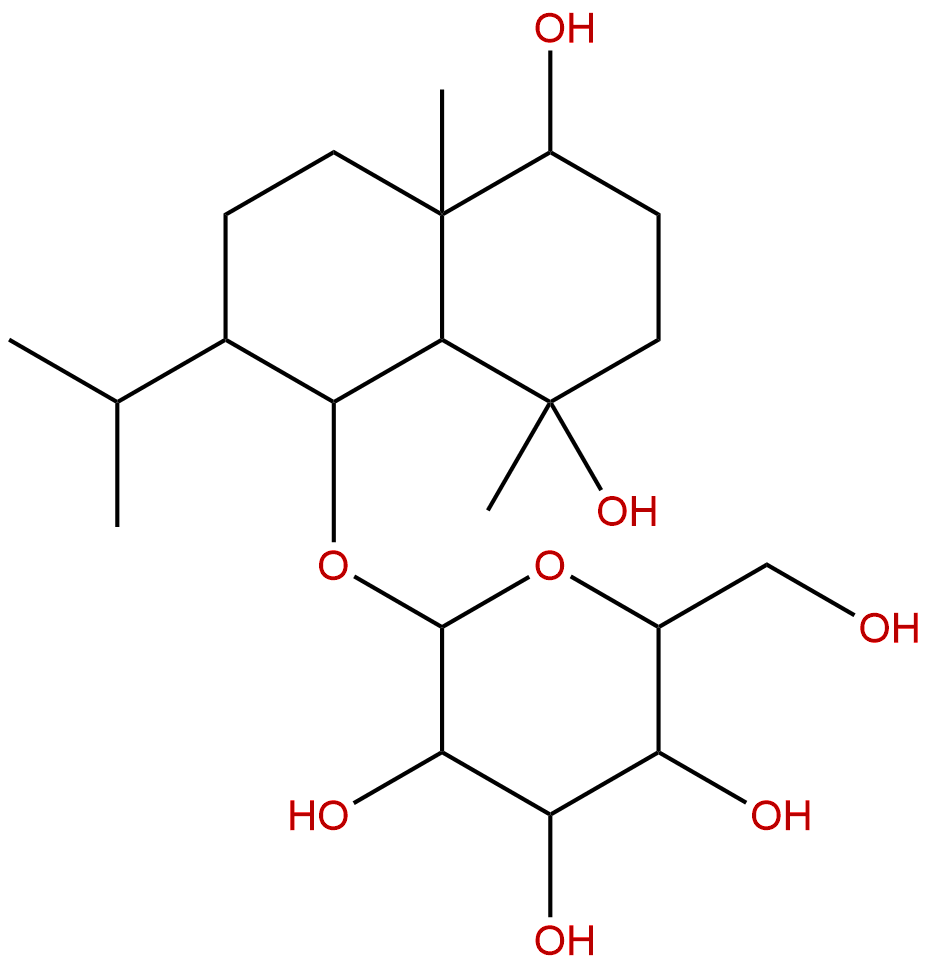
Ophiopogonoside A: Potential cardiovascular protective natural product derived from Ophiopogon japonicus
1. Overview
Ophiopogonoside A is a traditional medicinal plant derived from Ophiopogon japonicus(Ophiopogon japonicus)The sesquiterpenoid glycosides obtained from the separation have a CAS number of 791849-22-4. As a natural product, it has attracted attention in the fields of natural product chemistry and pharmacology research due to its unique chemical structure and potential biological activity. As a classic Chinese medicinal herb, Ophiopogon japonicus has the effects of nourishing yin, generating fluids, moistening the lungs, and clearing the heart in traditional Chinese medicine theory. It is commonly used to treat symptoms such as lung dryness and dry cough, yin deficiency and cough, restlessness and insomnia, and intestinal dryness and constipation. The discovery of Ophiopogonoside A provides an important material basis for explaining the traditional efficacy of Ophiopogon japonicus in promoting blood circulation and pulse circulation from a modern scientific perspective. In recent years, research has focused on its activity against specific molecular targets, particularly its protective role in cardiovascular diseases such as myocardial ischemia, revealing that it may exert therapeutic effects by regulating multiple pathways such as apoptosis, oxidative stress, and angiogenesis. This article will provide a systematic professional popularization of this compound from the aspects of its chemical nature, origin, pharmacological mechanism, drug properties, and research prospects.
2. Chemical structure and physicochemical properties
The molecular formula of Ophiopogonoside A is C21H38O8, with a molecular weight of 418.5270 g/mol. Structurally, it is a typical sesquiterpene glycoside, composed of a non sugar sesquiterpene nucleus (Aglycone) and a sugar group connected by a glycosidic bond. The SMILES string (CC (C) C1CCC2 (C) C (O) CCC (C) (O) C2C1OC1OC (CO) C (O) C (O) C1O) provides a detailed description of its atomic connection order, indicating the presence of multiple hydroxyl groups (- OH) in its structure, which has a decisive impact on its physicochemical properties and biological activity.
The key pharmacological parameters provide a quantitative perspective on their properties:
- Molecular weight (MW):418.5 g/mol, Far below 500 Da, it meets the common requirements for oral drug molecular weight in Lipinski's Five Rules.
- Lipid water partition coefficient (LogP/LogD)Approximately 0.34. This value is positive but relatively small, indicating that the compound has a certain degree of lipophilicity, but overall tends to be hydrophilic. This is consistent with the presence of multiple polar hydroxyl and glycosyl fragments in its structure. A lower LogP value is usually beneficial for water solubility, but may affect its transmembrane permeability.
- Topological Polarity Surface Area (TPSA)Up to 139.84 Å ². TPSA is a measure of the surface area of polar atoms (such as O, N) in a molecule, closely related to the hydrogen bonding ability, solubility, and membrane permeability of compounds. Generally, compounds with TPSA>140 Å ² have significantly reduced cell membrane permeability. The TPSA of Ophiopogonoside A is close to this critical value, indicating that it may have moderate to lower membrane permeability.
- Water solubility The calculated value is about 3.87 mg/mL, which belongs to the soluble range, thanks to its rich hydroxyl and sugar groups that bring strong hydrophilicity.
- Blood-brain barrier (BBB) penetrability Predicted as' low '. This is consistent with its higher TPSA and stronger polarity characteristics, which means it may not easily enter the central nervous system. For drugs that mainly act on the peripheral cardiovascular system, this can sometimes reduce the risk of central side effects.
- Plasma protein binding rate (PPB)Approximately 38.79%, belonging to the moderate to low level. A lower protein binding rate typically means a higher proportion of free drugs are available to exert pharmacological effects.
In summary, Ophiopogonoside A is a natural glycoside compound with moderate size, strong hydrophilicity, and a large polar surface area. Its physicochemical properties determine its distribution and transmission characteristics in organisms.
3. Plant sources and traditional applications
Ophiopogonoside A is mainly derived from the plant Ophiopogon japonicus in the family Liliaceae (now classified as Asparagaceae)(Ophiopogon japonicus Dried tubers of (L. f.) Ker Gawl. Mai Dong, also known as Yan Jie Cao, is a famous traditional nourishing yin medicinal herb in China. It was first recorded in the "Shen Nong Ben Cao Jing" and is classified as a top-grade herb. In traditional Chinese medicine clinical practice, Ophiopogon japonicus has a slightly cold nature, a sweet and slightly bitter taste, and returns to the heart, lungs, and stomach meridians. Its core functions are to nourish yin, generate fluids, moisten the lungs, and clear the heart. Commonly used for treatment:
1. Insufficient lung yin Causing dry cough with less phlegm, coughing and hemoptysis.
2. Deficiency of gastric yin Resulting in dry mouth and tongue, internal heat and thirst quenching.
3. Heart Yin deficiency The resulting annoyance, insomnia, and palpitations.
4. Intestinal dryness and fluid deficiency Constipation caused by.
In terms of cardiovascular health, traditional Chinese medicine theory holds that "the heart governs the blood vessels", and insufficient heart yin can lead to insufficient blood vessels and stagnant circulation. Ophiopogon japonicus nourishes the heart yin and indirectly plays a role in promoting blood circulation. It is commonly used to treat patients with qi yin deficiency syndrome, such as coronary heart disease and angina pectoris. Modern pharmacological research has confirmed that Ophiopogon japonicus extract has multiple effects, including improving myocardial contractility, anti myocardial ischemia, anti arrhythmia, anti-inflammatory, and antioxidant properties. Ophiopogonoside A, as one of the active ingredients isolated from Ophiopogon japonicus, is likely to be the material basis for its cardiovascular protective effects, linking the traditional "nourishing yin and promoting blood circulation" effects with modern "anti myocardial ischemia" effects.
4. Pharmacological activity and mechanism of action
The pharmacological activity research of Ophiopogonoside A mainly focuses on its Anti myocardial ischemia The mechanism of action involves the regulation of multiple key targets. The database information shows that the compound is associated with five targets including BCL2, HIF1A, NOS2, SOD2, VEGF, etc. These targets form a complex network that collectively mediates their protective effects on ischemic myocardium.
1. Inhibit cell apoptosis (targeting BCL2)
BCL2 is an important anti apoptotic protein. During myocardial ischemia/reperfusion injury, the expression of pro apoptotic proteins (such as Bax) is upregulated, while the expression of anti apoptotic protein BCL2 is downregulated, leading to the activation of mitochondrial pathway apoptosis. Research has shown that Ophiopogonoside A may inhibit programmed cell death in cardiomyocytes by upregulating BCL2 expression or enhancing its function, thereby protecting the survival of cardiomyocytes.
2. Regulating hypoxia adaptation and angiogenesis (targeting HIF1A and VEGF)
Hypoxia inducible factor-1 alpha (HIF1A) is a core transcription factor that cells use to respond to hypoxic environments. During myocardial ischemia, HIF1A is stabilized and activated, initiating the expression of a series of adaptive genes, among which one of the most important target genes is vascular endothelial growth factor (VEGF). VEGF is a potent angiogenic factor. Ophiopogonoside A may promote the expression of VEGF by stabilizing or activating the HIF1A signaling pathway, thereby stimulating the formation of new blood vessels in ischemic areas (angiogenesis) and improving local blood supply. This is a long-term and critical mechanism for its treatment of myocardial ischemia.
3. Regulating oxidative stress and inflammation (targeting NOS2 and SOD2)
Myocardial ischemia can trigger severe oxidative stress and inflammatory reactions.
- Inducible nitric oxide synthase (NOS2)Under pathological conditions, excessive activation produces a large amount of nitric oxide (NO), which can react with superoxide anions to produce highly cytotoxic peroxynitrite (ONOO -), exacerbating tissue damage. Ophiopogonoside A may alleviate inflammation and nitrification stress damage by inhibiting the overexpression of NOS2, reducing harmful NO and ONOO - production.
- Superoxide dismutase 2 (SOD2)It is a key antioxidant enzyme located within mitochondria, responsible for converting superoxide anion radicals (O2 • -) into hydrogen peroxide (H2O2) and oxygen. Ophiopogonoside A may enhance the ability of myocardial cell mitochondria to scavenge oxygen free radicals, protect mitochondrial function, and alleviate oxidative damage by upregulating the expression or activity of SOD2.
Integration of mechanism of action:
In the myocardial ischemia model, Ophiopogonoside A may exert its effects through multi-target synergy:in the short term By enhancing SOD2 activity, clearing oxygen free radicals, inhibiting NOS2, and reducing inflammation, it directly combats acute injury caused by ischemia;simultaneously By upregulating BCL2 to inhibit myocardial cell apoptosis and preserve vitality;in the long run By activating the HIF1A-VEGF pathway, it promotes the establishment of collateral circulation and fundamentally improves myocardial blood supply. This multi pathway and multi-target characteristic is in line with the traditional Chinese medicine treatment concept of "multi-component, multi-target", making it have unique potential in the treatment of complex myocardial ischemic diseases.
5. Evaluation of drug properties
Based on the provided pharmacokinetic parameters and in combination with classic drug design rules, a preliminary evaluation of the potential of Ophiopogonoside A can be conducted:
Lipinski's Rule of Five Analysis:
This rule is an empirical rule for evaluating the oral absorption potential of compounds.
1. Molecular weight<500 Da:Comply with(418.5)。
2. LogP < 5:Comply with(0.34)。
3. Hydrogen bond donor (HBD) count<5: Based on the structural formula, it contains multiple hydroxyl groups, possibly close to or exceeding 5,Possible violation。
4. The number of hydrogen bond acceptors (HBAs) is less than 10: the molecule contains multiple O atoms, and the number of HBAs may be close to 10,At critical or potentially violating。
5. Number of rotatable bonds: Usually required to be<10, specific calculations are needed, but glycoside structures usually have few rotatable bonds.
Ophiopogonoside A performs well in terms of molecular weight and LogP, but its high polarity (high TPSA) and possibly more hydrogen bond donor/acceptor numbers suggest that it Oral bioavailability may face challenges This is consistent with its predicted Caco-2 permeability (1.39 × 10 ⁻⁶ cm/s) and human effective permeability (Peff, 0.56) values, indicating that its intestinal absorption efficiency may not be high.
Evaluation of other key parameters:
- safety The key toxicity/safety indicators such as Ames test (0.0), chromosomal aberration (none), and hERG inhibition (no) were all negative, indicating a low risk of genetic and cardiac toxicity. Serum biochemical indicators (ALT/AST, etc.) showed no signs of liver toxicity, and skin and respiratory sensitization were also negative,Good safety features。
- Distribution and Metabolism Low BBB penetration indicates a low risk of central nervous system side effects. Moderate plasma protein binding rate is beneficial for drug distribution. The SyneAccess score is 4.75, indicating that its chemical synthesis is somewhat difficult and is currently more suitable for extraction or semi synthesis from natural sources.
- Formulation considerations Due to its acceptable water solubility but poor membrane permeability, in future formulation development, it may be necessary to consider using absorption enhancers, preparing prodrugs (such as esterification to reduce polarity), or developing non oral routes of administration (such as injections, directly used for intervention in acute myocardial ischemia).
Summary Ophiopogonoside A is a lead compound with clear multi-target pharmacological activity and good safety. The main bottleneck of its medicinal properties lies in Lower membrane permeability and potentially poor oral absorption It does not fully comply with Lipinski's rules, but this is common in natural products and does not completely negate its development value, but rather points to the optimization direction of formulation and structural modification.
6. Research Status and Application Prospects
At present, research on Ophiopogonoside A is still ongoing Preclinical stage Current research mainly focuses on:
1. Chemical research Completed the separation, purification, and structural identification from Ophiopogon japonicus.
2. Exploration of Pharmacological Mechanisms Through cell and animal models, its anti myocardial ischemia effect and its association with targets such as BCL2, HIF1A, VEGF have been preliminarily revealed. However, the specific details of its action and the upstream and downstream relationship of the signaling pathway still need to be further elucidated.
3. Preliminary evaluation of drug properties As described in this article, there are already some physicochemical and ADMET (absorption, distribution, metabolism, excretion, toxicity) property data based on calculations and preliminary experiments.
Future research directions and application prospects:
1. Deepening the mechanism of action Molecular biology techniques such as gene knockout/knockdown, reporter genes, co precipitation (Co IP), and chromatin immunoprecipitation (ChIP) are required to accurately verify the direct or indirect interactions between Ophiopogonoside A and the aforementioned targets, and to create a complete signal network diagram.
2. Research on Structural Optimization and Structure Activity Relationship (SAR)To address its poor permeability, carry out systematic structural modifications. For example, modifying or replacing the sugar moiety, acylating or alkylating the hydroxyl group on the glycoside to reduce polarity and improve lipid solubility, thereby improving its pharmacokinetic properties. Through SAR research, search for derivatives with better activity and drug properties.
3. Formulation development Explore suitable drug delivery systems, such as liposomes, nanoparticles, microemulsions, and other novel delivery systems, to encapsulate drugs and improve their stability, targeting, and bioavailability.
4. Preclinical comprehensive evaluation To comprehensively evaluate its efficacy, pharmacokinetics, and long-term toxicity in animal models of diseases that are closer to humans, such as the myocardial ischemia model in pigs, and prepare data for possible clinical trial applications (IND).
5. Expand indications Based on its anti-inflammatory, antioxidant, and pro angiogenic properties, its potential applications in other ischemic diseases (such as cerebral ischemia, lower limb ischemia), fibrotic diseases, or chronic inflammation related diseases can be explored.
In summary, Ophiopogonoside A is a highly valuable active molecule discovered from the traditional Chinese medicine Ophiopogon japonicus. It combats myocardial ischemia through a multi-target mechanism, demonstrating the overall regulatory advantages of traditional Chinese medicine. Although it still faces challenges in oral bioavailability on the path of traditional Chinese medicine, with the deepening involvement of modern medicinal chemistry, pharmacy, and pharmacology, it is expected to be developed into a novel mechanism of action derived from traditional Chinese medicine New drugs for anti myocardial ischemia or lead compound Provide new options for the treatment of cardiovascular diseases. Its research process is also a typical example of "elucidating mechanisms, optimizing structures, and creating new drugs" in the modernization and internationalization of traditional Chinese medicine.