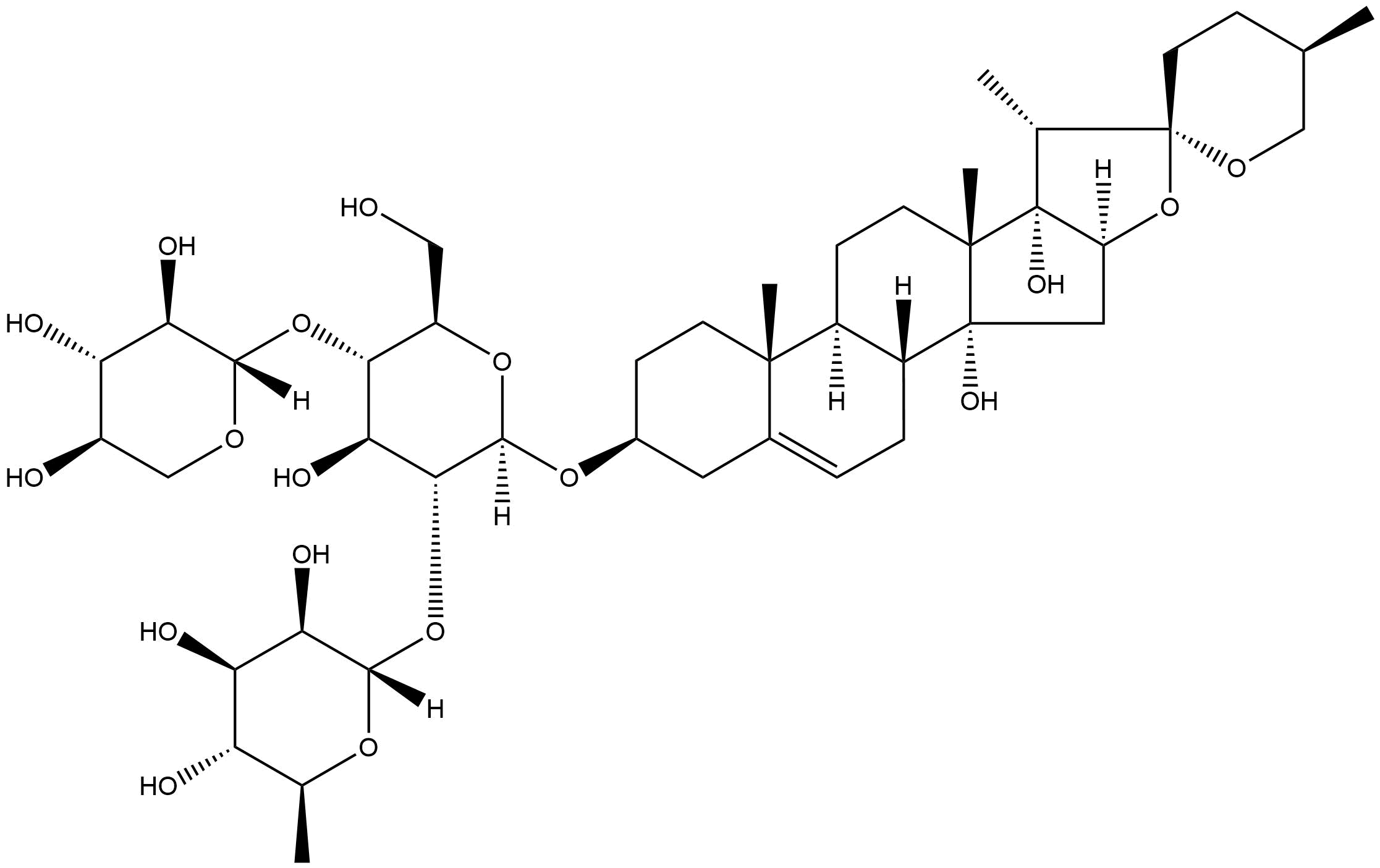


Product name: Ophiopojaponin C
Synonym name:
Catalogue No.: BP3296
Cas No.: 911819-08-4
Formula: C44H70O18
Mol Weight: 887.026
Botanical Source: Ophiopogonis Radix
Physical Description: 麦冬
Type of Compound: Steroids
Purity: 95%~99%
Analysis Method: HPLC-DAD or/and HPLC-ELSD
Identification Method: Mass, NMR
Packing: Brown vial or HDPE plastic bottle
Storage: Store in a well closed container, protected from air and light. Put into refrigerate or freeze for long term storage.
Whenever possible, you should prepare and use solutions on the same day. However, if you need to make up stock solutions in advance, we recommend that you store the solution as aliquots in tightly sealed vials at -20℃. Generally, these will be useable for up to two weeks.
The product could be supplied from milligrams to grams
Inquire for bulk scale.
For Reference Standard and R&D, Not for Human Use Directly.
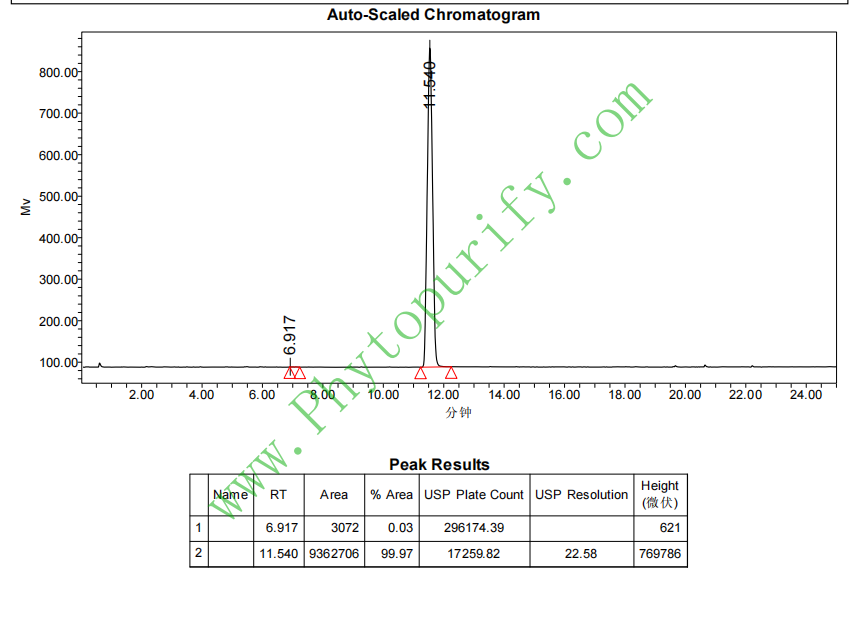
HPLC of Ophiopojaponin C
Storage conditions:Short-term storage at 2~8℃, long-term storage at -20 ~ -80℃
276.1400
1.1535
1.1533
.1325
.5163
.5198
Low
61.8276
6.9475
No
No
No
No
No
No
0.0
Yes
No
Yes
Yes
Natural products, as an important source of drug discovery, play an irreplaceable role in the long struggle between humans and diseases. Among them, steroidal saponins derived from traditional medicinal plants have always been a hot topic in pharmaceutical research due to their structural diversity and wide range of biological activities. Ophiopogon japonicus(Ophiopogon japonicus (L. f.) Ker-Gawl.), As a traditional Chinese medicine that nourishes yin, moistens the lungs, and promotes stomach and body fluids, its tubers have a long history of clinical application in traditional Chinese medicine. They are commonly used to treat symptoms such as lung dryness and dry cough, yin deficiency, tuberculosis and cough, throat obstruction and sore throat, thirst caused by fluid damage, internal heat and thirst reduction, and intestinal dryness and constipation. Modern pharmacological research has shown that Ophiopogon japonicus and its active ingredients exhibit significant potential in cardiovascular protection, anti-inflammatory, immune regulation, anti-tumor, and anti-aging aspects.
Ophiopogon C, a representative natural C29 steroid glycoside isolated from Ophiopogon tubers, has attracted widespread attention from researchers in recent years. Its unique chemical structure, consisting of a C29 steroid skeleton connected to multiple sugar units through glycosidic bonds, endows it with physicochemical properties and biological activity that distinguish it from other steroid saponins. Early research focused on its cytotoxicity, while recent studies have gradually revealed its enormous potential in anti-inflammatory, analgesic, and neuroprotective aspects. In particular, Ophiopogon japonicus saponin C can intervene in the pathological progression of various inflammation related diseases by regulating multiple key inflammatory signaling pathways, such as IL-6/STAT3, NF - κ B, and NLRP3/CASP1. In addition, its good pharmacokinetic parameters, such as low blood-brain barrier permeability, no risk of hERG inhibition, and negative Ames test results, provide an important safety basis for its development as a candidate drug. This article aims to systematically review the chemical structure, plant origin, pharmacological activity, mechanism of action, and pharmacological evaluation of Ophiopogon japonicus saponin C, in order to provide comprehensive references for the in-depth research and development of this natural product.
Ophiopogon C is a typical C29 steroid glycoside, consisting of a glycoside and a sugar chain in its chemical structure. The glycoside moiety is a C29 steroid skeleton and belongs to the spirostanol class of derivatives. Unlike common C27 steroidal saponins such as diosgenin, C29 steroidal saponins have an additional carbon atom or two on the C-20 position or side chain, making their structure more complex. The specific aglycone of Ophiopogon japonicus saponin C is a derivative of (25S) - rucogenin. Its structural features include: A/B ring is cis fused (5 β - H), B/C ring is trans fused, C/D ring is cis fused, and there is one hydroxyl group at C-1 and C-3 positions respectively. This specific stereoconfiguration is crucial for its interaction with biological targets.
The sugar chain is partially connected to the C-1 hydroxyl group of the aglycone and typically consists of two or three monosaccharides. According to literature reports, the sugar chain structure of Ophiopogon japonicus saponin C may include monosaccharide units such as D-glucose (Glc), L-rhamnose (Rha), and D-xylose (Xyl), which are connected by β - glycosidic bonds. The specific sugar chain sequence and connection mode (such as 1 → 2, 1 → 4, etc.) are key factors determining its molecular recognition and biological activity. For example, a common structure may be O - β - D-glucosyl - (1 → 2) - O - β - D-xylosyl - (1 → 4) - O - β - D-glucosyl - (1 → 1) - roscopin, but the exact structure still needs to be confirmed by combining high-resolution mass spectrometry (HR-MS) and nuclear magnetic resonance (NMR) spectroscopy data.
In terms of physicochemical properties, the molecular weight of Ophiopogon japonicus saponin C is 887.0260 Da, which is a medium-sized molecule. Its lipophilic water partition coefficient (LogP) is 1.1535, indicating that the compound has a certain degree of lipophilicity, but overall tends to be hydrophilic, which is related to the presence of multiple hydroxyl and sugar units in its molecule. The topologically polar surface area (TPSA) is as high as 276.14 Å ², far exceeding the recommended upper limit of 140 Å ² for oral drugs, indicating that its oral absorption may be poor and its membrane permeability limited. The low water solubility (0.1325 mg/mL) to some extent limits its bioavailability. In addition, its blood-brain barrier (BBB) permeability evaluation is "low", indicating that the compound mainly acts on peripheral tissues and is not easily able to enter the central nervous system. This is a favorable characteristic for the development of drugs targeting peripheral inflammatory diseases. The prediction result of hERG inhibition is' no ', indicating a low risk of causing QT interval prolongation and arrhythmia in the heart. The Ames test result is 0.0, indicating that it has no mutagenicity in the bacterial recovery mutation test, and the preliminary genetic toxicity risk is low. These pharmacological parameters collectively outline the advantages and challenges of using Ophiopogon japonicus saponin C as a lead compound for subsequent development.
Ophiopogon saponins C mainly come from Ophiopogon japonicus, a plant in the Liliaceae family and the genus Ophiopogon(Ophiopogon japonicus)Dry tubers. Ophiopogon japonicus is native to China, Japan, South Korea, and Southeast Asia. It is mainly distributed in Zhejiang, Sichuan, Hubei, Fujian, and other places in China. Among them, "Zhejiang Ophiopogon japonicus" and "Sichuan Ophiopogon japonicus" produced in Cixi, Zhejiang and Santai, Sichuan have excellent quality and are authentic medicinal herbs. Except O. japonicus Externally, plants of the same genus such as Hubei Ophiopogon japonicus(Liriope spicata var. prolifera)Or Short Ridge Mountain Ophiopogon japonicus(Liriope muscari)The tubers of Ophiopogon japonicus are also used as substitutes or mixed products in some areas, but the types and contents of its saponin components differ from those of genuine Ophiopogon japonicus. Therefore, clarifying the plant source is the primary prerequisite for ensuring the reproducibility and reliability of the research results of Ophiopogon japonicus saponin C.
The content of Ophiopogon japonicus saponin C in plants is relatively low, and its extraction usually requires a multi-step separation and purification process. The classic extraction process is as follows:
In recent years, with the advancement of chromatographic technology, high-speed countercurrent chromatography (HSCCC) and preparative high-performance liquid chromatography (Prep HPLC) have also been applied to the efficient and rapid separation of Ophiopogon japonicus saponins C, greatly improving purification efficiency and yield.
The pharmacological activity research of Ophiopogon japonicus saponin C is currently a hot topic in this field, mainly focusing on anti-inflammatory, analgesic, neuroprotective, and anti-tumor aspects.
1. Anti inflammatory activity
Inflammation is a defensive response of the body to harmful stimuli, but excessive or persistent inflammation is a common pathological basis for various diseases such as arthritis, colitis, and neurodegenerative diseases. Ophiopogon saponins C exhibit significant anti-inflammatory activity. In vitro studies have shown that in a lipopolysaccharide (LPS) - stimulated macrophage model (such as RAW264.7 cells), Ophiopogon japonicus saponin C can dose dependently inhibit the production of pro-inflammatory factors such as nitric oxide (NO), prostaglandin E2 (PGE2), tumor necrosis factor - α (TNF - α), interleukin-6 (IL-6), and interleukin-1 β (IL-1 β). Meanwhile, it can also downregulate the expression of inducible nitric oxide synthase (iNOS/NOS2) and cyclooxygenase-2 (COX-2/PTGS1). In animal models, Ophiopogon japonicus saponin C has an improving effect on various acute and chronic inflammation models. For example, in the rat foot swelling model induced by carrageenan and the mouse peritoneal capillary permeability increase model induced by acetic acid, Ophiopogon japonicus saponin C can significantly alleviate the inflammatory response. In more clinical disease models, such as the dextran sulfate sodium (DSS) - induced colitis model in mice, the disease activity index (DAI) of mice treated with Ophiopogon japonicus saponin C was significantly reduced, the shortening of colon length was alleviated, and histopathological damage (such as inflammatory cell infiltration and crypt destruction) was significantly reduced.
2. Analgesic activity
Pain often occurs in conjunction with inflammation. The analgesic effect of Ophiopogon japonicus saponin C has been validated in various classic pain models. In thermal stimulation pain models such as hot plate method and tail flick method, Ophiopogon japonicus saponin C can prolong the latency period of pain threshold in mice, indicating its central analgesic effect. In the formalin induced inflammatory pain model, Ophiopogon japonicus saponin C can significantly inhibit the pain response of the second phase (inflammatory phase), indicating its good relief effect on peripheral inflammatory pain. Its analgesic mechanism may be related to inhibiting the release of inflammatory mediators and regulating transient receptor potential (TRP) channels. Research suggests that Ophiopogon japonicus saponin C may exert analgesic effects by inhibiting the activation of TRPV1 and TRPA1 channels, reducing the transmission of nociceptive signals.
3. Neuroprotective activity
Given its low BBB permeability, the neuroprotective effect of Ophiopogon japonicus saponin C may mainly target peripheral nerves or indirectly affect the central nervous system by regulating the peripheral immune nervous axis. However, studies have shown that Ophiopogon japonicus saponin C has a protective effect on glutamate induced neuronal damage, can inhibit cell apoptosis, and reduce the production of reactive oxygen species (ROS). In cell models related to Alzheimer's disease (AD), Ophiopogon japonicus saponin C can reduce neurotoxicity induced by β - amyloid protein (A β). These effects may be related to inhibiting the NF - κ B pathway and regulating STAT3 signaling. Although its BBB permeability is low, considering its significant anti-inflammatory effect in peripheral diseases such as inflammatory bowel disease, as well as the rise of the concept of the "gut brain axis", Ophiopogon japonicus saponin C may indirectly affect the health of the central nervous system by regulating intestinal immunity and inflammatory status, which is a direction worthy of further exploration.
4. Antitumor activity
Early research on Ophiopogon japonicus saponin C mainly focused on its cytotoxicity. Studies have shown that Ophiopogon japonicus saponin C can inhibit the proliferation of many tumor cell lines, such as lung cancer A549, liver cancer HepG2, breast cancer MCF-7, colon cancer HT-29, etc. The mechanism may involve inducing cell cycle arrest (such as G0/G1 phase arrest) and promoting cell apoptosis (through the mitochondrial pathway or death receptor pathway). However, its anti-tumor activity is usually weaker than some classic chemotherapy drugs, and its selectivity needs to be improved. In recent years, the research focus has shifted from direct cytotoxicity to its role as an anti-inflammatory and immunomodulatory agent in the tumor microenvironment. Due to chronic inflammation being an important driving factor in the occurrence and development of tumors, Ophiopogon japonicus saponin C may help suppress tumor associated inflammation by inhibiting pro-inflammatory signaling pathways such as NF - κ B and STAT3, thereby exerting indirect anti-tumor effects.
The pharmacological activity of Ophiopogon japonicus saponin C, especially its anti-inflammatory effect, is achieved by regulating multiple key signaling pathways and molecular targets. Its mechanism of action exhibits the characteristics of multi-target and multi pathway.
1. Regulating the IL-6/STAT3 signaling pathway
IL-6 is a multifunctional pro-inflammatory cytokine that is upregulated in various inflammatory diseases. After binding to the receptor, IL-6 activates JAK kinase, which then phosphorylates and activates transcription factor STAT3. Activated STAT3 dimerizes and enters the nucleus, initiating the transcription of downstream target genes such as IL-6 itself, VEGF, Bcl-2, Cyclin D1, etc., forming a positive feedback loop that amplifies inflammatory responses and promotes cell proliferation and survival. Research has shown that Ophiopogon japonicus saponin C can significantly inhibit IL-6-induced STAT3 phosphorylation (Tyr705 site), block STAT3 nuclear translocation and transcriptional activity. By inhibiting the IL-6/STAT3 pathway, Ophiopogon japonicus saponin C can effectively reduce the production of pro-inflammatory factors and inhibit the abnormal proliferation of inflammation related cells.
2. Regulating the NF - κ B signaling pathway
Nuclear factor kappa B (NF - κ B) is the core transcription factor in inflammatory response. In the resting state, NF - κ B (usually p65/RELA-p50 dimer) binds to its inhibitory protein I κ B and exists in an inactive form in the cytoplasm. When cells are stimulated by LPS, TNF - α, etc., I κ B kinase (IKK, composed of subunits such as IKBKB) is activated, phosphorylating I κ B, leading to its ubiquitination and degradation. The released NF - κ B immediately enters the nucleus, initiating the transcription of a series of pro-inflammatory genes such as TNF - α, IL-1 β, IL-6, iNOS, COX-2. Ophiopogon japonicus saponin C has been found to inhibit the activity of IKK, prevent the phosphorylation and degradation of I κ B, and thus "lock" NF - κ B in the cytoplasm, inhibiting its nuclear translocation and transcription functions. In addition, Ophiopogon japonicus saponin C may directly interact with the p65/RELA subunit, interfering with its binding to DNA. By inhibiting the NF - κ B pathway, Ophiopogon japonicus saponin C effectively suppresses the production of various pro-inflammatory mediators from the source.
3. Regulating the NLRP3/CASP1 inflammasome pathway
NLRP3 inflammasome is a multi protein complex composed of pattern recognition receptor NLRP3, adaptor protein ASC, and effector protein Caspase-1 (CASP1). When cells are stimulated by pathogen associated molecular patterns (PAMPs) or damage associated molecular patterns (DAMPs), NLRP3 inflammasomes are activated, promoting self splicing activation of Caspase-1. Activated Caspase-1 cleaves pro-IL-1 β and pro-IL-18, producing mature IL-1 β and IL-18 and releasing them into the extracellular space, triggering a strong inflammatory response; On the other hand, Caspase-1 can also induce a pro-inflammatory cell death mechanism called pyroptosis. Research has found that Ophiopogon japonicus saponin C can inhibit the assembly and activation of NLRP3 inflammasomes, reduce the activation of Caspase-1, and thus decrease the secretion of IL-1 β and IL-18. This mechanism is particularly crucial in its protective effect against DSS induced colitis.
4. Adjust TRP channel
Transient receptor potential (TRP) channels, especially TRPV1 and TRPA1, are non selective cation channels located on sensory neurons and are key molecules for sensing pain, heat, cold, and chemical stimuli. TRPV1 can be activated by capsaicin, heat (>43 ° C), and acidic environments, while TRPA1 can be activated by mustard oil, cold stimulation, and various inflammatory mediators. After activation, cation influx causes depolarization of neurons and generates pain signals. Ophiopogon japonicus saponin C has been shown to inhibit the activity of TRPV1 and TRPA1 channels, which may directly explain its analgesic effect. By blocking these channels, Ophiopogon japonicus saponin C can reduce the transmission of harmful stimuli to the central nervous system, thereby relieving pain.
5. Other potential targets
In addition to the main pathways mentioned above, Ophiopogon japonicus saponin C may also exert its effects by regulating other molecular targets. For example, it may block TNF mediated inflammatory signals by inhibiting the binding of TNF - α to its receptors or downregulating the expression of TNF receptors. In addition, its inhibition of NOS2 (iNOS) expression directly reduces the production of NO, a key inflammatory mediator. The synergistic effects of these multiple targets together form the molecular basis for the anti-inflammatory, analgesic, and neuroprotective properties of Ophiopogon japonicus saponin C.
To develop natural products into clinical drugs, a systematic evaluation of their drug like and pharmacokinetic (ADME) properties is necessary. Based on preliminary calculations and limited experimental data, the pharmacological evaluation of Ophiopogon japonicus saponin C is as follows:
1. Analysis of pharmacological parameters
2. Pharmacokinetic characteristics (prediction and preliminary experiments)
3. Optimization strategy for drug properties
Regarding the main bottleneck of the pharmacological development of Ophiopogon japonicus saponin C (poor oral absorption), future optimization strategies include:
* Prodrug design Introducing cleavable lipophilic groups (such as ester and phosphate groups) into the molecule temporarily masks its polar groups (such as hydroxyl groups) and increases its membrane permeability. Release the original drug after enzymatic or chemical hydrolysis in the body.
* Drug delivery system Using liposomes, nanoparticles, microemulsions and other carriers to encapsulate Ophiopogon japonicus saponin C can protect it from degradation in the gastrointestinal tract and promote its absorption through intestinal epithelial cells.
* Structural modification Simplify or modify sugar chains, or structurally modify aglycones, while retaining key pharmacophores, to reduce molecular weight and improve lipophilicity. For example, searching for secondary glycosides or glycoside derivatives with stronger activity.
* Optimization of administration route Develop intravenous or intramuscular injection formulations for acute inflammation or diseases that require rapid onset of action. For IBD, develop rectal administration (such as enemas, suppositories) or oral colon targeted preparations.
Based on the unique pharmacological activity and preliminary safety evaluation of Ophiopogon japonicus saponin C, it has shown broad clinical application prospects in the treatment of the following diseases:
1. Inflammatory bowel disease (IBD)
This is the most promising application direction of Ophiopogon japonicus saponin C. Its strong anti-inflammatory activity, especially by inhibiting the NF - κ B, STAT3, and NLRP3 inflammasome pathways, as well as its inhibitory effect on key pro-inflammatory factors such as IL-6 and TNF - α, makes it an ideal candidate molecule for the treatment of Crohn's disease and ulcerative colitis. More importantly, its low oral bioavailability may actually become an advantage in the treatment of IBD, as the drug can reach high concentrations locally in the intestine, directly acting on the affected area, while reducing the side effects caused by systemic exposure. The development of oral colon targeted or rectal administration formulations is key to advancing their clinical application in IBD.
2. Inflammatory pain and neuropathic pain
Ophiopogon japonicus saponin C exhibits good analgesic effects in various pain models by inhibiting TRPV1 and TRPA1 channels as well as anti-inflammatory effects. Compared with traditional opioid analgesics, it is less prone to serious side effects such as addiction and respiratory depression. Compared with NSAIDs, they may have better efficacy and safety by acting on multiple targets. In the future, its application in chronic pain caused by peripheral nerve injury, arthritis, and other conditions can be explored.
3. Autoimmune diseases
The core pathological mechanisms of autoimmune diseases such as rheumatoid arthritis (RA) and psoriasis are abnormal immune activation and chronic inflammation. The regulation of IL-6/STAT3 and NF - κ B pathways by Ophiopogon japonicus saponin C has the potential to be used for the treatment of these diseases. Animal model studies, such as collagen induced arthritis models, are an important next step in verifying their therapeutic efficacy.
4. Metabolic disorders
Chronic low-grade inflammation is a common feature of metabolic diseases such as obesity, type 2 diabetes and atherosclerosis. The anti-inflammatory effect of ophiopogon saponin C may help to improve insulin resistance, reduce adipose tissue inflammation and delay the progression of atherosclerosis. Research in this area is still in its infancy and deserves further exploration.
Outlook and Challenges
Despite the promising prospects, the clinical translation of Ophiopogon japonicus saponin C still faces many challenges:
* bioavailability Low oral bioavailability is its biggest Achilles heel. The key to solving this problem is to develop efficient drug delivery systems or perform structural modifications.
* Deep analysis of the mechanism of action Although it is known to act on multiple targets, the specific binding mode, direct target proteins, and contribution of each target in different disease models are not fully understood. Chemical biological methods such as drug affinity reaction target stability DARTS and cell thermal transition analysis CETSA are needed to identify its direct targets.
* Metabolism and Toxicology in vivo It is necessary to systematically study its metabolic pathways in vivo, the activity and toxicity of metabolites, and conduct comprehensive long-term toxicological evaluations.
* Large scale preparation The cost of extracting and isolating from plants is high and the yield is low. Developing methods based on biosynthesis (such as yeast cell factories) or chemical total/semi synthesis is the only way to achieve its large-scale supply.
* Preclinical and clinical research More and more rigorous preclinical pharmacological and pharmacokinetic studies are needed, and ultimately advanced to the clinical trial stage.
Ophiopogon saponins C, a C29 steroid glycoside derived from the traditional Chinese medicine Ophiopogon japonicus, are gradually transforming from a classic natural product into a lead compound with clear pharmacological mechanisms and promising prospects for drug development. It exhibits unique advantages in the treatment of inflammatory bowel disease, inflammatory pain, and autoimmune diseases due to its anti-inflammatory, analgesic, and neuroprotective properties through multiple targets and pathways, especially IL-6/STAT3, NF - κ B, NLRP3/CASP1, and TRP channels. Although low oral bioavailability is the main obstacle to its development, this challenge is expected to be overcome through modern medicinal chemistry and pharmaceutical methods. In the future, with the in-depth analysis of its mechanism of action, innovation in drug delivery systems, and breakthroughs in biosynthetic technology, Ophiopogon japonicus saponin C and its derivatives are highly likely to move from the laboratory to clinical practice, contributing to human health. The study of Ophiopogon japonicus saponin C not only deepens our understanding of the scientific connotation of traditional Chinese medicine, but also provides valuable examples for the development of innovative drugs based on natural products.
