


Synonym name: 8-Methylophiopogonanone A
Catalogue No.: BP0941
Cas No.: 74805-92-8
Formula: C19H18O6
Mol Weight: 342.347
Botanical Source: From Ophiopogon japonicus
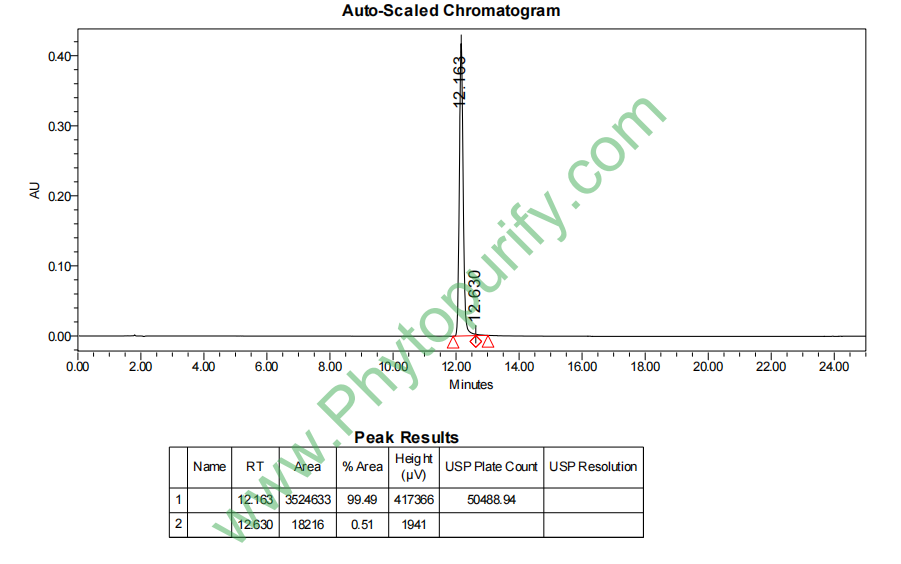
Purity: 95%~99%
Analysis Method: HPLC-DAD or/and HPLC-ELSD
Identification Method: Mass, NMR
Packing: Brown vial or HDPE plastic bottle
Can be supplied from milligrams to grams.
For Reference Standard and R&D, Not for Human Use Directly.
Inquire for bulk scale.
HPLC of Methylophiopogonanone A
Storage conditions:Short-term storage at 2~8℃, long-term storage at -20 ~ -80℃
85.2200
2.8567
2.6029
.1439
4.9818
13.5251
Low
90.9312
3.2041
Yes
No
Yes
No
Yes
No
0.6
Yes
No
No
No
Methylophopogonone A (hereinafter referred to as Methylophopogonone A) is a natural flavonoid product extracted from Ophiopogon japonicus, a plant of the Ophiopogon genus. As one of the active ingredients in traditional Chinese medicine Ophiopogon japonicus, methyl Ophiopogon flavanone A has received widespread attention in recent years due to its significant antioxidant and anti-inflammatory activities. Cardiovascular disease, as the leading cause of death worldwide, has a complex pathogenesis involving multiple pathological processes such as oxidative stress, inflammatory response, and endothelial dysfunction. Methyl Ophiopogon flavanone A has demonstrated excellent pharmacological activity in the field of cardiovascular protection and has become an important research object in natural product pharmacology and new drug development.
This article will provide a systematic review of the chemical structure and physicochemical properties, plant sources and extraction methods, pharmacological activity and mechanism of action of methyl Ophiopogon flavanone A. The focus will be on analyzing its molecular targets and pharmacological evaluation in cardiovascular protection. Combined with current pharmacokinetic data, the clinical application prospects and future research directions will be explored, aiming to provide theoretical basis and research guidance for the drug development of this natural product.
The molecular formula of methyl Ophiopogon flavanone A is C19H18O6, with a molecular weight of 342.3470 and a CAS number of 74805-92-8. Its structure belongs to flavanone compounds, with a typical flavonoid skeleton and multiple hydroxyl and methyl substituents, endowing it with strong biological activity. The LogP value of this compound is 2.8567, indicating that it has moderate lipid solubility, which is beneficial for membrane penetration and in vivo distribution. The polar surface area (TPSA) is 85.2200 Å ², indicating that it has a certain polarity, which is conducive to binding with biomolecule targets.
The water solubility is 0.1439, which belongs to low water solubility compounds, posing certain challenges to their oral absorption and bioavailability. The low permeability of the blood-brain barrier suggests its limited distribution in the central nervous system. The negative result of hERG channel inhibition experiment indicates a low risk of cardiac toxicity. The Ames mutagenicity test score is 0.6, indicating a low risk of genetic toxicity and a good safety basis.
In summary, the physicochemical properties of methyl Ophiopogon flavanone A are suitable as a candidate molecule for cardiovascular protection drugs, but its water solubility and bioavailability need to be improved through drug formulation technology.
Methyl Ophiopogon flavanone A mainly exists in the rhizomes of Ophiopogon japonicus. Ophiopogon japonicus is a perennial herbaceous plant in the Liliaceae family, widely distributed in East Asia such as China, Japan, and South Korea. It is an important medicinal herb in traditional Chinese medicine that nourishes yin, moistens the lungs, and soothes the heart and mind.
The process of extracting methyl Ophiopogon flavanone A usually includes the following steps:
Raw material pretreatment Crush the dried roots and stems of Ophiopogon japonicus into fine powder to increase extraction efficiency.
Solvent extraction Ethanol water mixed solvent (such as 70% ethanol) is used for reflux extraction, and the polarity of ethanol is moderate, which is beneficial for the dissolution of flavonoids.
Liquid-liquid separation After concentration, the extract is separated step by step using solvents of different polarities (such as ethyl acetate and n-butanol) to enrich flavonoids.
Chromatographic purification Further purification was carried out using techniques such as silica gel column chromatography and high-performance liquid chromatography (HPLC) to obtain high-purity methyl Ophiopogon flavanone A.
Structural Identification Confirm the structure of the compound through methods such as nuclear magnetic resonance (NMR), mass spectrometry (MS), and infrared spectroscopy (IR).
In recent years, ultrasound assisted extraction and microwave-assisted extraction technologies have been introduced to improve extraction efficiency and purity, while reducing solvent usage and extraction time, providing technical support for industrial production.
The pharmacological activities of methyl Ophiopogon flavanone A mainly focus on antioxidant, anti-inflammatory, and cardiovascular protective effects.
Oxidative stress is a key factor in the occurrence and development of various cardiovascular diseases. Methyl Ophiopogon flavanone A reduces oxidative damage by clearing reactive oxygen species (ROS) and enhancing the activity of endogenous antioxidant enzymes such as superoxide dismutase (SOD) and glutathione peroxidase (GPx). In vitro experiments have shown that the compound can inhibit lipid peroxidation and protect the integrity of cell membrane structure.
Inflammatory response plays an important role in cardiovascular diseases such as atherosclerosis and myocardial ischemia reperfusion injury. Methylpyrrolidone A can significantly downregulate the activity of pro-inflammatory factors such as tumor necrosis factor - α (TNF - α), interleukin-6 (IL-6), and nuclear factor kappa B (NF - κ B) signaling pathways, alleviate inflammatory reactions, and protect cardiovascular tissue.
Multiple animal model studies have confirmed that methyl Ophiopogon flavanone A has significant cardiovascular protective effects, including:
These effects lay the foundation for its potential as a cardiovascular treatment drug.
The cardiovascular protective effect of methyl Ophiopogon flavanone A involves multiple signaling pathways and molecular targets, mainly including:
SELP is an adhesion molecule on the surface of platelets and endothelial cells, involved in the recruitment of inflammatory cells and thrombus formation. Methyl Ophiopogon flavanone A reduces the interaction between platelets and endothelial cells and lowers the risk of thrombosis by inhibiting SELP expression.
PPARG regulates lipid metabolism and inflammatory response. Methylophiopogon flavanone A activates the PPARG signaling pathway, promotes the balance of lipid metabolism, inhibits the release of inflammatory factors, and slows down atherosclerosis.
ACE catalyzes the conversion of angiotensin I to angiotensin II and participates in blood pressure regulation. Methyl Ophiopogon flavanone A has a certain inhibitory effect on ACE, which helps to lower blood pressure and alleviate cardiac burden.
The AKT1 signaling pathway plays a critical role in cell survival, metabolism, and angiogenesis. Methyl Ophiopogon flavanone A activates AKT1, promotes endothelial cell function recovery, and enhances vascular repair ability.
ADRB2 is involved in myocardial contraction and vasodilation. Methylpyrrolidone A regulates ADRB2 activity, improves myocardial function and hemodynamics.
KCNH2 encodes cardiac potassium ion channels and regulates cardiac action potentials. Methyl Ophiopogon flavanone A does not inhibit hERG channels, indicating its high cardiac electrophysiological safety.
NOS3 produces nitric oxide (NO), which regulates vasodilation. Methyl Ophiopogon flavanone A promotes the expression and activity of NOS3, enhances NO production, and improves endothelial function.
ICAM1 and VCAM1 mediate the adhesion of inflammatory cells to endothelial cells. Methyl Ophiopogon flavanone A inhibits the expression of these two molecules and reduces inflammatory response.
SLC8A1 regulates intracellular calcium homeostasis in cardiomyocytes and affects myocardial contraction. Methyl Ophiopogon flavanone A protects myocardial cell function by regulating SLC8A1.
In summary, methyl Ophiopogon flavanone A exerts its cardiovascular protective effect through multi-target and multi pathway synergistic effects, reflecting the advantages of natural product multi-target regulation.
The pharmacological parameters of methyl Ophiopogon flavanone A show that it has good potential for drug development:
In terms of pharmacokinetics, existing studies have shown that methyl Ophiopogon flavanone A is absorbed quickly after oral administration, but its bioavailability is limited by its low water solubility and first pass effect. It is mainly metabolized by the liver in the body, and the activity of its metabolites needs further research. Moderate half-life, suitable for daily administration.
In the future, improving its solubility and stability through technologies such as nanomaterials and solid dispersions will help enhance its clinical application value.
Methyl Ophiopogon flavanone A, as a natural flavonoid compound with multiple pharmacological activities, has shown broad application prospects in the prevention and treatment of cardiovascular diseases. Its antioxidant, anti-inflammatory and endothelial protective effects help to slow down atherosclerosis, improve myocardial ischemia injury, regulate blood pressure and blood lipids, and provide new ideas for the comprehensive management of cardiovascular diseases.
Future research priorities should include:
In addition, the potential role of methyl sparganone A in other disease fields such as diabetes and neurodegenerative diseases is also worth exploring and expanding its application range.
Methyl Ophiopogon flavanone A, as a natural flavonoid extracted from Ophiopogon japonicus, has shown significant pharmacological potential in the field of cardiovascular protection due to its excellent antioxidant and anti-inflammatory activities. Its multi-target and multi mechanism mode of action provides new drug candidate molecules for the prevention and treatment of cardiovascular diseases. Although there are certain challenges in drug development and pharmacokinetics at present, with the assistance of modern drug research and development technology, it is expected to overcome limitations and achieve clinical translation.
Future research should focus on in-depth analysis of its molecular mechanism, optimization of drug formulations, and systematic clinical evaluation, in order to promote the safe and effective development of methylprednisolone A as a new cardiovascular treatment drug, benefiting a wide range of patients.
