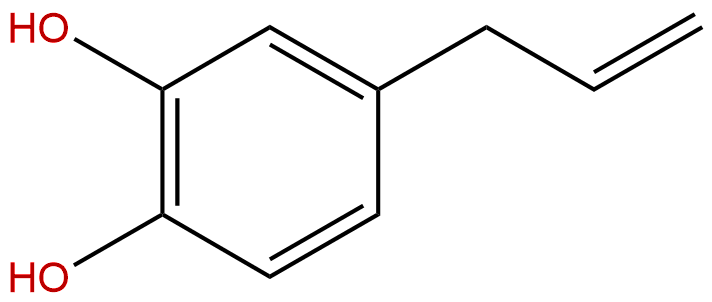


Product name: 2-hydroxychavicol
Synonym name:
Catalogue No.: BP3020
Cas No.: 1126-61-0
Formula: C9H10O2
Mol Weight: 150.177
Botanical Source:
Physical Description: Oil
Type of Compound: Phenylpropanoids
Purity: 95%~99%
Analysis Method: HPLC-DAD or/and HPLC-ELSD
Identification Method: Mass, NMR
Packing: Brown vial or HDPE plastic bottle
The product could be supplied from milligrams to grams. Inquire for bulk scale.
We provide solution to improve the water-solubility of compounds, thereby facilitating the variety of activity tests and clinic uses.
For Reference Standard and R&D, Not for Human Use Directly.
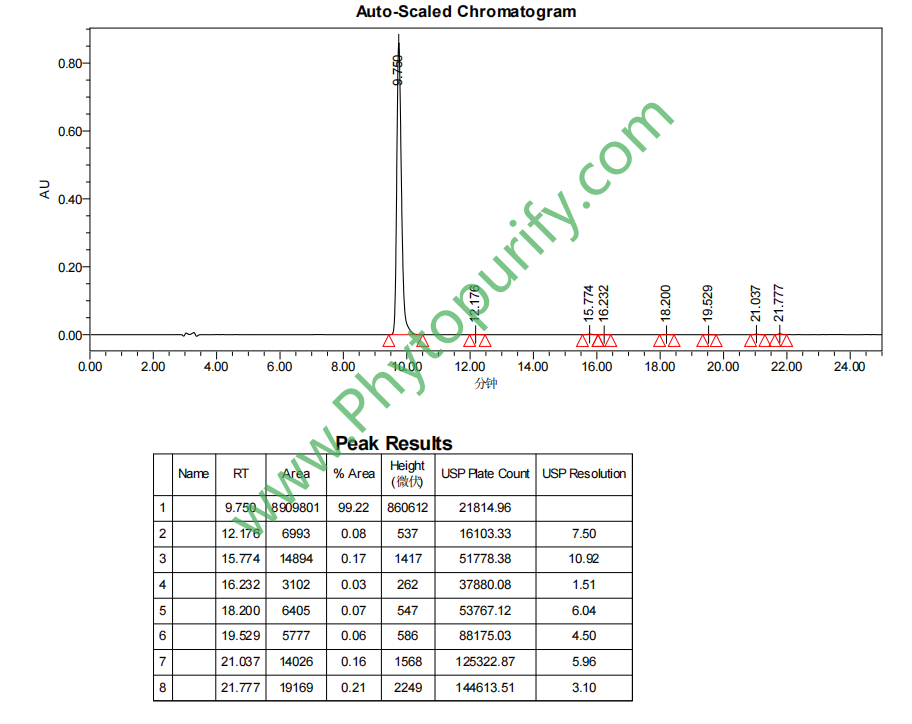
HPLC of 2-hydroxychavicol
Storage conditions:Short-term storage at 2~8℃, long-term storage at -20 ~ -80℃
40.4600
2.0800
2.0765
3.8349
8.9244
16.0293
High
71.8266
2.1660
No
Yes
No
No
Yes
No
0.6
Yes
No
Yes
Yes
Neuroinflammation is a complex immune response of the central nervous system to various injuries, infections, or neurodegenerative diseases, and is a common pathological feature of various neurological diseases such as Alzheimer's disease, Parkinson's disease, multiple sclerosis, and depression. Excessive or sustained neuroinflammatory reactions can lead to neuronal damage, synaptic dysfunction, and ultimately accelerate disease progression. Therefore, regulating neuroinflammation has become an important strategy for the development of drugs for neurological and psychiatric disorders. However, existing anti-inflammatory drugs have limitations in penetrating the blood-brain barrier, targeting specificity, and long-term safety, and there is an urgent need to discover lead compounds with novel structures, clear activities, and high safety from natural products. 2-Hydroxychavicol (2-HC), as a phenylpropanoid natural product isolated from ginger plants, has attracted much attention in recent years due to its significant anti neuroinflammatory activity in various inflammatory models. Its unique chemical structure enables it to act on multiple signaling pathways closely related to neuroinflammation, such as AMPK, TLR4, NF - κ B, demonstrating the potential for multi-target regulation. This article aims to provide a systematic review of the chemical properties, plant sources, pharmacological activities, molecular mechanisms of action, medicinal properties, and application prospects of 2-hydroxypiperenol in neuroinflammatory related diseases, in order to provide comprehensive scientific references for the in-depth research and development of this compound.
2-Hydroxypiperenol, chemical name 4-allyl-2-methoxyphenol, CAS number 1126-61-0. Its molecular formula is C10H12O2 and its molecular weight is 150.1770 g/mol. Structurally, it is a simple derivative of phenylpropanoid, with three substituents attached to the benzene ring: allyl (- CH2-CH=CH2), methoxy (- OCH3), and phenolic hydroxyl (- OH). The phenolic hydroxyl group is located adjacent to the methoxy group and is the key group for its antioxidant and partial pharmacological activities.
Its physical and chemical properties determine its bioavailability and functional characteristics. The calculated lipid water partition coefficient (LogP) is 2.08, indicating that the compound has moderate lipophilicity, which facilitates its penetration of cell membranes and binding to hydrophobic targets. The topological polar surface area (TPSA) is 40.46 Å ², which is relatively small, further indicating its good membrane permeability. The calculated value of water solubility is 3.83 mg/mL, which belongs to slight solubility, indicating that solubilization strategies may need to be considered during formulation development. More importantly, based on its small molecular weight, moderate LogP, and low TPSA, it is predicted that it has a high blood-brain barrier permeability, which lays a key physical and chemical foundation for its direct action on central nervous system targets and treatment of neuroinflammatory diseases. In addition, preliminary drug screening showed a negative hERG inhibition risk and an Ames test result of 0.6 (usually considered negative if<1.5), indicating a low potential mutagenic risk and good early safety characteristics.
2-Hydroxypiperenol is mainly found in Zingiberaceae plants, especially Pepper genus(Piper) and Shanbai genus Various plants of Kaempferia. Its most famous source is Lou Ye(Piper betle L.), Its leaves are rich in such phenolic compounds and are also widely used in traditional medicine. In addition, it has also been detected in plants such as Alpinia officinarum.
The extraction method follows the conventional process of natural product chemistry. The most commonly used method is organic solvent extraction. Usually, dried plant materials (such as fennel leaves) are crushed and subjected to extraction or reflux extraction using polar solvents such as methanol, ethanol, or ethyl acetate. The crude extract is then separated and purified using a series of chromatographic techniques, such as silica gel column chromatography, preparative thin layer chromatography (PTLC), or high performance liquid chromatography (HPLC), to ultimately obtain high-purity 2-hydroxypiperenol. Modern extraction techniques such as ultrasound assisted extraction (UAE) and microwave-assisted extraction (MAE) have also been applied to improve extraction efficiency and yield. Structural identification mainly relies on spectroscopic methods such as nuclear magnetic resonance (NMR, including 1H-NMR and 13C-NMR), mass spectrometry (MS), and infrared spectroscopy (IR).
Numerous in vitro and in vivo studies have confirmed that the core pharmacological activity of 2-hydroxypiperinol is concentrated in anti-inflammatory、antioxidant and neuroprotection Especially prominent in models related to neuroinflammation.
Anti neuroinflammatory activity This is the most highly anticipated activity of 2-HC. In the LPS induced inflammation model of microglia (BV-2 cells or primary microglia), 2-HC can dose dependently inhibit the production of inflammatory mediators such as nitric oxide (NO) and prostaglandin E2 (PGE2), and significantly downregulate the protein and mRNA expression of inducible nitric oxide synthase (iNOS) and cyclooxygenase-2 (COX-2). In animal models, such as LPS induced systemic inflammation in mice or Alzheimer's disease models induced by intracerebral injection of A β, 2-HC administration can effectively reduce the activation of glial cells in the hippocampus and other brain regions, lower the levels of pro-inflammatory cytokines such as interleukin-1 β (IL-1 β) and tumor necrosis factor - α (TNF - α) in brain tissue, and improve cognitive dysfunction in model animals.
antioxidant activity The catechol structure (ortho hydroxyl group) of 2-HC makes it an effective free radical scavenger. It can eliminate free radicals such as DPPH and ABTS, and enhance the intracellular antioxidant defense system, such as upregulating the activity of superoxide dismutase (SOD) and glutathione peroxidase (GPx). In the oxidative stress-induced neuronal damage model, 2-HC exhibits a protective effect.
Neuroprotective activity In addition to indirectly protecting neurons through anti-inflammatory and antioxidant effects, studies have also found that 2-HC has a protective effect on direct neuronal damage models such as glutamate excitotoxicity and hydrogen peroxide induced cell apoptosis. It can inhibit the activation of caspase-3, regulate the Bcl-2/Bax ratio, and thus suppress neuronal apoptosis.
Other potential activities Some studies have also reported that 2-HC has antibacterial, anti-tumor, and anti anxiety activities, but the correlation between these activities and its anti neuroinflammatory main line still needs further exploration.
The anti neuroinflammatory effect of 2-hydroxypiperol is not achieved through a single target, but through regulating a complex signaling network, and its mechanism of action involves multiple key targets and pathways:
Inhibition of TLR4/NF - κ B classical inflammatory pathway This is one of its core mechanisms. LPS activates Toll like receptor 4 (TLR4), triggers downstream myeloid differentiation factor 88 (MyD88) dependent pathway, and activates IKK complex (containing IKBKB). IKBKB phosphorylates and degrades I κ B, leading to the entry of the nuclear factor kappa B (NF - κ B) subunit RELA (p65) into the nucleus and initiating the transcription of numerous pro-inflammatory genes. 2-HC has been shown to inhibit the activation of IKBKB, prevent I κ B degradation and RELA nuclear translocation, thereby upstream inhibiting the expression of genes such as TNF, IL-1 β, IL-6, and NOS2 (iNOS gene).
Activate AMPK signaling pathway Adenosine activated protein kinase (AMPK, composed of subunits such as PRKAA1) is a core hub for cellular energy metabolism and inflammation regulation. Activated AMPK can negatively regulate inflammatory pathways such as NF - κ B. Research has shown that 2-HC is an activator of AMPK, which can increase the AMP/ATP ratio or directly conformationally activate AMPK. The activation of AMPK inhibits NF - κ B signaling and may clear inflammatory substances by regulating autophagy, exerting anti-inflammatory effects.
Regulating NLRP3 inflammasome The assembly and activation of NLRP3 inflammasomes are key steps leading to the mature release of IL-1 β and IL-18, which are closely related to neurodegenerative diseases. CASP1 (caspase-1) is a key executor downstream of inflammasomes. There is evidence to suggest that 2-HC can inhibit the activation of NLRP3 inflammasomes, reduce the shear activation of CASP1, and thus lower mature IL-1 β levels.
Affects other neural related targets:
In summary, 2-hydroxy piperonyl exerts synergistic effects on AMPK activation, TLR4/NF - κ B inhibition, inflammasome regulation, and other levels through a "multi-target, multi pathway" approach, ultimately achieving effective suppression of neuroinflammation.
Despite the enormous potential for pharmacological activity of 2-hydroxypiperenol, its drug like and pharmacokinetic (PK) properties are the key factors determining its successful development as a drug.
Analysis of drug properties parameters According to the "Rule of Five", the molecular weight of 2-HC (150) is much less than 500, the LogP (2.08) is less than 5, and the number of hydrogen bond donors (1 phenolic hydroxyl group) and acceptors (2 oxygen atoms) meets the requirements, indicating that it has good oral absorption potential. A higher blood-brain barrier penetration prediction is a significant advantage in treating central nervous system diseases. The lack of hERG inhibition reduces concerns about cardiac toxicity, and a negative Ames test preliminarily rules out strong mutagenicity.
Current status of pharmacokinetic research At present, pharmacokinetic studies on the 2-HC system are still relatively limited, which is one of the bottlenecks for future conversion. Based on its structural characteristics, it can be inferred that:
Potential challenges and optimization strategies:
2-Hydroxypiperinol has shown broad application prospects in the treatment of neuroinflammatory related diseases, but its transformation still faces challenges and opportunities.
Potential indications:
Development Strategy and Prospects:
2-Hydroxypiperinol, as a natural small molecule compound derived from traditional medicinal plants, has become an attractive lead compound in the field of neuroinflammation due to its clear anti neuroinflammatory, antioxidant, and neuroprotective activities, as well as its unique advantage of efficiently crossing the blood-brain barrier. It demonstrates the potential of multi-target intervention in complex diseases by synergistically regulating multiple key targets and pathways such as AMPK, TLR4/NF - κ B, NLRP3, etc. Although there is still a lot of in-depth work needed in terms of systematic pharmacokinetics, long-term toxicity, and precise analysis of target action, its excellent early pharmacological parameters and abundant pharmacological activity evidence have laid a solid foundation for its subsequent development. In the future, through interdisciplinary collaboration and the combination of modern medicinal chemistry, pharmacy, and systems biology methods, 2-hydroxypiperenol is expected to be optimized and developed into a new class of anti neuroinflammatory drugs for the treatment of major brain diseases such as Alzheimer's disease and Parkinson's disease, bringing new hope to the growing number of neurological disease patients worldwide.
