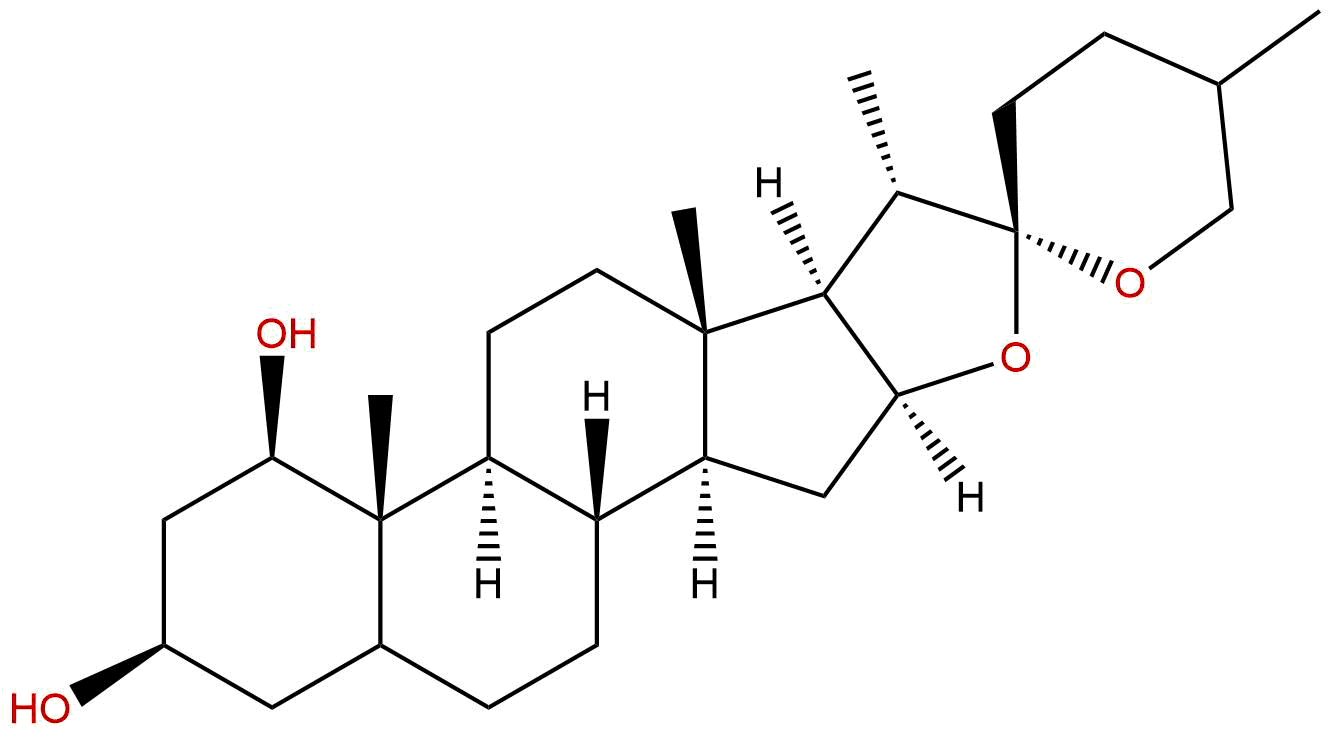


Product name: Dihydroruscogenin
Synonym name:
Catalogue No.: BP2438
Cas No.: 6869-91-6
Formula: C27H44O4
Mol Weight: 432.645
Botanical Source:
Type of Compound: Triterpenoids
Purity: 95%~99%
Analysis Method: HPLC-DAD or/and HPLC-ELSD
Identification Method: Mass, NMR
Packing: Brown vial or HDPE plastic bottle
Storage: Store in a well closed container, protected from air and light. Put into refrigerate or freeze for long term storage.
Whenever possible, you should prepare and use solutions on the same day. However, if you need to make up stock solutions in advance, we recommend that you store the solution as aliquots in tightly sealed vials at -20℃. Generally, these will be useable for up to two weeks.
The product could be supplied from milligrams to grams
Inquire for bulk scale.
For Reference Standard and R&D, Not for Human Use Directly.
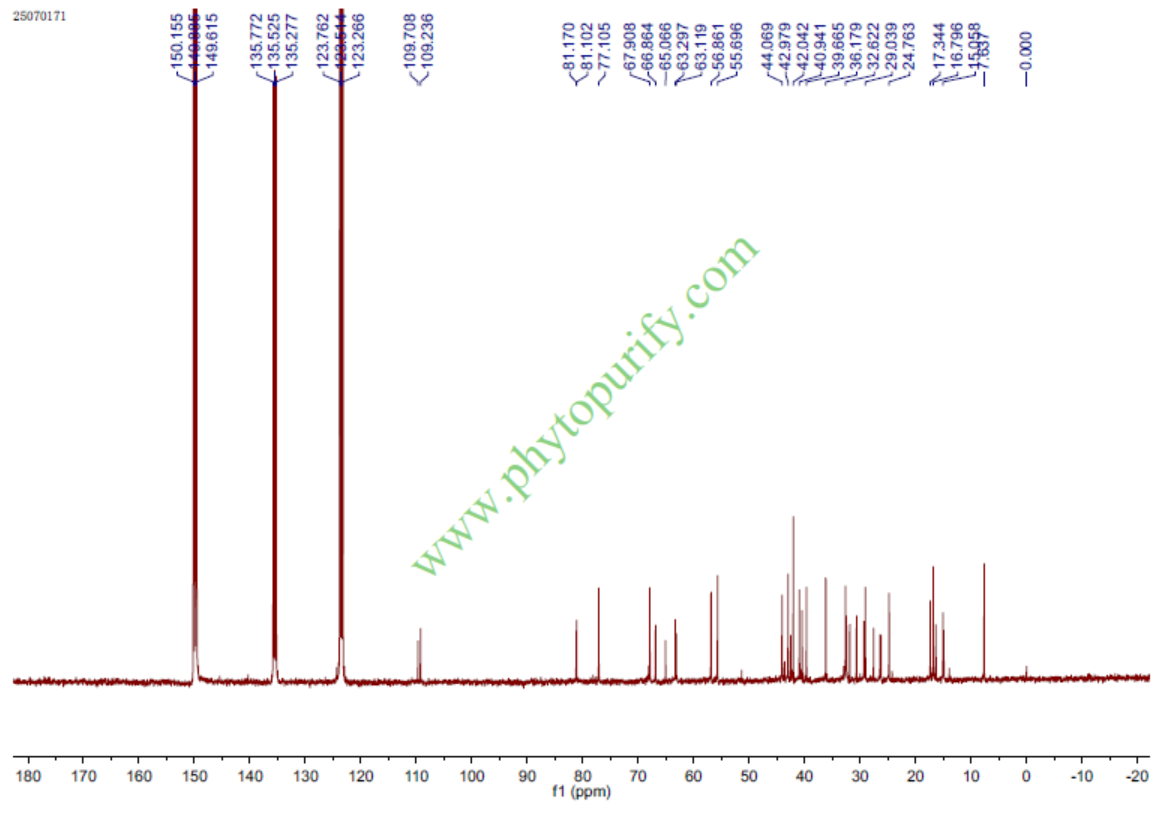
NMR of Dihydroruscogenin
Storage conditions:Short-term storage at 2~8℃, long-term storage at -20 ~ -80℃
74.6000
4.5000
Low
Unknown
Unknown
No
Unknown
No
Unknown
Unknown
Natural products, as an important source of drug discovery, play an irreplaceable role in the long history of human fight against diseases. Steroid sapogenins are a class of natural organic compounds widely present in the plant kingdom. Their structural basis is a steroid skeleton with a cyclopentane dihydrophenanthrene nucleus, and they often combine with sugar chains to form saponins. These compounds have long been a hot topic in natural medicine chemistry and pharmacology research due to their diverse biological activities, such as anti-inflammatory, anti-tumor, immune regulation, cardiovascular protection, etc. Among numerous steroidal sapogenins, dihydrorucogenin, as a compound with unique structural characteristics and potential pharmacological activity, has gradually attracted the attention of researchers in recent years.
Dihydrorutin saponins, CAS number 6869-91-6, belong to the spirostane type of steroidal saponins. The prefix 'dihydrogen' in its name implies a structural reduction relationship with Ruscogenin. Lusco saponin was first derived from plants in the lily family, such as the false leaf tree(Ruscus aculeatus)It was isolated and widely studied for its anti-inflammatory and vascular protective activities. Dihydrorutinosine, as its reducing derivative, retains the core structure of the steroid nucleus while the saturation of its specific functional groups may endow it with unique physicochemical properties and biological activity spectrum.
Although the research history of dihydro roscurogenin is relatively short and the number of public literature is limited compared to roscurogenin, existing evidence suggests that this compound exhibits potential for further exploration in anti-inflammatory, antioxidant, and potential cardiovascular protection. Its molecular weight is 432.63 Da, with moderate lipid solubility (LogP=4.5) and a topologically polar surface area (TPSA) of 74.6 Å ². These physicochemical parameters provide a basis for its potential biofilm permeability and oral absorption. However, there are still significant knowledge gaps regarding the pharmacokinetic properties, toxicological safety, and clear molecular targets of its system.
This article aims to systematically review the research progress on the chemical structure characteristics, plant sources, extraction and separation methods, pharmacological activity, mechanism of action, and pharmacological evaluation of dihydrorutinosine. Based on this, it explores its clinical application prospects and future research directions as a lead compound or candidate drug, in order to provide comprehensive academic references for the in-depth development of this natural product.
The chemical structure of dihydroroscurogenin belongs to the typical spirostane type steroidal sapogenin. The basic skeleton of steroidal sapogenins consists of 27 carbon atoms, including a cyclopentane dihydrophenanthrene core with four rings A, B, C, and D, as well as a unique spiroketal side chain structure. This side chain is connected to the C-17 position of the D ring and is composed of the E and F rings through a spiroketide structure (C-22 position is the spirocarbon atom), which is a characteristic feature of spirostane type sapogenins.
Specifically, the structure of dihydrorutin saponins is highly similar to that of rutin saponins. The structural characteristics of Lusco saponin include: one hydroxyl group (- OH) at each of the C-1 and C-3 positions, a double bond (Δ ⁵) at the C-5 position, and a complete spirostane side chain. The key structural difference of dihydrorutinosine is the reduction saturation of the C-5 (6) double bond, which transforms the Δ - alkene into a 5 α - or 5 β - saturated bond. This reduction reaction may cause a change in the fusion mode of the A/B ring, usually tending to form a 5 α (trans) configuration, thereby affecting the spatial conformation and flexibility of the entire molecule. In addition, the hydroxyl configuration at positions C-1 and C-3 (usually the β - configuration) and the stereochemistry of the spirostane side chain (25R or 25S configuration) are also key factors determining its biological activity. Accurate structural analysis typically relies on techniques such as high-resolution mass spectrometry (HR-MS) and nuclear magnetic resonance spectroscopy (NMR), including ¹ H-NMR, ¹ ³ C-NMR, and two-dimensional correlation spectroscopy (such as COSY, HSQC, HMBC).
From the perspective of physical and chemical properties, dihydrorutinosine is a white or off white crystalline powder with certain hygroscopicity. Its molecular formula is C ₂₇ H ₄₄ O ₄, with a molecular weight of 432.63 Da. The compound has strong lipid solubility, and the calculated LogP value is 4.50, indicating that it tends to be distributed in the organic phase in the n-octanol/water partition system, which is consistent with the hydrophobic characteristics of its steroid parent nucleus. A higher LogP value suggests that the compound may have good membrane permeability, which is beneficial for penetrating the cell membrane and entering the cell to exert its effects. However, it may also bring about poor water solubility, affecting its bioavailability.
The topological polar surface area (TPSA) is 74.60 Å ², which is mainly contributed by the four oxygen atoms in the molecule (two hydroxyl groups and two ether oxygen atoms in a spiroketide structure). According to the "Rule of 5" class of pharmacological rules, a TPSA of less than 140 Å ² usually indicates good oral absorption and intestinal permeability, therefore the TPSA value of dihydroluscin saponins is within an ideal range. The number of hydrogen bond acceptors is 4 and the number of hydrogen bond donors is 2 (from two hydroxyl groups), all of which comply with Lipinski's five rules (hydrogen bond donor ≤ 5, hydrogen bond acceptor ≤ 10, molecular weight ≤ 500, LogP ≤ 5), indicating that it has the basic chemical characteristics to become an oral drug. However, the actual oral bioavailability is also influenced by various complex factors such as dissolution rate, first pass effect, and intestinal transporters, and further experimental verification is needed.
Dihydroluciferin, as a reduced form of luciferin, exists in two main forms in nature: one is as a natural secondary metabolite directly present in certain plants; The second is as a reduction product of roscurogenin in plants or during the extraction process. At present, it is known that plants containing roscurogenin and its related steroidal saponins are mainly concentrated in families and genera such as Liliaceae and Dioscoreaceae.
One of the most important sources of plants is the genus Pseudophyllaceae in the family Liliaceae, such as Pseudophyllaceae(Ruscus aculeatus L.)。 The rhizome of the false leaf tree is used in traditional European medicine to treat venous diseases such as chronic venous insufficiency and hemorrhoids. Its main active ingredient is Ruscogenes, including Ruscogenin and dihydroRuscogenin. In addition, other lily plants such as Ophiopogon japonicus(Ophiopogon japonicus)Along the terrace grass(Ophiopogon bodinieri)The root tubers also contain abundant steroidal saponins, and their glycoside components often include roscurogenin and dihydroroscurogenin. As a traditional Chinese medicine, Ophiopogon japonicus has the effects of nourishing yin, generating fluids, moistening the lungs, and clearing the heart. Its saponin components are considered as important pharmacological substances. In addition, plants of the Dioscorea genus such as Dioscorea opposita(Dioscorea zingiberensis)There are also trace amounts or intermediate metabolites of dihydroroscurogenin present.
The extraction and separation of dihydrorutin saponins usually follow the classic process of natural product chemistry, which mainly includes the following key steps:
Raw material pretreatment and extraction Dry plant materials (usually rhizomes or tubers) are crushed and extracted using organic solvents. Due to the low polarity of steroidal saponins, commonly used extraction solvents include methanol, ethanol, or their aqueous solutions. To improve extraction efficiency, techniques such as heating reflux extraction, ultrasound assisted extraction, or microwave-assisted extraction can be used. For saponins, low polarity solvents such as chloroform or ethyl acetate are sometimes used for direct extraction, but in most cases, total saponins are extracted first and then hydrolyzed.
hydrolysis Due to its natural state, dihydroroscurogenin often exists in the form of saponins formed by binding with sugar chains. Therefore, to obtain aglycones, it is usually necessary to hydrolyze the total saponin extract. Acid hydrolysis is a classic method, commonly performed with dilute sulfuric acid (such as 2M H ₂ SO ₄) or hydrochloric acid under heating conditions to break glycosidic bonds and release aglycones. Enzymatic hydrolysis (such as using cellulases, β - glucosidase, etc.) is increasingly being recognized as a milder and more selective method, which can avoid the structural changes of glycosides that may occur under strong acid conditions.
Separation and Purification The hydrolyzed product is a complex mixture containing multiple glycosides and impurities. Separation and purification usually use column chromatography technology. Silica gel column chromatography is the most commonly used method, which uses gradient elution systems such as petroleum ether ethyl acetate or chloroform methanol in different ratios to separate compounds based on their polarity differences. For structurally similar roscurogenins and dihydroroscurogenins, their polarity differences are small and separation is difficult. High performance liquid chromatography (HPLC) or preparative thin-layer chromatography is required for fine separation. Reverse silica gel column chromatography (such as C18 column) and gel column chromatography (such as Sephadex LH-20) are also often used for further purification. Ultimately, high-purity dihydroluscin monomers can be obtained through recrystallization technology.
Structural Identification The purified compound needs to undergo structural confirmation through spectroscopic methods. UV spectroscopy can provide information on conjugated systems; Infrared spectroscopy (IR) can identify functional groups such as hydroxyl and carbonyl groups; Mass spectrometry (MS) can provide precise molecular weight and fragment information; One dimensional and two-dimensional nuclear magnetic resonance spectroscopy (NMR) are the most powerful tools for determining stereoisomers and complete structures.
Although the pharmacological research on dihydrorutin saponins is not as extensive as its parent compound rutin saponins, existing studies have revealed its potential activities in multiple disease models, mainly focusing on anti-inflammatory, antioxidant, cardiovascular protection, and anti-tumor aspects.
Inflammation is a defensive response of the body to injury and infection, but excessive or persistent inflammation can lead to various diseases. Research has shown that dihydrorutin saponins have significant anti-inflammatory effects. In a macrophage model stimulated by lipopolysaccharides (LPS), dihydroluscin can effectively inhibit the production of pro-inflammatory cytokines such as tumor necrosis factor - α (TNF - α), interleukin-6 (IL-6), and interleukin-1 β (IL-1 β). Its mechanism of action may be related to the inhibition of the activation of the nuclear factor kappa B (NF - κ B) signaling pathway. NF - κ B is a key transcription factor that regulates inflammatory responses. Dihydroluscin can inhibit the phosphorylation and degradation of I κ B α, prevent the translocation of NF - κ B p65 subunit to the nucleus, and thus downregulate the expression of downstream inflammatory genes. In addition, the compound can inhibit the expression of cyclooxygenase-2 (COX-2) and inducible nitric oxide synthase (iNOS), reduce the synthesis of inflammatory mediators such as prostaglandin E ₂ (PGE ₂) and nitric oxide (NO). In acute inflammation models such as mouse ear swelling and toe swelling experiments, dihydrorutinosine also showed dose-dependent inhibitory effects.
Oxidative stress is a pathological state caused by excessive production of reactive oxygen species (ROS) and reactive nitrogen species (RNS) or weakened function of the body's antioxidant defense system, which is closely related to various diseases such as aging, cardiovascular disease, and neurodegenerative diseases. Dihydrorutin saponins exhibit certain antioxidant capacity. In vitro chemical experiments (such as DPPH radical scavenging assay, ABTS ⁺ radical scavenging assay, and iron ion reduction ability assay) have shown that the compound can directly scavenge free radicals, which may be related to its hydroxyl functional group in the molecule. In cell models, dihydrorutinosine can reduce intracellular ROS levels induced by hydrogen peroxide (H ₂ O ₂) or tert butyl hydroperoxide (t-BHP), and increase the activity of endogenous antioxidant enzymes such as superoxide dismutase (SOD), glutathione peroxidase (GSH Px), and catalase (CAT). At the same time, it can upregulate the expression of nuclear factor E2 related factor 2 (Nrf2), promote the transcription of genes driven by its downstream antioxidant response element (ARE), and enhance the cell's antioxidant defense ability.
Due to its anti-inflammatory and antioxidant activities, the potential of dihydrorutinosine in cardiovascular disease has attracted attention. Lusco saponin has been proven to have vascular protective effects, improve venous tone, and is used for the treatment of chronic venous insufficiency. Dihydrorutin saponins may have similar or complementary activities. Preliminary studies show that this compound can inhibit the proliferation and migration of vascular smooth muscle cells induced by angiotensin II (Ang II), which is the key pathological process of vascular remodeling in atherosclerosis and hypertension. In addition, it can protect endothelial cells from oxidative damage and maintain the integrity of the endothelial barrier function. In the myocardial ischemia-reperfusion injury model, pretreatment with dihydrorutinosine can reduce myocardial infarction area, decrease the release of lactate dehydrogenase (LDH) and creatine kinase (CK), and inhibit cardiomyocyte apoptosis. These protective effects may be related to their ability to inhibit oxidative stress, alleviate inflammatory responses, and regulate the expression of apoptosis related proteins such as Bcl-2/Bax.
Natural steroidal saponins often have broad-spectrum anti-tumor activity. Dihydrorutin saponins have shown inhibitory effects on the proliferation of various tumor cell lines. For example, in vitro models such as HepG2 cells, breast cancer cells (MCF-7), lung cancer cells (A549) and cervical cancer cells (HeLa), the compound can inhibit cell viability in a dose and time-dependent manner. Its anti-tumor mechanism may involve multiple aspects: inducing cell cycle arrest (such as G0/G1 phase or G2/M phase arrest), inducing cell apoptosis (by activating the caspase cascade and mitochondrial pathway), inhibiting cell migration and invasion (by downregulating the expression of matrix metalloproteinases MMP-2 and MMP-9), and inhibiting angiogenesis (by downregulating the expression of vascular endothelial growth factor VEGF). However, current research on its anti-tumor activity is still in its early stages, and the in vivo anti-tumor effect and specific molecular mechanisms need further clarification.
A deep understanding of the mechanism of action and molecular targets of dihydroluscin is crucial for its development as a therapeutic drug. Based on existing research, its pharmacological activity involves the regulation of multiple signaling pathways and molecular targets, exhibiting characteristics of multi-target and multi pathway effects.
As mentioned earlier, inhibiting the NF - κ B signaling pathway is one of the core mechanisms by which dihydroluscin exerts anti-inflammatory effects. This compound may directly act on upstream kinases, such as I κ B kinase (IKK), inhibiting their activity and thereby preventing the phosphorylation and degradation of I κ B α. This results in the retention of NF - κ B dimers (mainly p50/p65) in the cytoplasm, preventing them from entering the nucleus and binding to the κ B site on DNA, ultimately downregulating the transcription of pro-inflammatory genes such as TNF - α, IL-6, COX-2, iNOS, etc. In addition, dihydrorutin saponins may indirectly affect the activity of NF - κ B by inhibiting MAPK pathways such as p38 mitogen activated protein kinase (MAPK) and c-Jun N-terminal kinase (JNK).
The antioxidant activity of dihydroquercetin is mainly attributed to its activation of the Nrf2/ARE pathway. Under normal physiological conditions, Nrf2 binds to Kelch like ECH related protein 1 (Keap1) in the cytoplasm, remains inactive, and is degraded by ubiquitination. When stimulated by oxidative stress or electrophilic agents (including dihydroluscin), Nrf2 dissociates from Keap1, stabilizes, and translocates into the nucleus. In the nucleus, Nrf2 forms heterodimers with small Maf proteins, recognizes and binds to antioxidant response elements (ARE), and initiates the expression of a series of antioxidant and detoxifying enzyme genes, such as SOD, CAT, GSH Px, glutathione S-transferase (GST), and quinone oxidoreductase 1 (NQO1). By enhancing the antioxidant reserve of cells, dihydrorutin saponins can effectively resist subsequent oxidative damage.
In terms of anti-tumor and myocardial protection, dihydrorutinosine plays a crucial role in regulating cell apoptosis. It can regulate key proteins in the mitochondrial apoptosis pathway. Specifically, it manifests as upregulating the expression of pro apoptotic protein Bax and downregulating the expression of anti apoptotic protein Bcl-2, leading to an increase in the Bax/Bcl-2 ratio. This change causes a decrease in mitochondrial membrane potential (Δ PSI m) and releases cytochrome c (Cyt c) into the cytoplasm. Cyt c binds with Apaf-1 to form an apoptotic body, which in turn activates caspase-9 and further activates downstream executive caspases (such as caspase-3/7), ultimately leading to cell apoptosis. In addition, the compound may also induce apoptosis through death receptor pathways such as Fas/FasL.
Although the above signaling pathways are indirect evidence of the role of dihydrorutinositol saponins, finding the molecular targets directly bound to them (i.e. "target discovery") is currently a difficult and hot research topic. Based on its steroid structure, some studies speculate that it may act on certain nuclear receptors, such as estrogen receptors (ER) or glucocorticoid receptors (GR), but direct evidence is not yet sufficient. In addition, it may also initiate signal transduction by interacting with certain receptors or ion channels on the cell membrane. For example, roscurogenin has been reported to act on the transient receptor potential vanillic acid subtype 4 (TRPV4) channel in endothelial cells, regulating calcium influx. It is worth exploring whether dihydrorutin saponins have similar effects. In the future, combining chemical biology methods such as Drug Affinity Reaction Target Stability (DARTS), Cell Thermal Transition Analysis (CETSA), or Activity Based Proteomic Analysis (ABPP) will help identify its true direct targets.
The evaluation of drug properties is a crucial step in pushing natural products from the laboratory to clinical applications. This includes a comprehensive evaluation of the physicochemical properties, pharmacokinetic (ADME) characteristics, safety (toxicology), and preliminary in vivo efficacy of the compound.
As mentioned earlier, the molecular weight (432.63 Da), LogP (4.50), number of hydrogen bond donors/acceptors (2/4), and TPSA (74.6 Å ²) of dihydroluscin saponin comply with the Lipinski Five Rules, indicating that it has the basic chemical backbone to become an oral drug. However, its high LogP value also suggests that its water solubility may be poor, which is often a common issue among steroid compounds. Poor water solubility can limit its dissolution rate and oral absorption, which is one of the main obstacles affecting bioavailability. Therefore, in drug development, it may be necessary to improve its water solubility and dissolution through formulation techniques (such as solid dispersions, nanocrystals, liposomes, etc.) or prodrug design.
At present, there is very limited publicly available data on the pharmacokinetics of dihydrorutinositol saponins in vivo. Based on its structural features and computational predictions, preliminary inferences can be made about its ADME characteristics:
Safety is the key factor determining whether a candidate drug can enter clinical practice. At present, there is a serious lack of toxicological data on dihydrorutinositol saponins. Existing information shows that its hepatotoxicity and cardiotoxicity are both "Unknown". The predicted result of hERG (human Ether - à - go Related Gene) potassium channel inhibition is "No", which is a positive signal indicating that its risk of prolonging QT interval and inducing arrhythmia may be low. The Ames test result is also 'Unknown', indicating that its genetic toxicity (mutagenicity) has not been evaluated.
Given these knowledge gaps, future research must conduct systematic toxicological evaluations, including:
1. acute toxicity test Determine the median lethal dose (LD ₅₀) and maximum tolerated dose (MTD).
2. Subchronic/Chronic Toxicity Test Evaluate the potential damage of long-term administration to major organs such as the liver, kidneys, heart, lungs, spleen, etc.
3. Genetic toxicity test Conduct Ames test, chromosome aberration test, and mouse micronucleus test.
4. Cardiac toxicity assessment Conduct patch clamp experiments and in vivo electrocardiogram monitoring for hERG channel current suppression.
5. Reproductive and developmental toxicity Evaluate the impact on fertility and embryonic development.
Although the research on dihydroroscurogenin is still in its early stages, its unique chemical structure and preliminary pharmacological activity provide promising directions for its clinical application prospects.
There are still many challenges in converting dihydrorutinositol into clinically available drugs:
Dihydrorutin, as a natural steroidal sapogenin derived from traditional medicinal plants such as Pseudophyllum and Ophiopogon japonicus, has a unique chemical structure and excellent medicinal properties. Preliminary pharmacological studies have shown that this compound has significant anti-inflammatory, antioxidant, cardiovascular protective, and potential anti-tumor activities. Its mechanism of action involves multiple key signaling pathways such as NF - κ B, Nrf2/ARE, and apoptosis. These findings make it a natural product lead compound worthy of further research and development.
However, it must be soberly recognized that the current research on dihydroluscin saponins is still in a very early stage. There is a huge gap between 'active' and 'druggable'. Key scientific questions regarding its pharmacokinetic properties, in vivo efficacy, toxicological safety, and clear molecular targets remain unanswered. Future research should focus on overcoming drug resistance barriers such as poor water solubility and metabolic instability, and using modern medicinal chemistry and chemical biology methods to systematically elucidate their mechanisms of action and structure-activity relationships.
In summary, dihydrorutinosine is a natural product treasure trove that needs to be further explored. Despite the numerous challenges ahead, with its unique structural framework and diverse biological activities, it is expected to open up new therapeutic pathways in fields such as anti-inflammatory and cardiovascular protection. Continuous, systematic, and in-depth research will be the key to unlocking its full potential and ultimately transforming it from a plant chemical component into a drug molecule that benefits human health.
