Introduction/Overview
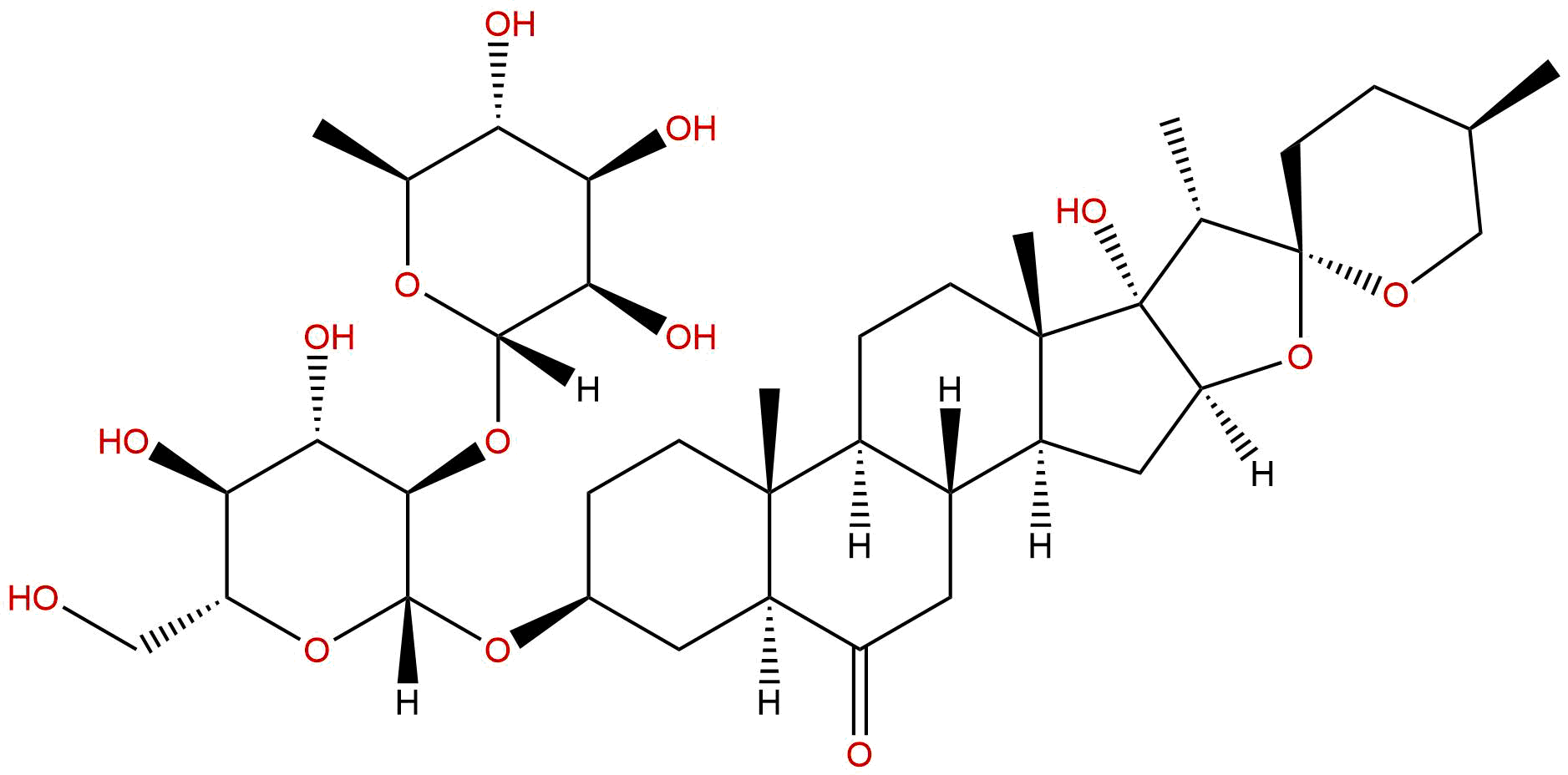
Cinnabar saponins (25 (R) -3 β, 17 α - Dihydroxy-5 α - spirostan-6-one 3-O - α - D-rhamnopyranosyl - (1 → 2) - β - D-glucopyranoside, CAS number: 143051-94-9) are a typical natural steroid saponin product that has received widespread attention in recent years due to its significant anti-inflammatory activity. Saponins, as an important natural product, are widely present in various traditional Chinese medicinal materials and plants. Due to their diverse biological activities and good safety, they have significant value in the field of drug development. As a representative compound, cinnabar saponins exhibit the potential to regulate various inflammation related signaling pathways, particularly in regulating cytokines, inflammatory mediators, and related transcription factors, demonstrating unique mechanisms of action.
Inflammatory response, as a defense response of the body to internal and external stimuli, involves complex regulation of multiple cytokines and signaling pathways. Chronic inflammation is closely related to various diseases such as autoimmune diseases, metabolic syndrome, neurodegenerative diseases, and tumors. Therefore, finding efficient and low toxicity anti-inflammatory drugs has become an important direction in current drug development. Research based on natural products not only enriches the drug resource library, but also provides a new perspective for understanding the mechanisms of inflammation regulation. This article will systematically review the chemical structure, plant origin, pharmacological activity, and mechanism of action of Polygonatum sibiricum saponins, and explore their clinical application prospects and development directions based on pharmacological evaluation and pharmacokinetic data.
Chemical structure and physicochemical properties
Cinnabar saponins belong to the class of steroidal saponins, characterized by a 25 (R) - configuration of a 5 α - spirostane skeleton, with two hydroxyl modifications of 3 β and 17 α, and a 6-ketone group. The sugar chain is composed of an alpha-D-rhamnose and a beta-D-glucose linked by a 1 → 2 glycosidic bond, forming a disaccharide structure. The steroid core of this structure endows it with strong lipid solubility, while the presence of sugar chains enhances its water solubility and biological activity.
In terms of physicochemical properties, the molecular weight of Polygonatum sibiricum saponins is 754.9110, with a LogP value of 1.6424, indicating moderate lipophilicity that facilitates membrane penetration but does not excessively hydrophobic. The polar surface area (TPSA) is as high as 214.06 Å ², reflecting its strong polarity, which may limit its ability to pass through the blood-brain barrier, consistent with its low blood-brain barrier permeability. The water solubility is 0.0862, indicating limited solubility in water, but the presence of sugar chains makes its water solubility better than typical steroid compounds. The hERG channel inhibition experiment showed a negative result, indicating a low risk of cardiac toxicity. The Ames mutagenicity test result was 0.0, indicating that the compound has no significant genetic toxicity.
Overall, the physicochemical properties of cinnabar saponins are suitable for oral administration and have high safety, laying a solid foundation for their subsequent drug development.
Plant sources and extraction methods
Cinnabar saponins are mainly distributed in the Liliaceae plant Trillium spp., especially from the rhizomes of Trillium tschonoskii. This plant has been used in traditional Chinese medicine to treat diseases such as rheumatism, pain, inflammation, and tumors, accumulating rich medicinal experience. In recent years, with the development of modern separation technology, the extraction and purification process of Polygonatum sibiricum saponins has been continuously optimized.
Common extraction methods include:
-
Solvent extraction
Using ethanol or methanol as the main solvent, efficient extraction of saponins and related saponin components from Polygonatum sibiricum can be achieved through reflux extraction or ultrasound assisted extraction. After concentration, the extract is eluted using a water ethanol gradient to remove impurities.
-
Liquid liquid distribution and column chromatography
Using solvents of different polarities for distribution, combined with methods such as silica gel column chromatography and C18 reverse phase column chromatography, gradually purify the target components. High performance liquid chromatography (HPLC) technology is widely used for purity detection and component identification.
-
Preparation type high performance liquid chromatography (Prep HPLC)
Further purification was achieved through preparative HPLC to obtain high-purity cinnabar saponins, meeting the needs of pharmacological research and drug development.
In addition, research on the use of supercritical CO ₂ extraction and membrane separation technologies is gradually being carried out, aiming to improve extraction efficiency and environmental friendliness. In the future, combined with the study of biosynthetic pathways, it is expected to achieve large-scale production of saponins from Polygonatum sibiricum through bioengineering methods.
Pharmacological activity research
The pharmacological activity of Polygonatum sibiricum saponins is mainly characterized by their significant anti-inflammatory effects, as well as certain immunomodulatory, antioxidant, and anti-tumor potentials. A large number of in vitro cell experiments and in vivo animal model studies have confirmed its multi-target and multi pathway biological activity.
anti-inflammatory effect
Cinnabar saponins alleviate inflammatory reactions by inhibiting the expression of pro-inflammatory cytokines such as IL-6 and TNF - α. It significantly reduces the release of inflammatory mediators in the lipopolysaccharide (LPS) - induced macrophage inflammation model, demonstrating good anti-inflammatory effects. In animal experiments, cinnabar saponins can alleviate the pathological manifestations of inflammatory diseases such as arthritis and enteritis, and reduce tissue damage.
immunomodulation
This compound regulates immune cell function, promotes regulatory T cell (Treg) activity, inhibits excessive immune response, and maintains immune homeostasis. It has a regulatory effect on macrophage polarization in the inflammatory microenvironment, which helps with the self repair of inflammation.
Antioxidant and Cellular Protection
Cinnabar saponins can eliminate free radicals, inhibit oxidative stress-related enzyme activity, and protect cells from oxidative damage. This effect indirectly supports its anti-inflammatory effect and reduces inflammation related cell damage.
Other potential activities
Some studies suggest that saponins from Polygonatum sibiricum have anti-tumor activity, possibly by inducing tumor cell apoptosis and inhibiting the tumor associated inflammatory microenvironment. However, the relevant mechanisms still need to be further explored.
Mechanism of action and molecular targets
The anti-inflammatory mechanism of Polygonatum sibiricum saponins involves multiple signaling pathways and molecular targets, reflecting its multi-target drug characteristics.
Regulating inflammatory factors
-
IL-6 and TNF - αCinnabar saponins significantly inhibit the expression of pro-inflammatory cytokines IL-6 and TNF - α, and alleviate inflammatory responses. IL-6, as a key inflammatory mediator, regulates the immune response through the JAK/STAT3 pathway. Cinnabar saponins inhibit STAT3 phosphorylation, block its signaling, and reduce the inflammatory cascade.
-
CASP1 (caspase 1)Cinnabar saponins inhibit CASP1 activity, reduce inflammasome activation, decrease the release of inflammatory mediators such as IL-1 β, and alleviate inflammatory reactions.
Affects ion channels
- TRPV1 and TRPA1 These two types of transient receptor potential ion channels play an important role in the transmission of inflammatory pain. Cinnabar saponins alleviate pain and neural excitability caused by inflammation by regulating the activity of TRPV1 and TRPA1.
Inhibit inflammatory enzymes
-
PTGS1 (COX-1) and PTGS2 (COX-2)Cinnabar saponins inhibit the activity of cyclooxygenase, reduce the production of prostaglandins, and alleviate inflammatory symptoms.
-
NOS2 (inducible nitric oxide synthase)By inhibiting NOS2 activity, reducing excessive production of nitric oxide (NO), and alleviating oxidative stress and inflammatory damage.
Regulating transcription factors
- NFKB1 (nuclear factor kappa B)As a core transcription factor in inflammatory response, NF - κ B regulates the expression of various inflammatory genes. Cinnabar saponins block the activation and nuclear translocation of NF - κ B, inhibit the transcription of inflammatory genes, and exert anti-inflammatory effects.
In summary, the saponins of Polygonatum sibiricum effectively regulate inflammatory responses through multi-target and multi pathway synergistic effects, demonstrating good pharmacological activity and potential clinical application value.
Evaluation of drug properties and pharmacokinetics
The pharmacological parameters of Polygonatum sibiricum saponins show that they have good potential for drug development.
Drugability assessment
-
Molecular weight (754.9110)High LogP (1.6424) may affect oral bioavailability, but moderate LogP is beneficial for cell membrane penetration.
-
Polar surface area (TPSA 214.06 Å ²)Larger, indicating strong polarity, may limit oral absorption and blood-brain barrier passage, but is beneficial for water solubility and targeting specificity.
-
Water solubility (0.0862)Moderate to low, need to improve bioavailability through formulation optimization.
-
Low permeability of blood-brain barrier Suitable for targeting peripheral inflammatory diseases and reducing central nervous system side effects.
-
HERG inhibition negative Good cardiac safety.
-
Ames test negative No genetic toxicity risk.
pharmacokinetics
At present, there is limited systematic pharmacokinetic research on the saponins of Polygonatum sibiricum. Preliminary in vivo experiments have shown that its oral absorption is slow, the plasma half-life is moderate, it is mainly metabolized by the liver, and the excretion pathway is mainly through bile excretion. Due to its sugar chain structure, cinnabar saponins may be hydrolyzed by microbial enzymes in the intestine, affecting their bioavailability and active forms.
Further development is needed in the future:
- Identification of metabolic pathways and metabolites in the body
- Determination of bioavailability and pharmacokinetic parameters
- Drug interactions and safety assessment
To improve its pharmacokinetic characteristics and provide scientific basis for clinical development.
Clinical application prospects and prospects
Based on the significant activity and good safety of cinnabar saponins in the field of anti-inflammatory, they have shown broad prospects in clinical applications.
Clinical application potential
-
Treatment of inflammatory diseases For rheumatoid arthritis, inflammatory bowel disease, chronic obstructive pulmonary disease, etc., cinnabar saponins can be used as adjuvant or alternative therapeutic drugs to alleviate inflammation and pain.
-
immunomodulator In autoimmune and allergic diseases, it exerts therapeutic effects by regulating immune balance.
-
Neuroinflammatory related diseases Although the blood-brain barrier has low permeability, it can indirectly alleviate neuroinflammation through peripheral anti-inflammatory effects.
-
Potential for combination therapy Combined use with other anti-inflammatory drugs or immunomodulators may enhance efficacy and reduce monotherapy side effects.
Research and Development Challenges and Future Directions
-
Pharmacokinetic optimization Improve bioavailability and in vivo stability through techniques such as structural modification and nanocarriers.
-
In depth study of mechanisms Combining multiple omics techniques to further elucidate its functional network and potential targets.
-
Preclinical safety evaluation Systematic toxicology research to ensure long-term medication safety.
-
Clinical trial design Conduct reasonable clinical trials to verify its efficacy and safety, and promote its conversion into clinical drugs.
-
Synthesis and production process Establish efficient and green synthesis and extraction processes to ensure drug supply.
In summary, as a natural product with multi-target anti-inflammatory activity, cinnabar saponins have the potential to become a new type of anti-inflammatory drug and are worthy of further development.
Conclusion
As a typical natural product of steroidal saponins, cinnabar saponins have shown significant value in the field of natural product pharmacology due to their unique chemical structure and multi-target anti-inflammatory mechanism. It exerts significant anti-inflammatory and immune regulatory effects by regulating key inflammation related targets such as IL-6, STAT3, CASP1, TRPV1, PTGS1/2, TNF, TRPA1, NOS2, and NFKB1. The drug evaluation shows that it has good safety and potential clinical application prospects.
In the future, combining modern medicinal chemistry, pharmacokinetics, and clinical research, cinnabar saponins are expected to become a new type of drug for treating various inflammation related diseases. Deepening the research on its mechanism of action, optimizing drug formulations, and conducting systematic clinical validation will be the key to promoting its clinical translation. The development of natural product pharmacology has provided abundant resources for the discovery and development of safe and effective anti-inflammatory drugs. As a model of this, cinnabar saponins will undoubtedly contribute new impetus to the research and development of anti-inflammatory drugs.