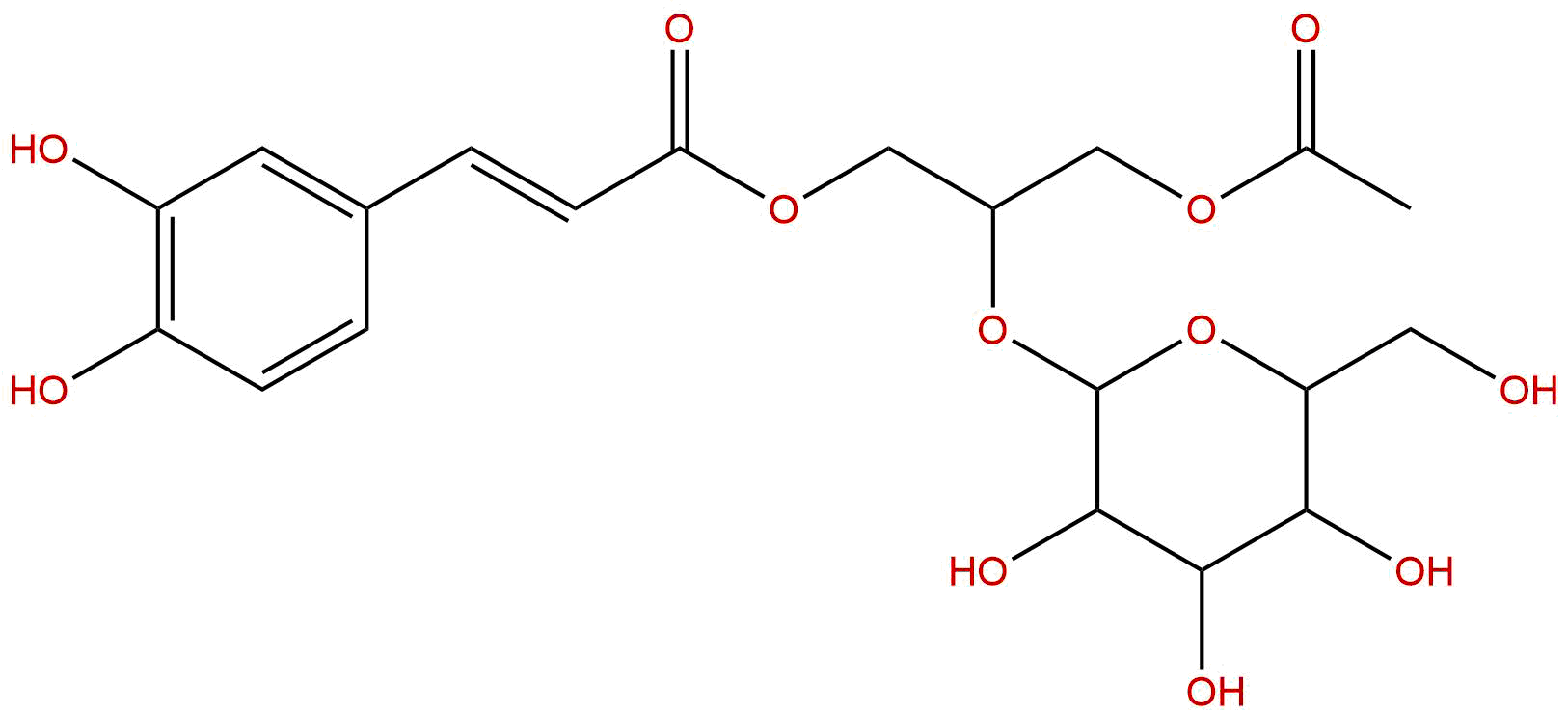


Product name: Regaloside E
Synonym name:
Catalogue No.: BP4536
Cas No.: 123134-21-4
Formula: C20H26O12
Mol Weight: 458.416
Botanical Source:
Type of Compound:
Purity: 95%~99%
Analysis Method: HPLC-DAD or/and HPLC-ELSD
Identification Method: Mass, NMR
Packing: Brown vial or HDPE plastic bottle
Storage: Store in a well closed container, protected from air and light. Put into refrigerate or freeze for long term storage.
Whenever possible, you should prepare and use solutions on the same day. However, if you need to make up stock solutions in advance, we recommend that you store the solution as aliquots in tightly sealed vials at -20℃. Generally, these will be useable for up to two weeks.
The product could be supplied from milligrams to grams
Inquire for bulk scale.
For Reference Standard and R&D, Not for Human Use Directly.
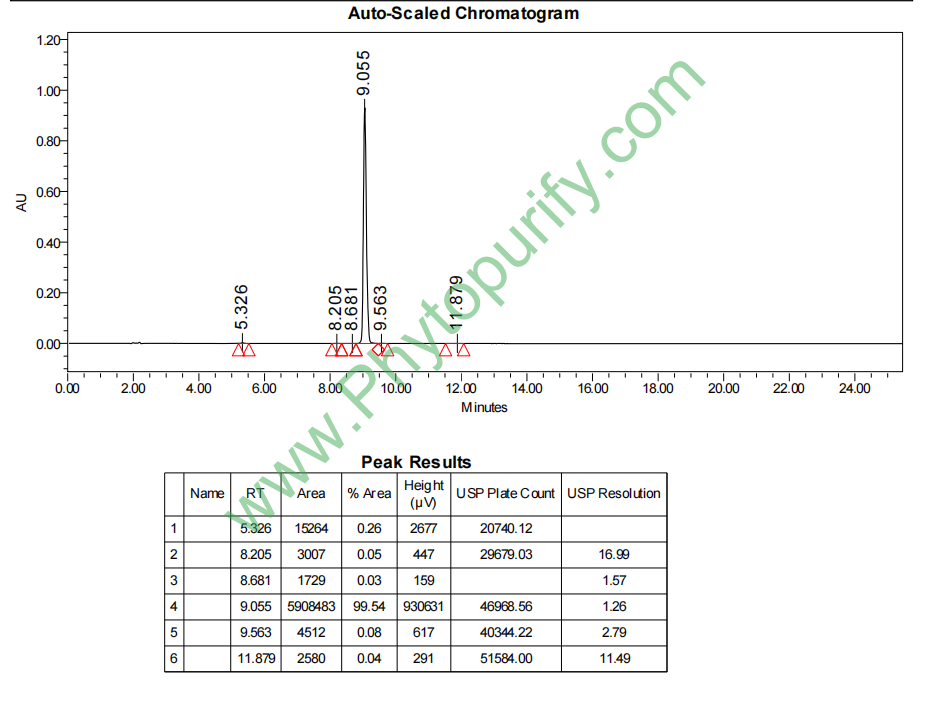
HPLC of Regaloside E
Storage conditions:Short-term storage at 2~8℃, long-term storage at -20 ~ -80℃
192.4400
-.6125
-.6183
14.0546
.4864
.0933
Low
37.7490
4.0850
Yes
No
No
No
No
No
0.0
Yes
Yes
Yes
Yes
Natural products, as an important source of drug discovery and development, play an irreplaceable role in the history of human disease prevention and treatment. Plant derived compounds have always been a key treasure trove for the discovery of innovative drug lead compounds due to their structural diversity and rich biological activity. Liliaceae plants not only have ornamental value, but their bulbs and other parts are also commonly used in traditional medicine for cough relief, calming the mind, anti-inflammatory, etc., containing rich bioactive ingredients. Regaloside E is a natural compound with research value isolated from plants of the lily genus. Its CAS number is 123134-21-4, mainly isolated from Lilium longiflorum Thunb., and also found in other plants of the lily genus. As a type of phenylpropanoid glycoside compound, baicalin E has gradually attracted the attention of natural product pharmacology researchers due to its unique chemical structure and various pharmacological activities, such as anti-inflammatory, antioxidant, neuroprotective, etc. This article aims to systematically review the chemical structure, plant origin, pharmacological activity, potential mechanism of action, pharmacological characteristics, and application prospects of Wang Baihe glycoside E, in order to provide comprehensive academic references for the in-depth research and future development of this compound.
Wangyuzhi E belongs to the phenylpropanoid glycoside class of compounds. Its basic chemical skeleton consists of a phenylethanol glycoside and a glucose group connected by glycosidic bonds, with characteristic substituents on the benzene ring and sugar group. Specifically, its glycoside moiety is p-hydroxyphenylethanol, which is usually substituted with methoxy or hydroxyl groups at positions 3 and 4 of the benzene ring (specific configuration to be determined based on nuclear magnetic resonance data). The hydroxyl group of its ethanol side chain forms a β - glycosidic bond with one molecule of glucose. Further acylation or other modifications may occur on the glucose group, which forms the basis for the structural diversity of Lilidroside E and its homologs. Accurate structural analysis relies on modern spectroscopic techniques such as nuclear magnetic resonance hydrogen spectroscopy, carbon spectroscopy, two-dimensional spectroscopy, and mass spectrometry.
According to the provided pharmacological parameters, the molecular weight of Wangyuxin E is 458.4160, which is consistent with its structure as a glycoside compound containing multiple oxygen atoms. The calculated lipid water partition coefficient (LogP) value is -0.6125, indicating that the compound has hydrophilicity, which is mainly attributed to the presence of sugar groups and multiple hydroxyl groups in the molecule, making its distribution tendency higher in the aqueous phase than in the lipid phase. The topologically polar surface area (TPSA) is as high as 192.4400 Å ², further confirming its characteristics of high molecular polarity and abundant hydrogen bond donor and acceptor sites. These structural features directly affect its solubility, with a calculated water solubility of 14.0546 mg/L, indicating that it belongs to the category of slightly soluble to soluble. Its solubility characteristics need to be considered in actual extraction and formulation processes. The higher polarity and TPSA also indicate that its ability to cross biofilms may be limited, and its blood-brain barrier permeability is predicted to be "low", which poses a challenge to its potential pharmacological effects on the central nervous system. In terms of early safety indicators, predicted data showed no hERG potassium channel inhibitory activity (hERG inhibition: no), indicating a low potential risk of cardiac toxicity; The Ames test predicted a value of 0.0, indicating no mutagenicity alert in this prediction model, but these in vitro prediction results need to be further validated through experiments. Overall, Wang Baihe glycoside E is a natural glycoside compound with strong polarity, acceptable water solubility, and good preliminary safety warning signals.
Wangyuxin E mainly comes from plants of the Liliaceae family and the Liliaceae genus. The earliest and most commonly reported source is the Lilium longiflorum Thunb., also known as the Iron Cannon Lily or Easter Lily. In addition, this compound or its structural analogues have also been detected or isolated in the bulbs or aboveground parts of various lilies such as Lilium lancefolium and Lilium brownii. This indicates that phenylpropanoid glycosides may be one of the characteristic secondary metabolites of lilies, and their content may be influenced by factors such as plant variety, origin, harvest season, and location.
The extraction of baicalin E from plant materials usually follows the conventional process of natural product chemistry. Firstly, dry and crush the lily bulbs to obtain coarse powder. The extraction method often uses solvent extraction. Due to the polarity of the compound, methanol, ethanol, or their aqueous solutions (such as 70% -80% ethanol) are commonly used for reflux extraction or ultrasound assisted extraction to efficiently extract polar components. Subsequently, crude extract was obtained by vacuum concentration.
The crude extract contains a large amount of impurities and requires systematic separation and purification to obtain high-purity baicalin E. Conventional separation strategies include:
1. Solvent fractionation extraction Suspend the crude extract in water and extract it sequentially with organic solvents such as petroleum ether, ethyl acetate, and n-butanol. Wangyuzhi E is mainly enriched in the n-butanol extraction site or aqueous layer due to its strong polarity.
2. Column chromatography technology This is a crucial purification step. Large pore adsorption resin columns (such as D101, AB-8) are commonly used for preliminary sugar removal and enrichment. Further use of silica gel column chromatography and reverse phase silica gel column chromatography (such as ODS, C18) with gradient elution using chloroform methanol, methanol water, or acetonitrile water systems in different ratios.
3. High performance liquid chromatography method To obtain chromatographically pure compounds, semi preparative or preparative high-performance liquid chromatography is often used for final purification. A reverse phase C18 chromatographic column combined with a UV detector (based on its benzene ring structure, the detection wavelength is always around 210-280 nm) is a commonly used method to separate target peaks using isocratic or gradient elution modes.
The entire separation process needs to be tracked and detected using thin-layer chromatography or high-performance liquid chromatography. The final pure product was determined to have the structure of baicalin E through spectral data such as mass spectrometry and nuclear magnetic resonance.
Although the in-depth research on Wangyuxin E is still in its early stages, existing in vitro and limited in vivo studies have revealed its multifaceted pharmacological potential, mainly focused on anti-inflammatory, antioxidant, neuroprotective, and skin protective fields.
1. Anti inflammatory activity
This is one of the most extensively studied activities of Wangyuxin E. In various cellular inflammation models, Wangyuxin E exhibits significant anti-inflammatory effects. For example, in the lipopolysaccharide (LPS) - induced mouse macrophage (RAW 264.7) inflammation model, baicalin E can dose dependently inhibit the production of inflammatory mediators such as nitric oxide (NO) and prostaglandin E2 (PGE2). Meanwhile, it can also downregulate the expression levels of inducible nitric oxide synthase (iNOS) and cyclooxygenase-2 (COX-2) proteins. Further research has shown that it can inhibit the mRNA expression and protein secretion of pro-inflammatory cytokines such as tumor necrosis factor - α (TNF - α), interleukin-6 (IL-6), and IL-1 β. These effects suggest that baicalin E may exert anti-inflammatory effects by regulating key inflammatory signaling pathways.
2. Antioxidant activity
The phenolic hydroxyl structure in the molecule of Wangyuzhi E endows it with the ability to scavenge free radicals. In vitro antioxidant experiments have shown that it exhibits certain scavenging activity against 1,1-diphenyl-2-trinitrophenylhydrazine (DPPH) free radicals, 2,2 '- diazobis (3-ethylbenzothiazoline-6-sulfonic acid) cationic free radicals, and superoxide anion free radicals. In the cellular oxidative stress model, such as hydrogen peroxide (H ₂ O ₂) - induced cell damage, pre-treatment with baicalin E can improve cell survival rate, reduce intracellular reactive oxygen species (ROS) accumulation, and enhance the activity of endogenous antioxidant enzymes such as superoxide dismutase (SOD) and glutathione peroxidase (GSH Px).
3. Neuroprotective activity
Based on its anti-inflammatory and antioxidant properties, the potential of Wangyuxin E in neuroprotection has attracted much attention. In the PC12 cell or primary neuron injury model induced by β - amyloid protein (A β), baicalin E can alleviate cytotoxicity and inhibit the expression of apoptosis related proteins. Its function may be related to reducing oxidative stress, inhibiting inflammatory response, and regulating the neurotrophic factor pathway. In addition, there are studies exploring its role in improving cognitive function in Alzheimer's disease models, but more in vivo experiments are needed to confirm it.
4. Skin protection and whitening activity
In skin related research, Wangyuxin E has shown potential for application. Its antioxidant activity helps to combat skin photoaging caused by ultraviolet radiation. What's even more interesting is that research has reported that Wangyuxin E can inhibit the activity of tyrosinase, which is a key enzyme in melanin biosynthesis. Therefore, it may be studied as a natural skin whitening agent ingredient. Meanwhile, its anti-inflammatory properties are also suitable for soothing skin irritation and inflammation.
5. Other potential activities
Scattered studies also suggest that Wangyuzhi E may have anti fatigue and immune regulatory effects, but the evidence in these areas is not sufficient and further systematic research is needed.
The exact mechanism of action and direct molecular targets of Wangyuzhi E have not been fully elucidated, and existing research mainly focuses on its regulatory effects on key intracellular signaling pathways, which are closely related to its core pharmacological activities such as anti-inflammatory and antioxidant effects.
1. Inhibition of nuclear factor kappa B (NF - κ B) signaling pathway
The NF - κ B pathway is the core hub for regulating inflammatory responses. Numerous studies have shown that the anti-inflammatory effect of Wangyuxin E mainly stems from its inhibition of the NF - κ B pathway. In LPS stimulated macrophages, baicalin E can prevent the degradation of I κ B α protein, thereby inhibiting the nuclear translocation of NF - κ B p65 subunit. Once NF - κ B is blocked in the cytoplasm, the transcription of downstream pro-inflammatory genes such as iNOS, COX-2, TNF - α, IL-6, etc. cannot be initiated. This is the key molecular mechanism by which it reduces the production of inflammatory mediators.
2. Regulation of the mitogen activated protein kinase (MAPK) signaling pathway
The MAPK pathway (including JNK, ERK, p38 MAPK) plays an important role in cellular stress, inflammation, and apoptosis. Research has shown that Wangyuzhi E can inhibit LPS induced phosphorylation activation of JNK and p38 MAPK, while its effect on the ERK pathway varies in different studies. By inhibiting the activation of p38 and JNK, baicalin E can further suppress the activity of transcription factors such as AP-1, and work together with the NF - κ B pathway to exert anti-inflammatory effects.
3. Activate the nuclear factor E2 related factor 2 (Nrf2)/antioxidant response element (ARE) pathway
Nrf2 is the main switch of the cellular antioxidant defense system. Under oxidative stress, Nrf2 dissociates from the cytoplasmic chaperone protein Keap1, enters the nucleus, binds to ARE, and initiates a series of phase II detoxifying enzymes and antioxidant proteins (such as heme oxygenase-1, HO-1; Transcription of quinone oxidoreductase 1 (NQO1). Research has shown that Wangyuxin E can promote nuclear translocation of Nrf2 and upregulate the expression of proteins such as HO-1. The activation of this mechanism is an important basis for its antioxidant and cell protective effects.
4. Regulation of the apoptotic pathway
In neuroprotective models, the anti apoptotic effect of Wangyuxin E has been observed. It may alleviate mitochondrial mediated cell apoptosis by upregulating the expression ratio of Bcl-2 (anti apoptotic protein) and downregulating the expression ratio of Bax (pro apoptotic protein), inhibiting the activation of caspase-3. This process may be indirectly related to its inhibition of oxidative stress and inflammation, or it may be the result of its direct action on upstream signals.
In summary Wangyuzhi E may be a multi-target and multi pathway regulator. The core mechanism is to suppress excessive inflammatory response by inhibiting the NF - κ B and MAPK pathways, while enhancing the antioxidant capacity of cells by activating the Nrf2 pathway. The synergistic effect of these two systems forms the basis of its cell protective effect. However, its upstream direct target (such as whether it directly binds to a receptor or kinase) remains a key scientific question that needs to be revealed in future research.
Based on computational data and limited experimental information, a preliminary evaluation of the pharmacological properties of Wang Baihe glycoside E is conducted
1. Pharmacokinetic prediction and challenges
At present, there are very few public reports on the pharmacokinetic studies of the Wangyuzhi E system, including absorption, distribution, metabolism, and excretion, which is a key knowledge gap for its development. Based on its physical and chemical properties, reasonable predictions can be made:
* absorb As a highly polar glycoside compound, its oral bioavailability may be low. Glycoside bonds may be hydrolyzed by gut microbiota or intestinal mucosal enzymes to generate aglycones. Glycosides have higher lipid solubility and may be absorbed, but the degree of absorption of the prototype of Wangyuxin E itself remains to be studied. Non oral administration routes (such as injection, transdermal) may be more advantageous.
* distribution High molecular weight, high TPSA, and predicted "low" blood-brain barrier permeability suggest that it is difficult for it to freely diffuse into the central nervous system, and its distribution volume may be small, mainly distributed in the blood and extracellular fluid. If central nervous system protection is required, structural modifications or special drug delivery systems may be needed.
* Metabolism As a glycoside, its metabolism may involve hydrolysis (deglycosylation) of glycosidic bonds to generate aglycones. Glycosides may undergo further II binding reactions (such as glucuronidation and sulfation). The liver may be the main metabolic organ.
* excretion The prototype drug and its metabolites may be mainly excreted through the kidneys and urine.
2. Analysis of advantages and disadvantages of drug properties
* Advantage:
* Good security warning The calculation predicted no hERG inhibition and Ames mutagenicity risk, providing preliminary positive signals for its safety.
* Clear activity Has clear anti-inflammatory, antioxidant and other multiple pharmacological activities at the cellular level.
* natural source Originating from traditional medicinal plants, it has a certain historical background of application.
* Disadvantages and Challenges:
* Pharmacokinetic properties may be poor Poor oral absorption and low blood-brain barrier permeability are the main bottlenecks limiting its development.
* Intensity and selectivity of action Current research has mostly focused on cell models, and their in vivo activity intensity, effective dosage, and selectivity for disease-related targets are not yet clear.
* Fuzzy mechanism of action The direct molecular target is unknown, and the mechanism of action is mostly based on observations of downstream pathways, which is not conducive to structure based optimization.
* Lack of in vivo research on the system There is a serious lack of preclinical research data on acute toxicity, long-term toxicity, pharmacokinetics, and other related issues.
3. Direction of structural optimization
Possible future structural modifications to enhance drug efficacy include:
* Prodrug strategy Esterification and alkylation of hydroxyl groups on sugar or phenolic hydroxyl groups on glycosides to prepare lipophilic prodrugs, in order to improve membrane permeability and oral bioavailability, and then hydrolyze them into active forms in vivo.
* Glycosylation modification Replace or modify the sugar moiety, explore the effects of sugar type and connection mode on activity, stability, and pharmacokinetic properties.
* Glycoside modification On the premise of retaining the pharmacophore, modify the benzene ring or side chain of the aglycone to optimize its physicochemical properties and interaction with the target.
As a natural compound with multiple biological activities, the clinical application prospects of Wang Baihe glycoside E mainly depend on the depth and translation direction of future research.
1. Potential therapeutic areas
* Inflammatory diseases Given its clear anti-inflammatory mechanism, it can be explored for the treatment of chronic inflammation related diseases such as arthritis (rheumatoid arthritis, osteoarthritis), inflammatory bowel disease, dermatitis, etc. It can be developed as a topical preparation (such as cream, gel) or a drug for systematic administration.
* Neurodegenerative diseases Its neuroprotective effects of anti-inflammatory, antioxidant, and anti apoptotic make it promising for the prevention or adjuvant treatment of diseases such as Alzheimer's disease and Parkinson's disease. But it is necessary to overcome the challenge of blood-brain barrier delivery.
* Skin care and treatment Combining its antioxidant, anti-inflammatory, and potential tyrosinase inhibitory activities, it has broad prospects in functional cosmetics and skin drugs, and can be used to develop skincare products that resist photoaging, whiten, soothe sensitive skin, or treat skin inflammation.
* Diseases related to metabolic syndrome Chronic low-grade inflammation is the core feature of metabolic diseases such as obesity and diabetes. The anti-inflammatory activity of Wangyuzhi E may provide new ideas for the intervention of these diseases.
2. Development Strategy and Prospects
* In depth basic research The primary task is to elucidate its direct target and validate its pathway mechanism in animal models using techniques such as gene knockout/knock in. Conduct systematic preclinical pharmacological, pharmacokinetic, and toxicological studies.
* Formulation innovation It is crucial to develop new drug delivery systems to address its drug defects. For example, encapsulation with carriers such as nanoparticles, liposomes, microemulsions, etc. can be used to enhance their oral bioavailability, targeting (such as brain targeting), or skin permeability.
* Exploration of combination therapy As a multi-target regulator, Wang Baihe glycoside E may have synergistic effects with other drugs with a single mechanism of action, improving efficacy or reducing side effects, which is worth exploring.
* Optimize as a lead compound Using it as the parent nucleus, systematic medicinal chemical modification is carried out with the aim of obtaining new compounds with stronger activity, better pharmacokinetic properties, and greater development value.
* Application in functional foods and health products If the safety is fully confirmed, food or dietary supplements with anti-inflammatory and antioxidant health functions can be developed directly or in the form of its rich lily extract.
Wangyuzhi E is a representative natural product of phenylpropanoid glycosides isolated from plants of the lily genus. Existing studies have shown that it exhibits clear in vitro pharmacological activities in anti-inflammatory, antioxidant, neuroprotective, and other aspects. Its mechanism of action is mainly related to inhibiting the NF - κ B and MAPK inflammatory pathways and activating the Nrf2 antioxidant pathway. These characteristics provide theoretical basis for its application in inflammatory diseases, neurodegenerative diseases, and skin health fields. However, its poor predictive pharmacokinetic properties (such as low oral bioavailability and low blood-brain barrier permeability) and unclear direct molecular targets pose major challenges for its drug conversion. Future research should focus on revealing its precise molecular mechanism of action and optimizing and modifying its structure through medicinal chemistry and novel drug delivery technologies. Meanwhile, the in vivo efficacy and safety evaluation of the system is an indispensable part. In summary, Wang Baihe glycoside E is a promising natural lead compound, and its in-depth research not only helps to explore the scientific connotation of the traditional medicinal value of lilies, but also may provide new candidate molecules and ideas for the discovery of related innovative drugs.
