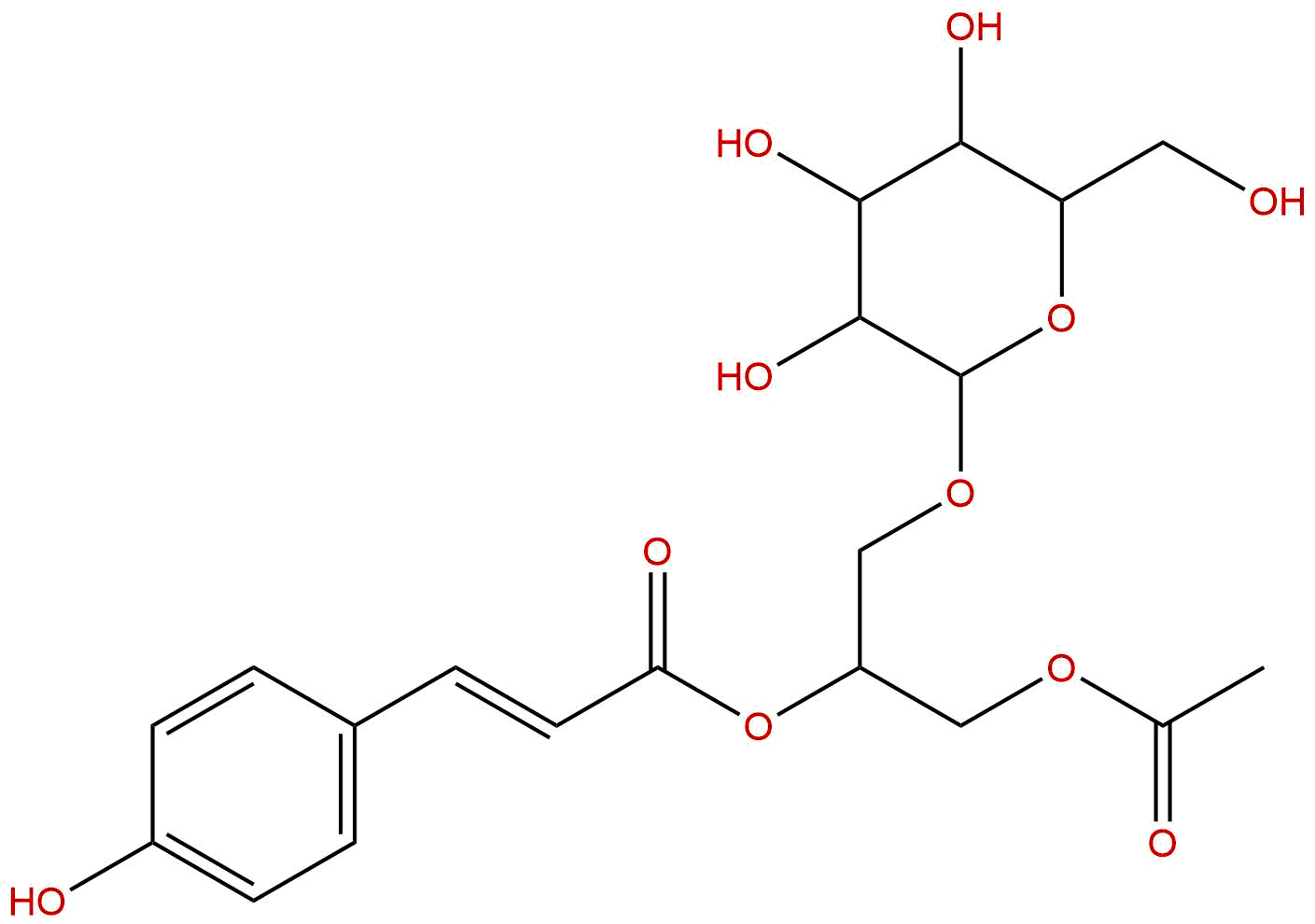


Product name: Regaloside I
Synonym name:
Catalogue No.: BP5264
Cas No.: 126239-78-9
Formula: C20H26O11
Mol Weight: 442.417
Botanical Source: Lilii Bulbus
Type of Compound:
Purity: 95%~99%
Analysis Method: HPLC-DAD or/and HPLC-ELSD
Identification Method: Mass, NMR
Packing: Brown vial or HDPE plastic bottle
Storage: Store in a well closed container, protected from air and light. Put into refrigerate or freeze for long term storage.
Whenever possible, you should prepare and use solutions on the same day. However, if you need to make up stock solutions in advance, we recommend that you store the solution as aliquots in tightly sealed vials at -20℃. Generally, these will be useable for up to two weeks.
The product could be supplied from milligrams to grams
Inquire for bulk scale.
For Reference Standard and R&D, Not for Human Use Directly.
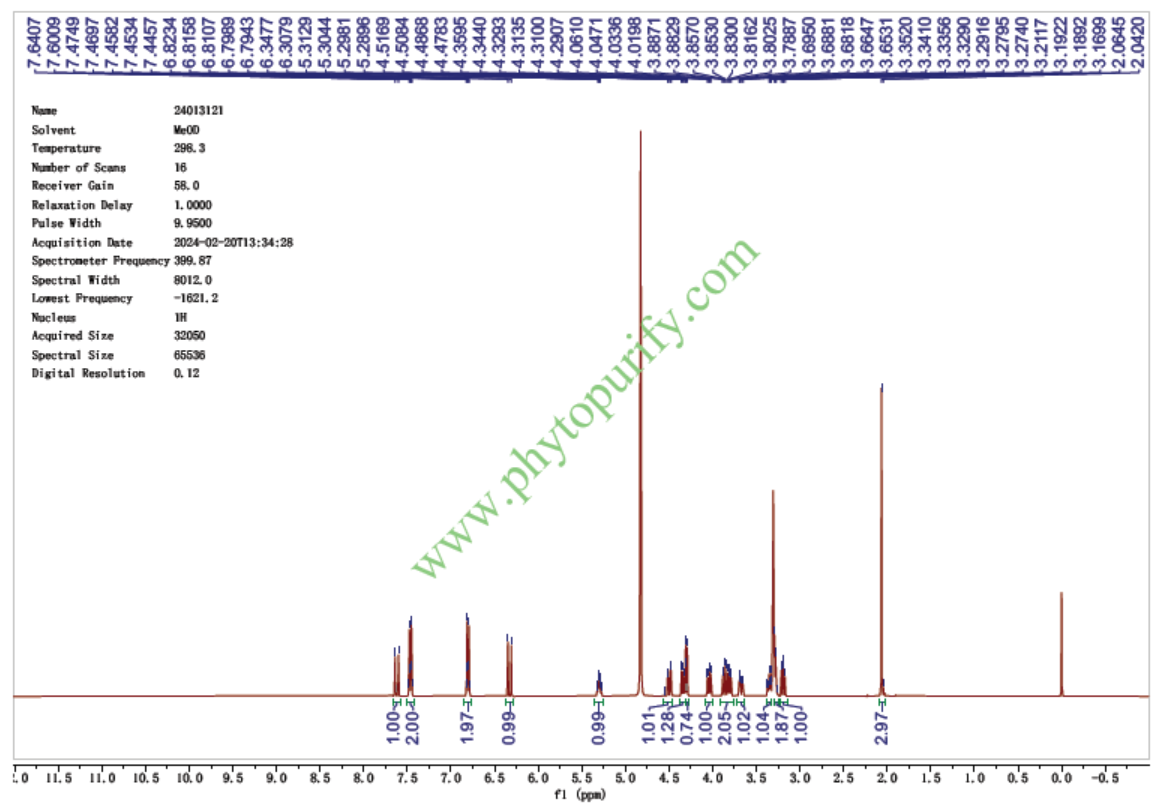
HNMR of Regaloside I
Storage conditions:Short-term storage at 2~8℃, long-term storage at -20 ~ -80℃
172.2100
-.5001
-.5017
6.6754
.4233
.0912
Low
36.9759
3.9462
Yes
No
No
No
No
No
0.3
Yes
Yes
Yes
Yes
Natural products, as an important source of drug discovery, play an irreplaceable role in the long history of human fight against diseases. From classic aspirin and paclitaxel to artemisinin, which has attracted much attention in recent years, plant secondary metabolites continue to provide valuable lead compounds for modern drug development due to their unique chemical diversity and biological activity. Among numerous natural products, phenylpropanoids have received long-term attention from researchers due to their widespread presence in the plant kingdom and various pharmacological activities such as antioxidant, anti-inflammatory, and antiviral. Regaloside I, as a phenylpropanoid glycerol glycoside isolated from plants of the lily genus, has shown remarkable potential in antiviral research in recent years and has become an emerging hotspot in natural product pharmacology research.
Wangyuxin I (CAS number: 126239-78-9) was originally derived from Lilium erinaceus(Lilium tenuifolium)Separation and identification indicate that it belongs to the phenylpropanoid glycoside compound family. These compounds are usually composed of phenylpropanoid units (such as caffeic acid, ferulic acid, etc.) connected to glycerol or sugar groups through ester or glycosidic bonds. They have a lipophilic aromatic ring and a hydrophilic sugar moiety in their structure. This amphiphilic feature provides a structural basis for them to cross biological membranes and interact with multiple biological targets. From the perspective of chemical taxonomy, Wangyuxin I represents the defensive secondary metabolites synthesized by plants during long-term evolution to adapt to environmental stresses such as pathogen infection and ultraviolet radiation. Its unique chemical structure not only endows it with rich biological activity, but also makes it an ideal model for studying the structure-activity relationship and mechanism of action of natural products.
In recent years, with the continuous threat of viral diseases - from influenza and AIDS to emerging infectious diseases such as COVID-19- the development of new, efficient and low toxic antiviral drugs has become an urgent need in the global medical field. Existing antiviral drugs face challenges such as drug resistance, toxic side effects, and insufficient broad-spectrum, prompting researchers to focus on natural products with novel structures and unique mechanisms of action. Wangyuxin I stands out in this context. Preliminary studies have shown that the compound has inhibitory effects on various virus related targets, including UL42, UL54, ICP27, TK, gD proteins associated with herpes virus replication, CCR5, CXCR4 co receptors associated with HIV infection, as well as HIV-1 protease (HIV1-PR) and integrase (INT). This multi-target action characteristic suggests that Wangyuxin I may have broad-spectrum antiviral activity and is not easily induced to develop viral resistance, making it a highly promising candidate molecule for antiviral development.
In addition, Wangyuxin I also exhibits regulatory effects on myeloperoxidase (MPO). MPO is a key enzyme in the body's natural immune system, involved in inflammatory responses and oxidative stress processes. This discovery suggests that Wangyuxin I may not only directly act on the virus itself, but also exert antiviral effects by regulating the host immune response, reflecting the typical characteristics of natural products' multi-target and multi pathway effects. From the perspective of drug development, Wang Baihe glycoside I has a moderate molecular weight (442.42 Da), good water solubility (6.68 mg/mL), low lipid solubility (LogP=-0.50), and low blood-brain barrier permeability. These physicochemical properties provide favorable conditions for its oral or topical use. Meanwhile, preliminary data such as negative hERG inhibition and low-risk Ames test indicate that it has good safety.
This review aims to systematically review the current research status of Wangyuxin I, from its chemical structure, plant origin, pharmacological activity, mechanism of action, pharmacological evaluation to clinical application prospects, comprehensively elaborating on the research progress and potential value of this natural product. By integrating existing literature data and calculating predicted results, we attempt to outline the complete picture of Wangyuxin I from natural discovery to drug development, providing reference for further in-depth research and exploring its future direction in the field of antiviral drug development.
The chemical structure of Wang Baihe Glycoside I belongs to the phenylpropanoid class of glycerol glycosides, and its core skeleton consists of three parts: phenylpropanoid units, glycerol groups, and sugar groups. Specifically, the parent nucleus structure of the compound is 1-O-caffeoyl-3-O - β - D-glucopyranosylglycerol, where caffeic acid is connected to the 1st hydroxyl group of glycerol through an ester bond, while glucose is connected to the 3rd hydroxyl group of glycerol through a β - glycosidic bond. This structural feature gives Wang Baihe glycoside I both the antioxidant potential of phenolic compounds and the water solubility advantage of glycoside compounds.
From the perspective of stereochemistry, there are multiple chiral centers in the molecule of Wang Baihe glycoside I, including one chiral carbon atom on the glycerol skeleton and five chiral carbon atoms on the glucose unit. The naturally occurring salidroside I usually exists in a specific stereoconfiguration, which is crucial for its interaction with biological targets. The trans double bond (E configuration) of the caffeic acid moiety is also an essential structural unit for its activity. It is worth noting that the catechol hydroxyl group (catechol structure) on the caffeoyl group is a key functional group for the antioxidant activity and chelation with metal ions of salidroside I. It is also a site for hydrogen bonding or π - π interactions with certain protein targets.
In terms of physical and chemical properties, the molecular weight of Wangyuxin I is 442.42 Da, which is within the ideal range for small molecule drugs (usually considered<500 Da). The LogP of its lipid water partition coefficient is -0.50, indicating that the compound has good hydrophilicity, which is consistent with the structural characteristics of the molecule containing multiple hydroxyl and sugar groups. The high water solubility (6.68 mg/mL) provides favorable conditions for its absorption and distribution in vivo, as well as facilitating in vitro pharmacological experiments and formulation development. The topological polar surface area (TPSA) is 172.21 Å ², which is much higher than the recommended upper limit of 140 Å ² for oral medications. This suggests that the intestinal permeability of Wangyuxin I may be limited, but also explains its low blood-brain barrier permeability. Low blood-brain barrier permeability may be an advantage for antiviral drugs, as many antiviral drugs need to avoid central nervous system side effects.
From a medicinal chemistry perspective, the structure of Wang Baihe glycoside I contains multiple modifiable sites, including phenolic hydroxyl groups on the caffeoyl group, hydroxyl groups on the glucose group, and hydroxyl groups on the glycerol backbone. These sites provide abundant possibilities for subsequent structural optimization and structure-activity relationship research. For example, methylation or acylation modification of phenolic hydroxyl groups may alter their antioxidant activity and metabolic stability; Changing the type or connection position of sugar groups may affect their water solubility and target affinity; The conformational changes of glycerol skeleton may affect the overall three-dimensional conformation of the molecule and the degree of matching with the target.
It is worth noting that the UV absorption characteristics of Wangyuxin I mainly come from the conjugated system of the caffeoyl group, which has characteristic absorption peaks at about 330 nm and 290 nm. This characteristic can be used for its quantitative analysis and quality control. In terms of stability, Wangyuxin I is relatively stable under acidic conditions, but its ester bonds are easily hydrolyzed under alkaline conditions, producing caffeic acid and glycerol glucoside. In addition, light and high temperature may also cause its degradation, so it is necessary to avoid light and low temperature conditions during extraction, separation, and storage.
Wang Baihe Glycoside I was originally derived from Lilium annuum(Lilium tenuifolium)The compound was isolated from the middle, but subsequent research found that it is widely present in the lily genus(Lilium)Among various plants, including cinnabar(L. lancifolium)Lanzhou Lily(L. davidii)Sichuan Lily(L. davidii var. unicolor)And musk lilies(L. longiflorum)Wait. Lily plants, as important ornamental and medicinal plants, have a wide range of cultivation and distribution worldwide, providing abundant plant resources for the sustainable acquisition of lily glycosides I. Apart from the lily genus, the closely related tulip genus(Tulipa)Belonging to the genus of Fritillaria(Fritillaria)Similar structures of phenylpropanoid glycerol glycosides have also been reported in plants, suggesting that these compounds may have chemical taxonomic significance in Liliaceae plants.
In terms of distribution in plant tissues, Wang Baihe glycoside I is mainly enriched in the bulbs of lilies, which is consistent with the traditional understanding that lily bulbs are the main medicinal parts. The bulb is the nutrient storage organ of lily plants, which accumulates a large amount of secondary metabolites to resist the invasion of pathogenic microorganisms and herbivores. There are significant differences in the content of baicalin I in lily bulbs of different varieties, origins, and harvesting periods, with mature bulbs harvested in autumn typically having higher levels. In addition, the above ground parts of lilies, such as flowers, leaves, and stems, also contain a certain amount of baicalin I, but the content is usually lower than that of bulbs.
The selection of extraction method is crucial for the yield and purity of Lilidroside I. Based on its good water solubility and moderate polarity, commonly used extraction solvents include water, methanol, ethanol, and their mixed solvents in different proportions. The traditional solvent extraction method usually uses a 50% -80% methanol or ethanol aqueous solution, and performs multiple leaching or percolation extractions at room temperature or heating conditions (40-60 ° C). Modern extraction techniques such as ultrasound assisted extraction (UAE) and microwave-assisted extraction (MAE) can significantly improve extraction efficiency, shorten extraction time, and reduce solvent usage. For example, using 70% ethanol as the extraction solvent and extracting for 30 minutes under ultrasound power of 300 W and temperature of 50 ° C, the extraction rate of Lilin I can be increased by 2-3 times compared to the traditional cold soaking method.
The crude extract after extraction needs to undergo a series of purification steps to obtain high-purity salidroside I. Common separation and purification methods include liquid-liquid extraction, macroporous adsorption resin column chromatography, silica gel column chromatography, reverse phase column chromatography (such as ODS), and preparative high-performance liquid chromatography (pre HPLC). Among them, macroporous adsorption resins (such as D101, AB-8, etc.) are widely used for the preliminary purification of lily crude extract due to their advantages of large processing capacity, low cost, and renewable use. Through gradient elution (usually in a water ethanol system), baicalin I is mainly enriched in the 30% -50% ethanol elution site. Subsequently, further separation was performed using silica gel column chromatography (chloroform methanol water system) or ODS column chromatography (methanol water system) to obtain Wang Baihe glycoside I with a purity greater than 90%. For pharmacological studies that require high-purity (>98%) samples, it is usually necessary to combine preparative HPLC for final purification. The commonly used mobile phase is acetonitrile water or methanol water system, with a detection wavelength of 330 nm.
It is worth noting that Wangyuxin I may undergo degradation or isomerization during the extraction and purification process. For example, under alkaline conditions, the ester bonds of caffeoyl groups are easily hydrolyzed; Under high temperature conditions, glycosidic bonds may break. Therefore, the entire extraction and separation process should be carried out under low temperature, light avoidance, and neutral or weakly acidic conditions as much as possible. In addition, due to the high content of starch and polysaccharides in lily bulbs, defatting and starch removal treatments (such as petroleum ether defatting and amylase treatment) before extraction can help improve subsequent purification efficiency.
From the perspectives of sustainability and quality control, it is of great significance to establish an efficient extraction process and standardized quality control methods for Wangyuxin I. At present, high performance liquid chromatography (HPLC) and ultra high performance liquid chromatography (UPLC) combined with ultraviolet detection or mass spectrometry (MS) detection are the main methods for qualitative and quantitative analysis of baicalin I. The application of fingerprint technology helps to comprehensively evaluate the content of Wang Baihe glycoside I and other active ingredients in lily medicinal materials from different sources, ensuring the consistency of raw material quality.
The pharmacological activity research of Wang Baihe glycoside I is currently mainly focused on the field of antiviral, while its antioxidant, anti-inflammatory and other activities are gradually receiving attention. Existing research evidence indicates that the compound has multiple biological activities and demonstrates potential for development as a multifunctional natural medicine.
In terms of antiviral activity, Wangyuxin I has shown inhibitory effects on various virus related targets. Regarding the herpes virus family, research has found that Wangyuxin I can inhibit the functions of key proteins such as UL42 (DNA polymerase helper protein), UL54 (DNA polymerase catalytic subunit), ICP27 (immediate early protein), TK (thymidine kinase), and gD (glycoprotein D). These targets play different but crucial roles in the replication cycle of herpes virus: UL42 and UL54 directly participate in the synthesis of viral DNA, ICP27 regulates the expression of viral genes, TK is responsible for the phosphorylation activation of nucleoside analogs, and gD mediates the membrane fusion process between the virus and host cells. The simultaneous action of Wangyuxin I on multiple targets means that it may exert antiviral effects by interfering with multiple stages of the virus replication cycle. This multi-target mode of action not only improves antiviral efficacy, but also reduces the possibility of virus resistance.
In terms of anti HIV research, Wangyuxin I exhibits antagonistic effects on CCR5 and CXCR4 co receptors. CCR5 and CXCR4 are necessary co receptors for HIV-1 virus to enter host cells, mediating the infection of R5 and X4 HIV-1, respectively. By blocking the binding of the virus to these co receptors, Wangyuxin I can effectively prevent HIV-1 from entering target cells. In addition, the compound also has inhibitory effects on HIV-1 protease (HIV1-PR) and integrase (INT). HIV-1 protease is responsible for the cleavage and maturation of viral precursor proteins, while integrase mediates the integration of viral DNA into the host genome. Both are important targets for the development of anti HIV drugs. The simultaneous inhibition of these two enzymes by Wangyuzhi I further enhances its anti HIV potential, suggesting that it may become a multi-target anti HIV lead compound.
It is worth noting that the regulatory effect of Wangyuxin I on myeloperoxidase (MPO) provides a new explanatory dimension for its antiviral activity. MPO is an oxidase highly expressed in neutrophils and monocytes, catalyzing the production of strong oxidants such as hypochlorous acid in inflammatory reactions and participating in pathogen clearance. However, excessive MPO activity can also lead to tissue damage and inflammation related diseases. The regulatory effect of Wangyuxin I on MPO may help balance the relationship between antiviral immune response and inflammatory damage, thereby playing an immune regulatory auxiliary role in antiviral therapy.
In addition to antiviral activity, Wangyuxin I also exhibits significant antioxidant activity. The caffeoyl group in its molecule contains a catechol hydroxyl structure, which can effectively scavenge free radicals, chelate transition metal ions, and inhibit lipid peroxidation. Research has shown that Wangyuxin I has the ability to scavenge DPPH free radicals, ABTS cationic free radicals, and superoxide anion free radicals. Its antioxidant activity is comparable to caffeic acid and superior to the common antioxidant vitamin C. This antioxidant activity may synergistically work with its antiviral and anti-inflammatory effects to protect cells from oxidative stress damage.
In terms of anti-inflammatory activity, preliminary studies have found that baicalin I can inhibit the production of nitric oxide (NO) and prostaglandin E2 (PGE2) in macrophages induced by lipopolysaccharide (LPS), and downregulate the expression of inducible nitric oxide synthase (iNOS) and cyclooxygenase-2 (COX-2). These effects may be related to the regulation of the nuclear factor kappa B (NF - κ B) signaling pathway by Wang Baihe glycoside I. Considering that viral infections are often accompanied by strong inflammatory reactions, the anti-inflammatory activity of Wangyuxin I may help alleviate immune pathological damage caused by the virus.
In addition, some studies have reported that lilioside I has cytotoxic effect on some tumor cell lines (such as HepG2 cells and MCF-7 cells of breast cancer), but its anti-tumor activity is relatively weak and its selectivity index is not high. At present, there is a lack of systematic in vivo pharmacological research, and its anti-tumor potential needs further evaluation.
The pharmacological activity of Wangyuxin I originates from its specific interactions with various biological targets. A deep understanding of its mechanism of action not only helps to elucidate the pharmacological basis of the compound, but also provides important guidance for drug design and optimization based on its structure. Based on existing research data, the mechanism of action of Wangyuxin I can be elucidated from the following aspects.
Firstly, in terms of the antiviral mechanism, Wangyuxin I exhibits multi-target and multi pathway characteristics. Regarding herpes virus, molecular docking and enzyme activity experiments have shown that Wangyuxin I can interact with the DNA binding domain of UL42 protein, interfere with the synergistic function of UL42 and UL54 (DNA polymerase), and thus inhibit the replication of viral DNA. Specifically, the caffeoyl portion of Lilidroside I binds to aromatic amino acid residues (such as Phe and Tyr) of UL42 through π - π stacking, while the glycosyl portion interacts with polar amino acid residues (such as Asn and Gln) through hydrogen bonding to form stable complexes. This binding mode hinders the binding of UL42 to DNA, thereby inhibiting the activity of viral DNA polymerase. For ICP27 protein, Wangyuxin I may affect the expression regulation of viral genes by interfering with its RNA binding ability or nuclear cytoplasmic shuttle function. For gD protein, Wangyuxin I may prevent the virus from fusing with the host cell membrane by occupying its binding site with the host cell receptor.
In terms of the anti HIV mechanism, the antagonistic effect of Wangyuxin I on the CCR5 and CXCR4 co receptors is the key to blocking HIV-1 from entering host cells. Molecular simulation studies have shown that baicalin I can embed into the hydrophobic pocket formed by the transmembrane helix of CCR5, and form hydrophobic interactions and hydrogen bonds with key amino acid residues such as Tyr37, Trp86, Tyr108, etc., thereby stabilizing the inactive conformation of the receptor and preventing the binding of gp120 to the co receptor. Similarly, Wangyuxin I can also interact with the ligand binding site of CXCR4, blocking the entry of X4 HIV-1. This dual antagonistic effect on the two main HIV co receptors gives Wangyuxin I the potential to cover different HIV-1 strains with different affinities.
The inhibitory effect of baicalin I on HIV-1 protease (HIV1-PR) may stem from its binding to the active site of the enzyme. HIV1-PR is an aspartic protease with two aspartic acid residues (Asp25 and Asp25 ') at its active site, responsible for catalyzing the hydrolysis of peptide bonds. The phenolic hydroxyl group of Wangyuxin I may form hydrogen bonds with these aspartic acid residues, while its aromatic ring interacts with the hydrophobic region of the active site (such as Ile50, Val82, etc.), competitively inhibiting the catalytic activity of the enzyme. For integrase (INT), Wang Baihe glycoside I may inhibit its chain transfer activity by chelating the magnesium ions (Mg ² ⁺) required for the active site of the integrase or directly binding to the catalytic core region of the integrase.
The regulatory mechanism of Wangyuxin I on myeloperoxidase (MPO) is also worth paying attention to. MPO catalyzes the reaction between H ₂ O ₂ and Cl ⁻ to produce hypochlorous acid (HOCl), which plays an important role in host defense, but excessive MPO activity can lead to tissue damage. Wangyuxin I may regulate MPO activity through two mechanisms: one is to directly eliminate hypochlorous acid and free radicals produced by MPO, reducing oxidative damage; The second is to bind to the active site of MPO and inhibit its enzymatic activity. Molecular docking studies have shown that the caffeoyl group of Wangyuxin I can enter the active site channel of MPO, interact with heme cofactors and key amino acid residues (such as His95, Arg239, etc.), and form stable enzyme inhibitor complexes.
In addition, the antioxidant mechanism of Wangyuxin I involves two aspects: direct clearance of free radicals and chelation of transition metal ions. Its ortho dihydroxy structure can provide hydrogen atoms, reducing free radicals to stable semiquinone free radicals, thereby interrupting the chain reaction of free radicals. At the same time, ortho dihydroxy groups can chelate transition metal ions such as Fe ² ⁺ and Cu ² ⁺, inhibit Fenton and Haber Weiss reactions, and reduce the production of hydroxyl radicals. This dual antioxidant mechanism enables Wangyuxin I to effectively protect cells from oxidative stress damage.
From the perspective of signal pathway regulation, Wangyuxin I may exert anti-inflammatory effects by inhibiting inflammation related signaling pathways such as NF - κ B and MAPK. Specifically, it may inhibit the phosphorylation and degradation of I κ B α, prevent nuclear translocation of NF - κ B, and downregulate the expression of pro-inflammatory factors (such as TNF - α, IL-6, IL-1 β) and inflammatory mediators (such as NO, PGE2). Meanwhile, inhibition of the MAPK pathway (such as ERK, JNK, p38) may also be involved in its anti-inflammatory effects.
The evaluation of drug properties is a crucial step in the process of natural product discovery and clinical translation. The pharmacological parameters of Wangyuxin I show that it has some favorable characteristics, but there are also some aspects that need to be optimized. The comprehensive evaluation of its pharmacological properties is of great significance for guiding subsequent drug development strategies.
From the perspective of Lipinski's Rule of Five, the molecular weight of Lilidroside I is 442.42 Da (<500), the number of hydrogen bond donors (phenolic and alcohol hydroxyl groups) is about 8 (>5), the number of hydrogen bond acceptors (oxygen atoms) is about 12 (>10), and the LogP is -0.50 (<5). Although the number of hydrogen bond donors and acceptors exceeds the recommended range of the rules, considering the specificity of natural products and the fact that the rules mainly target synthetic compounds, Lilidroside I still has good drug like properties. Its higher number of hydrogen bond donors/acceptors mainly comes from the sugar moiety, which may affect intestinal permeability, but also endows it with good water solubility and low toxicity.
Water solubility is one of the important parameters for oral medications. The water solubility of Wangyuxin I is 6.68 mg/mL, which is much higher than the recommended threshold of 0.1 mg/mL for general oral medications, providing favorable conditions for the development of its oral formulations. Good water solubility is not only beneficial for drug absorption, but also reduces bioavailability variability caused by solubility issues. However, its LogP is negative (-0.50), indicating that the compound has strong hydrophilicity, which may limit its ability to passively diffuse through the cell membrane, thereby affecting oral absorption efficiency.
The blood-brain barrier permeability assessment shows that Wangyuxin I has low permeability, which may be a double-edged sword for antiviral drugs. On the one hand, low blood-brain barrier permeability means that the compound is less likely to enter the central nervous system, thereby reducing the risk of neurotoxicity, which is particularly important for antiviral therapy that requires long-term medication. On the other hand, if the target virus (such as certain herpes viruses or HIV) can invade the central nervous system, low blood-brain barrier permeability may limit the drug's ability to clear the virus reservoir in the central nervous system.
In terms of safety evaluation, the hERG inhibition prediction result was negative, indicating a low risk of heart QT interval prolongation caused by Wangyuxin I. Inhibition of hERG potassium channels is one of the main causes of drug-induced arrhythmia, and many drugs are restricted or withdrawn from the market due to hERG inhibition issues. The negative result of Wangyuxin I provides preliminary assurance for its cardiovascular safety. The Ames test result is 0.3, indicating that the compound has a low risk of genetic toxicity. These security data, although mainly based on computational predictions, still provide important references for subsequent experimental verification.
In terms of pharmacokinetics, there is currently limited in vivo research data on Wangyuxin I, but some reasonable speculations can be made based on its physicochemical properties and structural characteristics. After oral administration, baicalin I may partially hydrolyze in the gastrointestinal tract, releasing caffeic acid and glycerol glucoside. Its absorption may mainly rely on passive diffusion and/or active transport mediated by transporters. Due to the presence of sugar groups in the molecule, sodium glucose co transporters (SGLTs) in the intestine may be involved in its absorption process. The absorbed Wangyuxin I may undergo first pass metabolism, including phase II metabolic reactions such as glucuronidation and sulfation, which mainly occur in the liver and intestinal mucosa.
In terms of distribution, Wangyuxin I is mainly distributed in extracellular fluid and blood due to its hydrophilicity, and its tissue distribution may be limited. Its binding rate to plasma proteins is not yet clear, but considering its polarity characteristics, the protein binding rate may be low. In terms of metabolism, in addition to the II binding reaction mentioned above, the ester bond of Lilidroside I may be hydrolyzed by esterases to produce caffeic acid and glycerol glucoside. Caffeic acid may subsequently be further metabolized into metabolites such as ferulic acid and isoferulic acid. In terms of excretion, baicalin I and its metabolites are mainly excreted through urine and bile.
It is worth noting that the glycosyl portion of Wangyuxin I may affect its metabolic stability. Glycoside bonds in the body may be hydrolyzed by glycosidases in gut microbiota or tissues, which may affect their bioavailability and duration of drug efficacy. In addition, the catechol hydroxyl group of caffeic acid is easily oxidized or methylated in the body, and these metabolic transformations may alter its biological activity.
From the perspective of formulation development, the good water solubility of Wangyuxin I makes it suitable for development as a conventional dosage form such as oral solution, tablet, or capsule. In order to improve its oral bioavailability, absorption enhancement technology can be considered, such as combining with absorption enhancers, preparing new drug delivery systems such as nanoemulsions or liposomes. For local applications (such as skin or mucosal administration), the low fat solubility of baicalin I may limit its transdermal absorption, requiring the use of appropriate penetration enhancers or carrier systems.
Wangyuxin I, as a natural product with multi-target antiviral activity, has shown broad prospects in clinical applications, but also faces many challenges. Based on existing research progress, the future development direction can be anticipated from the following aspects.
In the field of antiviral therapy, the broad-spectrum antiviral potential of Wangyuxin I makes it possible to develop it as a novel antiviral drug. Especially its multi-target inhibitory effect on herpes virus and HIV-1 provides a new strategy for treating these chronic viral infections. Compared with existing single target antiviral drugs, the multi-target mode of action of Wangyuxin I may have the following advantages: firstly, it reduces the probability of virus resistance, as the virus needs to undergo multiple gene mutations simultaneously to escape the inhibitory effect of the drug; Secondly, it may generate a synergistic antiviral effect, achieving stronger antiviral effects by simultaneously interfering with multiple stages of the virus replication cycle; The third possibility is to reduce drug dosage and side effects, as multi-target effects allow for the use of lower therapeutic doses.
Regarding herpes virus infection, Wangyuxin I may serve as a complementary or alternative treatment option to nucleoside analogues such as acyclovir and famciclovir. For herpes virus strains resistant to nucleoside analogues, baicalin I may maintain activity due to its different mechanisms of action. In addition, the inhibitory effect of crinoside I on gD protein suggests that it may have the potential to prevent virus transmission, and can be used to develop local prevention agents (such as gel or cream) to reduce the transmission risk of genital herpes and herpes simplex.
In the treatment of HIV, the dual antagonistic effect of Wangyuxin I on CCR5 and CXCR4 makes it a promising entry inhibitor. Compared with existing CCR5 antagonists (such as Maraviro), Wang Baihe glycoside I simultaneously acts on two co receptors, which may have a broader antiviral spectrum. In addition, its inhibitory activity against HIV-1 protease and integrase further enhances its anti HIV potential, which may be developed as a component of multi-target anti HIV compound preparations. However, it should be pointed out that the anti HIV activity of Wangyuxin I is currently mainly based on in vitro target studies, and there is a lack of complete cell level and animal in vivo pharmacological data. Its actual anti HIV effect needs further verification.
In addition to its direct antiviral effect, the regulatory effect of Wangyuxin I on MPO suggests that it may be used to treat inflammatory diseases related to viral infections. For example, in patients with severe influenza or COVID-19, excessive inflammatory response (cytokine storm) is the main cause of tissue damage and multiple organ failure. Wangyuzhi I may help alleviate virus induced excessive inflammatory response and improve disease prognosis by regulating MPO activity and inhibiting the NF - κ B signaling pathway. This dual function of both antiviral and anti-inflammatory effects gives Wangyuzhi I a unique advantage in treating diseases such as viral pneumonia.
In the field of antioxidant and anti-aging, the strong antioxidant activity of Wangyuxin I gives it the potential for development as a dietary supplement or functional food ingredient. Lily, as a traditional medicinal and edible plant, has a long history of consumption in Asian countries. As one of the active ingredients in lily, Wang Baihe glycoside I has relatively high safety. The development of lily extracts or purified products rich in royal lily glycoside I for the prevention of oxidative stress-related diseases such as cardiovascular disease and neurodegenerative diseases is a worthwhile direction to explore.
However, the clinical translation of Wangyuxin I still faces many challenges. Firstly, the pharmacokinetic properties need to be optimized. Its high water solubility and low fat solubility may lead to lower oral bioavailability, which needs to be improved through prodrug design, formulation technology, or structural modification. For example, acetylation or methylation modification of phenolic hydroxyl groups may improve their lipid solubility and membrane permeability; Chemical modification of the sugar moiety may improve its metabolic stability. Secondly, it is necessary to establish large-scale and efficient production processes. Although the lily genus is rich in plant resources, the content of baicalin I in plants is usually low (0.01% -0.1%), and the extraction and purification costs are relatively high. The large-scale production of baicalin I through plant cell culture, biosynthesis, or chemical synthesis methods is the key to promoting its industrial application.
In addition, systematic toxicology studies are needed, including acute toxicity, long-term toxicity, reproductive toxicity, etc., to comprehensively evaluate its safety. Although the preliminary computer predictions are good, in vivo experimental data is a necessary prerequisite for drugs to enter clinical trials. At the same time, it is necessary to establish a comprehensive pharmacological evaluation system, including cell level, animal models, and preclinical pharmacological studies, to clarify the in vivo effective dose and therapeutic window of its antiviral activity.
From the perspective of intellectual property protection, Wang Baihe Glycoside I, as a natural product itself, cannot be patented, but new derivatives, new uses, new formulations, or new extraction methods based on its structure can be patented. Therefore, conducting structural optimization and derivatization research on Wangyuxin I, and developing new antiviral drugs with independent intellectual property rights, has important strategic significance.
Wangyuzhi I, as a phenylpropanoid glycerol glycoside isolated from plants of the lily genus, has shown significant research value in the field of natural product drug development due to its unique chemical structure and multi-target pharmacological activity. This article provides a systematic review of the compound from the aspects of chemical structure, plant origin, pharmacological activity, mechanism of action, pharmacological evaluation, and clinical application prospects.
From a chemical perspective, the molecular structure of Wangyuxin I combines the antioxidant activity of caffeoyl groups with the water-soluble characteristics of sugar groups, providing a material basis for its diverse biological activities. From a pharmacological perspective, the multi-target inhibitory effect of Wangyuxin I on herpes virus and HIV-1 related targets, as well as its regulatory function on MPO, reflect the typical characteristics of natural products' multi-target and multi pathway effects. From the perspective of drug development, this compound has good water solubility, low blood-brain barrier permeability, and preliminary safety data, but it also faces challenges such as low oral bioavailability.
Looking ahead to the future, research on Wangyuxin I should focus on the following directions: firstly, to further elucidate its antiviral mechanism, especially the synergistic relationship between different targets and the signaling pathway regulatory network; Secondly, conduct systematic in vivo pharmacological and pharmacokinetic studies to verify its antiviral activity and bioavailability; The third is to conduct structural optimization and structure-activity relationship research, and develop derivatives with stronger activity and better pharmacokinetic properties; The fourth is to explore the combination application strategy with other antiviral drugs, evaluate the synergistic effect and attenuation potential; The fifth is to establish efficient and green extraction and purification processes or biosynthetic methods, laying the foundation for their industrial application.
In summary, Wang Baihe glycoside I, as a natural antiviral lead compound, has important research value and development potential. With the continuous deepening of research, this active ingredient from traditional medicinal plants is expected to provide new weapons for humans to fight against viral diseases. However, the road from laboratory discovery to clinical application is still long and challenging, requiring collaborative efforts from multidisciplinary researchers such as chemistry, biology, pharmacology, and pharmacy to ultimately translate the potential of this natural product into practical drugs that benefit patients.
