Introduction/Overview
Natural products, as an important treasure trove for drug discovery, play an irreplaceable role in the history of human disease prevention and treatment. Among them, phenylpropane compounds have always been a hot topic in medicinal chemistry and pharmacology research due to their wide and diverse biological activities. Regaloside A (CAS number: 114420-66-5), as a phenylpropanoid glycoside isolated from traditional medicinal plants, has attracted much attention in recent years due to its significant antioxidant and anti-inflammatory activities. Preliminary studies have revealed its enormous potential in the field of anti-tumor therapy, involving multiple roles such as regulating cell apoptosis, inhibiting tumor invasion and metastasis, and intervening in key signaling pathways. This article aims to provide a systematic review of the chemical structure, plant origin, pharmacological activity, molecular mechanism of action, and pharmacological characteristics of Wangyuxin A, in order to provide comprehensive scientific references for the in-depth research and potential drug development of this compound.
Chemical structure and physicochemical properties
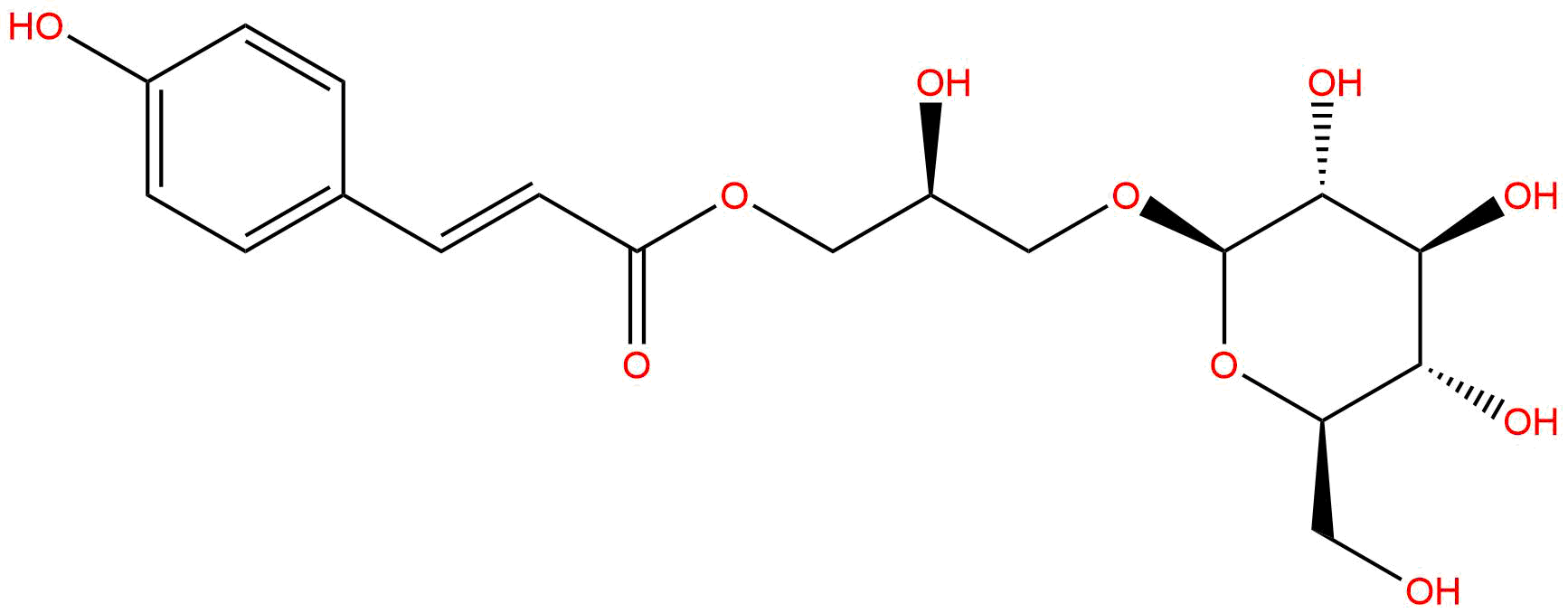
Wangyuzhi A is a typical phenylpropanoid glycoside compound. Its chemical structure consists of a Caffeoyl group connected to a glucose unit through an ester bond, and the reducing end of glucose further binds to the characteristic structural unit of phenylethanolic glycosides, such as hydroxyphenylethanol (Tyrosol) or its derivatives, through glycosidic bonds to form a complex ester glycoside structure. This structure endows it with both the antioxidant activity of phenolic hydroxyl groups and the water solubility improvement properties brought about by glycosylation.
According to the provided pharmacological parameters, the molecular weight of Wang Baihe Glycoside A is 400.3800, which is a medium-sized molecule. The calculated lipid water partition coefficient (LogP) is -0.7753, indicating that the compound has hydrophilicity, which is consistent with the presence of polar glucose units and multiple phenolic hydroxyl groups in the structure. The topologically polar surface area (TPSA) is as high as 166.1400 Å ², further confirming its characteristics of high molecular polarity and multiple hydrogen bond donor/acceptor sites. These properties directly affect its water solubility, with a calculated value of 9.2789 mg/L, indicating a certain degree of solubility in water, but not extremely high, and may require consideration of solubilization strategies in actual formulations. In addition, high TPSA and hydrophilicity also indicate that its ability to penetrate biofilms may be limited, for example, its penetration through the blood-brain barrier (BBB) is predicted to be "low", which limits its direct application for central nervous system diseases, but may also reduce the risk of central nervous system side effects. In terms of early safety indicators, Wangyuxin A did not show potential hERG potassium channel inhibitory activity (predicted as' no '), indicating a low risk of causing QT interval prolongation in the heart. Meanwhile, the Ames test predicted a value of 0.0, indicating that it may not be mutagenic in this model system, providing preliminary positive signals for its safety.
Plant sources and extraction methods
Wangyuxin A is mainly derived from the Liliaceae genus of the Liliaceae family(Lilium)Plant, its name "Wang Baihe Glycoside" implies its association with Wang Baihe(Lilium regale)The close relationship between ornamental and medicinal lilies. In fact, this compound has been found in the bulbs of various lily plants, such as Polygonatum sibiricum(Lilium lancifolium)Musk Lily(Lilium longiflorum)These plants are often used in traditional East Asian medicine for cough and phlegm relief, calming the heart and mind, and anti-inflammatory effects.
The extraction of baicalin A from plant materials is usually carried out using organic solvent extraction method. The common process is as follows: first, the dried lily bulbs are crushed, and then extracted by medium polarity solvents (such as methanol, ethanol, or aqueous ethanol) through leaching or heating reflux extraction. After vacuum concentration, the crude extract was subjected to liquid-liquid distribution extraction using solvents such as petroleum ether, ethyl acetate, and n-butanol. Wangyuxin A was mainly enriched in the n-butanol extraction site or water layer due to its polarity and water solubility. Further purification relies on various chromatographic techniques, including silica gel column chromatography, reverse phase C18 column chromatography (ODS), as well as high-performance liquid chromatography (HPLC) and preparative high-performance liquid chromatography (pre HPLC). Its separation and identification are often combined with techniques such as ultraviolet spectroscopy (UV, due to its characteristic absorption at~330 nm), mass spectrometry (MS), and nuclear magnetic resonance spectroscopy (NMR, especially 1H-NMR and 13C-NMR).
Pharmacological activity research
The pharmacological activity research of Wangyuxin A has expanded from the initial in vitro antioxidant and anti-inflammatory evaluation to more challenging anti-tumor fields, demonstrating multiple biological activities.
-
antioxidant activity One of the core biological activities of Wangyuxin A is its strong free radical scavenging ability. According to research reports, at a concentration of 160 μ M, the scavenging rate of 1,1-diphenyl-2-trinitrophenylhydrazine (DPPH) free radicals can reach 58.0%. This activity is attributed to the catechol structure (caffeoyl moiety) in its chemical structure, which can effectively quench free radicals and interrupt oxidative chain reactions by providing hydrogen atoms or electrons, thereby protecting cells from oxidative stress damage.
-
anti-inflammatory activity Wangyuxin A has been proven to have anti-inflammatory effects in various inflammatory models. In the lipopolysaccharide (LPS) - induced macrophage (such as RAW264.7) inflammation model, baicalin A can dose dependently inhibit the production of nitric oxide (NO), prostaglandin E2 (PGE2), and pro-inflammatory cytokines (such as tumor necrosis factor - α, interleukin-6). Its anti-inflammatory mechanism is closely related to the inhibition of key inflammatory signaling pathways such as nuclear factor kappa B (NF - κ B) and mitogen activated protein kinases (MAPKs).
-
Antitumor activity This is the most promising research direction for Wang Baihe Glycoside A. In vitro studies have shown that lilioside A has growth inhibition and apoptosis promoting effects on a variety of human cancer cell lines (such as breast cancer, liver cancer, colon cancer and lung cancer cells). Its anti-tumor effect is not achieved through a single cytotoxicity, but involves the regulation of multiple targets and pathways:
- Inducing cell apoptosis Wangyuzhi A can upregulate pro apoptotic proteins (such as Bax) and downregulate anti apoptotic proteins (such as Bcl-2, Mcl-1), leading to a decrease in mitochondrial membrane potential, release of cytochrome C, and activation of the Caspase cascade reaction, ultimately inducing programmed cell death in tumor cells.
- Inhibit cell invasion and metastasis This compound can downregulate the expression of matrix metalloproteinase-2 (MMP-2) and MMP-9, thereby inhibiting the degradation and invasion ability of tumor cells to extracellular matrix.
- Inhibition of cell proliferation and signal transduction Wangyuzhi A can intervene in the abnormal sustained activation of the STAT3 signaling pathway and may affect pathways such as MAPK/ERK, thereby inhibiting abnormal proliferation of tumor cells.
- Affects the tumor microenvironment By inhibiting the expression of hypoxia inducible factor-1 alpha (HIF-1 alpha), baicalin A may interfere with tumor hypoxia adaptation and angiogenesis.
Mechanism of action and molecular targets
The multiple pharmacological activities of Wangyuxin A, especially its anti-tumor effect, stem from its regulation of multiple key molecular targets within cells. Based on the provided target information, the mechanism of action network can be summarized as follows:
-
Regulating the apoptotic pathway (targeting MCL1 and BCL2)MCL1 and BCL2 are important anti apoptotic Bcl-2 family proteins that are overexpressed in various tumors and play a key role in tumor cell resistance to apoptosis. Wangyuzhi A can downregulate the expression of these proteins or interfere with their functions, thereby relieving their inhibition of pro apoptotic proteins and initiating the endogenous mitochondrial apoptosis pathway.
-
Intervention of transcription signals (targeting STAT3, HIF1A)STAT3 is a key transcription factor that connects cytokine signaling with nuclear gene expression, and its sustained activation promotes tumor cell survival, proliferation, and immune escape. Wangyuxin A can inhibit the phosphorylation activation of STAT3 and block the transcription of downstream target genes such as Mcl-1 and Cyclin D1. HIF1A is a core regulatory factor for cells to respond to hypoxic environments, promoting angiogenesis and metabolic reorganization. Inhibiting HIF1A helps to disrupt the adaptability and growth of tumors.
-
Inhibition of enzyme activity and function (targeting MMP2, TOP1, TOP2A, CYP19A1):
- MMP2 As the main enzyme for degrading type IV collagen, MMP2 is a key executor of tumor invasion and metastasis. Wangyuxin A inhibits its expression, directly weakening the invasive ability of tumors.
- TOP1/TOP2A DNA topoisomerases I and II α are essential enzymes for DNA replication, transcription, and repair, and are also targets of various chemotherapy drugs such as camptothecin and etoposide. Wangyuxin A may inhibit tumor cell proliferation by interfering with the function of these enzymes, leading to DNA damage.
- CYP19A1 (aromatase)This enzyme catalyzes the conversion of androgen into estrogen, and is an important target for the treatment of hormone dependent breast cancer. Lilioside A may play an anti breast cancer role by inhibiting CYP19A1 activity and reducing the local estrogen level of tumor.
-
Regulating signal transduction and nuclear receptors (targeting MAPK1, ESR1):
- MAPK1(ERK2)The MAPK/ERK pathway regulates cell growth, differentiation, and survival. Wangyuxin A may inhibit abnormal proliferation signals of tumor cells by affecting this pathway.
- ESR1 (estrogen receptor alpha)As a nuclear receptor, ESR1 is the core of estrogen signaling. Wangyuxin A may act as a regulator to affect the activity or expression of ESR1, thereby intervening in the growth of estrogen dependent tumors.
In summary, Wangyuxin A works through a multi-target network, which may overcome the disadvantage of single target drug resistance, but also poses challenges for its mechanism research and selective optimization.
Evaluation of drug properties and pharmacokinetics
Based on calculations and preliminary experimental data, a preliminary evaluation of the pharmacological properties of Wang Baihe Glycoside A is conducted
- Absorption and permeability As mentioned earlier, Lilidroside A has high hydrophilicity (LogP -0.78) and high polar surface area (TPSA 166 Å ²), which is in line with the restrictions on hydrogen bond donors/acceptors in the Rule of Five (usually recommended to have ≤ 10 hydrogen bond donors and ≤ 5 hydrogen bond acceptors, whose structure may be close to or slightly beyond the limit). These characteristics suggest that its oral bioavailability may be low due to its poor passive transmembrane absorption ability and potential as a substrate for efflux transporters such as P-glycoprotein. Its low blood-brain barrier penetration limits its central application.
- distribution Mainly distributed in the blood and systemic circulatory system, difficult to enter the brain. The binding rate with plasma proteins is not yet clear, but the phenolic hydroxyl structure may allow it to bind to albumin to some extent.
- Metabolism As a phenolic glycoside compound, baicalin A is likely to undergo hydrolysis (by β - glucosidase in gut microbiota or tissues) and II binding reactions (such as glucuronic acid binding and sulfation) in vivo. The caffeic acid moiety may also undergo phase I metabolism such as methylation and hydroxylation. Whether it is a substrate or inhibitor of CYP450 enzyme needs to be experimentally verified.
- excretion Water soluble metabolites may be mainly excreted through the kidneys and urine.
- Preliminary safety The calculation prediction shows no hERG inhibition and Ames mutagenicity risk, which are two important early safety green lights. However, comprehensive toxicological evaluations (such as acute toxicity, subchronic toxicity, reproductive toxicity, etc.) still need to be completed in preclinical studies.
Overall, Wangyuxin A has a good active skeleton and preliminary safety signal, but its pharmacological properties, especially oral absorption and metabolic stability, may be the main bottleneck for its development into a drug. Future research may require improving its pharmacokinetic properties through structural modifications (such as preparing prodrugs, optimizing lipid solubility) or developing novel drug delivery systems (such as nano formulations).
Clinical application prospects and prospects
The clinical application prospects of Wangyuxin A are mainly established in Its multi-target anti-tumor activity and good potential for antioxidant/anti-inflammatory adjuvant therapy above.
-
Antitumor therapy:
- combination therapy Given its multi-target nature and initially predicted low cardiac toxicity, Wang Baihe Glycoside A is expected to be used as an adjuvant drug in combination with existing chemotherapy drugs (such as topoisomerase inhibitors, anti estrogen drugs) or targeted drugs to enhance efficacy, reduce drug resistance, or alleviate side effects.
- Specific subtype tumors Its potential effects on CYP19A1 and ESR1 suggest that it may be useful in hormone receptor positive breast cancer. Inhibition of STAT3 and HIF1A may make them effective against tumors with abnormal activation of corresponding pathways, such as certain liver and head and neck cancers.
- Tumor prevention Its strong antioxidant and anti-inflammatory activities also make it have certain potential in preventing tumor occurrence by inhibiting chronic inflammation and oxidative damage.
-
Inflammatory related diseases In addition to serving as an adjuvant therapy for tumors, the direct anti-inflammatory activity of Wangyuxin A can be used to treat chronic inflammatory diseases such as arthritis, colitis, dermatitis, etc. Its antioxidant effect also helps to alleviate oxidative stress related neurodegenerative diseases (such as Alzheimer's disease) or metabolic diseases (such as diabetes and its complications), although its poor penetration of the blood brain barrier may limit its application in central diseases.
Future research directions should focus on:
* In depth mechanism research Using techniques such as gene knockout/knockdown and eutectic structure analysis, accurately elucidate the direct interaction mode between Wangyuxin A and the aforementioned key targets (such as STAT3 and MCL1).
* Preclinical development of the system Conduct comprehensive pharmacokinetic and toxicological studies to clarify its in vivo fate and safety window.
* Structural optimization and formulation research By rational drug chemical modification, while retaining its pharmacophore, it improves its lipid solubility, metabolic stability, and oral bioavailability. Or develop delivery systems such as nanoparticles and liposomes to improve their targeting and efficacy.
* Explore synergies Widely screen its synergistic anti-tumor combination with existing clinical drugs to provide a plan for subsequent clinical trials.
Conclusion
As a phenylpropanoid glycoside discovered from traditional medicinal plants, Wang Baihe Glycoside A exhibits remarkable biological activity in the fields of antioxidant, anti-inflammatory, and especially anti-tumor due to its unique chemical structure and multi-target mechanism of action. It exerts anti-tumor effects from multiple dimensions, including inducing apoptosis, inhibiting invasion, and blocking signaling pathways, by regulating multiple key targets such as MCL1, STAT3, MMP2, and CYP19A1. Although its current pharmacological parameters, such as high polarity and low blood-brain barrier penetration, suggest challenges in developing it as an oral small molecule drug, its rich active skeleton and good preliminary safety prediction lay a solid foundation for its subsequent research. In the future, through interdisciplinary collaboration and the latest methods in medicinal chemistry, pharmacy, and pharmacology, Wangyuyuxin A is expected to be developed into a novel multi-target anti-tumor candidate drug or effective adjuvant therapy, providing new strategies and choices for the treatment of major diseases such as cancer.