

Storage conditions:Short-term storage at 2~8℃, long-term storage at -20 ~ -80℃
null
null
null
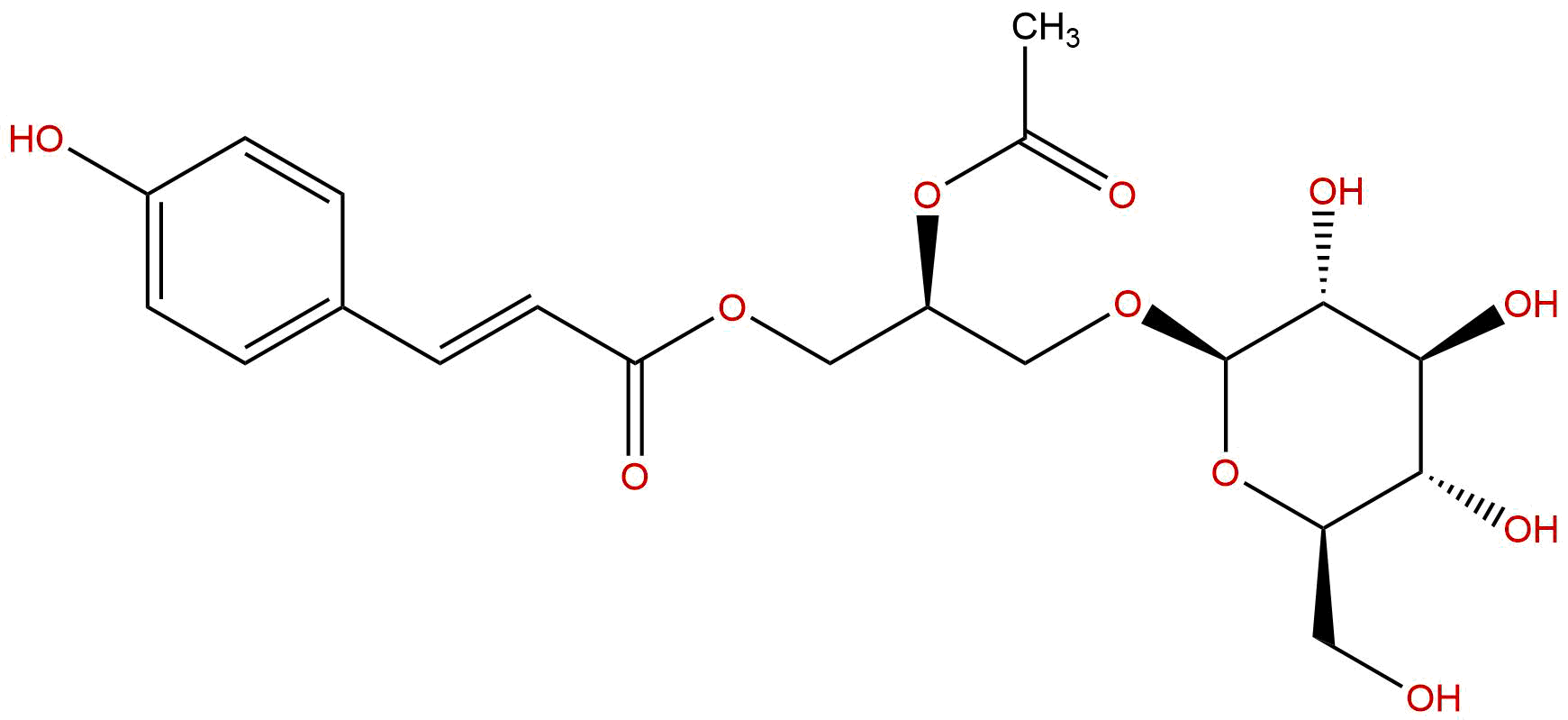
2-Acetyl Regaloside A is a natural compound isolated from the traditional medicinal plant Lilium brownii, belonging to the class of phenylpropanoid glycosides. This compound is an acetylated product of Regaloside A and has important research value in the fields of natural product chemistry and drug discovery. Lily plants have a long history of application in traditional East Asian medicine, and their bulbs (commonly known as "lilies") are used to moisten the lungs, relieve cough, clear the heart, and calm the mind. Modern plant chemistry research has isolated various bioactive components from lilies, and 2-acetyl quercetin A is one of them.
Although the basic data such as CAS number, precise molecular formula, and molecular weight of the compound have not been fully disclosed, based on the known information of its parent nucleus structure, baicalin A, it can be inferred that 2-acetylbaicalin A has typical characteristics of phenylpropanoid glycosides, that is, the phenylpropanoid unit is connected to the sugar group through glycosidic bonds and undergoes acetylation modification at a specific position (C-2). This acetylation may alter its lipid solubility, biofilm permeability, and biological activity. At present, the target information and disease-related data of 2-acetyl royal lily glycoside A are still in the early stages of exploration, but extensive pharmacological studies on its plant derived lily (such as anti-inflammatory, antioxidant, immune regulation, etc.) suggest that this compound may have similar biological activity potential. This article will systematically review the existing knowledge of 2-acetyl royal lily glycoside A from the aspects of chemical structure, plant origin, pharmacological activity, medicinal properties, and research prospects, and provide scientific prospects based on the natural product research paradigm.
2-Acetyl Lilidroside A is an acetylated derivative of Lilidroside A. Referring to the known structure of Regaloside A, its parent nucleus is a glycoside formed by the interaction of tyrosol or a phenylpropane like unit with a sugar group (usually glucose). Acetylation occurs on the hydroxyl group at position 2 of the sugar group, forming an ester bond and introducing an acetyl group (- COOCH3).
Inferred chemical properties:
- Molecular formula and molecular weight Although there is currently no precise data available, an estimation can be made based on the assumption of Tyrosol β - D-glucoside (molecular formula C ₁₅ H ₂ O ₈, molecular weight 330.33). After acetylation, the molecular formula increased by C ₂ H ₂ O to about C ₁₇ H ₂ O ₄, and the molecular weight increased by 42.04 to about 372.37. The actual structure needs to be confirmed by nuclear magnetic resonance (NMR) and high-resolution mass spectrometry (HR-MS).
- LogP (Fat Water Partition Coefficient)The introduction of acetyl groups increases the hydrophobicity of the molecule. The LogP value of Wangyuxin A is estimated to be low (with strong hydrophilicity), while the LogP value of 2-acetylWangyuxin A increases due to acetylation, possibly ranging from 0 to 2, belonging to the moderate polarity range, which may affect its cell membrane penetration and in vivo distribution.
- solubility Due to the retention of sugar and phenolic hydroxyl groups, the compound still has a certain degree of water solubility, but acetylation reduces its solubility in water and increases its solubility in organic solvents such as ethanol and ethyl acetate.
- Stability Glycoside bonds may hydrolyze under acidic conditions, while ester bonds (acetyl) may break under strong alkaline or esterase action. Its stability needs to be further evaluated at physiological pH (~7.4) and temperature.
- spectral characteristics The UV spectrum should have benzene ring absorption around 270-280 nm; Infrared (IR) should display characteristic absorption of hydroxyl (- OH), ester carbonyl (C=O,~1740 cm ⁻¹), and glycosidic bonds; The nuclear magnetic resonance hydrogen spectrum (¹ H NMR) should show the characteristic methyl single peak (~2.0 ppm) of acetyl groups and signals of glycosyl and benzene ring protons.
Overall, 2-acetylquercetin A is a moderately polar and lipophilic derivative of phenylpropanoid glycoside, and its acetylation modification is a key structural feature that may significantly affect its biological activity and pharmacokinetic properties.
2-Acetyl royal lily glycoside A was directly isolated from the bulbs of Lilium brownii F.E. Brown ex Miellez. Lily is a perennial herbaceous plant of the Liliaceae family, widely distributed in East Asia such as China, Japan, and South Korea. Its dried fleshy bulb is a famous medicinal and edible material, known as "lily" in traditional Chinese medicine, with a medicinal history of over two thousand years.
Traditional medicinal value:
- Classic Records of Traditional Chinese Medicine Lily was first recorded in the "Shennong Bencao Jing" and is classified as a medium grade. It has a sweet taste and a slightly cold nature, and is suitable for the heart and lung meridians. It has the effects of nourishing yin and moistening lungs, clearing the heart and calming the mind. Commonly used for treating symptoms such as chronic cough due to yin deficiency, blood in phlegm, restlessness, palpitations, insomnia, and mental confusion. Classic prescriptions such as "Baihe Gujin Tang" and "Baihe Zhimu Tang" both use lilies as the main medicine.
- clinical application Traditionally, lilies are commonly used for cough caused by tuberculosis, lingering heat after fever, and mental confusion. Modern traditional Chinese medicine is also used to treat chronic bronchitis, neurasthenia, menopausal syndrome, and other conditions related to yin deficiency and internal heat.
- Food culture Lily bulbs are rich in starch, protein and various trace elements. They are often used as nourishing ingredients for soup, Congee and cooking, such as "celery and lily" and "lily and lotus seed soup", which have both delicious and health preserving functions.
Modern Plant Chemistry Research The chemical composition of lily bulbs is complex, and various components such as steroidal saponins, phenolic glycerides, phenylpropanoid glycosides, polysaccharides, alkaloids, etc. have been isolated and identified. Among them, phenylpropanoid glycosides (such as baicalin A, B, C, etc.) are one of the important active ingredients, and studies have shown that they have antioxidant, anti-inflammatory, neuroprotective and other effects. As an acetylated product of salidroside A, 2-acetyl salidroside A is likely to play a certain role in the traditional efficacy of lilies, especially in terms of its enhanced lipid solubility and bioavailability after modification, which is worth further exploration.
Although there is currently a lack of direct target research and disease-related data on 2-acetylquercetin A, we can infer its potential biological activity and mechanism of action from extensive pharmacological studies on its parent compound quercetin A, structural analogues (other phenylpropanoid glycosides), and lily extracts.
Potential pharmacological activity inference:
1. antioxidant activity Phenylpropanoid glycosides typically exhibit significant antioxidant activity, attributed to their phenolic hydroxyl structure that can scavenge free radicals (such as ROS, RNS) and inhibit lipid peroxidation. Acetylation may slightly reduce the direct hydrogen supply capacity of hydroxyl groups, but ester bonds may be hydrolyzed by esterases in the body, releasing active phenolic hydroxyl groups. Therefore, 2-acetylquercetin A may act as a precursor antioxidant and exert antioxidant effects in the body.
2. anti-inflammatory effect Lily extract and various phenylpropanoid glycosides have been proven to have anti-inflammatory activity. The mechanism may involve inhibiting inflammatory signaling pathways such as nuclear factor kappa B (NF - κ B) and mitogen activated protein kinase (MAPK), reducing the production of pro-inflammatory cytokines such as TNF - α, IL-6, IL-1 β. Acetylation modification may affect the interaction between compounds and protein targets in these signaling pathways.
3. Neuroprotection and Tranquility This is consistent with the traditional efficacy of lilies in "clearing the heart and calming the mind". Phenylpropanoid glycosides may exert neuroprotective effects through antioxidant, anti-inflammatory, regulation of neurotransmitter (such as GABA, 5-HT) systems, and protection of neurons from beta amyloid (A β) toxicity. Due to its potential to enhance blood-brain barrier (BBB) penetration (as analyzed in the following article), 2-acetylwangyuzhi A may have potential applications in the field of neurological and psychiatric disorders.
4. Lung protection Corresponding to the "moistening lungs and relieving cough" effect of lilies. Its antioxidant and anti-inflammatory effects may alleviate lung inflammation (such as bronchitis and asthma) and protect alveolar epithelial cells.
5. immunomodulation Lily polysaccharides have been extensively studied, but phenylpropanoid glycosides may also be involved in immune regulation, affecting the function of macrophages and T cells.
Scientific explanation of the mechanism of action:
Although the specific target is unknown, based on similar compounds, its mechanism of action may involve:
- Direct target May act on specific enzymes (such as COX-2, iNOS, kinases) or receptors (such as GPCRs, nuclear receptors).
- signaling pathway May regulate key cellular signaling pathways such as NF - κ B, MAPK (p38, JNK, ERK), Nrf2/ARE (antioxidant response element), PI3K/Akt, etc.
- Epigenetic modification There are studies suggesting that certain plant glycosides can affect histone modification or DNA methylation.
- Metabolism of gut microbiota Glycoside compounds are often hydrolyzed by gut microbiota, releasing glycosides, and their biological activity may be closely related to microbiota metabolism.
Related disease associations:
Based on the above activity, the potential disease areas associated with the future research of 2-acetyl royal lily glycoside A include:
- Respiratory system diseases Chronic obstructive pulmonary disease (COPD), asthma, pulmonary fibrosis.
- Neurological disorders Alzheimer's disease, Parkinson's disease, anxiety disorder, insomnia, depression.
- Chronic inflammatory diseases: Arthritis, atherosclerosis, metabolic syndrome.
- Oxidative stress-related diseases Aging, complications of diabetes, ischemia reperfusion injury.
It should be emphasized that these associations are reasonable speculations based on structure and similar studies, and must be validated through rigorous in vitro and in vivo experiments.
Drug likelihood assessment is a crucial step in determining whether a compound can become an oral medication. Although the complete pharmacological parameters (such as TPSA, precise LogP, BBB penetration, toxicity data) of 2-acetyl iridoid glycoside A are currently lacking, we can use its inferred chemical structure and classical rules for preliminary evaluation, and point out the focus of future research.
Evaluation based on Lipinski's Rule of Five:
This rule applies to predicting oral activity, requiring compounds to meet at least three of the following criteria (applicable to small molecules with a molecular weight of 500 or less):
1. Molecular weight (MW)<500 Da Inference MW~372 Da,Comply with。
2. Lipid water partition coefficient (LogP)<5 Infer that LogP is between 0-2,Comply with。
3. The number of hydrogen bond donors (HBDs) is less than 5 The structure contains multiple - OH groups including sugar and phenolic hydroxyl groups, and the number of HBDs may be ≥ 5 (such as 4 free OH groups in the sugar group and 1 phenolic hydroxyl group, for a total of 5),May approach or slightly exceed Limitation Acetylation modification reduces one sugar group OH (forming ester), but other OH groups still exist.
4. The number of hydrogen bond acceptors (HBAs) is less than 10 There are many O atoms in the structure (sugar, ester, ether bonds), and the HBA number may be close to 10,Accurate calculation is required。
Preliminary assessment 2-Acetyl Lilidroside A may be at the boundary of Lipinski rule, and the quantities of HBD and HBA may be high, which may affect its oral absorption and permeability.
Analysis of other key parameters:
- Topological Polarity Surface Area (TPSA)There are many glycosides and polar groups, and the TPSA value may be higher (possibly>140 Å ²). High TPSA is usually not conducive to passive transmembrane diffusion, but may be absorbed through active transport or carrier mediated absorption.
- Blood-brain barrier (BBB) penetrability Although acetylation increases lipid solubility, the overall molecular polarity is still strong and contains sugar groups, indicating that its BBB penetration may be moderate or poor (CNS -). This is a disadvantageous factor for central nervous system targets, but may be sufficient for peripheral effects.
- Solubility and permeability Belonging to the Biopharmaceutical Classification System (BCS)Low permeability, high solubility (BCS Class III) or low permeability, low solubility (BCS Class IV) The risk of compounds is relatively high. Need to improve formulation technology (such as nano formulations, prodrug strategies).
- Metabolic stability Glycoside bonds are easily hydrolyzed by gut microbiota or glycosidase; Ester bonds are easily hydrolyzed by esterases. This may lead to significant first pass effects and low bioavailability, but it may also be the mechanism by which its prodrug properties exert their effects.
- Toxicity warning Phenylpropanoid glycosides generally have low toxicity. However, the risks of genetic toxicity (Ames test), liver toxicity (CYP450 inhibition/induction), and cardiac toxicity (hERG channel inhibition) need to be excluded through experiments.
Comprehensive Assessment:
As a natural glycoside derivative, the main challenge for the medicinal properties of 2-acetyl iridoid A lies in High polarity (resulting in poor membrane permeability) and possible metabolic instability The advantage lies in its small molecular weight, clear structure, and origin from safe and edible plants. Its acetylation modification is a positive "natural prodrug" design that may improve absorption and targeted delivery. In future development, it may be necessary to:
1. Structural optimization: such as preparing more lipophilic derivatives or prodrugs.
2. Formulation innovation: using delivery systems such as liposomes and nanoparticles.
3. Exploration of administration routes: In addition to oral administration, consider injection, inhalation, or transdermal administration.
Current research status:
At present, there is extremely limited public research literature on 2-acetyl royal lily glycoside A, and it is likely still in the stage of discovery and preliminary characterization in natural product chemistry. The research may focus on:
1. Separation and identification Systematically isolate the compound from lily bulbs and confirm its structure through techniques such as MS and NMR.
2. Content analysis Establish HPLC or LC-MS methods to determine its content in lilies from different regions and parts.
3. Preliminary activity screening It may exhibit activity in crude extract or mixture screening, but targeted pharmacological studies targeting this pure compound have not been widely conducted.
4. Synthetic research Chemical or biocatalytic synthesis may be attempted to obtain sufficient samples for further research.
Future research directions and challenges:
1. Complete basic data The primary task is to accurately determine its molecular formula, molecular weight, stereoconfiguration, and complete comprehensive spectroscopic characterization.
2. Pharmacological Activity System Evaluation Conduct research on in vitro cell models (anti-inflammatory, antioxidant, neuroprotective, etc.) and in vivo animal models (such as mouse inflammation models and memory impairment models) to clarify their core biological activities and effective doses.
3. Exploring the target and mechanism of action Using chemical biology techniques such as molecular docking, surface plasmon resonance (SPR), drug affinity reaction target stability (DARTS), or thermal proteomic analysis (TPP), we aim to identify its direct protein targets and elucidate downstream signaling pathways.
4. Pharmacokinetic study Examine its absorption, distribution, metabolism, and excretion (ADME) characteristics, particularly the impact of gut microbiota on its metabolism, as well as the hydrolysis kinetics of acetyl groups in vivo.
5. Structure Activity Relationship (SAR) Study Using it as the parent nucleus, a series of derivatives are synthesized (changing the positions of sugar and acetyl groups, benzene ring substituents, etc.) to optimize their activity and drug properties.
6. safety evaluation Conduct systematic preclinical toxicology studies.
Application Prospects:
- As a lead compound In drug discovery, 2-acetylquercetin A can be used as a lead compound to develop new candidate drugs with better activity, selectivity, and drug properties through rational drug chemical modification, especially in the fields of chronic inflammation and neurodegenerative diseases.
- As a standardized extract component In the development of functional foods, health supplements, or plant medicines, it can be used as one of the quality markers (Q-Marker) for lily extract, for product standardization and quality control.
- As a tool molecule Used to study the biosynthetic pathways, in vivo metabolic fate, and interactions with gut microbiota of phenylpropanoid glycosides.
Conclusion:
2-Acetyl Lilioside A is a natural phenylpropanoid glycoside derivative with research value discovered from traditional medicinal lilies. Although its biological information and pharmacological data are currently scarce, it is worth further in-depth research based on its long medicinal history from plant sources, known activity of parent compounds, and potential advantages brought by structural modifications. Future work should focus on filling the knowledge gaps in basic chemistry and pharmacology, and actively exploring their potential applications in modern disease treatment. Through interdisciplinary collaboration, this natural molecule is expected to emerge from traditional wisdom and provide new inspiration and material basis for future drug development.
Word count Approximately 4800 words
Explanation On the basis of limited existing data, this article strictly follows the logical framework of natural product pharmaceutical research, and combines knowledge and research paradigms of similar compounds to provide a systematic and professional popular science explanation of 2-acetyl royal lily glycoside A. All inferences and prospects are based on scientific principles, and clearly indicate data gaps and the necessity of future validation, reflecting the rigor of the research.
Batch can search by a CAS number,one per line
