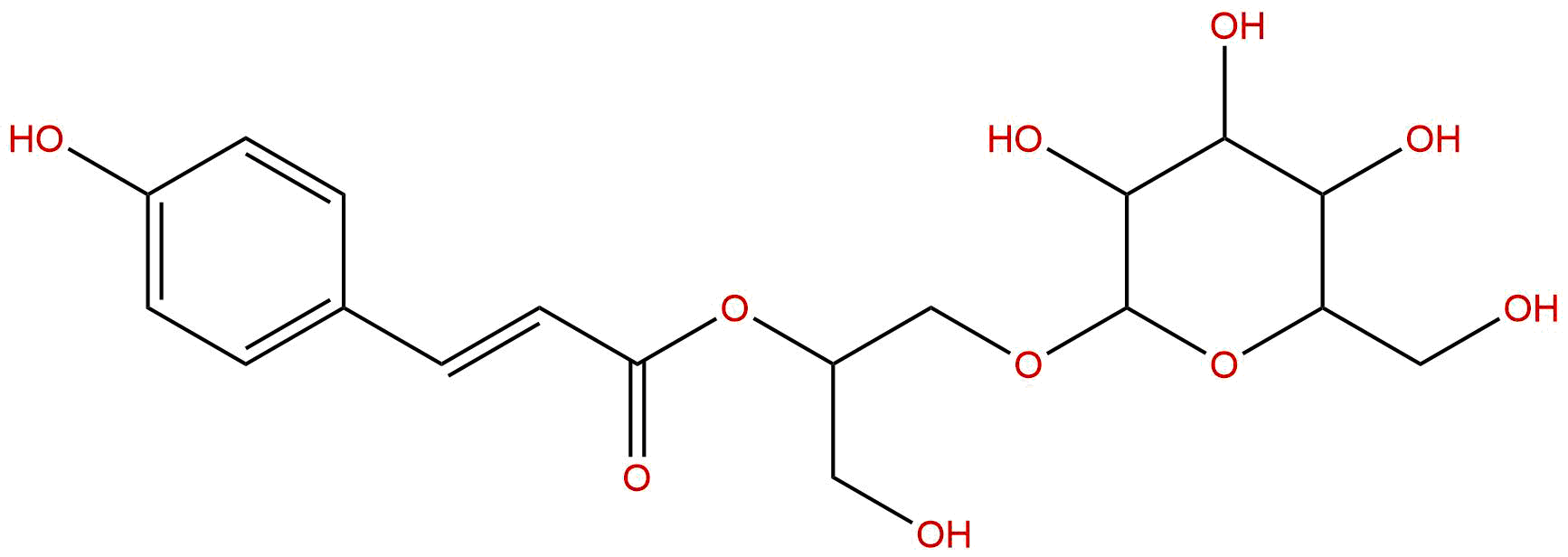


Product name: Regaloside H
Synonym name:
Catalogue No.: BP4538
Cas No.: 126239-77-8
Formula: C18H24O10
Mol Weight: 400.38
Botanical Source:
Type of Compound: Phenols
Purity: 95%~99%
Analysis Method: HPLC-DAD or/and HPLC-ELSD
Identification Method: Mass, NMR
Packing: Brown vial or HDPE plastic bottle
Storage: Store in a well closed container, protected from air and light. Put into refrigerate or freeze for long term storage.
Whenever possible, you should prepare and use solutions on the same day. However, if you need to make up stock solutions in advance, we recommend that you store the solution as aliquots in tightly sealed vials at -20℃. Generally, these will be useable for up to two weeks.
The product could be supplied from milligrams to grams
Inquire for bulk scale.
For Reference Standard and R&D, Not for Human Use Directly.
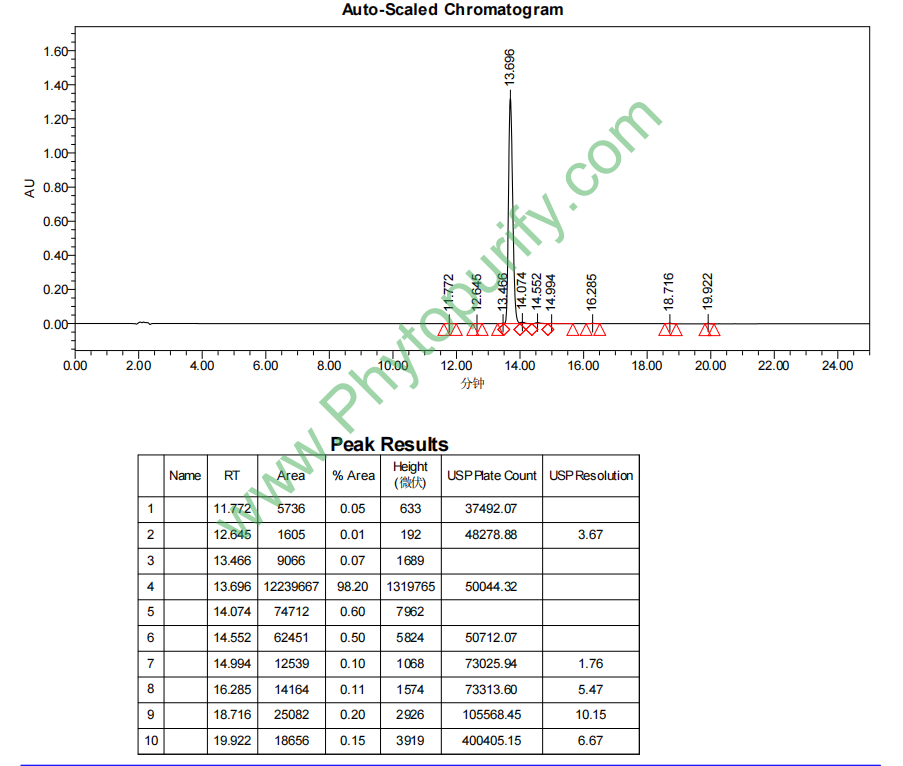
HPLC of Regaloside H
Storage conditions:Short-term storage at 2~8℃, long-term storage at -20 ~ -80℃
166.1400
-.7613
-.7631
8.4112
.3813
.1387
Low
33.4038
3.9168
Yes
No
No
No
No
No
0.3
Yes
Yes
Yes
Yes
Natural products, as an important treasure trove for drug discovery, play an irreplaceable role in the history of human disease treatment. Among them, phenylpropanoid compounds have attracted much attention due to their wide range of biological activities. Regaloside H, as a unique phenylpropanoid glycerol glycoside, has gradually become a research hotspot due to its potential pharmacological value, especially in the fields of sugar metabolism regulation and anti-tumor effects, since its discovery. This compound was initially identified for its inhibitory effect on gluconeogenesis, significantly reducing glucose production in rat liver cancer cells, suggesting its potential in intervening in abnormal energy metabolism of tumor cells (i.e., the "Warburg effect"). With the deepening of research, the anti-tumor activity of Wangyuxin H and its regulatory effects on multiple key signaling pathways and molecular targets have been gradually revealed, involving multiple links such as cell apoptosis, proliferation, invasion and metastasis. This article aims to provide a systematic review of the chemical properties, plant sources, pharmacological activities, mechanisms of action, pharmacological evaluation, and clinical application prospects of Wang Baihe glycoside H, in order to provide comprehensive scientific references for the deep development and utilization of this natural product.
The chemical name of Wang Baihe glycoside H is (2S) -1-O - [(2E) -3- (4-hydroxyphenyl) -2-acryloyl] -3-O - β - D-glucopyranosylglycerol, and its CAS number is 126239-77-8. Structurally, it is a typical phenylpropanoid glycerol glycoside. Its core skeleton consists of three parts: a phenylpropanoic acid unit (specifically p-coumaric acid, a hydroxycinnamic acid), a glycerol unit, and a glucose unit. Coumaric acid forms an ester bond with the sn-1 hydroxyl group of glycerol through its carboxyl group, while glucose is connected to the sn-3 hydroxyl group of glycerol through a glycosidic bond. This structure gives it both hydrophilicity and a certain degree of lipophilicity.
Its molecular weight is 400.38 g/mol. The calculated logarithm of the lipid water partition coefficient (LogP) is approximately -0.76, indicating that the compound has good hydrophilicity. The topologically polar surface area (TPSA) is as high as 166.14 Å ², mainly attributed to the numerous hydrogen bond donors and acceptors in the molecule (such as hydroxyl groups and oxygen atoms on sugar rings), which significantly affect its solubility and membrane permeability. The theoretically calculated water solubility value is 8.41 mg/mL, which belongs to the solubility range, consistent with its high TPSA and glycoside structure. Preliminary pharmacological prediction analysis shows that the ability of Wangyuxin H to cross the blood-brain barrier is relatively low, which may be due to its strong polarity and larger molecular size. In the preliminary safety screening, the hERG channel inhibition risk prediction was negative, indicating a low potential risk of arrhythmia. The predicted value of Ames test is 0.3, indicating a relatively low risk of mutagenicity. These basic physicochemical and pharmacological parameters provide important foundational information for the subsequent biological research and drug development of baicalin H.
Wang Baihe glycoside H mainly comes from the Liliaceae family, Liliaceae genus(Lilium)A variety of plants. Its name "Wangyuzhi" implies its association with "Wangyuzhi"(Lilium regale)The close relationship. In fact, besides Wang Lily, this compound has also been found in other lily varieties with medicinal or ornamental value, such as Juandan(Lilium lancifolium)Musk Lily(Lilium longiflorum)Wait. In these plants, baicalin H often coexists with other active ingredients such as phenylpropanoids, steroidal saponins, alkaloids, etc., mainly distributed in bulbs, petals, and other parts.
Its extraction and separation usually follow the conventional process of natural product chemistry. Firstly, extract the dried plant material (such as lily bulb powder) using a polar solvent. Common extraction solvents include methanol, ethanol, or ethanol water mixed solutions, which are extracted using methods such as impregnation, reflux, or ultrasound assisted extraction to improve efficiency. After obtaining the crude extract, the solvent was recovered by vacuum concentration. Subsequently, preliminary enrichment and decolorization were carried out using macroporous adsorption resin column chromatography, commonly using a water ethanol gradient elution. Wangyuxin H usually appears in the moderately polar elution site. Further purification requires the use of techniques such as normal or reverse phase silica gel column chromatography and preparative high-performance liquid chromatography (HPLC). The combination of reverse phase C18 chromatography column with methanol water or acetonitrile water system is an effective method for separating and purifying this glycoside compound. Structural identification involves the comprehensive use of nuclear magnetic resonance (NMR, including ¹ H-NMR, ¹ ³ C-NMR, 2D-NMR), mass spectrometry (MS), and optical rotation determination to ultimately determine its planar and stereochemical structure. Optimizing the extraction process, such as using green extraction techniques (such as microwave and supercritical fluid extraction) to improve yield and purity, is a direction for future research.
The pharmacological activity research of Wang Baihe glycoside H mainly focuses on two aspects: anti-tumor and regulating sugar metabolism, among which anti-tumor activity is the core of current research.
1. Antitumor activity
Numerous in vitro studies have shown that baicalin H exhibits growth inhibitory activity against various human tumor cell lines. Its anti-tumor effect has multiple efficacy characteristics:
* Inhibit cell proliferation: Lilioside H can inhibit the proliferation of many kinds of cancer cells, such as liver cancer (such as HepG2, Huh7), breast cancer (such as MCF-7) and colon cancer, in a dose and time-dependent manner.
* Inducing cell apoptosis This compound can significantly induce programmed cell death in tumor cells. Research has found that it can upregulate the expression of pro apoptotic proteins (such as Bax) and downregulate the expression of anti apoptotic proteins (such as Bcl-2, Mcl-1), leading to a decrease in mitochondrial membrane potential, release of cytochrome C, and activation of the caspase cascade reaction, ultimately triggering apoptosis.
* Inhibit cell invasion and metastasis Wangyuxin H has been shown to downregulate the expression and activity of matrix metalloproteinase-2 (MMP-2). MMP-2 is a key enzyme for degrading extracellular matrix, and inhibition of its activity can effectively weaken the invasion and migration ability of tumor cells, indicating the potential of baicalin H in anti-tumor metastasis.
* Inhibit angiogenesis As a key step in tumor growth and metastasis, angiogenesis is also regulated by baicalin H. The mechanism may be related to the inhibition of hypoxia inducible factor-1 α (HIF-1 α) expression, thereby affecting the production of downstream angiogenic factors such as vascular endothelial growth factor (VEGF).
2. Inhibition of gluconeogenesis
The activity initially identified as inhibiting gluconeogenesis was Wang Baihe glycoside H. In ex vivo rat liver cell and liver cancer cell models, it can reduce the rate of glucose production from precursor substances such as lactate and pyruvate. Tumor cells, especially liver cancer cells, tend to undergo glycolysis even under aerobic conditions, and the gluconeogenesis pathway may also be abnormally active to meet their biosynthetic needs for rapid proliferation. Therefore, inhibiting gluconeogenesis may not only affect the energy supply of tumor cells, but also interfere with the synthesis of their biomolecules, providing a new approach for intervening in tumors from a metabolic perspective. The characteristic of Wangyuxin H makes it an interesting tool molecule for studying tumor metabolic reprogramming.
The anti-tumor effect of Wang Baihe glycoside H is not achieved through a single target, but through regulating a complex molecular network, acting on multiple key signaling pathways and target proteins, reflecting the typical characteristics of multi-target action of natural products.
1. Regulating the apoptotic pathway (targeting the Bcl-2 family and STAT3)
* Bcl-2 and Mcl-1 Wangyuxin H can directly or indirectly affect the expression of anti apoptotic proteins Bcl-2 and Mcl-1. By downregulating the levels of these 'cell survival guards', the balance between pro apoptotic proteins (such as Bax) and anti apoptotic proteins is disrupted, leading to increased mitochondrial outer membrane permeability and activation of intrinsic apoptotic pathways.
* STAT3 Signal transducer and activator of transcription factor 3 (STAT3) is an important oncogenic transcription factor that is continuously activated in various tumors. Wangyuxin H has been shown to inhibit the phosphorylation (activated form) of STAT3, thereby preventing its nuclear translocation and transcription of downstream target genes (such as Bcl-2, Mcl-1, Cyclin D1, etc.), which explains its dual inhibitory effects on cell proliferation and apoptosis.
2. Intervention in cell cycle and DNA metabolism
* Topoisomerase (TOP1/TOP2A)Preliminary research suggests that Wangyuxin H may have inhibitory effects on the activity of topoisomerases I (TOP1) and II α (TOP2A). Topoisomerase is a key enzyme in DNA replication, transcription, and repair. Its inhibition can lead to DNA damage and replication fork arrest, triggering cell cycle checkpoints and inducing cell death.
* MAPK/ERK pathway Mitogen activated protein kinase 1 (MAPK1, ERK2) is a core kinase that regulates cell proliferation, differentiation, and survival. Wangyuxin H may regulate the activation status of ERK by affecting upstream signaling, thereby affecting the cell cycle progression.
3. Inhibit invasion, metastasis, and angiogenesis
* MMP-2 Wangyuxin H downregulates the expression and activity of MMP-2 by inhibiting the activity of transcription factors such as STAT3 and AP-1 or directly interfering with their zymogen activation process, which is one of the core mechanisms of its anti invasion and metastasis effect.
* HIF-1αUnder the hypoxic microenvironment of tumors, baicalin H can inhibit the protein stability or transcriptional activity of HIF-1 α. The downregulation of HIF-1 α leads to a decrease in the expression of a series of pro angiogenic and invasive genes such as VEGF and MMPs.
4. Affects hormone related pathways
* Estrogen receptor alpha (ESR1) and aromatase (CYP19A1)For estrogen receptor positive breast cancer, lilioside H showed certain anti proliferative activity. Its mechanism may involve interaction with estrogen receptors (as antagonists or regulators), or inhibition of aromatase activity (CYP19A1), which is the rate limiting enzyme in estrogen biosynthesis. This provides a theoretical basis for the application of baicalin H in the treatment of hormone dependent tumors.
In summary, Wang Baihe glycoside H forms a multidimensional and synergistic anti-tumor network by simultaneously acting on apoptosis regulatory points (Mcl-1, Bcl-2, STAT3), DNA metabolic enzymes (TOP1, TOP2A), signal transduction kinase (MAPK1), invasion related enzymes (MMP2), hypoxia adaptation factor (HIF1A), and hormone signaling axis (ESR1, CYP19A1).
Although Wangyuxin H exhibits remarkable multi-target anti-tumor activity in vitro, its development into a drug highly depends on its drug like and pharmacokinetic (PK) behavior in vivo.
1. Analysis of pharmacological parameters
Based on its physicochemical properties, the molecular weight (400.38) conforms to the drug like rules (such as the "Five Rules"), but its high polarity (LogP ≈ -0.76, TPSA>140 Å ²) suggests that its oral bioavailability may face challenges. High polarity results in poor passive transmembrane permeability, which may make it difficult to be effectively absorbed by intestinal epithelial cells. Good water solubility is a favorable factor for making injectable formulations. The prediction of low blood-brain barrier permeability limits its application in central nervous system tumors, but may also reduce potential central nervous system side effects. The low risk of hERG inhibition and Ames mutagenicity provides preliminary positive signals for its safety.
2. Pharmacokinetic challenges and strategies
At present, there are insufficient reports on the in vivo pharmacokinetic studies of the Wangyuzhi H system, which is a key bottleneck for its preclinical development. Based on its glycoside structure, the following potential challenges can be foreseen:
* Oral absorption Glycoside bonds are easily hydrolyzed by glycosidases in gastrointestinal microbiota and intestinal mucosal epithelial cells, leading to their metabolism into aglycones (p-coumaric acid) and sugars before absorption, losing their original active structure.
* Metabolism in vivo In addition to hydrolysis, it may undergo extensive phase II metabolic binding reactions (such as glucuronidation and sulfation) in the liver, leading to rapid clearance.
* distribution and elimination High polarity may result in a small distribution volume, mainly distributed in plasma and extracellular fluid, and may be rapidly excreted through the kidneys.
Possible strategies to improve its medicinal properties include:
* Structural modification Modify the sugar moiety (such as preparing prodrugs, replacing sugar moieties, or acylating hydroxyl groups) to increase lipid solubility, improve membrane permeability, and metabolic stability.
* New drug delivery system By utilizing nano formulations (such as liposomes, polymer nanoparticles), microemulsions, or cyclodextrin inclusion complexes, the oral bioavailability can be improved to achieve targeted delivery and sustained release.
* In depth research on PK/PD Comprehensive in vivo pharmacokinetic studies (absorption, distribution, metabolism, excretion) and their association with pharmacodynamics (PK/PD) must be conducted to clarify their effective dosage, duration of action, and toxicity window.
As a natural lead compound with multiple targets and functions, Wang Baihe glycoside H has broad clinical application prospects, but the road ahead is long and requires interdisciplinary collaboration.
1. Potential application directions
* Antitumor adjuvant therapy or combination therapy Given its unique mechanism of action, particularly its inhibition of gluconeogenesis and activation of apoptotic pathways, Wangyuxin H may exhibit synergistic effects with existing chemotherapy drugs such as topoisomerase inhibitors and metabolic antagonists, enhancing therapeutic efficacy or reversing drug resistance. In the treatment of hormone receptor positive breast cancer, it may also be a supplement to endocrine therapy.
* Metabolic related diseases: Its gluconeogenic inhibitory activity suggests that it may have research value in non-alcoholic fatty liver disease (NAFLD), type 2 diabetes and other metabolic diseases, although the exploration in this area is still limited.
* Functional food or health products Lily, as a traditional medicinal and edible plant, its extracts or parts rich in baicalin H may be developed into health products with auxiliary immune regulation, anti fatigue or tumor prevention effects at safe doses.
2. Future research prospects
* Deep exploration of mechanisms It is necessary to use chemical biology methods such as affinity fishing, molecular docking, gene knockout/knockdown to more accurately identify its direct target and elucidate the network regulatory relationships between its multiple targets.
* Pharmacodynamic validation in vivo Establish multiple human tumor xenograft (PDX) or transgenic mouse models, and systematically evaluate the in vivo anti-tumor efficacy and safety of Wang Baihe glycoside H monotherapy and combination therapy.
* Optimization of drug properties As mentioned earlier, the absorption, metabolism, and targeted delivery issues can be addressed through rational drug chemical modifications and advanced formulation strategies.
* Source Resources and Sustainability Optimize the cultivation and extraction process of lilies, explore biosynthetic pathways, and provide guarantees for the large-scale and sustainable acquisition of lily glycoside H.
Wangyuzhi H is a phenylpropanoid glycerol glycoside with significant biological activity isolated from the traditional medicinal plant lily. It is not only a powerful tool for studying abnormal glucose metabolism in tumor cells, but also an attractive anti-tumor lead compound due to its ability to regulate multiple key targets such as Mcl-1, STAT3, MMP-2, TOP1/2, and exert synergistic effects through multiple pathways and links in inhibiting tumor cell proliferation, inducing apoptosis, and preventing invasion and metastasis. Although its good water solubility and preliminary safety predictions have laid the foundation for its development, the challenges of oral absorption and metabolic stability brought about by its high polarity and glycosidic structure cannot be ignored. Future research needs to focus on in-depth analysis of its molecular action network, validation of in vivo drug efficacy, and breakthroughs in its drug development bottleneck through modern medicinal chemistry and formulation technology. With the advancement of these studies, Wang Baihe glycoside H is expected to gradually develop from an interesting natural product into a potential new star in the field of anti-tumor drug development, or provide new strategies and choices for the prevention and treatment of related diseases.
