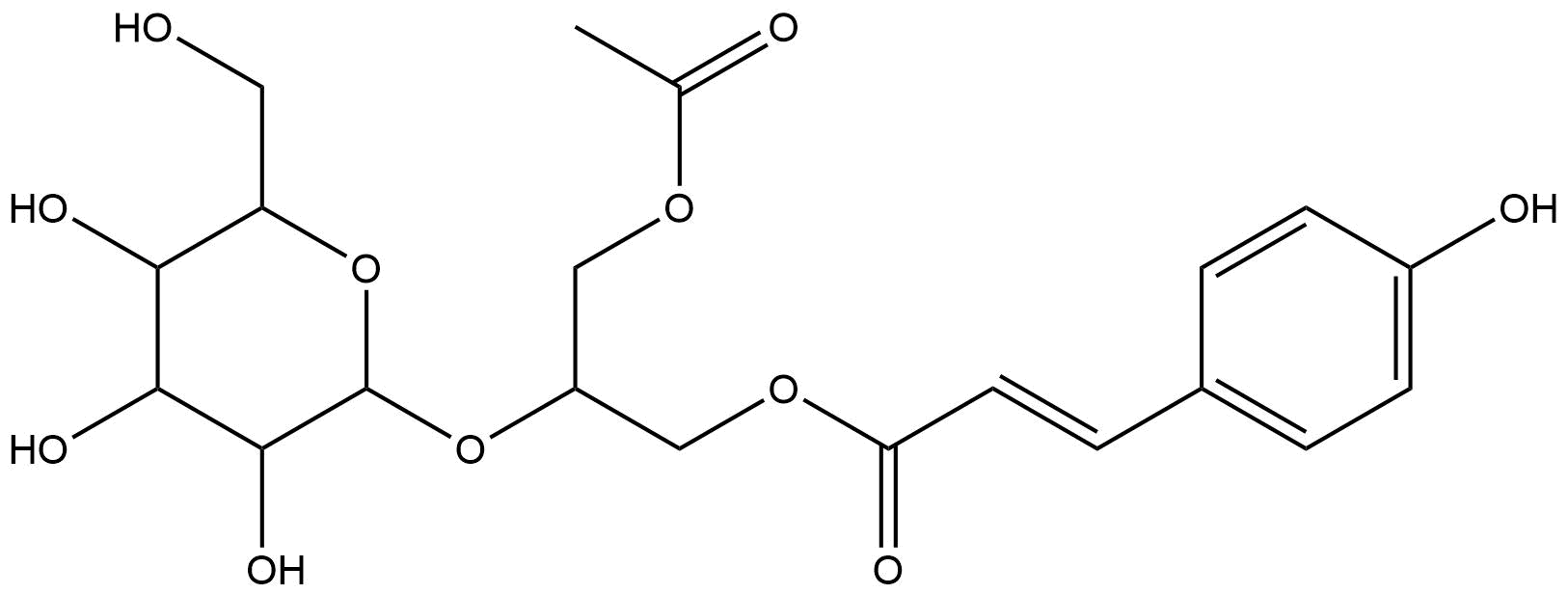


Product name: Regaloside B
Synonym name:
Catalogue No.: BP4254
Cas No.: 114420-67-6
Formula: C20H26O11
Mol Weight: 442.417
Botanical Source: Lilii Bulbus
Type of Compound:
Purity: 95%~99%
Analysis Method: HPLC-DAD or/and HPLC-ELSD
Identification Method: Mass, NMR
Packing: Brown vial or HDPE plastic bottle
Storage: Store in a well closed container, protected from air and light. Put into refrigerate or freeze for long term storage.
Whenever possible, you should prepare and use solutions on the same day. However, if you need to make up stock solutions in advance, we recommend that you store the solution as aliquots in tightly sealed vials at -20℃. Generally, these will be useable for up to two weeks.
The product could be supplied from milligrams to grams
Inquire for bulk scale.
For Reference Standard and R&D, Not for Human Use Directly.
Storage conditions:Short-term storage at 2~8℃, long-term storage at -20 ~ -80℃
172.2100
-.4505
-.4526
8.7266
.4217
.1002
Low
34.8166
3.9734
Yes
No
No
No
No
No
0.3
Yes
Yes
Yes
Yes
Natural products, as an important source of drug discovery, occupy a pivotal position in modern pharmacological research. Phenylpropane compounds have become one of the hotspots in natural product pharmacology research due to their diverse biological activities and unique chemical structures. Regaloside B is a type of long flowered lily from the lily genus(Lilium longiflorum)The phenylpropane compounds isolated from the middle have attracted much attention in recent years due to their significant anti-inflammatory and antioxidant activities. This compound not only regulates the expression of various inflammation related factors, but also demonstrates potential value in the study of physiological processes such as osteogenic differentiation.
This article will provide a systematic review of the chemical structure and physicochemical properties, plant sources, and extraction methods of Wangyuxin B, with a focus on its pharmacological activity and mechanism of action. The pharmacokinetic characteristics of Wangyuxin B will be analyzed based on its pharmacological parameters, and its clinical application prospects and future research directions will be explored. The aim is to provide a theoretical basis and research reference for the pharmacological development of this natural product.
The molecular formula of Wangyuxin B is C21H26O10, with a molecular weight of 442.4170 and a CAS number of 114420-67-6. It is a typical phenylpropanoid glycoside structure, containing multiple hydroxyl and sugar groups, giving it high polarity and water solubility. The physical and chemical properties data show that the LogP value of Wangyuxin B is -0.4505, indicating its strong hydrophilicity, water solubility of 8.7266, and polarization surface area (TPSA) of 172.2100 Å ², suggesting that its molecule has more hydrogen bond donors and acceptors, which is conducive to stable binding with biomolecules.
Structurally, Wang Baihe glycoside B contains a typical phenylpropane skeleton with glycosidic residues connected, and multiple hydroxyl groups in the structure may be key sites for its biological activity. The polarity and spatial conformation of its molecular structure have a significant impact on its bioavailability and targeting. In addition, Wang Baihe glycoside B does not have hERG channel inhibitory activity, and the Ames mutagenicity test result is 0.3, indicating its high safety and good potential for drug development.
Wangyuzhi B is mainly derived from the long flowered lily plant of the lily genus(Lilium longiflorum)Separated from the bulbs. As a traditional Chinese medicinal herb and ornamental plant, the long flowered lily contains abundant phenylpropanoid compounds and steroidal saponins, and has various pharmacological activities.
During the extraction process, alcohol extraction (such as methanol or ethanol) is often used to extract the dried bulb powder, followed by separation and purification through liquid-liquid distribution, silica gel column chromatography, and high-performance liquid chromatography (HPLC) techniques. The purified Wangyuzhi B can be structurally identified by means of mass spectrometry (MS), nuclear magnetic resonance (NMR), and infrared spectroscopy (IR). In recent years, the application of ultrasound assisted extraction and microwave-assisted extraction technologies has improved extraction efficiency and purity, providing technical support for large-scale preparation.
Wangyuxin B exhibits significant anti-inflammatory effects. In vitro cell model studies have shown that Wangyuxin B can inhibit the expression of inflammatory mediators, including vascular cell adhesion molecule-1 (VCAM-1), inducible nitric oxide synthase (iNOS), and cyclooxygenase-2 (COX-2). The downregulation of these molecules effectively blocks the transmission of inflammatory signals and reduces the inflammatory response of cells.
In addition, Wang Baihe glycoside B significantly reduces the p-p65/p65 ratio in the NF - κ B signaling pathway, inhibits the activation of nuclear factor κ B, and further blocks the transcription of inflammatory factors. It has inhibitory effects on the mRNA expression of chemokines (such as CXCL9, CXCL10, IL8) and immune regulatory factor IDO, indicating its potential function in regulating the immune microenvironment and inflammatory cell recruitment.
As a natural phenylpropane compound, Wangyuxin B has excellent antioxidant capacity. It activates the nuclear factor E2 related factor 2 (Nrf2/NFE2L2) signaling pathway, induces the expression of downstream antioxidant enzymes such as superoxide dismutase (SOD1, SOD2), catalase (CAT), glutathione peroxidase (GPX1), and heme oxygenase-1 (HMOX1), enhances the antioxidant defense ability of cells, and reduces oxidative stress damage.
In addition, Wangyuxin B also has a regulatory effect on matrix metalloproteinases (MMP1, MMP3), which helps maintain the homeostasis of extracellular matrix and prevent tissue damage caused by oxidative stress.
In recent years, Wangyuxin B has shown positive effects in osteogenic differentiation research. By regulating the expression of bone formation related genes and promoting the differentiation of bone marrow-derived mesenchymal stem cells into osteoblasts, baicalin B is expected to become a potential therapeutic agent for bone metabolism diseases such as osteoporosis. Its specific mechanism involves regulating the inflammatory microenvironment and redox status, providing favorable conditions for bone tissue repair.
The pharmacological effects of Wangyuxin B are mainly achieved by regulating inflammation and oxidative stress-related signaling pathways. Its core mechanism includes:
Inhibition of NF - κ B signaling pathway
Wangyuzhi B reduces the p-p65/p65 ratio, inhibits the nuclear translocation of NF - κ B, blocks the transcriptional expression of inflammatory genes, reduces the production of inflammatory mediators such as VCAM-1, iNOS, COX-2, and alleviates inflammatory reactions.
Nrf2 mediated activation of antioxidant response
By activating the Nrf2 transcription factor, baicalin B promotes the expression of downstream antioxidant enzymes (SOD1, SOD2, CAT, GPX1, HMOX1), enhances the ability of cells to clear reactive oxygen species (ROS), and protects cells from oxidative damage.
Downregulation of chemokines and immune regulatory factors expression
Inhibit the mRNA expression of CXCL9, CXCL10, IL8, and IDO, regulate the recruitment and activation of immune cells, and alleviate chronic inflammatory states.
Matrix metalloproteinases regulation
By regulating the expression of MMP1 and MMP3, baicalin B helps maintain the integrity of the extracellular matrix and prevent tissue damage caused by inflammation and oxidative stress.
Signal regulation promoting osteogenic differentiation
It may promote the differentiation of bone marrow mesenchymal stem cells into osteoblasts and facilitate bone tissue repair by affecting bone morphogenetic proteins (BMPs) and related transcription factors.
From the perspective of medicinal parameters, Wang Baihe glycoside B has the following characteristics:
At present, there is limited pharmacokinetic data on Wang Baihe glycoside B. It is speculated that its hydrophilicity and large polarized surface area may lead to limited oral absorption rate, and further research is needed on its half-life and metabolic pathways in vivo. In the future, it is expected to improve its pharmacokinetic properties through structural modification or nanocarrier delivery.
Based on the multi-target anti-inflammatory and antioxidant activity of Wangyuxin B, its potential for application in various inflammation related diseases is significant. Especially in chronic inflammation, immune regulation, and bone metabolism diseases (such as osteoporosis and rheumatoid arthritis), Wangyuxin B has shown promising application prospects.
In addition, the low toxicity and safety of Wangyuxin B provide a basis for its clinical translation. Future research can focus on:
Through interdisciplinary collaboration, Wang Baihe Glycoside B is expected to become a new natural medicine or lead compound, promoting the development of natural product pharmacology.
Wang Baihe Glycoside B, as a natural product of phenylpropane derived from long flowered lilies, has shown broad pharmacological research and clinical application prospects due to its significant multiple biological activities of anti-inflammatory, antioxidant, and promoting osteogenic differentiation. Its mechanism of action involves key signaling pathways such as NF - κ B and Nrf2, regulating the expression of various inflammatory factors and antioxidant enzymes, and has the characteristic of multi-target synergistic regulation.
Although the pharmacokinetics and clinical research on Wangyuzhi B are still in the preliminary stage, its good safety and pharmacological parameters have laid a solid foundation for subsequent development. In the future, through in-depth mechanism research, structural optimization, and preclinical validation, Wang Baihe glycoside B is expected to become an important candidate molecule in the field of natural product drug development, providing new ideas and strategies for the treatment of inflammatory diseases and bone metabolism diseases.
