Introduction/Overview
Natural products, as an important treasure trove for drug discovery, play an irreplaceable role in the history of human disease treatment. Lily plants are widely used in traditional medicine, often used to nourish yin, moisten lungs, clear the heart and calm the mind. With the development of modern separation and identification techniques, a series of compounds with unique biological activities have been discovered from lilies, among which glycerol glucoside compounds have attracted much attention due to their diverse pharmacological activities. Wangyuzhi C is a representative glycerol glucoside isolated from plants of the lily genus, with a CAS number of 117591-85-2. Early research revealed its significant anti-inflammatory activity, and subsequent studies further found that in the oxidative stress-induced myocardial cell injury model, baicalin C can exert cardiomyocyte protection by protecting mitochondrial function, providing preliminary clues for its application in the field of cardiovascular and cerebrovascular diseases. In recent years, with the rise of bioinformatics tools such as network pharmacology and molecular docking, the anti-tumor potential of baicalin C, especially its application prospects in the treatment of cervical cancer, has begun to enter the research field. Its potential targets involve multiple key pathways such as apoptosis, proliferation, inflammation, and cell cycle regulation. This article aims to provide a systematic review of the chemical structure, plant origin, pharmacological activity, mechanism of action, pharmacological properties, and clinical application prospects of Wangyuxin C in diseases such as cervical cancer, in order to provide comprehensive scientific references for the in-depth research and development of this compound.
Chemical structure and physicochemical properties
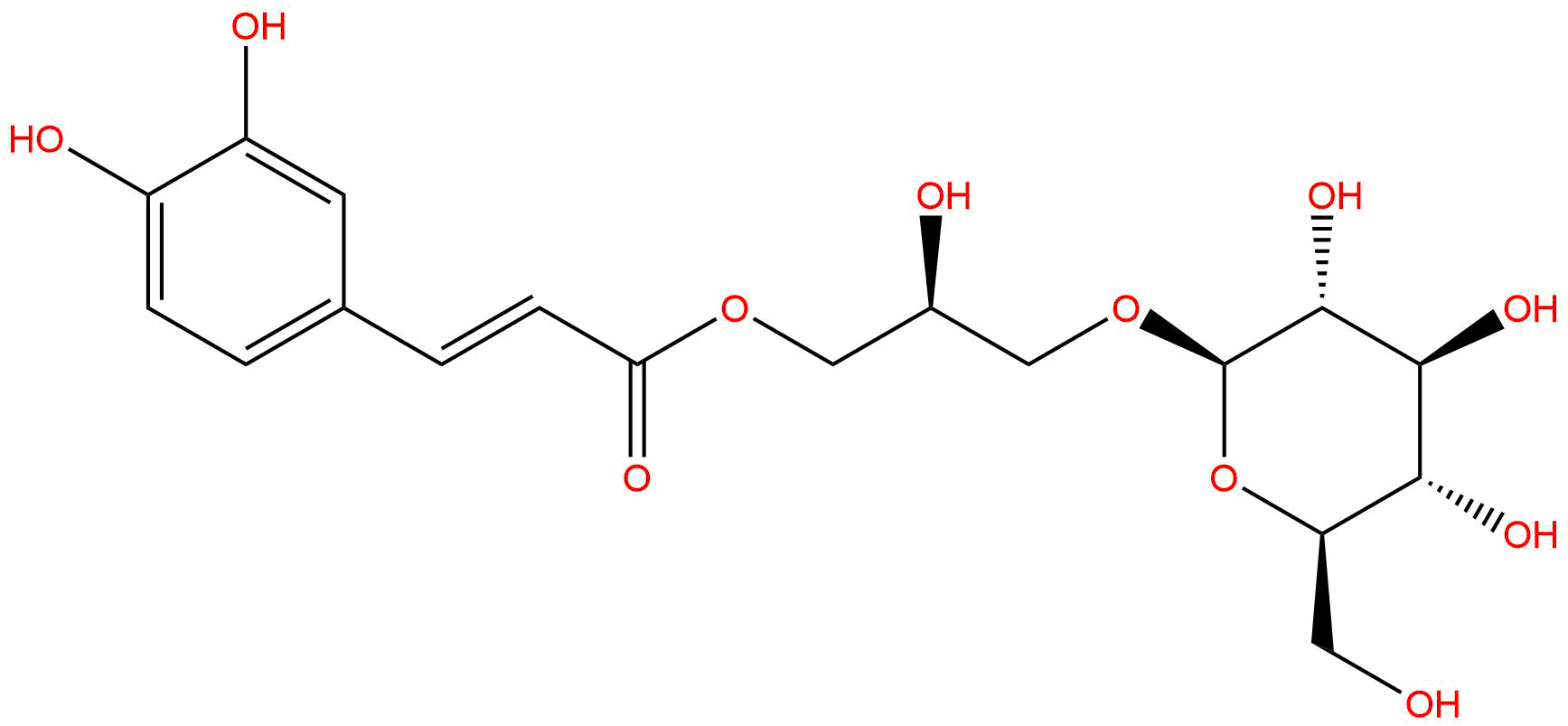
Wangyuzhi C is a glycerol glucoside compound. Its basic chemical structure is composed of a glycerol molecule and a glucose molecule connected by glycosidic bonds. Specifically, the glucose group is usually attached to a specific hydroxyl position in glycerol, forming an O-glycosidic bond, which gives it a certain hydrophilicity and typical characteristics as a small molecule glycoside.
According to the provided pharmacological parameters, the molecular weight of Wang Baihe glycoside C is 416.3790 g/mol, which is a medium to small molecule. The calculated lipid water partition coefficient LogP value is -0.9403, indicating that the compound has good hydrophilicity and tends to be distributed in the aqueous phase. This characteristic is consistent with its topological polar surface area value, with a TPSA of up to 186.37 Å ², mainly attributed to the polar groups such as hydroxyl and ether oxygen atoms abundant in the molecule. The high TPSA and negative LogP values together explain its good water solubility, with a calculated value of 15.0053 mg/mL, indicating that it may have good solubility in water-based formulations.
However, the high polarity and TPSA also pose challenges to its biofilm permeability. The parameters show that its blood-brain barrier permeability is "low", which means that under conventional administration methods, it is difficult for baicalin C to effectively enter the central nervous system, which is an adverse factor for treating central nervous system diseases, but may also reduce its potential risk of side effects on the central nervous system. In the early screening of safety, Wang Baihe glycoside C did not show hERG potassium channel inhibitory activity ("No"), indicating a low risk of causing QT interval prolongation in the heart. Meanwhile, the Ames test result was 0.0, indicating that no mutagenicity was observed in this testing system, providing preliminary safety support for its further development. Overall, Wangyuxin C is a natural small molecule with strong water solubility, high polarity, specific biological activity, and good preliminary safety.
Plant sources and extraction methods
Wangyuxin C mainly comes from various plants in the lily family and lily genus. Lily plants are widely distributed worldwide, and many species such as Polygonum, Lilium, and Lilium not only have important value in horticulture, but also serve as the base plants for traditional Chinese medicine "lily". Wangyuxin C was initially isolated and identified from the bulbs of this genus of plants. Lily bulbs are rich in various chemical components such as starch, polysaccharides, alkaloids, saponins, and glycerol glucoside, and are the main parts for extracting active ingredients.
The extraction and separation of highly polar glycerol glucosides such as Wangyuzhi C usually follow the conventional process of natural product chemistry and are optimized for their physicochemical properties. The extraction method often uses solvent extraction:
1. Extract Methanol, ethanol, or ethanol water mixed solvents are commonly used for extraction, reflux, or ultrasound assisted extraction of dried and crushed lily bulbs. These polar solvents can effectively dissolve baicalin C. In recent years, green extraction techniques such as pressurized liquid extraction and microwave-assisted extraction may also be applied to improve extraction efficiency and selectivity.
2. Enrichment and Coarse Separation After the extract is concentrated under reduced pressure, the resulting paste is often subjected to gradient extraction using solvents such as petroleum ether, ethyl acetate, and n-butanol in sequence. Due to its strong hydrophilicity, Wangyuxin C is mainly enriched in the n-butanol extraction site or water layer.
3. Separation and purification Further purification relies on chromatographic techniques. Large pore adsorption resin column chromatography (such as D101, AB-8 type) is commonly used for sugar removal and preliminary enrichment. Subsequently, silica gel column chromatography, reverse phase silica gel column chromatography, dextran gel column chromatography, etc. were used for repeated separation. High performance liquid chromatography, especially preparative reverse phase high performance liquid chromatography, is the key final step in obtaining high-purity Wangyuxin C monomer. C18 chromatography columns are commonly used, with methanol water or acetonitrile water as the mobile phase for elution.
4. appraisal The isolated monomeric compound was structurally identified by spectroscopic methods such as nuclear magnetic resonance and mass spectrometry, confirming its presence as baicalin C.
The optimization of extraction processes usually focuses on factors such as solvent concentration, solid-liquid ratio, extraction temperature, and time to maximize the yield of the target compound.
Pharmacological activity research
The pharmacological activity research of Wangyuxin C has expanded from its initial anti-inflammatory effect to the fields of cell protection and potential anti-tumor effects, demonstrating various biological activities.
-
anti-inflammatory effect This is one of the earliest reported activities of Wangyuxin C. In classic in vitro inflammatory models such as lipopolysaccharide induced macrophages, baicalin C can dose dependently inhibit the excessive production of inflammatory mediators such as nitric oxide and prostaglandin E2, while downregulating the expression of inducible nitric oxide synthase and cyclooxygenase-2. These effects indicate its potential to alleviate acute inflammatory reactions.
-
Cardiomyocyte protective effect This is a highlight of the pharmacological research on Wangyuxin C. In the H9C2 rat myocardial cell oxidative stress injury model induced by hydrogen peroxide, baicalin C showed significant protective effects. It can improve cell survival rate and reduce leakage of lactate dehydrogenase. In depth research reveals that the core of its protective effect lies in Mitochondrial protection Wangyuxin C can stabilize mitochondrial membrane potential, reduce the accumulation of reactive oxygen species in cells, inhibit the initiation of mitochondrial pathway apoptosis, such as reducing the release of cytochrome C and activation of caspase. This provides important experimental evidence for its application in the prevention and treatment of cardiovascular diseases such as myocardial ischemia/reperfusion injury and heart failure.
-
Potential anti-tumor activity Although there are not sufficient in vitro and in vivo experimental reports directly targeting the anti-tumor effects of Wangyuzhi C, its potential in tumor prevention and treatment is worth paying attention to based on its known anti-inflammatory, antioxidant, and regulatory potential on apoptosis pathways, combined with network pharmacology predictions. Especially for cervical cancer, predictive models suggest that baicalin C may affect tumor progression by acting on multiple key targets. Its anti-inflammatory activity may help inhibit chronic inflammation of the tumor microenvironment closely related to the occurrence and development of cancer; And its ability to protect normal cell mitochondria and inhibit apoptosis may be transformed into a pro apoptotic effect in tumor cells by acting on specific targets, which requires further experimental verification.
Mechanism of action and molecular targets
The specific mechanism of action of Wangyuxin C has not been fully elucidated, but existing research combined with bioinformatics analysis has outlined a network that may exert its effects through multiple targets and pathways.
In Cardiomyocyte protection In the model, its mechanism mainly revolves around Mitochondrial homeostasis and apoptosis inhibition open. Wangyuzhi C, through its antioxidant properties, directly or indirectly clears excess ROS induced by H2O2 and maintains mitochondrial membrane potential integrity. The stable mitochondrial membrane prevents the release of apoptotic factors such as cytochrome C, thereby inhibiting the activation of downstream caspase cascade reactions and ultimately reducing cardiomyocyte apoptosis. This process may involve the regulation of Bcl-2 family proteins (such as inhibiting pro apoptotic protein Bax and promoting anti apoptotic protein Bcl-2), as well as the regulation of the p53 signaling pathway.
Regarding its presence cervical cancer Based on the provided relevant targets, the potential mechanism of action in can be reasonably speculated and network analyzed as follows:
* Inducing cell apoptosis Wangyuxin C may be upregulated TP53 The expression or activity of p53 activates its downstream pro apoptotic targets. Meanwhile, it may have an impact BCL2 The balance of family proteins (such as inhibiting anti apoptotic protein Bcl-2) promotes mitochondrial apoptosis pathway. Final effector CASP3 The activation of caspase-3 will execute the cell apoptosis program.
* Inhibit cell proliferation and survival signals Possible interference EGFR Mediated survival and proliferation signaling pathways. Meanwhile, regarding MAPK1 and MAPK8 The regulation of signaling pathways (which may inhibit abnormal activation of ERK and JNK) can affect cell proliferation, differentiation, and stress response.
* Anti inflammatory and immune regulation:NFKB1 It is a core transcription factor for inflammation and cell survival. Wangyuzhi C may downregulate its target genes by inhibiting the nuclear translocation of NF - κ B, such as PTGS2 The expression of prostaglandins can reduce the production of inflammatory mediators and alter the microenvironment conducive to tumor growth.
* Affects cell cycle and DNA repair:TOP1 It is a key enzyme for DNA replication and transcription, and also a target for certain chemotherapy drugs. Wangyuzhi C may interfere with tumor cell DNA metabolism by affecting TOP1 activity.CDKN2A The encoded p16 protein is an important cell cycle inhibitory protein, and baicalin C may induce cell cycle arrest by upregulating CDKN2A expression.
These targets do not exist in isolation, but form a complex network of interactions. For example, activation of p53 can regulate the Bcl-2 family and affect the NF - κ B pathway; EGFR signaling can intersect with the MAPK and NF - κ B pathways. Wangyuxin C may act as a "multi node regulator", slightly simultaneously regulating multiple links in this network, synergistically exerting a comprehensive effect of anti-inflammatory, pro apoptotic, and anti proliferative, thereby potentially inhibiting the growth of cervical cancer cells.It should be emphasized that most of these mechanism speculations are derived from bioinformatics analysis and extensions of known pharmacological effects, and the specific binding modes and signal transduction details need to be confirmed by rigorous molecular biology and cell biology experiments.
Evaluation of drug properties and pharmacokinetics
Based on the provided parameters and the characteristics of similar compounds, a preliminary evaluation of the pharmacological properties of Wangyuxin C can be conducted.
Advantage aspects:
1. Preliminary safety indicators are good The absence of hERG inhibition warning and Ames mutagenicity negative has laid an important safety foundation for its preclinical development.
2. Good water solubility Good water solubility is beneficial for the development of formulations, which may be made into injection or oral liquid forms to improve bioavailability.
3. Moderate molecular weight The molecular weight is approximately 416, which falls within the typical range of small molecules for drug like properties.
Challenges and unknowns:
1. Membrane permeability and oral bioavailability High polarity (low LogP, high TPSA) and low blood-brain barrier permeability suggest weaker passive transmembrane diffusion ability. When administered orally, there may be issues such as low gastrointestinal absorption rate and significant first pass effects, leading to suboptimal oral bioavailability. Whether it is a substrate for certain transporters (such as glucose transporters) that promote absorption still needs to be studied.
2. Lack of pharmacokinetic data At present, there is almost no systematic pharmacokinetic study (such as absorption, distribution, metabolism, excretion) on Wangyuxin C in public literature. Animal experiments are needed to clarify key parameters such as half-life in vivo, plasma protein binding rate, major metabolic organs and metabolites, and excretion pathways.
3. Stability As a glycoside compound, it may undergo hydrolysis in acidic environments or under the action of specific enzymes (such as glycosidases), affecting its stability in the gastrointestinal tract and body.
4. Pharmaceutical Science Challenge Although it has good water solubility, improving its membrane permeability or achieving targeted delivery may require the use of formulation or chemical modification strategies such as liposomes, nanoparticles, and prodrug modifications.
Overall, Wangyuxin C is a lead compound with clear biological activity, but its class of medicinal properties, especially pharmacokinetic properties, have significant shortcomings. Future research needs to focus on addressing the issues of in vivo absorption, metabolism, and systemic exposure.
Clinical application prospects and prospects
The clinical application prospects of Wangyuxin C are mainly based on its proven and potential pharmacological activities, but it also faces a long road of transformation from compounds to drugs.
Potential application directions:
1. Cardiovascular disease adjuvant therapy Based on its clear antioxidant stress and cardiomyocyte protective effects, Wang Baihe glycoside C is most promising to be developed as an adjuvant drug or protective agent for the prevention and treatment of myocardial ischemia/reperfusion injury, chemotherapy induced cardiotoxicity, chronic heart failure, and other diseases. Explore its application as an injection during the perioperative period or acute events.
2. Anti inflammatory treatment As a natural anti-inflammatory agent, it can be used to treat diseases related to excessive inflammatory reactions, such as arthritis, colitis, dermatitis, etc. Consider developing it as an external preparation or in combination with other anti-inflammatory drugs.
3. Exploration areas of tumor prevention and treatment Especially in the field of cervical cancer, its multi-target mode of action is quite attractive. It may serve as a sensitizer for chemotherapy or radiotherapy, enhancing the sensitivity of tumor cells to treatment by inhibiting NF - κ B; Or as an adjuvant medication to alleviate normal tissue damage (such as myocardial injury) caused by radiotherapy and chemotherapy. Its anti-inflammatory properties may also be used to prevent chronic cervicitis caused by persistent infection of human papillomavirus from developing into cancer.
Future research prospects:
1. Deepen mechanism research It is necessary to verify its specific effects and molecular mechanisms in tumor cells such as cervical cancer through experiments. Clarify whether it directly binds to certain target proteins or regulates through upstream signals.
2. Comprehensive pharmacokinetic evaluation Conducting ADME research on the system as soon as possible is a crucial step in evaluating its development feasibility. Clarify its internal fate and provide a basis for dosage form design.
3. Structural optimization and modification Reasonable chemical structure modification can be carried out to address the problem of poor permeability. For example, preparing lipophilic prodrugs, synthesizing analogues to improve LogP, and enhancing bioavailability while retaining pharmacophores.
4. Application of new technology in formulation Explore new delivery technologies such as nano drug delivery systems, phospholipid complexes, and microemulsions to encapsulate baicalin C and improve its absorption and targeting properties.
5. Preclinical and clinical research After completing sufficient pharmacological and safety evaluations, gradually advance clinical research to verify its effectiveness and safety in humans.
Conclusion
Wangyuzhi C, as a glycerol glucoside isolated from the traditional medicinal plant lily, has demonstrated its value as a natural drug lead compound due to its clear pharmacological activities such as anti-inflammatory, antioxidant, and myocardial protection. Especially in the cardiovascular injury model related to oxidative stress, the protective mechanism exerted by maintaining mitochondrial function is clear, providing new ideas for the development of new drugs for related diseases. Although its potential anti-tumor (especially anti cervical cancer) activity is currently mainly predicted by networks, the involvement of multiple pathway target networks such as apoptosis, proliferation, and inflammation reveals its potential for multi-level intervention in disease progression, which is worthy of in-depth exploration and verification through rigorous experiments.
However, from active compounds to candidate drugs, Wangyuxin C still faces many challenges, among which the most prominent are its poor membrane permeability and unknown pharmacokinetic properties. Future research should focus on overcoming these pharmaceutical bottlenecks and improving their in vivo efficacy through strategies such as structural optimization and novel delivery systems. At the same time, it is necessary to strengthen its systematic toxicology and pharmacokinetic research, laying a solid scientific foundation for clinical translation. In short, Wang Baihe Glycoside C is a bridging molecule that connects traditional medicinal wisdom with modern life sciences. Continuous and in-depth research on it not only helps to reveal the scientific connotation of lilies, but also may open up new avenues for treating inflammatory diseases, cardiovascular diseases, and even tumors.