| Catalog No | Package | Original Price | Price | Inventory | Quantity | Operating |
|---|---|---|---|---|---|---|
| BP4548-5mg | 5mg | $420.00 | Sign in |
|


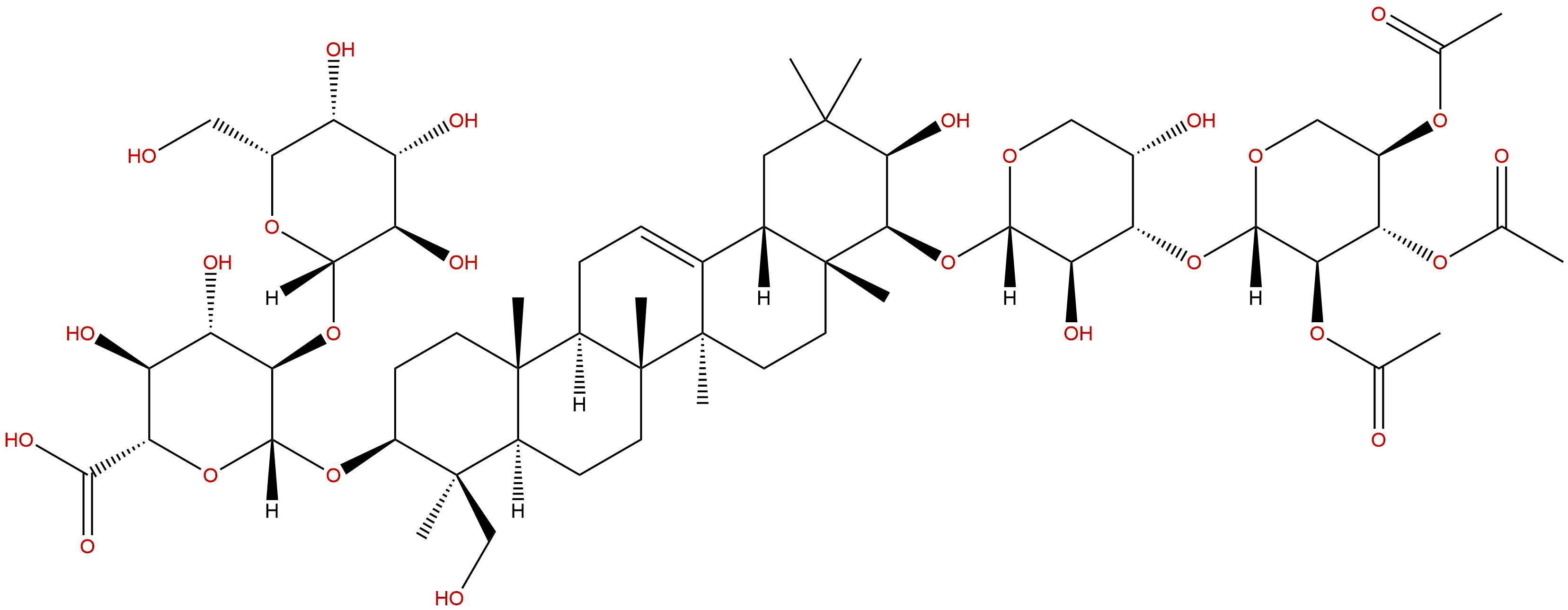
Product name: Soyasaponin Ae
Synonym name:
Catalogue No.: BP4548
Cas No.: 117230-34-9
Formula: C58H90O26
Mol Weight: 1203.33
Botanical Source:
Type of Compound: Triterpenoids
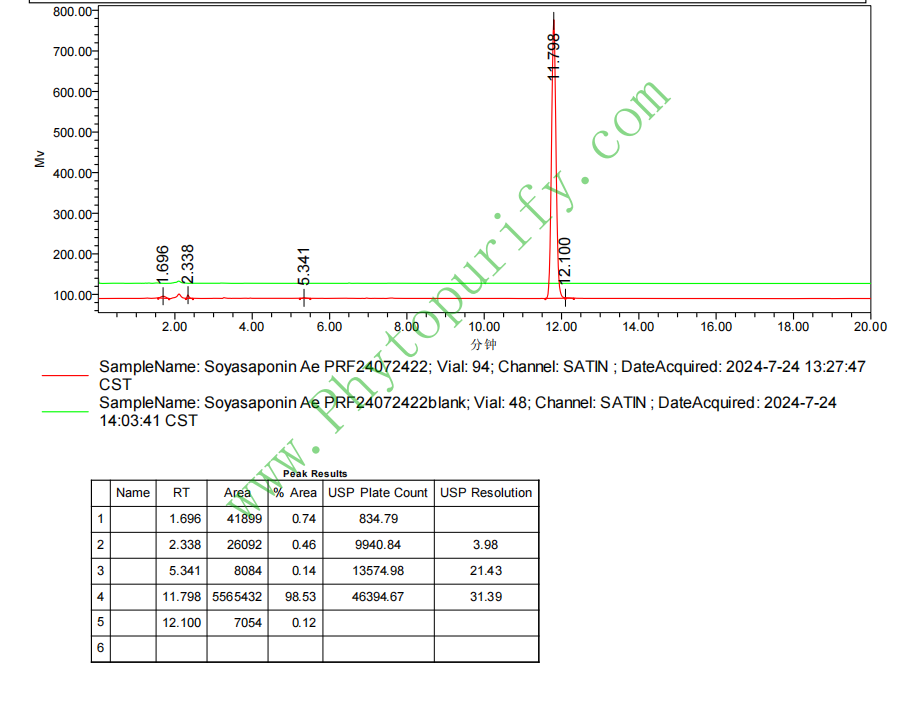
Purity: 95%~99%
Analysis Method: HPLC-DAD or/and HPLC-ELSD
Identification Method: Mass, NMR
Packing: Brown vial or HDPE plastic bottle
Storage: Store in a well closed container, protected from air and light. Put into refrigerate or freeze for long term storage.
Whenever possible, you should prepare and use solutions on the same day. However, if you need to make up stock solutions in advance, we recommend that you store the solution as aliquots in tightly sealed vials at -20℃. Generally, these will be useable for up to two weeks.
The product could be supplied from milligrams to grams
Inquire for bulk scale.
For Reference Standard and R&D, Not for Human Use Directly.
HPLC of Soyasaponin Ae
Storage conditions:Short-term storage at 2~8℃, long-term storage at -20 ~ -80℃
392.3400
1.6372
-.7952
.2648
.4718
.1115
Low
80.9878
7.1849
No
No
Yes
No
No
No
0.0
Yes
No
Yes
No
Diabetes, especially type 2 diabetes, has become a chronic metabolic disease that seriously threatens human health worldwide. its core pathophysiological characteristics include insulin resistance and progressive failure of pancreatic beta cell function. Although current first-line clinical drugs can effectively control blood sugar, long-term use often comes with limitations such as weight gain, risk of hypoglycemia, cardiovascular events, or gastrointestinal adverse reactions. Therefore, it is always an important direction in the field of drug research and development to explore new anti diabetes lead compounds with multiple targets and low toxic side effects from natural products. Soybean, as a traditional crop with both food and medicine, has attracted much attention in the research of its bioactive components. In addition to the well-known soy isoflavones, soybean saponins are an important class of oleanane type triterpenoid saponins with diverse biological activities. Among them, soybean saponin Ae, as a specific saponin monomer isolated from soybean seeds, has gradually emerged in recent years with its anti diabetes pharmacological activity, showing the potential to improve the disorder of glucose and lipid metabolism by regulating AMPK, PPAR γ, SGLT2, PI3K/Akt and other key signaling pathways. This article aims to systematically review the chemical structure, plant sources, extraction methods, pharmacological activities, molecular mechanisms of action, pharmacological characteristics, and clinical application prospects of soybean saponin Ae, in order to provide comprehensive scientific references for the in-depth research and development of this natural product.
Soy saponin Ae, with the chemical name 3-O - [α - L-rhamnopyranosyl - (1 → 2) - β - D-galactopyranosyl - (1 → 2) - β - D-glucopyranosyl] -22-O - β - D-glucopyranosyl soy soap alcohol B, has a CAS registration number of 117230-34-9. Structurally, it belongs to the oleanane type pentacyclic triterpenoid saponin, with its glycoside being soybean soap alcohol B. Its sugar chain is intricately connected, with a trisaccharide chain attached to the C-3 hydroxyl group in the order of glucuronic acid galactose rhamnose; In addition, there is a glucose unit attached to the hydroxyl group at position C-22 of the aglycone. This structure of polyhydroxy and polysaccharide chains endows it with significant hydrophilicity.
Its theoretical molecular weight is 1203.3320 g/mol. The calculated logarithmic value of the lipid water partition coefficient (LogP) is 1.6372, indicating that the molecule has a certain degree of amphiphilicity, but overall tends to be hydrophilic. Its topological polar surface area (TPSA) is as high as 392.3400 Å ², which is mainly attributed to the large number of hydroxyl groups and oxygen atoms on the sugar ring in the molecule, further confirming its strong polarity characteristics. The predicted water solubility value is 0.2648, which belongs to the range of slightly soluble to soluble. This is consistent with the surfactant properties of its saponins, which can form micelles in water. Preliminary pharmacological prediction analysis shows that due to its high polarity and large molecular weight, its ability to penetrate the blood-brain barrier is relatively low. In the early toxicity warning indicators, the hERG potassium channel inhibition risk prediction is negative, and the Ames mutagenicity test prediction value is 0.0, indicating that it may have good cardiac safety and low-risk genetic toxicity potential, but this still needs to be verified through experiments.
Soybean saponin Ae mainly comes from the seeds of leguminous plant soybean. The genetic resources, growth environment, harvest season, and processing technology of soybean can all affect the content and composition of saponins in soybean. Usually, soybean saponins are enriched in the cotyledons and hypocotyls of soybeans.
The extraction of soybean saponin Ae from soybeans usually follows the general extraction and purification process of saponin compounds, which mainly includes:
1. Defatting pretreatment Due to the high oil content in soybeans, non-polar solvents such as n-hexane or petroleum ether need to be used for degreasing treatment first to improve the extraction efficiency of polar saponins in the subsequent process.
2. Polar solvent extraction The defatted soybean meal is often subjected to reflux extraction or ultrasound assisted extraction using polar solvents such as methanol, ethanol, or aqueous ethanol (such as 70-80%). Ethanol is more commonly used due to its safety, low cost, and environmental friendliness.
3. Preliminary enrichment After the extraction solution is concentrated under reduced pressure, the obtained extract can be suspended in water and then subjected to liquid-liquid extraction using petroleum ether, ethyl acetate, n-butanol, etc. in sequence. Soybean saponin Ae is mainly distributed in the n-butanol layer.
4. Separation and purification The components of n-butanol extract are complex and require further separation using column chromatography technology. Commonly used fillers include macroporous adsorption resins (such as D101, AB-8), silica gel, and reverse phase silica gel (such as ODS). Among them, reverse phase chromatography is particularly effective for separating saponin monomers with highly similar structures. In recent years, modern chromatographic techniques such as high-speed countercurrent chromatography and preparative high-performance liquid chromatography have been widely used in the preparation of high-purity soybean saponin Ae monomers, whose purity can be identified by HPLC-ELSD or HPLC-MS.
A large number of pharmacological studies in vitro and in vivo have revealed that soybean saponin Ae has clear biological activity related to anti diabetes and its complications.
1. Improve insulin resistance and hypoglycemic effects In insulin resistant cell models such as palmitic acid-induced HepG2 liver cells or C2C12 myotubes, soybean saponin Ae can significantly enhance cell uptake and utilization of glucose, and reduce glucose levels in the culture medium. In the model of type 2 diabetes mice or rats induced by streptozotocin combined with high-fat diet, intragastric administration of soybean saponin Ae can reduce the levels of fasting blood glucose, postprandial blood glucose and glycosylated hemoglobin in a dose-dependent manner, and improve the results of oral glucose tolerance test and insulin tolerance test, suggesting that it can increase the sensitivity of the body to insulin.
2. Regulating lipid metabolism The compound can improve the lipid metabolism disorder often associated with diabetes. In animal experiments, it can reduce serum total cholesterol, triglycerides, low-density lipoprotein cholesterol levels, and increase high-density lipoprotein cholesterol. Its mechanism involves inhibiting key enzymes involved in liver fat synthesis and promoting fatty acid beta oxidation.
3. Protect pancreatic beta cell function Research has shown that soy saponin Ae can alleviate the damage of high glucose or inflammatory factors to pancreatic beta cell lines (such as INS-1 cells), inhibit cell apoptosis, and promote insulin secretion, indicating its potential beta cell protective effect.
4. Anti inflammatory and antioxidant effects Chronic low-grade inflammation and oxidative stress are important driving factors for insulin resistance and the progress of diabetes. Soybean saponin Ae can inhibit the overexpression of proinflammatory factors (such as TNF - α, IL-6) in macrophages or adipocytes, increase the activity of antioxidant enzymes (such as SOD, GSH Px), reduce the accumulation of reactive oxygen species, thus improving metabolic inflammation and oxidative damage in diabetes.
The anti diabetes effect of soybean saponin Ae does not pass through a single target, but presents the characteristics of multi target and multi pathway coordinated regulation, and its action network involves multiple key signaling molecules and pathways.
Although soybean saponin Ae exhibits excellent pharmacological activity, its pharmacological development still faces some challenges, and related research is still in its early stages.
Pharmacokinetic properties As a large molecule polar saponin, the oral bioavailability of soybean saponin Ae may be low. This is mainly limited by its large molecular weight and hydrophilicity, resulting in poor passive diffusion ability across intestinal epithelial cells. However, saponin components can sometimes be partially absorbed through interactions with gut microbiota or through specific transporters. After absorption, it may undergo extensive metabolism in the liver, such as glycation hydrolysis (deglycosylation) or binding reactions. Its distribution may be concentrated in organs with abundant blood and active metabolism, such as the liver and kidneys, and difficult to enter the central nervous system. The main excretion pathway may be bile excretion, with some being excreted through the kidneys. At present, there is a lack of systematic research reports on its detailed in vivo ADME process, absolute bioavailability, half-life and other parameters, which is a gap that must be filled in future translational research.
Challenges and optimization directions in drug development:
1. Solubility and permeability Although it has a certain degree of water solubility, its membrane permeability may be insufficient. It can be improved in intestinal absorption and bioavailability through structural modifications (such as prodrug preparation, modification of glycosides or glycosides), or the use of novel drug delivery systems (such as nanoliposomes, polymer micelles, self microemulsion systems).
2. Metabolic stability Glycoside bonds are easily hydrolyzed by enzymes or gut microbiota in the digestive tract and blood, leading to a rapid decrease in the concentration of their prototype drugs. It is crucial to study its metabolic sites and products, and carry out targeted structural stabilization modifications.
3. safety Although preliminary predictions indicate a low risk of hERG inhibition and Ames mutagenicity, a comprehensive preclinical safety evaluation is still needed, including acute toxicity, chronic toxicity, reproductive toxicity, etc., to confirm its safety window.
Soy saponin Ae, as a natural compound derived from food, has unique advantages and broad prospects in its development and application.
Potential application directions:
1. New anti diabetes drugs/health products Its multi target mechanism of action is in line with the concept of modern diabetes treatment changing from "single hypoglycemic" to "multi-channel regulation", and is expected to be developed into a new drug or functional food additive with multiple benefits such as improving insulin resistance, protecting β cells, and regulating lipids.
2. Combination medication components Given that its mechanism of action overlaps and complements existing drugs such as metformin, SGLT2 inhibitors, and DPP-4 inhibitors, it may be used as a component of combination therapy in the future to enhance efficacy, reduce single drug doses, and mitigate side effects.
3. Prevention and treatment of complications of diabetes Its anti-inflammatory and antioxidant properties suggest that it has potential value in the prevention and treatment of diabetes nephropathy, neuropathy, cardiovascular complications, etc.
Future research focus:
1. In depth mechanism research Molecular docking, surface plasmon resonance, gene knockout/knockdown and other techniques need to be used to clarify the direct interaction mode and precise binding site with targets such as AMPK and PPAR γ.
2. Systematic drug research Complete preclinical pharmacokinetic and toxicological studies must be conducted to clarify its in vivo fate and safety boundaries.
3. Structural optimization and formulation development Based on the study of structure-activity relationship, the structure is reasonably modified to improve its pharmacokinetic properties; At the same time, actively develop new drug delivery systems that are suitable for its physical and chemical properties.
4. Clinical translational research On the basis of sufficient preclinical research, gradually promote human clinical trials to verify its effectiveness and safety.
To sum up, soybean saponin Ae is a natural saponin compound with significant anti diabetes potential excavated from traditional crop soybean. It exhibits comprehensive benefits in improving insulin sensitivity, regulating glucose and lipid metabolism, protecting pancreatic function, and anti-inflammatory and antioxidant effects by synergistically regulating multiple signaling pathways such as AMPK, PI3K/Akt, and PPAR γ. Although some progress has been made in the study of its chemical structure, plant origin, and pharmacological activity, the detailed mechanism of action, especially the systematic pharmacokinetics and drug development research, still needs to be further explored. In the face of challenges such as low oral bioavailability, future research should focus on elucidating the details of its molecular interactions, optimizing its pharmacokinetic properties, and exploring effective delivery strategies. With the continuous advancement of research, soyasaponin Ae is expected to provide a new, multi-target natural candidate molecule for the prevention and treatment of diabetes and its complications, which highlights the great scientific value and application potential of tapping modern disease treatment drugs from the "drug food homology" resources.
