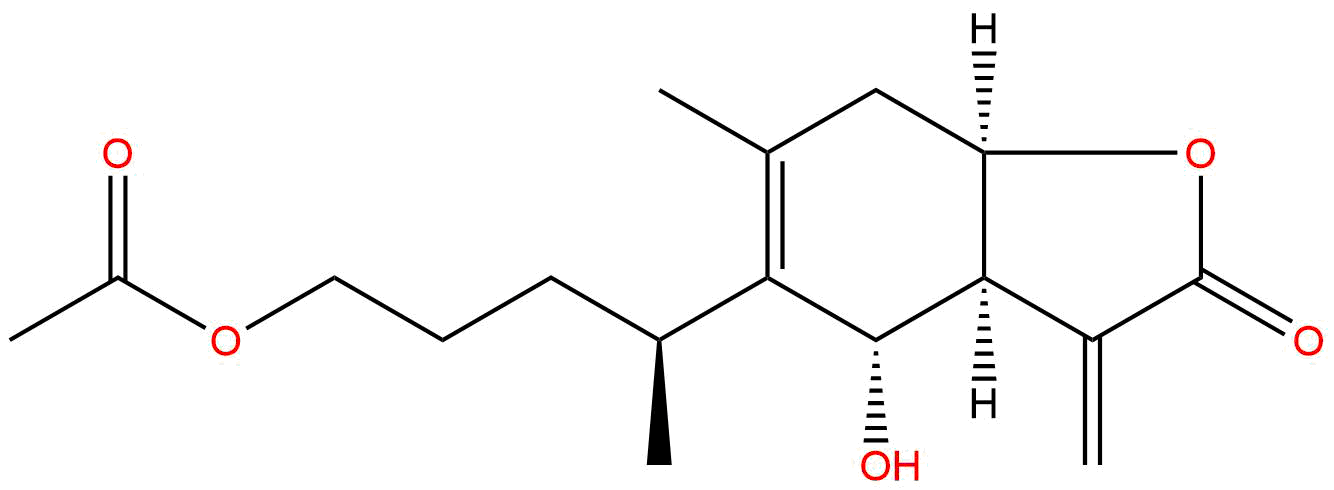


Synonym name: Britannilactone 1-O-acetate; 1-O-Acetylbritannilatone; Deleted Cas No.: 681457-46-5
Catalogue No.: BP0033
Cas No.: 33627-41-7
Formula: C17H24O5
Mol Weight: 308.374
Botanical Source:
Purity: 95%~99%
Analysis Method: HPLC-DAD or/and HPLC-ELSD
Identification Method: Mass, NMR
Packing: Brown vial or HDPE plastic bottle
Can be supplied from milligrams to grams.
For Reference Standard and R&D, Not for Human Use Directly.
Inquire for bulk scale.
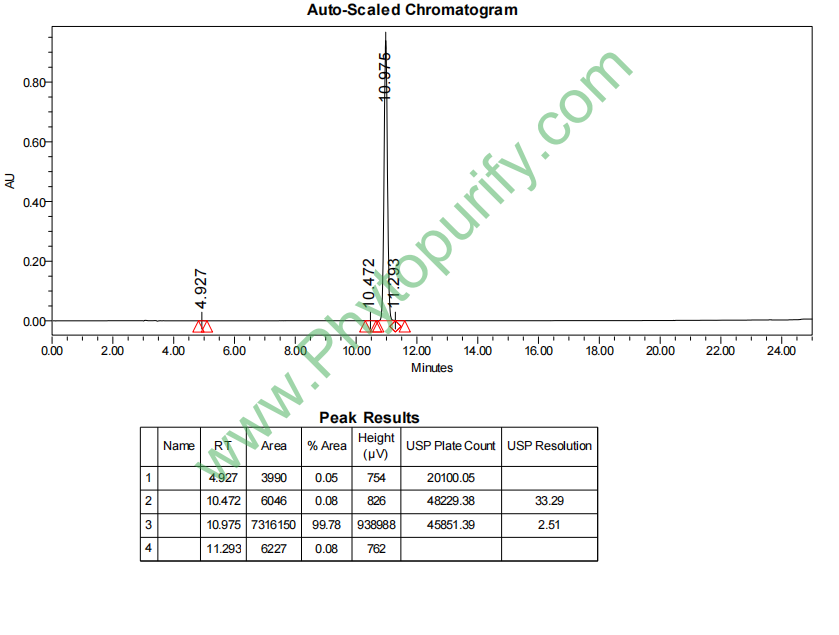
HPLC of Inulicin
Storage conditions:Short-term storage at 2~8℃, long-term storage at -20 ~ -80℃
72.8300
2.0422
2.0422
.5352
2.8416
4.4736
High
68.4020
4.3103
No
No
No
No
Yes
No
0.0
No
No
No
No
Natural products, as an important source of drug discovery, play an irreplaceable role in the long history of human fight against diseases. According to statistics, about 60% of the approved anti-cancer drugs worldwide are directly or indirectly derived from natural products and their derivatives. Among the numerous natural compounds with biological activity, terpenoids have attracted much attention due to their structural diversity and extensive pharmacological activities. Inulicin (CAS number: 33627-41-7), as a typical terpenoid lactone compound, has shown remarkable potential in the field of anti-tumor research in recent years, especially in the treatment of pancreatic tumors, which has aroused widespread interest in the academic community.
Convolvularin was originally derived from plants of the Convolvularia genus in the Asteraceae family(Inula The chemical structure of the isolated and identified species belongs to the sesquiterpene lactone family. Sesquiterpene lactones are an important class of secondary metabolites in nature, known to have various biological activities such as anti-inflammatory, anti-tumor, antibacterial, and antiparasitic. The unique α - methylene - γ - lactone structural unit of spinopein is considered a key pharmacophore for its pharmacological effects. This structure can undergo Michael addition reactions with nucleophilic groups in biomolecules, thereby regulating various cellular signaling pathways.
Pancreatic tumors are one of the most invasive malignant tumors in the digestive system, with a long-term 5-year survival rate of less than 10%, and are known as the "king of cancer". Traditional chemotherapy drugs such as gemcitabine and paclitaxel have limited efficacy and are often accompanied by serious toxic side effects and resistance issues. Therefore, the search for candidate drugs with new mechanisms of action has become an urgent need for research on the treatment of pancreatic tumors. Convolvulin acts on pancreatic tumor cells through a multi-target regulatory network, involving multiple key proteins such as APP, PTPN1, STAT3, ABCB1, PRKCA, CLEC4E, IDH1, SIRT1, PAX8, RELA, etc., exhibiting multi-target and multi pathway anti-tumor characteristics, providing new ideas for precise treatment of pancreatic tumors.
This article will provide a systematic review of the research progress of spinosad from multiple dimensions, including chemical structure and physicochemical properties, plant sources and extraction methods, pharmacological activity research, mechanism of action and molecular targets, pharmacological evaluation and pharmacokinetics, clinical application prospects and prospects, in order to provide reference for the in-depth development and transformation application of this natural product.
The chemical structure of spinocalyx belongs to the sesquiterpene lactone class, and its skeleton is composed of a sesquiterpene nucleus with 15 carbon atoms fused with a lactone ring. Specifically, the structural features of spinosad include: an α - methylene - γ - lactone ring, which is the active structural unit shared by sesquiterpene lactones; A bicyclic skeleton of cyclopentane and cyclohexane (5/7); And multiple hydroxyl and methyl substituents. The molecular formula of this compound is C ₁₇ H ₂₄ O ₅, with a molecular weight of 308.3740 g/mol.
From the perspective of stereochemistry, there are multiple chiral centers in the molecules of spinosad, and their absolute configurations have a significant impact on their biological activity. The configuration of the α - methylene - γ - lactone ring determines the selectivity and affinity of the compound for binding to the target protein. Research has shown that the exo configuration of the alpha methylene group in the lactone ring is crucial for maintaining its Michael receptor activity. This structure can covalently add to the thiol group of the cysteine residue of the target protein, irreversibly inhibiting its function.
In terms of physical and chemical properties, the compound exhibits moderate lipophilicity, with a calculated LogP value of 2.0422, indicating that it has a good distribution equilibrium in the lipid water phase. This characteristic is beneficial for its transmembrane transport and intracellular distribution. The topological polar surface area (TPSA) is 72.8300 Å ², which meets the general requirements for oral drugs (usually TPSA<140 Å ²), indicating that it may have good oral bioavailability. The water solubility parameter is 0.5352 mg/mL, which belongs to the category of slight solubility. This property may limit the development of its formulations, and suitable drug delivery systems are needed to improve solubility and dissolution rate.
It is worth noting that the blood-brain barrier penetration ability of spinopein has been evaluated as "high", which has potential advantages for treating central nervous system related diseases, but may also increase the risk of central nervous system toxicity. In terms of safety assessment, the predicted result of hERG inhibition is "no", indicating that the compound has a low risk of causing QT interval prolongation in the heart; The Ames test result is 0.0, indicating that it does not have significant mutagenicity. These preliminary safety data provide favorable conditions for the further development of spinosad.
The main source of spinocalyx is from the Asteraceae genus spinocalyx(Inula)Plants, comprising over 100 species, are widely distributed in temperate and subtropical regions of Europe, Asia, and Africa. In China, common plants of the genus Convolvulus include Convolvulus(Inula japonica Thunb.)、 Eurasian spiral flower(Inula britannica L.)、 Wood Fragrance(Inula helenium L. These plants have a long history of application in traditional Chinese medicine, often used to treat diseases such as cough, phlegm wheezing, and vomiting.
The content of anthocyanins in plants varies depending on species, place of origin, harvest season, and location. Research shows that spiral flowers(I. japonica)The content of anthocyanins in the inflorescence and aboveground parts is relatively high, while the content in the rhizome is relatively low. The optimal harvesting period is usually around the flowering period, when the secondary metabolism of plants is most active and the accumulation of active ingredients reaches its peak. There are significant differences in the content of anthocyanins in samples from different origins, which may be closely related to environmental factors such as soil conditions, climate factors, and altitude.
The methods for extracting anthocyanins mainly include traditional solvent extraction and modern assisted extraction techniques. Traditional methods often use ethanol or methanol as extraction solvents to obtain crude extracts through cold soaking, percolation or reflux extraction, and then purify the target compound through liquid-liquid extraction, column chromatography separation and other steps. Specifically, dried plant materials are crushed and extracted with 70% -95% ethanol at room temperature or heating conditions. The extracted solution is concentrated and then extracted with solvents such as petroleum ether, ethyl acetate, and n-butanol in sequence. The ethyl acetate extract, which is rich in spinosad, is further purified by silica gel column chromatography, ODS reverse phase column chromatography, and preparative high-performance liquid chromatography (pre HPLC) to obtain spinosad monomers with a purity of over 98%.
In recent years, green extraction techniques such as ultrasound assisted extraction (UAE), microwave-assisted extraction (MAE), and supercritical fluid extraction (SFE) have been applied to the extraction of anthocyanins. Ultrasound assisted extraction utilizes cavitation effect to destroy plant cell walls, significantly improving extraction efficiency and shortening extraction time; Microwave assisted extraction generates internal heat through the rapid vibration of polar molecules in a microwave field, accelerating the dissolution of target components; Supercritical CO ₂ extraction has the advantages of no solvent residue and high selectivity, making it particularly suitable for the extraction of thermosensitive components. Research has shown that using ultrasound assisted extraction technology, under the conditions of ethanol concentration of 70%, solid-liquid ratio of 1:15, ultrasound power of 300W, and extraction temperature of 50 ℃, the extraction rate of spinosad can be increased by more than 30% compared to traditional reflux extraction.
The quality control of extracts is usually analyzed using high-performance liquid chromatography (HPLC) or ultra high performance liquid chromatography (UPLC) combined with ultraviolet detectors (UV) or mass spectrometry detectors (MS). Establishing fingerprint spectra and content determination methods is crucial for ensuring the quality consistency of raw materials and products. In addition, near-infrared spectroscopy (NIR) and nuclear magnetic resonance (NMR) metabolomics techniques have been used to rapidly evaluate the chemical composition differences of extracts from different batches.
The pharmacological activity research of cyclosporine mainly focuses on the field of anti-tumor, especially its effect on pancreatic tumors. In addition, its anti-inflammatory, antioxidant, antibacterial and other activities have also received attention.
Pancreatic tumor cell lines such as PANC-1, MIA PaCa-2, BxPC-3, and AsPC-1 have been widely used for in vitro activity evaluation of spinosad. Studies have shown that spirulin can inhibit the proliferation of the above pancreatic cancer cell lines in a concentration and time-dependent manner, and its half inhibitory concentration (IC ≮ ₀) is usually within the range of 5-20 μ M. It is worth noting that spinosad has relatively low toxicity to normal pancreatic ductal epithelial cells (such as hTERT HPNE) and exhibits certain selective cytotoxicity, which is of great significance for the development of anti-tumor drugs.
In addition to inhibiting cell proliferation, cymosin can effectively induce apoptosis of pancreatic cancer cells. Annexin V-FITC/PI double staining flow cytometry analysis showed that the pancreatic cancer cells treated with helicoid had typical apoptotic characteristics, including phosphatidylserine eversion, nuclear pyknosis and DNA fragmentation. At the same time, cyclosporine can upregulate the expression of pro apoptotic proteins Bax and Bad, downregulate the expression of anti apoptotic proteins Bcl-2 and Bcl xL, activate caspase-3 and caspase-9, indicating that it induces cell apoptosis through the mitochondrial pathway (endogenous pathway).
Cell cycle analysis showed that clavulvodin could block pancreatic cancer cells in G ₂/M phase, which was related to the down-regulation of cyclin B1 and CDK1 expression and the up-regulated expression of p21 and p27. G ₂/M phase blockade is a common mechanism by which many anti-tumor drugs exert their effects, by preventing cells from entering the mitotic phase and inhibiting the unlimited proliferation of tumor cells.
In addition, cymosin also showed the ability to inhibit the migration and invasion of pancreatic cancer cells. Transwell experiment and scratch healing experiment showed that the migration rate and invasion ability of pancreatic cancer cells could be significantly reduced by the treatment of convolvul. Matrix metalloproteinases (MMPs) are key enzymes involved in tumor invasion and metastasis. Carousel can downregulate the expression and activity of MMP-2 and MMP-9, while upregulating the expression of tissue metalloproteinase inhibitors (TIMPs), thereby inhibiting the degradation of extracellular matrix and the invasion of tumor cells.
In addition to the anti-tumor activity of the pancreas, the convoluted cymose also shows a broad spectrum of anti-tumor activity, which has an inhibitory effect on many cancer cell lines, such as liver cancer, lung cancer, breast cancer, colorectal cancer, and so on. In terms of anti-inflammatory effects, cyclosporine can inhibit the production of nitric oxide (NO), prostaglandin E ₂ (PGE ₂), and pro-inflammatory cytokines (TNF - α, IL-6, IL-1 β) in macrophages induced by lipopolysaccharide (LPS), and its mechanism is related to the inhibition of NF - κ B and MAPK signaling pathways. Studies on antioxidant activity have shown that anthocyanins can clear free radicals, enhance the activity of superoxide dismutase (SOD) and glutathione peroxidase (GSH Px), and alleviate oxidative stress damage. In addition, spinosad also exhibits certain inhibitory effects on common pathogenic bacteria such as Staphylococcus aureus and Escherichia coli.
As a multi-target natural product, the anti pancreatic tumor effect of cyclosporine involves the synergistic regulation of multiple signaling pathways and molecular targets. Based on existing research, the following targets are considered key molecules for the anti-tumor effects of spinosad.
Signal transducer and activator of transcription factor 3 (STAT3) is a key oncogenic transcription factor in the occurrence and development of pancreatic tumors. In pancreatic cancer cells, STAT3 is constantly activated, promoting cell proliferation, inhibiting apoptosis, enhancing angiogenesis and immune escape. Convolvulin can inhibit the phosphorylation of STAT3 (Tyr705 site), block its nuclear translocation and transcriptional activity, thereby downregulating the expression of downstream target genes such as Cyclin D1, Survivor, Bcl xL, VEGF, and c-Myc. Research has shown that helicin may block STAT3 signaling by directly binding to the SH2 domain of STAT3 or indirectly inhibiting the activity of upstream kinases such as JAK2 and Src. It is worth noting that CLEC4E (member E of the C-type lectin domain family 4), as an upstream regulatory factor of STAT3, showed changes in expression levels after treatment with cyclosporine, suggesting that cyclosporine may exert anti-tumor effects by regulating the CLEC4E/STAT3 axis.
Nuclear factor kappa B (NF - κ B) is a core transcription factor in inflammation and tumorigenesis. As the main member of NF - κ B family, RELA (p65) is abnormally activated in pancreatic cancer cells, promoting the formation of inflammatory microenvironment and tumor progression. Convolvulin can inhibit the phosphorylation and degradation of I κ B α, prevent the nuclear translocation of NF - κ B p65 subunit, and thus suppress the transcriptional activity of NF - κ B. This effect leads to downregulation of downstream target genes such as Bcl-2, Bcl xL, XIAP, COX-2, MMP-9, and IL-8 expression. The inhibitory effect of anthocyanins on NF - κ B may be related to the direct modification of cysteine residues in p65 protein by its α - methylene - γ - lactone structure, which alters the conformation and function of p65 through covalent modification.
SIRT1 (deacetylase Sirtuin 1) and IDH1 (isocitrate dehydrogenase 1) are important targets in epigenetic regulation and metabolic reprogramming. SIRT1, as an NAD ⁺ - dependent histone deacetylase, is involved in regulating cellular stress response, metabolism, and aging. In pancreatic cancer, the abnormal expression of SIRT1 is associated with tumor progression and chemotherapy resistance. Convolvulin can inhibit the activity of SIRT1, increase the acetylation levels of substrates such as p53 and FOXO, thereby promoting cell apoptosis and inhibiting proliferation. IDH1 catalyzes the conversion of isocitrate to alpha ketoglutarate (α - KG), and its mutation or abnormal expression can lead to the accumulation of metabolite 2-hydroxyglutarate (2-HG), promoting epigenetic changes in tumors. The regulatory effect of crocetin on IDH1 may exert anti-tumor effects by affecting cellular metabolic status and epigenetic modifications.
ABCB1 (P-glycoprotein, P-gp) is an important member of ATP binding cassette transporter family, and its overexpression is one of the main mechanisms of multidrug resistance (MDR) in pancreatic cancer. Convolvulin can inhibit the transport function of ABCB1, increase the accumulation of chemotherapy drugs in cells, and thus reverse the drug resistance of tumor cells. In addition, helicin can also downregulate the protein expression levels of ABCB1, which may be achieved by inhibiting the NF - κ B or STAT3 signaling pathways. PTPN1 (protein tyrosine phosphatase non receptor type 1), as a tyrosine phosphatase, is involved in regulating various oncogenic signaling pathways. The regulation of PTPN1 by helicin may affect its downstream JAK/STAT and RAS/MAPK signaling pathways.
The expression and function of APP (amyloid precursor protein) in pancreatic cancer are not completely clear, but studies have shown that APP may participate in the process of cell adhesion and migration. PRKCA (protein kinase C α) is a member of the PKC family, involved in regulating cell proliferation, differentiation, and apoptosis. PAX8 (pairing box gene 8) plays a role as a transcription factor in pancreatic development and tumorigenesis. Further research is needed to clarify the regulatory effects of spinosad on these targets.
In summary, spinopein forms a complex regulatory network by simultaneously acting on multiple targets such as STAT3, NF - κ B, SIRT1, IDH1, ABCB1, PTPN1, PRKCA, CLEC4E, APP, PAX8, and RELA, synergistically exerting anti pancreatic tumor effects. This multi-target mode of action is a typical feature of natural products and its advantage over single target synthetic drugs.
The pharmacological evaluation of spinosad involves multiple aspects such as physicochemical properties, pharmacokinetic characteristics, and preliminary safety. Based on computational predictions and experimental data, the following is a systematic analysis of the pharmacological properties of spinosad.
According to Lipinski's "Rule of Five", the molecular weight of spinosad (308.3740) is less than 500, the LogP value (2.0422) is less than 5, the number of hydrogen bond donors (hydroxyl groups) is 2, and the number of hydrogen bond acceptors (oxygen atoms) is 5, which meets the basic requirements of drug like compounds. The TPSA value is 72.8300 Å ², indicating good membrane permeability and oral absorption potential. The water solubility (0.5352 mg/mL) is relatively low and may become a bottleneck in formulation development. Formulation technologies such as cyclodextrin inclusion, solid dispersion, and lipid nanoparticles need to be used to improve solubility and bioavailability.
The blood-brain barrier penetration ability of cyclosporine has been evaluated as "high", which has potential advantages for the treatment of brain metastatic pancreatic tumors, but also suggests the need to pay attention to central nervous system toxicity. In terms of metabolism, the α - methylene - γ - lactone structure of spinosad is a potential metabolic instability site, which may be hydrolyzed by esterases in the body or undergo conjugation reactions with glutathione (GSH). The cytochrome P450 enzyme system (CYP450) may be involved in the oxidative metabolism of anthocyanins, and the specific metabolic pathways and metabolites need further research.
In terms of drug interactions, the inhibitory effect of cyclosporine on ABCB1 (P-gp) may affect the pharmacokinetic behavior of other P-gp substrate drugs, increasing the risk of drug interactions. In addition, the induction or inhibition of CYP450 enzyme by helicin also needs to be systematically evaluated.
The preliminary safety prediction results show that spinosad does not have hERG inhibitory activity (predicted as "no"), indicating a low risk of cardiac toxicity. The Ames test result is 0.0, indicating that it has no mutagenicity. However, these predicted results require experimental verification. It is worth noting that sesquiterpene lactones typically have potential cytotoxicity and may have adverse effects on normal tissues. The relative selectivity of cyclosporine towards normal pancreatic ductal epithelial cells is its advantage, but a comprehensive evaluation is needed for its hepatotoxicity, nephrotoxicity, and immunotoxicity.
To address the issue of poor water solubility of spinosad, the following formulation strategies can be considered: (1) liposomes or nano lipid carriers to enhance the solubility and targeting of the drug; (2) Polymer micelles utilize amphiphilic block copolymers to self assemble and form core-shell structures, encapsulating hydrophobic drugs; (3) Cyclodextrin inclusion complexes utilize the cavity structure of β - cyclodextrin and its derivatives to encapsulate helicin, enhancing its solubility and stability; (4) Phospholipid complexes are formed through the intermolecular interactions between helicin and phospholipids, improving the oral absorption of lipophilic drugs.
As a natural terpenoid lactone compound, spinosad has shown broad application prospects in the treatment of pancreatic tumors, but it also faces many challenges.
Based on existing research, spinosad has shown significant anti-tumor activity in both in vitro and in vivo models, with relatively low toxicity to normal cells. Its multi-target mode of action may overcome the problem of resistance to traditional single target drugs. However, the in vivo anti-tumor activity, pharmacokinetic properties, and toxicity profile of spinosad need to be validated through systematic preclinical studies, including xenograft models, in situ models, and transgenic mouse models.
The combined use of cyclosporine and existing chemotherapy drugs such as gemcitabine, paclitaxel, and 5-fluorouracil may produce synergistic effects. The inhibitory effect of crocetin on ABCB1 can reverse multidrug resistance in tumor cells, increase the intracellular concentration and efficacy of chemotherapy drugs. In addition, the inhibition of STAT3 and NF - κ B signaling pathways by cyclosporine may enhance the sensitivity of tumor cells to chemotherapy drugs. The design of a combination therapy regimen needs to consider factors such as drug interactions, dose optimization, and administration timing.
Developing targeted delivery systems is an important research direction for improving the therapeutic index of spinosad and reducing systemic toxicity. Pancreatic tumor cells highly express certain specific receptors (such as folate receptors, integrins, EGFR, etc.) on their surface, which can be loaded into targeted ligand modified nanocarriers to achieve active targeted delivery of spinosad. In addition, tumor microenvironment responsive delivery systems (such as pH sensitive, enzyme sensitive, redox sensitive) can achieve controlled release of drugs at the tumor site, improving therapeutic efficacy.
The α - methylene - γ - lactone structure of spinosad is a key pharmacophore, but also a potential toxic site. By structural modification, such as introducing hydrophilic groups, changing the configuration or substitution mode of the lactone ring, it is possible to obtain derivatives with higher activity and lower toxicity. Systematic structure-activity relationship (SAR) studies can help guide the optimization of lead compounds and improve drug efficacy.
From laboratory research to clinical application, spinosad faces multiple challenges: (1) pharmacokinetic properties need to be optimized, including increasing water solubility, improving oral bioavailability, and prolonging half-life; (2) Safety assessment needs to be comprehensive, especially in terms of long-term toxicity, reproductive toxicity, and immune toxicity; (3) Large scale production processes need to be established to ensure consistent quality and stable supply of raw materials; (4) Intellectual property protection needs to be improved, including compound patents, formulation patents, and use patents.
As a sesquiterpene lactone compound isolated and identified from plants of the Convolvulaceae genus, Convolvulacetin has shown significant research value and application potential in the field of pancreatic tumor treatment due to its unique chemical structure and multi-target mechanism of action. This article provides a systematic review of the chemical structure and physicochemical properties, plant sources and extraction methods, pharmacological activity research, mechanism of action and molecular targets, pharmacological evaluation and pharmacokinetics, as well as clinical application prospects and prospects of spiramycin.
Convolvulin forms a complex signaling network by regulating multiple molecular targets such as STAT3, NF - κ B, SIRT1, IDH1, ABCB1, PTPN1, PRKCA, CLEC4E, APP, PAX8, and RELA, synergistically inhibiting the proliferation of pancreatic tumor cells, inducing apoptosis, blocking the cell cycle, inhibiting migration invasion, and reversing multidrug resistance. Its pharmacological evaluation shows that it meets the basic requirements of drug like compounds, but poor water solubility and high blood-brain barrier penetration ability are issues that need attention.
Looking ahead to the future, research on spinosad should focus on the following aspects: deepening the network regulation mode of its multi-target mechanism of action; Optimize formulation strategies to improve pharmacokinetic properties; Conduct systematic in vivo pharmacological and toxicological evaluations; Explore combination therapy regimens to improve efficacy and reduce toxicity; Perform structural modifications to obtain better lead compounds. With the deepening of research and the advancement of technology, cyclosporine is expected to become a new candidate drug for the treatment of pancreatic tumors, bringing new hope to patients with this difficult to treat tumor.
Natural products are a treasure trove for drug discovery, and the study of spinosad once again confirms the value of searching for active lead compounds from traditional medicinal plants. In today's rapidly developing field of precision medicine and medicinal chemistry, combining traditional wisdom with modern scientific technology will undoubtedly promote more natural products such as spinosad to be clinically applied, benefiting human health.
