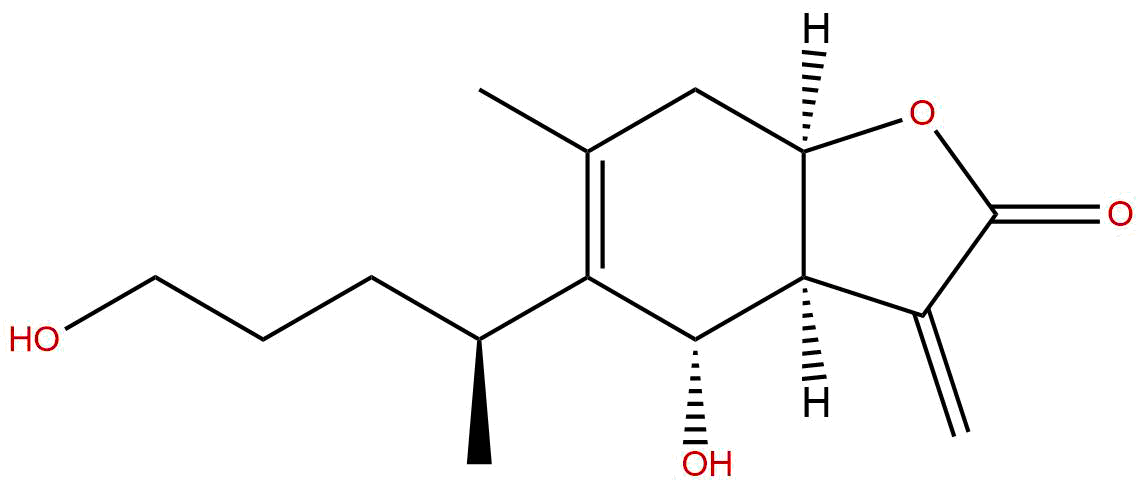


Synonym name: Deacetylinulicin; 1,6-Dihydroxyeriolanolide
Catalogue No.: BP0283
Cas No.: 33620-72-3
Formula: C15H22O4
Mol Weight: 266.337
Botanical Source: Inula britannica and Inula japonica
Purity: 95%~99%
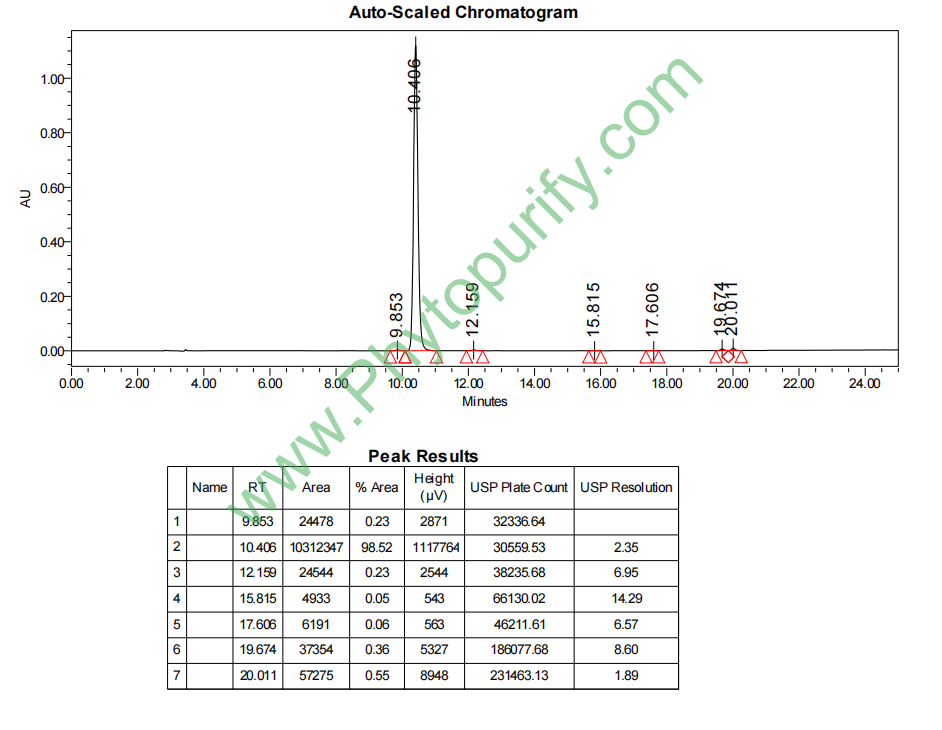
Analysis Method: HPLC-DAD or/and HPLC-ELSD
Identification Method: Mass, NMR
Packing: Brown vial or HDPE plastic bottle
Can be supplied from milligrams to grams.
For Reference Standard and R&D, Not for Human Use Directly.
Inquire for bulk scale.
HPLC of Britannilactone
Storage conditions:Short-term storage at 2~8℃, long-term storage at -20 ~ -80℃
66.7600
1.4526
1.4526
2.4303
2.2699
6.9027
High
55.2365
4.4394
No
No
No
No
Yes
No
0.0
No
No
No
No
Liver fibrosis is a pathological process shared by various chronic liver injuries, such as viral hepatitis, alcoholic liver disease, non-alcoholic fatty liver disease, etc. Its characteristic is the excessive deposition and degradation imbalance of extracellular matrix (ECM) in the liver. If left untreated, liver fibrosis can progress to cirrhosis, liver failure, and even hepatocellular carcinoma, posing a serious threat to human health. At present, there is a lack of efficient and specific anti liver fibrosis drugs in clinical practice, and treatment mainly focuses on etiological control and symptomatic support. Therefore, exploring novel anti liver fibrosis lead compounds with clear mechanisms of action from natural products has become an important direction in drug development.
Britannilactone, also known as Desacetylinulicin, is a traditional medicinal plant derived from the Eurasian spiral flower(Inula britannica L. A sesquiterpene lactone compound isolated from). Eurasian spiral flowers are commonly used in traditional medicine in Asia and Europe to treat inflammation, bronchitis, and digestive system diseases. Modern pharmacological research has shown that the plant extract and its monomeric components have a wide range of biological activities, including anti-inflammatory, anti-tumor, antibacterial, and hepatoprotective effects. In recent years, spironolactone has attracted much attention due to its significant potential in combating liver fibrosis. Preliminary studies have revealed that it acts on multiple pathological processes such as hepatic stellate cell activation, inflammatory response, oxidative stress, and cell apoptosis by regulating multiple signaling pathways including AMPK, STAT3, TLR4/NF - κ B, and Nrf2. This article aims to systematically review the chemical properties, plant sources, pharmacological activities, especially the mechanism of action and molecular target network of spironolactone against liver fibrosis, and evaluate and prospect its pharmacological properties and clinical application prospects.
Cyclobalanopostol (CAS number: 33620-72-3) is a typical sesquiterpene lactone with a molecular formula of C ₁₅ H ₂ O ₄ and a molecular weight of 266.3370 g/mol. Its core structure is a ten membered carbon ring (decahydronaphthalene skeleton) fused with a gamma lactone ring, belonging to the derivatives of Eudesmane sesquiterpene lactones. Compared with the commonly found and highly acetylated sesquiterpene lactones in many plants of the genus Convolvulaceae, such as Inuviscolide, the structure of Desacetylinulicin is relatively simple and lacks substituents such as acetoxy, which directly affects its physicochemical properties and biological activity.
From the analysis of the parameters related to drug properties, spironolactone exhibits ideal drug like properties. Its lipid water partition coefficient (LogP) is 1.4526, indicating that the compound has moderate lipophilicity, which is beneficial for transmembrane absorption and avoids metabolic and distribution problems caused by high lipid solubility. The topological polar surface area (TPSA) is 66.7600 Å ², which is relatively low and usually indicates good membrane permeability. The water solubility parameter is 2.4303 (LogS), which belongs to the range of slightly soluble to soluble, providing a basis for its dissolution and distribution in organisms. Of particular importance, the predictive model shows that it has high blood-brain barrier (BBB) permeability, suggesting that spironolactone may not only act on peripheral organs such as the liver, but also have potential research value for central nervous system related diseases. In early safety warning indicators, spironolactone showed no risk of hERG potassium channel inhibition (hERG inhibition: No), indicating a low potential risk of inducing QT interval prolongation in the heart. In addition, the Ames test predicted a value of 0.0, indicating that it may not have direct genetic toxicity, providing preliminary safety evidence for its further development.
The main source of spironolactone is the Eurasian spirochete in the Asteraceae family(Inula britannica L.)。 This plant is widely distributed in the Eurasian continent and grows in China, South Korea, Mongolia, and some parts of Europe. Its dry inflorescence is one of the sources of the commonly used traditional Chinese medicine "Xuanfu Flower". Traditionally, Xuanfu flowers are used to relieve cough, phlegm, lower qi, and stop vomiting. Modern plant chemistry research has confirmed that Eurasian spiral flowers are rich in various bioactive compounds, among which sesquiterpene lactones are their characteristic components and main pharmacological substances. In addition to spiral flower lactones, they also include inucinenolide and Britannin, among others.
The extraction and separation of spironolactone from plant materials usually use organic solvent extraction combined with chromatographic separation techniques. The conventional process is as follows: first, the dried Eurasian spiral flower whole plant or inflorescence is crushed, and then extracted or refluxed with polar organic solvents such as methanol, ethanol, or acetone to obtain the crude extract. Subsequently, the crude extract was subjected to segmented extraction using solvents such as petroleum ether and ethyl acetate, and the sesquiterpene lactones were mostly enriched in the ethyl acetate fraction. Further purification relies on various column chromatography techniques, such as silica gel column chromatography, reverse phase silica gel column chromatography (RP-18), etc., using different polarity solvent systems (such as petroleum ether ethyl acetate, chloroform methanol, etc.) for gradient elution. High performance liquid chromatography (HPLC), especially preparative HPLC, is a key step in obtaining high-purity spironolactone monomers. Structural identification is accomplished through techniques such as nuclear magnetic resonance (NMR, including ¹ H-NMR, ¹ ³ C-NMR, 2D-NMR), mass spectrometry (MS), and X-ray single crystal diffraction. In recent years, green extraction techniques such as supercritical fluid extraction have also been explored to improve extraction efficiency and selectivity.
The pharmacological activity research of spironolactone has revealed its multifaceted biological effects, among which its anti liver fibrosis effect is the most prominent, and it is closely related to its basic activities such as anti-inflammatory, antioxidant, and anti apoptotic.
1. Anti fibrotic activity:
Both in vitro and in vivo experiments have confirmed that spironolactone has significant anti liver fibrosis effects. In rat liver fibrosis models induced by carbon tetrachloride (CCl ₄) or bile duct ligation, administration of spironolactone significantly reduced serum levels of alanine aminotransferase (ALT), aspartate aminotransferase (AST), and liver tissue hydroxyproline content, improved liver pathological morphology, and reduced collagen fiber deposition. The core of its function is to inhibit the activation and proliferation of hepatic stellate cells (HSCs). HSC is the main cell that produces ECM during the process of liver fibrosis, and its transformation from a quiescent state to activated myofibroblast like cells is a key event in the occurrence of fibrosis.
2. Anti inflammatory and immune regulatory activity:
Chronic inflammation is the core driving force behind the progression of liver fibrosis. Cyclobalanopostol can effectively inhibit the excessive production of pro-inflammatory mediators such as nitric oxide (NO), prostaglandin E2 (PGE2), tumor necrosis factor - α (TNF - α), interleukin-6 (IL-6), etc. in macrophages stimulated by lipopolysaccharide (LPS) or inflammatory factors. This anti-inflammatory effect is closely related to its regulation of key inflammatory signaling pathways.
3. Antioxidant activity:
Oxidative stress is an important trigger for liver injury and fibrosis. Cyclobalanopostol can enhance the antioxidant defense ability of liver cells and HSCs. Research has shown that it can upregulate the expression of antioxidant enzymes such as heme oxygenase-1 (HO-1) and quinone oxidoreductase 1 (NQO1), which depend on its activation of the nuclear factor E2 related factor 2 (Nrf2) signaling pathway.
4. Antitumor and apoptosis inducing activity:
Some studies have reported that spironolactone has growth inhibitory and apoptosis inducing effects on certain cancer cell lines, such as liver cancer and lung cancer cells. Its pro apoptotic effect is related to regulating Bcl-2 family proteins (such as downregulating anti apoptotic protein Bcl-2) and activating the Caspase cascade reaction. This characteristic suggests that it may have potential value in the treatment of hepatocellular carcinoma, and liver fibrosis is an important background for the occurrence of liver cancer.
5. Other activities:
In addition, studies have reported that spironolactone has certain antibacterial and antiviral activities, but its strength and spectrum of action need further clarification.
The anti fibrotic effect of spironolactone is not achieved through a single target, but through a complex molecular network that intervenes in the fibrotic process through multiple pathways and targets. Based on existing research, its core mechanism of action and key molecular targets can be summarized as follows:
1. Activate the AMPK signaling pathway:
Adenosine activated protein kinase (AMPK) is a core regulator of cellular energy metabolism, and its activation has anti-inflammatory, antioxidant, and inhibitory effects on HSC activation. Convolutional anthocyanins have been confirmed to be activators of AMPK (encoded by subunits such as PRKAA1). Activated AMPK can phosphorylate and inhibit its downstream target, rapamycin target protein (mTOR), thereby suppressing HSC proliferation and collagen synthesis. Meanwhile, AMPK activation can also negatively regulate pro-inflammatory pathways such as NF - κ B.
2. Inhibit the TLR4/NF - κ B inflammatory pathway:
Toll like receptor 4 (TLR4) is a key receptor that recognizes endogenous injury associated molecular patterns (DAMPs) and exogenous pathogen associated molecular patterns (PAMPs). Its activation triggers the nuclear factor kappa B (NF - κ B) signaling cascade, leading to the expression of a large number of pro-inflammatory and chemokines. Carouselide can inhibit the expression or signal transduction of TLR4, thereby blocking the nuclear translocation of NF - κ B p65 subunit, upstream inhibiting liver inflammation response, and creating a favorable microenvironment for anti fibrosis.
3. Regulating the STAT3 signaling pathway:
Signal transduction and transcription activator 3 (STAT3) plays an important role in HSC activation, proliferation, and survival. Activated STAT3 promotes the expression of pro fibrotic genes. Cyclobalanopostol can inhibit the phosphorylation (activation) of STAT3, thereby blocking its pro fibrotic signal. This inhibition may be related to AMPK activation or upstream cytokine receptor signaling inhibition.
4. Activate the Nrf2 antioxidant pathway:
Nuclear factor E2 related factor 2 (Nrf2) is a central regulator of antioxidant response. Under oxidative stress, Nrf2 dissociates from its inhibitor Keap1 and translocates into the nucleus, initiating the transcription of phase II detoxifying enzymes and antioxidant enzymes such as HO-1 and NQO1. Carouselide promotes Nrf2 nuclear translocation, enhances cellular antioxidant capacity, reduces oxidative stress damage to liver cells, and inhibits HSC activation.
5. Regulating the balance between cell apoptosis and survival:
The effect of spironolactone on cell apoptosis is cell type specific. In activated HSCs, it may promote HSC apoptosis by downregulating the expression of anti apoptotic protein Bcl-2, thereby promoting the regression of fibrotic tissue. At the same time, it can protect liver parenchymal cells from apoptosis by activating pathways such as Nrf2. In addition, its potential regulatory effect on Caspase-1 may affect the novel inflammatory cell death mode of pyroptosis, thereby regulating liver inflammation.
6. Affects extracellular matrix metabolism:
The essence of liver fibrosis is the imbalance of ECM metabolism. Carouselide can downregulate the expression of matrix metalloproteinase inhibitors (TIMPs) and may also exert complex regulation on the activity of matrix metalloproteinases (such as MMP1, MMP2), generally tending to promote excessive deposition of collagen degradation. Protein kinase C alpha (PKC alpha, encoded by PRKCA) is an important molecule involved in HSC activation and contraction, and spironolactone may act by interfering with its signal. In addition, studies suggest that it may interact with the DNA helicase RECQL, which is involved in DNA repair and genome stability, but its specific role in liver fibrosis remains to be elucidated.
In summary, spironolactone passes through Activate AMPK and Nrf2 These two protective pathways, while Inhibition of TLR4/NF - κ B and STAT3 These two major pro-inflammatory and pro fibrotic pathways regulate apoptosis related proteins (Bcl-2, Caspases) and ECM metabolic enzymes, forming a synergistic anti liver fibrosis network.
Based on its physicochemical parameters and preliminary biological data, spironolactone has shown certain potential for development, but its comprehensive pharmacological evaluation is still in the early stages.
Pharmaceutical advantages:
1. Good drug quality: Moderate molecular weight (266), LogP value (~1.45), and low TPSA indicate good oral absorption potential and membrane permeability.
2. Preliminary safety warning is better: The lack of hERG inhibition and Ames mutagenicity risk prediction reduces the main safety concerns in early development.
3. Multi target mechanism of action: Multi pathway regulation may have more therapeutic advantages than single target drugs for the complex disease of liver fibrosis.
4. Natural product sources: Originating from traditional medicinal plants, it has a certain historical background of application.
Challenges and unknowns faced:
1. Lack of pharmacokinetic (PK) data: At present, there are very few reports on the systematic PK research of spironolactone. The key PK parameters such as oral bioavailability, in vivo distribution (although predicting high BBB permeability), metabolic pathway (whether it is metabolized by cytochrome P450 enzyme system), major metabolites, half-life, and excretion mode are all unknown. These are the key factors determining its dosing regimen and efficacy.
2. Water solubility limit: Although LogS shows a certain solubility, as a lactone compound, its actual water solubility may still be insufficient, which may affect formulation development and in vivo absorption. Optimization may require formulation techniques such as cyclodextrin inclusion, nanocrystals, liposomes, or structural modifications.
3. Potential toxicity and therapeutic window: Sesquiterpene lactones may sometimes cause gastrointestinal irritation or allergic reactions. The window between its effective dose and toxic dose (therapeutic index) needs to be determined through systematic acute and long-term toxicity experiments.
4. Target selectivity: It is not clear whether its effect on targets such as AMPK and STAT3 is direct binding or indirect regulation. Clarifying its direct target of action (possibly through chemical biology methods such as molecular probe fishing) will help optimize the compound more accurately.
Future research should prioritize systematic preclinical pharmacokinetic studies and, based on this, carry out rational structural optimization to improve its PK/PD (pharmacological) properties.
As a natural small molecule with clear anti liver fibrosis activity, spironolactone has broad clinical application prospects, but solid research is still needed to promote its transformation.
Potential application directions:
1. Development of anti liver fibrosis drugs: As the core direction, it can be developed as a new drug to treat liver fibrosis caused by chronic hepatitis B, nonalcoholic steatohepatitis and other diseases, or combined with existing antiviral drugs and liver protection drugs to enhance the efficacy.
2. Inflammatory liver diseases: Based on its powerful anti-inflammatory and antioxidant mechanisms, it may be used to treat inflammation based liver diseases such as drug-induced liver injury and autoimmune liver disease.
3. Fibrosis of other organs: Fibrosis is a common pathological basis for multiple organ failures, such as pulmonary fibrosis and renal fibrosis. Given the universality of its target, the value of spironolactone in the treatment of fibrosis in organs such as the lungs and kidneys is worth exploring.
4. Adjuvant treatment for neurological disorders: Its high BBB permeability and anti-inflammatory and antioxidant properties suggest that it may have potential application value in neuroinflammatory related diseases such as Alzheimer's disease, Parkinson's disease, and cerebral ischemia-reperfusion injury.
Future research prospects:
1. In depth mechanism research: Using gene knockout/knockdown techniques, proteomics, transcriptomics, and other methods, further validate and expand its target network, and elucidate its direct molecular targets.
2. Comprehensive preclinical development: The system has completed pharmacological (dose-response), pharmacokinetic, and toxicological (GLP standard) studies in different liver fibrosis models, clarifying its safe and effective dosage range.
3. Structural optimization and derivative design: Using it as the parent nucleus, structural modification is carried out through medicinal chemical methods to improve its activity, water solubility, metabolic stability, and targeting, in order to obtain candidate compounds with better properties.
4. Research on New Delivery Systems: Develop liver targeted delivery systems (such as galactose modified nanoparticles) to enhance drug enrichment in the liver, reduce systemic exposure and potential side effects.
5. Exploring combination therapy strategies: Study its synergistic effect with existing standard therapeutic drugs such as entecavir, pirfenidone, etc., to provide theoretical basis for clinical combination therapy.
Xuanfu flower lactone is a sesquiterpene lactone monomer with significant anti liver fibrosis activity discovered from the traditional Chinese medicine Eurasian Xuanfu flower. It synergistically activates the AMPK/Nrf2 protective pathway and inhibits the TLR4/NF - κ B/STAT3 pro fibrotic pathway, multi-target inhibiting hepatic stellate cell activation, reducing inflammation and oxidative stress, regulating cell apoptosis and matrix metabolism, demonstrating good potential for intervening in the complex pathological network of liver fibrosis. From the perspective of drug development, it has good drug like properties and preliminary safety predictions, but systematic pharmacokinetic and toxicological evaluations are the key bottlenecks for its clinical application.
Currently, drug development for complex multifactorial diseases is shifting from a "single target high selectivity" paradigm to a "multi-target synergistic regulation" paradigm. Convolutional anthocyanins are a representative natural lead compound under this trend. Future research needs to integrate multidisciplinary technologies such as modern pharmacology, medicinal chemistry, and pharmacy. Based on a deeper understanding of the mechanisms, efforts should be made to address the shortcomings in drug development, promote its transition from laboratory to clinical use, and bring new treatment hope to patients with liver fibrosis and other fibrotic diseases. The in-depth study of spironolactone will not only contribute to the development of new drugs, but also provide an example for interpreting the scientific connotation of traditional Chinese medicine.
