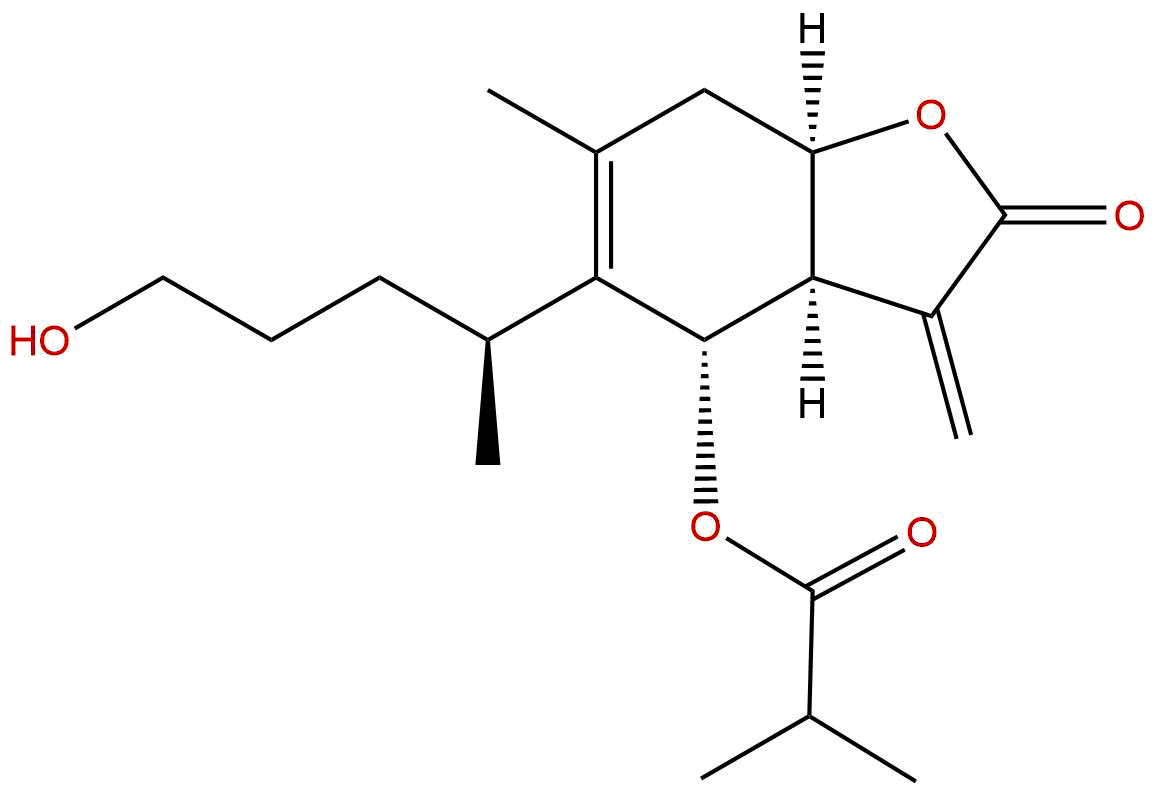


Product name: 6α-isobutyryloxy-Britannilactone
Synonym name: 6α-isobutyryloxy-1-hydroxy-4αH-1,10-secoeudesma-5(10),11(13)-dien-12,8β-olide
Catalogue No.: BP2239
Cas No.: 1259933-02-2
Formula: C19H28O5
Mol Weight: 336.428
Botanical Source:
Type of Compound:
Purity: 95%~99%
Analysis Method: HPLC-DAD or/and HPLC-ELSD
Identification Method: Mass, NMR
Packing: Brown vial or HDPE plastic bottle
Storage: Store in a well closed container, protected from air and light. Put into refrigerate or freeze for long term storage.
Whenever possible, you should prepare and use solutions on the same day. However, if you need to make up stock solutions in advance, we recommend that you store the solution as aliquots in tightly sealed vials at -20℃. Generally, these will be useable for up to two weeks.
The product could be supplied from milligrams to grams
Inquire for bulk scale.
For Reference Standard and R&D, Not for Human Use Directly.
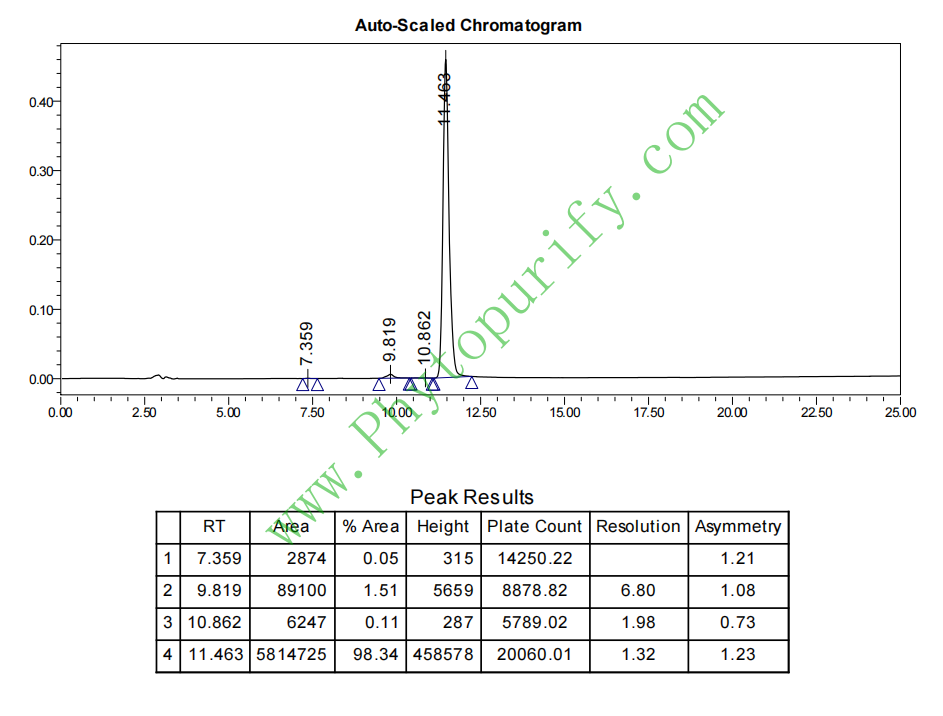
HPLC of 6α-isobutyryloxy-Britannilactone
Storage conditions:Short-term storage at 2~8℃, long-term storage at -20 ~ -80℃
72.8300
2.8362
2.8365
.1901
3.1956
9.1447
High
72.5623
4.4008
No
No
No
No
Yes
No
0.0
No
No
Yes
Yes
Antibiotic resistance has become one of the most severe challenges in the global public health field. The continuous emergence of multidrug-resistant bacteria (MDR) and extensively drug-resistant bacteria (XDR) has led to a decline in the efficacy of traditional antibiotics and a dilemma in clinical treatment. Therefore, finding antibacterial lead compounds with novel mechanisms of action from novel chemical frameworks is a key strategy to address this crisis. Natural products have always been a valuable source of new drug development due to their structural diversity and rich biological activity. As an important class of active molecules in natural products, sesquiterpene lactones have shown great potential in anti-inflammatory, anti-tumor, and antibacterial fields. Among them, 6 α - isobutyrylyloxy Brittannilactone (6 α - IBBL), as a derivative of spironolactone isolated from traditional medicinal plants, has attracted attention in recent years due to its significant inhibitory activity against various drug-resistant strains. This article aims to systematically review the research progress on the chemical structure, plant origin, pharmacological activity, mechanism of action, and drug resistance of 6 α - IBBL, in order to provide scientific basis for the development of new anti drug resistant bacteria drugs.
The chemical name of 6 α - isobutyryl-2-spironolactone is (3aS, 4S, 7S, 7aR) -4- (hydroxymethyl) -7-methyl-3-methyl-3a, 4,7,7a-tetrahydro-1H-4,7-epoxyisobenzofuran-1-one 6 α - isobutyrate ester. Its CAS number is 1259933-02-2, molecular formula is C19H28O5, and molecular weight is 336.4280.
The core skeleton of this compound is Britannilactone, which belongs to the eucalyptol type sesquiterpene lactone. Its structural features include a decahydronaphthalene nucleus, an α - methylene - γ - lactone ring, and an epoxy bridge bond. The unique feature of 6 α - IBBL is that its C-6 hydroxyl group is esterified with isobutyryl, forming a 6 α - isobutyryloxy substituent. This structural modification has a decisive impact on its physicochemical properties and biological activity.
According to calculations and experimental data, the lipid water partition coefficient (LogP) of 6 α - IBBL is 2.8362, indicating that the compound has moderate lipophilicity and is beneficial for penetrating bacterial cell membranes. Its topological polar surface area (TPSA) is 72.8300 Å ², reflecting the presence of multiple hydrogen bond acceptors in the molecule, such as lactone carbonyl, ester carbonyl, and epoxy oxygen atoms. The predicted value of water solubility is about 0.1901 mg/mL, which belongs to the category of slight solubility. This suggests that solubilization strategies may need to be considered in formulation development. Preliminary pharmacological predictions indicate that the compound has high blood-brain barrier permeability potential, no significant risk of hERG potassium channel inhibition (hERG inhibition: no), and a negative Ames test prediction result (0.0), suggesting a low potential genotoxicity risk. These physicochemical and preliminary safety parameters have laid the foundation for its further development.
The main source of 6 α - isobutyryl-2-spironolactone is from plants in the Asteraceae family. This genus of plants is widely distributed worldwide, and many species are used in traditional medicine in Asia, Europe, and North America to treat infections, inflammation, and digestive system diseases. Research has shown that 6 α - IBBL is effective in certain plants of the Eupatorium genus, such as the Eurasian Eupatorium Inula britannica L. The content is relatively high in the inflorescence or aboveground part of the plant.
Its extraction and separation usually follow the classic process of natural product chemistry. Firstly, the dried plant material is crushed and subjected to cold soaking or heating reflux extraction using medium polarity solvents such as methanol, ethanol, or acetone to fully extract the active ingredients, including sesquiterpene lactones. After vacuum concentration, the crude extract was preliminarily separated using liquid-liquid distribution method (such as extraction with petroleum ether, ethyl acetate, and n-butanol in sequence), and 6 α - IBBL was mostly enriched in the ethyl acetate fraction.
Further purification relies on various chromatographic techniques. Silica gel column chromatography is commonly used for preliminary fractionation, with different ratios of petroleum ether ethyl acetate or chloroform methanol gradient elution. Subsequently, fine separation and purification were carried out by reversed-phase silica gel (such as ODS) column chromatography, Sephadex gel column chromatography or high performance liquid chromatography (HPLC, usually using C18 column, methanol water or acetonitrile water as mobile phase), and finally high-purity 6 α - IBBL monomer compound was obtained. Structural identification involves the comprehensive use of techniques such as nuclear magnetic resonance (NMR, including 1H, 13C, 2D-NMR), mass spectrometry (MS), infrared spectroscopy (IR), and X-ray single crystal diffraction.
The most notable pharmacological activity of 6 α - IBBL lies in its strong inhibitory effect on multiple drug-resistant bacteria. In vitro antibacterial experiments have shown that the compound exhibits significant antibacterial activity against a range of Gram positive resistant bacteria, including methicillin-resistant Staphylococcus aureus (MRSA), vancomycin resistant Enterococcus (VRE), and multidrug-resistant Streptococcus pneumoniae. Its minimum inhibitory concentration (MIC) values are often at the micromolar level, and some strains even reach sub micromolar levels. Of particular note is that its activity against certain clinically isolated MRSA strains is superior to or equivalent to some first-line antibiotics, and it also exhibits moderate inhibitory effects on certain strains of Gram negative bacteria such as Escherichia coli and Klebsiella pneumoniae.
In addition to its direct antibacterial effect, preliminary studies suggest that 6 α - IBBL may have the ability to inhibit bacterial biofilm formation. Biofilm is an important barrier for bacterial resistance and persistent infection, capable of resisting the clearance of antibiotics and the host immune system. 6 α - IBBL can interfere with the biofilm formation of bacteria such as Staphylococcus aureus at sub inhibitory concentrations, reducing their adhesion ability and maturity. This provides a new approach for the treatment of chronic and refractory bacterial infections.
In addition, as a member of the sesquiterpene lactone family, 6 α - IBBL may also inherit other biological activities of the family, such as anti-inflammatory and immunomodulatory effects. Although there are relatively few research reports on 6 α - IBBL in these areas, based on its core structural features (such as α - methylene - γ - lactone), it is speculated that it may exert anti-inflammatory effects by regulating inflammatory signaling pathways such as NF - κ B and MAPK, which needs further experimental verification.
Unlike traditional antibiotics, 6 α - IBBL may exert bactericidal or bacteriostatic effects by acting on multiple novel bacterial targets or interfering with key bacterial physiological processes, giving it a unique advantage in overcoming existing resistance mechanisms. Existing research and bioinformatics analysis suggest that its potential targets involve multiple processes such as bacterial DNA replication, cell wall synthesis, folate metabolism, and efflux pump systems
It is currently widely believed that the antibacterial effect of 6 α - IBBL is likely the result of multi-target synergy. The α - methylene - γ - lactone group in its structure is a highly active Michael reaction receptor that can covalently bind to nucleophilic groups (such as thiol groups) in bacterial target proteins, which may form the molecular basis for its irreversible inhibition of certain key enzyme activities. At the same time, the introduction of isobutyryl may optimize the lipid solubility and spatial conformation of the molecule, enhancing its affinity with the target protein binding pocket. The exact and direct target of action and its binding mode still need to be further validated through cutting-edge technologies such as proteomics, X-ray eutectic diffraction, and surface plasmon resonance (SPR).
Although 6 α - IBBL exhibits excellent antibacterial activity in vitro, its potential as a candidate drug still requires systematic pharmacological evaluation and pharmacokinetic studies.
Based on its physicochemical parameters, 6 α - IBBL has a moderate LogP value and a certain TPSA, indicating that it may have good membrane permeability and oral absorption potential. The prediction of high blood-brain barrier penetration provides the possibility for its treatment of bacterial infections in the central nervous system. The absence of hERG inhibition and Ames mutagenicity risk is a positive signal for early safety.
However, its poor water solubility (0.1901 mg/mL) is the primary issue that needs to be addressed in formulation development. Possible strategies include preparing salts (if there are salt forming groups), using cyclodextrin inclusion, and creating novel drug delivery systems such as nanocrystals or liposomes to improve their dissolution and bioavailability.
At present, there is a lack of reports on the in vivo pharmacokinetic studies of the 6 α - IBBL system. Future research requires a comprehensive evaluation of the absorption, distribution, metabolism, and excretion (ADME) characteristics after administration in experimental animal models such as mice and rats. The key questions include: What is the oral bioavailability? Is the distribution concentration in major organs such as lungs, liver, kidneys, and spleen sufficient to achieve effective antibacterial levels? What are the main hepatic enzymes (such as CYP450 family) that catalyze its metabolism, and what are the main metabolites? Is the excretion pathway through bile or kidneys? These data are crucial for determining the route, dosage, and frequency of administration.
In addition, its in vivo safety (acute toxicity, long-term toxicity) and synergistic effect with existing antibiotics are also necessary contents to be covered in preclinical research. Especially its core α - methylene - γ - lactone structure, although contributing to activity, may also pose potential risks of irritation or allergic reactions, requiring close attention in toxicology research.
As a novel natural antibacterial lead compound, the clinical application prospects of 6 α - IBBL are mainly reflected in the following aspects:
Looking ahead to the future, research on 6 α - IBBL should be conducted in depth from the following aspects:
* In depth structure-activity relationship (SAR) research Systematically synthesize a series of derivatives with different substituents at C-6 and other positions, clarify the effects of various functional groups on activity, selectivity, and drug formation, in order to discover candidate molecules with stronger activity, lower toxicity, and better physicochemical properties.
* Clear mechanism of action research Using chemical biology techniques such as active molecule probe labeling, affinity fishing, CRISPR-Cas9 gene editing, etc., to confirm its direct target at the cellular and molecular levels, and to analyze the three-dimensional structure of the complex, providing a blueprint for rational drug design based on structure.
* Comprehensive preclinical development Complete the pharmacological (multiple animal models of infection), pharmacokinetic, and toxicological evaluations of the system, providing solid data support for its application for clinical research.
* Explore combination therapy Widely screen its in vitro and in vivo synergistic effects with various antibiotics, and develop the optimal combination therapy plan.
6 α - isobutyryl-2-spironolactone is a natural sesquiterpene lactone with significant antimicrobial activity discovered from traditional medicinal plants. Its unique chemical structure, potential for multi-target action, and initially predicted good drug resistance parameters make it an attractive lead compound for combating the global antibiotic resistance crisis. Although current research is still in its early stages and there are still many gaps to be filled in terms of its mechanism of action, in vivo efficacy, and pharmacokinetics, the existing findings have fully demonstrated its translational potential. Through in-depth interdisciplinary research, including the collaboration of medicinal chemistry, pharmacology, microbiology, and pharmacy, it is expected that this natural molecule will be optimized and developed into a new weapon for combating drug-resistant bacterial infections, contributing an important force to safeguarding human health. Natural products, this chemical treasure trove that has undergone billions of years of evolution, remain an indispensable source of inspiration and material for solving modern medical problems.
