Introduction/Overview
Natural products, as an important source of drug discovery, play an irreplaceable role in the long history of human struggle against diseases. Among them, it originates from the genus Convolvulus in the Asteraceae family(Inula)Plant sesquiterpene lactones have always been a hot topic in natural product chemistry and pharmacology research due to their structural diversity and significant biological activity. Spinning flower(Inula britannica L. As a traditional Chinese medicine, it has the effects of reducing phlegm, lowering qi, promoting diuresis, and stopping nausea, and the research on its active ingredients is particularly in-depth. Among the numerous compounds isolated and identified from Convolvulacea flowers, diacetyl spironolactone (1,6-O, O-diacetylbritrinilane, OABL) has attracted widespread attention due to its unique chemical structure and multifaceted pharmacological activities, particularly its significant anti-inflammatory effects.
OABL is a deacetylated derivative of britannilactone (BL). Compared to its parent compound, OABL exhibits enhanced lipid solubility, which may have a significant impact on its bioavailability and pharmacological activity. In recent years, significant progress has been made in research on OABL, revealing its key role in regulating multiple physiological and pathological processes such as inflammation, oxidative stress, and cell apoptosis. In particular, OABL has shown great potential in treating inflammatory diseases, autoimmune diseases, and even cancer by acting on multiple inflammation related signaling pathways and molecular targets, such as IL-6/STAT3, NF - κ B, NLRP3 inflammasome, etc.
This article aims to provide a systematic review of the current research status of OABL. We will first introduce its chemical structure and physicochemical properties, then trace its plant origin and extraction process, focusing on its anti-inflammatory, anti-tumor and other pharmacological activities, and deeply explore its mechanism of action and molecular targets. On this basis, combined with its pharmacological parameters, the pharmacokinetic characteristics, clinical application prospects, and future research directions of OABL are discussed, in order to provide comprehensive scientific basis for the in-depth development and translational application of this natural product.
Chemical structure and physicochemical properties
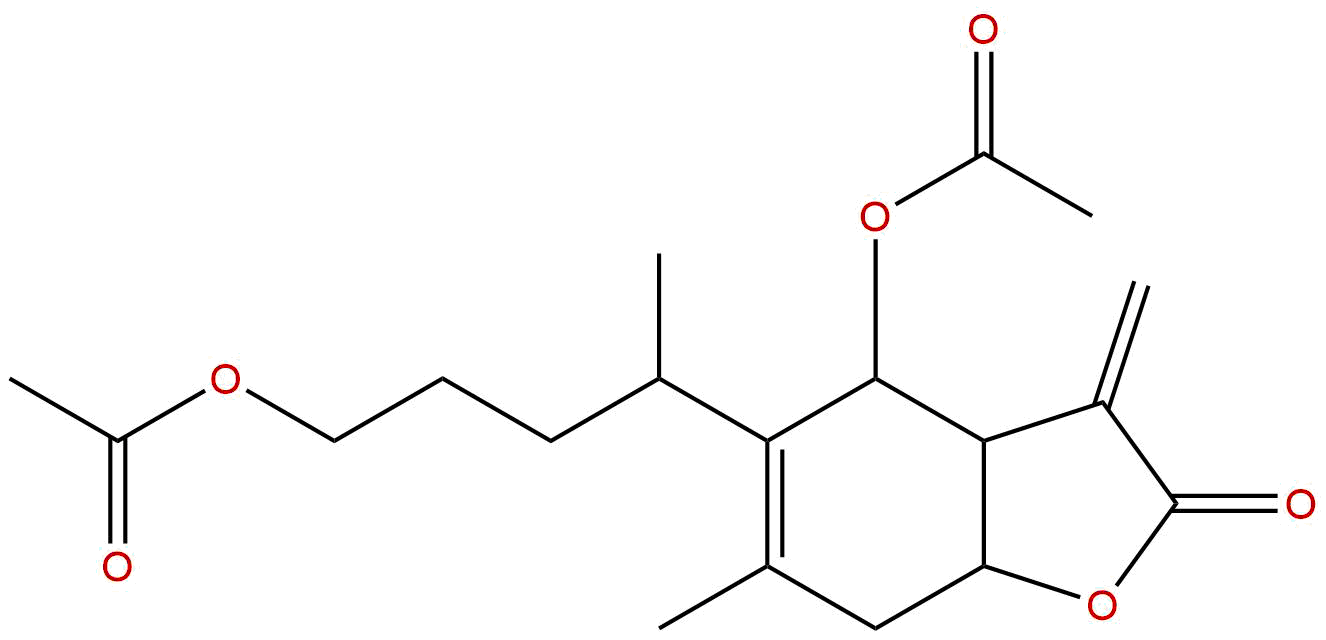
Diacetyl spironolactone (OABL) belongs to the eudemane type sesquiterpene lactone, with a core skeleton consisting of 15 carbon atoms, a cis fused bicyclic [4.4.0] decane system, and a characteristic α - methylene - γ - lactone ring. The lactone ring is a key pharmacophore for many sesquiterpene lactones (such as artemisinin and baicalin) to exert biological activity, and is generally believed to undergo Michael addition reactions with cysteine thiol groups in biomolecules, thereby regulating protein function.
The chemical structure of OABL is characterized by the substitution of hydroxyl groups at positions C-1 and C-6 with acetyl groups (- COOCH3), forming 1,6-O, O-diacetyl derivatives. Its chemical name is (1S, 4S, 5S, 6R, 7R, 8S) -1,6-diacetoxy-4-hydroxy-8- (2-hydroxypropan-2-yl) -4a, 8-dimethyl-3,4,5,6,7,8-hexahydronaphthalene-2 (1H) - one, or abbreviated as 1,6-O, O-diacetylbritinalactone. Its molecular formula is C ₁₉ H ₂₆ O ₇, molecular weight is 350.4110 g/mol, and CAS number is 151513-70-1.
In terms of physical and chemical properties, OABL exhibits moderate lipid solubility. Its oil-water partition coefficient (LogP) is 2.6365, indicating that the solubility of the compound in organic solvents is higher than that in water, which is consistent with its presence of two acetyl groups and multiple hydrophobic carbon ring structures. Its topological polar surface area (TPSA) is 78.9000 Å ², which is within a relatively moderate range, providing possibilities for its transmembrane transport and interaction with target proteins. The water solubility (LogS) is 0.1582, indicating limited solubility in water, which may be a limiting factor for its oral bioavailability. It is worth noting that OABL is predicted to have a high blood-brain barrier (BBB) penetration ability, suggesting its potential role in central nervous system diseases. In addition, computer prediction models showed that OABL does not have hERG (human ether - à - go related gene) inhibitory activity (no), and the Ames test result was 0.0, indicating that it did not exhibit significant genetic toxicity risk in early assessment. These physicochemical properties and preliminary pharmacological evaluations provide a favorable basis for the subsequent development of OABL as a lead compound.
Plant sources and extraction methods
OABL is mainly isolated from plants in the Asteraceae family, with the most significant source being Eurasian spiral flowers(Inula britannica L.)。 This plant is widely distributed in China, Japan, South Korea, and some parts of Europe. In traditional Chinese medicine, its dried inflorescence is known as the Chinese medicine "Xuanfu Flower", which is used to treat cough, phlegm accumulation, chest and rib fullness, and other diseases. Except for Eurasian spiral flowers, other plants of the spiral flower genus, such as linear leaf spiral flowers(Inula linearifolia)Hubei Xuanfu Flower(Inula hupehensis)Wait, it may also contain OABL or its analogues, but the content is usually low.
The content of OABL in plants is usually not high, and it often coexists with various structurally similar sesquiterpene lactones such as spironolactone (BL) and 1-O-acetyl spironolactone, which poses challenges for its efficient extraction and purification. At present, the extraction method of OABL mainly follows the classic process of natural product chemistry and is optimized by combining modern separation techniques.
The typical extraction process is as follows:
1. Raw material pretreatment Collect dry spiral flower heads or whole plants, and grind them to appropriate particle size.
2. Solvent extraction Organic solvents with moderate polarity are usually used for extraction, such as ethanol, methanol, or their aqueous solutions. Cold soaking, percolation, or heating reflux are commonly used extraction methods. Due to the LogP value of 2.64 for OABL, it can be effectively extracted using ethanol or methanol water mixed solvents.
3. Preliminary separation After the extraction solution is concentrated under reduced pressure, the total extract is obtained. Disperse the total extract in water and perform liquid-liquid extraction using solvents of different polarities such as petroleum ether, ethyl acetate, and n-butanol in sequence. OABL is mainly enriched in the ethyl acetate extraction layer due to its lipophilicity.
4. Column chromatography separation The ethyl acetate extract was preliminarily separated by silica gel column chromatography using gradient elution systems such as petroleum ether ethyl acetate or chloroform methanol. Collect the fraction containing OABL through thin-layer chromatography (TLC) monitoring.
5. purification Further purify the fraction rich in OABL using modern separation techniques such as preparative high-performance liquid chromatography (Pre HPLC), high-speed counter current chromatography (HSCCC), or recrystallization. Pre HPLC typically uses a reverse phase C18 chromatography column with acetonitrile water or methanol water as the mobile phase, which can efficiently separate OABL from other structurally similar compounds (such as BL, 1-O-acetylboritanilanlactone) and obtain high-purity monomer compounds.
During the extraction and purification process, special attention should be paid to the sensitivity of sesquiterpene lactones to heat and acidity. The operating conditions should be as mild as possible to avoid structural rearrangement or degradation. In recent years, some green extraction techniques, such as supercritical fluid extraction (SFE) and microwave-assisted extraction (MAE), have also been attempted to extract active ingredients from spiral flowers, showing the potential to improve extraction efficiency and selectivity. However, their application in large-scale production of OABL still needs further research.
Pharmacological activity research
The pharmacological activity research of OABL mainly focuses on its anti-inflammatory, anti-tumor, and neuroprotective aspects, among which anti-inflammatory activity is its most core and deeply studied function.
1. Anti inflammatory activity
Numerous in vitro and in vivo experiments have confirmed the potent anti-inflammatory effects of OABL. In cell models, OABL can significantly inhibit the production of nitric oxide (NO), prostaglandin E2 (PGE2), and various pro-inflammatory cytokines, including tumor necrosis factor - α (TNF - α), interleukin-6 (IL-6), and interleukin-1 β (IL-1 β), by macrophages (such as RAW264.7 cells) stimulated by lipopolysaccharide (LPS). Its mechanism of action is closely related to the inhibition of key inflammatory signaling pathways (see below for details).
In animal models, OABL has also demonstrated therapeutic potential for various inflammatory diseases. For example, in acute inflammation models induced by carrageenan and complete Freund's adjuvant induced arthritis models, OABL can effectively reduce toe swelling and lower inflammation scores. In the colitis model induced by dextran sulfate sodium (DSS), OABL treatment can alleviate clinical symptoms such as weight loss, diarrhea, and rectal bleeding, and improve pathological damage to colon tissue. In addition, OABL also shows a protective effect in models of acute lung injury, liver injury, etc. Its effect is closely related to reducing the level of inflammatory factors in tissues and inhibiting the infiltration of inflammatory cells.
2. Antitumor activity
OABL showed certain cytotoxicity to a variety of tumor cell lines, such as lung cancer (A549), breast cancer (MCF-7, MDA MB-231), liver cancer (HepG2), colon cancer (HT-29) and leukemia (HL-60), which can inhibit cell proliferation and induce apoptosis. Its anti-tumor mechanism is multifaceted, including:
- Inducing cell apoptosis By activating the mitochondrial pathway (upregulating Bax/Bcl-2 ratio, releasing cytochrome c, activating Caspase-9 and Caspase-3) or the death receptor pathway (upregulating Fas/FasL expression).
- Inhibit cell proliferation By blocking the cell cycle in G0/G1 or G2/M phases, the mechanism may be related to downregulating the expression of cell cycle proteins such as Cyclin D1 and CDK4.
- Inhibit angiogenesis In in vitro and in vivo models, OABL can inhibit the expression of vascular endothelial growth factor (VEGF) and the formation of new blood vessels.
- Reverse drug resistance Studies have shown that OABL may enhance the sensitivity of tumor cells to chemotherapy drugs by inhibiting the NF - κ B pathway and downregulating the expression of multidrug resistance related proteins (such as P-gp).
It is worth noting that the anti-tumor activity of OABL is often intertwined with its anti-inflammatory activity, as chronic inflammation is an important microenvironmental factor in the occurrence and development of tumors. By inhibiting inflammatory signals, OABL may indirectly exert chemopreventive effects.
3. Other pharmacological activities
In addition to anti-inflammatory and anti-tumor effects, OABL also exhibits other pharmacological activities. For example, based on its high BBB penetration prediction, OABL has shown a protective effect in neurodegenerative disease models. In the Alzheimer's disease model, OABL can inhibit A β - induced neuroinflammation and neuronal apoptosis. In the Parkinson's disease model, OABL has a protective effect against MPTP induced dopaminergic neuron damage. In addition, OABL also has certain antibacterial, antiviral, and immune regulatory activities, but its activity intensity and mechanism of action in these fields still need further research.
Mechanism of action and molecular targets
The pharmacological activity of OABL, especially its anti-inflammatory effect, is achieved by regulating multiple key signaling pathways and molecular targets. Its mechanism of action has the characteristics of multiple targets and pathways.
1. Inhibit the NF - κ B signaling pathway
NF - κ B (nuclear factor kappa B) is the core transcription factor in inflammatory response. In the resting state, NF - κ B binds to its inhibitory protein I κ B and exists in an inactive form in the cytoplasm. When stimulated by LPS, TNF - α, etc., I κ B kinase (IKK, such as IKBKB) is activated, phosphorylating I κ B, leading to its ubiquitination degradation, releasing NF - κ B (such as RELA/p65 subunit) and translocating it into the nucleus, initiating the transcription of various pro-inflammatory genes (such as TNF - α, IL-6, IL-1 β, COX-2, iNOS).
Research has shown that OABL can effectively inhibit the activation of NF - κ B. The specific mechanism includes:
- Inhibition of IKK activity OABL can directly or indirectly inhibit the activity of IKBKB, preventing the phosphorylation and degradation of I κ B.
- Inhibition of p65 nuclear translocation OABL treatment can reduce the migration of p65 protein to the nucleus.
- Inhibition of p65 binding to DNA OABL may reduce its binding ability to target gene promoter regions by affecting the phosphorylation or acetylation status of p65.
By inhibiting the NF - κ B pathway, OABL blocks the production of various pro-inflammatory factors from upstream sources, which is one of the core mechanisms by which it exerts a wide range of anti-inflammatory effects.
2. Regulating the STAT3 signaling pathway
STAT3 (Signal Transduction and Transcription Activation Factor 3) is another transcription factor closely related to inflammation and tumors. After IL-6 and other cytokines bind to receptors, JAK kinase is activated, which phosphorylates STAT3 to form a dimer and translocates it into the nucleus, regulating the expression of downstream genes such as Bcl xL, Survivor, Cyclin D1, VEGF.
OABL has been found to inhibit the phosphorylation of STAT3, particularly at the Tyr705 site, thereby blocking its activation. This inhibitory effect may be related to the direct interaction between OABL and STAT3 protein, or through the inhibition of upstream JAK kinase activity. By inhibiting STAT3 signaling, OABL can not only suppress inflammatory responses, but also induce tumor cell apoptosis, inhibit proliferation and angiogenesis, which is an important mechanism of its anti-tumor activity.
3. Regulating NLRP3 inflammasome
NLRP3 inflammasome is a multi protein complex composed of pattern recognition receptors, adaptor protein ASC, and effector protein Caspase-1 (CASP1). Its activation requires two signals: a start signal (such as LPS activation of NF - κ B, upregulation of NLRP3 and pro-IL-1 β expression) and an activation signal (such as ATP, uric acid crystallization, reactive oxygen species, etc.). The activated NLRP3 inflammasome promotes self cleavage activation of Caspase-1, which in turn cleaves pro-IL-1 β and pro-IL-18, producing mature IL-1 β and IL-18, and may induce cell pyroptosis.
Research has shown that OABL can inhibit the assembly and activation of NLRP3 inflammasomes. The mechanism may include:
- Inhibit the start signal By inhibiting the NF - κ B pathway, the expression of NLRP3 and pro-IL-1 β is reduced.
- Inhibit activation signal OABL may block the activation signal of NLRP3 inflammasome by clearing reactive oxygen species (ROS) or stabilizing mitochondrial function.
- Directly interact with NLRP3 There are studies suggesting that OABL may bind to cysteine residues on NLRP3 protein through Michael addition reaction, directly inhibiting its function.
4. Regulating transient receptor potential (TRP) channels
TRPV1 and TRPA1 are important nociceptors involved in the transmission of pain and inflammatory signals. OABL is predicted as a potential target for TRPV1 and TRPA1. Although direct evidence is not yet sufficient, studies have shown that some sesquiterpene lactones (such as resveratrol) can regulate TRP channel activity. OABL may exert analgesic and anti-inflammatory effects by acting on these channels, which is related to its potential application in inflammatory pain models.
5. Other targets
OABL may also exert its effects by affecting other targets, such as:
- PTGS1/COX-1 OABL may directly inhibit the activity of cyclooxygenase-1 (COX-1) and reduce the synthesis of prostaglandins such as PGE2.
- NOS2/iNOS OABL reduces the production of NO by inhibiting the NF - κ B pathway and downregulating the expression of inducible nitric oxide synthase (iNOS).
In summary, OABL forms a complex regulatory network by acting on multiple molecular targets such as IKBKB, RELA, STAT3, CASP1, TRPV1, TRPA1, PTGS1, NOS2, TNF, IL-6, etc., synergistically exerting its pharmacological activities such as anti-inflammatory and anti-tumor effects. The covalent binding (Michael addition) between it and the target protein may be an important reason for its long-lasting and significant activity.
Evaluation of drug properties and pharmacokinetics
Based on the provided pharmacological parameters, we can conduct a preliminary evaluation of the pharmacological properties of OABL.
- Molecular weight and LogP The molecular weight is 350.41 Da, which conforms to the "Lipinski rule" (molecular weight<500). The LogP is 2.64, which is within the ideal range (-0.4 to 5.6), indicating that it has good membrane permeability and lipid solubility, which is beneficial for oral absorption.
- TPSA 78.90 Å ², less than 140 Å ², indicates good oral bioavailability and membrane permeability.
- Water solubility LogS is 0.1582, which belongs to compounds with poor water solubility. This may be a bottleneck for its oral absorption, which needs to be improved through formulation techniques such as solid dispersions, liposomes, cyclodextrin inclusion complexes, etc.
- Blood-brain barrier penetrability Predicting high is a double-edged sword. It is advantageous for treating central nervous system diseases such as neuroinflammation and Alzheimer's disease, but it may also increase the risk of central nervous system toxicity.
- HERG inhibition and Ames test All of them are negative, indicating that they did not show significant risks of cardiac toxicity and genetic toxicity in early screening, which is an important addition to their pharmacological properties.
Regarding the pharmacokinetic (ADME) studies of OABL, there is currently relatively limited publicly available data, but there have been some preliminary explorations. Due to the presence of two ester bonds in OABL, it may be rapidly hydrolyzed by esterases in vivo and converted into spironolactone (BL) or other monoacetylated metabolites. Therefore, OABL may serve as a prodrug, and its in vivo activity may be partially or entirely mediated by its metabolites. After oral administration, its absolute bioavailability may be lower due to first pass effects and hydrolysis. Intravenous administration may be a more effective route of administration. Its distribution, metabolism, and excretion pathways still require systematic research. Future pharmacokinetic studies need to focus on key parameters such as metabolic stability, metabolite identification, tissue distribution, and protein binding rate.
Clinical application prospects and prospects
OABL, as a natural product with multiple targets and active features, has shown broad application prospects in the treatment of various diseases.
-
Inflammatory diseases Given its potent anti-inflammatory activity, OABL or its derivatives are expected to be developed as novel drugs for the treatment of chronic inflammatory diseases such as rheumatoid arthritis, inflammatory bowel disease, acute lung injury, and chronic obstructive pulmonary disease. By simultaneously inhibiting multiple key pathways such as NF - κ B, STAT3, and NLRP3 inflammasomes, it may have better efficacy and lower resistance risk than drugs targeting a single target.
-
tumor The anti-tumor activity of OABL, especially its ability to induce apoptosis, inhibit proliferation, and reverse drug resistance, makes it a potential candidate for anti-tumor drugs. It can be used as a chemotherapy sensitizer in combination with existing chemotherapy drugs to improve efficacy and reduce side effects. In addition, its potential in cancer chemoprevention is also worth exploring.
-
Neurodegenerative diseases Its high BBB penetration indicates its potential in the treatment of neurodegenerative diseases such as Alzheimer's disease and Parkinson's disease. By inhibiting neuroinflammation and oxidative stress, OABL may delay disease progression and protect neuronal function.
-
pain management By regulating TRPV1 and TRPA1 channels, OABL may be developed as a novel analgesic, particularly for inflammatory pain.
Future research directions:
- structural optimization Using OABL as the lead compound, modify its structure through chemical synthesis or biotransformation to improve its water solubility, metabolic stability, and targeting, and reduce potential toxicity.
- In depth mechanism research Using chemical biology methods such as activity-based proteomic analysis (ABPP) to identify the direct targets of OABL in cells and elucidate its precise molecular mechanism.
- Systematic pharmacokinetic study Conduct comprehensive in vivo ADME research to clarify its metabolic pathways, major metabolites, and their activities, providing a basis for drug administration design.
- Formulation development Develop novel drug delivery systems (such as nanoparticles, liposomes, microemulsions, etc.) to enhance the bioavailability of OABL and achieve targeted delivery.
- toxicological evaluation Conduct systematic acute and chronic toxicity studies to evaluate their safety and treatment window.
- clinical translation After completing sufficient preclinical research, promote the entry of OABL or its derivatives into the clinical trial phase.
Conclusion
As a natural sesquiterpene lactone derived from the traditional Chinese medicine Spironopsis pilosula, diacetyl spironolactone (OABL) has become a research hotspot in the field of natural product pharmacology due to its unique chemical structure and significant biological activity. This article systematically reviews the chemical structure, plant origin, pharmacological activity, mechanism of action, pharmacological evaluation, and clinical application prospects of OABL. Existing research fully demonstrates that OABL exhibits strong anti-inflammatory, anti-tumor, and neuroprotective activities by acting on multiple molecular targets such as NF - κ B, STAT3, NLRP3 inflammasome, TRP channel, etc. The preliminary pharmacological evaluation results are also optimistic, especially its high BBB penetration and low genetic toxicity risk.
However, research on OABL still faces many challenges, such as poor water solubility, metabolic instability, and lack of pharmacokinetic data in vivo. Future research should focus on structural optimization to improve its pharmacokinetic properties, utilizing advanced technologies to elucidate its direct targets, and conducting systematic toxicological and pharmacological studies. Despite the long road ahead, OABL undoubtedly provides a highly promising lead molecule for the development of innovative drugs derived from natural products. With the continuous deepening of research, we have reason to believe that OABL and its derivatives have the potential to bring new breakthroughs in the treatment of inflammatory diseases, tumors, and neurodegenerative diseases in the future, achieving the transformation from traditional Chinese medicine active ingredients to modern clinical drugs.