


Product name: Notoginsenoside R1
Synonym name:
Catalogue No.: BP1010
Cas No.: 80418-24-2
Formula: C47H80O18
Mol Weight: 933.139
Botanical Source: Panax notoginseng(Burk.)F.H.Chen
Physical Description:
Type of Compound: Triterpenoids
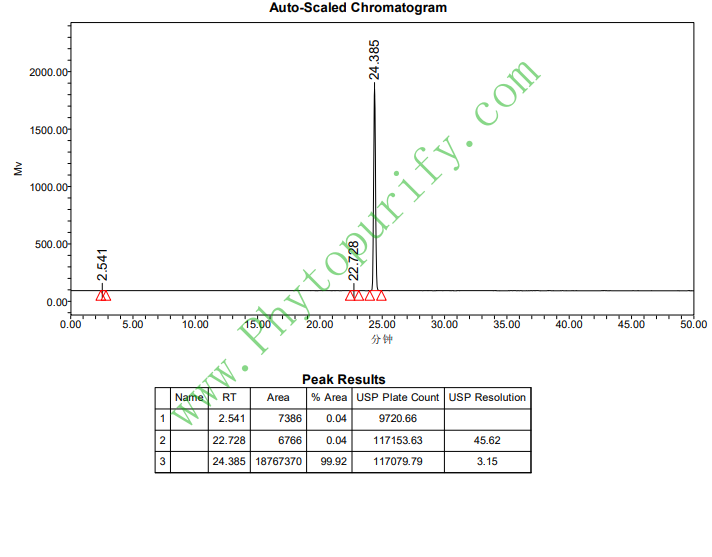
Purity: 95%~99%
Analysis Method: HPLC-DAD or/and HPLC-ELSD
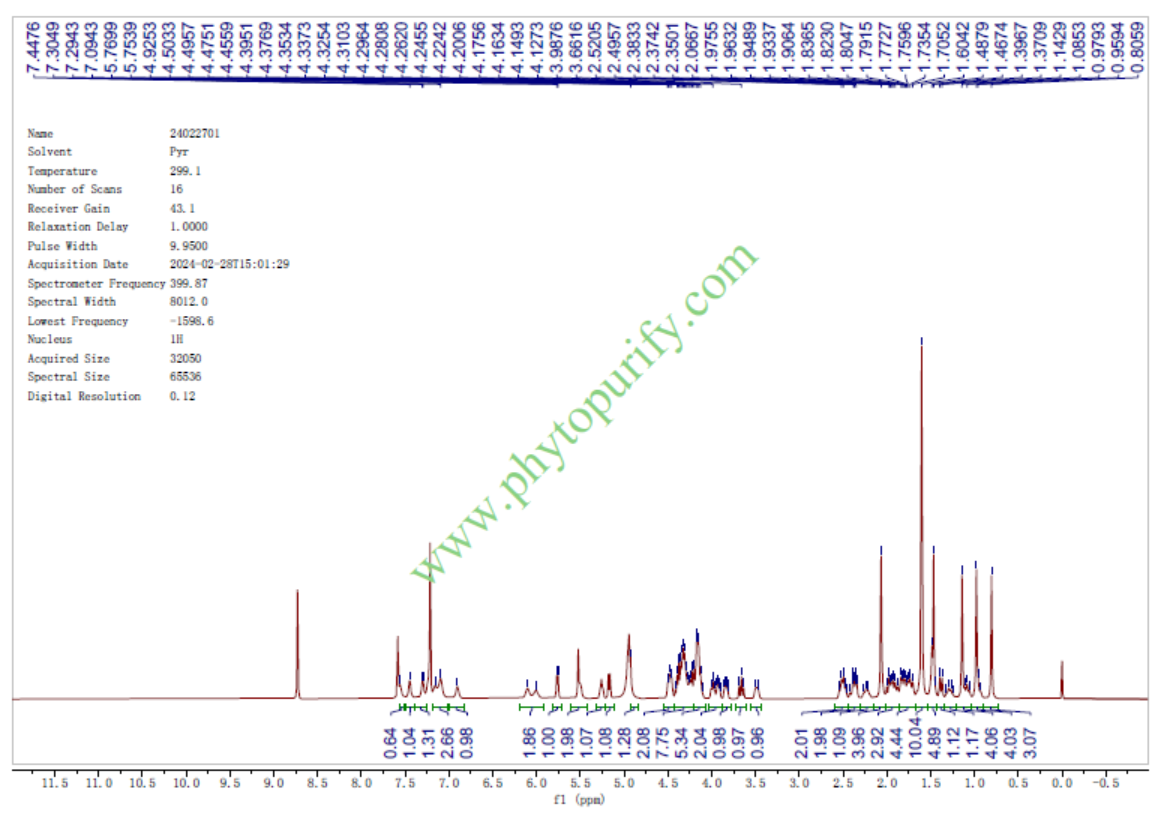
Identification Method: Mass, NMR
Packing: Brown vial or HDPE plastic bottle
Storage: Store in a well closed container, protected from air and light. Put into refrigerate or freeze for long term storage.
The product could be supplied from milligrams to grams
Inquire for bulk scale.
Description:
Notoginsenoside R1(NR1) is the main ingredient with cardiovascular activity in Panax notoginseng, which has some neuronal protective, antihypertensive,antioxidant, anti-inflammatory, antiapoptotic, and immune-stimulatory activities. NR1 can counteract endotoxin-induced activation of endothelial cells in vitro and endotoxin-induced lethality in mice in vivo. NR1 inhibits TNF-α-induced PAI-1 overexpression via extracellular signal-related kinases (ERK1/2) and phosphatidylinositol 3-kinase (PI3K)/protein kinase B (PKB) signaling pathways, it attenuates amyloid-β-induced damage in neurons by inhibiting reactive oxygen species and modulating MAPK activation.
References:
Arterioscler Thromb Vasc Biol. 1997 Mar;17(3):465-74.
Notoginsenoside R1 counteracts endotoxin-induced activation of endothelial cells in vitro and endotoxin-induced lethality in mice in vivo.
In this study we investigated a possible counteracting activity Notoginsenoside R1 (NG-R1) on lipopolysaccharide (LPS)-induced effects in vitro and in vivo.
METHODS AND RESULTS:
The upregulation of plasminogen activator inhibitor-1 (PAI-1) antigen due to LPS (1 microgram/mL for 12 hours) in human umbilical vein endothelial cells (HUVECs) was prevented when the cells were incubated simultaneously with 100 micrograms/mL NG-R1 (PAI-1 antigen: LPS-treated cells, 969 +/- 54 ng/10(5) cells; control cells, 370 +/- 15 ng/10(5) cells; LPS + NG-R1-treated cells, 469 +/- 29 ng/10(5) cells; n = 6). The 2.5- and 3.4-fold (2.2- and 3.2-kb) increases in PAI-1 mRNA levels induced by LPS (1 microgram/mL for 6 hours) were reduced to 1.4- and 2.6-fold increases in the presence of both LPS and 100 micrograms/mL NG-R1. LPS-induced tissue factor (TF) activity in HUVECs was also counteracted when the cells were coincubated with both LPS and 100 micrograms/mL NG-R1 for 6 hours (TF activity: LPS-treated cells, 88.6 +/- 6.5 mU/10(6) cells; control cells, 0.7 +/- 0.01 mU/10(6) cells; LPS + NG-R1-treated cells, 56.0 +/- 1.9 mU/10(6) cells). The 26-fold increase in TF mRNA levels induced by LPS (1 microgram/mL for 2 hours) was reduced to a 13-fold increase in the presence of both LPS and 100 micrograms/mL NG-R1. PAI activity levels in the plasma of mice 4 hours after injection of LPS (10 ng/g body wt) increased 2.3-fold compared with a control group. In contrast, PAI activity from LPS + NG-R1 (1 microgram/g body wt NG-R1)-treated animals was at control level (PAI-1 activity: LPS-treated group, 11.3 +/- 3.1 U/mL; control group, 4.9 +/- 0.3 U/mL; LPS + NG-R1-treated group, 4.3 +/- 1.0 U/mL; n = 5 to 8). The production of TNF-alpha induced by 1 microgram/mL LPS by cultured human whole-blood cells was inhibited by 46% when the cells were incubated together with 100 micrograms/mL NG-R1. NG-R1 protected mice from the lethal effects of LPS. The 78% lethality induced by LPS/galactosamine was reduced to 23% when NG-R1 was administered simultaneously (P < .01 by chi 2 test). To extend this study to inflammatory cells, the effect of NG-R1 on LPS stimulation of the monocytic cell line THP-1 was investigated.
CONCLUSIONS:
NG-R1 inhibited the LPS-induced degradation of I kappa B-alpha and superinduced LPS-induced I kappa B-alpha mRNA, indicating that the effect of NG-R1 is not restricted to endothelial cells and is at least in part mediated by interference with the NF-kappa B/I kappa B-alpha pathway.
Int Immunopharmacol. 2014 Sep;22(1):151-9.
Notoginsenoside R1 attenuates amyloid-β-induced damage in neurons by inhibiting reactive oxygen species and modulating MAPK activation.
Progressive accumulation of amyloid-β (Aβ) is a pathological hallmark of Alzheimer's disease (AD). Aβ increases free radical production in neuronal cells, leading to oxidative stress and cell death.
METHODS AND RESULTS:
An intervention that would reduce Aβ-related neurotoxicity through free radical reduction could advance the treatment of AD. Notoginsenoside R1 (NR1), the major and most active ingredient in the herb Panax notoginseng, can reduce reactive oxygen species and confer some neuroprotective effects. Here, NR1 was applied in a cell-based model of Alzheimer's disease. Cell viability, cell death, reactive oxygen species generation, and mitochondrial membrane potential were assessed in cultured PC12 neuronal cells incubated with Aβ(25-35). In this model, Aβ was neurotoxic and induced necrosis and apoptosis; however, NR1 significantly counteracted the effects of Aβ by increasing cell viability, reducing oxidative damage (including apoptosis), restoring mitochondrial membrane potential, and suppressing stress-activated MAPK signaling pathways.
CONCLUSIONS:
These results promise a great potential agent for Alzheimer's disease and other Aβ pathology-related neuronal degenerative disease.
Free Radic Biol Med. 2006 May 1;40(9):1664-74.
Notoginsenoside R1 inhibits TNF-alpha-induced fibronectin production in smooth muscle cells via the ROS/ERK pathway.
The matrix fibronectin protein plays an important role in vascular remodeling. Notoginsenoside R1 is the main ingredient with cardiovascular activity in Panax notoginseng; however, its molecular mechanisms are poorly understood.
METHODS AND RESULTS:
We report that Notoginsenoside R1 significantly decreased TNF-alpha-induced activation of fibronectin mRNA, protein levels, and secretion in human arterial smooth muscle cells (HASMCs) in a dose-dependent manner. Notoginsenoside R1 scavenged hydrogen peroxide (H2O2) in a dose-dependent manner in the test tube. TNF-alpha significantly increased intracellular ROS generation and then ERK activation, which was blocked by Notoginsenoside R1 or DPI and apocynin, inhibitors of NADPH oxidase, or the antioxidant NAC. Our data demonstrated that TNF-alpha-induced upregulation of fibronectin mRNA and protein levels occurs via activation of ROS/ERK, which was prevented by treatment with Notoginsenoside R1, DPI, apocynin, NAC, or MAPK/ERK inhibitors PD098059 and U0126. Notoginsenoside R1 significantly inhibited H2O2-induced upregulation of fibronectin mRNA and protein levels and secretion; it also significantly inhibited TNF-alpha and H2O2-induced migration.
CONCLUSIONS:
These results suggest that Notoginsenoside R1 inhibits TNF-alpha-induced ERK activation and subsequent fibronectin overexpression and migration in HASMCs by suppressing NADPH oxidase-mediated ROS generation and directly scavenging ROS.
HPLC of Notoginsenoside R1
HNMR of Notoginsenoside R1
Storage conditions:Short-term storage at 2~8℃, long-term storage at -20 ~ -80℃
298.1400
2.0416
2.0416
.1375
.4912
.1443
Low
65.3631
6.4767
No
No
No
No
No
No
0.0
Yes
No
No
No
Natural products, as an important source of drug discovery, play an irreplaceable role in human health maintenance and disease treatment. Among numerous natural products with biological activity, it originates from the traditional Chinese medicine Sanqi(Panax notoginseng The Notoginsenoside R1 (NG-R1) of Burk. F.H. Chen has attracted widespread attention in recent years. Sanqi, also known as Tianqi, is a perennial herbaceous plant of the Panax genus in the Araliaceae family. Its roots and stems are known in traditional Chinese medicine theory as "gold does not change" and have the effects of dispersing blood stasis, stopping bleeding, reducing swelling, and relieving pain. It is commonly used to treat cardiovascular and cerebrovascular diseases, hemorrhagic diseases, and traumatic injuries. Modern pharmacological research has shown that the main active ingredient of Panax notoginseng is the dammarane type triterpenoid saponin, among which Sanchinoside R1 is one of its characteristic components, and its content is often used as an important indicator to evaluate the quality of Panax notoginseng medicinal materials and their preparations.
The chemical name of Panax notoginseng saponin R1 is 20 (S) - protopanaxatriol-6- [α - D-xylopyranosyl - (1 → 2) - β - D-glucopyranosyl] -20- β - D-glucopyranoside, with a CAS number of 80418-24-2. As a unique natural saponin, NG-R1 exhibits various pharmacological activities, including antioxidant, anti-inflammatory, anti apoptotic, anti angiogenic, and anti ischemia/reperfusion (I/R) injury. These activities demonstrate enormous potential in various therapeutic fields such as cardiovascular diseases, neurodegenerative diseases, tumors, and metabolic diseases. In particular, the study of its mechanism of action in cardiac and neuroprotection provides new ideas for the development of innovative drugs for acute myocardial infarction, stroke and other critical illnesses.
This article aims to provide a systematic review of the research progress of Panax notoginseng saponin R1, covering its chemical structure and physicochemical properties, plant sources and extraction methods, pharmacological activity, mechanism of action and molecular targets, pharmacological evaluation and pharmacokinetic properties. It also looks forward to its clinical application prospects, in order to provide comprehensive references for the in-depth research and development of this natural product.
Panax notoginseng saponin R1 belongs to the dammarane type tetracyclic triterpenoid saponin, with a aglycone of 20 (S) - protopanaxatriol (PPT). Its structural feature is that sugar chains are connected to the C-6 and C-20 positions of the PPT aglycone, respectively. Specifically, the hydroxyl group at position C-6 is connected to a disaccharide chain formed by a (1 → 2) glycosidic bond between a β - D-glucopyranose group and an α - D-xylopyranose group; The hydroxyl group at position C-20 is connected to a β - D-glucopyranose group. Its complete chemical structure can be represented as: 20 (S) - protopanaxatriol-6-O - α - D-xylopyranosyl - (1 → 2) - β - D-glucopyranosyl-20-O - β - D-glucopyranoside.
From the perspective of physical and chemical properties, the molecular formula of NG-R1 is C ₄₇ H ₈₀ O ₁₈, with a molecular weight of 933.1390 g/mol. Its lipid water partition coefficient (LogP) is 2.0416, indicating that it has a certain degree of lipophilicity, but overall tends to be hydrophilic. The topological polar surface area (TPSA) is as high as 298.1400 Å ², mainly due to the large number of hydroxyl and glycosidic bonds in its molecules, which give it strong polarity. The water solubility parameter is 0.1375 mg/mL, indicating its low solubility in water, which to some extent limits its bioavailability. In addition, the predictive model shows that the blood-brain barrier (BBB) permeability of NG-R1 is relatively low, indicating that it may face challenges in exerting central nervous system effects, but also implies a lower risk of central side effects after peripheral administration. The prediction result of hERG (human Ether - à - go Related Gene) inhibition is' no ', indicating a low risk of cardiac toxicity. The Ames test result is 0.0, indicating no significant mutagenicity. These physicochemical properties and preliminary safety predictions have laid a solid foundation for the subsequent development of NG-R1.
Sanqi saponin R1 is mainly derived from the Panax ginseng plant in the Araliaceae family(Panax notoginseng)The roots and rhizomes. In addition, in other plants of the ginseng genus, such as ginseng(Panax ginseng)And American ginseng(Panax quinquefolius)A small amount has also been found, but Sanqi is its main source, and its content is relatively high in Sanqi, which is usually used as one of its quality control indicators. The production areas of Sanqi are mainly concentrated in Wenshan, Yunnan and Baise, Guangxi in China. Wenshan is known as the "hometown of Sanqi in China", and its Sanqi products have excellent quality and stable NG-R1 content.
The traditional NG-R1 extraction method mainly relies on solvent extraction. Due to the high polarity of NG-R1, water or different concentrations of ethanol are usually used as extraction solvents. Common extraction techniques include:
1. Water decoction method Boil the Sanqi powder with water, filter and concentrate, and then extract with organic solvents such as n-butanol to obtain the crude extract of total saponins.
2. Alcohol extraction method Extract with 50% -80% ethanol reflux, recover ethanol, and then perform column chromatography on macroporous adsorption resins (such as D101, AB-8, etc.) using water and different concentrations of ethanol gradient elution to enrich the components rich in NG-R1.
With the development of modern separation technology, more efficient and specific extraction and purification methods have been applied to the preparation of NG-R1:
1. High-speed countercurrent chromatography Utilizing the difference in distribution coefficients of solutes in two-phase solvent systems to achieve efficient separation. This method has the advantages of high sample recovery rate and irreversible adsorption, and is suitable for the preparation grade separation of NG-R1.
2. Preparation type high-performance liquid chromatography Using a C18 reverse phase chromatography column with acetonitrile water or methanol water as the mobile phase, efficient separation of NG-R1 from other ginsenosides (such as ginsenoside Rb1, Rg1, Re, etc.) can be achieved through gradient elution, resulting in high-purity monomeric compounds.
3. membrane separation technology Such as ultrafiltration, nanofiltration, etc., can be used to remove large molecular impurities and salts from the extraction solution, improving the subsequent purification efficiency.
At present, the technology for extracting NG-R1 from Panax notoginseng is quite mature and can obtain high-purity (>98%) products, providing sufficient raw material guarantee for subsequent pharmacological research and drug development.
The pharmacological activity of Panax notoginseng saponin R1 has been extensively studied, mainly focusing on the following aspects:
1. Cardiovascular protective effect
This is the most in-depth and extensive field of research on NG-R1. Numerous in vitro and in vivo experiments have confirmed that NG-R1 has a significant protective effect on myocardial ischemia/reperfusion (I/R) injury. In myocardial cell hypoxia/reoxygenation (H/R) models and animal myocardial I/R models, NG-R1 can:
- Reduce the area of myocardial infarction By inhibiting oxidative stress, reducing inflammatory response, and suppressing myocardial cell apoptosis, the scope of myocardial infarction is significantly reduced.
- Improve heart function Improve left ventricular ejection fraction and fractional shortening, and enhance the systolic and diastolic function of the heart.
- Protecting myocardial cells Reduce the release of lactate dehydrogenase (LDH) and creatine kinase (CK-MB) to maintain the integrity of the myocardial cell membrane.
2. Neuroprotective effect
NG-R1 also has a protective effect on the central nervous system, especially in models of cerebral ischemia/reperfusion injury. Its mechanism is similar to the cardioprotective effect, including:
- anti-oxidative stress Eliminate free radicals, increase the activity of superoxide dismutase (SOD) and glutathione peroxidase (GSH Px), and reduce the content of malondialdehyde (MDA).
- anti-apoptotic Inhibit neuronal apoptosis and protect the integrity of the blood-brain barrier.
- anti-inflammatory Inhibit the excessive activation of microglia and astrocytes, and reduce the release of pro-inflammatory cytokines.
3. Antitumor effect
Studies have shown that NG-R1 has inhibitory effects on a variety of tumor cells, including breast cancer, lung cancer, liver cancer, colon cancer, leukemia, etc. Its anti-tumor mechanism involves multiple aspects:
- Inducing apoptosis Inducing tumor cell apoptosis by regulating Bcl-2 family proteins (such as upregulating Bax and downregulating Bcl-2) and activating the Caspase cascade reaction.
- Inhibition of proliferation By regulating cell cycle related proteins such as Cyclin D1 and CDK4, the cell cycle is arrested in the G0/G1 phase.
- Inhibit invasion and metastasis Inhibiting the migration and invasion ability of tumor cells by downregulating the expression of matrix metalloproteinases (MMP-2, MMP-9).
- Angiogenesis inhibition Blocking the formation of tumor neovascularization by inhibiting the expression of vascular endothelial growth factor (VEGF) and its receptor (VEGFR).
4. Anti inflammatory and antioxidant effects
This is the basis for NG-R1 to exert various pharmacological activities. NG-R1 can inhibit the activation of key inflammatory signaling pathways such as nuclear factor kappa B (NF - κ B) and mitogen activated protein kinase (MAPK), thereby reducing the production of pro-inflammatory factors such as tumor necrosis factor - α (TNF - α), interleukin-1 β (IL-1 β), and interleukin-6 (IL-6). Meanwhile, it is also an effective antioxidant that can directly eliminate reactive oxygen species (ROS) and upregulate the activity of antioxidant defense systems such as nuclear factor E2 related factor 2 (Nrf2).
5. Other pharmacological activities
In addition to the above main activities, NG-R1 has also been reported to have a variety of pharmacological effects such as anti fibrosis (such as liver fibrosis, renal fibrosis), anti diabetes and its complications, improving osteoporosis, and protecting renal function.
The pharmacological activity of Panax notoginseng saponin R1 is the result of its interaction with multiple molecular targets and regulation of multiple signaling pathways. The core mechanism can be summarized as follows:
1. Regulating apoptosis and survival signaling pathways
- PI3K/Akt pathway NG-R1 can activate the phosphatidylinositol 3-kinase (PI3K)/protein kinase B (Akt) signaling pathway. Activated Akt can phosphorylate and inhibit pro apoptotic proteins Bad and Caspase-9, while activating mammalian rapamycin target protein (mTOR) to promote cell survival and protein synthesis, thereby exerting anti apoptotic effects. This is one of the core mechanisms of its cardiac and neuroprotective effects.
- Bcl-2 family proteins NG-R1 directly regulates the expression of Bcl-2 family proteins. In tumor cells, it downregulates the expression of anti apoptotic proteins MCL1 and BCL2, upregulates the expression of pro apoptotic protein Bax, increases mitochondrial outer membrane permeability, releases cytochrome c, activates Caspase-9 and Caspase-3, and ultimately induces cell apoptosis. In normal myocardium or nerve cells, it upregulates Bcl-2 and downregulates Bax, exerting a protective effect. The specific regulation of this cell type is the key to its bidirectional regulatory effect.
2. Regulating inflammation and oxidative stress pathways
- NF - κ B pathway NG-R1 can inhibit the activity of I κ B kinase (IKK), prevent the phosphorylation and degradation of I κ B α, and thus suppress the nuclear translocation and transcriptional activity of NF - κ B. This leads to downregulation of downstream pro-inflammatory genes (such as TNF - α, IL-6, COX-2, iNOS), exerting anti-inflammatory effects.
- Nrf2/ARE pathway NG-R1 can activate nuclear factor E2 related factor 2 (Nrf2), causing it to dissociate from Kelch like ECH related protein 1 (Keap1), translocate into the nucleus, bind to antioxidant response elements (ARE), initiate the transcription of downstream antioxidant enzyme genes (such as HO-1, NQO1, SOD, GSH Px), and enhance the cell's antioxidant defense ability.
- MAPK pathway The regulation of the MAPK pathway (including ERK, JNK, p38) by NG-R1 is complex and cell specific. In the I/R injury model, it typically inhibits excessive phosphorylation of JNK and p38 (both associated with inflammation and apoptosis), while possibly moderately activating ERK (associated with cell survival), thereby reducing injury.
3. Regulating targets related to angiogenesis and metastasis
- HIF-1 α/VEGF axis In the tumor microenvironment, NG-R1 can inhibit the protein expression and transcriptional activity of hypoxia inducible factor-1 alpha (HIF-1 alpha), thereby downregulating the expression of its target gene vascular endothelial growth factor (VEGF), thereby inhibiting the formation of tumor neovascularization and cutting off the tumor's nutritional supply.
- Matrix metalloproteinases NG-R1 downregulates the expression and activity of matrix metalloproteinases MMP2 and MMP9 by inhibiting signaling pathways such as STAT3 and MAPK, thereby inhibiting the degradation of extracellular matrix by tumor cells and hindering their invasion and metastasis.
- Topoisomerase The study also found that NG-R1 can inhibit the activity of DNA topoisomerases I (TOP1) and II α (TOP2A), which may be one of the mechanisms by which it directly exerts cytotoxicity and inhibits tumor cell proliferation.
4. Regulating other signaling pathways
- Estrogen receptor signaling The structure of NG-R1 is similar to estrogen and can bind to estrogen receptor alpha (ESR1), exerting a selective estrogen receptor modulator (SERM) like effect. This may be related to its role in hormone related tumors such as breast cancer.
- CYP19A1 (aromatase)NG-R1 can inhibit the activity of aromatase (CYP19A1) and reduce the transformation of androgen to estrogen, which may be another mechanism of its anti hormone dependent tumors (such as breast cancer).
In summary, Sanqi Saponin R1 exerts its multifaceted pharmacological activities by acting on multiple molecular targets such as MCL1, BCL2, STAT3, MMP2, TOP1, HIF1A, TOP2A, MAPK1, ESR1, CYP19A1, etc., and comprehensively regulates key biological processes such as cell apoptosis, survival, inflammation, oxidative stress, angiogenesis, and metastasis.
Despite the remarkable pharmacological activity of Panax notoginseng saponin R1, its medicinal properties still face some challenges. According to the provided parameters, its molecular weight (933.14 Da) far exceeds the limit of molecular weight<500 in Lipinski's Rule of Five, and its TPSA (298.14 Å ²) is also much greater than 140 Å ². Although LogP (2.04) is within an acceptable range, overall, its oral bioavailability may be low. The poor water solubility (0.1375 mg/mL) also limits the development of its formulations.
Pharmacokinetic studies have confirmed these predictions. After oral administration, the absorption of NG-R1 is poor, and the absolute bioavailability is usually less than 5%. This is mainly due to its high molecular weight and polarity, making it difficult to passively diffuse through intestinal epithelial cells. In addition, it is also metabolized by gut microbiota and liver first pass effects. In the body, NG-R1 mainly undergoes deglycosylation metabolism, gradually converting into secondary glycosides (such as ginsenoside Rg1) and even aglycones (protopanaxatriol). These metabolites may also have biological activity, or even stronger activity. After intravenous injection, NG-R1 is rapidly distributed in the body, but eliminated quickly with a short half-life. Its plasma protein binding rate is high, mainly distributed in organs with abundant blood such as the liver, kidneys, and heart.
In order to enhance its medicinal properties, researchers have attempted various strategies:
1. Structural modification Modify the sugar chain of NG-R1 through chemical or biological transformation methods, such as introducing small molecule groups or changing the sugar chain composition, in order to improve its lipid solubility and membrane permeability.
2. New drug delivery system By utilizing nanotechnology such as liposomes, polymer nanoparticles, solid lipid nanoparticles, etc., encapsulating NG-R1 can significantly improve its oral bioavailability, achieving targeted delivery and sustained release effects. For example, the preparation of NG-R1 into phospholipid complexes or self microemulsifying drug delivery systems has shown potential for improving absorption.
3. Prodrug design Esterification or etherification modification of the hydroxyl group of NG-R1 to produce a prodrug, improve its lipid solubility, and release the original drug after enzymatic hydrolysis in vivo.
Despite the challenges, the good safety (no hERG inhibition, Ames test negative) and clear pharmacological mechanism of action of NG-R1 make it a highly valuable lead compound for development.
Based on its rich pharmacological activity and relatively clear mechanism of action, Panax notoginseng saponin R1 has broad clinical application prospects in multiple disease fields.
1. Cardiovascular diseases
The cardioprotective effect of NG-R1 is most prominent, especially in the adjuvant therapy of acute myocardial infarction (AMI). At present, although reperfusion therapy for myocardial infarction (such as thrombolysis and PCI) can open blood vessels, reperfusion itself can cause I/R injury, leading to further death of myocardial cells. As a multi-target protective agent, NG-R1 is expected to be used in combination with reperfusion therapy to alleviate I/R injury, reduce myocardial infarction area, and improve cardiac function. Developing its injectable form for the treatment of acute myocardial infarction has high clinical translational value.
2. Cerebrovascular diseases
The neuroprotective effect of NG-R1 also has important application prospects for ischemic stroke. It can protect the blood-brain barrier, reduce brain edema, and inhibit neuronal apoptosis, and is expected to become an adjuvant drug for thrombolytic or thrombectomy treatment of acute stroke. However, the problem of low BBB permeability needs to be addressed, and bypassing the BBB through nano formulations or nasal administration is a future research direction.
3. Tumors
The anti-tumor activity of NG-R1, especially its anti angiogenesis and anti metastasis effects, makes it a promising adjuvant therapy for tumors. It can be used in combination with chemotherapy drugs or targeted drugs to enhance efficacy, while potentially reducing the toxic side effects of certain chemotherapy drugs. For example, the combination of paclitaxel or cisplatin in the treatment of breast cancer and lung cancer has shown synergistic effect. In addition, its dual role as aromatase inhibitor and estrogen receptor modulator makes it have unique advantages in the treatment of hormone dependent breast cancer.
4. Other diseases
The anti-inflammatory, antioxidant and anti fibrosis effects of NG-R1 also provide a theoretical basis for its application in chronic kidney disease, liver fibrosis, diabetes nephropathy, osteoporosis and other chronic diseases. Developing oral or long-acting formulations for the long-term management of these chronic diseases is also an important direction.
Future prospects:
- In depth study of mechanisms It is necessary to use systems biology and network pharmacology methods to more comprehensively reveal the "multi-target multi pathway" action network of NG-R1, and elucidate its molecular basis for exerting different or even opposite effects in different cell types.
- Structural optimization and improvement of drug properties The key to solving the bottleneck of drug efficacy such as low oral bioavailability and short half-life of NG-R1 is to modify its structure or develop new drug delivery systems through medicinal chemical methods.
- Clinical translational research Currently, research on NG-R1 is mostly in the preclinical stage. In the future, more rigorously designed and sufficiently sampled clinical trials are needed to verify their effectiveness and safety in specific diseases such as acute myocardial infarction and stroke, clarify their clinical positioning and optimal dosing regimen.
- Quality Control and Standardization Establishing stricter and more comprehensive quality control standards to ensure the uniformity and stability of different batches of NG-R1 raw materials and formulations is the foundation for promoting its industrialization.
Sanqi saponin R1, as a characteristic active ingredient in traditional Chinese medicine Sanqi, has shown great potential for development in various therapeutic fields such as cardiovascular protection, neuroprotection, and anti-tumor due to its multiple pharmacological activities including antioxidant, anti-inflammatory, anti apoptotic, and anti angiogenesis. Its mechanism of action involves precise regulation of multiple key signaling pathways and molecular targets such as PI3K/Akt, NF - κ B, Nrf2, HIF-1 α, Bcl-2 family, etc. Although low oral bioavailability and rapid metabolism are the main obstacles to its clinical translation, these challenges are expected to be overcome through strategies such as structural modification and development of novel drug delivery systems. With a deeper understanding of its mechanism of action and continuous progress in formulation technology, Panax notoginseng saponin R1 is expected to develop from a natural lead compound into a new type of drug for treating major diseases such as cardiovascular and cerebrovascular diseases, tumors, etc., and contribute to human health. The continuous research on Panax notoginseng saponin R1 is not only a modern interpretation of traditional Chinese medicine wisdom, but also an important practice for modern drug discovery and development.
