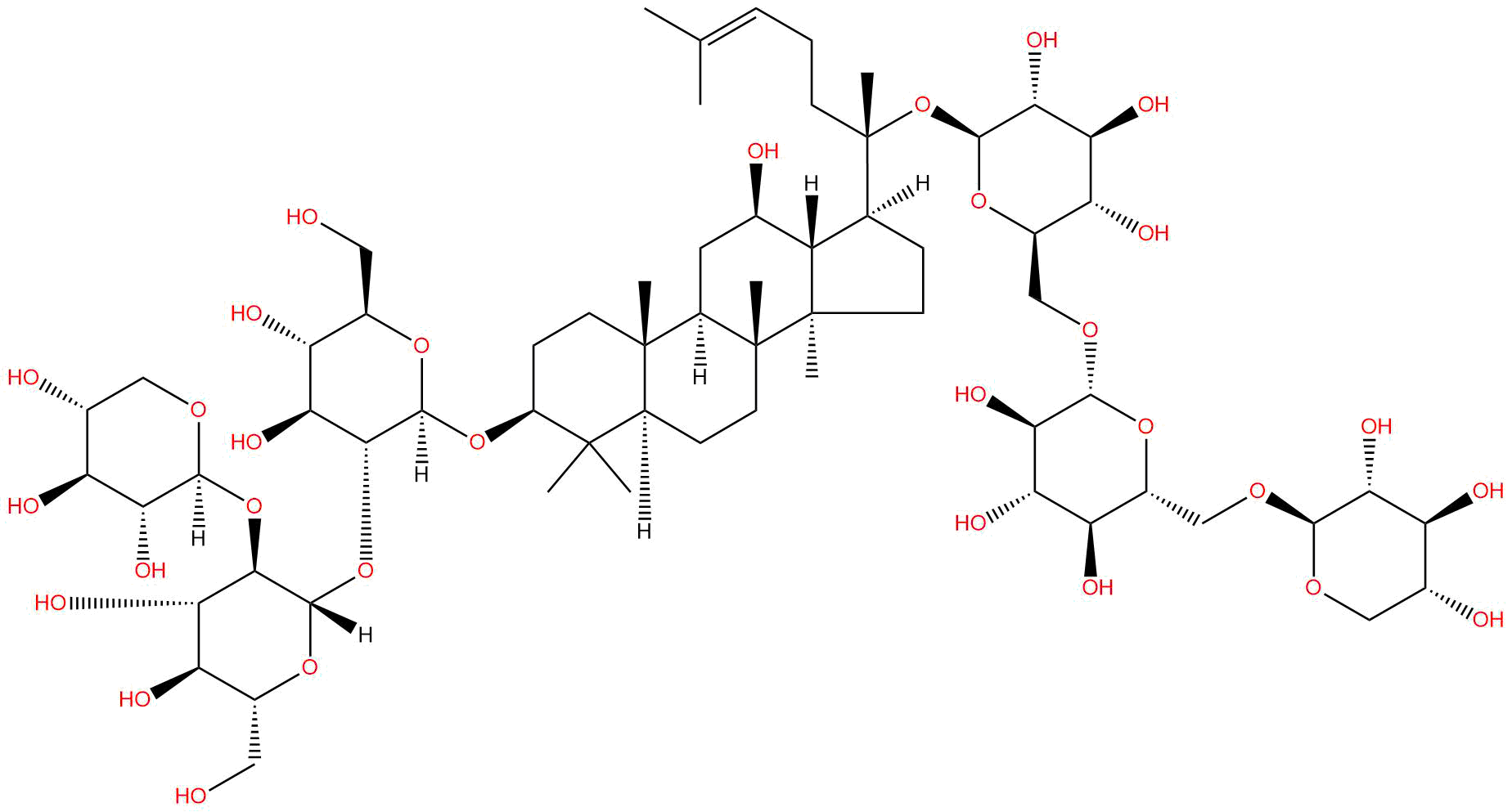


Product name: Notoginsenoside D
Synonym name:
Catalogue No.: BP5256
Cas No.: 193895-50-0
Formula: C64H108O31
Mol Weight: 1373.54
Botanical Source: Panax notoginseng
Type of Compound: Triterpenoids
Purity: 95%~99%
Analysis Method: HPLC-DAD or/and HPLC-ELSD
Identification Method: Mass, NMR
Packing: Brown vial or HDPE plastic bottle
Storage: Store in a well closed container, protected from air and light. Put into refrigerate or freeze for long term storage.
Whenever possible, you should prepare and use solutions on the same day. However, if you need to make up stock solutions in advance, we recommend that you store the solution as aliquots in tightly sealed vials at -20℃. Generally, these will be useable for up to two weeks.
The product could be supplied from milligrams to grams
Inquire for bulk scale.
For Reference Standard and R&D, Not for Human Use Directly.
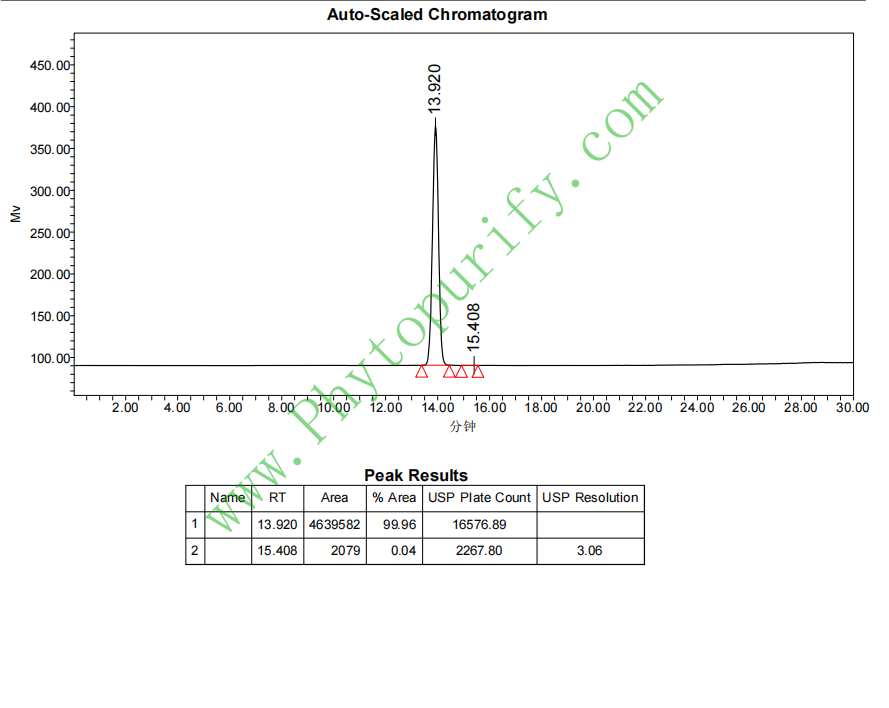
HPLC of Notoginsenoside D
Storage conditions:Short-term storage at 2~8℃, long-term storage at -20 ~ -80℃
495.1300
1.2294
1.2288
.6504
.4379
.1021
Low
64.8266
7.6946
Yes
No
No
No
No
No
0.0
Yes
No
No
No
Natural products, as an important source of drug discovery, play an irreplaceable role in human health maintenance and disease treatment. Among numerous biologically active natural compounds, it originates from the traditional precious Chinese medicine Sanqi(Panax notoginseng The saponin components of (BURK.) F.H. Chen have always been a hot topic in pharmacological research. Sanqi, as a plant of the Panax genus in the Araliaceae family, is known for its dry roots and rhizomes in traditional Chinese medicine theory as "gold cannot be exchanged". It has the effects of removing blood stasis, stopping bleeding, promoting blood circulation, and relieving pain, and is widely used in the prevention and treatment of cardiovascular and cerebrovascular diseases. Modern pharmacological research has revealed that the main active ingredient of Panax notoginseng is dammarane type triterpenoid saponins, among which ginsenosides Rb1, Rg1, Rd, etc. have been extensively studied. However, in the complex saponin spectrum of Panax notoginseng, there are still some trace components with relatively low content but unique structure and significant activity, and Notoginsenoside D (NG-D) is one of them.
Panax notoginseng saponin D, CAS number 193895-50-0, is a dammarane type triterpenoid oligoglycoside isolated from Panax notoginseng roots. Its chemical structure is characterized by a complex sugar chain, which endows it with unique physicochemical properties and biological activity. Early research mainly focused on the identification of NG-D as a trace component in total saponins of Panax notoginseng. However, in recent years, with the advancement of separation techniques and pharmacological evaluation methods, the unique pharmacological value of NG-D has gradually emerged, especially in the fields of neuroprotection and liver injury repair, showing remarkable potential. This article aims to systematically review the chemical structure, plant origin, pharmacological activity, mechanism of action, medicinal properties, and clinical application prospects of Panax notoginseng saponins D, in order to provide comprehensive scientific basis for the in-depth research and development of this natural product.
Sanqi saponin D belongs to the Damane type tetracyclic triterpenoid saponin. The basic skeleton of Damaran type saponins consists of four rings (A, B, C, D rings) with 17 carbon atoms and side chains with 8 carbon atoms. According to the different configurations at position C-20, it can be divided into 20 (S) - protopanaxadiol type (PPD) and 20 (S) - protopanaxatriol type (PPT). The structure of Sanqi saponin D was identified by spectroscopic methods such as NMR and MS, and its aglycone was 20 (S) - protopanaxadiol. Its unique structural features lie in the composition and connection of its sugar chains. Specifically, sugar chains are connected to the C-3 and C-20 positions of the aglycone. The sugar chain at C-3 position is usually β - D-glucopyranosyl - (1 → 2) - β - D-glucopyranosyl, while the sugar chain at C-20 position is more complex, usually β - D-xylopyranosyl - (1 → 6) - β - D-glucopyranosyl - (1 → 6) - β - D-glucopyranosyl. This complex oligosaccharide chain structure is the key distinguishing factor between NG-D and other ginsenosides (such as ginsenoside Rb1, which has two glucose residues at C-20), and is also the main reason for its larger molecular weight (1373.5370 Da).
From the perspective of physical and chemical properties, NG-D exhibits typical saponin characteristics. Its molecular weight is 1373.5370, belonging to macromolecular compounds. Its oil-water partition coefficient (LogP) is 1.2294, indicating that it has a certain degree of lipophilicity, but overall it still leans towards hydrophilicity. The topologically polar surface area (TPSA) is as high as 495.1300 Å ², mainly attributed to the large number of hydroxyl and glycosidic oxygen atoms in its molecules, indicating good water solubility (predicted water solubility of 0.6504 mg/mL). High TPSA and molecular weight also directly lead to lower blood-brain barrier (BBB) penetration ability, which is both a challenge and an opportunity for its application in central nervous system diseases. In addition, preliminary computer simulation predictions show that the inhibitory risk of NG-D on hERG potassium channels is low (No), and the Ames test result is 0.0, indicating that its mutagenic risk is extremely low, which provides a good safety basis for it as a candidate drug.
Sanqi saponin D mainly comes from the Panax ginseng plant in the Araliaceae family, Sanqi(Panax notoginseng)Dry roots and rhizomes. Sanqi is mainly distributed in the Wenshan area of Yunnan and the Baise area of Guangxi in China, and is a typical representative of authentic medicinal herbs. In Panax notoginseng, the content of NG-D is usually low and belongs to trace saponin components, which are much lower than the main components of ginsenosides Rg1, Rb1, Rd, etc. Its content is influenced by various factors, including the place of origin, growth period, harvest season, processing method (such as steaming), and plant parts (main root, fibrous root, reed head) of Panax notoginseng. Generally speaking, the accumulation of NG-D is relatively high in the main roots of Panax notoginseng with a longer growth period (such as more than 3 years).
Given the low content of NG-D in plants, efficient and specific methods are required for its extraction and purification. Traditional extraction methods typically include the following steps:
1. Solvent extraction After crushing the dried roots of Panax notoginseng, use ethanol or methanol aqueous solution (such as 70% ethanol) for heating reflux or ultrasound assisted extraction. Alcohol water mixed solvents can effectively extract saponins with high polarity.
2. Preliminary purification After concentration, the extract is often extracted with n-butanol to transfer saponin components from the aqueous phase to the organic phase, in order to remove a large amount of water-soluble impurities (such as sugars and proteins).
3. Column chromatography separation After drying, the n-butanol extract was separated by column chromatography. Common stationary phases include macroporous adsorption resins (such as D101, AB-8), silica gel, and reverse phase silica gel (such as ODS). Macroporous resin columns are commonly used for the enrichment of total saponins, and components rich in saponins of different polarities can be obtained by gradient elution with ethanol at different concentrations.
4. Preparation of High Performance Liquid Chromatography (HPLC)For trace components such as NG-D, conventional column chromatography is difficult to obtain high-purity products. Therefore, it is usually necessary to use preparative high-performance liquid chromatography (Prep HPLC) for final purification. Using a reverse phase C18 chromatography column with acetonitrile water or methanol water system as the mobile phase, NG-D can be efficiently separated from other structurally similar saponins (such as ginsenosides Rb1, Rd, and tricarboxylic acid R1) by isocratic or gradient elution, combined with UV detection (usually at 203 nm, characteristic absorption of saponins), to obtain NG-D monomers with a purity greater than 98%.
In recent years, with the advancement of chromatographic technology, high-speed countercurrent chromatography (HSCCC) and supercritical fluid chromatography (SFC) have also been attempted to be applied for the separation of saponins from Panax notoginseng, providing new options for the green and efficient preparation of NG-D.
In recent years, research on the pharmacological activity of Panax notoginseng saponins D has gradually deepened, mainly focusing on the following aspects:
Neurodegenerative diseases, such as Alzheimer's disease (AD) and Parkinson's disease (PD), have complex pathological mechanisms involving β - amyloid (A β) deposition, tau protein hyperphosphorylation, oxidative stress, neuroinflammation, and mitochondrial dysfunction. Multiple studies have shown that NG-D exhibits significant neuroprotective activity in both in vitro and in vivo models.
Sanqi and its total saponins have been widely used in traditional and modern medicine for liver protection. As one of the active ingredients of Panax notoginseng, NG-D also showed significant protective effects in liver injury models.
In addition to the main activities mentioned above, NG-D has also been reported to have potential activities such as anti-inflammatory, anti-tumor (such as inhibiting the proliferation and migration of certain cancer cells), and cardiovascular protection. However, research in these areas is still in its infancy and further exploration is needed.
The pharmacological activity of Panax notoginseng saponins D is the result of multi-target and multi pathway synergistic effects. Based on existing research, its core mechanism of action can be summarized into the following aspects, which are highly consistent with the target information you provided:
Regulating cell apoptosis and survival (BCL2, CASP9, MAPK1)NG-D upregulates the expression of anti apoptotic protein Bcl-2, downregulates the expression of pro apoptotic protein Bax, and inhibits the activation of key executive enzyme Caspase-9, thereby blocking the mitochondrial mediated endogenous apoptosis pathway. In addition, NG-D can regulate the mitogen activated protein kinase (MAPK) pathway, particularly MAPK1 (i.e. ERK2). The ERK signaling pathway is typically associated with cell proliferation and survival, and NG-D may counteract injury stimuli and promote cell survival by activating the ERK pathway.
Regulating amyloid precursor protein (APP) metabolism and tau protein phosphorylation (APP, BACE1, MAPT, GSK3B)In the Alzheimer's disease model, NG-D can affect the processing of APP. It may reduce the production of A β by inhibiting the activity of β - secretase 1 (BACE1). At the same time, NG-D inhibits the activity of GSK-3 β, reduces the excessive phosphorylation of tau protein at key sites (such as Ser396, Ser404), thereby maintaining microtubule stability and protecting the neuronal skeleton.
Activate the antioxidant defense system (NFE2L2, SIRT1)NG-D is an effective activator of Nrf2 (encoded by the NFE2L2 gene). It promotes the nuclear translocation of Nrf2, initiates the expression of a series of downstream antioxidant and detoxifying enzymes, and constructs a powerful cellular antioxidant barrier. Meanwhile, NG-D can upregulate the expression and activity of SIRT1 (deacetylase). SIRT1 not only participates in antioxidant stress, but also regulates mitochondrial biosynthesis, energy metabolism, and cell survival by deacetylating various substrates (such as PGC-1 α, p53, FOXO). It works synergistically with the Nrf2 pathway to maintain cellular homeostasis.
Regulating neurotransmitters and synaptic plasticity Although direct evidence is not yet sufficient, given its neuroprotective effect, NG-D may improve synaptic plasticity by affecting the expression and function of synaptic proteins, thereby playing a role in cognitive function improvement.
In summary, NG-D has formed a networked regulatory mechanism by simultaneously acting on multiple key pathological processes such as apoptosis, A β metabolism, tau protein phosphorylation, and oxidative stress, which makes it potentially advantageous in the treatment of complex diseases such as AD.
Although Sanqi Saponin D has shown good pharmacological activity in vitro and in vivo models, its pharmacological development still faces some challenges, mainly due to its complex chemical structure.
Pharmaceutical advantages:
* Good security As mentioned earlier, computer predictions and preliminary toxicology studies have shown that NG-D has a low inhibitory risk on hERG channels and a negative Ames test, indicating a low risk of genetic and cardiac toxicity, which is an important additional factor for its candidate drug.
* Clear pharmacological activity Has clear and strong activity in neuroprotection and liver protection, with a clear mechanism of action and clear targets.
Drug Challenge:
* Low oral bioavailability This is a common problem faced by most saponin compounds. The high molecular weight (>1300 Da) and polarity (high TPSA) of NG-D result in strong water solubility but insufficient lipid solubility, making it difficult to penetrate the intestinal epithelial cell membrane. In addition, its complex sugar chain structure is easily hydrolyzed by acid and metabolized by gut microbiota in the gastrointestinal tract, resulting in extremely low oral bioavailability of its prototype drug (usually less than 1%). This is the biggest obstacle to its oral drug development.
* Low blood-brain barrier penetration As mentioned earlier, its high molecular weight and high polarity result in low BBB penetration ability. This is a serious challenge for treating central nervous system diseases such as AD. Although NG-D may indirectly affect the central nervous system by regulating peripheral immunity or metabolism, its efficiency in directly targeting brain targets is relatively low.
* Metabolic stability NG-D undergoes extensive metabolism in the body, mainly through deglycosylation, gradually converting into secondary glycosides or aglycones (such as ginsenosides Rd, F2, and ultimately to 20 (S) - protopanaxadiol). These metabolites may have different biological activities, making their pharmacological evaluation complex.
Pharmacokinetic characteristics (preliminary study):
* absorb Poor oral absorption and low absolute bioavailability. Intravenous injection is the main route of administration.
* distribution After intravenous administration, NG-D is mainly distributed in plasma and organs with abundant blood flow (such as the liver, kidneys, and lungs), with very little distribution in brain tissue.
* Metabolism Metabolism mainly occurs in the liver and intestines. The gut microbiota is an important site for metabolizing saponins, producing a series of metabolites through the gradual hydrolysis of sugar chains.
* excretion Mainly excreted in the form of metabolites through bile and feces, with less excretion in urine.
Improvement strategy:
In response to the above challenges, future research can consider the following strategies:
1. Optimization of administration route Develop non oral routes of administration, such as nasal administration (directly targeting the brain, bypassing the BBB), transdermal administration, or injection administration (such as liposomes, nanoparticle encapsulation).
2. Structural modification Structural modification of the sugar chain of NG-D, such as introducing specific functional groups or preparing prodrugs, to enhance its lipid solubility and metabolic stability.
3. New delivery system Utilizing nanotechnology, such as polymer nanoparticles, liposomes, micelles, etc., to encapsulate NG-D to enhance its water solubility, bioavailability, and targeting. Especially for brain diseases, develop nano delivery systems that can actively target the BBB (such as nanoparticles with surface modified transferrin receptor or glucose transporter ligands).
Sanqi saponin D, as a natural product from traditional Chinese medicine, has a unique chemical structure and multi-target pharmacological activity, which makes it show potential clinical application prospects in multiple disease fields.
Neurodegenerative diseases Given its strong neuroprotective effects, particularly its ability to resist A β toxicity, inhibit tau phosphorylation, and resist oxidative stress, NG-D is a potential candidate compound for the treatment of Alzheimer's disease (AD) and Parkinson's disease (PD). However, its low BBB penetration is the main obstacle. The future research focus should be on developing formulation technologies that can effectively deliver NG-D into the brain, such as nasal delivery nanosystems. Once this bottleneck is overcome, NG-D is expected to become a multi-target drug for treating AD.
liver disease The protective effect of NG-D is clear in various liver injury models, and the liver is one of the main organs for its metabolism and distribution, which provides a natural advantage for the treatment of liver disease with NG-D. It can be used to treat acute liver injury, alcoholic liver disease, non-alcoholic steatohepatitis (NASH), and even liver fibrosis. Due to the relatively easy targeting of the liver, the development prospects of NG-D in the field of liver disease may be more optimistic than in the field of neurological diseases.
As a lead compound The complex sugar chain structure of NG-D provides abundant modification sites for medicinal chemists. By systematically studying the structure-activity relationship (SAR) of its sugar chains, a series of derivatives with simplified structures, stronger activity, and better pharmacokinetic properties can be designed and synthesized. For example, retaining the core aglycone and optimizing the length and monosaccharide composition of the sugar chain may lead to novel compounds with higher oral bioavailability and better BBB penetration.
Future research directions:
* In depth pharmacokinetic research Systematically study the absorption, distribution, metabolism, and excretion processes of NG-D and its main metabolites in the body, and clarify the true active form (prototype or metabolite) that exerts pharmacological effects.
* Comprehensive toxicological evaluation Conduct systematic safety evaluations on long-term toxicity, reproductive toxicity, and immune toxicity.
* Deepening the mechanism of action Using omics techniques (such as transcriptomics, proteomics, metabolomics) and systems biology methods, comprehensively reveal the molecular network regulatory mechanism of NG-D and verify its target binding in vivo.
* Formulation development Focus on developing new drug delivery systems that can improve bioavailability and targeting for different indications, such as nanoliposomes, polymer micelles, phospholipid complexes, etc.
* clinical trial After completing sufficient preclinical research, promote the clinical trial phase of NG-D or its derivatives to verify their safety and efficacy in humans.
Sanqi saponin D, as a unique trace amount of dammarane type triterpenoid oligoglycoside in Sanqi, is gradually moving from behind the scenes to the forefront due to its complex chemical structure and multi-target pharmacological activity. Its enormous potential in the fields of neuroprotection and liver injury repair has made it a remarkable new star in the development of natural product drugs. Although challenges such as low oral bioavailability and poor blood-brain barrier penetration still exist, this does not mask its value as a lead compound and therapeutic candidate. By combining modern medicinal chemistry, nanotechnology, and pharmacokinetic studies, we have reason to believe that Sanqi Saponin D and its derivatives have the potential to provide new and effective drug options for the treatment of neurodegenerative and liver diseases in the future, thereby transforming the wisdom of traditional Chinese medicine into the achievements of modern medicine. The in-depth study of Panax notoginseng saponins D is not only to explore the value of a single compound, but also a beneficial exploration for the modernization and internationalization of traditional Chinese medicine.
