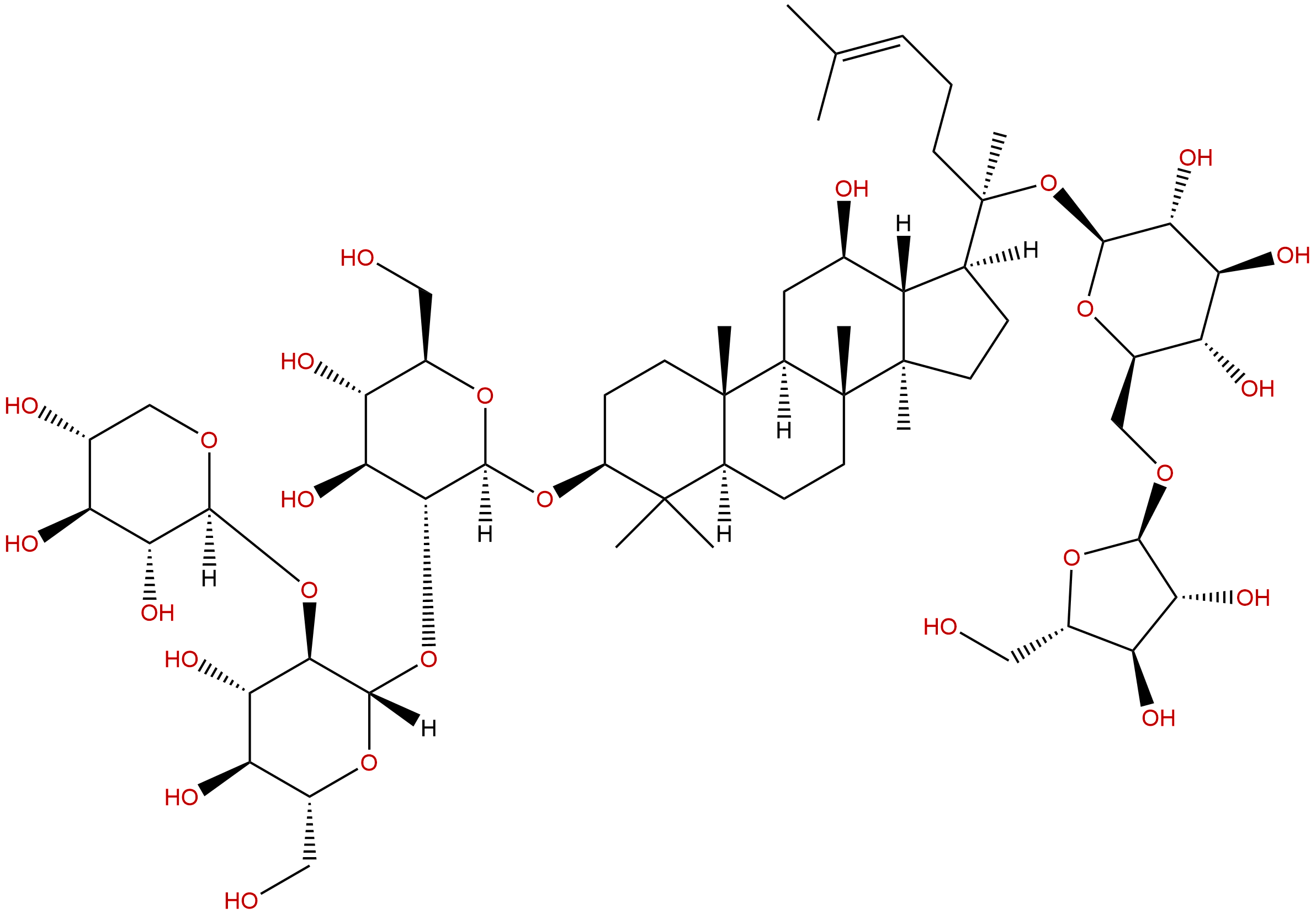


Product name: Notoginsenoside FP2
Synonym name:
Catalogue No.: BP2013
Cas No.: 1004988-75-3
Formula: C58H98O26
Mol Weight: 1211.4
Botanical Source: Notoginseng
Physical Description:
Type of Compound:
Purity: 95%~99%
Analysis Method: HPLC-DAD or/and HPLC-ELSD
Identification Method: Mass, NMR
Packing: Brown vial or HDPE plastic bottle
The product could be supplied from milligrams to grams. Inquire for bulk scale.
We provide solution to improve the water-solubility of compounds, thereby facilitating the variety of activity tests and clinic uses.
For Reference Standard and R&D, Not for Human Use Directly.
Description:
Reference standards.
References:
Helvetica Chimica Acta, 2008,91(1):60-66.
Two New Dammarane‐Type Bisdesmosides from the Fruit Pedicels of Panax notoginseng.
Two new dammarane-type triterpenoidal saponins, notoginsenoside FP1 (1) and Notoginsenoside FP2 (2), were isolated from the fruit pedicels of Panax notoginseng, along with 22 known compounds.
METHODS AND RESULTS:
Their structures were elucidated on the basis of spectroscopic evidences and chemical methods. The known compounds were identified as ginsenosides Rg1 (3), Re (4), Rb3 (5), Rc (6), Rd (7), Rb2 (8), Rb1 (9), F2 (10), and F1 (11); as notoginsenosides R1 (12), Fa (13), and Fc (14); as vina-ginsenoside R7 (15); as gypenosides IX (16), XVII (17), and XIII (18), and as chikusetsusaponin-L5 (19), quercetin 3-O-β-D-glucopyranosyl-(1→2)-β-D-galactopyranoside (20), kaempferol 3-O-β-D-glucopyranosyl-(1→2)-β-D-galactopyranoside (21), benzyl-β-primeveroside (22), (S)-tryptophan (23), and icariside B6 (24). Compounds 15, 19 and 22–24 are reported for the first time from the title plant.
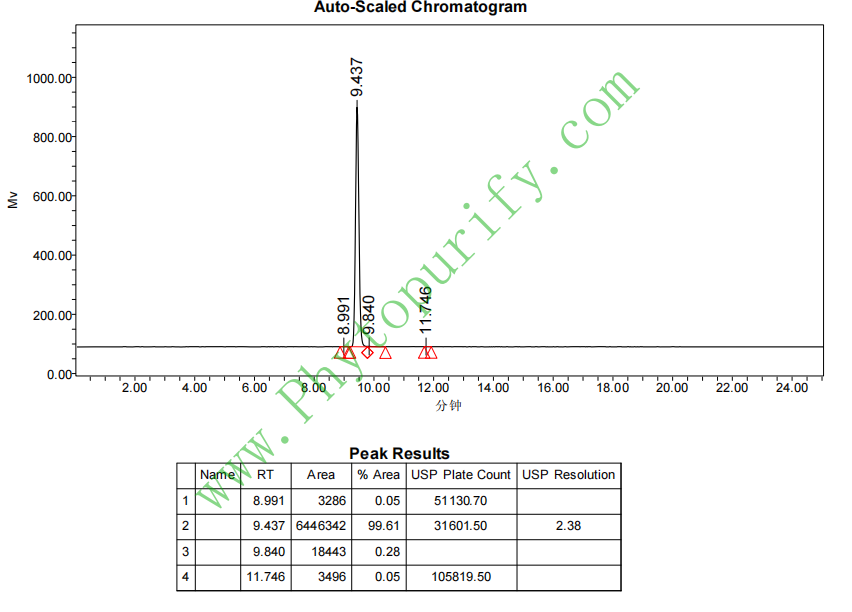
HPLC of Notoginsenoside FP2
Storage conditions:Short-term storage at 2~8℃, long-term storage at -20 ~ -80℃
415.9800
1.6668
1.6667
.2580
.4686
.1158
Low
66.7726
7.2247
Yes
No
No
No
No
No
0.0
Yes
No
No
No
Notoginsenoside FP2 is a traditional precious Chinese medicine derived from Panax notoginseng(Panax notoginseng Damane type triterpenoid saponins isolated from the fruit stem of Burk. F.H. Chen. Sanqi, as a classic medicinal herb in traditional Chinese medicine that promotes blood circulation, removes blood stasis, reduces swelling, and relieves pain, can be traced back to the Ming Dynasty. Li Shizhen recorded it as "stopping bleeding, dispersing blood, and relieving pain" in his book "Compendium of Materia Medica". Modern pharmacological research has confirmed that the main active ingredient of Panax notoginseng, Panax notoginseng saponins (PNS), exhibits significant therapeutic potential in cardiovascular diseases, cerebrovascular diseases, anti thrombotic and anti-inflammatory effects. With the advancement of separation and purification technology, more and more monomeric saponins have been identified from different parts of Panax notoginseng (roots, flowers, stems, leaves), and Panax notoginseng saponin FP2 is one of them.
The discovery of Sanqi saponin FP2 has expanded the diversity of Sanqi's chemical components, especially in its non-traditional medicinal part - the fruit stem. This discovery not only provides a new direction for the comprehensive utilization of Sanqi resources, but also suggests that the compound may have unique pharmacological activities. Preliminary studies have shown that Panax notoginseng saponins FP2 have the potential to study cardiovascular diseases, especially anti thrombotic effects. Thrombotic diseases, such as myocardial infarction, ischemic stroke, and deep vein thrombosis, are one of the leading causes of death and disability worldwide. The existing antithrombotic drugs, such as aspirin, clopidogrel, and warfarin, although effective, often have limitations such as bleeding, gastrointestinal reactions, or the need for frequent monitoring of coagulation indicators. Therefore, the search for efficient and low toxicity novel antithrombotic lead compounds from natural products has always been a research hotspot in the fields of medicinal chemistry and pharmacology.
This article aims to provide a systematic professional review of Panax notoginseng saponins FP2, covering its chemical structure and physicochemical properties, plant sources and extraction methods, pharmacological activity research, mechanism of action and molecular targets, pharmacological evaluation and pharmacokinetic characteristics, as well as prospects for its clinical application, in order to provide comprehensive scientific basis for the in-depth research and development of this compound.
Panax notoginseng saponins FP2 belong to the Damane type tetracyclic triterpenoid saponins, and their chemical structure has typical characteristics of this class of compounds. Its aglycone is Protopanaxadiol (PPD), which has hydroxyl groups attached to the C-3 and C-12 positions of the Damatane skeleton, and the C-20 position is in the S configuration. Similar to many Sanqi saponins, the sugar chain of Sanqi saponin FP2 is partially connected to the hydroxyl groups at positions C-3 and C-20 of the aglycone. According to its name and structural analysis, the C-3 sugar chain is usually composed of β - D-glucopyranosyl (1 → 2) - β - D-glucopyranosyl, while the C-20 sugar chain is composed of β - D-xylopyranosyl (1 → 6) - β - D-glucopyranosyl. This specific glycosylation pattern determines its unique chemical properties and biological activity.
From the perspective of physical and chemical properties, the molecular formula of Sanqi saponin FP2 is C ₅₉ H ₁₀₀ O ₂₆, with a molecular weight of 1211.3960 Da, making it a macromolecular compound. The LogP value of its lipid water partition coefficient is 1.6668, indicating that the compound has a certain degree of lipophilicity, but overall it still leans towards hydrophilicity. The topologically polar surface area (TPSA) is as high as 415.9800 Å ², mainly attributed to the numerous hydroxyl and glycosidic oxygen atoms in its molecule, which give it a strong ability to form hydrogen bonds. The water solubility parameter is 0.2580 mg/mL, indicating limited solubility in water and belonging to the category of slight solubility. This characteristic may affect its absorption and bioavailability in the body.
In terms of stability, as a saponin compound, Panax notoginseng saponins FP2 may undergo hydrolysis under acidic conditions, leading to sugar chain breakage and the formation of secondary glycosides or aglycones. Relatively stable under alkaline conditions, but prolonged heating may also cause structural changes. Its pure product is usually a white or off white amorphous powder, which is easily soluble in polar organic solvents such as methanol, ethanol, n-butanol, and difficult to dissolve in non-polar solvents such as ether and petroleum ether. These physical and chemical properties are important foundations for designing extraction, separation, purification processes, and subsequent formulation development.
The plant source of Sanqi saponin FP2 is Sanqi, a plant of the Panax genus in the Araliaceae family(Panax notoginseng)The fruit stem. Traditionally, the medicinal parts of Panax notoginseng are mainly dry roots and rhizomes, while the above ground parts such as flowers, fruit stems, stems and leaves are often treated as non medicinal parts or waste. However, modern chemical composition analysis shows that the aboveground part of Panax notoginseng is also rich in various active saponins, and its saponin composition differs from that of the underground part. The discovery of Sanqi saponin FP2 is the result of systematic chemical composition research on Sanqi fruit stems, which greatly promotes the whole plant development and utilization of Sanqi plant resources.
The extraction of Sanqi saponin FP2 usually follows the principle of "similar solubility". Due to its high molecular weight and polarity, commonly used extraction solvents are aqueous ethanol or methanol. The typical extraction process includes: crushing the dried Sanqi fruit stems, heating and refluxing with a certain concentration (such as 70% -80%) ethanol solution for extraction or cold soaking extraction. After the extraction solution is concentrated under reduced pressure and the solvent is recovered, the total extract is obtained. Subsequently, the total extract was dispersed in water and subjected to liquid-liquid extraction using petroleum ether, ethyl acetate, and water saturated n-butanol in sequence. Due to the high polarity of Sanqi saponin FP2, it is mainly enriched in the n-butanol extraction layer.
N-butanol extract is a crude extract rich in saponins, which contains various structurally similar saponin monomers. In order to obtain high-purity Panax notoginseng saponins FP2, various modern chromatographic separation techniques need to be used for purification. The commonly used methods include: silica gel column chromatography (gradient elution with chloroform methanol water system), macroporous adsorption resin column chromatography (such as D101, HP-20 type, elution with different concentrations of ethanol water system), ODS (octadecylsilane bonded silica gel) reverse phase column chromatography, and preparative high-performance liquid chromatography (Pre HPLC). Due to the high similarity in structure between Panax notoginseng saponins FP2 and other ginsenosides such as Rb1, Rd, Rg1, etc., separation is difficult and usually requires repeated purification using multiple chromatographic techniques. Finally, the obtained monomer compound was structurally identified by spectroscopic methods such as nuclear magnetic resonance spectroscopy (NMR) and mass spectrometry (MS), confirming its identity as Sanqi saponin FP2.
At present, the pharmacological activity research of Panax notoginseng saponins FP2 is still in its infancy, but the existing evidence strongly points to its potential value in cardiovascular disease, especially in anti thrombosis.
Antithrombotic activity Thrombosis is a complex pathological process involving platelet activation, aggregation, activation of coagulation cascade reactions, and formation of fibrin network. Preliminary studies have shown that Panax notoginseng saponins FP2 may exert antithrombotic effects through multiple targets and pathways. In vitro experiments, it may exert its effect by inhibiting platelet aggregation. Platelet aggregation is the core process of arterial thrombosis formation. Sanqi saponin FP2 may reduce platelet aggregation by interfering with the binding of platelet surface receptors (such as integrin α IIb β 3, i.e. ITGA2B/ITGB3) to fibrinogen, or by inhibiting platelet signaling pathways (such as P2Y12 receptor-mediated ADP signaling pathway). In addition, it may also affect key enzymes in the coagulation cascade reaction. Thrombin (F2), coagulation factors VII (F7), IX (F9), and X (F10) are key serine proteases in both endogenous and exogenous coagulation pathways. Sanqi saponin FP2 may exert anticoagulant effects by inhibiting the activity or expression of these factors, prolonging clotting time, reducing fibrin formation.
The impact on vascular function In addition to its direct antithrombotic effect, Sanqi saponin FP2 may also have a protective effect on the function of vascular endothelial cells. Endothelial injury is one of the initiating factors for thrombus formation. This compound may indirectly inhibit thrombus formation by inhibiting inflammatory reactions, reducing oxidative stress damage, maintaining the integrity and function of endothelial cells. In addition, its potential impact on cyclooxygenase-1 (PTGS1, COX-1) is also worth paying attention to. COX-1 is a key enzyme that catalyzes the production of thromboxane A2 (TXA2) from arachidonic acid, which is a potent inducer of platelet aggregation and vasoconstrictor. Sanqi saponin FP2 may inhibit platelet aggregation and vascular constriction by suppressing COX-1 activity, reducing TXA2 production. At the same time, it may also act on the TXA2 receptor (TBXA2R), blocking downstream signaling of TXA2.
Other potential activities Given the extensive activities of Panax notoginseng saponins in anti-inflammatory, antioxidant, and anti apoptotic aspects, the monomeric component of Panax notoginseng saponins FP2 may also have similar effects. These effects are of great significance for improving myocardial ischemia-reperfusion injury and protecting brain tissue from ischemic injury. However, these hypotheses still need to be validated through rigorous in vitro and in vivo experiments.
Based on existing research, the anti thrombotic mechanism of Panax notoginseng saponins FP2 may involve a complex molecular network, with its targets mainly focused on the coagulation system and platelet function.
Regulation of coagulation system targets Sanqi saponin FP2 may inhibit the coagulation cascade reaction directly or indirectly. Its potential targets include:
- Thrombin (F2)Thrombin is the core enzyme in the coagulation cascade, responsible for converting fibrinogen into fibrin and strongly activating platelets. Sanqi saponin FP2 may act as a direct inhibitor of thrombin or reduce thrombin production by affecting the activation of prothrombin.
- Coagulation factor X (F10)FX is a common pathway of endogenous and exogenous coagulation pathways, which activates to form FXa and subsequently activates thrombin. Inhibition of FXa is the mechanism of action of novel oral anticoagulants such as rivaroxaban and apixaban. Sanqi saponin FP2 may have similar FXa inhibitory activity.
- Coagulation factors VII (F7), IX (F9)FVIIa is the initiating factor of the exogenous coagulation pathway, while FIXa is the key factor of the endogenous coagulation pathway. Sanqi saponin FP2 may inhibit the activity of these upstream factors, further upstream blocking the amplification of coagulation signals.
- Antithrombin III (SERPINC1)Antithrombin III is the most important natural anticoagulant substance in the body, which can inactivate various coagulation factors such as thrombin and FXa. Sanqi saponin FP2 may indirectly exert anticoagulant effects by enhancing the activity of antithrombin III.
Regulation of platelet functional targets Platelet activation and aggregation are the core of arterial thrombosis formation. Sanqi saponin FP2 may act on the following targets:
- P2Y12 receptor (P2RY12)P2Y12 is a G protein coupled receptor on the surface of platelets and a key receptor for ADP induced platelet aggregation. Antiplatelet drugs such as clopidogrel and ticagrelor act by blocking this receptor. Sanqi saponin FP2 may act as a P2Y12 receptor antagonist, inhibiting ADP mediated platelet activation signaling.
- Integrin α IIb β 3 (ITGA2B/ITGB3)This integrin is the ultimate common pathway for platelet aggregation. Activated α IIb β 3 binds to fibrinogen, leading to platelet cross-linking and aggregation. Sanqi saponin FP2 may inhibit its binding to ligands by blocking the activation of this receptor or directly competitively inhibiting its binding.
- Thromboxane A2 receptor (TBXA2R)TXA2 is a powerful platelet agonist. Sanqi saponin FP2 may antagonize TBXA2R, block TXA2 induced platelet aggregation and vascular constriction.
- Cyclooxygenase-1 (PTGS1)Aspirin reduces TXA2 production by irreversibly inhibiting COX-1. Sanqi saponin FP2 may reduce the synthesis of TXA2 from the source by inhibiting COX-1 activity.
In summary, the antithrombotic effect of Panax notoginseng saponins FP2 is not a single target, but rather through a network regulation mode of "multi-target, multi pathway", acting simultaneously on key nodes of the coagulation system and platelet function. This mode of action may bring more comprehensive antithrombotic effects and may reduce the common bleeding risk of single target drugs.
The development of natural products into clinical drugs must undergo strict pharmacological evaluation. The physicochemical properties of Sanqi saponin FP2 provide preliminary but important clues for its medicinal properties.
Analysis of drug properties parameters:
- Molecular weight (1211.40 Da)Far exceeding the threshold of molecular weight less than 500 in Lipinski's Rule of Five. High molecular weight typically means poor oral absorption and low permeability, which are common challenges faced by saponin compounds.
- LogP(1.67)Within an ideal range (0-3), it indicates a balance between lipophilicity and hydrophilicity, which is favorable for transmembrane transport.
- TPSA(415.98 Ų): Far above the threshold of 140 Å ². High TPSA indicates that the compound is difficult to passively diffuse through the cell membrane, and its oral bioavailability may be extremely low.
- Water solubility (0.258 mg/mL)Belonging to micro solubility, it limits its dissolution and absorption in the gastrointestinal tract.
- Blood-brain barrier (BBB)Predicted as low permeability. This is an advantage for treating peripheral vascular diseases such as deep vein thrombosis, as it can reduce central nervous system side effects; But for the treatment of stroke, special delivery systems may be required.
- HERG inhibition Predicted as negative, this is a positive signal indicating a lower risk of causing QT interval prolongation and arrhythmia in the heart.
- Ames test The result is 0.0, indicating no mutagenicity and low risk of genetic toxicity.
Pharmacokinetic characteristics (prediction and outlook):
Based on the above parameters, the oral bioavailability of Sanqi saponin FP2 is expected to be very low. This is mainly due to the poor membrane permeability caused by its high molecular weight and polarity, as well as the possible efflux of intestinal efflux transporters such as P-glycoprotein. In addition, saponin compounds are easily metabolized by gut microbiota in the gastrointestinal tract, undergoing deglycosylation reactions and generating secondary glycosides or aglycones, which may be the true active forms of these metabolites. Therefore, pharmacokinetic studies of Panax notoginseng saponins FP2 should focus on:
1. absorb Poor absorption after oral administration may require improvement in bioavailability through intravenous injection, sublingual administration, or the development of novel drug delivery systems such as liposomes, nanoemulsions, phospholipid complexes.
2. distribution After intravenous administration, due to its high polarity, it may mainly be distributed in the extracellular fluid and have a higher binding rate with plasma proteins.
3. Metabolism The main metabolic pathways may include phase II metabolic reactions such as deglycosylation, hydroxylation, and glucuronidation in the liver and intestine.
4. excretion The prototype drug may be mainly excreted through bile and feces, and the amount excreted through the kidneys may be relatively small.
Overall, Sanqi saponin FP2 has a certain pharmacological basis (such as low toxicity and no hERG risk), but its oral bioavailability is the main obstacle to its development as an oral drug. Future research needs to focus on how to overcome this bottleneck, such as through structural modifications (such as prodrug design) or formulation techniques.
Sanqi saponin FP2, as a natural product with antithrombotic potential, has broad clinical application prospects, but also faces many challenges.
Potential indications:
1. Prevention and treatment of thrombotic diseases Given its multi-target antithrombotic mechanism, Panax notoginseng saponins FP2 may be used for the prevention and treatment of arterial thrombotic diseases (such as acute coronary syndrome, ischemic stroke) and venous thromboembolism (such as deep vein thrombosis, pulmonary embolism). Its potential anti-inflammatory and vascular protective effects may also have value in the long-term management of atherosclerosis.
2. As an adjuvant drug for antithrombotic therapy It can be used in combination with existing antiplatelet drugs (such as aspirin, clopidogrel) or anticoagulants (such as warfarin, new oral anticoagulants) to synergistically enhance efficacy through different mechanisms and potentially reduce the dosage and side effects of a single drug. For example, in combination therapy, the risk of bleeding may be reduced by inhibiting coagulation factors.
3. Treatment of diseases related to microcirculation disorders For example, diabetes retinopathy, peripheral vascular disease, etc., its effect of improving microcirculation and anti platelet aggregation may bring clinical benefits.
Future research directions:
1. In depth pharmacological research It is necessary to systematically evaluate the efficacy of Panax notoginseng saponins FP2 in various in vivo thrombus models, such as arterial thrombosis, venous thrombosis, and arteriovenous bypass thrombosis models. At the same time, precise validation of its binding mode and affinity with targets such as PTGS1, F2, P2RY12 can be achieved through gene knockout or pharmacological tools.
2. Pharmacokinetic and Toxicological Studies Establish sensitive and specific biological sample analysis methods (such as LC-MS/MS) to systematically study their absorption, distribution, metabolism, and excretion (ADME) processes in animal bodies. Conduct long-term toxicity tests to evaluate its safety, especially its impact on bleeding time and liver and kidney function.
3. Research on Structural Optimization and Structure Performance Relationship Using Sanqi saponin FP2 as the lead compound, a series of derivatives were synthesized by modifying its sugar chain (such as changing the type, quantity, and connection position of sugars) or modifying its aglycone. The relationship between its antithrombotic activity and structure was studied to find candidate compounds with stronger activity and better pharmacokinetic properties.
4. Development of a new drug delivery system To address the issue of low oral bioavailability, liposomes, nanoparticles, phospholipid complexes, and self microemulsifying drug delivery systems have been developed to improve oral absorption. For acute indications, developing intravenous injection formulations is a more direct choice.
Sanqi saponin FP2 is a triterpenoid saponin with a unique structure discovered from the non medicinal part of the traditional Chinese medicine Sanqi, the fruit stem. Preliminary pharmacological studies have revealed its enormous potential in anti thrombosis, and its mechanism of action involves the regulation of multiple key targets such as the coagulation system (F2, F7, F9, F10) and platelet function (P2RY12, ITGA2B/ITGB3, TBXA2R), reflecting the characteristic of natural products with "multi-target and multi pathway" effects. The drug efficacy evaluation shows that although the compound faces challenges such as low oral bioavailability, its advantages of low toxicity, no genetic toxicity, and no risk of hERG inhibition provide a feasible basis for its development.
Looking ahead to the future, research on Sanqi saponin FP2 is still in its early stages, and there is still a long way to go from laboratory discovery to clinical application. Thoroughly elucidating its in vivo efficacy, pharmacokinetic characteristics, safety, and developing efficient delivery systems will be the core tasks of future research. As a model of comprehensive utilization of Sanqi resources, the successful development of Sanqi saponin FP2 may not only provide a new candidate drug for the treatment of thrombotic diseases, but also provide new ideas and examples for the modernization and internationalization of traditional Chinese medicine. We have reason to believe that with the continuous deepening of research, the new star of Sanqi Saponin FP2, a natural product treasure trove, will eventually shine its due light.
