


Synonym name:
Catalogue No.: BP0043
Cas No.: 948046-15-9
Formula: C41H70O13
Mol Weight: 770.998
Botanical Source:
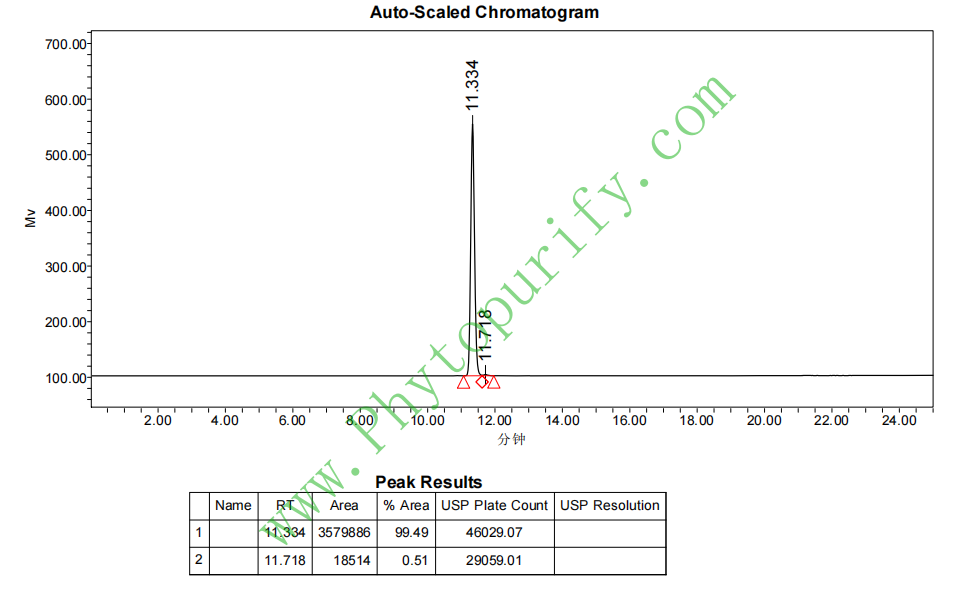
Purity: 95%~99%
Analysis Method: HPLC-DAD or/and HPLC-ELSD
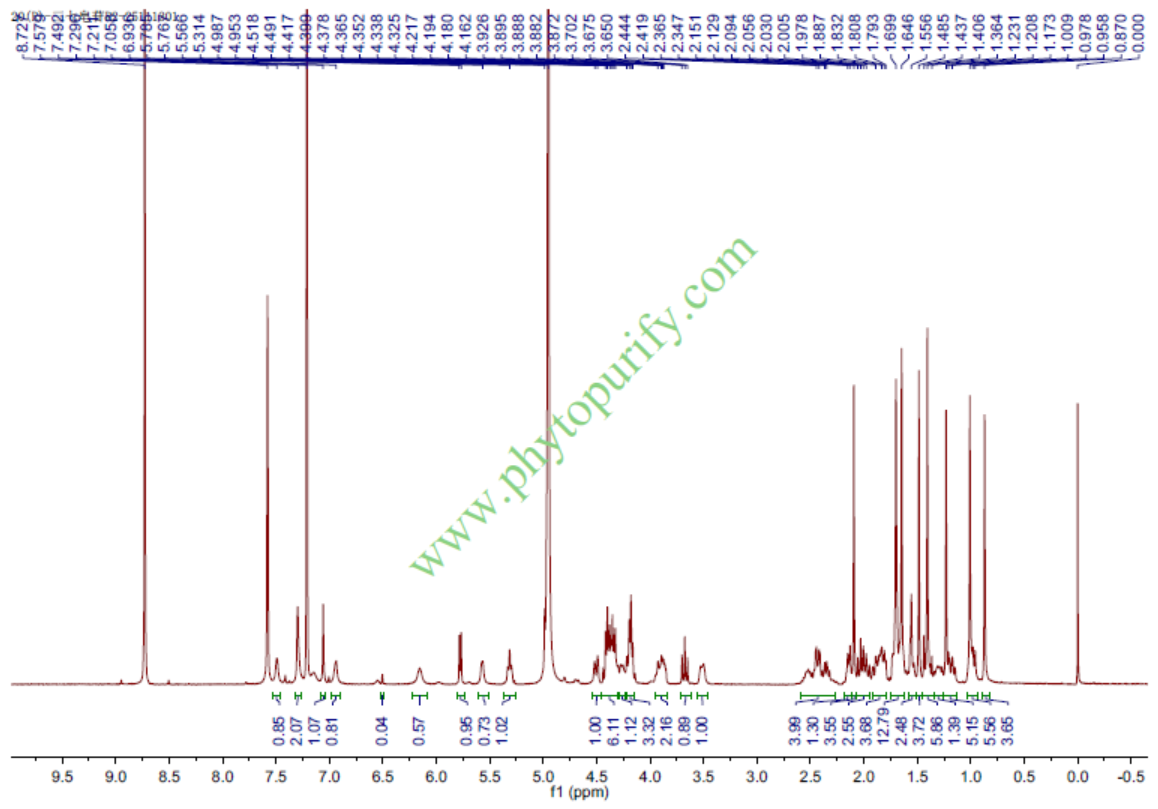
Identification Method: Mass, NMR
Packing: Brown vial or HDPE plastic bottle
Can be supplied from milligrams to grams.
For Reference Standard and R&D, Not for Human Use Directly.
Inquire for bulk scale.
HNMR of 20(R)-Notoginsenoside R2
HPLC of 20(R)-Notoginsenoside R2
Storage conditions:Short-term storage at 2~8℃, long-term storage at -20 ~ -80℃
218.9900
2.6931
2.6932
.0542
.6197
.2110
Low
65.9962
5.9775
No
No
No
No
No
No
0.0
Yes
No
No
No
Natural products, as an important treasure trove for drug discovery, play an irreplaceable role in the history of human disease prevention and treatment. Ginseng plants, especially Panax Notoginseng, are renowned for their excellent blood activating and stasis removing effects, and their pharmacological substances are mainly based on ginsenosides. 20 (R) - Notoginsenoside R2 (CAS: 948046-15-9) is a rare saponin monomer with a unique stereoisomeric configuration in Panax notoginseng. Compared with common 20 (S) - configuration saponins, its C-20 position is in the R configuration. This subtle stereochemical difference often leads to significant changes in its biological activity, target of action, and metabolic pathways, which may have unique pharmacological value. In recent years, with the advancement of separation and identification techniques, there has been increasing attention to these rare saponins. Of particular note, preliminary studies have revealed that 20 (R) - Sanqi saponin R2 exhibits potential therapeutic activity in inflammation related diseases such as pneumonia. Pneumonia, as a pulmonary inflammatory disease caused by pathogen infection or physical and chemical stimulation, involves complex dysregulation of inflammatory signaling networks in its pathogenesis, and there is an urgent need to develop new and efficient anti-inflammatory drugs. This article aims to provide a systematic review of the chemical properties, plant sources, pharmacological activities of 20 (R) - Panax notoginseng saponin R2, especially focusing on the mechanism of action of pneumonia related targets, and to preliminarily evaluate its pharmacological properties, in order to provide comprehensive scientific references for the in-depth research and development of this compound.
20 (R) - Sanqi Saponin R2 is a triterpenoid saponin compound with a molecular formula of C41H70O13 and a molecular weight of 770.9980. Its chemical structure is composed of a dammarane type tetracyclic triterpene as the aglycone, with a sugar chain connected at positions C-3 and C-20. The C-3 sugar group is usually a glucose group, while the C-20 sugar group is more complex. Its most significant structural feature is the R-shaped stereoconfiguration at position C-20, which forms an enantiomeric or diastereomeric relationship with the more abundant 20 (S) - configuration saponins in Panax notoginseng, such as ginsenoside Rg1, Rb1, etc. The flipping of this C-20 configuration may affect the stereo matching between the molecule and the target protein binding pocket, resulting in unique biological activity.
From the analysis of physical and chemical properties, the lipophilic water partition coefficient (LogP) of the compound is 2.6931, indicating that it has a certain degree of lipophilicity, but not highly hydrophobic. Its topological polar surface area (TPSA) is as high as 218.99 Å ², which is mainly attributed to the abundant oxygen atoms on multiple hydroxyl groups and sugar rings in the molecule, indicating its strong molecular polarity. The calculated water solubility value is 0.0542, belonging to the category of slightly soluble or poorly soluble, which is consistent with its larger molecular weight and more sugar based structures, and is also a common problem faced by most saponin compounds. These basic physicochemical parameters lay the foundation for subsequent formulation research and pharmacokinetic property prediction.
20 (R) - Sanqi Saponin R2 mainly comes from the dried roots and rhizomes of Panax Notoginseng (Burk.) F.H. Chen, a plant in the family Araliaceae. In the total saponins of Panax notoginseng, 20 (S) - configuration saponins are the absolute dominant ones, and the content of 20 (R) - configuration saponins is very low, belonging to rare saponins. Its content may be affected by factors such as planting area, harvesting period, and processing methods. In addition, in some processed products of ginseng or American ginseng (such as red ginseng), trace amounts of 20 (R) - configuration saponins may also be detected due to partial transformation of the C-20 configuration caused by heat treatment.
Due to its extremely low natural content, the direct isolation and purification of 20 (R) - Panax notoginseng saponin R2 from plants is costly and inefficient. At present, the main strategies for obtaining this compound include:
1. Directional extraction and separation Total saponins of Panax notoginseng were extracted using methanol or ethanol, followed by systematic separation using various chromatographic techniques such as macroporous adsorption resin column chromatography, silica gel column chromatography, and reverse phase preparative liquid chromatography (RP-HPLC). By using chiral chromatography columns or specific elution conditions, it can be separated from the abundant 20 (S) - isomer.
2. Biotransformation and synthesis This is a more promising large-scale preparation method. Using abundant 20 (S) - configuration protopanaxatriol type saponins (such as ginsenoside Rg1) as substrates, specific microorganisms (such as bacteria, fungi) or enzymes are used for biocatalysis to selectively hydrolyze some sugar groups and possibly undergo C-20 configuration transformation, thereby selectively preparing 20 (R) - Sanqi saponin R2. Chemical semi synthesis is also an important means of studying its structure-activity relationship.
Existing research has shown that 20 (R) - Sanqi saponin R2 has multiple pharmacological activities, with research focus mainly on anti-inflammatory, immune regulation, organ protection, and other fields, especially showing potential in pathological models related to pneumonia.
Anti inflammatory and immune regulatory effects This is the most highly anticipated activity of the compound. In the lipopolysaccharide (LPS) - induced macrophage (such as RAW264.7) inflammation model, 20 (R) - Sanqi saponin R2 can significantly inhibit the excessive production of nitric oxide (NO), prostaglandin E2 (PGE2), and key pro-inflammatory cytokines such as tumor necrosis factor - α (TNF - α), interleukin-6 (IL-6), and interleukin-1 β (IL-1 β). In animal models, it has a clear protective effect on acute lung injury (ALI) - a severe inflammatory state of the lungs - by reducing lung tissue edema, decreasing inflammatory cell infiltration and cytokine levels in bronchoalveolar lavage fluid, and improving pathological damage to lung tissue. These effects suggest that it has the potential to contain the inflammatory storm of pneumonia.
anti-oxidative stress This compound can upregulate the activity of intracellular antioxidant enzymes such as superoxide dismutase (SOD) and glutathione peroxidase (GSH Px), reduce the levels of reactive oxygen species (ROS) and malondialdehyde (MDA), thereby alleviating oxidative stress damage to lung tissue epithelial and endothelial cells.
Anti fibrotic effect In the pulmonary fibrosis cell model induced by bleomycin or TGF - β 1, 20 (R) - Sanqi saponin R2 showed a trend of inhibiting fibroblast proliferation and transformation into myofibroblasts, which may delay abnormal repair and scar formation of lung tissue by regulating fibrosis related signaling pathways. This has preventive significance for possible secondary pulmonary fibrosis after pneumonia.
Other potential activities Preliminary studies suggest that it may have certain effects in cardiovascular protection (anti myocardial ischemia, improvement of vascular function), neuroprotection, etc., but relevant research is not yet in-depth.
The anti-inflammatory and organ protective effects of 20 (R) - Sanqi saponin R2 involve synergistic regulation of multiple targets and pathways. The mechanism of action of the target network related to pneumonia can be summarized as follows:
Regulating Toll like receptor (TLR) signaling pathway to inhibit inflammation initiation LPS and other pathogen related molecular patterns mainly initiate downstream inflammatory cascade reactions through TLR4 (and TLR2). Research has shown that 20 (R) - Sanqi saponin R2 may interfere with the dimerization or endocytosis of TLR4 directly or indirectly, inhibiting its signal transduction. This leads to the inhibition of downstream myeloid differentiation factor 88 (MyD88) - and TRIF dependent pathways, thereby blocking the activation of nuclear factor kappa B (NF - κ B) and interferon regulatory factor (IRF). Among them, the inhibition of nuclear translocation of the NF - κ B signaling core transcription factor RELA (p65) is particularly crucial, thereby reducing the expression of inflammatory mediators such as TNF, IL-6, and NOS2 (inducible nitric oxide synthase, iNOS) at the transcriptional level.
Regulating cell pyroptosis and inflammasome Cellular pyroptosis is an important programmed inflammatory cell death closely associated with severe pneumonia. CASP1 (Caspase-1) is a key protease that executes pyroptosis, and the GSDMD protein activated by it can cause cell membrane perforation. 20 (R) - Sanqi Saponin R2 has been shown to inhibit the assembly and activation of NLRP3 inflammasomes, reduce the activity of CASP1, decrease the maturation and release of IL-1 β and IL-18, thereby alleviating excessive inflammatory damage.
Affects metabolism and epigenetic regulation IDH1 (isocitrate dehydrogenase 1) is involved in cellular metabolism and oxidative stress response. SIRT1 (deacetylase 1) is an NAD+- dependent deacetylase involved in the regulation of energy metabolism, oxidative stress, and inflammation. This compound may promote mitochondrial function, inhibit oxidative stress, and negatively regulate the transcriptional activity of transcription factors such as NF - κ B and SMAD3 by affecting IDH1 activity or directly activating SIRT1, exerting anti-inflammatory and anti fibrotic effects.
Intervention of TGF - β/SMAD signaling pathway TGF - β 1 is the core factor that promotes fibrosis, and SMAD3 is its downstream key signaling molecule. 20 (R) - Sanqi Saponin R2 may inhibit the expression of TGF - β 1 or phosphorylate SMAD3 nuclear translocation, suppress the expression of fibrosis related genes such as collagen and α - smooth muscle actin, and counteract the progression of pulmonary fibrosis.
Regulating protein tyrosine phosphatases (PTPN1/PTP1B)PTPN1 is a negative regulator of the insulin and leptin signaling pathways, and is also associated with inflammatory signaling. This compound may indirectly affect inflammation related pathways such as JAK/STAT by regulating the activity of PTPN1.
In summary, 20 (R) - Sanqi saponin R2 forms a synergistic network by acting on key targets such as TLR4, CASP1, SIRT1, SMAD3, etc., from inhibiting inflammation initiation, blocking inflammation signal amplification, to reducing oxidative damage and abnormal repair, jointly exerting its protective effect on pneumonia and related lung injury.
Based on its physicochemical properties and preliminary in vitro ADMET (absorption, distribution, metabolism, excretion, toxicity) data, the pharmacological properties of 20 (R) - Panax notoginseng saponin R2 can be preliminarily evaluated.
Prediction of pharmacokinetic properties The compound has a large molecular weight (>500) and a high TPSA value, which are usually unfavorable for its passive transmembrane diffusion, leading to a possible low oral bioavailability. Its blood-brain barrier permeability is predicted to be "low", which is consistent with the characteristics of most saponin components, indicating that it mainly acts on the peripheral system and has a lower risk of central nervous system related side effects. The LogP value is moderate, but high TPSA and low water solubility may limit its absorption in the gastrointestinal tract. Saponins are often used as substrates for efflux pumps such as P-glycoprotein, which may also affect their absorption and distribution. At present, there is a lack of public reports on detailed in vivo pharmacokinetic studies of this compound, such as absolute bioavailability, tissue distribution, metabolite identification, and excretion pathways. This is a key gap that must be filled in future preclinical research.
Preliminary evaluation of safety The existing computational prediction data shows that it has no inhibitory tendency on hERG potassium channels (hERG inhibition: no), indicating a low risk of potential cardiac toxicity (QT interval prolongation). The Ames test predicted a value of 0.0, indicating that there may be no genetic toxicity risk. These are preliminary predictions based on computational models, which still need to be confirmed through standardized in vitro and in vivo toxicology experiments (such as acute toxicity, subchronic toxicity, reproductive toxicity, etc.). Saponins may have hemolytic effects at high doses, which is also a safety indicator that needs attention.
Challenges and Strategies in Pharmaceutical Science The main challenges in formulation development are its low water solubility and potential intestinal metabolism/efflux issues. To improve its bioavailability, the following strategies can be considered: ① preparing novel drug delivery systems such as nanocrystals, liposomes, micelles, or solid dispersions; ② Perform structural modifications (such as preparing prodrugs or derivatives) to improve solubility and membrane permeability; ③ Develop non oral routes of administration, such as inhalation (for lung diseases), injection, etc.
20 (R) - Sanqi Saponin R2, as a natural active molecule with a unique three-dimensional configuration, has shown promising application prospects in the treatment of inflammatory lung diseases, especially community-acquired pneumonia, acute lung injury/acute respiratory distress syndrome (ALI/ARDS), and prevention of post pneumonia pulmonary fibrosis. Its multi-target and multi pathway characteristics may make it more advantageous than single target drugs in controlling excessive inflammatory reactions, reducing tissue damage, and abnormal repair, especially for complex and severe inflammatory diseases.
However, pushing it from laboratory research to clinical applications still faces a series of challenges and directions that need to be further explored:
1. In depth mechanism research At present, the understanding of its target of action is still mostly based on association analysis and preliminary verification. It is necessary to use chemical biology methods such as photoaffinity labeled probes and proteomics to directly identify its molecular target proteins and elucidate their precise mode of action.
2. Systematic pharmacodynamic evaluation It is necessary to systematically evaluate the treatment window, dose-response relationship, and combined efficacy with existing antibiotics or anti-inflammatory drugs in animal models of diseases that are closer to clinical practice, such as bacterial/viral pneumonia models.
3. Comprehensive ADMET research Systematic in vitro and in vivo ADMET research must be conducted to clarify its absorption, distribution, metabolites, excretion patterns, and potential toxicity, providing a basis for dosage form design and clinical dosing regimens.
4. Efficient preparation process development Promoting the optimization of its biotransformation or synthetic biology preparation process, achieving low-cost and large-scale production, is the foundation for meeting future research and market demand.
5. Innovative formulation research and development In response to its physical and chemical property defects, actively developing new drug delivery systems, especially pulmonary inhalation formulations, is expected to achieve local administration, increase drug concentration in the lungs, reduce systemic exposure and side effects.
20 (R) - Sanqi Saponin R2, as a rare and structurally unique saponin component in Sanqi, is gradually emerging from the vague background of traditional Chinese medicine and becoming a highlight of natural product pharmacology research. Its significant activities in anti-inflammatory, antioxidant, and anti fibrotic aspects, especially in regulating the complex network related to pneumonia by acting on key targets such as TLR4, CASP1, SIRT1, and SMAD3, reveal its enormous potential as a lead compound for novel anti-inflammatory drugs. Although there are still many challenges in drug formulation, systemic efficacy, and preparation processes, with the continuous advancement of modern pharmaceutical technology and the deepening of interdisciplinary cooperation, in-depth research on 20 (R) - Sanqi saponin R2 not only helps to clarify the traditional pharmacological connotation of Sanqi's "promoting blood circulation and relieving pain", but also may provide important candidate molecules and theoretical basis for the development of new drugs for the treatment of major respiratory diseases such as pneumonia and acute lung injury. Future research should focus on addressing its key scientific and technological bottlenecks, promoting its clinical translation, and ultimately benefiting human health.
