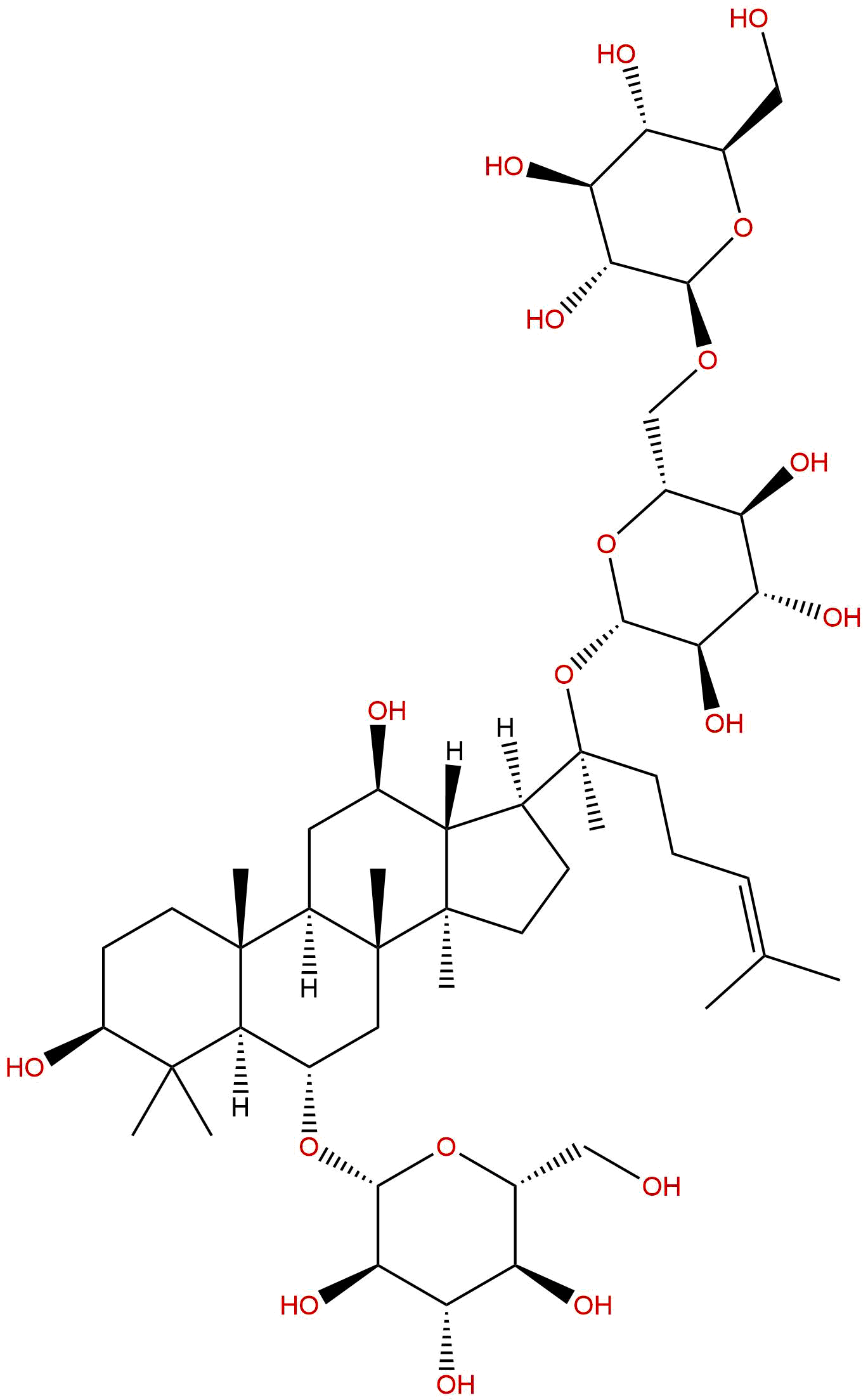


Product name: Notoginsenoside R3
Synonym name:
Catalogue No.: BP5290
Cas No.: 87741-76-2
Formula: C48H82O19
Mol Weight: 963.165
Botanical Source:
Type of Compound: Triterpenoids
Purity: 95%~99%
Analysis Method: HPLC-DAD or/and HPLC-ELSD
Identification Method: Mass, NMR
Packing: Brown vial or HDPE plastic bottle
Storage: Store in a well closed container, protected from air and light. Put into refrigerate or freeze for long term storage.
Whenever possible, you should prepare and use solutions on the same day. However, if you need to make up stock solutions in advance, we recommend that you store the solution as aliquots in tightly sealed vials at -20℃. Generally, these will be useable for up to two weeks.
The product could be supplied from milligrams to grams
Inquire for bulk scale.
For Reference Standard and R&D, Not for Human Use Directly.
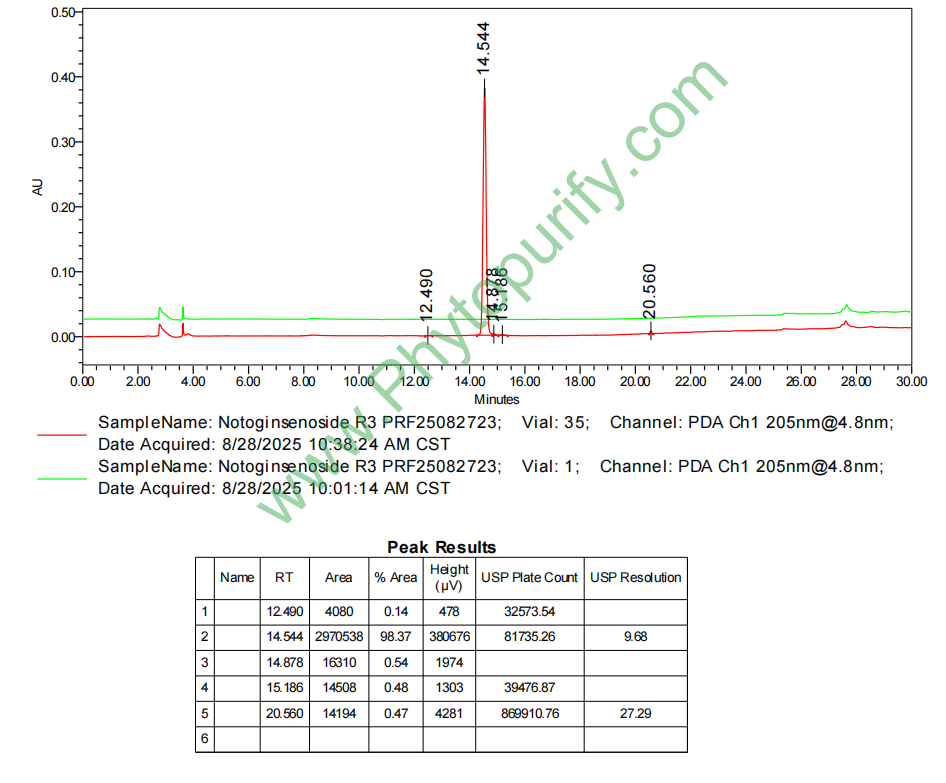
HPLC of Notoginsenoside R3
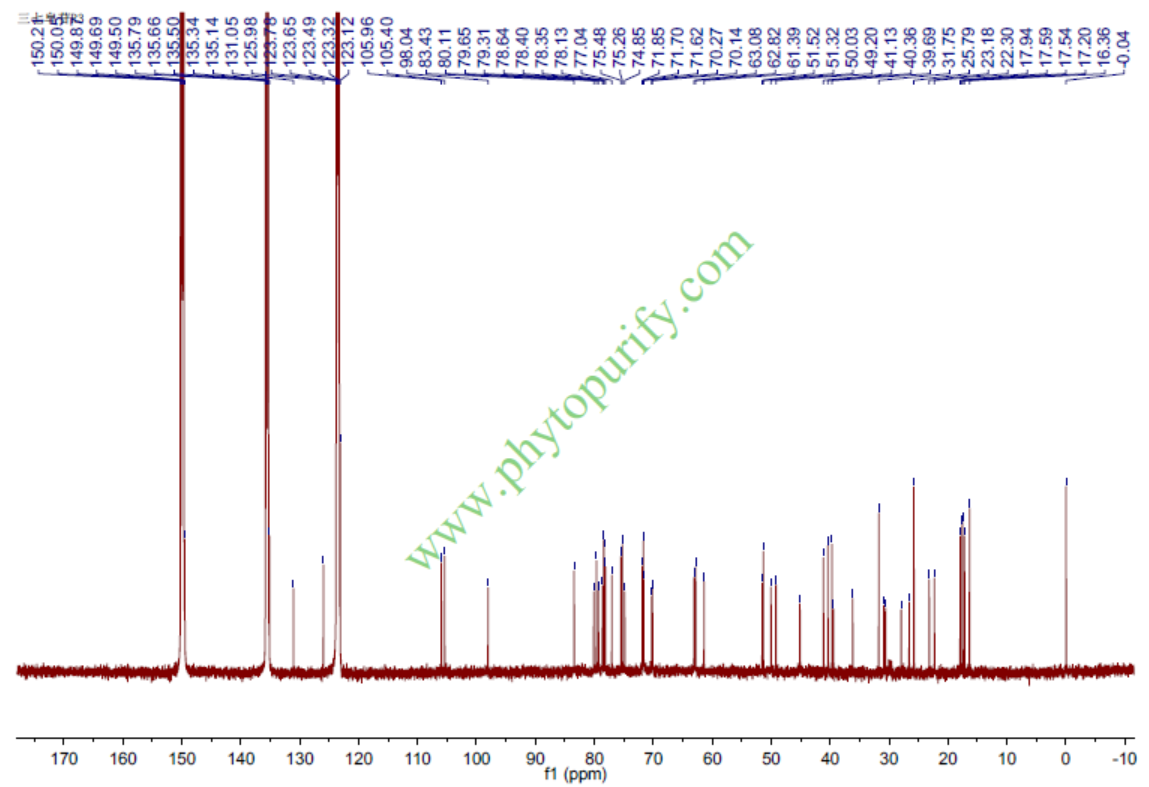
NMR of Notoginsenoside R3
Storage conditions:Short-term storage at 2~8℃, long-term storage at -20 ~ -80℃
318.3700
1.9885
1.9886
.1534
.4653
.1586
Low
63.9269
6.5203
No
No
No
No
No
No
0.0
Yes
No
No
No
Notoginsenoside R3 (NGR3 for short) is derived from the Panax notoginseng plant in the Araliaceae family(Panax notoginseng A dammarane type triterpenoid saponin isolated from Burk. F.H. Chen. Sanqi, as a traditional precious Chinese medicine, has a clinical application history of hundreds of years in China. Its roots and stems are often used to promote blood circulation, remove blood stasis, reduce swelling and relieve pain, especially in the prevention and treatment of cardiovascular diseases. Modern pharmacological research has shown that the main active ingredients of Panax notoginseng include Notoginsenosides and ginsenosides. Among them, Panax notoginseng saponin R3 has gradually become a hot topic in the field of natural product research in recent years due to its unique chemical structure and significant biological activity.
Unlike the main saponins with high content in Sanqi (such as ginsenoside Rb1 and Rg1), Sanqi saponin R3 belongs to the category of trace saponins, but its biological activity should not be underestimated. Early research focused on the protective effects of Panax notoginseng saponins on the cardiovascular system, but with the advancement of separation and purification techniques and the application of activity oriented screening strategies, the unique pharmacological value of NGR3 has been revealed. Existing evidence suggests that NGR3 exhibits pleiotropy in immune regulation, anti-inflammatory, anti-tumor, and tissue protection. Its mechanism of action involves fine regulation of multiple signaling pathways, particularly in maintaining immune homeostasis. This article aims to systematically review the chemical properties, plant sources, pharmacological activities, molecular mechanisms, and medicinal properties of Panax notoginseng saponin R3, in order to provide theoretical basis for the further development and clinical translation of this compound.
The chemical structure of Panax notoginseng saponin R3 belongs to the damaane type tetracyclic triterpenoid saponin, and its parent nucleus is 20 (S) - protopanaxadiol (PPD). Compared with common protopanaxadiol type saponins such as ginsenoside Rb1, the sugar chain substitution pattern of NGR3 is unique. Specifically, its sugar moiety is composed of monosaccharides such as glucose and xylose, typically attached to hydroxyl groups at positions C-3 and C-20. According to existing literature reports, the complete chemical name of NGR3 is 3-O - β - D-glucopyranosyl - (1 → 2) - β - D-glucopyranosyl-20-O - β - D-xylopyranosyl - (1 → 6) - β - D-glucopyranosyl-20 (S) - protopanaxadiol. Its molecular formula is C ₄₇ H ₈₀ O ₂₀, and the precise molecular weight is 963.1650 Da.
From the perspective of physicochemical properties, NGR3 exhibits typical triterpenoid saponin characteristics. Its lipophilic water partition coefficient (LogP) is 1.9885, indicating that the compound has a certain degree of lipophilicity, but overall tends towards moderate polarity. The topologically polar surface area (TPSA) is as high as 318.3700 Å ², which is mainly attributed to the large number of hydroxyl and glycosidic bonds in its molecules, giving it a strong ability to form hydrogen bonds. The water solubility parameter is 0.1534 mg/mL, which belongs to the category of slight solubility, which to some extent limits its oral bioavailability. It is worth noting that NGR3 has a high molecular weight (>900 Da) and extremely high TPSA. According to the Lipinski Five Rules and Veber Rules, this compound may face challenges in oral absorption. In addition, computer simulations predict that NGR3 has a lower ability to penetrate the blood-brain barrier (BBB), indicating that its pharmacological effects are mainly concentrated in peripheral tissues. In terms of safety, the hERG inhibition prediction result was negative, and the Ames test result was 0.0, indicating that the compound has low potential risks in terms of genotoxicity and cardiotoxicity, providing a favorable safety window for its subsequent development.
Sanqi saponin R3 mainly comes from the plant Sanqi in the Araliaceae family(Panax notoginseng)Dry roots and rhizomes. Sanqi is mainly distributed in Wenshan, Yunnan and Baise, Guangxi in China. Its growth cycle is relatively long, usually requiring more than three years to be harvested. The content of NGR3 in Panax notoginseng is relatively low and belongs to trace components, far lower than the main saponins such as ginsenoside Rg1, Rb1, and Panax notoginseng saponin R1. Therefore, its acquisition often relies on efficient extraction and separation techniques.
Traditional extraction methods often use ethanol or methanol reflux extraction, followed by n-butanol extraction to enrich total saponins. However, due to the similar polarity of NGR3 and structurally similar compounds such as ginsenoside Rd, Rb1, etc., conventional silica gel column chromatography is difficult to achieve effective separation. In recent years, with the development of modern chromatographic technology, high-speed countercurrent chromatography (HSCCC), preparative high-performance liquid chromatography (Pre HPLC), and macroporous adsorption resin combined technology have been widely used for the separation and purification of NGR3. For example, preliminary classification of total saponins in Panax notoginseng using D101 macroporous adsorption resin, combined with ODS reverse phase column chromatography and preparative HPLC, can successfully obtain NGR3 monomers with a purity greater than 98%. In addition, new separation methods based on molecular imprinting technology or affinity chromatography are also being explored to improve the recovery rate of trace saponins.
It is worth noting that NGR3 not only exists in the original plant of Panax notoginseng, but may also be present in trace amounts in other plants of the Panax genus (such as ginseng and American ginseng), but its content and biological activity are most prominent in Panax notoginseng. Due to the extremely low content of NGR3 in plants, research on its biosynthetic pathways has gradually begun. Through transcriptomic analysis, the key glycosyltransferase genes involved in NGR3 glycosylation modification have been preliminarily identified, providing the possibility for future heterologous production of NGR3 through synthetic biology.
Immune regulation is one of the most concerned pharmacological activities of Panax notoginseng saponin R3. Existing research has shown that NGR3 can bidirectionally regulate immune response, that is, while inhibiting excessive inflammatory response, it enhances the body's ability to clear pathogens. In vitro experiments have shown that NGR3 can significantly regulate the functions of macrophages and dendritic cells. For example, in the RAW264.7 macrophage model stimulated by lipopolysaccharide (LPS), NGR3 can inhibit the release of pro-inflammatory factors such as tumor necrosis factor - α (TNF - α), interleukin-6 (IL-6), and nitric oxide (NO), while upregulating the expression of anti-inflammatory factor interleukin-10 (IL-10). This regulatory effect is not simply immune suppression, but achieves homeostasis by reshaping the immune microenvironment.
In terms of adaptive immunity, NGR3 has a regulatory effect on T cell differentiation. Research has found that NGR3 can promote the differentiation of regulatory T cells (Tregs) while inhibiting excessive activation of Th17 cells. This effect is closely related to the expression changes of transcription factors FOXP3 and STAT3. In addition, NGR3 can also affect the antibody secretion function of B cells, indicating its important role in humoral immunity.
In addition to immune regulation, NGR3 exhibits significant anti-inflammatory and antioxidant activities. In various inflammatory models, such as the carrageenan induced toe swelling model and the acetic acid-induced increase in intra-abdominal capillary permeability model, NGR3 can effectively alleviate the inflammatory response. Its mechanism is related to the inhibition of the activation of nuclear factor kappa B (NF - κ B), which is the core transcription factor of inflammatory response. NGR3 inhibits the nuclear translocation of p65 subunit by blocking the phosphorylation and degradation of I κ B α, ultimately reducing the transcription of downstream inflammatory mediators.
In terms of oxidative stress, NGR3 can clear free radicals, increase the activity of intracellular superoxide dismutase (SOD) and glutathione peroxidase (GSH Px), and reduce the level of malondialdehyde (MDA). This antioxidant protective effect is particularly evident in myocardial and liver cell injury models.
Given the traditional application of Sanqi in cardiovascular diseases, the cardiovascular protective effect of NGR3 has also been preliminarily validated. In the myocardial ischemia-reperfusion injury model, NGR3 pretreatment can significantly reduce myocardial infarction area and decrease the release of lactate dehydrogenase (LDH) and creatine kinase (CK). Its protective mechanism involves activating the PI3K/Akt signaling pathway, inhibiting the opening of the mitochondrial permeability transition pore (mPTP), thereby reducing cell apoptosis. In addition, NGR3 can inhibit platelet aggregation and prolong clotting time, indicating its potential for anti thrombosis.
In recent years, the anti-tumor activity of NGR3 has gradually attracted attention. In many tumor cell lines (such as HepG2, A549, and MCF-7 of breast cancer), NGR3 showed a dose-dependent inhibition of proliferation. Its mechanism of action includes inducing cell cycle arrest in the G0/G1 phase, as well as inducing apoptosis through mitochondrial and endoplasmic reticulum stress pathways. It is worth noting that NGR3 has low toxicity to normal cells and exhibits a certain degree of selectivity. In addition, NGR3 can enhance the sensitivity of chemotherapy drugs such as cisplatin and paclitaxel, possibly by inhibiting NF - κ B-mediated resistance mechanisms.
The pharmacological effects of Sanqi saponin R3 are the result of multi-target and multi pathway synergistic effects. Based on existing research, its core molecular mechanisms can be summarized as follows:
Toll like receptor 4 (TLR4) is a key receptor that recognizes patterns of pathogen associated molecules such as LPS. NGR3 can directly bind to the extracellular domain of TLR4, competitively inhibiting the binding of LPS to TLR4/MD2 complex, thereby blocking downstream MyD88 dependent and TRIF dependent signaling transduction. This leads to the inhibition of the activation of the I κ B kinase (IKK) complex, and NF - κ B (composed of p50 and RelA encoded by NFKB1) cannot enter the nucleus to initiate the transcription of pro-inflammatory genes (such as IL2, IFNG, TNF). This mechanism is the basis for NGR3 to exert anti-inflammatory and immunosuppressive effects.
The signal transduction and transcription activator (STAT) family plays a decisive role in immune cell differentiation. NGR3 can regulate the phosphorylation levels of STAT3 and STAT4. In T cells, NGR3 reduces the differentiation of Th17 cells by inhibiting the activation of STAT3; Meanwhile, by promoting the phosphorylation of STAT5, the development of Treg cells is enhanced. In addition, NGR3 can upregulate the expression of cytokine signal transduction suppressor (SOCS), forming a negative feedback regulatory loop, thereby finely regulating the intensity of immune response.
Transforming growth factor - β 1 (TGFB1) is a key factor in inducing differentiation of Treg cells. NGR3 can upregulate the expression of TGF - β 1 and activate downstream Smad2/3 signaling, synergistically promoting the expression of FOXP3. Meanwhile, NGR3 can enhance the expression of cytotoxic T lymphocyte associated protein 4 (CTLA4), which serves as an immune checkpoint molecule that can inhibit excessive activation of T cells and maintain immune tolerance. This mechanism explains the protective role of NGR3 in autoimmune disease models.
Overall, the molecular target network of NGR3 consists of TLR4, STAT3, NFKB1, TGFB1, CTLA4, FOXP3, IL10, and IFNG as core nodes. Among them, IL10, as an anti-inflammatory factor, upregulation of its expression is an important effector of NGR3 in exerting immune regulatory effects; The expression of IFNG (interferon - γ) is finely regulated and maintained at moderate levels in anti infective immunity. This multi-target collaborative regulatory mode enables NGR3 to correct immune imbalances without completely suppressing the immune system.
From the perspective of medicinal chemistry, the pharmacological properties of NGR3 face certain challenges. Its molecular weight (963.17 Da) far exceeds the conventional threshold for oral drugs (500 Da), and its TPSA (318.37 Å ²) is extremely high, resulting in poor transmembrane permeability. According to the Lipinski Five Rules, NGR3 violates the three rules of molecular weight, number of hydrogen bond donors, and number of hydrogen bond acceptors, making it a typical "beyond Rule of 5" (bRo5) compound. However, bRo5 compounds are not completely untreatable, as many natural products (such as cyclosporine A) and macrolide drugs belong to this category, and their oral absorption often relies on active or lymphatic transport pathways.
The LogP of NGR3 is 1.99, which is within a moderate range, indicating that its lipophilicity is acceptable, but its water solubility (0.1534 mg/mL) is low, which may affect the development of the formulation. In terms of safety, both hERG inhibition and Ames test were negative, indicating a low risk of cardiac and genetic toxicity, which is an important advantage of its drug development.
At present, there is insufficient in vivo research on the pharmacokinetics of NGR3, but it can be inferred based on the metabolic characteristics of structurally similar compounds (such as ginsenoside Rb1, Rd). After oral administration, NGR3 may undergo acid hydrolysis and intestinal microbiota metabolism in the gastrointestinal tract, gradually removing sugar chains and generating secondary glycosides or aglycones (such as protopanaxadiol). These metabolites may have different biological activities. Due to its high molecular weight and polarity, the oral bioavailability of NGR3 is typically low, possibly below 5%. After intravenous administration, the half-life of NGR3 distribution in plasma is relatively short, mainly distributed in liver, kidney, and lung tissues, with very little distribution in brain tissue, consistent with BBB prediction results.
In terms of metabolic pathways, NGR3 is mainly metabolized by the liver and may involve deglycosylation and oxidation reactions. The main excretion pathway is bile excretion, and some metabolites are excreted through feces. The prototype drug content in urine is extremely low. To improve its bioavailability, new delivery technologies such as nanoliposomes, phospholipid complexes, and self microemulsion drug delivery systems are being explored.
Based on the regulatory effect of NGR3 on TLR4/NF - κ B and STAT3 signaling pathways, it has potential application value in autoimmune diseases such as inflammatory bowel disease, rheumatoid arthritis, psoriasis, etc. Especially its ability to promote Treg cell differentiation and upregulate CTLA4 expression makes it a potential novel inducer of immune tolerance. In addition, the protective role of NGR3 in organ transplant rejection and graft-versus-host disease (GVHD) is also worth exploring.
The bidirectional immune regulatory properties of NGR3 exhibit unique advantages in tumor immunotherapy. On the one hand, it can reduce inflammation levels in the tumor microenvironment by inhibiting NF - κ B and STAT3, thereby reversing the immunosuppressive state; On the other hand, it can enhance the expression of CTLA4, suggesting that it may have a synergistic or antagonistic effect with immune checkpoint inhibitors such as anti-CTLA-4 antibodies. Future research needs to clarify the specific role nodes of NGR3 in the tumor immune cycle.
As the active ingredient of Panax notoginseng, NGR3 has the most direct application in cardiovascular diseases. Its anti myocardial ischemia, anti platelet aggregation and anti-inflammatory effects are expected to become a candidate drug for the treatment of coronary heart disease, myocardial infarction and atherosclerosis. However, due to the low oral bioavailability, developing injectable or transdermal drug delivery systems may be a better option.
Despite its broad prospects, the clinical translation of NGR3 still faces many challenges. Firstly, its plant derived content is extremely low, and large-scale production relies on chemical synthesis or biosynthesis, resulting in high costs. Secondly, the pharmacokinetic properties are poor, and modern formulation technology is needed to improve its absorption and metabolic stability. In addition, current in vivo pharmacological studies on NGR3 are mostly limited to animal models and lack high-quality human clinical trial data. In the future, the multi-target mechanism of action of NGR3 should be further elucidated by combining systems pharmacology and network pharmacology methods, and structural modification strategies such as prodrug design and glycosylation modification should be utilized to optimize its drug properties.
Panax notoginseng saponin R3, as a micro active component in Panax notoginseng, is changing from the "supporting role" of traditional Chinese medicine to the "new star" of modern drug research and development by virtue of its unique dammarane structure and multiple pharmacological activities. This article systematically reviews the research progress of NGR3 in terms of chemical structure, plant origin, pharmacological activity, molecular mechanism, and drug properties. It reveals the molecular basis of NGR3's immunomodulatory, anti-inflammatory, cardiovascular protective, and anti-tumor effects by regulating key targets such as TLR4, STAT3, NF - κ B, and TGF - β 1. Although there are still bottlenecks in oral bioavailability and large-scale preparation, its good safety window and unique immune homeostasis regulation mechanism make it have undeniable development potential in the fields of autoimmune diseases, tumor immunotherapy, and cardiovascular diseases. With the advancement of synthetic biology, medicinal chemistry, and nanoformulation technology, Sanqi saponin R3 is expected to move from the laboratory to clinical practice and become an innovative drug molecule derived from traditional Chinese medicine.
