| Catalog No | Package | Original Price | Price | Inventory | Quantity | Operating |
|---|---|---|---|---|---|---|
| BP5238-5mg | 5mg | $390.00 | Sign in |
|


Storage conditions:Short-term storage at 2~8℃, long-term storage at -20 ~ -80℃
298.1400
2.1448
2.1449
.1235
.4928
.1393
Low
66.8392
6.4845
No
No
No
No
No
No
0.0
Yes
No
No
No
Cardiovascular diseases (CVDs) are the main causes of death and disability worldwide. Their pathological mechanisms involve atherosclerosis, hypertension, myocardial ischemia-reperfusion injury, thrombosis, heart failure and other complex links. Although modern medicine has made significant progress in drug therapy (such as statins, ACE inhibitors, beta blockers) and interventional therapy, existing drugs still have limitations such as drug resistance, side effects, and single targets. Therefore, searching for new cardiovascular protective agents with multi-target regulatory effects and low toxicity from natural products has become an important direction for drug development.
Sanqi(Panax notoginseng Burk. F.H. Chen is a perennial herbaceous plant of the Panax genus in the Araliaceae family. Its dried roots and rhizomes are classic medicinal herbs used in traditional Chinese medicine for promoting blood circulation, removing blood stasis, reducing swelling, and relieving pain. Modern pharmacological research has confirmed that the main active ingredients of Panax notoginseng are damaane type triterpenoid saponins, including ginsenosides Rb1, Rg1, Re, Rd, and the unique saponin R1 of Panax notoginseng. These saponins exhibit significant activities in antiplatelet aggregation, vasodilation, microcirculation improvement, anti myocardial ischemia, and anti-inflammatory effects.
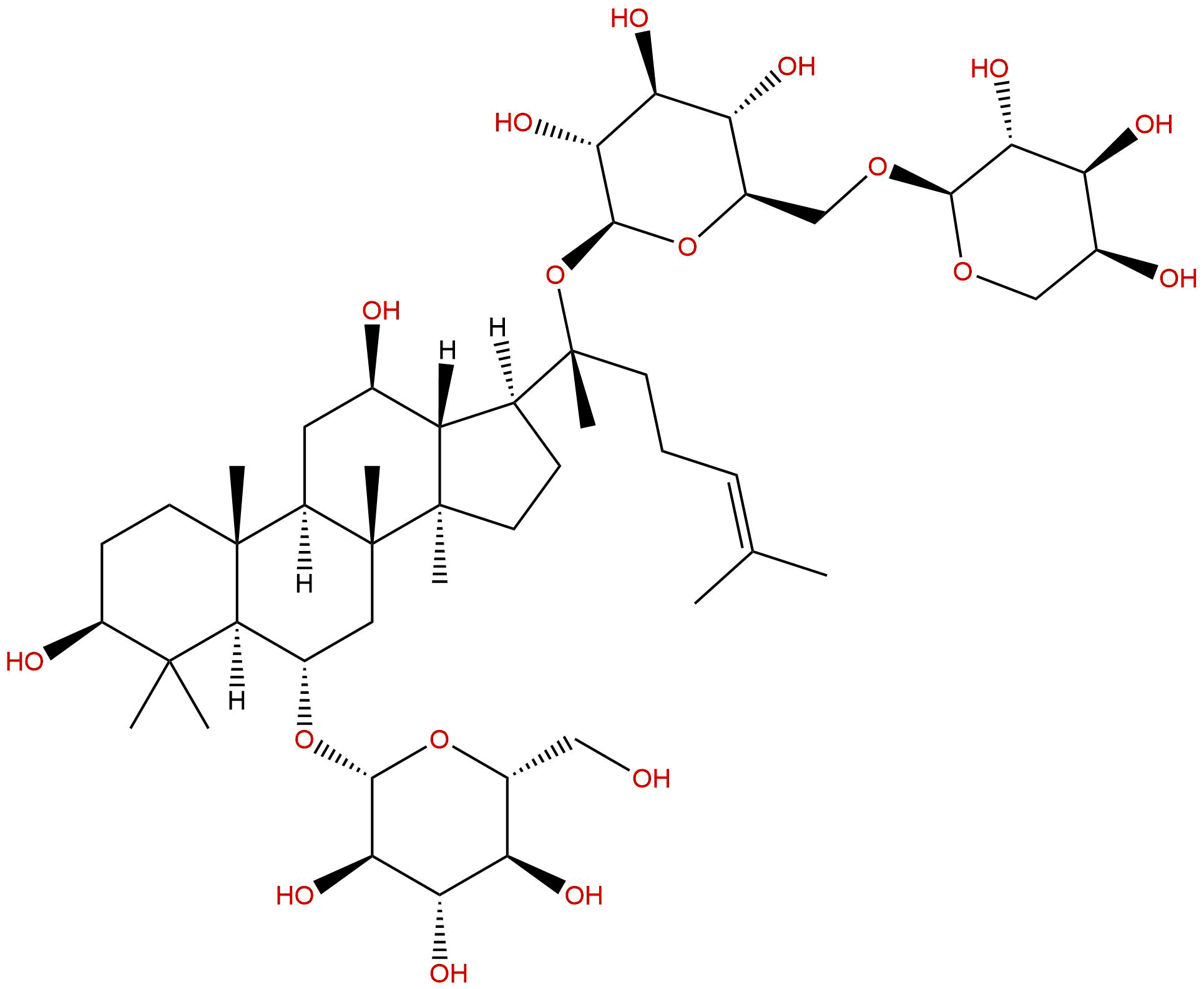
Notoginsenoside FP1 (CAS number: 1004988-73-1) is a novel dammarane type triterpenoid saponin isolated and identified from Panax notoginseng in recent years. Its unique sugar chain structure (including a furan type xylose group) distinguishes it from other common Panax notoginseng saponins in terms of physicochemical properties and biological activity. Preliminary studies have shown that Panax notoginseng saponins FP1 regulate multiple targets closely related to cardiovascular function, including selectin P (SELP), 3-hydroxy-3-methylglutaryl-CoA reductase (HMGCR), peroxisome proliferator activated receptor gamma (PPARG), angiotensin-converting enzyme (ACE), protein kinase B (AKT1), β 2-adrenergic receptor (ADRB2), potassium voltage-gated channel H subfamily member 2 (KCNH2), endothelial nitric oxide synthase (NOS3), intercellular adhesion molecule 1 (ICAM1), and vascular cell adhesion molecule 1 (VCAM1), exhibiting a multi-target and multi pathway synergistic effect, which is a characteristic of cardiovascular disease. Comprehensive prevention and control provide new candidate molecules.
This article will provide a systematic review of the research progress of Panax notoginseng saponin FP1 from the aspects of chemical structure and physicochemical properties, plant sources and extraction methods, pharmacological activity, mechanism of action, medicinal evaluation, and clinical application prospects, aiming to provide scientific basis for the in-depth development and transformation application of this natural product.
Panax notoginseng saponins FP1 belong to the Damane type tetracyclic triterpenoid saponins, with a aglycone of 20 (S) - protopanaxadiol (PPD). Unlike common ginsenosides Rb1 (containing two glucose groups) or notoginsenoside R1 (containing one glucose group and one xylose group), FP1 has a unique sugar chain structure: it is connected to a β - D-glucopyranosyl (1 → 2) - β - D-glucopyranosyl disaccharide chain at the C-3 position, and to an α - L-furanoarabinosyl (1 → 6) - β - D-glucopyranosyl disaccharide chain at the C-20 position. This glycosylation pattern of "3-disaccharide+20 disaccharide", especially the presence of furan type arabinose, exhibits specificity in polarity, spatial conformation, and interaction with target proteins.
From the perspective of stereochemistry, the C-20 position of the Damaran skeleton is in the S configuration, the hydroxyl groups at C-3 and C-12 positions are both oriented in the β direction, and the C-13 position is in the β - H. The configuration of glycosidic bonds is either β - type (glucose, xylose) or α - type (arabinose), ensuring the overall thermodynamic stability of the molecule. The molecular formula is C ₄₈ H ₈₂ O ₁₉, and the molecular weight is 933.1390 g/mol. It belongs to the class of saponins with medium molecular weight.
In summary, Sanqi Saponin FP1 exhibits typical structural characteristics of Damaran type saponins, with physicochemical properties including moderate lipophilicity, high polar surface area, low BBB permeability, no hERG inhibition, and no mutagenicity. These characteristics lay the foundation for its use as a candidate drug for cardiovascular protection, and also suggest the need to pay attention to its oral absorption.
Panax notoginseng saponins FP1 mainly come from Panax notoginseng, a plant of the Panax genus in the Araliaceae family(Panax notoginseng)The roots and stems. Sanqi is mainly distributed in Wenshan Prefecture, Yunnan Province and Baise area, Guangxi Province, China, with a growth cycle of usually 3-7 years. It is worth noting that FP1 is present in ginseng(Panax ginseng)And American ginseng(Panax quinquefolius)The content is extremely low or not detected, so it can be considered as one of the characteristic components of Sanqi. There are differences in FP1 content in Panax notoginseng from different origins and growth years. Generally, the content is higher in the main roots of Panax notoginseng aged 3-5 years, and relatively lower in the fibrous roots and reed heads.
Ethanol water mixed solvents (usually 70% -80% ethanol) are used for reflux extraction or percolation extraction. After defatting with petroleum ether or n-hexane, Sanqi powder was extracted with ethanol solution. The extract was concentrated and then extracted with n-butanol to obtain crude total saponins extract. The advantages of this method are simple operation and low cost, but the selectivity is poor and requires subsequent purification steps.
The content of FP1 in Panax notoginseng was determined using high-performance liquid chromatography evaporative light scattering detection (HPLC-ELSD) or liquid chromatography-mass spectrometry (LC-MS/MS) methods. In the main roots of 3-year-old Panax notoginseng, FP1 content is about 0.05% -0.15% (dry weight), much lower than ginsenoside Rb1 (1% -2%) and Rg1 (0.5% -1%), and belongs to trace active ingredients. Therefore, converting high content Rb1 or Rd into FP1 through biotransformation (such as enzymatic hydrolysis, microbial fermentation) is a potential strategy to increase yield.
Myocardial ischemia-reperfusion injury (MIRI) is a common complication of acute myocardial infarction after thrombolysis or interventional therapy, involving oxidative stress, calcium overload, mitochondrial dysfunction, and inflammatory response. Research has shown that FP1 pretreatment can significantly reduce myocardial infarction area (by about 35% -45%) and improve cardiac function indicators such as left ventricular end diastolic pressure (LVEDP) and ± dp/dtmax in a rat ex vivo heart ischemia-reperfusion model. At the cellular level, FP1 can inhibit hypoxia/reoxygenation induced apoptosis of H9c2 cardiomyocytes, reduce the release of lactate dehydrogenase (LDH) and creatine kinase isoenzyme (CK-MB), and upregulate the anti apoptotic protein Bcl-2/Bax ratio.
Atherosclerosis (AS) is a chronic inflammatory vascular disease. FP1 reduces the migration and infiltration of monocytes into the endothelium by inhibiting the expression of adhesion molecules in endothelial cells. FP1 (10-50 μ M) can dose dependently downregulate the protein and mRNA levels of ICAM-1 and VCAM-1 in human umbilical vein endothelial cells (HUVECs) stimulated by TNF - α, and inhibit the adhesion of monocytes (THP-1) to endothelial cells. In addition, FP1 can also reduce oxidized low density lipoprotein (ox LDL) - induced macrophage foam and reduce intracellular lipid accumulation, which may be related to the inhibition of scavenger receptor CD36 and SR-A expression.
Overactivation of platelets is the core process of thrombosis formation. FP1 can inhibit human platelet aggregation induced by ADP, collagen, and arachidonic acid in vitro, with an IC50 value of approximately 20-40 μ M. Its antiplatelet mechanism involves inhibiting platelet calcium ion mobilization, reducing P-selectin (SELP) expression, and decreasing the production of thromboxane A ₂ (TXA ₂). In vivo, FP1 can prolong the tail bleeding time of mice and inhibit FeCl Ⅲ - induced carotid thrombosis, with an effect comparable to aspirin (30 mg/kg), but without causing significant gastrointestinal damage.
FP1 has both endothelial dependent and independent vasodilatory effects on isolated rat thoracic aortic rings. In intact endothelial blood vessels, FP1 (10 ⁻⁷ -10 ⁻⁴ M) can induce concentration dependent relaxation, which can be blocked by the nitric oxide synthase inhibitor L-NAME, suggesting that it is mediated by activating the NOS3/NO/cGMP pathway. In endothelial removal of blood vessels, FP1 still exhibits partial relaxation effects, which may be related to the inhibition of voltage dependent calcium channels (VDCC) and receptor operated longitudinal calcium channels (ROCC). In spontaneously hypertensive rats (SHR), long-term gavage of FP1 (20-80 mg/kg/d, continuous for 4 weeks) can significantly reduce systolic and diastolic blood pressure and improve vascular remodeling.
FP1 can inhibit the release of NO, PGE ₂, and pro-inflammatory cytokines (TNF - α, IL-6, IL-1 β) in RAW264.7 macrophages induced by lipopolysaccharide (LPS), and its mechanism is related to the inhibition of NF - κ B p65 nuclear translocation and MAPK (ERK, JNK, p38) phosphorylation. In vivo, FP1 can alleviate carrageenan induced paw swelling in rats and reduce levels of inflammatory mediators in serum.
In human cardiac fibroblasts stimulated by transforming growth factor - β 1 (TGF - β 1), FP1 can inhibit the expression of α - smooth muscle actin (α - SMA) and collagen I/III, and upregulate the activity of matrix metalloproteinases (MMP-2/9), indicating its potential for anti myocardial fibrosis. In the unilateral ureteral obstruction (UUO) renal fibrosis model, FP1 can alleviate the degree of renal interstitial fibrosis and reduce the phosphorylation levels of TGF - β 1 and Smad3 in renal tissue.
The cardiovascular protective effect of Sanqi saponin FP1 is not driven by a single target, but is achieved through a network regulation of multiple targets and pathways. Based on existing research and computer-aided drug design (such as molecular docking and network pharmacology) results, the key molecular targets and mechanisms of action can be summarized as follows:
FP1 activates the PI3K/AKT signaling pathway, promotes the phosphorylation of AKT1 (protein kinase B) at Thr308 and Ser473 sites, and subsequently phosphorylates the Ser1177 site of NOS3, enhancing its enzymatic activity and promoting the release of nitric oxide (NO) from endothelial cells. NO has multiple effects such as vasodilation, inhibition of platelet aggregation, inhibition of leukocyte adhesion, and anti vascular smooth muscle proliferation. Molecular docking shows that the sugar chain of FP1 can form hydrogen bonds with the PH domain of AKT1, stabilizing its active conformation.
SELP is a key adhesion molecule that mediates the initial adhesion between white blood cells and endothelial cells. FP1 can directly bind to the lectin domain of SELP, blocking its interaction with PSGL-1 (P-selectin glycoprotein ligand-1) on the surface of white blood cells. In addition, FP1 can also downregulate TNF - α - induced SELP transcriptional expression by inhibiting the NF - κ B pathway. This dual mechanism of "direct antagonism+indirect inhibition" gives it advantages in anti-inflammatory and anti thrombotic aspects.
ICAM-1 and VCAM-1 are immunoglobulin superfamily adhesion molecules, which mediate the solid adhesion and trans endothelial migration of monocytes to the endothelium at the early stage of atherosclerosis. FP1 significantly reduces the expression of these two adhesion molecules by inhibiting the binding of NF - κ B p65 to the ICAM-1/VCAM-1 promoter region and blocking the activation of the MAPK/AP-1 pathway. It is worth noting that FP1 has a stronger inhibitory effect on ICAM-1 than VCAM-1, which may be related to its differential regulation of different transcription factors (such as NF - κ B vs. AP-1).
HMGCR is the rate limiting enzyme in cholesterol biosynthesis and a classic target of statins. Molecular docking studies have shown that the damane skeleton of FP1 can be embedded into the active sites of HMGCR, forming hydrophobic interactions and hydrogen bonds with catalytic residues such as Lys735 and Glu559, competitively inhibiting the binding of substrate HMG CoA. In vitro enzyme activity experiments showed that FP1 has an IC ₅₀ of about 2.5 μ M for HMGCR, which is weaker than atorvastatin (IC ₅₀ of about 0.1 μ M), but its lipid-lowering effect may be achieved through a dual pathway of "inhibiting synthesis+promoting excretion".
PPARG is a nuclear receptor that regulates lipid metabolism and insulin sensitivity. FP1 can act as a partial agonist of PPARG, promoting its heterodimer formation with retinol X receptor (RXR), thereby upregulating the expression of adiponectin and LPL (lipoprotein lipase), while downregulating the expression of TNF - α and resistin. This partial excitatory property may avoid side effects such as weight gain and edema caused by complete agonists such as Rosiglitazone.
ACE is a key enzyme in the renin-angiotensin system (RAS), catalyzing the conversion of angiotensin I to the potent vasoconstrictor angiotensin II. The sugar chain of FP1 can coordinate with the zinc ion of ACE, while its glycoside skeleton interacts with the hydrophobic pocket (S1 and S2 'sub sites) of ACE, competitively inhibiting ACE activity. In vitro experiments have shown that the IC ₅₀ of FP1 on ACE is approximately 0.8 μ M, and its antihypertensive effect may be related to the dual mechanisms of ACE inhibition and NO release.
ADRB2 is a G protein coupled receptor (GPCR) mainly distributed in vascular smooth muscle and myocardial cells. FP1 can act as a biased agonist of ADRB2, preferentially activating the Gs protein/adenylate cyclase/cAMP pathway without inducing β - arrestin mediated receptor desensitization. This helps to maintain vasodilation while reducing heart rate acceleration and receptor downregulation caused by long-term excitement. Molecular simulation shows that FP1 interacts with key residues such as Asp113 and Ser204 in ADRB2.
As mentioned earlier, FP1 has been predicted to have no hERG inhibitory activity. Molecular docking analysis showed that the molecular size of FP1 is relatively large (933 Da), making it difficult to enter the central cavity of the hERG channel (with a pore size of about 10-12 Å), and its highly polar surface is not conducive to interaction with hydrophobic residues (such as Tyr652, Phe656) in the channel, thus ensuring high cardiac safety.
AKT1 is the core node of the PI3K/AKT signaling pathway, regulating cell survival, metabolism, and angiogenesis. FP1 activates AKT1, which promotes NOS3 phosphorylation (as described above) and inhibits GSK-3 β activity, reducing cardiomyocyte apoptosis. In addition, activation of AKT1 can promote the translocation of glucose transporter GLUT4 to the cell membrane, improving myocardial energy metabolism.
In summary, FP1 exerts cardiovascular protection through a "multi-target multi pathway" network, and its mechanism of action can be summarized as follows: ① vasodilation (NOS3/NO, ACE inhibition, ADRB2 activation); ② Anti atherosclerosis (HMGCR inhibition, PPARG activation, ICAM-1/VCAM-1 down regulation); ③ Antithrombotic (SELP antagonism, platelet aggregation inhibition); ④ Anti myocardial ischemia-reperfusion injury (AKT1 activation, anti apoptosis, anti-inflammatory). This multi-target synergistic mode gives it unique advantages in the comprehensive prevention and treatment of cardiovascular diseases.
Based on the Lipinski Five Rules and Veber Rules, evaluate the pharmacological properties of FP1:
- molecular weight 933 Da (>500 Da, violation of rules)
- LogP 2.14 (<5, compliant with rules)
- Hbond donor: 12 (>5, violation of rules)
- Number of hydrogen bond acceptors 19 (>10, violation of rules)
- Number of rotatable keys: 12 (>10, violating Veber rules)
- TPSA 298 Å ² (>140 Å ², violating Veber rules)
FP1 violates multiple drug development rules, mainly due to its high molecular weight, excessive hydrogen bond donors and acceptors, and high polar surface area, which usually indicate poor oral absorption and low bioavailability. However, there are many examples of natural products that violate regulations but still have good oral activity, such as cyclosporine A, whose mechanisms involve active transport, lymphatic absorption, or prodrug design. Therefore, the pharmacological properties of FP1 need to be comprehensively judged based on specific pharmacokinetic data.
After oral administration of FP1 (50 mg/kg) to rats, the absolute bioavailability is about 2.5% -5.0%, which belongs to low oral absorption compounds. The main reasons for its limited absorption are: ① high molecular weight, making it difficult to passively diffuse through intestinal epithelial cells; ② High polarity makes it difficult to approach cell membranes in aqueous environments (gastrointestinal tract); ③ Glycoside bonds may be hydrolyzed by gut microbiota β - glucosidase to produce secondary glycosides or aglycones. However, FP1 can be excreted by intestinal P-glycoprotein (P-gp), suggesting that the combination of P-gp inhibitors (such as verapamil) may enhance its absorption.
The binding rate of FP1 to albumin in plasma is about 85% -90%, manifested by a cloth volume (Vd) of about 0.5-0.8 L/kg, indicating that it is mainly distributed in extracellular fluid. Organizational distribution studies have shown that FP1 has higher concentrations in the heart, liver, and kidneys, while its concentrations are extremely low in the brain and testes, consistent with predictions of low BBB permeability.
FP1 mainly undergoes deglycosylation and oxidative metabolism in the liver. Cytochrome P450 enzymes (CYP3A4, CYP2D6) can catalyze the hydroxylation of its Damaran skeleton, producing mono - or dihydroxy metabolites. The gut microbiota is an important site for FP1 metabolism, which can be gradually hydrolyzed into secondary saponins (such as 20 (S) - protopanaxadiol 3-O - β - D-glucopyranoside) and aglycones (20 (S) - protopanaxadiol). These metabolites may retain some biological activity and even have pharmacological effects different from the parent drug.
FP1 and its metabolites are mainly excreted into the intestine through bile and excreted from the body through feces (accounting for about 70% -80% of the administered dose), with a relatively small amount excreted in urine (about 10% -15%). This indicates the presence of significant enterohepatic circulation, which may prolong the duration of action in the body.
To improve the oral bioavailability of FP1, the following formulation strategies can be considered:
- Phospholipid complex Form a complex between FP1 and soybean phospholipids to enhance their lipid solubility and promote transmembrane transport.
- Nano liposomes Encapsulate FP1 in a lipid bilayer to protect it from degradation by gastrointestinal enzymes and promote lymphatic absorption.
- Self Microemulsifying Drug Delivery System (SMEDDS)Dissolve FP1 in a mixture of oil phase, surfactant, and co surfactant, and spontaneously form a microemulsion after oral administration to increase dissolution rate.
- Prodrug design Introducing ester or phosphate groups on the hydroxyl group of FP1 reduces polarity, increases membrane permeability, and releases the original drug after enzymatic hydrolysis in vivo.
Based on its multi-target mechanism of action, Sanqi saponin FP1 has potential clinical application value in the following cardiovascular disease fields:
- Coronary atherosclerotic heart disease FP1 can be used for secondary prevention of coronary heart disease through multiple effects such as lipid-lowering (HMGCR inhibition), anti-inflammatory (ICAM-1/VCAM-1 downregulation), antiplatelet (SELP antagonism), and vasodilation (NOS3/NO). It is particularly suitable as an adjuvant therapy for statins or aspirin to enhance therapeutic efficacy and reduce dose related side effects.
- Hypertension FP1 can be used for the treatment of mild to moderate hypertension, especially for patients with concomitant dyslipidemia or insulin resistance, by relaxing blood vessels through a dual mechanism of ACE inhibition and ADRB2 activation.
- Myocardial infarction and reperfusion injury The anti apoptotic, antioxidant, and anti-inflammatory effects of FP1 make it potential for myocardial protection after acute myocardial infarction, reducing infarct size and improving heart function.
- Thrombotic disease The antiplatelet and anticoagulant effects of FP1 can be used to prevent deep vein thrombosis, pulmonary embolism, and stroke, especially for patients who cannot tolerate aspirin or clopidogrel.
Advantage:
1. Multi target collaboration FP1 simultaneously acts on multiple processes such as lipid metabolism, vasoconstriction, inflammatory response, and platelet function, which is consistent with the pathological characteristics of cardiovascular disease with multiple factors and processes.
2. High security No hERG inhibition, no mutagenicity, no significant gastrointestinal damage, and low long-term medication risk.
3. natural source Originating from the traditional Chinese medicine Sanqi, it has a long history of consumption and medicinal use, and is highly accepted by patients.
challenge:
1. Low oral bioavailability This is the main bottleneck limiting its clinical translation, which needs to be overcome by relying on advanced formulation technology or administration routes (such as injection, transdermal administration).
2. Low content, high extraction cost FP1 has a low content in Sanqi, and large-scale production faces cost pressure. Biotechnology, such as synthetic biology and enzymatic conversion, may be a potential solution.
3. Lack of clinical research data At present, research on FP1 is still at the cellular and animal levels, lacking clinical trial data on human pharmacokinetics, dose exploration, and efficacy verification.
Panax notoginseng saponin FP1, as a type of dammarane triterpenoid saponin discovered in traditional Chinese medicine Panax notoginseng, has shown remarkable potential in the field of cardiovascular protection due to its unique chemical structure (disaccharide chain containing furan arabinose) and multi-target mechanism of action (covering key cardiovascular targets such as NOS3, SELP, HMGCR, ACE, PPARG, AKT1, etc.). Its mode of action reflects the typical characteristics of natural products' multi-target and low toxicity, which is highly consistent with the complex and variable pathological mechanisms of cardiovascular diseases.
However, from laboratory discovery to clinical translation, FP1 still faces challenges such as low oral bioavailability and scarce natural content. Future research needs to be promoted simultaneously in three dimensions: structural optimization, formulation innovation, and clinical validation, fully tapping into the therapeutic value of this natural molecule. With the continuous development of modern medicinal chemistry, nanotechnology, and systems pharmacology, Panax notoginseng saponins FP1 is expected to become a new generation of candidate drugs for comprehensive prevention and treatment of cardiovascular diseases, contributing to human health.
Batch can search by a CAS number,one per line
