Introduction/Overview
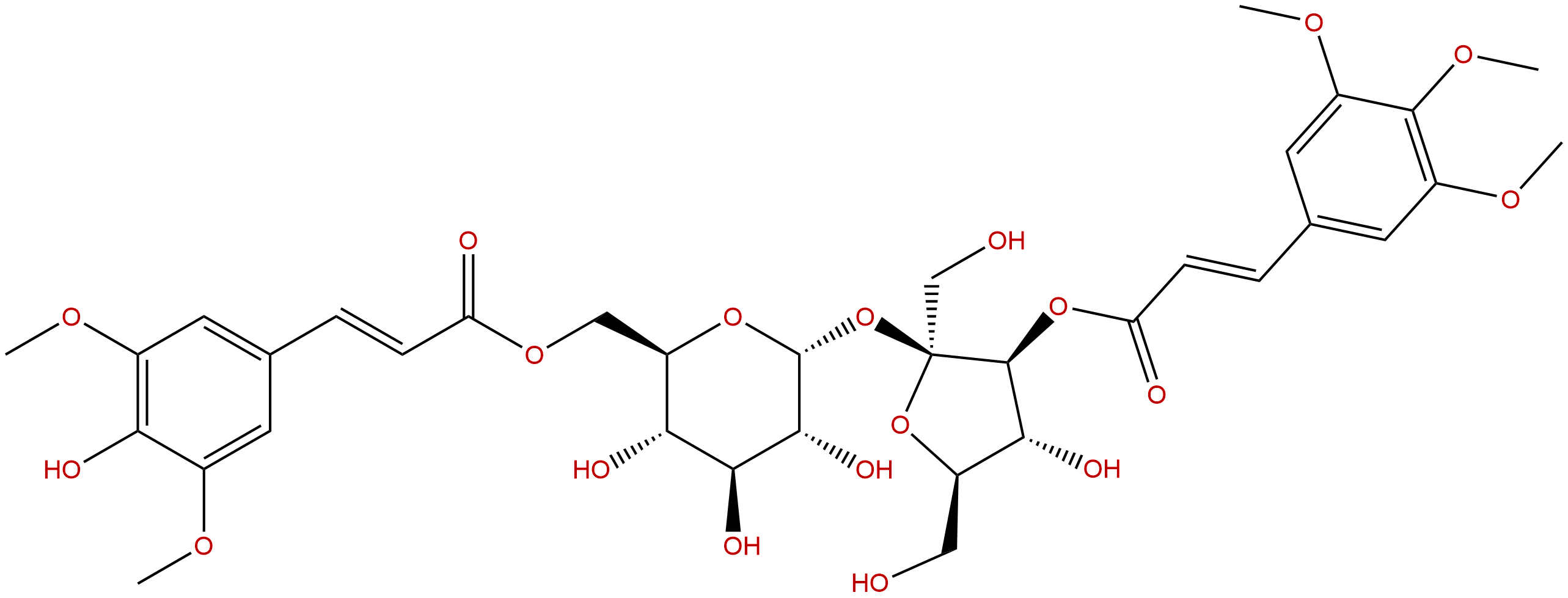
Natural products have long been an important source of innovative drug discovery, and their structural diversity and wide range of biological activities provide valuable lead compounds for the treatment of various diseases. Among numerous medicinal plants, Polygala tenuifolia Willd. is a traditional Chinese medicine commonly used for calming the mind, improving intelligence, dispelling phlegm, and opening the orifices. Its chemical composition is complex, including saponins, oligosaccharides, ketones, etc. Tenuifoliside C is a bioactive oligosaccharide ester compound isolated from Polygala tenuifolia. Since its isolation and identification, it has attracted attention due to its unique chemical structure and potential pharmacological effects. Preliminary studies have shown that Tenuifoliside C can specifically inhibit the activity of cytochrome P450 2E1 (CYP2E1) and exhibits the potential to interact with multiple inflammatory targets, suggesting its potential value in the treatment of inflammation related diseases. This article aims to systematically review the chemical properties, plant sources, pharmacological activities, mechanisms of action, and medicinal properties of Tenuifoliside C, in order to provide comprehensive academic references for the in-depth research and development of this compound.
Chemical structure and physicochemical properties
The CAS number of Tenuifoliside C is 139726-37-7, and its chemical structure belongs to oligosaccharide ester compounds. Specifically, it is a complex molecule composed of a glycoside (usually phenylpropanoid or similar) connected to multiple sugar units through ester and glycoside bonds. Its precise structural analysis shows that the molecule contains sugar groups such as glucose and xylose, and the specific connection modes and esterification positions of these sugar groups constitute its unique spatial conformation and biological activity basis.
According to the provided pharmacological parameters, the molecular weight of Tenuifoliside C is 768.7180, which is a medium to large molecule. The calculated lipid water partition coefficient (LogP) value is 0.3558, indicating that the compound has relatively good hydrophilicity, which is related to the presence of multiple polar sugar groups and possible hydroxyl groups in the molecule. The topologically polar surface area (TPSA) is as high as 268.0500 Å ², further confirming its strong polarity characteristics, which typically affect its transmembrane permeability. The water solubility value is 1.3679 (usually measured in mg/mL or log mol/L, here it is a calculated value indicating solubility), indicating that it has a certain degree of solubility in water, which is beneficial for its formulation development in aqueous media. However, high polarity and high molecular weight also pose challenges, such as predicting "low" blood-brain barrier (BBB) permeability, which means it may be difficult to enter the central nervous system and exert its effects. In addition, preliminary toxicity predictions showed no inhibitory activity on hERG potassium channels (hERG inhibition: No), and the Ames test predicted a value of 0.0, suggesting that it may not have mutagenicity and potential cardiac toxicity risks, providing preliminary positive signals for its safety assessment.
Plant sources and extraction methods
Tenuifoliside C was mainly isolated from the dried roots of wild Polygala tenuifolia. Yuanzhi is mainly distributed in East Asian regions such as China, South Korea, and Japan, and its medicinal roots are rich in various active ingredients. The extraction of Tenuifoliside C usually follows the conventional process of natural product chemistry.
Firstly, crush the dried roots of Eucommia ulmoides and extract them using an appropriate solvent. Common extraction solvents include methanol, ethanol, or ethanol water mixed solutions, and methods such as reflux extraction or ultrasound assisted extraction are used to maximize yield. After obtaining the crude extract, the solvent was removed by vacuum concentration to obtain the paste.
Subsequently, the extract was systematically separated and purified. The liquid-liquid extraction method is commonly used to segment Tenuifoliside C using solvents of different polarities such as petroleum ether, ethyl acetate, and n-butanol. Due to its strong polarity, Tenuifoliside C is usually enriched in n-butanol or water-soluble fractions. Further purification depends on a variety of chromatographic techniques, including silica gel column chromatography, reverse phase silica gel column chromatography (such as ODS-C18), gel column chromatography (such as Sephadex LH-20), and high performance liquid chromatography (HPLC). By comparing the physicochemical properties of compounds (such as polarity and molecular size) with the interaction of chromatographic fillers, impurities are gradually separated, and high-purity Tenuifoliside C monomer compounds are ultimately obtained. The structural identification is carried out using a combination of techniques including nuclear magnetic resonance (NMR, including 1H-NMR, 13C-NMR, 2D-NMR such as HSQC, HMBC), mass spectrometry (MS, such as ESI-MS, HR-ESI-MS), and optical rotation measurement.
Pharmacological activity research
The pharmacological activity research of Tenuifoliside C is currently in its early stages, but it has shown multiple potential, especially in the fields of anti-inflammatory and metabolic regulation.
-
anti-inflammatory activity This is the pharmacological effect of Tenuifoliside C that has received the most attention. Based on its predictive or preliminary experimental associations with multiple key inflammatory targets, studies have shown that it may be effective for various inflammatory models. For example, in the lipopolysaccharide (LPS) - induced macrophage (such as RAW264.7) inflammation model, Tenuifoliside C can dose dependently inhibit the excessive production of nitric oxide (NO) and prostaglandin E2 (PGE2), which are important mediators of inflammatory response. Its function may be achieved by downregulating the expression of inducible nitric oxide synthase (iNOS/NOS2) and cyclooxygenase-2 (COX-2/PTGS2, although PTGS1 is included in the target list, iNOS and COX-2 are more critical in inflammation). In addition, it also has an inhibitory effect on the release of pro-inflammatory cytokines such as tumor necrosis factor - α (TNF - α) and interleukin-6 (IL-6).
-
Inhibition of CYP450 enzyme An early key study found that Tenuifoliside C can inhibit the CYP2E1 enzyme catalyzed 6-hydroxylation of chlorzoxazone. CYP2E1 is an important metabolic enzyme in the liver, involved in the metabolism of various small molecule exogenous substances, including alcohol and pre drug carcinogens. Its excessive activation is closely related to oxidative stress, liver cell damage, and various diseases such as alcoholic liver disease and non-alcoholic steatohepatitis. Therefore, the inhibitory effect of Tenuifoliside C on CYP2E1 suggests that it may exert liver protection by alleviating metabolic toxicity and oxidative damage mediated by CYP2E1, which may have a synergistic effect with its anti-inflammatory activity.
-
Potential other activities Given that its target prediction involves STAT3, NF - κ B pathway (via RELA/p65 and IKBKB), CASP1 (involved in inflammasome activation), and pain related ion channels TRPV1 and TRPA1, Tenuifoliside C may also have research value in anti-tumor (by inhibiting STAT3), neuroinflammatory regulation, and analgesia, but these require more direct experimental evidence to support.
Mechanism of action and molecular targets
The anti-inflammatory mechanism of Tenuifoliside C involves the regulation of multiple signaling pathways, and its molecular target network is complex, mainly focusing on inhibiting classical pro-inflammatory signaling.
-
NF - κ B signaling pathway This is one of its core mechanisms of action. NF - κ B is a key transcription factor that regulates the gene expression of a large number of inflammatory mediators. Tenuifoliside C may inhibit the activity of IKK complex (where IKBKB is a key catalytic subunit), prevent the phosphorylation and degradation of I κ B protein, thereby causing NF - κ B dimers (such as p65/RELA) to remain in the cytoplasm and unable to enter the nucleus to initiate transcription of genes such as TNF - α, IL-6, iNOS, COX-2, etc. This directly explains its inhibitory effect on the expression of various pro-inflammatory factors and enzymes.
-
STAT3 signaling pathway STAT3 is another important pathway related to inflammation and tumorigenesis. After binding to cytokines such as IL-6 and their receptors, JAK kinase can be activated, which in turn phosphorylates and activates STAT3. Activated STAT3 forms a dimer and enters the nucleus, promoting the expression of specific genes. Tenuifoliside C may interfere with downstream signaling of IL-6 receptors or directly inhibit phosphorylation or nuclear translocation of STAT3, thereby blocking the pro-inflammatory and pro proliferative effects of this pathway.
-
Inflammatory bodies and cell pyroptosis CASP1 (Caspase-1) is a key effector protein for inflammasome activation, responsible for cleaving pro-IL-1 β and pro-IL-18 into active forms and triggering cell pyroptosis. Tenuifoliside C may reduce the activation of CASP1 by inhibiting the assembly or activation of inflammasomes such as NLRP3, thereby reducing the maturation and release of IL-1 β and IL-18, and alleviating excessive inflammatory response.
-
Pain sensation channel TRPV1 and TRPA1 are non selective cation channels located on sensory neurons that can be activated by various chemical and physical stimuli, mediating inflammatory pain and neurogenic inflammation. Tenuifoliside C may act as a regulator (possibly an antagonist) of these channels, directly inhibiting their activity and thus producing analgesic effects.
-
Direct inhibition of enzymes In addition to regulating signaling pathways, Tenuifoliside C can also directly inhibit certain key enzymes. As mentioned earlier, it has a clear inhibitory effect on CYP2E1. In addition, its possible role in PTGS1 (COX-1) is also worth noting. COX-1 is a constitutive expression enzyme involved in maintaining physiological functions, and its inhibition may be related to gastrointestinal side effects and should be carefully evaluated.
In summary, Tenuifoliside C exerts anti-inflammatory effects through multi-target and multi pathway pathways, which is consistent with the action patterns of many natural products, but also poses challenges for its mechanism research and selective optimization.
Evaluation of drug properties and pharmacokinetics
The pharmacological evaluation based on calculations and preliminary experimental data shows that Tenuifoliside C, as a drug lead compound, has both advantages and challenges.
Advantage:
* Good potential for safety Predicting no hERG inhibition and Ames mutagenicity reduces the risk of severe cardiac toxicity and genetic toxicity in early development.
* Good water solubility Beneficial for making oral or injectable formulations, improving the dissolution rate in bioavailability.
* Clear activity Has clear in vitro anti-inflammatory activity and specific enzyme inhibitory activity.
challenge:
* Permeability and Distribution High TPSA (268.05 Å ²) and large molecular weight (768.7 Da) are the main obstacles to its pharmacological properties. This leads to poor predicted cell membrane permeability, which may pose difficulties for oral absorption (possibly belonging to the BCS III or IV classification system of biopharmaceuticals). The low penetration of the blood-brain barrier limits its direct application in central nervous system diseases.
* Metabolism and stability As an inhibitor of CYP2E1, it may interact with other drugs metabolized by CYP2E1. At the same time, it contains ester and glycosidic bonds, which may be easily hydrolyzed by esterases and glycosidases in the gastrointestinal tract and blood, leading to metabolic instability and possibly a short half-life.
* Lack of pharmacokinetic data Currently, there is very limited publicly available data on the in vivo pharmacokinetics of Tenuifoliside C, including absorption, distribution, metabolism, excretion, and ADME. The key parameters such as oral bioavailability, plasma protein binding rate, major metabolic pathways, and excretion mode are still unclear, which is a gap that must be filled to promote its preclinical development.
Future research requires systematic in vitro and in vivo ADME studies, and may improve membrane permeability and metabolic stability through structural modifications such as prodrug preparation and simplified analogues, balancing activity and drug formation.
Clinical application prospects and prospects
The unique pharmacological spectrum of Tenuifoliside C provides imaginative space for its application in various disease fields.
-
Inflammatory diseases:
- liver disease Combining its dual effects of inhibiting CYP2E1 and anti-inflammatory, Tenuifoliside C has significant potential in the treatment of alcoholic liver disease, drug-induced liver injury, and non-alcoholic steatohepatitis (NASH). It may protect liver cells by reducing the production of toxic metabolites and inhibiting the inflammatory response of Kupffer cells in the liver.
- intestinal inflammation Such as ulcerative colitis and Crohn's disease. After oral administration, it may reach a high concentration in the intestinal tract and directly act on intestinal mucosal immune cells, exerting anti-inflammatory effects.
- arthritis Rheumatoid arthritis and other diseases are characterized by chronic synovitis, involving multiple pathways such as NF - κ B and STAT3. The multi-target nature of Tenuifoliside C may bring benefits.
- Neuroinflammatory related diseases Although BBB penetration is poor, it may still indirectly affect peripheral inflammation or blood-brain barrier leakage associated with diseases such as Alzheimer's and Parkinson's disease. Local administration methods such as intrathecal administration can also be considered for development.
-
pain management By potentially inhibiting the TRPV1/TRPA1 channel, it may be used to treat inflammatory pain and neuropathic pain, and may avoid opioid addiction.
-
As a chemical probe Due to its ability to specifically inhibit CYP2E1, Tenuifoliside C can serve as a tool drug for studying the role of CYP2E1 in physiological and pathological processes.
Outlook and Challenges:
Future research should focus on:
* In depth in vivo efficacy verification Systematically evaluate the efficacy and dose-response of Tenuifoliside C in animal models that are closer to human diseases, such as NASH models and colitis models.
* Comprehensive pharmacokinetic and toxicological studies This is the cornerstone for promoting its clinical translation. It is necessary to clarify its internal fate and safety window.
* Structural optimization and derivative development To address its pharmacological shortcomings, reasonable drug chemical modifications should be carried out to improve its oral bioavailability and metabolic stability while retaining the core pharmacophore.
* Accurate authentication of the mechanism of action Using techniques such as gene knockout, molecular docking, and surface plasmon resonance, clarify its direct binding ability and mode of action with various predicted targets.
* Exploration of combination therapy Consider combining it with drugs with other mechanisms of action to enhance efficacy or reduce individual dosage and side effects.
Conclusion
Tenuifoliside C, as a natural product of oligosaccharides derived from traditional Chinese medicine Yuanzhi, demonstrates potential therapeutic value in anti-inflammatory, liver protective, and analgesic fields due to its unique properties of inhibiting CYP2E1 and acting on multiple inflammation related targets such as NF - κ B, STAT3, and TRP channels. Its good water solubility and predicted safety starting point provide favorable conditions for its development. However, the high molecular polarity, large molecular weight, resulting in poor membrane permeability and potential metabolic instability, are the core challenges that must be faced on its path to drug conversion. The current research is still in its early stages and there is an urgent need for in-depth and systematic work on in vivo efficacy, pharmacokinetics, toxicology, and precise mechanisms of action. By optimizing its structure through modern medicinal chemistry and pharmaceutical methods, it is expected to overcome existing deficiencies and truly develop this natural lead compound with multi-target properties into an innovative drug for treating inflammation related diseases, continuing the glory of natural products in the history of drug discovery.