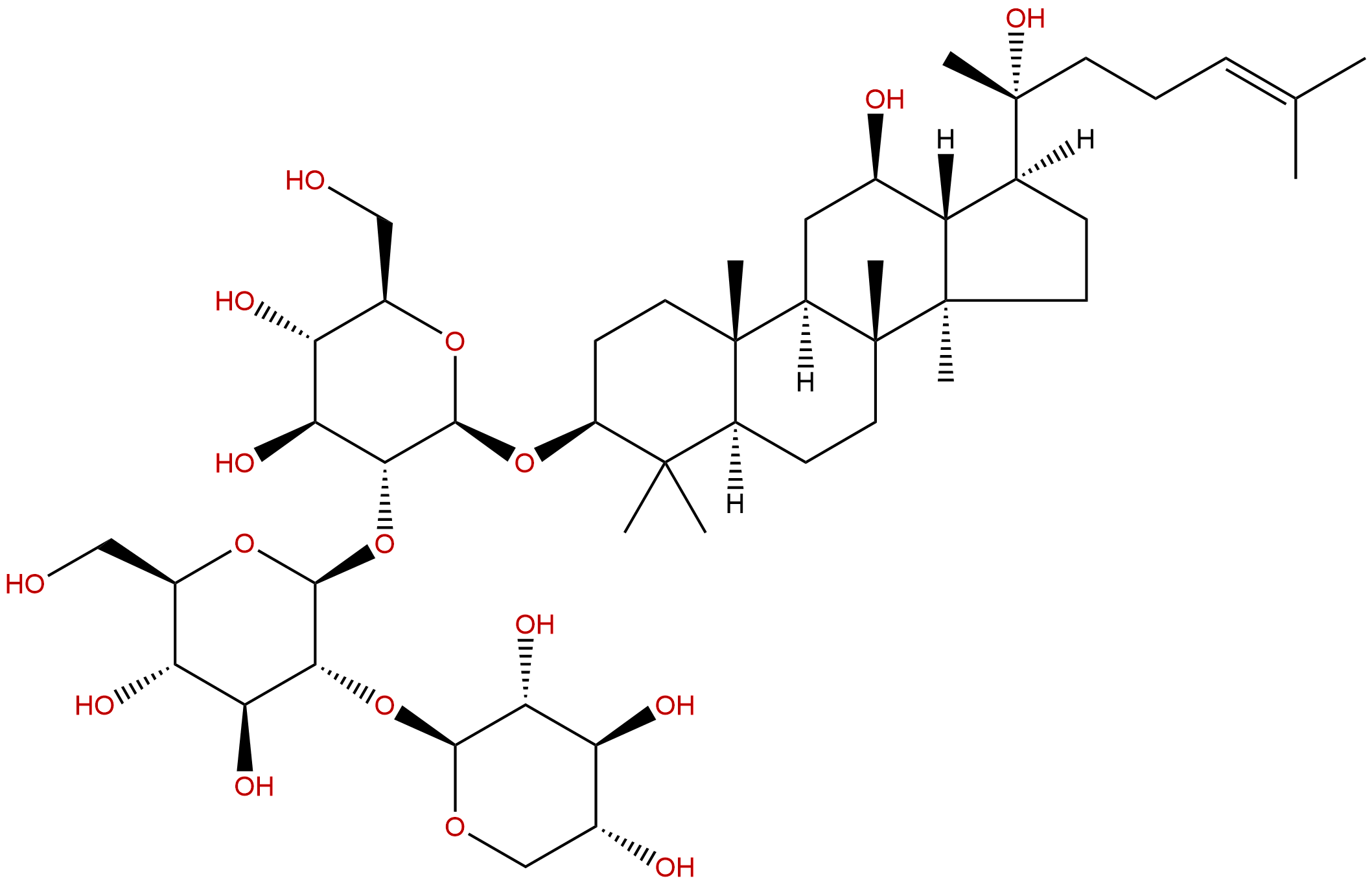


Product name: Notoginsenoside Ft1
Synonym name:
Catalogue No.: BP1846
Cas No.: 155683-00-4
Formula: C47H80O17
Mol Weight: 917.14
Botanical Source: Panax notoginseng
Physical Description:
Type of Compound: Triterpenoids
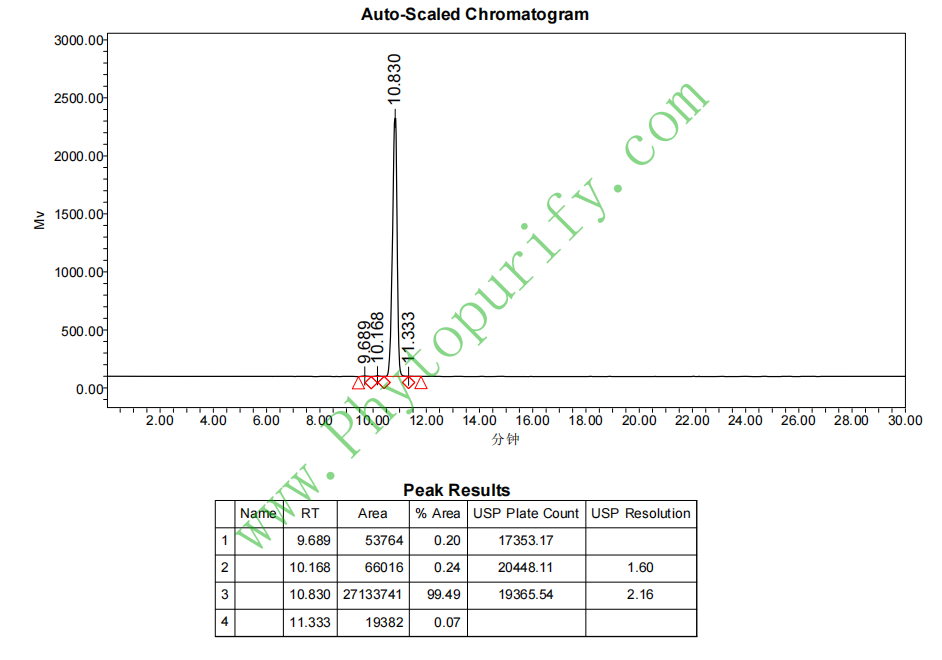
Purity: 95%~99%
Analysis Method: HPLC-DAD or/and HPLC-ELSD
Identification Method: Mass, NMR
Packing: Brown vial or HDPE plastic bottle
The product could be supplied from milligrams to grams. Inquire for bulk scale.
We provide solution to improve the water-solubility of compounds, thereby facilitating the variety of activity tests and clinic uses.
For Reference Standard and R&D, Not for Human Use Directly.
Description:
Notoginsenoside Ft1 is a novel stimulator of angiogenesis, it stimulates angiogenesis via HIF-1α-mediated VEGF expression, with PI3K/AKT and Raf/MEK/ERK signaling cascades concurrently participating in the process; it has the potential therapeutic effect on human neuroblastoma, it can arrest the proliferation and elicited the apoptosis of SH-SY5Y cells possibly via p38 MAPK and ERK1/2 pathways.Notoginsenoside Ft1 activates both glucocorticoid and estrogen receptors to induce endothelium-dependent, nitric oxide-mediated relaxations in rat mesenteric arteries. Notoginsenoside Ft1 also provides a great potential application of it in clinics for patients with diabetic foot ulcers, it may accelerate diabetic wound healing by orchestrating multiple processes, including promoting fibroblast proliferation, enhancing angiogenesis, and attenuating inflammatory response.
References:
Life Sci. 2014 Jul 17;108(2):63-70.
p38 MAPK and ERK1/2 pathways are involved in the pro-apoptotic effect of notoginsenoside Ft1 on human neuroblastoma SH-SY5Y cells.
This study aims to investigate the effect and the mechanisms of Notoginsenoside Ft1, a natural compound exclusively found in P. notoginseng, on the proliferation and apoptosis of human neuroblastoma SH-SY5Y cells.
METHODS AND RESULTS:
CCK-8 assay was used to assess the cell proliferation. Flow cytometry was performed to measure the cell cycle distribution and cell apoptosis. Hoechst 33258 staining was conducted to confirm the morphological changes of apoptotic cells. Protein expression was detected by western blot analysis and caspase 3 activity was measured by colorimetric assay kit. Among the saponins examined, Ft1 showed the best inhibitory effect on cell proliferation of SH-SY5Y cells with IC50 of 45μM. Ft1 not only arrested the cell cycle at S, G2/M stages, but also promoted cell apoptosis, which was confirmed by Hoechst 33258 staining. Further studies demonstrated that Ft1 up-regulated the protein expressions of cleaved caspase 3, phospho-p53, p21, and cyclin B1, but down-regulated that of Bcl-2. Moreover, Ft1 enhanced the phosphorylation of ERK1/2, JNK and p38 MAPK. However, the phosphorylation of Jak2 and p85 PI3K was reduced by Ft1. Inhibitors of p38 MAPK and ERK1/2 but not JNK abrogated the up-regulated protein expressions of cleaved caspase 3, p21 and down-regulated protein expression of Bcl-2 as well as elevated caspase 3 activity induced by Ft1.
CONCLUSIONS:
Ft1 arrested the proliferation and elicited the apoptosis of SH-SY5Y cells possibly via p38 MAPK and ERK1/2 pathways, which indicates the potential therapeutic effect of it on human neuroblastoma.
Biochem Pharmacol. 2014 Mar 1;88(1):66-74.
Notoginsenoside Ft1 activates both glucocorticoid and estrogen receptors to induce endothelium-dependent, nitric oxide-mediated relaxations in rat mesenteric arteries.
Panax notoginseng (Burk.) F.H. Chen has been used traditionally for the treatment of cardiovascular diseases. Notoginsenoside Ft1 (Ft1) is a bioactive saponin from the leaves of P. notoginseng. Experiments were designed to determine whether or not Ft1 is an endothelium-dependent vasodilator.
METHODS AND RESULTS:
Rat mesenteric arteries were suspended in organ chambers for the measurement of isometric tension during phenylephrine-induced contractions. The cyclic guanosine monophosphate (cGMP) level was assessed using enzyme immunoassay. The phosphorylation and protein expressions of endothelial nitric oxide synthase (eNOS), glucocorticoid receptors (GR), estrogen receptors beta (ERß), protein kinase B (Akt) and extracellular signal-regulated kinase 1/2 (ERK1/2) were determined by Western blotting. The localization of GR and ERß were determined by immunofluorescence staining. Ft1 caused endothelium-dependent relaxations, which were abolished by l-NAME (inhibitor of nitric oxide synthases) and ODQ (inhibitor of soluble guanylyl cyclase). Ft1 increased the cGMP level in rat mesenteric arteries. GR and ERß were present in the endothelial layer and their antagonism by RU486 and PHTPP, respectively, inhibited Ft1-induced endothelium-dependent relaxations and phosphorylations of eNOS, Akt and ERK1/2. Inhibition of phosphoinositide-3-kinase (PI3K) by wortmannin and ERK1/2 by U0126 reduced Ft1-evoked relaxations and eNOS phosphorylation.
CONCLUSIONS:
Taken in conjunction, the present findings suggest that Ft1 stimulates endothelial GRs and ERßs with subsequent activation of the PI3K/Akt and ERK1/2 pathways in rat mesenteric arteries. This results in phosphorylation of eNOS and the release of NO, which activates soluble guanylyl cyclase in the vascular smooth muscle cells leading to relaxations.
J Pharmacol Exp Ther. 2016 Feb;356(2):324-32.
Notoginsenoside Ft1 Promotes Fibroblast Proliferation via PI3K/Akt/mTOR Signaling Pathway and Benefits Wound Healing in Genetically Diabetic Mice.
Wound healing requires the essential participation of fibroblasts, which is impaired in diabetic foot ulcers (DFU). Notoginsenoside Ft1 (Ft1), a saponin from Panax notoginseng, can enhance platelet aggregation by activating signaling network mediated through P2Y12 and induce proliferation, migration, and tube formation in cultured human umbilical vein endothelial cells. However, whether it can accelerate fibroblast proliferation and benefit wound healing, especially DFU, has not been elucidated.
METHODS AND RESULTS:
In the present study on human dermal fibroblast HDF-a, Ft1 increased cell proliferation and collagen production via PI3K/Akt/mTOR signaling pathway. On the excisional wound splinting model established on db/db diabetic mouse, topical application of Ft1 significantly shortened the wound closure time by 5.1 days in contrast with phosphate-buffered saline (PBS) treatment (15.8 versus 20.9 days). Meanwhile, Ft1 increased the rate of re-epithelialization and the amount of granulation tissue at day 7 and day 14. The molecule also enhanced mRNA expressions of COL1A1, COL3A1, transforming growth factor (TGF)-β1 and TGF-β3 and fibronectin, the genes that contributed to collagen expression, fibroblast proliferation, and consequent scar formation. Moreover, Ft1 facilitated the neovascularization accompanied with elevated vascular endothelial growth factor, platelet-derived growth factor, and fibroblast growth factor at either mRNA or protein levels and alleviated the inflammation of infiltrated monocytes indicated by reduced tumor necrosis factor-α and interleukin-6 mRNA expressions in the diabetic wounds.
CONCLUSIONS:
Altogether, these results indicated that Ft1 might accelerate diabetic wound healing by orchestrating multiple processes, including promoting fibroblast proliferation, enhancing angiogenesis, and attenuating inflammatory response, which provided a great potential application of it in clinics for patients with DFU.
Br J Pharmacol. 2014 Jan;171(1):214-23.
Platelet P2Y₁₂ receptors are involved in the haemostatic effect of notoginsenoside Ft1, a saponin isolated from Panax notoginseng.
Among the saponins examined, Notoginsenoside Ft1 was the most potent procoagulant and induced dose-dependent platelet aggregation.
METHODS AND RESULTS:
Notoginsenoside Ft1 reduced plasma coagulation indexes, decreased tail bleeding time and increased thrombogenesis. Moreover, it potentiated ADP-induced platelet aggregation and increased cytosolic Ca(2+) accumulation, effects that were attenuated by clopidogrel. Molecular docking analysis suggested that Notoginsenoside Ft1 binds to platelet P2Y₁₂ receptors. The increase in intracellular Ca(2+) evoked by Notoginsenoside Ft1 in HEK293 cells overexpressing P2Y₁₂ receptors could be blocked by ticagrelor. Notoginsenoside Ft1 also affected the production of cAMP and increased phosphorylation of PI3K and Akt downstream of P2Y₁₂ signalling pathways.
CONCLUSIONS:
Notoginsenoside Ft1 enhanced platelet aggregation by activating a signalling network mediated through P2Y₁₂ receptors. These novel findings may contribute to the effective utilization of this compound in the therapy of haematological disorders.
HPLC of Notoginsenoside Ft1
Storage conditions:Short-term storage at 2~8℃, long-term storage at -20 ~ -80℃
277.9100
2.4931
2.4930
.0742
.5688
.1773
Low
69.1635
6.3048
No
No
No
No
No
No
0.0
Yes
No
No
No
Notoginsenoside Ft1 is a traditional and precious Chinese medicinal herb, Panax notoginseng(Panax notoginseng)The monomeric compounds of dammarane type triterpenoid saponins isolated from the middle. Its CAS number is 155683-00-4, molecular formula is C47H80O17, and molecular weight is as high as 917.1400 g/mol. It belongs to a natural product with complex structure and diverse biological activities. In recent years, with the deepening development of natural product chemistry and molecular pharmacology, Panax notoginseng saponin Ft1 has emerged as a research hotspot among numerous Panax notoginseng saponins due to its broad and unique pharmacological activities. Existing research indicates that it not only has the traditional "promoting blood circulation and removing blood stasis" related properties of Sanqi, but also angiogenesis and Procoagulant The dual regulatory effect has shown great potential in anti-tumor, neuroprotective, anti-inflammatory, renal protection, and metabolic disease intervention. Its mechanism of action involves PI3K/AKT/mTOR、MAPK Regulating multiple key signaling pathways and being able to act on Corticosteroid receptor (GR)、Estrogen receptor beta (ER β)、TGR5 bile acid receptor Waiting for multiple targets reflects the synergistic effects of natural products with multiple components, targets, and pathways. This article will provide a systematic and professional interpretation of this star molecule from its chemical structure, traditional sources, modern pharmacological mechanisms, drug evaluation, and future prospects.
The chemical structure of Panax notoginseng saponin Ft1 is the material basis for its biological activity. The SMILES string provides a detailed description of its complex stereoisomerism: it is a saponin molecule composed of a dammarane type tetracyclic triterpene as a aglycone, connected by three sugar chains (possibly including glucose, xylose, etc.). This highly glycosylated structure determines its strong hydrophilicity.
From the perspective of pharmacological parameters:
- Molecular weight (MW)917.14, far beyond the scope of conventional small molecule drugs (usually<500 Da), poses challenges for its oral absorption and transmembrane transport.
- Lipid water partition coefficient (LogP/LogD)Approximately 2.49. This value indicates that the compound has a certain degree of lipophilicity, but considering its large molecular weight and polarity, its overall properties are more inclined towards amphiphilicity. This is consistent with the surfactant properties of its saponins.
- Topological Polarity Surface Area (TPSA)Up to 277.91 Å ². The TPSA value is often related to the hydrogen bonding ability and membrane permeability of the compound. Generally, compounds with TPSA>140 Å ² have lower oral bioavailability. The extremely high TPSA value of Panax notoginseng saponin Ft1 is mainly due to the large number of hydroxyl groups and oxygen atoms on the sugar ring in its molecule, which strongly suggests its Poor cell membrane permeability It is difficult to enter cells through passive diffusion.
- Water solubility:0.0742 mg/mL, Belonging to micro solubility. This is contradictory to its high TPSA and sugar based structure, possibly due to its complex spatial structure and high molecular weight leading to tight crystal packing and slow dissolution kinetics. In practical applications, it may be necessary to improve its solubility and bioavailability through formulation techniques such as making nanoparticles, phospholipid complexes, etc.
- Caco-2 permeability 0.1773, a low value, confirms the prediction of poor intestinal absorption.
In summary, Panax notoginseng saponin Ft1 is a typical "macromolecular" natural saponin, characterized by high polarity, high TPSA, and low membrane permeability. These physicochemical properties are the decisive factors in its pharmacokinetic behavior and also the main technical bottlenecks that need to be overcome in its development into oral drugs.
Sanqi saponin Ft1 is derived from plants of the Panax genus in the Araliaceae family Sanqi(Panax notoginseng (Burk.) F. H. Chen)Dry roots and rhizomes. Sanqi is mainly produced in Wenshan, Yunnan, China. It is also known as "Tianqi" or "Jin Bu Huan" and has a long history of medicinal use. It was first recorded in Li Shizhen's "Compendium of Materia Medica" during the Ming Dynasty and is described as a "divine medicine for stopping bleeding and a wonderful product for regulating blood flow".
In traditional Chinese medicine theory, Sanqi has a warm nature, a sweet and slightly bitter taste, and belongs to the liver and stomach meridians. It is skilled in its functions Relieve blood stasis and stop bleeding, reduce swelling and relieve pain Traditionally, it is mainly used to treat various types of bleeding (such as hemoptysis, vomiting blood, epistaxis, rectal bleeding, and collapse) as well as injuries caused by falls, bruises, swelling, and pain. There are many similarities between the concepts of "promoting blood circulation and removing blood stasis" in traditional Chinese medicine theory and "improving microcirculation, anti thrombotic, anti-inflammatory, and promoting tissue repair" in modern medicine. Modern pharmacological research on Panax notoginseng has confirmed that its core active ingredients are various saponin compounds represented by Panax notoginseng saponin Ft1, as well as Panax notoginseng saponins, flavonoids, polysaccharides, and so on.
Traditionally, Sanqi is mostly consumed in powder form or applied externally. Modern preparations include injections such as Xuesaitong and Xueshuantong, as well as various capsules and tablets, which are widely used in the prevention and treatment of cardiovascular and cerebrovascular diseases. The in-depth study of Panax notoginseng saponin Ft1 is a key link in revealing the scientific connotation of "promoting blood circulation and removing blood stasis" in Panax notoginseng at the molecular level. It closely links traditional efficacy with modern disease targets.
The pharmacological activity of Panax notoginseng saponin Ft1 is extensive and complex, and its mechanism of action presents a network feature of multi-target and multi pathway interweaving. The following analysis focuses on the known targets (BCL2, HIF1A, MAPK1, CASP3, SOD2) and related diseases (myocardial infarction).
Sanqi saponin Ft1 perfectly embodies the wisdom of "stopping bleeding without leaving blood stasis" in traditional Chinese medicine's "promoting blood circulation and removing blood stasis", manifested in its effects on coagulation and angiogenesis Bidirectional and precise regulation。
Promote angiogenesis and vasodilation This is the core mechanism of "removing blood stasis and promoting tissue repair".
procoagulant effect This reflects its aspect of "stopping bleeding".
In myocardial infarction In the context of stroke, this bidirectional regulation is particularly important: in the acute phase of infarction, its potential procoagulant properties need to be carefully evaluated; During the recovery period, its strong pro angiogenic and anti-inflammatory effects (see below) are beneficial for the survival of myocardial cells in the infarct margin, inhibit ventricular remodeling, and promote the establishment of collateral circulation, thereby improving heart function.
Sanqi saponin Ft1 exhibits inhibitory activity against various cancer cells, mainly by inducing cell apoptosis and lysosomal cell death.
- Target and pathway:
- Apoptotic pathway It inhibits by PI3K/AKT/mTOR This key pathway promotes cell survival and proliferation, while activating p38 MAPK and ERK1/2(MAPK1)Signal disrupts the balance of cellular survival. This leads to the activation of pro apoptotic factors while inhibiting anti apoptotic proteins such as BCL2 The expression. Finally,Caspase-3 (CASP3) As a key effector, caspase is activated to execute the cell apoptosis program.
- Lysosomal pathway In addition to classical apoptosis, it can also induce mitochondrial dysfunction and lysosomal membrane permeability, leading to another type of programmed cell death.
Comprehensively promote it Fibroblast proliferation、Enhance angiogenesis(Angiogenesis) and anti-inflammatory Notoginseng saponin Ft1 shows comprehensive advantages in promoting the healing of chronic wounds (such as diabetes foot ulcer), and its role is the result of multi link and multi target synergy.
Based on the provided pharmacological parameters, we combine Lipinski's Rule of Five (Ro5) Objective evaluation of the pharmacological potential of Panax notoginseng saponin Ft1 in accordance with modern drug development standards.
Analysis of Lipinski's Five Rules:
1. Molecular weight (MW) ≤ 500 The MW of Ft1 is 917.14, seriously exceeding the standard (violation).
2. Lipid water partition coefficient (LogP) ≤ 5 LogP is 2.49, which is consistent.
3. Number of hydrogen bond donors (HBD) ≤ 5 According to the structural formula, its HBD number (mainly hydroxyl groups) far exceeds 5 (violation).
4. Number of hydrogen bond acceptors (HBA) ≤ 10 Its HBA count (oxygen atom count) far exceeds 10 (violation).
Conclusion Sanqi saponin Ft1 seriously violates three items in Ro5 (MW, HBD, HBA) and belongs to the typical category“Beyond Rule of Five (bRo5)”Compounds. Ro5 is mainly used to predict drug properties, especially oral absorption. Violating Ro5 means that its oral bioavailability is likely to be extremely low, consistent with its predicted very low Caco-2 permeability (0.1773).
Analysis of other key parameters:
- Blood-brain barrier (BBB) penetrability Predicted as' low '. This is consistent with its high TPSA and high molecular weight, which means it is not easily able to enter the central nervous system. For diseases targeting the central nervous system, such as certain brain tumors and neurodegenerative diseases, special drug delivery systems may be required.
- Protein binding rate (PPB)69.16%, belonging to the above average level. A higher protein binding rate will affect its free drug concentration, tissue distribution, and clearance rate.
- Toxicity warning:
- HERG inhibition No, this is a positive signal indicating a low risk of potential cardiac toxicity (causing QT interval prolongation).
- AMES test: 0.0, indicating no mutagenicity.
- Chromosomal aberration, skin/respiratory sensitization, phototoxicity, etc All are negative or absent, indicating good preliminary safety.
- Serum enzyme indicators (ALT/AST, etc.)The relevant prediction is' no ', indicating a low potential risk of liver cell toxicity.
Comprehensive Assessment:
Sanqi saponin Ft1 is a Highly active and multi-target, but drug development (especially oral absorption) faces significant challenges Natural products. Its advantages lie in its extensive pharmacological activity and good preliminary safety warning. The main development bottleneck lies in:
1. Poor oral bioavailability This is the biggest obstacle.
2. May require injection administration Considering its traditional source, Sanqi, has a history of injection applications, developing it into injectable formulations (such as freeze-dried powder injections) is a feasible path that can bypass absorption issues and be directly used for cardiovascular and cerebrovascular diseases, anti-tumor adjuvant therapy, etc.
3. Structural modification and formulation technology Future research can optimize its physicochemical properties through structural modifications, such as preparing prodrugs and simplifying sugar chains; Alternatively, advanced formulation technologies such as nanocrystals, liposomes, phospholipid complexes, and polymer micelles can be utilized to encapsulate drugs, significantly improving their solubility, stability, and targeting, and even enhancing their oral absorption.
Research status:
At present, research on Panax notoginseng saponin Ft1 has progressed from early extraction, isolation, and structural identification to Cellular and Molecular Pharmacological Mechanisms The exploration phase. Its mechanism of action in anti-tumor, pro angiogenesis, pro coagulation, organ protection, and other aspects has been extensively validated through in vitro and some animal experiments. The research network has covered multiple popular signaling nodes and death modes such as PI3K/AKT, MAPK, HIF-1 α/VEGF, cell apoptosis/ferroptosis, etc. However, there are still some shortcomings in existing research: 1) Most studies remain at the cellular level,In vivo pharmacological evaluation of the system The validation, especially in animal models of diseases, is not yet sufficient; 2)Pharmacokinetic study Severe scarcity, with unclear absorption, distribution, metabolism, and excretion (ADME) processes; 3) As a bRo5 compound, it Delivery strategy The research has just begun.
Application Prospects:
1. Drugs for the treatment of cardiovascular and cerebrovascular diseases Based on its pro angiogenic and anti-inflammatory properties, developed for treatment Myocardial infarction recovery period, chronic heart failure, ischemic stroke sequelae, diabetes microvascular complications (such as foot ulcer) The injection or new oral preparations have broad prospects.
2. Antitumor adjuvant therapy drugs As a natural product that induces cancer cell death through multiple targets and pathways, it can be combined with existing chemotherapy and targeted therapy to enhance efficacy or reduce drug resistance. Especially noteworthy is its role in tumors such as neuroblastoma.
3. Metabolic disease treatment drugs Its dual role as a TGR5 agonist/FXR antagonist provides insights for the development of therapies Type 2 diabetes, non-alcoholic fatty liver disease (NAFLD), obesity Innovative drugs provide new ideas.
4. Organ protectants The anti ferroptotic effect, especially in acute kidney injury and chronic kidney disease, is a highly promising new direction.
5. Structural optimization of lead compounds By using its complex structure as a template and simplifying or modifying it through medicinal chemical methods, it is expected to obtain derivatives with better activity and drug properties.
Summary:
Sanqi saponin Ft1 is a shining pearl presented by traditional Chinese medicine Sanqi to modern pharmacy. It vividly interprets the scientific connotation of multi-component synergistic treatment of diseases in traditional Chinese medicine with its complex chemical structure and multi-target, multi pathway network pharmacological effects. Although the inherent physical and chemical properties of modern drugs pose significant challenges in terms of drug development, this is precisely the field where modern pharmacy, medicinal chemistry, and pharmacology can shine. With breakthroughs in delivery technology and in-depth preclinical research, Panax notoginseng saponin Ft1 is expected to transform from a naturally occurring compound with clear activity into an innovative drug for treating cardiovascular and cerebrovascular diseases, metabolic diseases, and even tumors, truly achieving a leap from ancient pharmacopoeias to modern pharmacies.
