


Product name: Stigmasterol
Synonym name: Serposterol
Catalogue No.: BP1343
Cas No.: 83-48-7
Formula: C29H48O
Mol Weight: 412.702
Botanical Source: Widely occurring sterol. Present in potato (Solanum tuberosum), chick pea (Cicer arietinum), artichoke (Cynara scolymus), sunflower oil, olive oil, beans (Phaseolus vulgaris), oats and strawberry fruit. Also widely distributed in marine organisms such as
Physical Description: Powder
Type of Compound: Steroids
Purity: 95%~99%
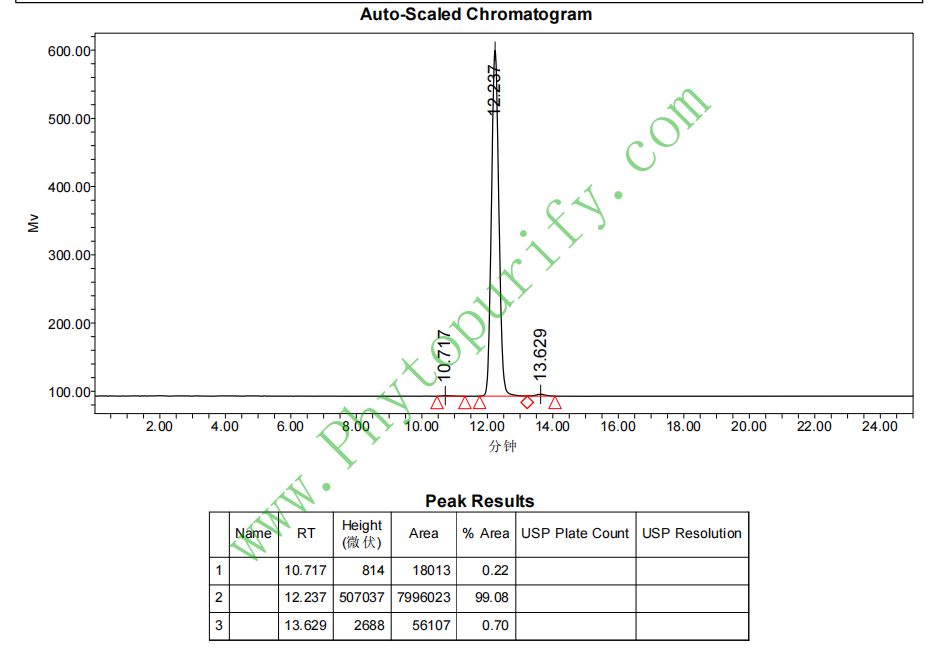
Analysis Method: HPLC-DAD or/and HPLC-ELSD
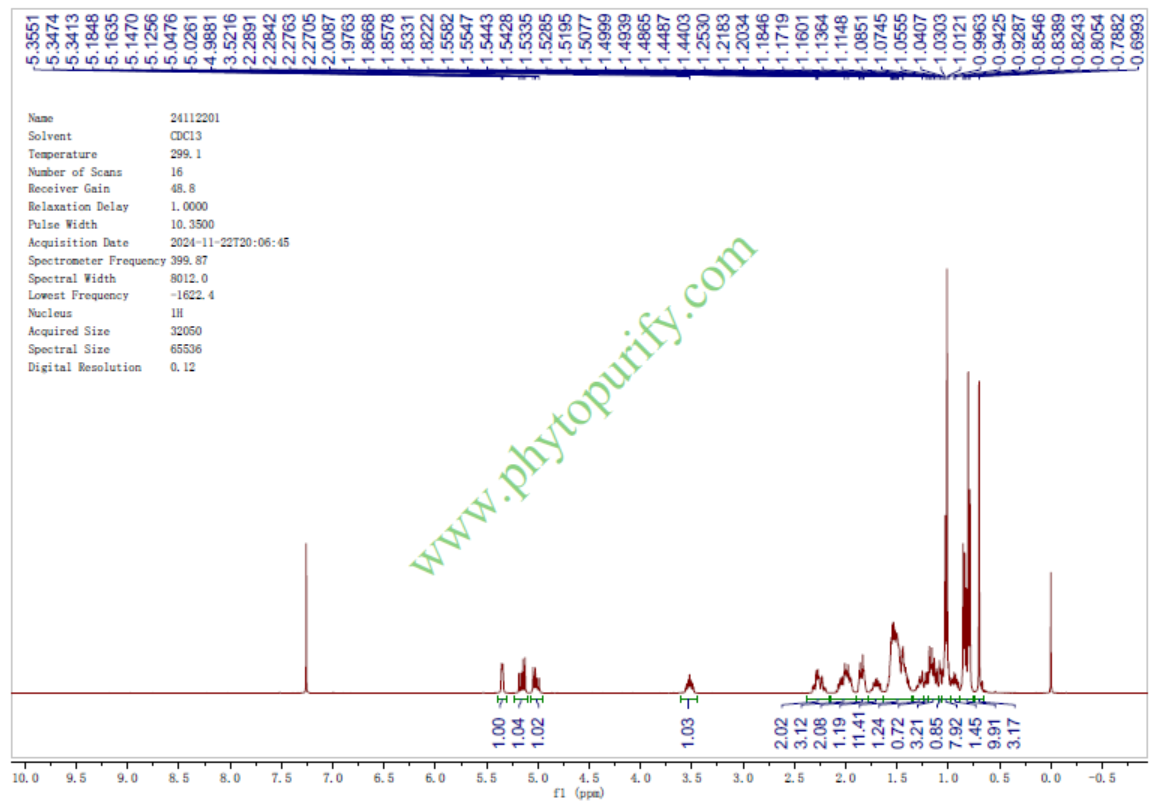
Identification Method: Mass, NMR
Packing: Brown vial or HDPE plastic bottle
Storage: Store in a well closed container, protected from air and light. Put into refrigerate or freeze for long term storage.
Whenever possible, you should prepare and use solutions on the same day. However, if you need to make up stock solutions in advance, we recommend that you store the solution as aliquots in tightly sealed vials at -20℃. Generally, these will be useable for up to two weeks.
The product could be supplied from milligrams to grams, up to kilograms
Inquire for bulk scale.
Descriptions:
Stigmasterol, a soy lipid-derived phytosterol, is an antagonist of the bile acid nuclear receptor FXR.[1]
Stigmasterol, isolated from the bark of Butea monosperma, has thyroid inhibitory, anti-peroxidative and hypoglycemic effects .[2]
Stigmasterol has potential anti-osteoarthritic properties, can inhibit several pro-inflammatory and matrix degradation mediators typically involved in OA-induced cartilage degradation, at least in part through the inhibition of the NF-kappaB pathway.[3]
Stigmasterol can inhibit tumour promotion in mouse skin two-stage carcinogenesis.[4]
Stigmasterol can induce cognitive ameliorative effects, mediated by the enhancement of cholinergic neurotransmission system via the activation of estrogen or NMDA receptors.[5]
Stigmasterol, when fed, lowers plasma cholesterol levels, inhibits intestinal cholesterol and plant sterol absorption, and suppresses hepatic cholesterol and classic bile acid synthesis in Wistar as well as WKY rats. However, plasma and hepatic incorporation of stigmasterol is low.[6]
References:
[1] Carter B A, Taylor O A, Prendergast D R, et al. Pediatric Res, 2007, 62(3):301-6.
[2] Panda S, Jafri M, Kar A, et al. Fitoterapia, 2009, 80(2):123-6.
[3] Gabay O, Sanchez C, Salvat C, et al. Osteoarthr Cartilage, 2010, 18(1):106-16.
[4] Kasahara Y, Kumaki K, Katagiri S, et al. Phytother Res 1994, 8(6):327-31.
[5] Park S J, Dong H K, Jung J M, et al. Eur J Pharmacol, 2012, 676(1-3):64-70.
[6] Batta A K, Xu G, Honda A, et al. Metabolism , 2006, 55(3):292-9.
[7] Liu S Y, Sun L J, Guo X. Adv Materials Res, 2011, 233-235:1206-9.
HPLC of Stigmasterol
HNMR of Stigmasterol
Storage conditions:Short-term storage at 2~8℃, long-term storage at -20 ~ -80℃
20.2300
8.2541
8.2541
.0001
8.0838
4.9685
High
93.6503
4.5706
No
No
No
No
No
No
0.0
No
No
No
Yes
In the broad field of natural product chemistry and pharmacology research, plant sterols have attracted much attention due to their extensive biological activity and potential therapeutic value. Stigmasterol (CAS number: 83-48-7), as a plant sterol widely present in various plants, is not only an important component of plant cell membranes, but also a hot molecule in drug development due to its excellent biological functions. Traditionally, stigmasterol has been used as a dietary supplement to lower cholesterol due to its structural similarity to cholesterol. However, in-depth research in the past two decades has revealed that stigmasterol is much more than that. It has been proven to be a natural active molecule that is orally effective and can efficiently cross the blood-brain barrier, demonstrating strong potential in immune regulation, anti-inflammatory, neuroprotection, and other areas. Especially in the field of central nervous system diseases, sitosterol has shown significant therapeutic effects in alleviating cognitive impairment, Alzheimer's disease (AD), and neuropathic pain models by regulating the function of microglia and inhibiting neuroinflammation. In addition, its role in regulating lipid metabolism related targets also provides scientific basis for its application in metabolic diseases such as hypercholesterolemia. This article aims to systematically review the chemical properties, plant sources, pharmacological activities, molecular mechanisms of action, medicinal properties, and clinical application prospects of stigmasterol, in order to provide comprehensive academic references for the in-depth development and transformation research of this natural product.
Dougesterol is a tetracyclic triterpenoid compound belonging to the Δ 5-unsaturated plant sterols. Its chemical name is (3 β, 22E) - stigmast-5,22-dien-3-ol, with a molecular formula of C29H48O and a molecular weight of 412.7020. Its core structure consists of a cyclopentane dihydrophenanthrene steroid nucleus and an 8-carbon side chain. Compared with cholesterol, stigmasterol has a double bond (Δ 5) between the C-5 and C-6 positions of the steroid nucleus, as well as a trans double bond (Δ 22, E configuration) between the C-22 and C-23 positions of its side chain, and an ethyl substitution at the C-24 position. These structural differences are the material basis for its unique biological activity.
In terms of physical and chemical properties, stigmasterol is a white flake or needle shaped crystal with no odor. Its lipophilicity is extremely high, with a calculated LogP value of up to 8.2541, indicating its strong lipophilicity. Consistent with this, its water solubility is extremely low, about 0.0001 mg/mL, almost insoluble in water, but soluble in organic solvents such as ethanol, ether, chloroform, acetone, etc. Its topological polar surface area (TPSA) is only 20.23 Å ², further confirming its non-polar molecular characteristics. These physicochemical parameters determine the distribution characteristics of sitosterol in organisms, especially its excellent transmembrane ability. It is worth noting that although its molecular weight exceeds 400 Da and its lipophilicity is high, existing research has confirmed that it has a high blood-brain barrier permeability, which lays a key foundation for its direct action on the central nervous system. The preliminary drug risk assessment shows that the Ames test result is negative (0.0), indicating no mutagenicity; At the same time, there is no hERG potassium channel inhibitory activity, indicating a low potential risk of arrhythmia and good safety characteristics.
Bean sterols are widely distributed in nature and are one of the most common sterols in the plant kingdom. Its main plant sources include:
1. Leguminous plants As its name comes from, soybean (Glycine max) and its products (such as soybean oil and soybean meal) are the most abundant and major commercial sources of stigmasterol. Other legumes such as beans and chickpeas are also abundant in content.
2. medicinal plants Many traditional medicinal plants contain high levels of stigmasterol, such as Astragalus membranaceus, ginseng, Tripterygium wilfordii, centella asiatica, and Houttuynia cordata, which may partially explain the traditional anti-inflammatory and immune regulating effects of these herbs.
3. Oil crops and nuts Rapeseed, corn germ, peanut, sesame, sunflower seeds and their oils all contain a considerable proportion of stigmasterol.
4. Other vegetables and fruits Broccoli, carrots, bananas, mangoes, etc. also contain small amounts of stigmasterol.
The extraction and separation of sitosterol usually follow the general process of plant sterols, and the main methods include:
1. Solvent extraction method The most commonly used method. By utilizing the lipophilicity of sitosterol, organic solvents such as petroleum ether, n-hexane, and ethyl acetate are used for reflux extraction or ultrasound assisted extraction of plant raw materials (usually requiring degreasing first).
2. saponification Heating and saponification of plant oils or extracts under alkaline conditions (such as KOH/ethanol solution) to hydrolyze glycerides and release free sterols, followed by purification by organic solvent extraction.
3. Chromatographic separation method To further obtain high-purity stigmasterol, column chromatography (such as silica gel column, alumina column), thin-layer chromatography, or high-performance liquid chromatography are commonly used for separation and purification. Due to the structural similarity between sitosterol and other sterols such as β - sitosterol and campesterol, separation is a key challenge, and silver nitrate silica gel columns are often used to utilize their double bond differences for separation.
4. Modern extraction techniques Supercritical CO2 fluid extraction technology has become an important method for extracting plant sterols (including stigmasterol) due to its green, efficient, and selective advantages, especially suitable for the production of high value-added products.
A large number of pharmacological studies both in vitro and in vivo have shown that stigmasterol has various biological activities, with its core revolving around anti-inflammatory, immune regulation, and neuroprotection.
1. Neuroprotective and anti cognitive impairment activity
The most notable activity of stigmasterol lies in its protective effect on the central nervous system. In various animal models of Alzheimer's disease (AD), such as A β 1-42 induction and streptozotocin induction models, oral administration of stigmasterol can significantly improve the spatial learning and memory abilities of model animals, reduce hippocampal neuron loss, and decrease the deposition of A β plaques and excessive phosphorylation of Tau protein in the brain. In Parkinson's disease models, it also shows a protective effect on dopaminergic neurons. These effects are closely related to their strong anti neuroinflammatory properties.
2. Anti inflammatory and immune regulatory activity
Dougesterol has inhibitory effects on both systemic and local inflammation. In the lipopolysaccharide (LPS) - induced macrophage inflammation model, stigmasterol can dose dependently inhibit the production of key pro-inflammatory factors such as nitric oxide (NO), prostaglandin E2 (PGE2), tumor necrosis factor - α (TNF - α), interleukin-6 (IL-6), and IL-1 β. In animal models such as carrageenan induced paw edema, cotton ball induced granuloma, and colitis models, sitosterol has shown significant anti-inflammatory effects.
3. Regulating microglial polarization and relieving neuropathic pain
Microglia are intrinsic immune cells of the central nervous system, and their overactivation and M1 (pro-inflammatory) polarization are the core components of neuroinflammation and neuropathic pain. Research has shown that stigmasterol can effectively inhibit the polarization of microglia towards M1 phenotype, while promoting their transformation towards M2 phenotype (anti-inflammatory/reparative). In neuropathic pain models induced by chronic sciatic nerve compression injury (CCI) or spinal nerve ligation (SNL), steroid treatment can significantly alleviate mechanical hyperalgesia and thermal hyperalgesia, and its analgesic effect is closely related to regulating microglial cell function.
4. Lowering cholesterol and regulating lipid metabolism
As a plant sterol, stigmasterol can reduce serum total cholesterol and low-density lipoprotein cholesterol levels through mechanisms such as competitive inhibition of cholesterol absorption in the intestine and promotion of cholesterol excretion. Its function involves multiple targets related to cholesterol metabolism.
5. Other activities
In addition, the study also reported that stigmasterol has potential activities such as antioxidant, anti-tumor (inhibiting proliferation of breast cancer, prostate cancer, colon cancer cells, etc.), anti osteoporosis, liver protection, etc., showing its multi target effect.
The pharmacological effects of sitosterol are not achieved through a single target, but through the regulation of a complex cellular signaling network. Its core mechanism involves precise regulation of energy metabolism, inflammatory pathways, and cellular polarization.
1. Activation of AMPK signaling pathway
Adenosine activated protein kinase (AMPK) is a core sensor of cellular energy metabolism. Dougesterol has been confirmed as an AMPK activator. The activation of AMPK has global anti-inflammatory and metabolic regulatory effects. On the one hand, activated AMPK can directly phosphorylate and inhibit the downstream nuclear factor kappa B (NF - κ B) signaling pathway, reducing the transcription of pro-inflammatory genes. On the other hand, activation of AMPK can inhibit the assembly and activation of NOD like receptor protein 3 (NLRP3) inflammasomes, thereby reducing the maturation and release of IL-1 β and IL-18. This "AMPK-NF - κ B/NLRP3" axis is the core molecular mechanism by which sitosterol exerts anti neuroinflammatory and neuroprotective effects.
2. Regulating the NF - κ B and TLR4 signaling pathways
The Toll like receptor 4 (TLR4)/NF - κ B pathway is a key pathway mediating inflammatory responses. In LPS stimulated microglia or macrophages, stigmasterol can inhibit the expression of TLR4 and the recruitment of downstream myeloid differentiation factor 88 (MyD88), thereby preventing the degradation of I κ B α and nuclear translocation of NF - κ B p65 subunit, ultimately inhibiting the expression of factors such as TNF - α, IL-6, and inducible nitric oxide synthase (iNOS). By regulating this pathway, sitosterol effectively promotes the polarization of microglia from pro-inflammatory M1 type to anti-inflammatory M2 type, which is crucial in alleviating neuropathic pain and AD pathology.
3. Regulating the network of lipid metabolism related targets
For hypercholesterolemia, stigmasterol works through a multi-target network:
- Inhibition of absorption and synthesis Competitive inhibition of intestinal cholesterol transporter NPC1L1, reducing cholesterol absorption; Simultaneously inhibit the activity of the cholesterol synthesis rate limiting enzyme HMGCR.
- Promote outward discharge and transportation Upregulate the expression of liver cell X receptors (LXR α/NR1H3, LXR β/NR1H4) and their target gene ABCA1 to promote cholesterol reverse transport; May affect the activity of cholesterol ester transfer protein (CETP).
- Other auxiliary mechanisms Indirectly improving lipid metabolism disorders and oxidative stress by regulating signals such as STAT3, NRF2 (NFE2L2), HIF-1 α, etc.
4. Other potential targets
Dougesterol may also participate in its anti-tumor, antioxidant, and other auxiliary activities by regulating estrogen receptors, activating the antioxidant stress pathway (NRF2), and affecting topoisomerase I (TOP1).
Although stigmasterol is a natural product, its medicinal characteristics are quite advantageous, but it also faces some challenges.
Advantage:
1. Good absorption and distribution After oral administration, stigmasterol can be absorbed through the intestine, and its high lipid solubility is beneficial for transmembrane transport. The most prominent feature is its outstanding Blood-brain barrier penetration ability To achieve effective concentration in the central nervous system is a key prerequisite for treating neurodegenerative diseases.
2. Clear security Long term consumption as a dietary ingredient with good historical safety data. Preclinical toxicology studies have shown that its acute toxicity is low. There is no risk of genetic toxicity (Ames negative) and significant cardiac toxicity (hERG negative), providing a safe basis for its clinical translation.
3. Multi target synergistic effect Its mechanism of action involves multiple core pathways such as AMPK and NF - κ B, which may have synergistic benefits in multiple interventions for complex diseases such as AD.
Challenges and limitations:
1. Extremely low water solubility This is the main challenge facing the development of stigmasterol preparations. Low solubility can lead to unstable oral bioavailability, significant individual differences, and affect the development of intravenous drug formulations.
2. Extensive metabolism As a steroid compound, stigmasterol may undergo extensive phase I (such as hydroxylation) and phase II (such as glucuronidation and sulfation) metabolism in the liver, leading to first pass effects and potentially reducing its systemic exposure.
3. Pharmacokinetic research is not yet sufficient At present, there is still a lack of detailed ADME (absorption, distribution, metabolism, excretion) parameters, absolute bioavailability, plasma protein binding rate, and other data on sitosterol in the human body. More systematic preclinical and clinical pharmacokinetic studies are needed.
Formulation strategy To overcome the problem of poor water solubility, modern formulation technologies such as nanocrystals, liposomes, solid dispersions, cyclodextrin inclusion complexes, and self microemulsion delivery systems have been widely studied to improve their solubility and bioavailability.
The conversion of sitosterol from a dietary component to a therapeutic drug has broad and clear application prospects.
1. Main therapeutic areas
- Neurodegenerative diseases As an adjuvant or disease modifying therapy for diseases such as AD, Parkinson's disease, and multiple sclerosis, its core value lies in its anti neuroinflammatory and neuroprotective effects. Consider developing it as an oral formulation or for combination therapy.
- neuropathic pain: In view of diabetes peripheral neuropathy, chemotherapy induced neuralgia, postoperative neuralgia and other intractable pain, stigmasterol provides a new analgesic strategy by regulating the polarization of microglia, which may be better than traditional analgesics that simply inhibit neuronal conduction.
- Metabolic diseases As a safe and effective plant sterol, it can be used for primary/secondary prevention of hypercholesterolemia and cardiovascular disease, or combined with statins to enhance lipid-lowering efficacy, reduce statin dosage and side effects.
- Chronic inflammatory diseases Such as rheumatoid arthritis, inflammatory bowel disease, etc., their broad-spectrum anti-inflammatory activity has the potential for application.
2. Future research directions and prospects
- In depth mechanism exploration Using chemical biology methods (such as photoaffinity labeled probes) to search for their direct target of action; Using multi omics techniques to comprehensively analyze the network regulated by it.
- Structural optimization and derivative development Chemical modification based on the parent nucleus of stigmasterol aims to improve water solubility, targeting, metabolic stability, or enhance its efficacy against specific targets (such as AMPK), and develop more pharmacological derivatives.
- Research on Advanced Delivery Systems Focus on developing nano formulations (such as functionalized liposomes and polymer nanoparticles) that can be targeted and delivered to the brain or inflammatory sites to improve therapeutic efficacy and reduce systemic side effects.
- Clinical translational research To promote rigorously designed clinical trials, exploratory clinical studies should be conducted within the safe dosage range of dietary supplements to verify their improvement effects on cognitive function and pain scores in early AD patients, and to obtain key human efficacy evidence.
- Combination therapy strategy Exploring the combined use of stigmasterol and existing standard therapeutic drugs (such as A β antibodies in AD, gabapentin in pain management, statins in lipid-lowering) may result in synergistic effects, reducing their respective dosages and toxicity.
As a natural plant sterol with abundant and safe sources, sitosterol has gradually evolved from its traditional role as a nutritional supplement to a lead compound with clear molecular mechanisms and broad therapeutic prospects. Its core value lies in its ability to effectively penetrate the blood-brain barrier, and precisely intervene in neuroinflammation, a common pathological link of various central nervous system diseases, through multiple mechanisms such as activating AMPK, inhibiting NF - κ B/NLRP3 inflammatory signals, and regulating microglial polarization. Meanwhile, its regulatory effect on lipid metabolism network also lays the foundation for its application in the field of metabolic diseases. Despite facing challenges such as poor water solubility in drug development, modern pharmaceutical chemistry and formulation science provide abundant solutions for this. In the future, by deepening mechanism research, developing new derivatives and delivery systems, and actively promoting clinical validation, sitosterol is expected to move from the laboratory to clinical practice, providing a new natural drug option for the treatment of neurodegenerative diseases, chronic pain, and metabolic diseases, demonstrating the lasting vitality and unique value of natural products in innovative drug development.
