Research progress on Beiwujiapi glycoside N: a multi-target anti-inflammatory natural product derived from Xiangjiapi
1. Overview
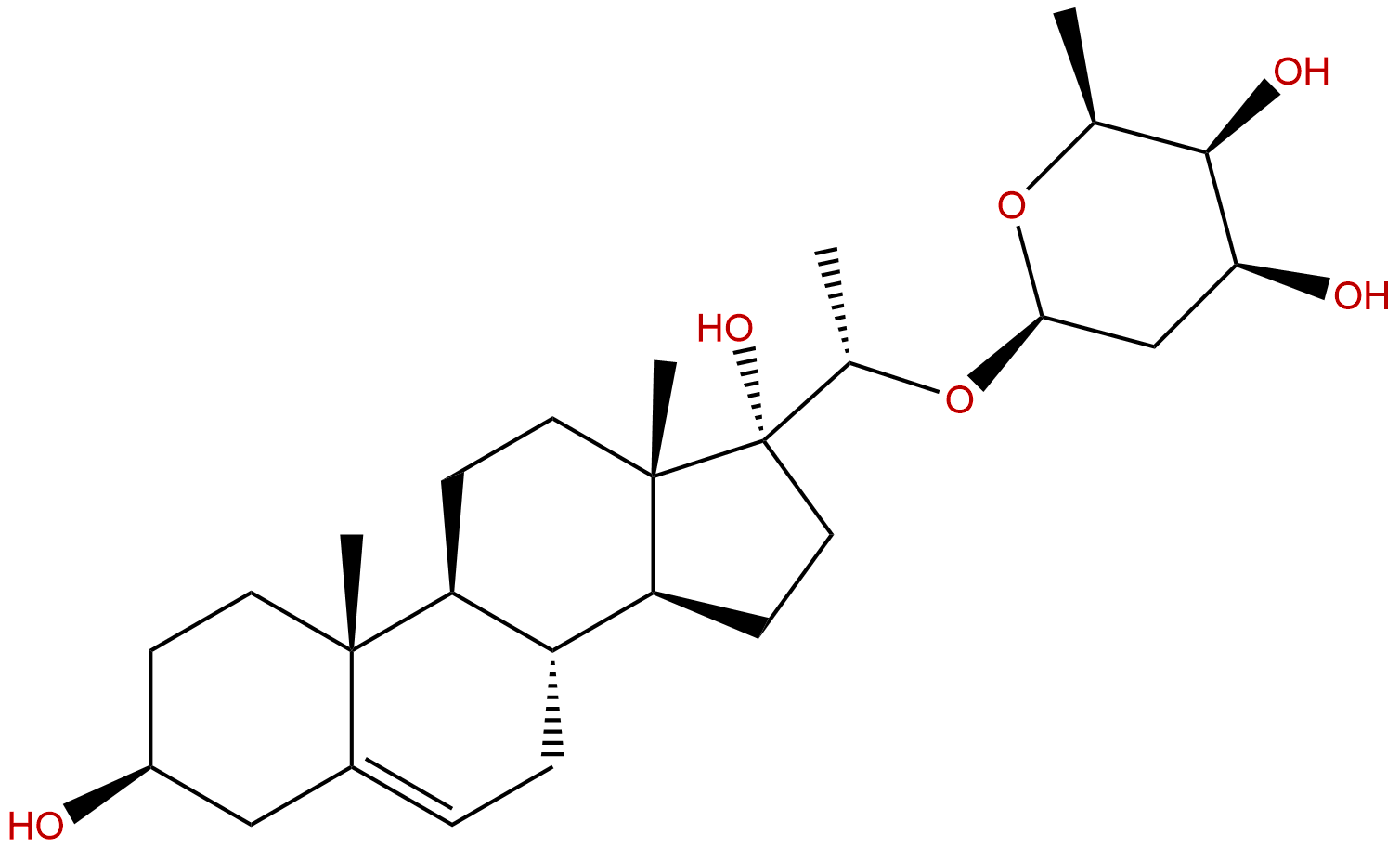
Periplocoside N, CAS number 39946-41, is a traditional medicinal plant Xiangjiapi Separated from Periploca sepium Pregnane glycoside compounds Its molecular formula is C27H44O6 and its molecular weight is 464.6430 g/mol. This compound was initially used for its red imported fire ant The significant insecticidal activity of Solenopsis invicta has been discovered, but recent studies have revealed that its more important potential may lie in Multi target anti-inflammatory effect According to database information, North Wujiapi glycoside N can act on multiple key inflammation related targets, including TNF, PTGS2 (COX-2), NFKB1, IL6, and IL1B, indicating its broad research prospects in the treatment of inflammation related diseases. As a structurally clear natural product, North Wujiapi glycoside N not only provides a molecular basis for understanding the traditional pharmacological effects of Xiangjiapi, but also provides a lead compound for the development of new anti-inflammatory drugs. This article will systematically elaborate on its chemical structure, plant origin, pharmacological mechanism, evaluation of medicinal properties, and research prospects.
2. Chemical structure and physicochemical properties
Beiwujiapi glycoside N belongs to Pregnane glycoside Its structural feature is the presence of glycosidic groups attached to the steroid mother nucleus (pregnane). From the provided SMILES string, it can be inferred that it has a complex stereochemical structure containing multiple chiral centers, which is crucial for its biological activity. Its molecular weight (464.64 g/mol) is moderate and falls within the category of small molecule drugs.
The key physicochemical parameters related to drug properties are as follows:
- Lipid water partition coefficient (LogP/LogD)Approximately 2.92. This value indicates that the compound has moderate lipophilicity, which facilitates its penetration into cell membranes, but excessive lipophilicity (LogP>5) may lead to solubility and metabolic issues. The value of 2.92 is within the ideal range (usually considered 1-3 or 1-5 to be better), indicating that it has a good foundation for membrane permeability.
- Topological Polarity Surface Area (TPSA)The TPSA value is related to the hydrogen bonding ability of molecules and is an important parameter for predicting drug absorption and blood-brain barrier penetration. Usually, drugs with TPSA>140 Å ² have difficulty penetrating the blood-brain barrier, while those with TPSA<60 Å ² have better penetration. The TPSA of North Wujiapi glycoside N is 99.38 Å ², which is in the middle range Low BBB penetration The predicted results are consistent, suggesting that it may mainly act on the peripheral system.
- Water solubility 0.0285 (usually measured in mg/mL or mol/L, with lower values here). Low solubility is a common challenge for many natural products, which may affect their oral bioavailability and needs to be addressed in formulation development.
- Caco-2 permeability 2.6907 (usually measured in units of 10 ⁻⁶ cm/s). The high value suggests that the compound exhibits good permeability in the intestinal model, indicating potential oral absorption potential.
Overall, the chemical structure of North Wujiapi glycoside N endows it with specificity for interacting with biological targets, and its physicochemical properties generally meet the basic requirements of drug like molecules, but water solubility is an optimization point that needs attention.
3. Plant sources and traditional applications
Beiwujiapi glycoside N is derived from Lauraceae family(Apocynaceae) plants Xiangjiapi(Periploca sepium), Its dried root bark is called "Xiangjiapi" or "Beiwujiapi" in traditional Chinese medicine. Xiangjiapi has a long history of medicinal use in China, first recorded in the "Shennong Bencao Jing" and classified as a medium grade. Its nature is pungent, bitter, warm, toxic, and belongs to the liver, kidney, and heart meridians. Traditional benefits mainly include Dispelling wind and dampness, strengthening muscles and bones, promoting diuresis and reducing swelling It is commonly used to treat conditions such as rheumatoid arthritis, soreness and weakness of the waist and knees, palpitations and shortness of breath, and lower limb edema.
It is worth noting that Xiangjiapi is used to treat heart failure due to its cardiotonic effect, but the cardiac glycosides contained in it (such as paeoniflorin) have a narrow therapeutic window, high toxicity, and improper use can easily lead to serious adverse reactions such as arrhythmia. This suggests that the compounds isolated from Xiangjiapi have significant biological activity, but require rigorous toxicological evaluation. Beiwujiapi glycoside N, as one of the pregnane glycosides, has a different activity from traditional cardiac glycosides, focusing more on insecticidal and anti-inflammatory effects, reflecting the diversity of natural product chemistry and pharmacological activity. In depth research on specific monomeric compounds in Xiangjiapi can help clarify the pharmacological substance basis while avoiding or reducing the toxicity risks in its traditional applications, achieving the modern drug development goal of "removing impurities and essence, eliminating toxins and preserving efficacy".
4. Pharmacological activity and mechanism of action
Beiwujiapi glycoside N is known to have Insecticidal activity and anti-inflammatory activity It was initially discovered to have insecticidal effects on red fire ants, which may be related to its interference with the insect's nervous system or growth and development. However, what is even more remarkable is its anti-inflammatory potential demonstrated by acting on multiple key human inflammatory targets. The database information clearly lists its five related targets: TNF, PTGS2, NFKB1, IL6, and IL1B. These targets form a dense inflammatory regulatory network, and the possible mechanisms of action of North Wujiapi Glycoside N will be analyzed one by one below:
-
Inhibition of tumor necrosis factor - α (TNF - α)TNF - α is one of the earliest and most central pro-inflammatory cytokines in the inflammatory response, produced by activated macrophages, T cells, and other cells. It can activate downstream NF - κ B and MAPK signaling pathways, induce the expression of more inflammatory factors such as IL-6 and IL-1 β, and promote the production of cell adhesion molecules. Inhibiting TNF - α is an effective strategy for treating autoimmune diseases such as rheumatoid arthritis, ankylosing spondylitis, and psoriasis (such as adalimumab, etanercept, and other biologics). Beiwujiapi glycoside N acts on TNF targets, which may directly inhibit its production or block its binding to receptors.
-
Inhibition of cyclooxygenase-2 (PTGS2/COX-2)COX-2 is a key rate limiting enzyme in the synthesis of prostaglandins (PGs), which is induced to be highly expressed at the site of inflammation and is responsible for producing inflammatory and pain mediators such as PGE2. Non steroidal anti-inflammatory drugs (NSAIDs) such as celecoxib are selective COX-2 inhibitors. The inhibitory effect of Beiwujiapi glycoside N on COX-2 may directly reduce the production of inflammatory mediators, thereby exerting anti-inflammatory and analgesic effects.
-
Inhibition of nuclear factor kappa B (NF - κ B)NF - κ B is a key transcription factor family (NFKB1 encodes its p50 subunit), located at the hub of inflammation, immunity, and cell survival signaling pathways. In the resting state, NF - κ B binds to the inhibitory protein I κ B and exists in the cytoplasm. When stimulated by TNF - α, IL-1 β, or lipopolysaccharides, I κ B is phosphorylated and degraded, allowing NF - κ B to enter the nucleus and initiate transcription of a large number of inflammation related genes such as TNF - α, IL-6, IL-1 β, COX-2, etc.Inhibiting the activation of NF - κ B is the fundamental strategy to block the cascade amplification effect of inflammation Beiwujiapi glycoside N acts on NFKB1, possibly by stabilizing I κ B or interfering with its nuclear entry process, widely inhibiting the production of downstream inflammatory factors from upstream.
-
Inhibition of interleukin-6 (IL-6) and interleukin-1 β (IL-1 β)IL-6 and IL-1 β are important pro-inflammatory cytokines involved in processes such as acute phase response, fever, and lymphocyte activation. They are both downstream products of NF - κ B and can also activate NF - κ B in reverse, forming a positive feedback loop and exacerbating inflammation. IL-1 β inhibitors (such as anakinins) and IL-6 receptor antagonists (such as tocilizumab) have been successfully used to treat autoimmune diseases. The effect of Beiwujiapi glycoside N on these two targets may be to interrupt the inflammatory circuit at multiple stages.
Mechanism integration and disease association:
The unique feature of Beiwujiapi glycoside N lies in its Multi target action characteristics It does not solely inhibit a certain inflammatory factor or enzyme, but may simultaneously intervene in TNF, NF - κ B, COX-2, as well as downstream IL-6 and IL-1 β. This multi-target synergistic effect is expected to more comprehensively and effectively control complex inflammatory networks, which may have implications for Rheumatoid arthritis, osteoarthritis, inflammatory bowel disease, atherosclerosis Various chronic inflammatory diseases have therapeutic effects. The discovery of its anti-inflammatory activity provides modern pharmacological evidence for explaining the traditional efficacy of Xiangjiapi in "dispelling wind and dampness" (anti rheumatic inflammation). Of course, the above mechanism of action is mainly based on the speculation of target information. The specific molecular interaction mode (whether it is direct binding or indirect regulation), the strength and selectivity of the action still need to be empirically studied through biochemical and cell biology methods such as molecular docking, surface plasmon resonance, reporter gene experiments, and enzyme activity assays.
5. Evaluation of drug properties
Based on the provided pharmacological parameters, combined with Lipinski's Five Rules Lipinski's Rule of Five (Ro5) and other standards can provide a preliminary assessment of the potential for the development of Tripterygium wilfordii glycosides N:
- Molecular weight (MW):464.64 < 500 Da, Compliant with Ro5.
- Lipid water partition coefficient (LogP)2.92<5, compliant with Ro5.
- Hydrogen bond donor (HBD)From the structural formula, it can be inferred that it contains multiple hydroxyl groups (- OH), but the specific quantity needs to be calculated. SMILES displays multiple 'O' and 'H' connections, possibly exceeding 5, which could be a potential 'violation point' that could affect oral absorption. Its higher TPSA (99.38 Å ²) indirectly reflects its ability to form more hydrogen bonds.
- Hydrogen bond acceptor (HBA)There are 6 oxygen atoms in the molecule (C27H44)O6), can be used as hydrogen bond acceptors, with a quantity of 6<10, in accordance with Ro5.
- Number of rotatable keys From a structural perspective, it has a certain degree of flexibility, but the specific number needs to be calculated. Excessive rotatable bonds can affect conformational stability and oral bioavailability.
Analysis of other key parameters:
- Blood-brain barrier penetrability (BBB)Predicted as' low ', which is consistent with higher TPSA values. For drugs primarily used to treat peripheral inflammatory diseases, low BBB penetration can sometimes be an advantage in avoiding central nervous system side effects.
- Plasma protein binding rate (PPB)76.56%, belonging to the moderate to high level. High protein binding can affect the concentration of free drugs, which may require adjusting the dosage, but it may also prolong the half-life.
- Absorption and penetration The permeability of Caco-2 (2.6907) and the predicted effective permeability (Peff: 1.1313) values are acceptable, indicating potential for intestinal absorption. However, the actual oral bioavailability still needs to consider factors such as first pass metabolism and solubility.
- Toxicity warning:
- Ames test: 0.0 (usually indicating negative, non mutagenic), this is a positive signal.
- chromosome aberration: None.
- HERG inhibition No, indicating a lower risk of causing QT interval prolongation in the heart.
- Skin/respiratory sensitization: No.
- Phototoxicity: None.
- Serum biochemical indicators The data shows that it may have an impact on Alkaline phosphatase (ALK)and Alanine aminotransferase (ALT)Has an impact ("Yes"), indicating the need to pay attention to its potential Hepatotoxicity This is an important warning that extends from the traditional toxicity of Xiangjiapi, and a detailed liver toxicity assessment must be conducted in subsequent development.
Comprehensive Assessment:
Beiwujiapi glycoside N conforms to the principle of drug likeness in terms of molecular weight and lipophilicity, and its multi-target anti-inflammatory mechanism is attractive with low initial genetic toxicity risk. main challenge Possible reasons include: 1)Poor water solubility, affecting the development of formulations; 2)The number of potential hydrogen bond donors may exceed the standard May affect oral absorption; 3)Potential hepatotoxic signals Strict verification is required. Therefore, it is more likely to serve as an excellent lead compound Through Structural modification(such as improving solubility by preparing prodrugs, simplifying glycosides to reduce hydrogen bond donors, conducting SAR studies to optimize activity and reduce toxicity) to further enhance its pharmacological properties. Its "multi-target" characteristic itself is also in line with the current trend of "network pharmacology" in treating complex diseases.
6. Research Status and Application Prospects
At present, there is relatively limited public research literature on the isolation, identification, and preliminary insecticidal activity of North Wujiapi glycoside N. The information on its anti-inflammatory activity and related targets mostly comes from the prediction and mining of databases, which is in-depth In vitro and in vivo pharmacological validation, detailed mechanism studies, and pharmacokinetic and toxicological evaluations Still in the blank or early stages.
Future research directions:
1. Empirical Study on Mechanism The primary task is to use cell inflammation models (such as LPS stimulated macrophages) and specific detection methods to empirically demonstrate the inhibitory ability of North Wujiapi glycoside N on TNF - α, IL-6, IL-1 β secretion, as well as its inhibitory effect on COX-2 enzyme activity and NF - κ B signaling pathway activation, and to clarify its efficacy and selectivity.
2. In vivo efficacy evaluation Establish acute/chronic inflammation models in mice or rats (such as carrageenan induced foot swelling, adjuvant arthritis, colitis models, etc.), evaluate their anti-inflammatory effects after oral or injection administration, and determine their in vivo activity.
3. Optimization of drug properties Based on its chemical structure, carry out systematic research Structure Activity Relationship (SAR) Study By synthesizing derivatives or analogues, the aim is to improve water solubility, enhance target activity or selectivity, reduce potential liver toxicity, and improve pharmacokinetic properties.
4. Security system evaluation On the basis of clarifying the efficacy of the drug, conduct standardized preclinical safety pharmacology and repeated dose toxicity tests, with particular attention to its impact on key organs such as the liver and heart, and clarify its safety window.
Application Prospects:
If the above research can proceed smoothly, the application of North Wujiapi glycoside N is expected to be realized in the following directions:
- Lead compounds of novel anti-inflammatory drugs Develop innovative oral or topical drugs for the treatment of diseases such as rheumatoid arthritis and osteoarthritis.
- Pesticides derived from natural products Develop environmentally friendly plant-based insecticides based on their insecticidal activity.
- Examples of Modernization Research on Traditional Chinese Medicine As one of the active ingredients identified from Xiangjiapi, its research helps to clarify the scientific connotation of the medicinal herb's "dispelling wind and dampness" effect, promote the improvement of traditional Chinese medicine quality standards, and promote the secondary development of products.
In summary, North Wujiapi glycoside N is a natural product with unique structure, novel mechanism, and multi-target anti-inflammatory potential. Despite facing challenges in drug development, it undoubtedly provides a valuable starting point for discovering and developing new generations of anti-inflammatory drugs. With the interdisciplinary integration of natural product chemistry, pharmacology, and medicinal chemistry, the future of North Wujiapi glycoside N and its derivatives is worth looking forward to.