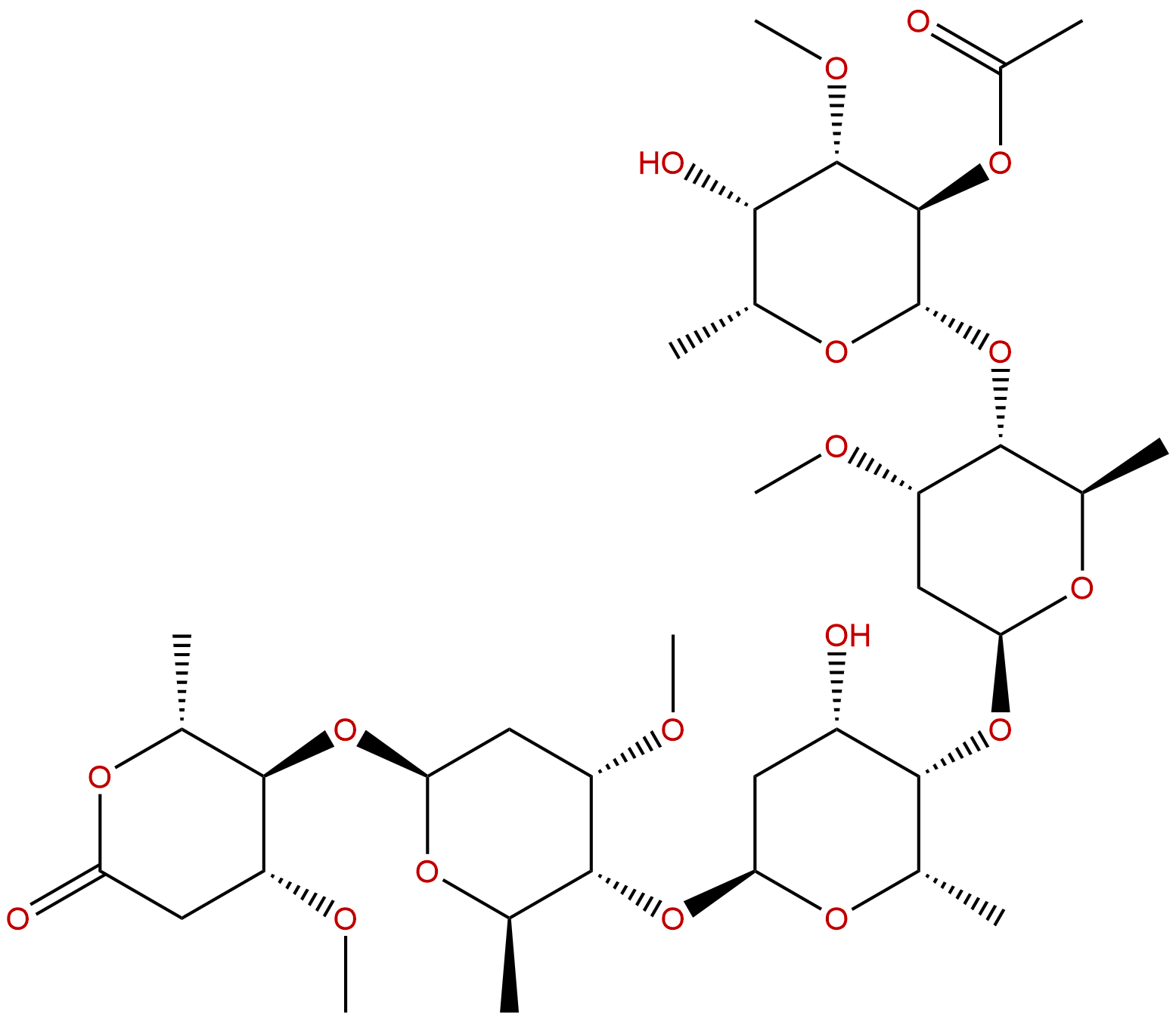
Periphyllum oligosaccharides B: a natural immune regulating oligosaccharide derived from fragrant bark
1. Overview
Perisesaccharide B is a traditional medicinal plant derived from Perisesaccharide B Xiangjiapi Natural oligosaccharides isolated from the roots of Periploca sepium. Its CAS number is 1095261-93-0, molecular formula is C36H60O18, and molecular weight is approximately 780.86 g/mol. As a class of structurally complex oligosaccharides, Periphyllum oligosaccharides B have shown potential in recent years due to their Immune regulatory activity And it has attracted attention from the fields of natural product pharmacy and immunopharmacology research.
Xiangjiapi is commonly used in traditional Chinese medicine clinical practice to dispel rheumatism and strengthen muscles and bones. Modern pharmacological research has gradually revealed the multi-target action characteristics of its active ingredients. The discovery of Lycium barbarum oligosaccharides B represents an important progress in the search for novel immunomodulators from this plant. Existing research data shows that this compound can act on multiple targets closely related to immune response, including IL2, FOXP3, IFN γ, STAT1, and CD4, suggesting that it may play a key role in regulating T cell function, cytokine networks, and immune balance. This article will provide a systematic and professional interpretation of this potential natural immune regulatory component from the aspects of its chemical structure, plant origin, pharmacological mechanism, pharmacological evaluation, and research prospects.
2. Chemical structure and physicochemical properties
The molecular formula of Periphyllum oligosaccharides B is C36H60O18, with a molecular weight of 780.8580 g/mol, and it belongs to the category of medium molecular weight oligosaccharides. The SMILES string provides a detailed description of the stereochemical connectivity of the moleculeCO[C@H]1[C@@H](O)[C@@H](C)O[C@@H](O[C@H]2[C@@H](OC)C[C@H](O[C@@H]3[C@H](C)O[C@@H](O[C@H]4[C@@H](OC)C[C@H](O[C@@H]5[C@@H](C)OC(=O)C[C@H]5OC)O[C@@H]4C)C[C@@H]3O)O[C@@H]2C)[C@@H]1OC(C)=OStructurally, it is composed of multiple pyranose units connected by glycosidic bonds and contains modifying groups such as acetoxy. This complex sugar chain structure is the material basis for its biological activity.
According to the provided pharmacological parameters, it Topological Polarity Surface Area (TPSA)As high as 203.82 Å ², this is consistent with the structural characteristics of its polyhydroxy oligosaccharides and also indicates its strong hydrophilicity.The LogP value is approximately 0.89, The LogD values are similar (0.89), indicating that the compound has low lipophilicity in physiological pH environments and tends to be distributed in the aqueous phase.The predicted value of water solubility is 4.67 mg/mL This further confirms its good water solubility, which is a favorable factor for dissolution and absorption after oral administration. However, high polarity also brings challenges in terms of membrane permeability: its predicted Caco-2 cells have low permeability (0.24 cm/s), and The blood-brain barrier (BBB) penetration is predicted to be 'low'This means that it may be difficult for it to efficiently cross the intestinal epithelial cell membrane or enter the central nervous system through passive diffusion, and its absorption and distribution in vivo may mainly rely on active transport or be limited to peripheral effects.
3. Plant sources and traditional applications
The plant source of Lycium barbarum oligosaccharides B is Xiangjiapi The dried root bark of Periploca sepium, a plant in the Apocynaceae family. Xiangjiapi is a traditional Chinese medicine, first recorded in the "Shennong Bencao Jing" and classified as a middle grade. It has the effects of dispelling wind and dampness, strengthening muscles and bones, promoting diuresis and reducing swelling. In clinical practice of traditional Chinese medicine, it is often used to treat conditions such as rheumatoid arthritis, soreness and weakness of the waist and knees, palpitations and shortness of breath, lower limb edema, etc. It has a long history of application, especially in the treatment of rheumatoid arthritis and heart failure.
Modern plant chemistry research has isolated and identified multiple active ingredients from Fructus Xanthii, including C21 steroidal glycosides (such as periplocin), cardiac glycosides, oligosaccharides, flavonoids, and phenolic compounds. Among them, C21 steroidal glycosides have been extensively studied due to their cardiotonic effects and certain toxicity. In contrast, research on oligosaccharides such as Periphyllum oligosaccharides B is relatively new. Traditionally, the medicinal part of Xiangjiapi is the root bark, which is taken through methods such as boiling in water. As a water-soluble component, Periphyllum oligosaccharides B are likely to dissolve and contribute to their pharmacological activity in traditional decoction, providing a basis for exploring their modern pharmacological value from traditional application experience. However, traditional applications have not clearly distinguished the roles of different components. The value of modern research lies in separating and purifying individual components, elucidating their specific targets and mechanisms, and laying the foundation for the development of more precise and safe modern drugs.
4. Pharmacological activity and mechanism of action
The pharmacological activity core of Lycium barbarum oligosaccharides B focuses on immunomodulation The database information suggests that its role involves five key targets:IL2, FOXP3, IFN γ, STAT1, and CD4 These targets are deeply involved in adaptive immune response, especially in the activation, differentiation, and functional regulation of T lymphocytes. Below, we will combine these targets to analyze their possible mechanisms of action in depth.
1. Target network and immune balance
* IL2 (interleukin-2)Produced by activated T cells (mainly CD4+T cells), it is a key growth factor for T cell proliferation and survival. It can promote the clonal expansion of effector T cells (Teff) and regulate the development and function of regulatory T cells (Treg), playing a dual role in the initiation and termination of immune responses.
* FOXP3 (forkhead box protein P3)It is a specific key transcription factor and functional marker for CD4+CD25+regulatory T cells (Treg). Treg cells are a core subpopulation of cells that maintain immune tolerance, prevent autoimmunity, and prevent excessive inflammation. The expression and function of FOXP3 directly affect the immunosuppressive ability of Treg.
* IFN - γMainly produced by activated Th1 cells, cytotoxic T cells, and NK cells, it is a classic pro-inflammatory cytokine that can activate macrophages, enhance antigen presentation, drive cellular immune responses, and play an important role in anti infection and anti-tumor immunity. However, it is also associated with the occurrence of many autoimmune diseases.
* STAT1 (Signal Transduction and Transcription Activation Factor 1)It is a key transcription factor downstream of the IFN γ signaling pathway. After binding to its receptor, IFN γ activates the JAK-STAT pathway, leading to phosphorylation, dimerization, and translocation of STAT1 into the nucleus, initiating the expression of a series of interferon stimulated genes (ISGs), thereby amplifying immune and inflammatory signals.
* CD4 It is mainly expressed on the surface of helper T cells (Th) and serves as a co receptor for T cell receptors (TCR), participating in the recognition of antigens presented by MHC class II molecules. It is a key molecule for T cell activation. CD4+T cells are the "commanders" of adaptive immunity and can differentiate into different functional subgroups such as Th1, Th2, Th17, Treg, etc.
2. Hypothesis of mechanism of action
Periphyllum oligosaccharides B can simultaneously act on the above targets, suggesting that they may finely regulate immune responses through multiple pathways and multi ring segments. A reasonable scientific hypothesis is that Periphyllum oligosaccharides B may exert immunomodulatory effects by affecting the activation or differentiation balance of T cells, especially CD4+T cells.
* May promote immune tolerance/suppress excessive inflammation If Salix oligosaccharides B can Upregulation of FOXP3 expression or function This may promote the differentiation of initial CD4+T cells into Treg cells with immunosuppressive function, or enhance the activity of existing Treg cells. Meanwhile, it may Regulating the biological utilization of IL2 Tend to support the maintenance of Treg (Treg highly expresses IL-2 receptor CD25 and is highly dependent on low concentrations of IL-2). In addition, through Inhibition of IFN γ production or its signaling pathway (such as activation of STAT1)It can weaken Th1 type immune response and related inflammatory reactions. This synergistic mode of action allows for the theoretical use of Periphyllum oligosaccharides B in the treatment of diseases caused by Th1/Treg imbalance or excessive immune activation, such as certain autoimmune diseases (rheumatoid arthritis, multiple sclerosis, etc.) or inflammatory diseases.
* Reflection on the Mode of Action As a highly polar oligosaccharide molecule, Periphyllum oligosaccharides B are likely to not directly penetrate the cell membrane and enter the cytoplasm. Its mode of action may include: 1) interacting with pattern recognition receptors on the cell surface (such as certain C-type lectin receptors, Toll like receptors) or specific sugar binding proteins to initiate intracellular signal transduction; 2) Indirectly regulate T cell response by affecting the function of antigen-presenting cells; 3) Modifying the glycosylation pattern on the surface of cells and affecting intercellular interactions. Further experiments such as molecular docking, surface plasmon resonance (SPR), and gene knockout/knockdown are needed to verify the direct or indirect interactions with targets such as IL2, FOXP3, and STAT1.
3. Association with "immune regulation" diseases
The database only relates to the broad disease/functional category of "immune regulation", which is consistent with the multi-target action characteristics mentioned above. Based on its target spectrum, the potential application directions of Periphyllum oligosaccharides B may include:
* Treatment of autoimmune diseases By enhancing Treg function and inhibiting the Th1/Th17 pathway, immune tolerance can be rebuilt.
* Intervention for inflammatory diseases By inhibiting the signaling of pro-inflammatory factors (such as IFN γ), tissue inflammation damage can be alleviated.
* Prevention and treatment of organ transplant rejection As an immunosuppressant, it helps induce transplant tolerance.
* allergic diseases Although the current target is not directly directed towards Th2, the overall balance regulation of the immune system may indirectly affect allergic reactions.
5. Evaluation of drug properties
Based on the provided pharmacological parameters, combined with classic Lipinski's Five Rules The Rule of Five (used to evaluate the similarity of small molecule oral drugs) and other pharmacokinetic/toxicity prediction indicators can provide a preliminary assessment of the potential for the drug development of Periphyllum oligosaccharides B
1. Analysis based on Lipinski's Five Rules:
* Molecular weight (MW):780.86 > 500 Da,not conform to Rule (should be ≤ 500).
* Number of hydrogen bond donors (estimated)Based on the molecular formula and polyhydroxy structure, it is likely that the number of hydrogen bond donors (OH+NH) is greater than 5,not conform to Rule (should be ≤ 5).
* Number of hydrogen bond acceptors (estimated)There are 18 oxygen atoms in the molecule, and the number of hydrogen bond acceptors is much greater than 10,not conform to Rule (should be ≤ 10).
* LogP:0.89 < 5,Comply with Rule (should be ≤ 5).
* Number of rotatable keys (estimated)The complex sugar chain structure implies a greater number of rotatable bonds, likely exceeding 10,not conform to Rule (recommended ≤ 10).
Conclusion Periphyllum oligosaccharides B do not meet many of the five criteria, strictly speaking, it does not belong to the category of "class drugs" small molecules. This is consistent with its natural properties as a medium-sized oligosaccharide. Therefore, if developed as Traditional oral small molecule chemical drugs Its intestinal absorption and bioavailability may face significant challenges (consistent with the predicted low Caco-2 permeability).
2. Interpretation of other key pharmacological parameters:
* Absorption and distribution Prediction of low Caco-2 permeability and low BBB permeability suggests poor oral absorption and difficulty in entering the brain. This limits its use for central nervous system related diseases, but may have a minor impact on peripheral immune system diseases.The Peff value (effective permeability coefficient) is 1.45 cm/s x 10 ^ -4 Located in the low penetration range.
* protein binding:The predicted plasma protein binding rate (PPB) is 28.02%Belonging to low to moderate combination, it means that there is a high proportion of free drugs available for distribution and action, which is a favorable factor.
* Metabolism and toxicity:
* The predicted value of AMES experiment is 0.9(Usually<0.8 or 0.9 is considered a mutagenic risk and should be interpreted with caution. Experimental verification is required when approaching the threshold),Chromosome aberration predicted as' none 'The risk of genetic toxicity may be low.
* HERG inhibition predicted as' no 'This indicates that the risk of causing QT interval prolongation in the heart is relatively low.
* The maximum recommended therapeutic dose (MRTD) is predicted to be "yes"At a reasonable dosage, there may be an acceptable safety window.
* Skin sensitization prediction is' no 'But Respiratory sensitization prediction is' yes'Attention should be paid when developing formulations and selecting routes of administration.
* Phototoxicity prediction is' none '。
*The prediction of serum biochemical indicators may have an impact on Alkaline phosphatase (ALK) and aspartate aminotransferase (AST)There is an impact, indicating the need to pay attention to potential liver effects Gamma glutamyl transferase (GGT) and alanine aminotransferase (ALT)The impact prediction is' no '.
3. Comprehensive evaluation and development strategy:
As a natural oligosaccharide, Periphyllum oligosaccharides B The main challenge in drug development lies in oral bioavailability However, this does not completely negate its development value. Possible development strategies include:
* Change the route of administration Consider developing as injection(such as intravenous or subcutaneous injection), bypassing the intestinal absorption barrier and directly entering the systemic circulation to act on the immune system.
* Structural modification Moderately improve its lipid solubility and membrane permeability through chemical modifications (such as selective alkylation and preparation of prodrugs), but pay attention to maintaining the necessary structural features for its activity.
* As a lead compound Conduct in-depth research on the active sugar chain fragments (pharmacophores) that interact with the target, and based on this, design simpler and more effective mimetics or small molecule agonists/antagonists.
* As a natural medicine/health product development Given its plant origin and traditional application background, it can be developed according to the standards of natural medicine or functional food ingredients, with a focus on overall safety and efficacy verification.
6. Research Status and Application Prospects
At present, there is relatively limited public research literature on the activity of Lycium barbarum oligosaccharides B, and its activity data mainly comes from the collection and prediction of compound databases. This reflects that the compound is still in Early discovery and research stage The existing information outlines a natural product image with unique structure and multi-target immune regulatory potential, but there is still a long way to go before it becomes a mature candidate drug.
Current research status:
1. Basic research needs to be further explored The vast majority of predicted targets and activities need to be confirmed through various in vitro experiments (such as cytokine detection, reporter gene experiments, flow cytometry analysis of T cell subsets, Western Blot detection of signal protein phosphorylation, etc.) and in vivo disease models (such as autoimmune arthritis and colitis models).
2. Fuzzy mechanism of action How it interacts with targets such as IL2 and FOXP3, whether it directly binds or indirectly regulates, whether it activates or inhibits, these core mechanism issues urgently need to be clarified.
3. Blank pharmacokinetic data The absorption, distribution, metabolism, and excretion (ADME) process of it in animal bodies is almost unknown, which is the key to evaluating its feasibility for development.
Future research directions and application prospects:
1. Mechanism oriented activity verification Prioritize the systematic validation of its effects on IL2, IFN γ secretion, FOXP3 expression, STAT1 phosphorylation, and CD4+T cell differentiation in immune cells (such as human peripheral blood mononuclear cells, T cell lines) and related animal models, and clarify the specific phenotype and pathway of its immune regulation.
2. Structure Activity Relationship (SAR) Study Synthesize or isolate structural analogues or degradation fragments of Lycium barbarum oligosaccharides B, determine the essential sugar units and key functional groups for their immune activity, and provide a basis for optimizing design.
3. Exploration of formulations and administration strategies Given its pharmacological characteristics, early animal pharmacodynamic studies may consider using injection administration. Simultaneously exploring nanocarrier (such as liposomes, polymer nanoparticles) encapsulation and other formulation technologies to improve their delivery efficiency and targeting.
4. Expanding disease model research After confirming its basic immune regulatory direction (such as leaning towards anti-inflammatory/pro tolerance), evaluate its therapeutic potential in more specific disease models (such as experimental autoimmune encephalomyelitis, collagen induced arthritis, skin transplant rejection models, etc.).
5. Exploration of combination therapy As a natural immune modulator, it may be considered to be used in combination with existing immunosuppressants (such as low-dose glucocorticoids and rapamycin) in the future to enhance efficacy and reduce side effects.
Summary Gangliu oligosaccharide B is a natural oligosaccharide discovered from traditional Chinese medicine Xiangjiapi, with a novel structure and multi-target immunomodulatory potential. It provides us with a new chemical entity to explore the precise regulatory function of carbohydrates in the immune system. Despite facing the common challenge of low oral bioavailability, it is expected to become a valuable tool for developing novel immunomodulatory drugs through a shift in development thinking (such as injection administration), in-depth mechanism research, and rational structural optimization lead compound Provide new candidate strategies for treating autoimmune diseases, controlling inflammation, etc. Its research will further enrich the scientific understanding of the modern pharmacological connotation of traditional Chinese medicine Xiangjiapi.