| Catalog No | Package | Original Price | Price | Inventory | Quantity | Operating |
|---|---|---|---|---|---|---|
| BP3909-5mg | 5mg | $260.00 | Sign in |
|


Storage conditions:Short-term storage at 2~8℃, long-term storage at -20 ~ -80℃
233.4200
.7384
-1.8763
7.6402
1.1806
.1223
Low
44.3334
6.1334
Yes
No
Yes
No
No
No
0.9
Yes
No
Yes
No
Natural products, as an important source of drug discovery, play an irreplaceable role in the long history of human fight against diseases. In recent years, with the rapid development of glycobiology and glycomics, oligosaccharides have gradually become a research hotspot in the field of drug development due to their unique biological activity and low toxicity. Acetyl Perisesaccharide C (CAS number: 110764-09-5) is derived from the traditional Chinese medicine Perisesaccharide C(Periploca sepium A oligosaccharide compound with significant immunomodulatory activity was isolated from Bge. Its unique chemical structure and multi-target pharmacological mechanism have attracted widespread attention from scholars at home and abroad.
Gangliu is a plant belonging to the family Loricaceae and the genus Gangliu. Its root bark (fragrant bark) is commonly used in traditional Chinese medicine clinical practice to treat rheumatism, rheumatism, pain, soreness, and weakness of the waist and knees. Modern pharmacological studies have shown that Perilla frutescens contains various active ingredients, including cardiac glycosides, C21 steroidal glycosides, and oligosaccharides. Among them, Acetyl Periphyllum Oligosaccharides C, as a representative oligosaccharide component in Periphyllum, exhibits unique pharmacological activity in immune regulation. This compound can regulate multiple signaling pathways and affect the function of various immune cells, showing potential application value in fields such as autoimmune diseases, inflammatory responses, and tumor immunotherapy.
This article will provide a systematic review of the research progress of Acetyl Periphyllum Oligosaccharides C from the aspects of chemical structure, plant origin, pharmacological activity, mechanism of action, pharmacological evaluation, and clinical application prospects, in order to provide reference for the in-depth research and development of this compound.
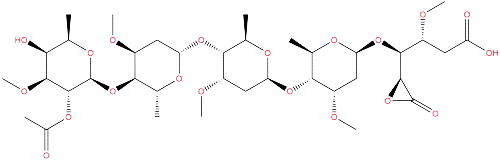
Acetyl Periphyllum Oligosaccharides C is a complex oligosaccharide compound with a molecular formula of C ③₄ H ₅₆ O ₂③ and a molecular weight of 824.8670 g/mol. From a chemical structure perspective, the compound is composed of multiple monosaccharide units connected by glycosidic bonds and contains acetyl modifications at specific positions. This acetyl modification has a significant impact on its biological activity, possibly by changing the spatial conformation and hydrophilicity of the molecule, thereby affecting its interaction with biological targets.
In terms of physicochemical properties, Acetyl Periphyllum Oligosaccharides C exhibit typical oligosaccharide characteristics. Its lipophilic water partition coefficient (LogP) is 0.7384, indicating that the compound has moderate lipophilicity, which can maintain a certain solubility in the aqueous phase and has the ability to penetrate biofilms. The topological polar surface area (TPSA) is 233.4200 Å ², which is a relatively high value and reflects the presence of a large number of polar groups (such as hydroxyl, carbonyl, etc.) in the molecule, which facilitate the formation of hydrogen bonding interactions. The water solubility parameter is 7.6402 mg/mL, indicating good water solubility, which provides favorable conditions for its transport and distribution in organisms.
It is worth noting that the blood-brain barrier penetration ability of Acetyl Polysaccharide C is relatively low, which limits its application in the treatment of central nervous system diseases, but also reduces the potential risk of central neurotoxicity. In addition, the hERG inhibition test result was negative, indicating that the compound does not pose a significant risk of cardiac toxicity. The Ames test result is 0.9, indicating a low risk of genetic toxicity, which provides positive information for its safety evaluation as a candidate drug.
From the perspective of structure activity relationship, the oligosaccharide skeleton of Acetyl Periphyllum oligosaccharides C provides a molecular basis for its interaction with various biological targets. The hydroxyl groups on oligosaccharide chains can serve as hydrogen bond donors or acceptors, forming specific recognition with amino acid residues on the protein surface; The introduction of acetyl groups may enhance the binding ability of molecules with certain hydrophobic pockets. This structural feature enables Acetyl Periphyllum Oligosaccharides C to simultaneously act on multiple immune related targets, exhibiting multi-target and multi pathway pharmacological effects.
Acetyl Periphyllum Oligosaccharides C mainly come from Periphyllum plants in the family Loricaceae(Periploca sepium Bge.)。 Gangliu is widely distributed in China, mainly produced in North China, Northeast China, Northwest China, and East China. It often grows on slopes, valleys, and forest edges. As a traditional Chinese medicine, the root bark (fragrant bark) of Gangliu is recorded in the Chinese Pharmacopoeia and has the effects of dispelling wind and dampness, and strengthening muscles and bones. Modern plant chemistry research shows that the root bark of Perilla frutescens contains abundant C21 steroidal glycosides, cardiac glycosides, and oligosaccharides, among which oligosaccharides mainly include Perilla frutescens oligosaccharides A, B, C and their acetylated derivatives.
The content of Acetyl Periphyllum Oligosaccharides C in plants is relatively low, and its extraction and purification processes require modern chromatographic separation techniques. The traditional extraction method usually includes the following steps: first, the dried bark of the willow root is crushed and refluxed with ethanol or methanol for extraction to obtain the total extract; Then, preliminary separation is carried out through liquid-liquid extraction (such as petroleum ether, ethyl acetate, n-butanol, etc.) to obtain components rich in oligosaccharides; Finally, silica gel column chromatography, ODS column chromatography, Sephadex LH-20 gel column chromatography and preparative high performance liquid chromatography (HPLC) were used for systematic separation and purification.
In recent years, with the advancement of separation technology, some more efficient extraction methods have been developed and applied. For example, using ultrasound assisted extraction or microwave-assisted extraction can significantly improve the extraction efficiency of oligosaccharides and shorten the extraction time. In addition, high-speed countercurrent chromatography (HSCCC) technology has demonstrated unique advantages in the separation of oligosaccharides, enabling high-purity separation in a relatively short period of time. For the purification of Acetyl Periphyllum Oligosaccharides C, it is usually necessary to combine multiple chromatographic techniques and utilize the selective adsorption of different stationary phases to gradually remove impurities, ultimately obtaining the target compound with a purity of over 95%.
In terms of structural identification, the chemical structure of Acetyl Periphyllum Oligosaccharides C is mainly determined by nuclear magnetic resonance spectroscopy (NMR, including ¹ H-NMR, ¹ ³ C-NMR, COSY, HSQC, HMBC, etc.), mass spectrometry (MS, including ESI-MS, HR-ESI-MS), and chemical degradation methods. Among them, NMR technology can provide detailed information on glycosidic bond connections and acetyl substitution positions, while high-resolution mass spectrometry is used to determine molecular weight and molecular formula. By comprehensively analyzing these spectral data, the chemical structure of Acetyl Periphyllum Oligosaccharides C can be accurately identified.
It is worth noting that the content of oligosaccharides in Perilla frutescens is influenced by various factors, including plant origin, harvesting time, processing methods, etc. Therefore, establishing standardized extraction processes and quality control standards is of great significance for ensuring the stable supply and subsequent research of Acetyl Periphyllum Oligosaccharides C.
The pharmacological activity research of Acetyl Periphyllum Oligosaccharides C mainly focuses on the field of immune regulation, and multiple studies have confirmed that this compound can regulate the function of the immune system through multiple pathways. The following provides a systematic explanation of its pharmacological activity from different perspectives.
Immune regulation is the core pharmacological activity of Acetyl Periphyllum Oligosaccharides C. Research has shown that this compound can bidirectionally regulate immune responses, enhancing immune function during immune suppression and inhibiting inflammatory responses during immune overactivation, demonstrating a unique ability to regulate immune homeostasis.
In terms of cellular immunity, acetyl fructooligosaccharides C can promote the proliferation and differentiation of T lymphocytes. In vitro experiments have shown that under ConA or PHA stimulation, acetyl fructooligosaccharides C can significantly increase the proliferation index of T cells and promote the secretion of Th1 cytokines (such as IFN - γ) and Th2 cytokines (such as IL-10). This bidirectional regulatory effect helps maintain Th1/Th2 immune balance, which is of great significance for the treatment of autoimmune and allergic diseases.
In terms of humoral immunity, Acetyl Periphyllum Oligosaccharides C can enhance the antibody production ability of B cells. Animal experiments have shown that administration of Acetyl Periphyllum Oligosaccharides C significantly increases the levels of IgG, IgM, and other antibodies in the serum of mice, while also increasing the number of antibody producing cells in the spleen. This discovery suggests that the compound may serve as an immune adjuvant to enhance the immune efficacy of vaccines.
In addition, Acetyl Periphyllum oligosaccharides C also have regulatory effects on antigen-presenting cells such as macrophages and dendritic cells. Research has found that this compound can promote the phagocytic function of macrophages, enhance their antigen presentation ability, and regulate their cytokine secretion profile, thereby affecting subsequent adaptive immune responses.
Inflammatory response is an important defense mechanism for the body to respond to injury and infection, but excessive or sustained inflammatory response can lead to tissue damage and disease occurrence. Acetyl Periphyllum oligosaccharides C have shown significant anti-inflammatory activity in various inflammatory models.
In the lipopolysaccharide (LPS) - induced macrophage inflammation model, acetyl fructooligosaccharides C can significantly inhibit the production of pro-inflammatory cytokines (such as TNF - α, IL-6, IL-1 β), while promoting the secretion of anti-inflammatory cytokines (such as IL-10). The regulatory effect of this cytokine spectrum helps to control the intensity and duration of inflammatory responses, avoiding excessive inflammatory damage.
In animal inflammation models, Acetyl Perilla Polysaccharide C exhibits inhibitory effects on both acute inflammation (such as carrageenan induced toe swelling) and chronic inflammation (such as adjuvant arthritis). Histopathological analysis showed that the compound can alleviate inflammatory cell infiltration and tissue damage at the site of inflammation, and reduce the levels of inflammatory mediators such as prostaglandin E2 and nitric oxide.
In recent years, the potential of Acetyl Periphyllum Oligosaccharides C in the field of tumor immunotherapy has gradually attracted attention. Research has shown that this compound can enhance the body's anti-tumor immune response by regulating the immune cell function in the tumor microenvironment.
In tumor models, Acetyl Periphyllum Oligosaccharides C can increase the infiltration of CD8+T cells in tumor tissues and enhance the cytotoxic T lymphocyte (CTL) killing activity. Meanwhile, the compound can also inhibit the proliferation and function of regulatory T cells (Tregs), relieving the immunosuppressive state in the tumor microenvironment. This "immune activation" effect provides a new strategy for tumor immunotherapy.
It is worth noting that the direct cytotoxicity of acetyl periploid oligosaccharide C to many tumor cell lines (such as liver cancer, lung cancer, breast cancer, etc.) is weak, and its anti-tumor effect mainly depends on the participation of the immune system. This characteristic may result in lower toxicity and side effects in tumor treatment, making it suitable for use as an immune modulator in combination with chemotherapy drugs or immune checkpoint inhibitors.
The immune regulatory effect of Acetyl Periphyllum Oligosaccharides C involves multiple molecular targets and signaling pathways, and its mechanism of action has the characteristics of multiple targets and pathways. The following provides a systematic explanation from the perspectives of key targets and signaling pathways.
Toll like receptor 4 (TLR4) is an important pattern recognition receptor in the innate immune system, capable of recognizing pathogen associated molecular patterns (PAMPs) and injury associated molecular patterns (DAMPs), initiating inflammatory responses and immune responses. Research has shown that acetyl fructooligosaccharides C can interact with TLR4 and regulate its downstream signal transduction.
Specifically, acetyl fructooligosaccharides C may competitively bind to the ligand binding site of TLR4, inhibiting TLR4 activation induced by agonists such as LPS. This inhibitory effect leads to the weakening of downstream MyD88- and TRIF dependent signaling pathways, thereby reducing the activation levels of NF - κ B and IRF3 and decreasing the production of pro-inflammatory cytokines. At the same time, this compound may also finely regulate TLR4 signaling intensity by modulating the intracellular localization and expression levels of TLR4.
The signal transduction and transcription activator (STAT) family plays a crucial role in the development, differentiation, and functional regulation of immune cells. Among them, STAT3 and STAT4 are important nodes in immune regulation.
Acetyl poplar oligosaccharides C have a bidirectional regulatory effect on the STAT3 signaling pathway. Under inflammatory conditions, this compound can inhibit the phosphorylation activation of STAT3, reduce the STAT3 signaling induced by cytokines such as IL-6, thereby inhibiting the differentiation of Th17 cells and the production of pro-inflammatory cytokines. Under immunosuppressive conditions, acetylated Periphyllum oligosaccharides C may promote T cell survival and proliferation by moderately activating STAT3 signaling.
For the STAT4 signaling pathway, acetyl fructooligosaccharides C can promote IL-12-induced STAT4 phosphorylation and enhance Th1 type immune response. This selective regulatory effect helps maintain Th1/Th2 immune balance and plays an important role in anti infective immunity and tumor immunity.
Nuclear factor kappa B (NF - κ B) is a core transcription factor in inflammatory and immune responses, regulating the expression of a large number of inflammation related genes. Acetyl poplar oligosaccharides C have a significant inhibitory effect on the NF - κ B signaling pathway.
Mechanism studies have shown that Acetyl Periphyllum Oligosaccharides C can inhibit the phosphorylation and degradation of I κ B α, preventing the translocation of NF - κ B from the cytoplasm to the nucleus. Meanwhile, the compound can directly interact with the DNA binding domain of NF - κ B, reducing its binding ability to the promoter region of the target gene. These effects collectively lead to a decrease in NF - κ B transcriptional activity, thereby inhibiting the expression of inflammation related genes such as TNF - α, IL-6, IL-1 β, COX-2, etc.
Transforming growth factor beta 1 (TGF - β 1) and cytotoxic T lymphocyte associated protein 4 (CTLA4) are important regulatory molecules for immune suppression and immune tolerance. Acetyl poplar oligosaccharides C can regulate the expression and function of these molecules, affecting immune homeostasis.
Research has found that acetyl fructooligosaccharides C can inhibit the activation of the Smad signaling pathway induced by TGF - β 1 and reduce the differentiation of Treg cells. At the same time, the compound can downregulate the expression of CTLA4 on the surface of T cells and relieve CTLA4 mediated immune suppression signals. These effects help enhance the function of effector T cells and improve the immunosuppressive state in the tumor microenvironment.
Forkhead box protein P3 (FOXP3) is a key transcription factor in Treg cells, while IL-10 is an important anti-inflammatory cytokine. The regulatory effect of Acetyl Periphyllum Oligosaccharides C on FOXP3 and IL-10 reflects its ability to regulate immune homeostasis.
Under inflammatory conditions, acetyl fructooligosaccharides C can moderately upregulate FOXP3 expression, promote the differentiation of inducible Treg (iTreg) cells, and thus control excessive inflammatory response. Meanwhile, the compound can also promote the production of IL-10, exerting anti-inflammatory and immune regulatory effects. However, in the tumor microenvironment, acetyl fructooligosaccharides C may inhibit the accumulation of FOXP3+Treg cells, reduce the immunosuppressive effect of IL-10, and enhance the anti-tumor immune response.
IL-2 is a key cytokine for T cell growth and proliferation, while IFN - γ is a hallmark cytokine for Th1 type immune response. Acetyl Periphyllum oligosaccharides C can promote the production of IL-2 and IFN - γ, enhance the activity of T cells and NK cells.
Research has shown that Acetyl Periphyllum oligosaccharides C promote the transcription and expression of IL-2 genes by activating the calcineurin NFAT signaling pathway. At the same time, the compound can enhance STAT4 signaling and promote the production of IFN - γ. These effects collectively promote Th1 type immune responses and enhance the body's immune defense against infections and tumors.
As a candidate drug, the pharmacological evaluation of Acetyl Periphyllum Oligosaccharides C involves multiple aspects, including physicochemical properties, pharmacokinetic characteristics, safety, etc.
From the perspective of physical and chemical properties, the molecular weight of Acetyl Periphyllum Oligosaccharides C is 824.8670 g/mol, exceeding the threshold of less than 500 molecular weight in the traditional "Five Rules for Drugs", which to some extent increases the challenge of its oral bioavailability. However, oligosaccharide compounds have unique biological activities, and the successful application of many natural oligosaccharide drugs (such as heparin, hyaluronic acid, etc.) indicates that molecular weight is not the only factor determining drug efficacy.
The LogP of Acetyl Periphyllum Oligosaccharides C is 0.7384, which is within the ideal range, indicating its good hydrophilic lipophilic balance. The TPSA is 233.4200 Å ², which is relatively high but within the normal range for oligosaccharides. The water solubility is 7.6402 mg/mL, indicating good water solubility, which is beneficial for formulation development and in vivo absorption.
The pharmacokinetic research on Acetyl Periphyllum Oligosaccharides C is currently relatively limited, but some basic characteristics can be inferred based on its structural features. Due to its large molecular weight and high polarity, the oral absorption of this compound may be poor and its bioavailability may be low. Therefore, in clinical applications, non oral administration routes such as injection or transdermal administration may need to be considered.
In terms of distribution, the blood-brain barrier penetration ability of Acetyl Polysaccharide C is relatively low, which limits its application in central nervous system diseases, but also reduces the risk of central toxicity. This compound may be enriched in metabolic organs such as the liver and kidneys, mainly excreted through the kidneys.
In terms of metabolism, oligosaccharides may be hydrolyzed by glycosidases in the body, producing small molecule oligosaccharides or monosaccharides. Acetyl modification may be hydrolyzed by esterases, affecting their biological activity. Therefore, metabolic stability is an important factor affecting the duration of its pharmacological effect.
Safety is a key consideration in drug development. Acetyl Periphyllum oligosaccharides C showed good safety characteristics in the preliminary safety evaluation. The hERG inhibition test result is negative, indicating a low risk of cardiac toxicity. The Ames test result is 0.9, indicating a low risk of genetic toxicity.
However, as an immunomodulatory agent, Acetyl Periphyllum Oligosaccharides C may cause immune related adverse reactions, such as inflammation or autoimmune reactions caused by excessive immune activation. Therefore, in clinical applications, it is necessary to closely monitor immune function indicators and control the dosage and course of treatment reasonably.
Acetyl Periphyllum oligosaccharides C, as a natural oligosaccharide compound with unique immunomodulatory activity, have shown potential application prospects in multiple disease fields.
Autoimmune diseases such as rheumatoid arthritis, systemic lupus erythematosus, inflammatory bowel disease, etc. involve abnormal activation of the immune system and destruction of self tolerance in their pathogenesis. The bidirectional immune regulatory effect of Acetyl Periphyllum Oligosaccharides C gives it a unique advantage in the treatment of autoimmune diseases. By inhibiting overactivated immune responses while maintaining normal immune defense function, this compound may provide a safer treatment option for autoimmune diseases.
Tumor immunotherapy is a major breakthrough in the field of cancer treatment in recent years. Acetyl polysaccharide C can enhance anti-tumor immune response, relieve immune suppression in the tumor microenvironment, and is expected to serve as an adjuvant drug for immune checkpoint inhibitors (such as anti-PD-1/PD-L1 antibodies), improving the efficacy of immunotherapy. In addition, the compound may also serve as an immune adjuvant to enhance the immune efficacy of tumor vaccines.
In terms of infectious diseases, the immune enhancement effect of acetyl periploid oligosaccharide C may help to improve the body's ability to eliminate pathogens. Especially in chronic infections such as HIV, HBV, HCV, etc., this compound may help control infections by enhancing specific immune responses. However, its anti-inflammatory effect may also play a protective role in certain acute infections, preventing tissue damage caused by excessive inflammatory reactions.
The immune rejection reaction after organ transplantation is an important factor affecting the success rate of transplantation and the survival rate of patients. The immunomodulatory effect of Acetyl Periphyllum Oligosaccharides C may help induce transplant immune tolerance, reduce the dosage and toxic side effects of immunosuppressants.
Despite the promising application prospects of Acetyl Periphyllum Oligosaccharides C, its research and development still face many challenges. Future research should focus on the following aspects:
In depth mechanism research Using modern molecular biology techniques such as CRISPR gene editing and single-cell sequencing to further elucidate the precise molecular targets and signaling network of Acetyl Periphyllum Oligosaccharides C.
structural optimization Develop derivatives with higher activity and better pharmacokinetic properties through chemical modification or biosynthetic methods.
Formulation development To address the issue of low oral bioavailability, develop new drug delivery systems (such as nanomaterials, liposomes, etc.) to improve their bioavailability and targeting.
Combination therapy research Explore the synergistic effect of Acetyl Periphyllum Oligosaccharides C with existing drugs such as immune checkpoint inhibitors, chemotherapy drugs, etc., and optimize treatment plans.
clinical translation Conduct systematic preclinical toxicology and pharmacokinetic studies to lay the foundation for clinical trials.
Acetyl Periphyllum Oligosaccharides C, isolated from traditional Chinese medicine Periphyllum, has shown significant scientific value and development potential in the field of natural product medicine research due to its unique chemical structure and multi-target immunomodulatory mechanism. This compound can fine regulate the function of the immune system by regulating TLR4, STAT3, NF - κ B, TGF - β 1 and other signal pathways, and has potential applications in autoimmune diseases, tumor immunotherapy, infectious diseases and other diseases.
However, there are still many challenges from laboratory research to clinical application, including optimization of pharmacokinetic properties, development of formulation technology, and improvement of safety evaluation. With the continuous deepening of research in glycobiology, medicinal chemistry, and pharmacology, as well as the application of new technologies, Acetyl Periphyllum Oligosaccharides C and its derivatives are expected to become a new type of immunomodulatory drug in the future, contributing to human health.
Natural products are an important source of drug discovery, and the study of Acetyl Periphyllum Oligosaccharides C once again proves that the active ingredients in traditional Chinese medicine contain abundant drug lead compounds. Thoroughly exploring and systematically studying these natural products not only helps to elucidate the pharmacological mechanisms of traditional Chinese medicine, but also provides new ideas and directions for modern drug development.
Batch can search by a CAS number,one per line
