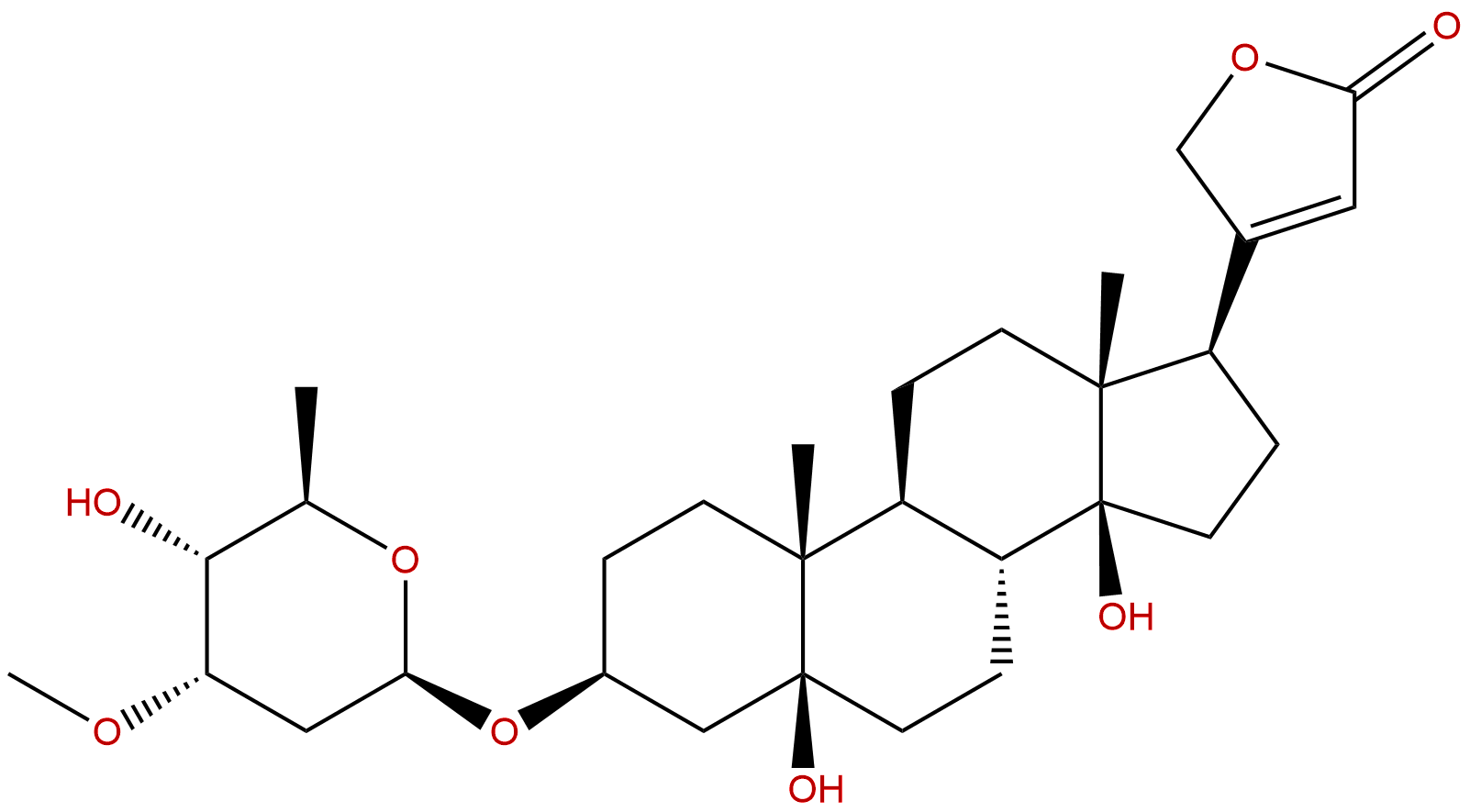


Product name: Periplocymarin
Synonym name:
Catalogue No.: BP3656
Cas No.: 32476-67-8
Formula: C30H46O8
Mol Weight: 534.69
Botanical Source:
Physical Description:
Type of Compound: Steroids
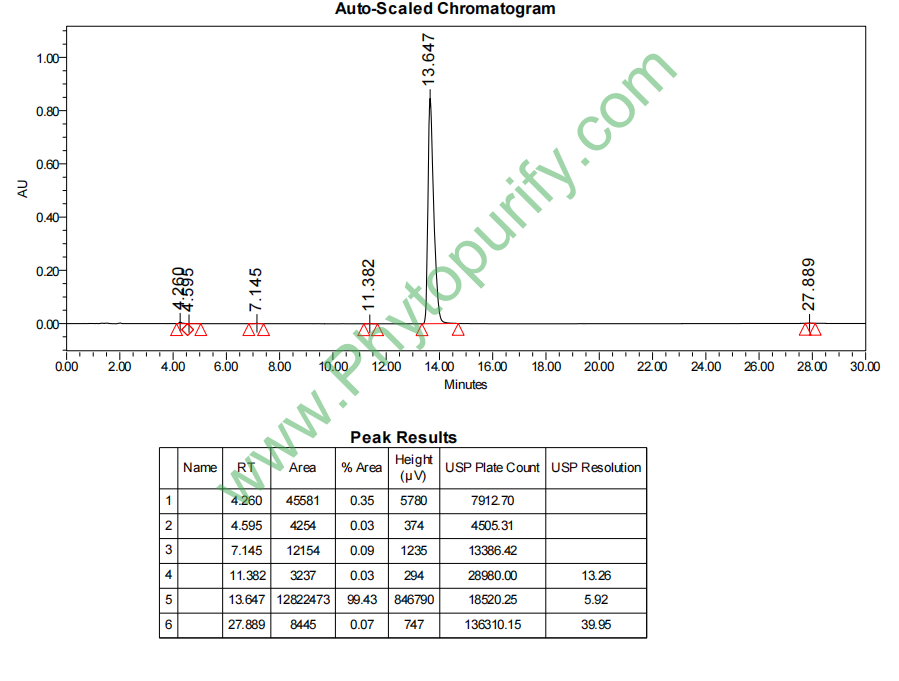
Purity: 95%~99%
Analysis Method: HPLC-DAD or/and HPLC-ELSD
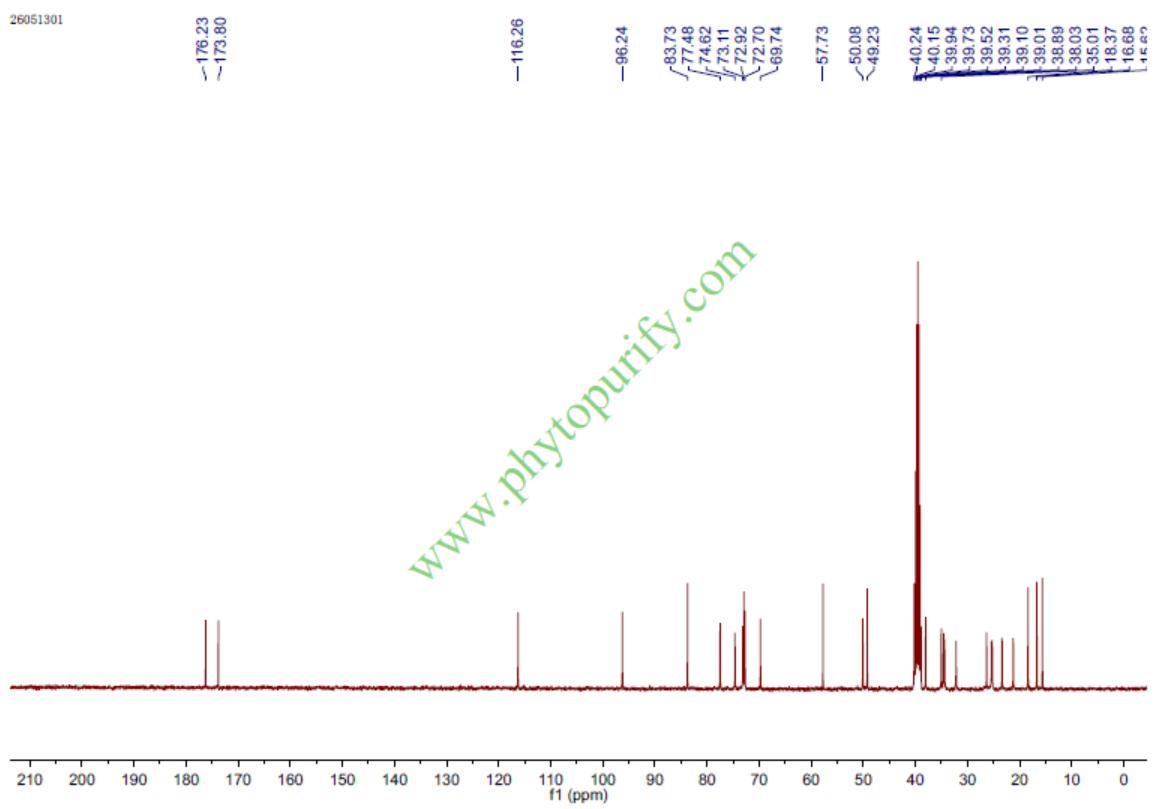
Identification Method: Mass, NMR
Packing: Brown vial or HDPE plastic bottle
The product could be supplied from milligrams to grams. Inquire for bulk scale.
We provide solution to improve the water-solubility of compounds, thereby facilitating the variety of activity tests and clinic uses.
For Reference Standard and R&D, Not for Human Use Directly.
Description:
Periplocymarin, a cardiac glycoside, has potential anti-cancer activity. Octreotide-conjugated periplocymarin demonstrates tumor selectivity and may be useful as a targeting agent to improve the safety profile of cardiac glycosides for cancer therapy.
References:
Oncotarget. 2016 Dec 27;7(52):86326-86338.Octreotide-periplocymarin conjugate prodrug for improving targetability and anti-tumor efficiency: synthesis, in vitro and in vivo evaluation.
Cardiac glycosides could increase intracellular Ca2+ ion by inhibiting the Na+/K+ATPase to induce apoptosis in many tumor cells. However, narrow therapeutic index, poor tumor selectivity and severe cardiovascular toxicity hinder their applications in cancer treatment. To improve the safety profile and tumor targetablility of cardiac glycosides, we designed octreotide conjugated Periplocymarin, a cardiac glycoside isolated from Cortex periplocae.
METHODS AND RESULTS:
The conjugate showed higher cytotoxicity on MCF-7 cells and HepG2 tumor cells (SSTRs overexpression) but much less toxicity in L-02 normal cells. Tissue distribution studies of the conjugate using H22 tumor model in mice showed higher accumulation in tumor and lower distribution in heart and liver than Periplocymarin. Furthermore, in vivo anticancer effects of the conjugate on mice bearing H22 cancer xenografts confirmed enhanced anti-tumor efficacy and decreased systemic toxicity.
CONCLUSIONS:
Altogether, octreotide-conjugated Periplocymarin demonstrated tumor selectivity and may be useful as a targeting agent to improve the safety profile of cardiac glycosides for cancer therapy.
HPLC of Periplocymarin
NMR of Periplocymarin
Storage conditions:Short-term storage at 2~8℃, long-term storage at -20 ~ -80℃
114.6800
2.4693
2.4691
.0247
1.4405
4.0617
Low
70.3481
5.1957
No
No
No
No
Yes
No
0.0
No
No
Yes
Yes
Periplocymarin is a compound derived from the Apocynaceae plant Periplocymarin(Periploca sepium)The natural steroidal compounds isolated from dried root bark (known as "Xiangjiapi" in traditional Chinese medicine) belong to the class of cardiac glycosides. Its CAS number is 32476-67-8, molecular formula is C30H46O8, and molecular weight is approximately 534.69 g/mol. Qiangxin is a class of drugs with a long history and significant effects, traditionally used to treat heart failure and certain arrhythmias. Its classic representative drugs include digoxin. However, recent studies have revealed that these compounds exhibit broad biological activities beyond the cardiovascular field, particularly in anti-inflammatory and anti-tumor fields, at appropriate doses and targeting strategies.
The research background of salidroside is rooted in this paradigm shift. Early research mainly focused on its cardiotonic effects. But with the development of molecular pharmacology, scientists have discovered that naringin can intervene in multiple key cellular signaling pathways and molecular targets closely related to inflammation and cancer, such as nuclear factor kappa B (NF - κ B) and cyclooxygenase-2 (PTGS2/COX-2). What is even more remarkable is that through modern medicinal chemistry methods (such as coupling with octreotide), it is possible to endow naringin with tumor targeting properties, thereby improving its anti-tumor efficacy while potentially avoiding the common cardiac toxicity and other side effects of traditional cardiac glycosides. Therefore, the transformation of salidroside from a traditional cardiovascular active ingredient to a potential anti-inflammatory and anticancer lead compound with multi-target intervention ability has attracted sustained attention in the fields of natural product pharmacology and tumor pharmacology. This article will systematically elaborate on its chemical essence, sources, pharmacological mechanisms, drug properties, and prospects.
Gangliuci glycoside is a typical cardiac glycoside compound, whose chemical structure is based on the steroid nucleus and is linked to an unsaturated lactone ring (represented as "C6=CC (=O) OC6" in this SMILES structure, which is an α, β - unsaturated pentagonal lactone ring and one of the key pharmacophores for cardiac glycosides to exert positive inotropic effects) and multiple glycosidic ligands. From the provided SMILES string, it can be seen that the molecule has a complex stereochemical structure, containing multiple chiral centers (represented by the @ symbol), which are crucial for its biological activity and specific binding to the target.
Its physicochemical properties provide important clues for its biological behavior:
- Molecular weight (MW):534.69 g/mol, Slightly higher than the commonly considered "drug like" molecular weight threshold (500 Da), but still within an acceptable range.
- Lipid water partition coefficient (LogP/LogD)Approximately 2.47. This value indicates that salidroside has moderate lipophilicity, neither highly hydrophilic (LogP<0) nor highly lipophilic (LogP>5). This is beneficial for its passive diffusion on biological membranes (such as cell membranes), but it also means that its water solubility may be limited.
- Water solubility The value of 0.0247 (usually measured in mg/mL or mol/L, which is not specified here but is small) confirms its poor water solubility, consistent with the common properties of cardiac glycosides. Solubilization strategies may need to be considered during formulation development.
- Topological Polarity Surface Area (TPSA): 114.68 Å ². This value reflects the total surface area of polar atoms (such as O, N) in the molecule. Generally, compounds with TPSA>140 Å ² have poor transmembrane permeability. The TPSA of Lycium barbarum glycoside is below this threshold, indicating its good membrane permeability potential.
- Penetration data The Caco-2 cell permeability (Caco2_permeability) is 4.0617 (usually measured in units of 10 ⁻⁶ cm/s, with higher values), and the predicted effective permeability (Peff) is 1.4405, indicating moderate to good intestinal absorption potential. However, its blood-brain barrier penetrability (BBB-permeability) is predicted to be "low", which means it may not easily enter the central nervous system, which could be beneficial for reducing potential central nervous system side effects.
- Plasma protein binding rate (PPB)Approximately 70.35%, belonging to a moderately high binding rate. This means that in the blood, most of the glucosinolates bind to plasma proteins (mainly albumin), and only about 30% of the free drugs can exert pharmacological activity, which affects their distribution volume and effective concentration.
The main plant source of Lycium barbarum glycoside is Periploca sepium Bunge In traditional Chinese medicine, its dry root bark is called Xiangjiapi or Beiwujiapi Gangliu is a plant in the Apocynaceae family (formerly classified under the Apocynaceae family, now mostly under the Apocynaceae family), widely distributed in northern China.
Xiangjiapi, as a traditional Chinese medicine, has a long history of application. According to traditional Chinese medicine theory, the fragrance and skin have a pungent, bitter, warm nature, are toxic, and belong to the liver, kidney, and heart meridians. have Dispelling wind and dampness, strengthening muscles and bones, promoting diuresis and reducing swelling The efficacy. In clinical practice, it is commonly used for treatment Wind cold dampness, soreness and weakness of the waist and knees, palpitations and shortness of breath, lower limb edema Waiting for symptoms. Its effects of "strengthening muscles and bones" and "promoting diuresis and reducing swelling" coincide with the positive muscle strength (enhancing myocardial contractility) and diuretic effects of cardiac glycosides recognized in modern medicine, reflecting the compatibility between traditional medical practice and modern pharmacological discoveries.
However, traditional applications also explicitly state that Xiangjiapi is "toxic" and requires strict processing and dosage control when used. This toxicity is mainly attributed to the various cardiac glycosides contained in it, including periplocin and periplocin. Excessive use can lead to symptoms similar to digitalis poisoning, such as arrhythmia, nausea and vomiting. This reminds us that when developing and utilizing its activity, we must attach great importance to the narrow therapeutic window (the range between effective dose and toxic dose). Traditional medicine manages this risk through compound combinations (such as co decoction with other drugs to reduce or enhance toxicity) and dose control, while modern research focuses on improving its safety through structural modification and targeted delivery.
The pharmacological activity of salidroside has expanded from traditional cardiovascular fields to anti-inflammatory and anti-tumor fields. Its mechanism of action is complex, involving the regulation of multiple key signaling pathways and inflammatory factors.
Core targets and anti-inflammatory mechanisms:
According to database information, the targets of action of salidroside include TNF (tumor necrosis factor - α), PTGS2 (prostaglandin endoperoxide synthase 2, COX-2), NFKB1 (nuclear factor kappa B p105 subunit), IL6 (interleukin-6), and IL1B (interleukin-1 β). These targets are not independent proteins, but together form a tightly interconnected system Core inflammatory signaling network。
Therefore, through targeting the "master switch" of NF - κ B, naringin exerts its effects Broad spectrum anti-inflammatory Function. This multi-target intervention strategy may be more effective in fundamentally controlling complex inflammatory responses than simply inhibiting a downstream factor (such as using COX-2 inhibitors alone), providing a theoretical basis for its treatment of chronic inflammatory diseases such as rheumatoid arthritis and inflammatory bowel disease.
Antitumor activity and its association with cardiac glycoside properties:
Gangliuci glycoside is described as a 'potential anti-cancer compound'. The anticancer mechanism of cardiac glycosides is multifaceted:
1. Inhibition of Na+/K+- ATPase This is the classic target of cardiac glycosides. In myocardial cells, inhibiting this pump leads to an increase in intracellular Na+, which in turn increases Ca2+influx through Na+/Ca2+exchange and enhances contractility. In tumor cells, Na+/K+- ATPase is often overexpressed or has specific subtypes. Inhibiting this pump can disrupt the ion homeostasis within tumor cells, activate downstream signaling pathways such as SRC kinase and MAPK pathway, and ultimately induce cell cycle arrest, apoptosis, or autophagy.
2. Regulating inflammation and tumor microenvironment As mentioned earlier, chronic inflammation is a "catalyst" for the occurrence and development of tumors. The NF - κ B and COX-2/PGE2 pathways play key roles in promoting tumor cell proliferation, survival, invasion, angiogenesis, and suppressing immune surveillance. The anti-inflammatory effect of salidroside, especially its inhibition of the NF - κ B-COX-2 axis, helps create a microenvironment that is unfavorable for tumor growth and metastasis.
3. Inducing tumor cell specific apoptosis Research has shown that certain cardiac glycosides can selectively induce apoptosis in tumor cells, with little effect on normal cells. This may be related to tumor cells being more sensitive to ion homeostasis disorders or overexpressing certain cardiac glycoside sensitive Na+/K+- ATPase subtypes.
Targeted strategy enhances security Given the potential toxicity of cardiac glycosides to the heart, using them directly for anti-cancer treatment carries a higher risk. The "Octreotide conjugated periplocymarin" mentioned in the study is a clever solution. Octreotide is a somatostatin analogue, which can bind to the somatostatin receptor (SSTR) highly expressed on the surface of many neuroendocrine tumors (such as some pancreatic cancer and carcinoid tumors). The coupling of naringin with octreotide is equivalent to installing a "guidance system" for cytotoxins, enabling them to Selective enrichment in tumor tissue Reduce the distribution in normal tissues such as the heart, thereby Significantly improve treatment index and safety This provides a highly promising technological pathway for repositioning cardiac glycosides as targeted anticancer drugs.
Based on the provided pharmacological parameters, combined with the famous "Rule of Five" (Ro5) and other standards, a preliminary evaluation of the development potential of naringin as an oral drug can be conducted:
Lipinski Five Rule Compliance:
Absorption and distribution:
Metabolism and toxicity:
Comprehensive Assessment As a lead compound, salidroside has clear and multi-target pharmacological activities, especially promising prospects in anti-inflammatory and targeted anticancer fields. However, its medicinal properties face significant challenges:Poor water solubility, possible low oral bioavailability, potential genetic toxicity and hepatotoxicity risks These characteristics determine that it may not be suitable for direct development as a traditional oral small molecule drug. Future development strategies should focus on: 1) structural optimization Improve its water solubility and safety through chemical modification, and reduce toxicity; 2) Targeted delivery system If the studied octreotide conjugates or formulations such as nanoliposomes and polymer micelles are used to achieve tumor specific delivery, maximize chemotherapy efficacy, and minimize systemic toxicity; 3) Explore non oral administration routes Like injectable preparations.
At present, research on the extraction, isolation, structural identification, and basic cardiovascular activity of salidroside has progressed from early stages to the exploration of molecular pharmacological mechanisms and the development of new drug forms.
Research status:
- mechanism research A large number of in vitro and a small amount of in vivo studies have confirmed its activity in inhibiting inflammatory factors (TNF - α, IL-6, COX-2), inducing tumor cell apoptosis, inhibiting migration and invasion, and preliminarily elucidated its role in inhibiting pathways such as NF - κ B.
- Research on Security Improvement The most prominent progress is the construction of targeted conjugates (such as octreotide palisade). This type of research aims to utilize specific receptors on the surface of tumor cells to achieve precise drug delivery, which is a cutting-edge direction in solving the problem of narrow therapeutic window for cardiac glycosides.
- Exploration of Combination Therapy Research has begun to explore the combined use of salidroside and other anticancer drugs (such as chemotherapy drugs and targeted drugs) in order to generate synergistic effects and reduce their respective dosages and toxicity.
Application Prospects:
1. As a lead compound for anti-inflammatory drugs For chronic inflammatory diseases (such as rheumatoid arthritis and atherosclerosis) with excessive activation of NF - κ B pathway, the multi-target anti-inflammatory properties of periplocin deserve further exploration. By modifying its structure to reduce its direct cardiac toxicity, it is expected to develop new anti-inflammatory drugs.
2. As the "warhead" of targeted anti-cancer drugs This is the direction with the greatest potential for conversion. Using salidroside as a cytotoxic component, it can be combined with various tumor targeting molecules (antibodies, peptides, small molecule ligands) or responsive nanocarriers to construct a "biological missile". This can not only be used for neuroendocrine tumors expressing somatostatin receptors, but also extended to other types of cancer with clear surface markers.
3. Examples of Modernization Research on Traditional Chinese Medicine The research on Lycium barbarum glycoside is a typical representative of the path of "searching for active ingredients from traditional Chinese medicine, elucidating the mechanism with modern science, and improving it through new technology". It connects the traditional efficacy of Xiangjiapi with modern anti-inflammatory and anti-cancer theories, providing a reference for the research and development of other active ingredients in traditional Chinese medicine.
Challenges and Future Directions:
Future research needs to focus on addressing the following issues: ① Conducting more systematic research Preclinical pharmacodynamic and toxicological evaluation Especially in animal models of related diseases, validate the efficacy and safety of its targeted formulations. ② Elaborate on it in depth Accurate molecular targets Are there any other direct acting proteins besides Na+/K+- ATPase and signaling networks. ③ Optimization Synthesis and coupling process To achieve controllable preparation and large-scale production of targeted conjugates. ④ Explore it Immune regulatory function The potential of combination therapy in tumor immunotherapy.
In summary, as a natural cardiac glycoside derived from traditional Chinese medicine, Periphyllum glycoside is gaining new vitality in modern drug development, especially in the field of tumor targeted therapy, due to its unique anti-inflammatory and anti-tumor multi-target mechanism of action. Despite facing challenges in drug formulation, it is expected to be transformed into an efficient and low toxicity new therapeutic drug through advanced drug chemistry and delivery technology, achieving a leap from ancient medicine cabinets to modern pharmacies.
