Introduction/Overview
Natural products have long been an important source of innovative drug discovery, and their structural diversity and wide range of biological activities provide unique molecular frameworks for addressing various diseases. Salicylic acid and its derivatives, as a classic class of phenolic compounds, occupy a pivotal position in the history of medicine. The salicylic acid and its metabolite salicylic acid extracted from willow bark ultimately gave birth to the "miracle drug of the century" acetylsalicylic acid (aspirin), whose anti-inflammatory, antipyretic, analgesic, and antiplatelet aggregation activities have been fully validated. This successful example inspires researchers to continuously explore salicylic acid structural modifications in order to obtain new candidate drugs with better activity and fewer side effects. 4-Methoxysalicylic acid (4-MSA, CAS: 2237-36-7), also known as 2-hydroxy-4-methoxybenzoic acid, is a natural derivative that has attracted much attention in this context. It introduces a methoxy group at the 2-position (4-position) of the parent nucleus salicylic acid, a seemingly minor structural change that may significantly alter its electronic distribution, spatial conformation, and interaction mode with biological targets, resulting in a unique pharmacological activity spectrum. Current research suggests that 4-MSA has potential in inflammation related fields such as fever reduction and pain relief, and its mechanism of action may involve the regulation of multiple key enzymes in the arachidonic acid metabolism pathway. This article aims to systematically review the chemical properties, natural sources, pharmacological activities, mechanisms of action, pharmacological evaluation, and clinical application prospects of 4-MSA, in order to provide comprehensive scientific references for the in-depth research and development of this compound.
Chemical structure and physicochemical properties
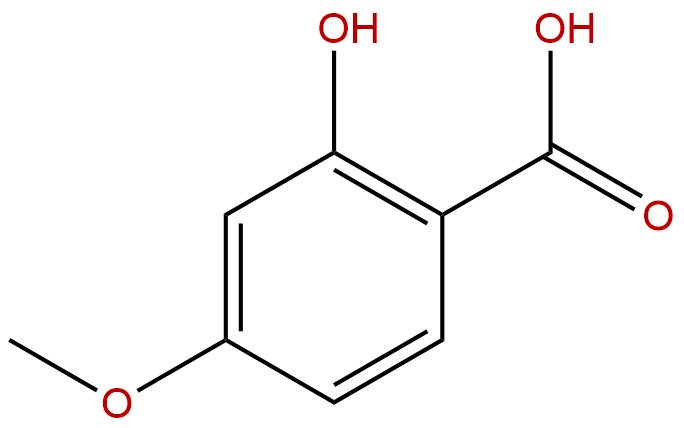
4-methoxysalicylic acid, molecular formula C8H8O4, molecular weight 168.1480. Its chemical structure belongs to benzoic acid derivatives, specifically on the benzoic acid skeleton, it is connected to a carboxyl group (- COOH) at the 1-position, a hydroxyl group (- OH) at the 2-position, and a methoxy group (- OCH3) at the 4-position. This adjacent hydroxybenzoic acid (i.e. salicylic acid type) structure is the key to its specific biological activity. The hydroxyl and carboxyl groups at the 2-position can form intramolecular hydrogen bonds, forming a six membered cyclic structure, which has a significant impact on the polarity, acidity, and coordination ability of the molecule. The 4-position methoxy group is an electron donating group that affects the electron cloud density of the benzene ring through conjugation and induction effects, potentially altering its binding affinity with the enzyme active center.
From the analysis of physical and chemical properties, the calculated lipid water partition coefficient (LogP) is about 2.04, indicating that the compound has moderate lipophilicity, which is conducive to transmembrane transport, but not significantly increases the risk of accumulation in the body due to high lipid solubility. Its topological polar surface area (TPSA) is 66.76 Å ², reflecting the surface area occupied by polar groups (oxygen atoms in carboxyl, hydroxyl, and methoxy groups) in the molecule. This value suggests that the molecule has a certain polarity, which, together with the LogP value, determines its solubility and permeability. The predicted value of its water solubility is about 1.82 mg/mL, which belongs to the range of slightly soluble to soluble. This provides a basis for the development of its formulation, but it may also require salt formation (such as sodium salt) or formulation technology to improve its dissolution behavior. These basic physicochemical parameters preliminarily outline the physicochemical profile of 4-MSA as a drug candidate molecule, which meets the basic requirements of drug similarity and lays the foundation for its subsequent biological activity research.
Plant sources and extraction methods
4-methoxysalicylic acid, as a plant metabolite, is relatively widely distributed in nature and mainly exists in various medicinal plants. According to literature reports, it has been detected in some plants of the Rosaceae, Asteraceae, and Salicaceae families. For example, in some species of willow (Salix spp.) bark, in addition to being rich in salicin, there may also be methoxylated derivatives of it. In addition, some traditional Chinese herbs used for anti-inflammatory and analgesic purposes, such as certain Artemisia plants, have also been found to contain 4-MSA or its glycoside form. These natural sources provide sustainable access and partially explain the material basis for the traditional efficacy of related medicinal plants.
Extracting 4-MSA from plant materials typically follows the general extraction strategy for natural phenolic acid compounds. Common methods include:
1. Solvent extraction method The most commonly used method is to use polar organic solvents such as methanol, ethanol, or acetone aqueous solutions for leaching or reflux extraction. Ethanol is often preferred due to its low toxicity, high extraction efficiency, and environmental friendliness. Sometimes solvents of different polarities are used for gradient extraction to enrich the target components.
2. Ultrasound assisted extraction or microwave-assisted extraction These modern extraction techniques utilize the energy of ultrasound or microwave to accelerate the fragmentation of plant cell walls and the dissolution of components, significantly reducing extraction time, improving extraction efficiency, and potentially reducing solvent usage.
3. Purification and Separation After filtration and concentration, the crude extract is usually separated and purified using column chromatography technology. Silica gel, macroporous adsorption resins (such as D101, AB-8), or polyamide are commonly used as stationary phases for gradient elution using solvent systems of different polarities such as chloroform methanol and petroleum ether ethyl acetate. High performance liquid chromatography (HPLC), especially preparative HPLC, is the key final step in obtaining high-purity 4-MSA monomers. Thin layer chromatography (TLC) or HPLC can be used for identification by comparing with standard samples.
4. Identification and characterization The purified compound requires structural confirmation through spectroscopic methods, including nuclear magnetic resonance hydrogen (¹ H NMR) and carbon (¹ ³ C NMR), mass spectrometry (MS), infrared spectroscopy (IR), etc. These data are compared with known 4-MSA standard spectra or literature values to confirm their structure.
With the development of synthetic chemistry, 4-MSA can also be obtained through chemical synthesis pathways, such as starting from p-methoxyphenol and synthesizing through Kolbe Schmidt reaction (carboxylation reaction), which provides a stable and sufficient source of substances for pharmacological research and potential applications.
Pharmacological activity research
The core pharmacological activity of 4-methoxysalicylic acid focuses on anti-inflammatory, antipyretic, and analgesic fields, which is in line with the traditional efficacy of its structural parent salicylic acid, but may have different characteristics or advantages of action.
-
anti-inflammatory activity In vitro cell model studies have shown that 4-MSA can significantly inhibit the production of nitric oxide (NO) and prostaglandin E2 (PGE2) by macrophages (such as RAW264.7 cells) stimulated by inflammatory factors such as lipopolysaccharides (LPS). NO and PGE2 are important mediators in the inflammatory response, and their excessive production is closely related to symptoms such as redness, swelling, and thermal pain. The inhibitory effect of 4-MSA shows a dose-dependent pattern, indicating its direct anti-inflammatory effect. In some animal inflammation models, such as rat paw swelling induced by carrageenan or Freund's complete adjuvant, administration of 4-MSA can effectively reduce tissue edema and inflammatory cell infiltration.
-
Analgesic activity In the classic acetic acid-induced mouse writhing test (chemical irritant pain model) and hot plate test (thermal irritant pain model), 4-MSA showed clear analgesic effects. It can significantly reduce the number of twisting reactions or prolong the latency period of the hot plate foot licking reaction. Its analgesic efficacy can be comparable to some classic NSAIDs within a certain dosage range, but the specific potency strength needs to be determined through more systematic comparative studies.
-
Antipyretic activity In yeast or LPS induced fever animal models (such as rats), oral administration of 4-MSA can promote the restoration of elevated body temperature to normal and exhibit antipyretic effects. The onset time and duration of action are important parameters for evaluating its antipyretic properties.
-
Other potential activities In addition to its core antipyretic, analgesic, and anti-inflammatory effects, based on the antioxidant properties of its phenolic acid structure, 4-MSA may also exhibit the ability to scavenge free radicals and inhibit lipid peroxidation, which may contribute synergistically to its anti-inflammatory effects. In addition, sporadic studies have explored its activity in other fields such as antibacterial and antifungal, but no systematic conclusions have been formed yet.
Overall, 4-MSA has been confirmed to have antipyretic, analgesic, and anti-inflammatory pharmacological activities in various experimental models, providing preliminary pharmacological evidence for its development as a candidate anti-inflammatory and analgesic drug.
Mechanism of action and molecular targets
The molecular basis of the pharmacological activity of 4-methoxysalicylic acid mainly stems from its regulation of the arachidonic acid (AA) metabolic pathway. The metabolism of arachidonic acid is the core pathway for inflammation and pain signaling, and its products include potent inflammatory mediators such as prostaglandins, thromboxanes, and leukotrienes. Existing research suggests that 4-MSA may exert multi-target regulatory effects by acting on multiple key enzyme targets in this pathway.
-
Inhibition of cyclooxygenase-2 (PTGS2/COX-2)COX-2 is an inducible cyclooxygenase that is highly expressed at the site of inflammation and is responsible for converting AA into prostaglandin H2 (PGH2), which is a precursor to various prostaglandins such as PGE2 and PGI2. Research has shown that 4-MSA can dose dependently inhibit the enzymatic activity of COX-2 and reduce the production of PGE2. This is one of the most likely core mechanisms for its anti-inflammatory, analgesic, and antipyretic effects, similar to the mechanism of action of traditional nonsteroidal anti-inflammatory drugs (NSAIDs), but with different selectivity.
-
Inhibition of prostaglandin E synthase (PTGES)PTGES is a key terminal enzyme that catalyzes the specific conversion of PGH2 to PGE2. Inhibition of PTGES can directly reduce the production of potent pain and heat mediators PGE2 without affecting the synthesis of other prostaglandins (such as PGI2), theoretically potentially leading to better gastrointestinal safety (as gastrointestinal protective effects are associated with PGI2). The inhibitory effect of 4-MSA on PTGES provides another precise regulatory pathway for its analgesic and antipyretic effects.
-
Affects the 5-lipoxygenase (ALOX5/5-LOX) pathway 5-LOX is the rate limiting enzyme in another important pathway of AA metabolism, the leukotriene synthesis pathway. Its products, such as leukotriene B4 (LTB4), are potent chemokines and inflammatory mediators. 4-MSA may have a certain regulatory effect on 5-LOX activity. Meanwhile, for downstream Hematopoietic prostaglandin D synthase (HPGDS)Inhibition of PGD2 can reduce the production of PGD2 and its metabolites, and PGD2 is also involved in regulating fever and pain. Correct Thromboxane A2 Synthase (TBXAS1)The potential impact may involve regulation of platelet aggregation and vascular constriction.
-
Multi target synergistic effect Unlike aspirin (which irreversibly inhibits COX-1) or selective COX-2 inhibitors, 4-MSA may moderately inhibit COX-2 and PTGES in a relatively balanced manner, and may also affect certain segments of the LOX pathway. This multi-target, mildly inhibitory mode may help reduce potential side effects caused by completely blocking a single pathway (such as cardiovascular risk from COX-2 inhibitors or gastrointestinal damage from traditional NSAIDs) while maintaining anti-inflammatory and analgesic efficacy. In addition, the phenolic hydroxyl groups within its molecule endow it with antioxidant activity, which may indirectly inhibit the activation of inflammatory signaling pathways such as NF - κ B by clearing reactive oxygen species (ROS), forming a synergistic anti-inflammatory effect.
In summary, the mechanism of action of 4-MSA exhibits multi-target characteristics, mainly focusing on the arachidonic acid metabolism network. It reduces PGE2 synthesis by inhibiting the COX-2/PTCES axis and may regulate the LOX pathway, jointly leading to a decrease in inflammatory mediator levels, thereby exerting antipyretic, analgesic, and anti-inflammatory effects.
Evaluation of drug properties and pharmacokinetics
Based on calculations and preliminary experimental data, a preliminary evaluation of the pharmacological properties of 4-methoxysalicylic acid is conducted
-
Drug like properties and physicochemical properties As mentioned earlier, its molecular weight (168.15) is moderate, LogP (~2.04) is in the ideal range (usually considered 1-3 to be better), and TPSA (66.76 Å ²) also conforms to the general rules of oral drug absorption. These parameters meet the preliminary criteria for drug properties such as Lipinski's "Five Rules", indicating that it may have good oral absorption potential.
-
Prediction and Preliminary Study of Absorption, Distribution, Metabolism, and Excretion (ADME):
- absorb Moderate LogP and TPSA suggest that it may have good passive diffusion absorption in the small intestine. However, its carboxyl group may partially dissociate at physiological pH, affecting its lipid solubility. The actual bioavailability needs to be determined through in vivo pharmacokinetic studies.
- distribution: Predict it Low blood-brain barrier (BBB) permeability For antipyretic and analgesic drugs that primarily target peripheral inflammation, this may be an advantage in reducing the risk of central nervous system side effects such as drowsiness and dizziness. The plasma protein binding rate is not yet clear and needs to be experimentally determined.
- Metabolism As a phenolic acid derivative, its possible metabolic pathways include: phase I metabolism, such as demethylation of methoxy groups on the benzene ring (producing salicylic acid or other hydroxylated products); Phase II metabolism mainly involves binding with glucuronic acid or sulfuric acid to form more water-soluble complexes, which are excreted through urine or bile. It is necessary to conduct in-depth research on its main metabolic enzymes (such as CYP450 isoenzymes, UGT, etc.) to assess potential drug drug interaction risks.
- excretion It is expected that the prototype drug and its metabolites will mainly be excreted through the kidneys and urine.
-
Preliminary evaluation of safety:
- HERG inhibition The predicted data shows' no ', indicating a low risk of potential cardiac toxicity (inducing long QT syndrome). This is an important safety positive signal, but experimental verification is needed.
- Genotoxicity:Ames test It is a classic method for evaluating the mutagenicity of compounds. The data "0.6" given in the report usually refers to the ratio of the number of revertant colonies to the number of spontaneously revertant colonies at the tested concentration (mutation rate). It is generally considered negative when the ratio is less than 2 and there is no dose dependence. The preliminary value of 0.6 suggests that 4-MSA did not show mutagenicity in this testing system, but it needs to be comprehensively judged in combination with other genetic toxicity tests (such as micronucleus test, chromosome aberration test).
- Acute toxicity and long-term toxicity At present, there is a lack of animal acute and long-term toxicity experimental data in the system, which is a key gap that must be filled before it can be promoted to clinical practice.
At present, there are few reports on the 4-MSA system and complete pharmacokinetic studies (such as absolute bioavailability, half-life, clearance rate, tissue distribution, etc. in rats, dogs, and other animals). This is an important shortcoming in the development chain of the compound. Future research requires the establishment of sensitive and specific biological analysis methods (such as LC-MS/MS) to comprehensively elucidate their in vivo processes, providing a basis for formulation design and dosing regimens.
Clinical application prospects and prospects
4-methoxysalicylic acid, as a natural small molecule with clear pharmacological activity, has a clinical application prospect mainly focused on mild to moderate inflammation and painful diseases, but also faces many challenges and directions that need to be explored.
Potential application directions:
1. Development of new antipyretic, analgesic and anti-inflammatory drugs As a structural analogue of aspirin, the most direct development direction of 4-MSA is for the treatment of common symptoms such as fever, headache, toothache, muscle pain, joint pain, etc. Its multi-target mechanism of action may lead to a different balance of efficacy/safety compared to existing NSAIDs. If subsequent research confirms that its gastrointestinal irritation is significantly lower than traditional NSAIDs, or its cardiovascular risk is lower than certain COX-2 inhibitors, its market competitiveness will be greatly enhanced.
2. Adjuvant treatment for chronic inflammatory diseases Chronic diseases such as osteoarthritis and rheumatoid arthritis require long-term medication. If 4-MSA is proven to have cartilage protective or immune regulatory effects (further research is needed), it may become a potential treatment or adjuvant therapy option for these diseases.
3. Compound preparation components It can be combined with analgesics with other mechanisms of action (such as acetaminophen) or plant extracts to form a compound, exerting synergistic effects, reducing single drug doses and side effects.
4. Precursor or structural optimization lead compound Using it as the parent nucleus, develop more advantageous derivatives through chemical modifications (such as esterifying carboxyl groups to improve absorption and tolerance, or further structural modifications to enhance target selectivity or activity).
Challenges and Future Research Prospects:
1. In depth study on the mechanism of action It is necessary to use techniques such as molecular docking, surface plasmon resonance (SPR), and enzyme kinetics analysis to accurately elucidate the binding mode, inhibition constant (Ki), and inhibition type (reversible/irreversible, competitive/non competitive) of 4-MSA with targets such as COX-2 and PTGES. At the same time, gene knockout or RNA interference techniques are used to validate the contribution of each target to its efficacy in cell and animal models.
2. Systematic evaluation of drug properties Systematic preclinical pharmacokinetic and toxicological studies must be conducted as soon as possible. Including: comprehensive research on ADME in different animal models; Standard acute toxicity, subacute toxicity, and long-term toxicity tests; Reproductive toxicity, carcinogenicity assessment, etc. This is the threshold for whether it can enter clinical trials.
3. Pharmaceutical research: Develop appropriate oral solid preparations (such as tablets and capsules) or topical preparations (such as gel and creams, for local analgesia) for their potential solubility and stability problems. Explore novel delivery systems such as nanomedicine to improve bioavailability or achieve targeted delivery.
4. Clinical efficacy and safety verification Ultimately, rigorous Phase I-III clinical trials are required to validate its effectiveness and safety in treating specific indications such as postoperative pain and osteoarthritis pain in humans, and to compare it head to head with existing standard therapies.
5. Natural sources and sustainable production Although it can be chemically synthesized, exploring the cultivation and green extraction processes of its high content plant resources is also of great significance for reducing costs and developing new plant medicine products.
Conclusion
4-methoxysalicylic acid, as a natural member of the salicylic acid family, inherits the core genes of anti-inflammatory and analgesic effects, and may possess unique pharmacological properties due to the introduction of the 4-methoxy group. The existing research has preliminarily outlined the molecular landscape of its antipyretic, analgesic, and anti-inflammatory effects by intervening in the arachidonic acid metabolism pathway, especially the COX-2/PTCES axis. Its good drug like parameters and preliminary safety predictions bring hope for its further development. However, the road from active molecules in the laboratory to real clinical drugs is still long. Systematic and in-depth elucidation of the mechanism of action, comprehensive preclinical pharmacokinetic and toxicological evaluation, and final clinical validation are key steps in determining its future fate. Regardless of whether 4-MSA itself can ultimately be successfully marketed, its research undoubtedly enriches the chemical and pharmacological knowledge base of phenolic anti-inflammatory drugs, and provides valuable examples for discovering and optimizing multi-target anti-inflammatory drugs from natural products. In today's increasingly prevalent concept of precision medicine and multi-target drug design, the continuous exploration of natural small molecules with multi-target regulatory potential, such as 4-MSA, has important scientific significance and application value.