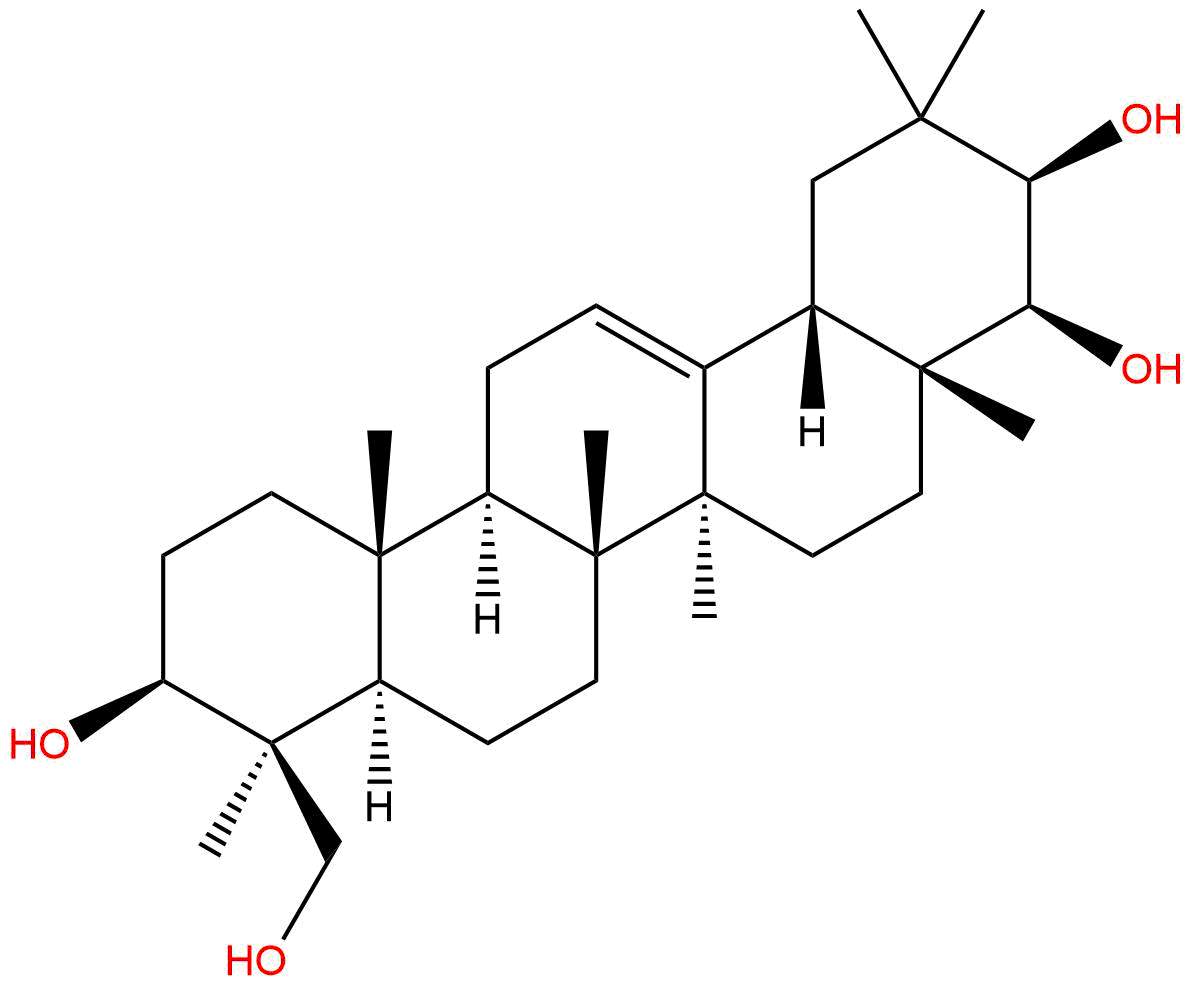


Synonym name: Soyasapogenol M4
Catalogue No.: BP1328
Cas No.: 508-01-0
Formula: C30H50O4
Mol Weight: 474.726
Botanical Source: Glycine max (soybean) and Abrus cantoniensis
Purity: 95%~99%
Analysis Method: HPLC-DAD or/and HPLC-ELSD
Identification Method: Mass, NMR
Packing: Brown vial or HDPE plastic bottle
Can be supplied from milligrams to grams.
For Reference Standard and R&D, Not for Human Use Directly.
Inquire for bulk scale.
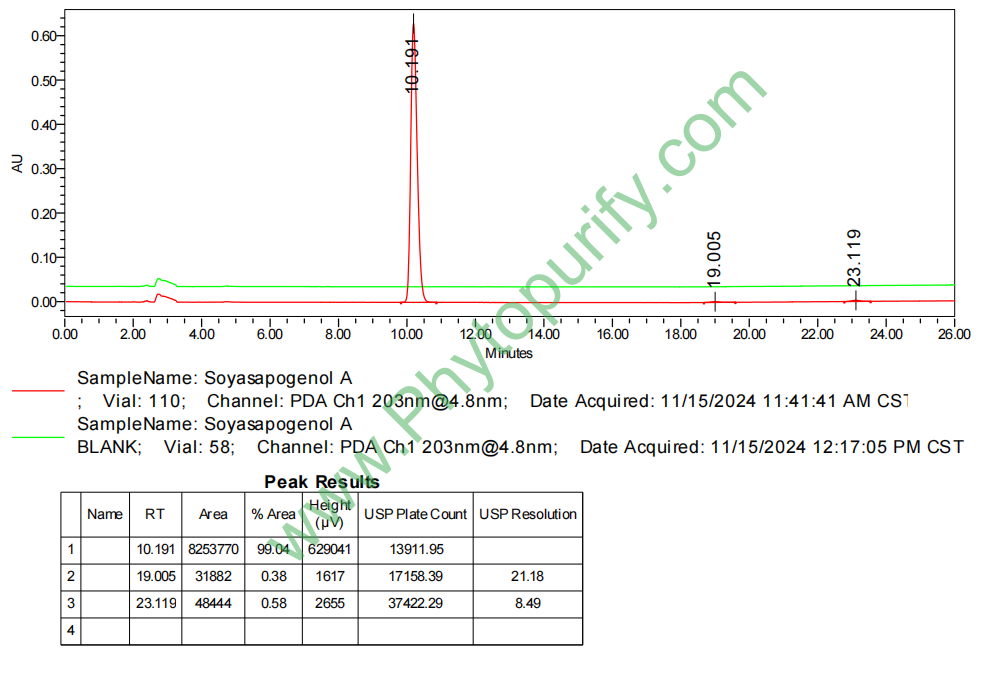
HPLC of Soyasapogenol A
Storage conditions:Short-term storage at 2~8℃, long-term storage at -20 ~ -80℃
80.9200
4.8460
4.8460
.0012
3.8082
7.3489
High
85.4863
5.0417
No
No
No
No
No
No
0.0
Yes
No
Yes
No
Cardiovascular disease (CVD) is the leading cause of death worldwide, and dyslipidemia, especially hypercholesterolemia, is one of its core risk factors. Although lipid-lowering therapies such as statins have achieved significant results, problems such as drug resistance, adverse reactions, and residual cardiovascular risks still exist, and there is an urgent need to develop new, safe, and multi-target lipid-lowering drugs. In this context, searching for lead compounds with lipid-lowering activity from natural products has become an important direction for drug development. Soyasapogenol A, as a triterpenoid glycoside isolated from the traditional edible plant soybean, has attracted widespread attention in the pharmacological community in recent years due to its extensive pharmacological activity, especially its outstanding potential in regulating lipid metabolism.
Soybean saponin A is a glycoside form released from soybean saponins after acid or enzyme hydrolysis, belonging to the oleanane type pentacyclic triterpenoids. Early research focused on its anti-inflammatory, anticancer, and hepatoprotective activities. With the deepening of research, its pharmacological effects on regulating cholesterol metabolism and improving blood lipid profile have gradually been revealed, demonstrating the unique advantages of intervening in lipid homeostasis through multi-target and multi pathway approaches. Compared to many synthetic drugs, soybean saponin A is derived from daily diet and has better biocompatibility and safety expectations. This article aims to systematically review the chemical properties, plant sources, and extraction methods of soybean saponin A, with a focus on its pharmacological activity, mechanism of action, and molecular targets in reducing blood lipids. It also evaluates and prospects its pharmacological properties, pharmacokinetic characteristics, and clinical application prospects, in order to provide comprehensive scientific references for the development of lipid-lowering new drugs based on this natural product.
The chemical name of soybean saponin A is (3 β, 4 β, 16 β, 21 β, 22 α) -3,16,22,24-tetrahydroxyolean-12-ene, and its CAS number is 508-01-0. Its molecular formula is C30H50O4 and its molecular weight is 474.7260 g/mol.
Structurally, soybean saponin A has a typical oleanane type pentacyclic triterpenoid skeleton composed of six isoprene units. Its structural features include: A/B ring, B/C ring, C/D ring are all trans fused, and D/E ring is cis fused. Connect a β - oriented hydroxyl group at positions C-3, C-16, C-21, and C-22 (with C-22 being α - oriented), and a double bond at position C-12. These hydroxyl groups are the key functional groups for its biological activity and the main source of its hydrophilicity. Its glycoside compounds (soybean saponins) are linked to oligosaccharide chains on the C-3 hydroxyl group, significantly increasing their water solubility.
Based on its structure, soybean saponin A exhibits specific physicochemical properties. The calculated lipid water partition coefficient (LogP) is 4.8460, indicating that the compound has high lipophilicity. The topological polar surface area (TPSA) is 80.92 Å ², reflecting the polarity brought by its multiple hydroxyl groups. The water solubility is relatively low, about 0.0012 mg/mL, which is related to the lack of hydrophilic sugar groups in its glycoside form. This also suggests that it may need to improve solubility in formulation development through salt formation, inclusion complex formation, or preparation into nano formulations. These basic physicochemical parameters are the basis for evaluating the drug absorption, distribution, metabolism, and excretion (ADME) characteristics.
Soybean saponin A is mainly derived from the leguminous plant soybean(Glycine max (L.) Merr. and its processed products. In soybeans, it does not exist in the form of free glycosides, but is stored in cotyledons and hypocotyls in the form of soybean saponins (such as Soyasaponin I, II, III, IV, V, etc.). Soybean saponins are important secondary metabolites in leguminous plants, with defensive and regulatory functions.
Obtaining daidzein A from soybeans usually requires two main steps: first, extracting total saponins from soybeans, and then hydrolyzing to obtain aglycones.
1. Extract total saponins Common methods include solvent extraction. Usually, methanol, ethanol, or ethanol water mixed solvents are used for heating reflux or ultrasound assisted extraction of defatted soybean meal. In recent years, green extraction techniques such as microwave-assisted extraction and supercritical CO ₂ extraction have also been applied to improve extraction efficiency and selectivity. After concentration, the extract is enriched and purified using macroporous adsorption resins such as AB-8 and D101. Impurities such as sugars are washed away with water, and then eluted with different concentrations of ethanol to obtain crude soybean total saponins.
2. Hydrolysis preparation of aglycones Hydrolyze the purified soybean total saponins to cleave glycosidic bonds and release sapogenins. Acid hydrolysis is the most commonly used method, typically carried out using methanol or ethanol solutions of hydrochloric acid, sulfuric acid, or trifluoroacetic acid under heating conditions. The acid hydrolysis conditions are severe, which may lead to side reactions such as dehydration or isomerization of some glycoside structures. Enzymatic hydrolysis (using specific glycosidases) has mild conditions, high selectivity, and can better maintain the original structure of glycosides, but it is costly and relatively inefficient. After hydrolysis, high-purity soybean saponin A can be isolated and purified by adjusting pH, extraction (commonly using ethyl acetate or chloroform), silica gel column chromatography, or high-performance liquid chromatography (HPLC).
Soybean saponin A has a wide range of pharmacological activities, among which its lipid-lowering effect is one of the most concerned directions.
1. Hypolipidemic activity
A large number of in vitro and in vivo studies have confirmed the significant lipid-lowering effect of soybean saponin A. In high-fat diet induced obesity or hyperlipidemia animal models (such as mice and rats), oral administration of daidzein A or its precursor saponins can effectively reduce serum total cholesterol (TC), triglycerides (TG), and low-density lipoprotein cholesterol (LDL-C) levels, while increasing beneficial high-density lipoprotein cholesterol (HDL-C) levels. The strength of its effect is positively correlated with the dosage. In vitro cell experiments show that daidzein A can inhibit the uptake of free fatty acids and the accumulation of triglycerides by hepatocytes (such as HepG2), and can reduce the foam of macrophages - a key step in the formation of atherosclerotic plaque.
2. Other pharmacological activities
- anti-inflammatory activity Soy saponin A can inhibit the excessive production of nitric oxide (NO), prostaglandin E2 (PGE2), and pro-inflammatory cytokines (such as TNF - α, IL-1 β, IL-6) in macrophages induced by stimuli such as lipopolysaccharide (LPS). Its anti-inflammatory effect is closely related to the inhibition of nuclear factor kappa B (NF - κ B) and mitogen activated protein kinase (MAPK) signaling pathways.
- anticancer activity Research shows that daidzein A has growth inhibition and apoptosis induction effects on many cancer cell lines (such as colon cancer, liver cancer, breast cancer cells). The mechanism involves activation of the mitochondrial pathway, cell cycle arrest (such as G1 phase), and regulation of the death receptor pathway.
- Hepatoprotective activity In models of chemical liver injury (such as acetaminophen and carbon tetrachloride induction) and alcoholic liver injury, daidzein A exhibits a protective effect by reducing serum transaminase levels, alleviating liver steatosis and inflammatory cell infiltration. Its mechanism is related to antioxidant stress and anti-inflammatory effects.
- Antiviral activity Research has shown that it has a certain inhibitory effect on herpes simplex virus type 1 (HSV-1).
These activities are interrelated, for example, their anti-inflammatory and antioxidant effects help to alleviate inflammation and oxidative damage in the process of atherosclerosis, and they work together with their lipid-lowering effects to play a cardiovascular protective effect.
The lipid-lowering effect of soybean saponin A is not achieved through a single target, but through the synergistic regulation of various stages of lipid metabolism through multiple targets and pathways, reflecting the multi efficiency of natural products. According to existing research, its mechanism of action mainly involves the following aspects and related targets:
1. Inhibit cholesterol synthesis and promote its clearance
- Inhibition of HMGCR (3-hydroxy-3-methylglutaryl-CoA reductase)HMGCR is the rate limiting enzyme for cholesterol synthesis in the body and a classic target for statins. Research has shown that daidzein A can downregulate the expression or activity of HMGCR at the transcriptional or post transcriptional level, reducing the synthesis of endogenous cholesterol.
- Upregulation of LDLR (low-density lipoprotein receptor)LDLR is the main receptor for clearing circulating LDL-C in the liver. Soy saponin A can promote the expression of LDLR, accelerate the uptake and degradation of LDL-C, thereby reducing plasma LDL-C levels. This process may involve the regulation of the sterol regulatory element binding protein (SREBP) pathway.
- Regulation of PCSK9 (Protease Converting Enzyme Subtilisin 9)PCSK9 can bind to LDLR, promote its lysosomal degradation, and is a key protein that negatively regulates LDL-C clearance. Research has found that soybean saponin A may stabilize LDLR and enhance its function by inhibiting the expression of PCSK9 or interfering with its interaction with LDLR.
2. Regulating lipoprotein metabolism and assembly
- Affects APOB/ApoE Apolipoprotein B (APOB) is the core structural protein of atherogenic lipoproteins such as LDL, and apolipoprotein E (APOE) plays a key role in the clearance of chyle particles and VLDL residues. Soy saponin A may affect the assembly, secretion, and clearance of lipoprotein particles by regulating the synthesis or metabolism of these lipoproteins.
- Activate PPARA (peroxisome proliferator activated receptor alpha)PPARA is a member of the nuclear receptor superfamily and a core transcription factor that regulates fatty acid oxidation and lipoprotein metabolism. Activation of PPARA can promote fatty acid beta oxidation, reduce triglyceride synthesis, and upregulate the expression of HDL related genes (such as ApoA-I). Soy saponin A may act as a ligand or regulator of PPARA, activating this pathway and thus comprehensively improving the lipid profile.
3. Promote reverse cholesterol transport (RCT)
- Regulating CETP (Cholesterol Ester Transfer Protein)CETP is responsible for transporting cholesterol esters from HDL to lipoproteins rich in triglycerides (such as VLDL, LDL), while transporting triglycerides from the latter to HDL. Inhibition of CETP activity can increase HDL-C levels and may promote RCT. Some studies suggest that soybean saponin A may have a regulatory effect on CETP activity.
4. Other auxiliary mechanisms
Its anti-inflammatory effect is achieved by inhibiting pathways such as NF - κ B, reducing the inflammatory response of the vascular wall; Antioxidation can reduce the formation of oxidized LDL (ox LDL), which is an important factor in atherosclerosis. These mechanisms complement their direct regulation of lipid metabolism.
In summary, soybean saponin A has constructed a three-dimensional lipid-lowering network by acting on multiple key targets such as HMGCR, LDLR, PCSK9, APOB, APOE, PPARA, CETP, etc., from multiple levels of cholesterol synthesis, uptake, clearance, lipoprotein metabolism, and reverse transport.
Based on the provided pharmacological parameters and existing research, the preliminary evaluation of the pharmacological properties of soybean saponin A is as follows:
Pharmaceutical advantages:
1. High potential for safety The Ames test result is 0.0, indicating no mutagenicity and low genetic toxicity risk under the conditions of this experiment. HERG inhibition is' no ', indicating a low risk of causing QT interval prolongation and apical torsion ventricular tachycardia, which are important cardiac safety indicators of concern in many drug developments. It originates from food and its long-term consumption history provides evidence for its safety.
2. High blood-brain barrier permeability A higher LogP value (4.8460) and smaller polarity make it easier to penetrate the blood-brain barrier (BBB). This may be a potential advantage for treating diseases related to lipid metabolism in the central nervous system, such as Alzheimer's disease, which is associated with abnormal cholesterol metabolism, but caution should also be exercised about possible central side effects.
3. Clear activity and multi-target effects As mentioned earlier, its lipid-lowering activity is clear, and its mechanism of action is multi-target, which may bring more comprehensive efficacy and lower drug resistance risk.
Drug Challenge:
1. Poor water solubility The extremely low water solubility (0.0012 mg/mL) is its main drawback, which will seriously affect its oral bioavailability. The dissolution of drugs in the gastrointestinal tract is a prerequisite for absorption, and low solubility may lead to irregular and incomplete absorption, resulting in large fluctuations in blood drug concentration.
2. Pharmacokinetic (PK) characteristics to be optimized At present, there is relatively limited data on the PK study of soybean saponin A system. As a glycoside, it may face first pass effects after oral administration. Its high lipophilicity may lead to widespread tissue distribution and a longer elimination half-life, requiring detailed research to determine an appropriate dosing regimen. Its metabolic pathways in the body (such as CYP450 enzyme metabolism), major metabolites, and activities also need to be elucidated.
3. Difficulty in formulation development To overcome solubility and bioavailability issues, advanced drug delivery systems need to be developed, such as solid dispersions, cyclodextrin inclusion complexes, liposomes, nanocrystals, or self microemulsion systems.
Prospects of Pharmacokinetic Research Future research requires the use of technologies such as liquid chromatography-mass spectrometry (LC-MS/MS) to systematically conduct ADME studies in animal models (rats, dogs, etc.), clarifying their absolute bioavailability, tissue distribution characteristics, major metabolic enzymes, and excretion pathways. These data serve as the foundation for dosage form optimization and preclinical development.
Soybean saponin A has broad clinical application prospects in the fields of lipid-lowering and cardiovascular disease prevention and treatment, but it also faces a series of challenges.
Potential application directions:
1. Development of new lipid-lowering drugs/health products It can be used as a single ingredient or in combination with other natural products (such as Monacolin K in red yeast rice) to develop into prescription drugs or high-value functional health foods for the adjuvant treatment of mild to moderate hyperlipidemia.
2. combination therapy Given its partially overlapping mechanism of action with statins (such as affecting HMGCR) and unique multi-target properties (such as potentially affecting PCSK9 and PPARA), its combination with statins can be explored to achieve synergistic effects while reducing statin dosage, muscle toxicity, and other side effects, and better managing residual cardiovascular risks.
3. Non alcoholic fatty liver disease (NAFLD/NASH)Its multiple activities of lipid-lowering, anti-inflammatory, and hepatoprotective make it a potential candidate drug for the treatment of NAFLD/NASH. NAFLD is closely related to dyslipidemia, and there is currently a lack of specific drugs.
4. Atherosclerotic disease Its comprehensive effects of reducing lipid, anti inflammation, anti-oxidation and inhibiting the formation of foam cells directly point to the multiple links of the occurrence and development of atherosclerosis and are expected to be developed as anti atherosclerosis drugs.
Challenges faced and future research directions:
1. Deep analysis of the mechanism of action At present, the understanding of some targets (such as the exact mode of action of PCSK9 and CETP) is still in the preliminary stage. It is necessary to use molecular docking, surface plasmon resonance (SPR), gene knockout/knockdown cell models and other methods to accurately elucidate the interaction details and network regulatory relationships with various targets.
2. System preclinical evaluation In addition to PK research, it is also necessary to complete standardized GLP toxicology evaluations (acute toxicity, long-term toxicity, reproductive toxicity, etc.) to comprehensively assess their safety. Validate its efficacy in advanced animal models that are closer to human diseases, such as ApoE knockout mice, hamsters, and miniature pigs.
3. Innovation in formulation technology As mentioned earlier, the development of new formulations that can significantly improve their solubility and oral bioavailability is a key step towards their clinical application.
4. clinical research Ultimately, its safety, efficacy, and optimal dosing regimen need to be validated in humans through Phase I-III clinical trials.
As a natural triterpenoid compound derived from bulk agricultural products, soybean saponin A has become a star molecule in the research and development of natural lipid-lowering drugs due to its clear lipid-lowering activity, unique multi-target mechanism of action, and good preliminary safety characteristics. It not only inhibits cholesterol synthesis by mimicking statins, but also exhibits the potential of systemic regulation of lipid homeostasis through synergistic effects such as upregulating LDLR, regulating PCSK9, activating PPARA, and affecting lipoprotein metabolism. Although there are significant shortcomings in its drug properties, especially in terms of water solubility, modern pharmaceutical formulation technology and delivery systems provide the possibility to overcome these obstacles. In the future, through interdisciplinary cooperation, the molecular pharmacology mechanism of soybean saponin A will be deeply revealed, its pharmacokinetic properties will be optimized, and standardized preclinical and clinical research will be promoted. Soybean saponin A is expected to be successfully transformed from a dietary component into an innovative drug for the prevention and treatment of dyslipidemia and related metabolic diseases, providing new choices for the prevention and treatment of cardiovascular diseases, while also enhancing the added value of soybean resources, which is in line with the trend of natural product research and development.
