Introduction/Overview
Pancreatic cancer, especially pancreatic ductal adenocarcinoma, is one of the most malignant tumors with the worst prognosis. Chemotherapy resistance, difficulty in early diagnosis, and highly invasive and metastatic characteristics are the main reasons for its clinical treatment failure. Therefore, it is urgent to develop new, efficient and low toxicity anti pancreatic cancer drugs. Natural products have always been an important source of innovative drug discovery due to their structural diversity and rich biological activity. Triterpenoid saponins, as an important class of plant secondary metabolites, have attracted much attention due to their extensive pharmacological effects such as anti-inflammatory, anti-tumor, and immune regulation.
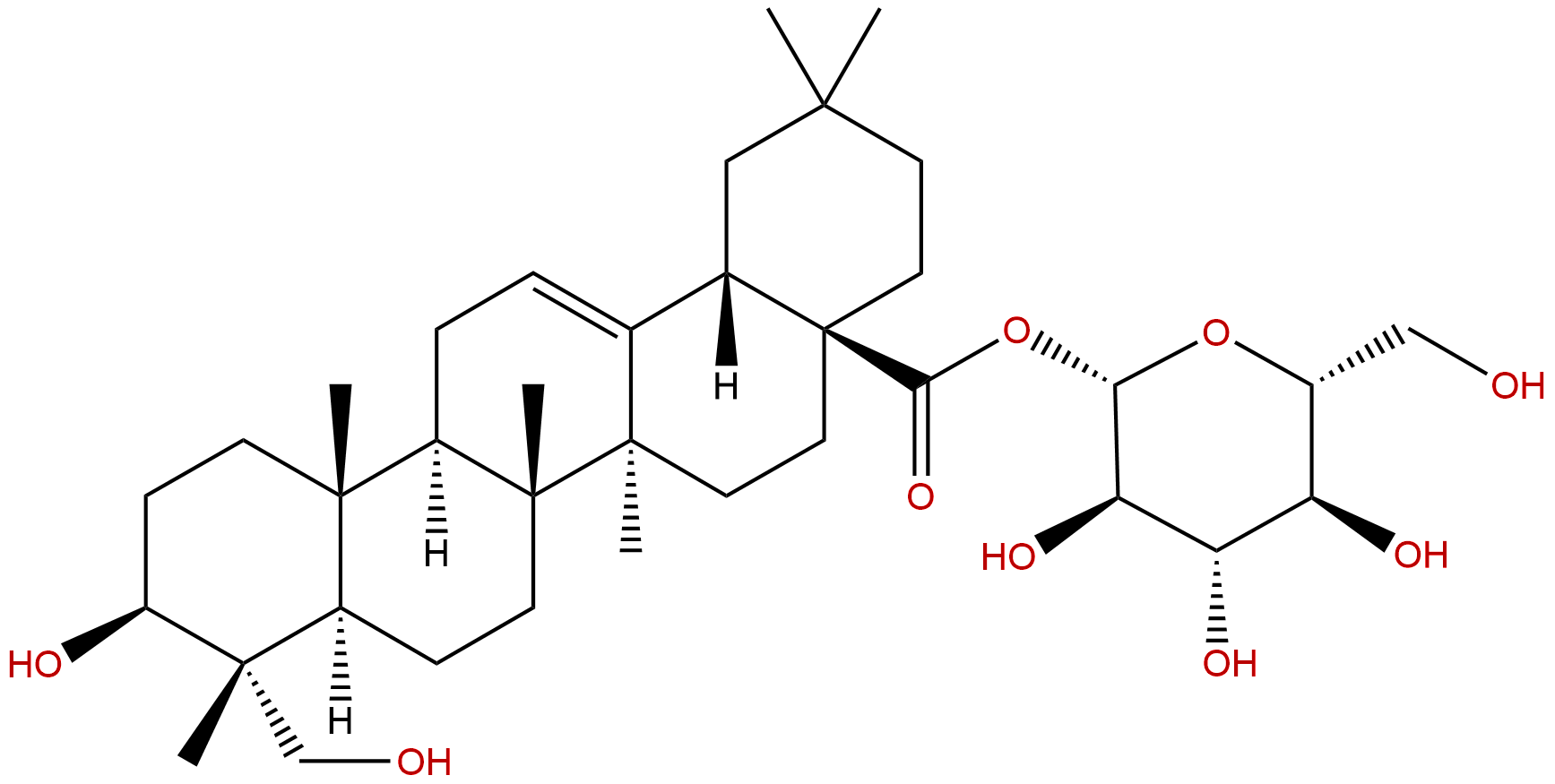
O-glucopyranosylpiederangenin (28-, hereinafter referred to as the "compound"), CAS number 53931-25-2, is an oleanane type pentacyclic triterpenoid saponin isolated from plants such as walnuts. Its parent nuclear structure is hederagenin, and a β - D-glucopyranose group is connected to its C-28 carboxyl group through an ester bond. Early studies have revealed that it has basic anti-inflammatory and other activities. In recent years, with in-depth research, this compound has demonstrated remarkable multi-target and multi-channel inhibitory potential in the field of anti pancreatic cancer, involving multiple key links such as inducing apoptosis, inhibiting proliferation, invasion and metastasis, and reversing drug resistance, making it a highly valuable lead compound. The purpose of this paper is to systematically review the chemical properties, plant sources, pharmacological activities, especially the mechanism of action and molecular targets of this compound against pancreatic cancer, and to make a preliminary evaluation of its pharmaceutical properties, in order to provide scientific basis for the subsequent drug development.
Chemical structure and physicochemical properties
This compound is a typical oleane type pentacyclic triterpenoid saponin. Its basic skeleton consists of six isoprene units, including five hexagonal rings (A/B/C/D rings) and one pentagonal ring (E ring), belonging to the oleanolic acid type structure. Its core feature is that the carboxyl group at position C-28 does not exist freely like oleanolic acid, but is connected to a molecule of β - D-glucopyranose through an ester glycosidic bond (- COO sugar) to form an ester glycoside at position C-28. There are significant differences in chemical properties and metabolic stability between this ester glycoside bond and the common C-3 oxygen glycoside bond of triterpenoid saponins.
Its molecular formula is C36H58O9 and its molecular weight is 634.8510. The structure contains multiple hydrophobic steroid rings and a hydrophilic sugar group, exhibiting amphiphilicity. The calculated lipid water partition coefficient (LogP) is 3.5716, indicating that the compound has moderate to high lipophilicity, which is beneficial for its penetration of cell membranes but may also affect its water solubility. Its topological polar surface area (TPSA) is 156.9100 Å ², reflecting the polarity brought by sugar and ester bonds. The water solubility test data is 0.0156 mg/mL, which belongs to insoluble compounds and may be one of the main limiting factors for their oral bioavailability. In the preliminary pharmacological screening, the compound did not show hERG potassium channel inhibitory activity (hERG inhibition: No), indicating a low potential risk of arrhythmia; The Ames test result is 0.0, indicating preliminarily that it has no direct genetic toxicity. These basic physicochemical and safety parameters provide important references for its subsequent structural optimization and formulation development.
Plant sources and extraction methods
This compound is mainly isolated from plants in the walnut family, especially from plants in the walnut genus, such as the leaves, branches, or green skin (the outer skin of immature fruits) of walnuts, which are important sources. As a traditional medicinal plant, various extracts of walnut have been reported to have anti-inflammatory, antioxidant, and anti-tumor activities. The discovery of this compound provides a material basis for elucidating some of the pharmacological effects of walnut.
Its extraction and separation usually follow the conventional process of natural product chemistry. Firstly, the dried plant material (such as peach leaves) is crushed and subjected to extraction or reflux extraction using polar solvents (such as methanol, ethanol, or aqueous ethanol) to obtain the crude extract. After vacuum concentration, the crude extract was subjected to gradient extraction using solvents such as petroleum ether, ethyl acetate, and n-butanol. Due to its polarity and structural characteristics, the compound was mainly enriched in the n-butanol extraction site. Subsequently, various modern chromatographic techniques were comprehensively utilized for separation and purification, including but not limited to: silica gel column chromatography (using chloroform methanol water system gradient elution), reverse phase silica gel column chromatography (such as ODS, using methanol water or acetonitrile water system elution), and high-performance liquid chromatography (HPLC, especially preparative HPLC). Tracking and structural identification are carried out through thin layer chromatography (TLC) combined with specific chromogenic agents (such as 10% ethanol sulfate solution, color development after heating), as well as spectroscopic techniques such as nuclear magnetic resonance (NMR, including 1H-NMR, 13C-NMR, 2D-NMR such as HSQC, HMBC), mass spectrometry (MS, such as ESI-MS). The HMBC spectrum is crucial for confirming the connection position of the C-28 glucose ester glycosidic bond.
Pharmacological activity research
The compound shows a wide range of pharmacological activities, among which the anti pancreatic cancer activity is the focus of current research.
1. Anti pancreatic cancer activity:
A large number of in vitro studies have shown that this compound has significant proliferation inhibition and apoptosis inducing effects on human pancreatic cancer cell lines (such as PANC-1, MIA PaCa-2, BxPC-3, etc.). Its effect is concentration and time-dependent. In cell cycle analysis, this compound can cause G0/G1 phase or S phase arrest, preventing cells from entering mitosis. In addition, it can significantly inhibit the migration and invasion of pancreatic cancer cells, suggesting that it has anti metastasis potential. In in vivo models such as nude mouse transplanted tumors, this compound can effectively inhibit tumor growth and show synergistic effects when combined with first-line chemotherapy drugs such as gemcitabine, while also reducing some of the side effects caused by chemotherapy.
2. Anti inflammatory and immune regulatory activity:
As a derivative of ivy saponin, this compound inherits the anti-inflammatory properties of the parent nucleus. Research has shown that it can inhibit the excessive production of nitric oxide (NO), prostaglandin E2 (PGE2), and pro-inflammatory cytokines (such as TNF - α, IL-6, IL-1 β) in macrophages induced by lipopolysaccharides (LPS) and other factors. Its anti-inflammatory effect is closely related to the inhibition of the activation of NF - κ B and MAPK signaling pathways. This anti-inflammatory activity not only has therapeutic value in itself, but may also indirectly contribute to its anti-tumor effect by regulating the inflammatory state in the tumor microenvironment.
3. Other activities:
In addition, the study suggests that the compound may have antioxidant and hepatoprotective activities, which are related to its regulation of Nrf2 and other antioxidant pathways.
Mechanism of action and molecular targets
The anti pancreatic cancer mechanism of this compound is complex, involving multi target, multi pathway coordinated regulation, which can be summarized as follows:
1. Inducing cell apoptosis and regulating apoptosis related proteins:
This compound can significantly upregulate the expression of pro apoptotic protein Bax and downregulate the expression of anti apoptotic protein BCL2, leading to a decrease in mitochondrial membrane potential, release of cytochrome C, and activation of Caspase cascade reaction, ultimately triggering cell apoptosis. This is one of the core pathways through which it exerts cytotoxic effects.
2. Inhibit tumor cell proliferation and signal transduction:
* STAT3 signaling pathway: STAT3 is a key oncogenic transcription factor continuously activated in pancreatic cancer. This compound can effectively inhibit the phosphorylation (activated form) of STAT3, block its nuclear translocation, thereby downregulating the expression of downstream target genes (such as Cyclin D1, Bcl-2, Survivor), inhibiting cell proliferation and promoting apoptosis.
* Protein kinase C (PKC) family: The study suggests that the compound may act on enzymes such as PRKCA (PKC α) and PRKCE (PKC ε). PKC α is associated with cell proliferation and drug resistance, while PKC ε is closely related to tumor invasion and metastasis. Inhibiting the activity of these kinases can interfere with downstream proliferation and survival signals.
3. Inhibit invasion, metastasis, and angiogenesis:
* Matrix metalloproteinases (MMPs): This compound can downregulate the expression and activity of MMP2 and MMP9, which are key enzymes that degrade extracellular matrix and promote tumor invasion and metastasis.
* Hypoxia inducible factor-1 alpha (HIF1A): In the hypoxic microenvironment of tumors, this compound can inhibit the stability and activation of HIF1A, thereby reducing the expression of downstream angiogenic factors such as vascular endothelial growth factor (VEGF) and inhibiting tumor angiogenesis.
* Toll like receptor 4 (TLR4): The abnormal activation of TLR4 signaling pathway is closely related to the formation and metastasis of tumor inflammatory microenvironment. This compound may inhibit the production of downstream pro-inflammatory and pro metastatic factors such as NF - κ B by interfering with TLR4 signaling.
4. Reversing multidrug resistance (MDR):
Drug resistance of pancreatic cancer to chemotherapy is the main cause of treatment failure. This compound has been shown to downregulate the expression of ABCB1 (P-glycoprotein, P-gp). P-gp is an important drug efflux pump that can pump chemotherapy drugs (such as gemcitabine) out of cells, leading to a decrease in intracellular drug concentration. Inhibiting P-gp function helps restore tumor cell sensitivity to chemotherapy drugs.
5. Regulating oxidative stress and cellular defense:
By activating the transcription factor NFE2L2 (Nrf2), this compound can upregulate the expression of a series of phase II detoxifying enzymes and antioxidant proteins, enhancing the antioxidant stress resistance of cells. On the one hand, this may contribute to its chemopreventive potential, and on the other hand, moderate Nrf2 activation may also protect normal cells in tumor therapy, but its dual role in cancer cells requires further investigation.
6. Interaction with DNA Topoisomerase:
There are studies suggesting that it may interact with TOP1 (DNA topoisomerase I). Topoisomerases are key enzymes involved in DNA replication and transcription, and are also targets of various chemotherapy drugs. Interference with its function can lead to DNA damage and cell death.
To sum up, this compound has formed a multi-dimensional network to inhibit the growth, metastasis and drug resistance of pancreatic cancer by acting on multiple key targets such as BCL2, STAT3, PRKCA/PRKCE, MMP2, HIF1A, TLR4, ABCB1, NFE2L2, TOP1, etc., reflecting the advantages of natural products in multi target action.
Evaluation of drug properties and pharmacokinetics
Based on its physicochemical properties and preliminary biological data, a preliminary evaluation of the pharmacological properties of the compound is conducted
Advantage:
1. Clear activity, multi-target effect: The anti pancreatic cancer activity is significant and the mechanism of action is rich, which may overcome the problem of drug resistance of single target drugs.
2. Preliminary good safety: The absence of hERG inhibition and Ames mutagenicity warning provides a good safety starting point for subsequent development.
3. Clear structure and strong modifiability: As triterpenoid saponins, both their glycosides and sapogenins can be chemically modified to optimize their properties.
Challenges and shortcomings:
1. Solubility and permeability: Low water solubility (0.0156 mg/mL) and moderate LogP value may seriously affect its oral absorption (expected low bioavailability). Its large TPSA and molecular weight also pose challenges for its crossing of biofilms.
2. Pharmacokinetic (PK) unknown: At present, publicly available pharmacokinetic studies (such as absorption, distribution, metabolism, and excretion) data on this compound are extremely scarce. The ester glycosidic bond may be hydrolyzed by esterases in the body to produce ivy saponin and glucose. The stability, half-life, and tissue distribution (especially pancreatic targeting) of the prototype drug in vivo need to be further studied.
3. Blood-brain barrier permeability: Predicting low blood-brain barrier permeability may not be advantageous for treating brain metastases, but it may also reduce central nervous system side effects.
4. Preparation difficulty: Due to their amphiphilicity and insolubility, it is necessary to develop stable formulations (such as nanocrystals, liposomes, micelles, etc.) suitable for drug administration (especially intravenous administration), but there are also technical challenges.
Future research needs to focus on conducting systematic preclinical pharmacokinetic and toxicological studies, and actively explore overcoming drug development bottlenecks through prodrug strategies, structural modifications (such as glycosylation modification, preparation of more polar derivatives to increase solubility, or preparation of more lipophilic derivatives to improve absorption), or advanced drug delivery systems.
Clinical application prospects and prospects
Ivy saponin-28-O - β - D-glucoside shows a clear development prospect in the field of anti pancreatic cancer, but it still faces a long and rigorous path to clinical application.
Potential application directions:
1. Adjuvant treatment or combination of anti pancreatic cancer drugs: Given its ability to reverse P-gp mediated drug resistance and multi-target anti-tumor activity, the most promising application of this compound is in combination with standard therapies such as gemcitabine and albumin bound paclitaxel to enhance efficacy, overcome resistance, reduce chemotherapy drug dosage and side effects.
2. Anti inflammatory adjuvant therapy: Its anti-inflammatory activity can be used to control cancer-related inflammation or treat other inflammatory diseases.
3. Chemical preventive agents: Based on its antioxidant and anti-inflammatory properties, or it can be used for chemoprevention research of pancreatic cancer in high-risk groups.
Future research prospects:
1. In depth mechanism research: It is necessary to use techniques such as gene knockout/knockdown, chromatin immunoprecipitation (ChIP), and eutectic structure analysis to more accurately verify its direct interaction sites and patterns with targets such as STAT3 and PKC.
2. Systematic pharmacokinetics and toxicology research: Complete preclinical ADME (absorption, distribution, metabolism, excretion) and GLP (Good Laboratory Practice) toxicology studies must be conducted to clarify their treatment window.
3. Structural optimization and derivative development: Conduct a systematic structure-activity relationship (SAR) study using this compound as the lead structure. Modification sites may include: C-28 sugar groups (changing sugar types, connection modes), hydroxyl groups on sapogenins (acylation, etherification), and modifications to the A or E ring, aimed at improving solubility, metabolic stability, targeting, and efficacy.
4. Research on a new drug delivery system: Develop targeted drug delivery systems based on nanotechnology (such as folate/transferrin modified nanoparticles, exosomes, etc.) to enhance their enrichment in pancreatic tumor tissues and reduce systemic exposure toxicity.
5. Exploring biosynthetic pathways: Extracting limited yields from plants and analyzing their biosynthetic pathways holds promise for achieving efficient and sustainable production in microorganisms or plant cells using synthetic biology methods.
Conclusion
As a natural triterpene saponin discovered from the traditional medicinal plant Walnut, Ivy Sapogenin-28-O - β - D-glucoside has become a highlight in the research of natural anti-tumor drugs due to its unique C-28 ester glycoside structure and multi-target anti pancreatic cancer pharmacological activity. It launches multi-dimensional attacks on pancreatic cancer, the "king of cancer", by regulating multiple key pathways such as apoptosis (BCL2), proliferation (STAT3, PRKCA), metastasis (MMP2, HIF1A, PRKCE), drug resistance (ABCB1), and microenvironment (TLR4), showing the potential to surpass single target drugs. Although it faces challenges in terms of solubility, pharmacokinetics, and other aspects of drug development, these challenges are precisely the areas that modern medicinal chemistry and pharmacy can focus on addressing. Through in-depth mechanism analysis, systematic preclinical evaluation, reasonable structure optimization and innovative delivery strategies, this compound is expected to be developed as a new therapeutic drug or adjuvant against pancreatic cancer, bringing new hope for improving the prognosis of pancreatic cancer patients. The research process has once again confirmed the eternal value of the strategy of finding innovative drug leads from traditional medicinal plants and natural products.