


Synonym name:
Catalogue No.: BP0710
Cas No.: 465-99-6
Formula: C30H48O4
Mol Weight: 472.71
Botanical Source: Hedera helix; Chinese ivy; Hedera nepalensis K,Koch var.sinensis (Tobl.) Rehd
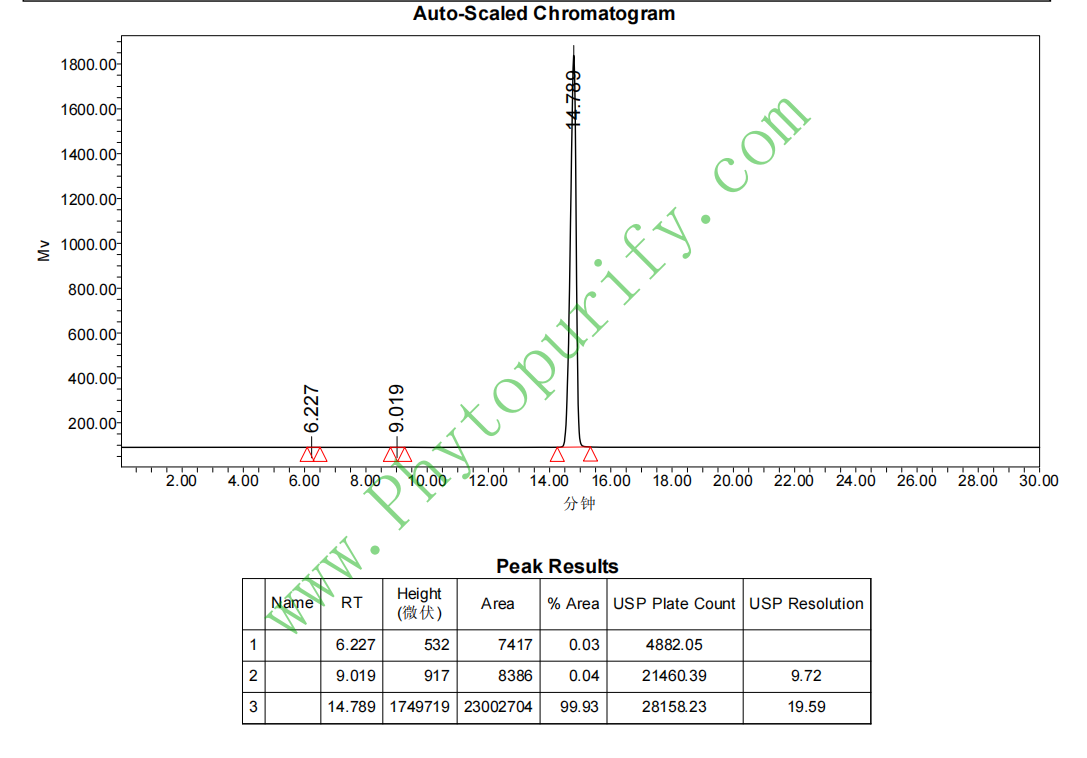
Purity: 95%~99%
Analysis Method: HPLC-DAD or/and HPLC-ELSD
Identification Method: Mass, NMR
Packing: Brown vial or HDPE plastic bottle
Can be supplied from milligrams to grams, up to kilograms.
Inquire for bulk scale.
Hederagenin is a triterpenoid which is a chemical constituent of the Hedera helix plant.
Hederagenin is the aglycone part of numerous saponins found in Hedera helix (common ivy), the most prevalent of these being hederacoside C and alpha-hederin. It is also one of three primary triterpenoids extracted from the Chenopodium quinoa plant categorized by the EPA as a biopesticide. HeadsUp Plant Protectant is made up of approximately equal ratios of the saponin aglycones oleanolic acid, hederagenin, and phytolaccagenic acid and is intended for use as a seed treatment on tuber (e.g. potato seed pieces), legume, and cereal seeds or as a pre-plant root dip for roots of transplants, at planting, to prevent fungal growth, bacterial growth, and viral plant diseases.
Hederagenin has been found to have antidepressant-like effects in a rodent models.
HPLC of Hederagenin
Storage conditions:Short-term storage at 2~8℃, long-term storage at -20 ~ -80℃
77.7600
5.5274
3.7777
.0030
4.0749
3.9061
Low
90.9978
4.7492
No
No
No
No
No
No
0.0
No
No
Yes
No
Natural products are an important treasure trove for the discovery and development of new drugs, among which triterpenoids have attracted much attention due to their structural diversity and wide range of biological activities. Hederagenin (CAS number: 465-99-6), as a common oleanane type pentacyclic triterpenoid saponin, is a key active glycoside in various medicinal plants. In recent years, with the deepening of modern pharmacological research, hederagenin has demonstrated multifaceted pharmacological activities beyond traditional understanding, especially in the fields of anti-tumor, anti-inflammatory, and liver protection, showing great potential. Its mechanism of action involves multiple aspects such as regulating cell apoptosis, inhibiting inflammatory signaling pathways, inducing oxidative stress, and can enhance sensitivity to classical chemotherapy drugs, suggesting its potential as a novel therapeutic or adjuvant therapy. The purpose of this article is to systematically review the chemical properties, plant sources, pharmacological activities, molecular mechanisms of action, and medicinal properties of ivy saponins, and to prospect their clinical application prospects, in order to provide comprehensive scientific references for the in-depth research and development of this natural product.
Ivy saponins belong to the oleanane type pentacyclic triterpenoid compounds, and their chemical name is 3 β, 23-dihydroxyolean-12-en-28-oic acid. The molecular formula is C30H48O4 and the molecular weight is 472.7100. Its basic skeleton consists of five rings (A/B/C/D/E), with a β - configured hydroxyl group connected to each of the C-3 and C-23 positions, a carboxyl group connected to the C-17 position (C-28 position), and a double bond present at the C-12 position. This structure is the basis for its various biological activities.
In terms of physicochemical properties, ivy saponins exhibit typical lipophilic characteristics. The calculated lipid water partition coefficient (LogP) is 5.5274, indicating strong lipid solubility. The topological polar surface area (TPSA) is 77.7600 Å ². Its water solubility is extremely low, about 0.0030 mg/mL, which to some extent limits its bioavailability. According to the prediction of pharmacological parameters, the ability of ivy saponin to penetrate the blood-brain barrier is relatively low, indicating that its central nervous system related effects may be limited. In the preliminary safety assessment, the hERG inhibition risk was negative, indicating a low potential risk of arrhythmia; The Ames test result is 0.0, indicating that there is no significant genetic toxicity. These physicochemical and preliminary safety parameters provide important basis for its subsequent structural modification and formulation development.
Ivy saponins are not abundant in plants in free form, but as glycosides of saponins, they are connected to one or more sugar chains through glycosidic bonds and widely distributed in various plants. Its main plant sources include:
1. Plants of the Mutsu family Like Mutong(Akebia quinata)San Ye Mu Tong(Akebia trifoliata)The vine stem contains saponins with ivy saponin as the aglycone.
2. Honeysuckle plants in the family Lonicera Like honeysuckle(Lonicera japonica)The stems and leaves, as well as various honeysuckle plants.
3. Araliaceae plants Like the five thorns(Eleutherococcus senticosus)Ivy(Hedera helix)Wait.
4. Other families and genera Some medicinal plants such as Ranunculaceae and Primulaceae also contain their derivatives.
The extraction of ivy saponins usually involves the following steps:
1. Raw material pretreatment and extraction After drying and crushing the plant materials, reflux extraction or ultrasound assisted extraction is performed using polar solvents such as methanol, ethanol, or aqueous ethanol to obtain crude total saponin extract.
2. Acid hydrolysis or enzymatic hydrolysis Heating and refluxing the extract rich in saponins under acidic conditions (such as hydrochloric acid or sulfuric acid solution), or breaking the glycosidic bond, releases sapogenins (i.e. ivy saponins) and glycosides. Enzymatic hydrolysis has milder conditions but higher costs.
3. Separation and Purification The hydrolyzed mixture is extracted with organic solvents such as ethyl acetate and chloroform to obtain the saponin moiety. Further separation and purification can be achieved through techniques such as silica gel column chromatography, reverse phase column chromatography, and preparative high-performance liquid chromatography (HPLC) to obtain high-purity hederagenin.
Modern extraction techniques such as microwave-assisted extraction and supercritical fluid extraction have also been applied to improve extraction efficiency and reduce solvent consumption.
Numerous in vitro and in vivo studies have confirmed that hederagenin has multiple pharmacological activities.
1. Antitumor activity This is the most highly regarded activity of ivy saponins. Studies have shown that it can significantly inhibit the proliferation of many human cancer cell lines, including liver cancer, breast cancer, lung cancer, colon cancer, cervical cancer, prostate cancer, etc. Its function is not limited to directly inhibiting cell growth, but more prominently manifested as inducing cell apoptosis. Research has shown that hederagenin can increase the levels of reactive oxygen species (ROS) in cancer cells, disrupt mitochondrial membrane potential, and initiate the apoptotic program of the mitochondrial pathway.
2. anti-inflammatory activity Ivy saponins exhibit good oral anti-inflammatory activity. In macrophage models induced by inflammatory stimuli such as lipopolysaccharide (LPS), it can effectively inhibit the expression of inducible nitric oxide synthase (iNOS) and cyclooxygenase-2 (COX-2), thereby reducing the excessive production of inflammatory mediators nitric oxide (NO) and prostaglandin E2 (PGE2). This effect is closely related to its inhibition of the activation of the nuclear factor kappa B (NF - κ B) signaling pathway.
3. Chemical sensitization effect Ivy saponin can significantly enhance the sensitivity of various tumor cells to classical chemotherapy drugs. For example, it can enhance cancer cell apoptosis induced by cisplatin and paclitaxel, providing a new strategy for overcoming tumor multidrug resistance, reducing chemotherapy drug dosage and side effects.
4. Liver protective effect Research suggests that hederagenin has the potential to prevent alcoholic liver injury. The mechanism may involve antioxidant activity, inhibition of inflammatory response, and regulation of lipid metabolism.
5. Other activities In addition, the study also reported that ivy saponins have potential activities such as antibacterial, antiviral, anti ulcer, and anti osteoporosis effects, demonstrating their multi-target properties.
The pharmacological effects of ivy saponins, especially their anti-tumor effects, are achieved by intervening in multiple key signaling pathways and molecular targets, forming a complex network.
1. Inducing cell apoptosis and targeting apoptosis related proteins:
* Mitochondrial pathway By increasing ROS, disrupting mitochondrial membrane potential, promoting cytochrome C release, and activating caspase cascade reaction. It can downregulate the expression of anti apoptotic proteins B cell lymphoma 2 (BCL2) and myeloid leukemia 1 (MCL1), thereby promoting apoptosis.
* Death receptor pathway Some studies have shown that it can upregulate the expression of death receptors such as Fas.
2. Inhibition of inflammation and NF - κ B pathway Ivy saponin is an important inhibitor of the NF - κ B signaling pathway. It can prevent the degradation of I κ B α and p65 nuclear translocation caused by LPS and other stimuli, thereby inhibiting the expression of downstream inflammatory factors (such as TNF - α, IL-6) and effector enzymes (iNOS, COX-2), which is the core of its anti-inflammatory effect.
3. Regulating key signal transduction pathways and transcription factors:
* STAT3 signaling pathway It can inhibit the phosphorylation (activation) of signal transducer and activator of transcription factor 3 (STAT3), thereby affecting the expression of downstream genes related to cell proliferation and survival, such as Cyclin D1 and Survivor.
* MAPK/ERK pathway The regulation of mitogen activated protein kinase 1 (MAPK1, ERK2) is also involved in its growth inhibitory effect.
* HIF-1 α pathway Under hypoxic conditions, it can inhibit the stability and activation of hypoxia inducible factor-1 alpha (HIF1A), which may affect tumor angiogenesis and adaptation.
4. Affects extracellular matrix metabolism and metastasis By inhibiting the expression and activity of matrix metalloproteinase-2 (MMP2), hederagenin can interfere with the invasion and metastasis of tumor cells.
5. Intervention in DNA metabolism and hormone regulation:
* Topoisomerase inhibition There are studies suggesting that it may affect the activity of topoisomerases I (TOP1) and II α (TOP2A), interfering with DNA replication and repair.
* Estrogen related targets The regulation of estrogen receptor α (ESR1) and aromatase (CYP19A1) may be related to its potential to treat hormone dependent tumors (such as breast cancer).
Although the pharmacological activity of ivy saponins is clear, their medicinal properties still face challenges, and related pharmacokinetic studies are still in progress.
1. Absorption, distribution, metabolism, excretion (ADME):
* absorb Due to its low water solubility and high LogP value, the oral bioavailability of ivy saponins may be limited. Studies have shown that its absorption in the intestine may involve passive diffusion, but the specific absorption mechanism and first pass effect need further clarification.
* distribution Predict low blood-brain barrier permeability, mainly distributed in peripheral tissues. In animal models, it has a wide tissue distribution in rats, but its concentration is relatively high in the liver and kidneys.
* Metabolism As a triterpenoid compound, it mainly undergoes phase I metabolism (such as hydroxylation and oxidation) and phase II metabolism (such as glucuronidation and sulfation) in the body. The liver is the main metabolic organ, and the cytochrome P450 enzyme system may be involved.
* excretion Metabolites are mainly excreted through bile and urine.
2. Challenges and optimization strategies for drug development:
* Solubility and permeability Low water solubility and high lipophilicity are the main obstacles affecting its oral absorption.
* Structural modification By chemically modifying active sites such as C-3, C-23, and C-28, such as preparing esters, amides, glycoside derivatives, or prodrugs, to improve their solubility, stability, and targeting.
* New drug delivery system Using nanotechnology to develop delivery systems such as liposomes, nanoparticles, micelles, and solid dispersions can significantly improve their solubility and bioavailability, and may achieve passive or active targeting of tumor tissues, enhancing therapeutic efficacy and reducing systemic toxicity.
* Pharmacokinetic study At present, the preclinical pharmacokinetic data of the system is still incomplete, and more comprehensive in vivo ADME studies and human pharmacokinetic predictions are needed to provide a basis for dosage form design and clinical dosing regimens.
Ivy saponins show broad clinical application prospects, but there are also many directions that need to be broken through.
1. As an anti-tumor drug or adjuvant therapy:
* Single therapy Based on its multi-target anti-tumor mechanism, develop it as a novel anti-tumor candidate drug, especially suitable for tumor types that are insensitive or resistant to existing chemotherapy drugs.
* combination therapy Its chemical sensitization properties make it highly valuable when used in combination with chemotherapy drugs such as cisplatin, paclitaxel, and doxorubicin. It is expected to reduce the dosage of chemotherapy drugs, alleviate toxic side effects, and reverse drug resistance, and has important clinical translational potential.
* Modernization of Traditional Chinese Medicine As an active ingredient in various traditional Chinese medicines, clarifying the role of ivy saponins can help explain the pharmacological substance basis of related formulas (such as those containing Mutong and Honeysuckle), promote the modernization and international recognition of traditional Chinese medicine.
2. As an anti-inflammatory and hepatoprotective drug Develop formulations for the treatment of chronic inflammatory diseases such as arthritis and colitis, as well as alcoholic or drug-induced liver injury.
3. Challenges faced and future research directions:
* In depth mechanism research It is necessary to utilize omics technologies (proteomics, metabolomics) and gene editing tools to more accurately depict its functional network and discover new key targets.
* Improve drug efficacy Continuously optimizing structural modification and nano delivery strategies, conducting systematic pharmaceutical research, is the key to advancing it towards clinical practice.
* Preclinical safety evaluation A comprehensive GLP toxicology study must be completed, including long-term toxicity, reproductive toxicity, immunotoxicity, etc., to ensure its safety.
* Conduct clinical trials Based on sufficient preclinical research, gradually advance Phase I and Phase II clinical trials to evaluate their safety, pharmacokinetic characteristics, and preliminary efficacy in humans.
* Explore new indications Based on its multi activity characteristics, its potential applications in metabolic diseases, neurodegenerative diseases, and other fields can be explored.
Ivy saponin, as a natural triterpenoid saponin with abundant sources, has become a highlight in the research of natural product drugs due to its multi-target and multi pathway pharmacological activities such as anti-tumor, anti-inflammatory, and hepatoprotective effects. Its unique chemical sensitization effect is particularly remarkable, providing new ideas for combined cancer therapy. Despite facing challenges such as low solubility and poor bioavailability in drug development, these obstacles are gradually being overcome through the application of modern drug chemical modifications and novel delivery technologies. In the future, with a deeper understanding of its molecular mechanism of action, a comprehensive grasp of its pharmacokinetic properties, and continuous innovation in formulation technology, ivy saponin is expected to develop from a potential lead compound into a new type of drug or adjuvant therapy with clinical application value, contributing the power of natural products to human health. The research process also fully reflects the classic path from traditional medicinal experience to modern scientific interpretation, and then to innovative drug development.
